Is the Topeka Shiner Protected in Kansas?
There's nothing quite as frustrating as being out on the water, enjoying a peaceful day of fishing, only to worry if the tiny fish darting through the shallows might be something you shouldn't even be looking at, let alone accidentally catching. It can feel overwhelming to keep track of all the rules and regulations, especially when it comes to smaller, less common species. This guide is here to shed some light on one such fish: the Topeka Shiner, detailing its protected status in Kansas and what every responsible angler needs to know to stay on the right side of conservation.
Understanding the Topeka Shiner and Its Status
Before we dive into the nitty-gritty of regulations, it’s really helpful to understand what we're talking about. The Topeka Shiner isn't your typical sport fish, but it plays a vital role in its ecosystem, and its protection is a testament to the delicate balance of nature in our Kansas waters.
What Exactly is a Topeka Shiner?
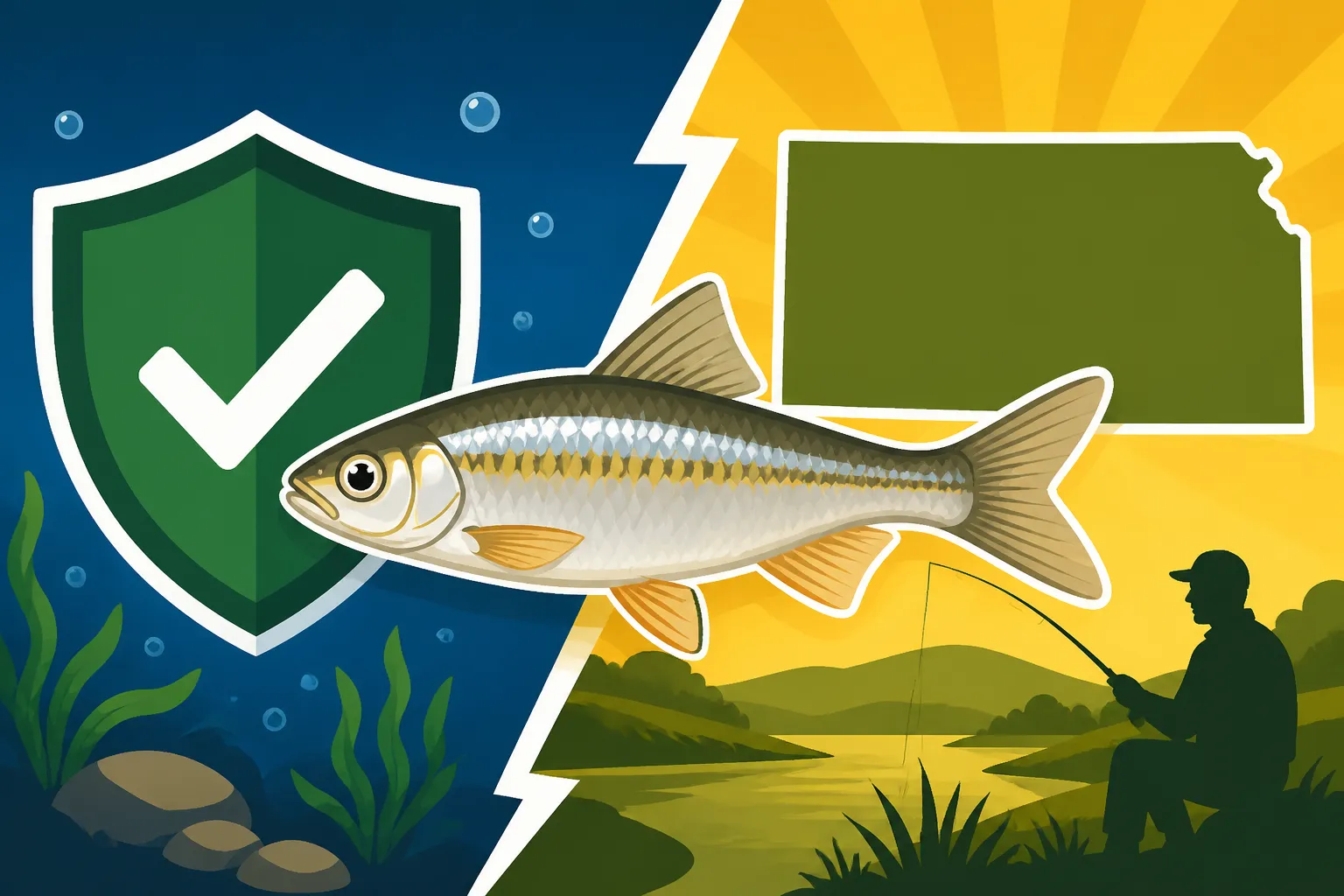
The Topeka Shiner (scientific name: Notropis topeka) is a small, freshwater minnow, usually growing to about 2-3 inches in length. They're often described as having a somewhat compressed body, meaning they're a bit flattened side-to-side, and they typically exhibit a silvery body with a distinct dark stripe running along their side. During breeding season, males can develop vibrant orange or red fins and a bluish hue on their bodies, making them surprisingly colorful. These little guys are primarily insectivores, feasting on small aquatic insects and larvae, and in turn, they become a crucial food source for larger fish species like bass and crappie, as well as various birds and amphibians. They prefer clear, cool, slow-moving waters in small to medium-sized prairie streams and oxbow lakes, often associating with areas that have lush aquatic vegetation or submerged roots for cover. Imagine a small, meandering stream with tall grasses along the banks and maybe some lily pads – that's prime Topeka Shiner territory. Their presence is often an indicator of good water quality and a healthy stream ecosystem. They're not the kind of fish you target with a rod and reel, but you might certainly spot them flashing in the sunlight in shallow areas.
Why Is the Topeka Shiner Protected?
The sad truth is that the Topeka Shiner has faced a significant decline across much of its historical range, which once stretched across several Midwestern states. This decline is largely due to habitat loss and degradation. Think about it: our landscapes have changed dramatically over the last century. Prairies have been converted to agriculture, streams have been channelized, wetlands drained, and water quality has suffered from runoff and pollution. These changes directly impact the shallow, clear-water habitats that Topeka Shiners depend on for survival and reproduction. As their numbers dwindled, it became clear that without intervention, this little fish could disappear entirely. Ecologically, their role as a forage fish is immensely important; a decline in their population can ripple through the food chain, affecting the health and abundance of other species, including the ones we love to fish for. Conservation efforts aren't just about saving one species; they're about preserving the entire intricate web of life within an ecosystem. Protecting the Topeka Shiner means protecting the health of our prairie streams for all species, including ourselves.
The Legal Status in Kansas and Beyond
So, here's the crucial part: yes, the Topeka Shiner is a protected species in Kansas. It's listed as an endangered species at the federal level under the Endangered Species Act, which is a big deal. This federal listing means it receives comprehensive protections, making it illegal to harass, harm, pursue, hunt, shoot, wound, kill, trap, capture, or collect them, or attempt to do so. On top of that, its critical habitat is also protected. Kansas recognizes this federal protection and has its own state regulations reinforcing these measures. This dual layer of protection means that both federal and state agencies work together to conserve the species and enforce laws designed to protect it. For anglers, this isn't just a suggestion; it's a serious legal matter. Even accidental harm or possession can lead to significant penalties, emphasizing the need for every angler to be aware and cautious. You can find more comprehensive details on general aquatic regulations in our Kansas Fishing Regulations Explained article.
Identifying the Topeka Shiner in Kansas Waters
Knowing that the Topeka Shiner is protected is one thing, but actually being able to identify it among a school of other small minnows can be a real challenge. Many small fish look similar, and it's easy to make a mistake. However, with a keen eye and a bit of knowledge, you can learn to distinguish them.
Key Identification Features
When you're peering into the water, trying to figure out if that little flash is a Topeka Shiner or just another minnow, here are some things to look for:
- Size: They are small, typically 2 to 3 inches long. Any fish significantly larger is likely not a Topeka Shiner.
- Body Shape: They have a somewhat deep and compressed body, almost like a miniature bluegill in shape but much thinner. This is distinct from many other minnows that tend to be more torpedo-shaped.
- Lateral Stripe: Look for a prominent, dark lateral stripe running from the gill cover to the base of the tail. This stripe is usually quite straight and well-defined.
- Spot at Tail Base: Often, there's a small, dark spot or blotch at the base of the caudal (tail) fin, where the lateral stripe terminates. This can be a key distinguishing feature.
- Snout and Mouth: They have a relatively pointed snout and a small, terminal mouth (meaning it's at the very end of their head, not upturned or downturned).
- Breeding Colors: As mentioned, during spawning season (typically late spring to early summer), males become quite vibrant. Look for males with bright orange or red on their fins and a bluish sheen on their bodies. This is a dead giveaway if you see it.
- Dorsal Fin: The dorsal fin (on top of the back) usually has 8 rays. While hard to count in the field, it contributes to their overall appearance.
Having a good waterproof field guide for Kansas fish species can be incredibly helpful for identification. You can often find these guides online, perhaps even through retailers like Amazon, that specifically highlight the unique characteristics of local fish.
Common Look-Alikes
It's easy to confuse the Topeka Shiner with several other small fish species commonly found in Kansas streams and ponds. These look-alikes can make identification tricky, so knowing what else is out there is crucial:
- Sand Shiner (Notropis stramineus): These are very common and can look quite similar. Sand shiners generally have a more slender body, a less distinct lateral stripe, and lack the prominent dark spot at the base of the tail. They also tend to have a slightly more yellowish or olive hue compared to the Topeka Shiner's silvery appearance.
- Red Shiner (Cyprinella lutrensis): Also very common, especially in disturbed habitats. Red shiners are typically more robust, have a reddish tint, especially when breeding, and their lateral stripe is often less defined or even absent compared to the Topeka Shiner. Their scales are also often larger and more diamond-shaped.
- Emerald Shiner (Notropis atherinoides): These are often found in larger rivers and lakes. They are typically more slender and elongated than Topeka Shiners, with a distinct silvery-green sheen, giving them their "emerald" name.
- Other Minnows and Dace: There are many other small minnow and dace species in Kansas, each with subtle differences in body shape, coloration, and fin placement. Juvenile game fish, like young bass or sunfish, might also be mistaken for minnows by an untrained eye, though their body shape is usually more robust.
The best approach is to err on the side of caution. If you're not 100% sure what you've caught or observed, assume it might be a protected species and follow catch-and-release protocols, as we'll discuss next.
Where You Might Encounter Them
Knowing where Topeka Shiners typically live can help you predict if you're in an area where you might encounter them. They are generally found in the central and eastern portions of Kansas, favoring specific types of habitats:
- Prairie Streams: Their preferred habitat is small to medium-sized prairie streams with relatively stable flow, clear water, and a gravel or sand bottom. They like streams that maintain a good connection to their floodplains, allowing for natural meanders and slower-moving areas.
- Pools and Backwaters: Within these streams, they are most often found in pools, riffles with slow currents, and isolated backwaters or oxbows. They particularly like areas with abundant aquatic vegetation, submerged logs, or dense riparian vegetation along the banks that provide shade and cover. They are less common in main channels of large, fast-flowing rivers.
- Oxbow Lakes: Old river bends that have been cut off from the main channel, forming crescent-shaped lakes, can also be prime habitat if they maintain good water quality and vegetation.
- Avoidance of Larger, Disturbed Waters: You're much less likely to find Topeka Shiners in large reservoirs, heavily channelized rivers, or streams with consistently turbid (muddy) water or high levels of pollution. They are quite sensitive to habitat changes and poor water quality.
If you're fishing in a smaller, clear-water stream in eastern or central Kansas, especially one that looks particularly pristine with lots of natural vegetation, be extra vigilant. Checking local regulations and environmental reports for your specific fishing spot can also provide insights into known Topeka Shiner populations. For specific locations and rules about fishing in community lakes versus state parks, you might also refer to Kansas Community Fishing Lake Rules or Kansas State Park Fishing Permit Rules.
What Anglers Need to Know When Fishing
As responsible anglers, our goal is to enjoy nature without harming it. When it comes to protected species like the Topeka Shiner, this means being extra mindful and prepared. Accidental encounters can happen, but how you react makes all the difference.
Catch and Release Best Practices
Even the most careful angler might accidentally hook a Topeka Shiner, especially when targeting panfish or small baitfish in suitable habitat. If this happens, your immediate action is crucial to its survival. Here's how to ensure a safe and successful release:
- Minimize Handling: The less you touch the fish, the better. Fish have a protective slime coat that can be easily removed by human hands, leaving them vulnerable to infection.
- Wet Hands: If you must touch the fish, always wet your hands thoroughly first. This helps preserve their slime coat.
- Use Barbless Hooks: If you anticipate fishing in areas where protected minnows might be present, consider using barbless hooks. They make removal much quicker and less damaging. You can easily pinch down the barb on a regular hook with a pair of pliers, which is a great practice for all catch-and-release fishing, especially for sensitive species.
- Gentle Removal: Use needle-nose pliers or a hemostat to carefully remove the hook. Try to avoid tearing the mouth or gills. If the fish is deeply hooked, it's often better to cut the line as close to the hook as possible rather than trying to rip it out, which can cause fatal damage.
- Support the Fish: When releasing, gently support the fish in the water until it swims away on its own power. Don't just toss it back. In streams with current, face the fish upstream so water flows over its gills, helping it recover.
- Quick Action: The longer a fish is out of the water, the more stressed it becomes. Work quickly and calmly.
Remember, the goal is to get the fish back into its environment unharmed as swiftly as possible. This approach is not only good for the fish but also helps you avoid any potential legal issues.
Avoiding Areas with Known Topeka Shiner Populations
The best way to protect Topeka Shiners is to avoid disturbing their habitats altogether. While it might not always be possible to know every single ripple in a stream, there are steps you can take:
- Consult Local Resources: The Kansas Department of Wildlife, Parks and Tourism (KDWP) is an excellent resource. Their website often provides information on endangered species, sensitive habitats, and areas to be aware of. They might not explicitly list "no fishing zones" for shiners, but understanding their habitat preferences from official sources can guide your choices.
- Review Habitat Maps: Conservation organizations and university extension offices sometimes publish maps or reports detailing critical habitats for endangered species. A quick online search for "Topeka Shiner habitat map Kansas" might yield valuable information.
- Observe Your Surroundings: When you arrive at a potential fishing spot, take a moment to observe the stream characteristics. Is the water clear and slow-moving? Is there abundant aquatic vegetation? Does it seem like an undisturbed prairie stream? These are indicators that Topeka Shiners could be present. If you're targeting larger fish with methods that involve disturbing the bottom or using large baits, you might consider moving to a different spot that doesn't fit the shiner's preferred habitat profile.
- Education is Key: Understanding the fish and its needs is your best defense. The more you know about species like the Topeka Shiner, the better equipped you'll be to make responsible decisions about where and how you fish. General knowledge about Kansas Fish Species Guide will help you recognize what is common versus what is rare.
Penalties for Accidental Harm or Possession
This is where things get serious. Because the Topeka Shiner is federally endangered, violating its protection can lead to severe consequences. While accidental catch-and-release, handled properly, is generally tolerated if no harm is evident, intentionally catching, possessing, or causing harm to a Topeka Shiner can result in:
- Significant Fines: Federal fines can range from thousands to tens of thousands of dollars, depending on the severity of the violation and whether it's considered intentional. State fines would also apply.
- Imprisonment: In severe cases involving intentional harm or repeated violations, jail time is a possibility.
- Loss of Fishing Privileges: You could face suspension or revocation of your fishing license, not just in Kansas but potentially nationwide, given the federal status.
- Confiscation of Gear: Equipment used in the violation, such as boats, rods, or other gear, can be confiscated.
These aren't just theoretical possibilities; they are real consequences designed to deter harm to critically endangered species. Law enforcement takes these protections seriously. If you are concerned about potential penalties for fishing violations, our article on Kansas Fishing Law Enforcement and Penalties provides a broader overview, though the specifics for endangered species are particularly stringent. It's always best to be educated, cautious, and respectful of all wildlife.
Key Takeaways for Anglers in Kansas
| Aspect | Description | Angler's Action |
|---|---|---|
| Protected Status | The Topeka Shiner is federally endangered and state-protected in Kansas. It is illegal to intentionally harm, harass, or possess. | Be aware of its status and take precautions, especially in potential habitats. |
| Habitat Preferences | Prefers clear, cool, slow-moving prairie streams, pools, and backwaters with abundant aquatic vegetation. | Exercise extra caution when fishing in these specific environments, particularly in central and eastern Kansas. |
| Identification | Small (2-3 inches), compressed body, prominent dark lateral stripe often with a spot at the tail base. Males have vibrant breeding colors. | Learn to distinguish it from common look-alikes. Carry a field guide or use a reliable app. |
| Accidental Catch | If accidentally caught, immediately and gently release using wet hands, barbless hooks, or cutting the line if deeply hooked. Minimize time out of water. | Prioritize the fish's well-being and a swift, safe return to the water. |
| Legal Consequences | Violations can lead to substantial fines, imprisonment, loss of fishing licenses, and gear confiscation. | Understand the serious nature of these protections and fish responsibly. |
| Information Source | Kansas Department of Wildlife, Parks and Tourism (KDWP) provides official information and regulations. | Consult KDWP resources and local experts for specific guidance on fishing locations and protected species. Where to Find the Kansas Fishing Regulations Summary |
As Kansas anglers, we share a collective responsibility to protect our natural heritage. The Topeka Shiner, though small, is a significant part of that heritage. By understanding its protected status, learning to identify it, and practicing responsible angling techniques, we can all contribute to its conservation and ensure that these unique little fish continue to thrive in our beautiful Kansas waters. Happy and responsible fishing out there!
Disclaimer
This article is for general informational purposes only and does not constitute professional advice. Laws, prices and regulations vary by location and change over time. Consult a qualified professional for guidance on your specific situation.