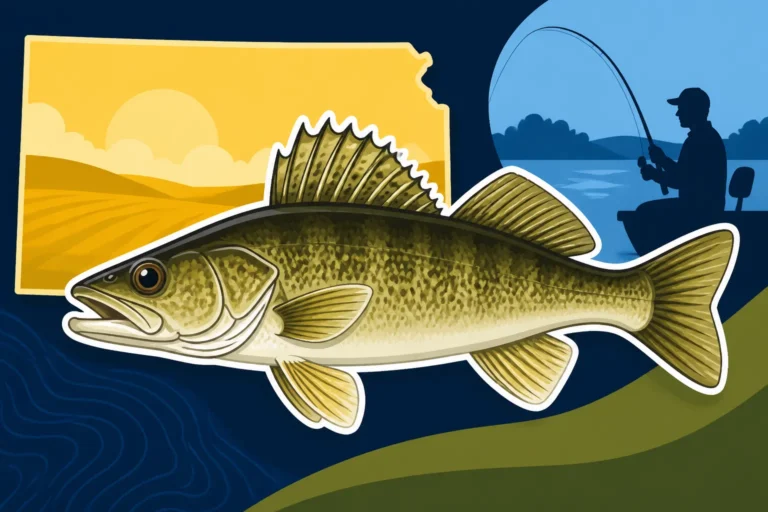
Kansas Saugeye Identification
Many Kansas anglers find themselves staring at a fish, a mix of excitement and confusion bubbling up as they try to determine if their catch is a walleye, a sauger, or that fascinating hybrid known as a saugeye. This isn't just a minor puzzle; confidently identifying your fish is critical for adhering to local regulations, which can vary significantly between these look-alike species. This guide is your in-depth resource, designed to equip you with the knowledge and practical tips needed to accurately identify a saugeye every single time you reel one in from Kansas waters.
The Saugeye Unveiled: Its Origins and Identification Challenges
Before we dive into the nitty-gritty of identification, let's understand what makes a saugeye so special, and why it's so frequently mistaken for its relatives. The saugeye isn't a naturally occurring species; it's a triumph of fisheries management, intentionally bred to enhance angling opportunities. Knowing its origins helps us understand its blended physical characteristics. For a broader overview of the species found in the state, consult our Kansas Fish Species Guide.
The Walleye-Sauger Cross: Born for Better Fishing
The saugeye is a hybrid fish, specifically a cross between a female walleye (Sander vitreus) and a male sauger (Sander canadensis). This deliberate crossbreeding was initiated by fisheries biologists to create a game fish that combines the most desirable traits of both parent species. Walleye are highly sought after for their large size, strong fighting spirit, and exceptional taste, but they often prefer clearer, deeper, and cooler waters, and can be quite challenging to catch consistently. Sauger, while also delicious and spirited, are typically smaller than walleye and are more tolerant of turbid (cloudy) water and warmer temperatures, often thriving in riverine environments.
The goal of creating the saugeye was to produce a fish that exhibits hybrid vigor—meaning it often grows faster, is more adaptable to a wider range of water conditions (like varying turbidity and temperature), and is generally more aggressive and easier to catch than a purebred walleye in many environments. This makes saugeye an excellent choice for stocking in reservoirs or river systems where walleye might struggle to establish a robust population. For anglers, it translates to more reliable and exciting fishing opportunities in diverse settings across the state.
Why Hybrids Matter to Anglers: More Opportunities, More Challenges
For those of us who love to cast a line in Kansas, the saugeye represents a fantastic addition to our target species list. They provide robust fisheries in many areas, offering a consistent catch when other species might be less cooperative. Their aggressive nature means they're often willing to hit a variety of baits and lures, making them accessible to anglers employing different techniques. This adaptability has made them a popular choice for stocking programs in several Kansas lakes and rivers.
However, this very hybrid nature is the root of the identification challenge. Because saugeye inherit traits from both parents, they don't always fit neatly into one category. An individual saugeye might display certain features that strongly resemble a walleye, while other features lean heavily towards a sauger. This variability within the species means there isn't a single, straightforward "saugeye look" that applies to every fish. Instead, you need to become adept at recognizing a combination of subtle clues, making accurate identification a test of observation and knowledge.
The Overlap in Appearance: A Blended Lineage
Imagine mixing blue and yellow paint; you get green, but the exact shade of green can vary depending on the proportions of blue and yellow. Similarly, a saugeye is a "green" fish in a world of "blue" walleye and "yellow" sauger. Their appearance is a mosaic of features. You might catch a saugeye with pronounced body markings reminiscent of a sauger, but a body shape that's more robust like a walleye. Or, conversely, one that has a more slender body but lacks the distinct white tail tip of a walleye.
This blending of characteristics can lead to genuine confusion, even for experienced anglers who have caught hundreds of walleye or sauger. The key to overcoming this overlap is to move beyond relying on just one or two characteristics. Instead, you need to consider a suite of identifying marks and, critically, understand how each feature differs across all three species. It’s about building a comprehensive picture rather than looking for a single magic bullet.
Common Misconceptions: Myths That Cloud Judgment
Many well-meaning anglers rely on simplified rules of thumb that, while sometimes helpful for purebreds, can be misleading when it comes to saugeye. For instance, a widely held belief is that any fish with spots on its dorsal fin is a sauger, and any fish with a white tip on its tail is a walleye. While these statements are generally true for purebred sauger and walleye, they become ambiguous when dealing with a saugeye. A saugeye can sometimes have some spotting or wavy markings on its dorsal fin (but not neat rows), and it might have a faint, almost translucent lightening on its tail (but rarely the stark white tip of a walleye).
Another common misconception relates to size or coloration. Some believe saugeye are always smaller than walleye, or always have a specific hue. However, environmental factors like water clarity, diet, and age can significantly influence a fish's color and size across all three species. These generalizations often hinder accurate identification rather than helping it. To truly distinguish a saugeye, we need to focus on consistent anatomical markers that hold true regardless of the fish's individual variations or the fishing tale you heard at the bait shop.
The Definitive Features: What Makes a Saugeye Unique
Now for the detective work! When a fish is in your hands, knowing exactly what to look for can make all the difference. We're going to break down the most reliable physical characteristics that distinguish a saugeye from its walleye and sauger relatives.
Body Shape and Coloration: A Blended Aesthetic
Generally, a saugeye tends to possess a body form that is an intermediate between its two parent species. It's typically more elongated and streamlined than the often deeper-bodied, stockier walleye, but usually more robust and heavier-built than the slender, almost snake-like sauger. This isn't always a definitive feature on its own, as body condition can vary greatly, but it's a good general indicator.
In terms of coloration, saugeye often display a beautiful, variegated pattern. Their backs range from olive-green to a brassy brown or gold, fading into lighter, often yellowish or creamy, flanks and a white belly. What's often most telling are the distinct, dark, saddle-like blotches or bars along their sides. These markings are typically more pronounced and defined than the subtle, sometimes absent, mottling of a walleye, but they are generally less stark and crisply delineated than the bold, almost tiger-striped patterns often seen on a sauger. These lateral blotches can be a great first clue, though their intensity can vary depending on the waterbody and individual fish.
The Crucial Dorsal Fin Test: Worm-Tracks, Not Spots or Blotches
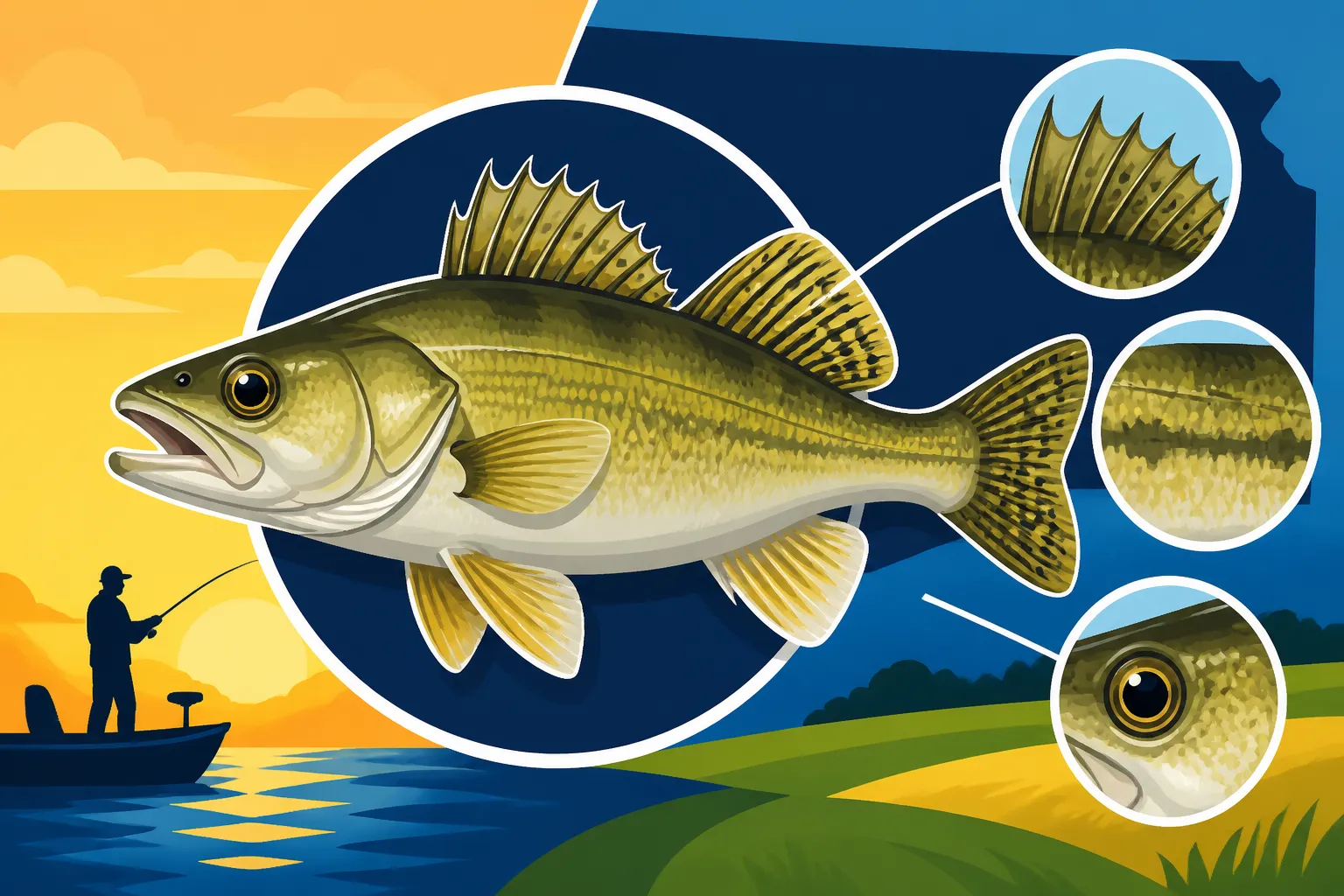
If there's one single feature that acts as the primary "tell" for a saugeye, it's the pattern on its first dorsal fin (the spiny one located towards the head). This is where the genetic blend becomes most apparent and reliably distinct.
- Walleye: A pure walleye will have a singular, distinct, dark blotch at the very rear base of its first dorsal fin. The rest of the fin will typically be clear, or perhaps show very faint, diffuse striations. This blotch is like a clear thumbprint.
- Sauger: In contrast, a sauger's first dorsal fin is covered with clear, distinct rows of round, dark spots, much like a perfectly polka-dotted fabric. There is no large, singular blotch; instead, you'll see consistent, orderly spotting across the entire fin.
- Saugeye: This is your key! A saugeye's first dorsal fin will exhibit dark, wavy, irregular, "worm-track" like streaks or blotches. It's not the single, distinct blotch of a walleye, nor is it the neat rows of spots of a sauger. It looks like someone scribbled on the fin with a marker. This vermiculated pattern is highly characteristic of a saugeye and is usually the most reliable way to differentiate it from both parent species. Take the time to gently spread the fin to get a clear view.
Feeling for Scales: Gill Plate and Cheek Texture
Another incredibly reliable and tactile identifier lies in the scaling (or lack thereof) on the fish's cheeks and gill plates (operculum). This is a feature you can feel with your fingers.
- Walleye: When you gently run your finger over the cheeks and gill plates of a walleye, they will feel predominantly smooth. There might be very few, if any, scales present in these areas.
- Sauger: A sauger is distinguished by having extensive, rough patches of scales on its cheeks and often on its gill plates as well. If you gently stroke against the grain, you'll feel a distinct sandpaper-like texture due to these embedded scales.
- Saugeye: The saugeye typically falls in between. While they might have some scattered scales on their cheeks, making them feel slightly rougher than a walleye, they will not exhibit the extensive and pronounced scaling that is characteristic of a purebred sauger. Many saugeye will have mostly smooth cheeks and gill plates, leaning more towards their walleye parent in this specific trait. If it feels notably rough and extensively scaled, it's very likely a sauger. If it's mostly smooth, it's either a walleye or a saugeye.
The Tail Fin's Story: No Bright White Signature
The tail fin, specifically its lower lobe, provides another important, though sometimes less definitive, piece of the identification puzzle.
- Walleye: One of the most classic and easily recognizable features of a walleye is the prominent, bright white tip on the lower lobe of its tail fin. It's often referred to as the "white sock" and is a strong indicator of a walleye.
- Sauger: The tail fin of a sauger will not have a distinct white tip on the lower lobe. It will typically be mottled, spotted, or uniformly dark, sometimes with faint bands, but never that crisp white patch.
- Saugeye: This is where it can be a bit ambiguous, but still helpful. Saugeye generally lack the distinct, bright white tip that defines a walleye's tail. They might, however, have a very faint, almost translucent or milky white edge, or a slight lightening on the lower lobe. Crucially, it will never be as stark, opaque, and obvious as the white tip on a purebred walleye. If you see a bold white tip, you can confidently rule out a saugeye.
Distinguishing Saugeye from Walleye and Sauger
Now that we've covered the individual characteristics, let's put it all together and specifically address how to tell these similar fish apart in a side-by-side comparison. This is where the real nuance comes into play.
Walleye vs. Saugeye: Decoding the Differences
The confusion between walleye and saugeye is perhaps the most common, especially in Kansas waters where both species are prevalent. Remember that distinct regulations apply to each. For example, knowing the difference is crucial given Kansas Walleye Length Limits and Kansas Walleye Daily Limit of Two Fish.
- Dorsal Fin Pattern: This is your absolute first line of defense. The walleye has that distinct, dark blotch at the back of its first dorsal fin, with the rest of the fin mostly clear. The saugeye, however, will never have this singular blotch. Instead, it will display irregular, wavy, "worm-track" like streaks or blotches across the entire fin. This contrast is usually unmistakable once you know what to look for.
- Cheek/Gill Plate Texture: Run your finger gently. A walleye's cheeks will be smooth. A saugeye's cheeks will typically be mostly smooth too, perhaps with very sparse, small scales, but they will never be as extensively rough and scaled as a sauger. If it feels truly smooth, it's likely a walleye or a saugeye.
- Tail Fin Tip: The presence or absence of a bright white tip on the lower lobe of the tail fin is a major differentiator. If it has a clear, bright white tip, it's a walleye. If it lacks this prominent white tip, it's either a sauger or a saugeye. A saugeye might have a very faint, almost translucent lightening, but it will never be as distinct as a walleye's "white sock."
- Body Markings: Walleye tend to have a more uniform body color, with any lateral bars or mottling being very subtle or even absent. Saugeye, conversely, generally have more defined, dark, saddle-like blotches or bars along their sides that stand out more against their background coloration. These markings are more pronounced than on a walleye, though perhaps not as stark as on a sauger.
Sauger vs. Saugeye: Spotting the Finer Details
Distinguishing a saugeye from a sauger can be even trickier because they share more common genetic traits. This often requires a closer look at the key indicators.
- Dorsal Fin Pattern: Again, this is paramount. A purebred sauger will have neat, distinct rows of round, dark spots covering its entire first dorsal fin. Think of a perfect polka-dot pattern. The saugeye, while it might have some dark markings, will never have these neat rows of spots. Instead, it will have those irregular, wavy, "worm-track" like blotches or streaks. This is the most crucial visual cue.
- Cheek/Gill Plate Texture: This is a vital tactile difference. A sauger will have significantly scaled and rough cheeks and gill plates. You can distinctly feel the roughness when you run your finger against the grain. A saugeye will be much smoother in comparison, with only sparse, if any, scaling on its cheeks, and smooth gill plates. If it feels very rough and scaled, it's a sauger. If it's mostly smooth, it's a saugeye (or a walleye).
- Tail Fin Tip: This is a point of similarity: neither a sauger nor a saugeye will have the prominent, bright white tip on the lower lobe of the tail fin that defines a walleye. So, if the white tip is absent, you've narrowed your choice down to sauger or saugeye, and then need to rely on the dorsal fin and cheek texture.
- Body Markings: Sauger often have very pronounced and distinct saddle-like blotches or bars on their sides, often appearing quite bold against their lighter background. While saugeye also have these lateral markings, they can sometimes be a bit less distinct or more broken than on a sauger, but still more pronounced than on a walleye.
Practical Strategies for On-the-Water ID and Regulatory Compliance
Being able to identify your catch quickly and accurately is a crucial skill for any responsible Kansas angler. Not only does it help you stay within legal limits, but it also aids in conservation efforts. Let's look at some practical ways to apply this knowledge on the water.
Using Habitat and Behavior as Clues
While not definitive, understanding the typical preferences of each species can give you a strong initial hint about what you've caught. Walleye generally prefer clearer, cooler waters with distinct structure, and are often found in deeper sections of large reservoirs like Milford Lake Fishing Guide or Cheney Reservoir Fishing Guide. They tend to be more light-sensitive, often preferring dawn, dusk, or deeper water during the day. Consider that different Kansas Walleye Fishing Techniques might apply depending on the time of day and water clarity.
Sauger, on the other hand, are considerably more tolerant of turbid (cloudy), warmer waters and are frequently found in river systems or the murkier, shallower, wind-blown areas of reservoirs. They are less bothered by bright light. Saugeye, being the adaptable hybrid, often bridge this gap. They can thrive in a wider range of water clarities and temperatures than purebred walleye and are often more aggressive feeders. You'll find excellent saugeye fishing in places like Tuttle Creek Lake Fishing Guide. If you're consistently catching fish in somewhat murky, current-laden areas, a sauger or saugeye is a more likely candidate than a walleye. Conversely, if you're pulling fish from deep, clear, open water on a bright day, a walleye is a strong possibility. Many of the Best Fishing Lakes in Kansas are known for specific species, so knowing a lake's reputation can also help.
Field Identification Techniques: From Glance to Grasp
When a fish is in the net, time is of the essence, especially if you plan to release it. Here’s a quick workflow for identification:
- The Initial Tail Glance: As soon as the fish is secured, look at the lower lobe of its tail fin. Does it have a bright, distinct white tip? If yes, it's a walleye. If no, you've narrowed it down to either a sauger or a saugeye. This is often the fastest way to eliminate one option. To aid this initial visual, a good pair of polarized sunglasses, available on Amazon, can significantly improve your ability to spot details even before the fish is out of the water.
- Dorsal Fin Inspection: Gently spread the first dorsal fin. This is usually the most reliable differentiator between sauger and saugeye. Look closely for:
- Neat rows of distinct spots (sauger).
- Irregular, wavy, "worm-track" like streaks or blotches (saugeye).
- The Cheek Test (Tactile): Carefully and gently run your finger against the scales on the fish's cheek and gill plate. Is it very rough and extensively scaled (sauger)? Or mostly smooth, perhaps with only a few scattered scales (saugeye)? This hands-on check often confirms your visual assessment.
- Overall Impression and Markings: Consider the body shape and the distinctness of the lateral blotches. Are they very pronounced and tiger-like (more sauger-like)? Or more defined than a walleye, but possibly a bit more broken (saugeye)?
Remember to handle the fish minimally and with wet hands to protect its slime coat, especially if you intend to release it. Having a good, easy-to-read fish ruler or measuring board, also readily available on Amazon, is crucial for quickly checking length limits without prolonged handling.
Photography for Later Review: Your Angling Journal
When in doubt, and especially if you plan on catch-and-release, take a few clear photographs of your catch before releasing it. Get close-up shots of the key identification features: the first dorsal fin (spread open), the cheek/gill plate area, and the tail fin. You can review these photos later, perhaps with a detailed fish identification guide or book found on Amazon, to confirm your identification without any stress on the fish. This practice is not only excellent for learning but also provides a record for your personal angling journal. It's a fantastic way to sharpen your identification skills over time and ensure you're always making the correct call.
The Importance of Correct Identification: Regulations and Conservation
Beyond the personal challenge of identifying your catch, there are critical, practical reasons why understanding the differences between saugeye, walleye, and sauger is paramount. It boils down to legal compliance and responsible angling.
Why Accurate ID is Crucial: Staying Legal and Sustainable
The Kansas Department of Wildlife, Parks and Tourism (KDWPT) meticulously develops and enforces specific size and creel limits for various fish species, and these regulations can, and often do, differ between walleye, sauger, and saugeye. For instance, the minimum length for walleye might be 21 inches, with a daily creel limit of two, while saugeye or sauger might have entirely different guidelines. Reviewing the current Kansas Fishing Regulations Explained before each trip is absolutely essential.
Imagine the frustration of receiving a citation for keeping an undersized fish or exceeding your daily limit, simply because you misidentified a walleye as a saugeye. These regulations aren't arbitrary; they are scientifically formulated to manage fish populations, ensure fish can reach reproductive maturity, and maintain healthy, sustainable fisheries for everyone to enjoy, now and in the future. Your ability to correctly identify your catch directly contributes to these vital conservation efforts and ensures you're upholding your responsibilities as a licensed angler. The foundation of responsible angling starts with acquiring your Kansas Fishing License Guide.
Penalties for Misidentification: Not Worth the Risk
Making an honest mistake in identification can still lead to serious consequences. Violating fishing regulations, whether intentional or not, can result in a range of penalties. These can include warnings, significant fines that quickly negate the joy of your catch, the confiscation of your fishing gear, or even the suspension of your fishing privileges. It's a costly lesson to learn and one that is entirely avoidable with a bit of knowledge and careful observation.
Consider a scenario where you unknowingly keep three 18-inch walleye, believing them to be legal saugeye. If the walleye limit is two and the minimum length is 21 inches, you've just committed two separate violations. The financial and personal repercussions can be substantial. If you are ever truly unsure about a fish's identity, especially concerning length or creel limits, the safest and most responsible action is always to release it unharmed. For broader context on the seriousness of non-compliance, you can refer to information such as Fishing Without a License Penalties in Kansas, which underscores the gravity of violating fishing laws and the importance of knowing and adhering to the rules for all species. For information on state records, you can always check the Kansas State Record Fish Guide.
Comparison Table: Walleye, Sauger, and Saugeye
To help summarize these critical differences, here's a quick reference table. Keep this in mind when you're on the water!
| Feature | Walleye | Sauger | Saugeye (Hybrid) |
|---|---|---|---|
| First Dorsal Fin | Single, prominent dark blotch at rear base | Distinct rows of round, dark spots | Irregular, wavy, "worm-track" streaks/blotches |
| Cheeks/Gill Plates | Mostly smooth, few to no scales | Heavily scaled and rough to the touch | Mostly smooth, some scattered scales, less rough |
| Tail Fin Tip | Distinct white tip on lower lobe | No white tip, often mottled | No prominent white tip (may have faint lightening) |
| Body Markings | Subtle, indistinct bars or mottling | Pronounced, distinct saddle-like blotches | More defined saddle-like blotches than walleye, but less distinct than sauger |
| Overall Body Shape | More robust, stockier body | More slender, elongated body | Intermediate; often more robust than sauger, but sleeker than walleye |
| Habitat Preference | Clearer, cooler, deeper water, light-sensitive | Turbid, warmer, often shallower water, current | Adaptable, tolerates varying clarity/temp |
Disclaimer
This article is for general informational purposes only and does not constitute professional advice. Laws, prices and regulations vary by location and change over time. Consult a qualified professional for guidance on your specific situation.