Kansas White Crappie Identification
There's nothing quite like the excitement of feeling that tell-tale tap on your line, setting the hook, and pulling in a beautiful crappie. But for many Kansas anglers, the moment of truth often comes with a bit of a pause: "Is this a white crappie or a black crappie?" This guide is here to clear up that confusion, diving deep into the distinct features that set white crappie apart, helping you identify your catch with confidence and adhere to specific regulations.
The Crappie Conundrum: Why Identification Matters
We've all been there, standing by the water's edge, holding up a fish and squinting, trying to figure out exactly what species it is. It might seem like a small detail, but in the world of Kansas fishing, knowing your crappie is more important than you might think. It's not just about bragging rights; it's about smart angling and respecting the rules.
The Frustration of Misidentification
Imagine you've had a fantastic day on the water, reeling in crappie left and right. You get home, excited to clean your catch, only to realize you've been misidentifying them all along. Perhaps you thought they were all white crappie, but half of them turned out to be black crappie, each with their own unique characteristics. This common mix-up can lead to a lot of frustration, especially if you're trying to target a specific species or if there are subtle differences in regulations for each type. It's easy to dismiss crappie as "just crappie," but for dedicated panfish enthusiasts, the nuances matter. The subtle differences can influence where you fish, what bait you use, and even how you approach Kansas Crappie Fishing Guide.
Anglers often get caught up in the thrill of the bite, and rightfully so! But taking that extra moment to properly identify your catch on the spot can save you headaches later. Maybe you're convinced that certain spots only hold one type of crappie, but a closer look at your catches reveals a different story. This kind of misidentification means you might be missing out on prime fishing opportunities or failing to understand the full potential of a particular fishing hole. It’s a common challenge, but one that’s easily overcome with a little knowledge.
Why Accurate ID Boosts Your Fishing Success
Knowing precisely what you've caught, especially distinguishing a white crappie from its black crappie cousin, can dramatically improve your future fishing trips. Each species has slightly different preferences when it comes to habitat, forage, and even how they react to different baits and lures. By correctly identifying the crappie you're catching, you start to build a mental map of where certain species thrive, allowing you to refine your techniques and spend less time guessing.
For example, if you consistently catch white crappie in brush piles near a creek channel, you'll know to seek out similar structures on other lakes. If you're struggling in a particular spot, and you realize you're actually catching a species that prefers different conditions, you can adjust your approach rather than abandoning a potentially fruitful area. Furthermore, understanding the specific species helps you stay within Kansas Crappie Length and Bag Limits, which can sometimes vary slightly by species or location. Accurate identification truly is a cornerstone of becoming a more effective and responsible angler.
Key Distinguishing Features of Kansas White Crappie
When you're out on the lakes and reservoirs of Kansas, targeting crappie, you'll quickly realize that these panfish are some of the most sought-after game fish. But to truly master crappie fishing, you need to understand the individual characteristics of each species. The white crappie has several key features that make it distinct, and once you know what to look for, you'll be identifying them like a pro.
Dorsal Fin Spines: The Ultimate Giveaway
Without a doubt, the most reliable way to differentiate a white crappie from a black crappie is by counting the spines in its dorsal fin. The dorsal fin is the fin located on the fish's back. For white crappie, you will consistently find six dorsal fin spines. This is a hard and fast rule, a biological blueprint that rarely deviates. Once you've counted six spines, you can be almost certain you're holding a white crappie.
This counting method is incredibly useful, especially when other features might be less obvious due to water conditions, age of the fish, or even genetic variations. It's like a secret handshake that only white crappie know. So, the next time you reel one in, gently spread that dorsal fin and count those pointy spines. It’s a trick that will serve you well in any Kansas Fishing Seasons Guide scenario.
Coloration and Pattern: More Than Just Spots
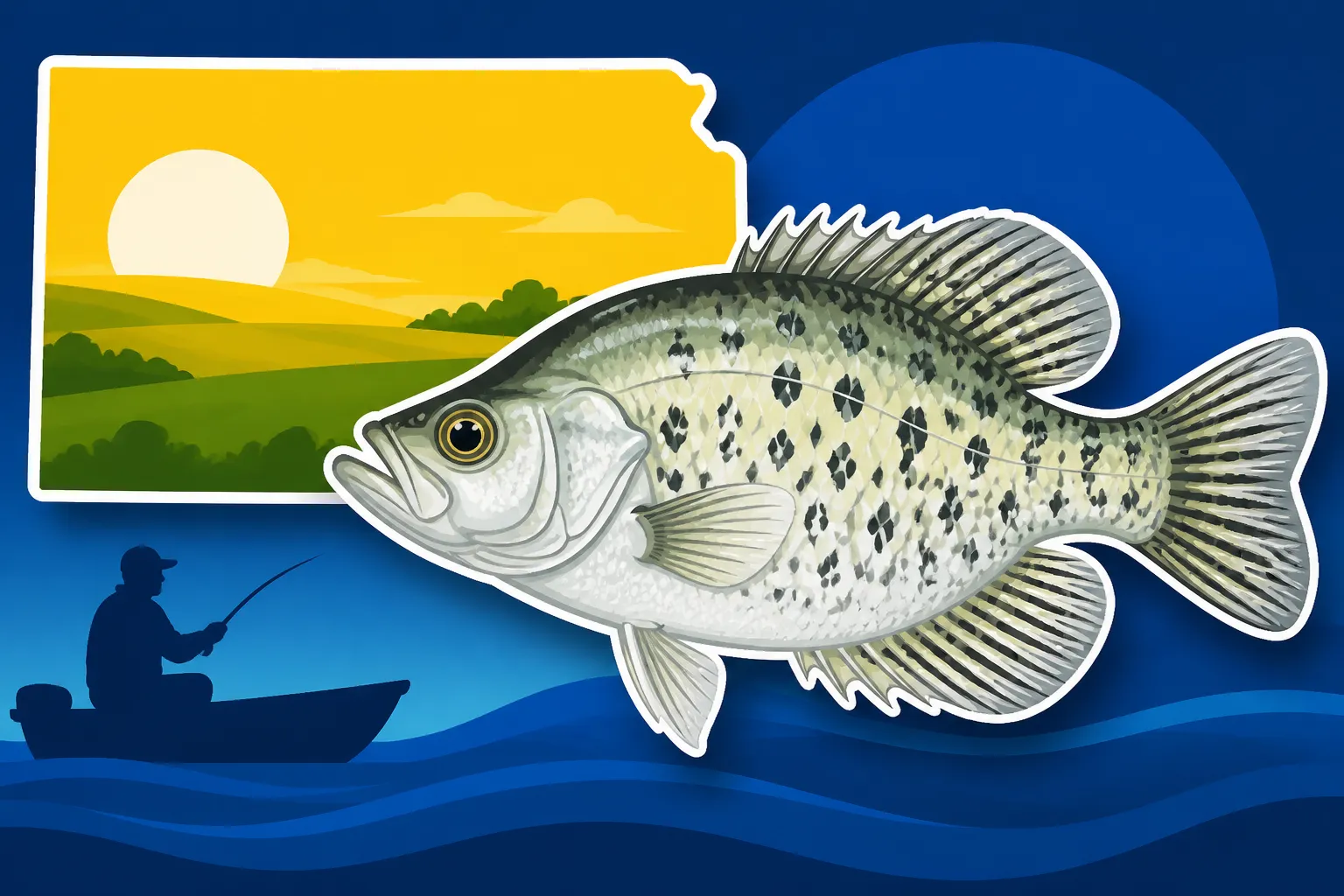
While the fin spines are the definitive characteristic, the coloration and pattern of a white crappie offer strong visual clues. White crappie generally have a lighter, silvery body color, often with a greenish or yellowish tint, especially on their backs. Their most defining pattern is the presence of 7 to 9 vertical bars (sometimes described as faint, dark bands) running down their sides. These bars are usually quite distinct, though they can fade or intensify depending on the fish's mood, water clarity, and habitat.
Unlike their heavily speckled counterparts, white crappie usually have fewer, less distinct spots on their bodies. You might see some faint mottling or speckling, especially on the fins, but it won't be as dense or widespread as what you'd observe on a black crappie. Think of it as a subtle pinstripe suit compared to a polka-dotted dress. Observing these patterns can be a quick initial identifier, especially if you have a good pair of polarized sunglasses, which you can easily find on Amazon, to cut through glare and see the fish clearly.
Body Shape and Mouth Size
Beyond the fins and patterns, the overall body shape and the size of the mouth also provide helpful identification cues for white crappie. White crappie tend to have a more elongated, slender body shape compared to the often rounder, deeper-bodied black crappie. If you look at the profile of the fish from head to tail, a white crappie will often appear longer in proportion to its depth.
When it comes to the mouth, white crappie typically have a larger mouth that extends further back on the head. If you imagine a vertical line drawn from the front of the eye down, a white crappie's mouth will often extend past this line, sometimes significantly so. This larger mouth is adapted for feeding on small baitfish, which often form a significant part of their diet. This distinction is subtle but noticeable once you've had a chance to compare a few of each species side-by-side.
White Crappie vs. Black Crappie: A Head-to-Head Comparison
For many anglers, distinguishing between white crappie and black crappie is the ultimate identification challenge. They look so similar at first glance, but a closer examination reveals clear differences that are crucial for accurate identification. Understanding these distinctions will not only boost your confidence but also make you a more informed angler in Kansas waters. We've covered the basics of Kansas White Crappie Identification, now let's put them side-by-side with their black crappie cousins.
Counting Spines: The Definitive Method
As we discussed, the number of dorsal fin spines is the most definitive way to tell these two popular panfish apart. A white crappie will always have six dorsal fin spines. No more, no less. It's their biological fingerprint. Gently feel the spines on the dorsal fin; they are usually stiff and easy to count.
In stark contrast, a black crappie will always possess seven or eight dorsal fin spines. This is the single most reliable characteristic. If you catch a crappie and count six spines, it's a white crappie. If you count seven or eight, it's a black crappie. This rule holds true regardless of the fish's size, age, or the lake it came from. This crucial difference is what forms the basis of Kansas Black Crappie Identification.
Here's a quick comparison table to keep handy:
| Feature | White Crappie | Black Crappie |
|---|---|---|
| Dorsal Fin Spines | 6 (always) | 7-8 (always) |
| Body Pattern | 7-9 distinct vertical bars | Irregular, dark speckles |
| Coloration | Silvery, lighter overall | Darker, bronze, or olive |
| Body Shape | More elongated, slender | Deeper-bodied, rounder |
| Mouth Size | Larger, extends past eye | Smaller, typically ends before eye |
| Head Profile | Dish-shaped curve | Gentle curve |
Spotting the Differences in Body and Head
Beyond the spines, there are other visual cues that, when combined, paint a clearer picture. White crappie typically have a lighter, more silvery body with those distinct vertical bars. Their head profile often has a slight "dish" or concave curve just above the eyes, leading up to the dorsal fin. Their scales can appear smoother and more uniform.
Black crappie, on the other hand, usually exhibit a darker, often brassy or olive-green coloration, liberally covered with irregular dark speckles and spots that seem randomly scattered across their body and fins, not in distinct bars. Their head profile tends to have a more gradual, convex curve. Their body is generally rounder and deeper, giving them a more robust appearance. These subtle differences in appearance, once you train your eye, become quite apparent and help reinforce your spine count. You can often find detailed illustrations of these differences in reputable fishing guides or books, many of which are available for purchase on Amazon.
Habitat Clues for Identification
While not a direct identification feature of the fish itself, understanding the preferred habitat of each crappie species can provide strong contextual clues. White crappie tend to be more tolerant of turbid (murky) water and often prefer areas with less vegetation. They are frequently found in larger impoundments, rivers, and the open waters of reservoirs, often associated with deeper creek channels, standing timber, or brush piles in slightly deeper water. They might move into shallower areas during their spawning season but often retreat to deeper, more open water after.
Black crappie, however, generally prefer clearer water and more abundant aquatic vegetation, submerged brush, or other complex structures. They are often found in smaller lakes, ponds, and vegetated backwaters of larger reservoirs. Their preference for structure often means they're found closer to shorelines or in shallower, more sheltered coves. Knowing these habitat preferences can sometimes give you a good "pre-ID" guess before you even pull the fish out of the water. This knowledge is invaluable when exploring various Kansas Community Lake Fishing Rules.
White Crappie Habitat and Behavior in Kansas Waters
Understanding where and how white crappie live and behave is just as important as knowing how to identify them. These factors directly influence when and where you'll find them biting. Kansas offers a fantastic environment for white crappie, with numerous lakes and reservoirs supporting healthy populations. Knowing their patterns throughout the year can make your fishing trips far more productive.
Preferred Structures and Depths
White crappie are masters of structure. They love to congregate around anything that provides cover, shade, or a break in the current, especially in the larger, often more turbid, reservoirs across Kansas. Think about areas with standing timber, submerged brush piles, old roadbeds, rock piles, or bridge pilings. These structures provide ambush points for feeding and protection from predators. They tend to relate strongly to deeper creek channels and drop-offs, especially in the main lake body.
While they can be found in a range of depths, white crappie often prefer slightly deeper water than black crappie, especially during the hotter summer months or colder winter periods. You might find them suspended at various depths over open water, especially when chasing schools of baitfish. During the pre-spawn and post-spawn periods, they will move shallower but still often relate to a nearby deeper channel or drop-off. Understanding how to interpret your fish finder and locate these submerged structures is key to consistent success.
Spawning Habits and Timing
The spawning season is a particularly exciting time for crappie anglers, as the fish move into shallower water and become more accessible. For white crappie in Kansas, spawning typically occurs in the spring when water temperatures climb into the 60-68°F range, often from April through June, depending on the specific lake and spring weather patterns. They seek out shallow, protected coves or bays with some form of cover like brush, roots, or even riprap, usually in depths of 2 to 8 feet.
During this time, male white crappie will develop darker coloration, sometimes almost black, as they guard nests. They fan out small depressions on the bottom where females will lay their eggs. This is a prime time for anglers, as the fish are aggressive and concentrated. Understanding When Crappie Move Shallow in Kansas during this crucial period can lead to some incredible fishing action, but remember to be mindful of spawning fish and practice responsible angling.
Seasonal Movements and Feeding Patterns
White crappie exhibit distinct seasonal movements that are largely dictated by water temperature and the availability of food.
In spring (pre-spawn and spawn), they move from deeper wintering holes into shallower, protected areas to spawn. They'll be actively feeding on minnows and insects as they stage for the spawn.
In summer, as water temperatures rise, they typically retreat to deeper, cooler water, often suspending over brush piles, creek channels, or thermoclines where baitfish are abundant. Night fishing can be particularly productive during the summer as they come shallower to feed under cover of darkness.
Fall sees them becoming more active again as water temperatures cool, and they move back towards shallower main lake structures, aggressively feeding to build up fat reserves for winter. This is a fantastic time for Kansas Fall Crappie Fishing Tips.
In winter, they generally move to deeper, more stable water, often suspending in large schools over deeper channels, brush piles, or main lake points. They become less active but can still be caught by vertical jigging or slow trolling with small baits.
Understanding these seasonal shifts allows you to adjust your approach, whether you're using live minnows, small jigs, or even crankbaits designed for Kansas crappie. Always be sure to consult the local fishing reports and condition updates for the specific body of water you're planning to visit.
Enhancing Your Crappie Identification Skills
Becoming proficient at distinguishing between white and black crappie, or any fish species for that matter, takes practice and a keen eye. It’s a skill that will develop over time, but there are definitely ways to accelerate your learning and ensure you’re confident in your identification. It's about being observant and knowing what specific details to focus on.
Observing Subtle Nuances
While counting dorsal fin spines is the most definitive method, pay attention to the subtle nuances in coloration and body shape. For instance, the vertical bars on a white crappie aren't always super dark; sometimes they're quite faint. Similarly, the speckling on a black crappie can vary in intensity. Look at the overall impression of the fish: is it more streamlined (likely white crappie) or more compact and round (likely black crappie)?
Consider the head profile. The "dish" or concave curve on the white crappie's head, just above the eyes, is a subtle but consistent feature. Compare this to the more uniform, convex curve of a black crappie's head. These details, when taken together, become much easier to spot after you've examined a few of each species. Having a small, inexpensive field guide that you can take with you on your fishing trips can be incredibly helpful; many excellent options are available on Amazon.
Practical Tips for Anglers
To truly hone your identification skills, nothing beats hands-on experience.
- Catch and Compare: The best way to learn is to catch both species and hold them side-by-side. If possible, go with an experienced crappie angler who can walk you through the differences.
- Photography: Take clear photos of your catches, especially focusing on the dorsal fin, body pattern, and head profile. You can then review these photos later at home, perhaps comparing them to images in a reliable Kansas Fish Species Guide or online resources.
- Practice Counting Spines: Don't just look; gently run your finger over the dorsal fin to feel and count the spines. This tactile experience can be very reinforcing.
- Check Local Regulations: Always be aware of any specific length or creel limits that might differentiate between white and black crappie in your chosen fishing spot. This responsibility ensures you're fishing legally and sustainably.
Resources for Further Learning
There are many great resources available to help you become a crappie identification expert. Beyond practical experience, consider:
- Kansas Department of Wildlife, Parks and Tourism (KDWPT) Publications: KDWPT often publishes detailed fishing guides and species identification charts specific to Kansas waters. These are invaluable for hyper-local information.
- Online Fishing Forums and Groups: Join Kansas fishing communities online. Many experienced anglers are happy to share their knowledge and help identify fish from photos.
- Field Guides: Invest in a good freshwater fish identification guide. While not specific to Kansas, they often have excellent illustrations and descriptions that can supplement local information. Look for one with clear images of crappie species. Many reputable outdoor publishers sell these books, and they are readily available through retailers like Amazon.
- Fishing Shows and Videos: Watch educational fishing content that specifically covers crappie fishing and identification. Visual aids can be very effective in learning these distinctions.
By combining these methods, you'll not only become adept at identifying white crappie but also gain a deeper appreciation for the rich diversity of fish species found in our beautiful Kansas waters.
Disclaimer
This article is for general informational purposes only and does not constitute professional advice. Laws, prices and regulations vary by location and change over time. Consult a qualified professional for guidance on your specific situation.