Kansas Crappie Fishing Guide
Many Kansas anglers face the perennial challenge of consistently locating and catching crappie, those famously finicky but incredibly rewarding panfish. From understanding their seasonal movements to picking the perfect lure in ever-changing conditions, it can feel like a puzzle. This comprehensive guide is here to demystify crappie fishing in the Sunflower State, offering proven strategies, essential gear advice, and a deep dive into regulations so you can fill your cooler with these delicious fish.
Understanding Kansas Crappie: Species, Habits, and Identification
Crappie hold a special place in the hearts of Kansas anglers, and for good reason! They're abundant, put up a fun fight on light tackle, and are absolutely delicious on the dinner plate. But to truly master crappie fishing, you need to understand the fish themselves – their distinct characteristics, behavior patterns, and what makes them tick in our diverse Kansas waters.
White Crappie vs. Black Crappie: Key Differences
Kansas is home to both white crappie and black crappie, and while they share many similarities, knowing the subtle differences can help you target them more effectively. They often coexist in the same lakes and rivers, but they tend to prefer slightly different environments, which impacts where you'll find them.
White crappie, often seen as the more elongated of the two, typically have distinct vertical bars or stripes on their sides, though these can sometimes be faint. A key identifier is the number of dorsal fin spines: white crappie usually have 5 or 6. They generally prefer more turbid (cloudy) waters and are often found in larger reservoirs and rivers with less dense vegetation. These fish tend to school more readily in open water and around larger, more spread-out cover. If you're looking for Kansas White Crappie Identification, keep an eye out for those subtle vertical bands and the lower spine count.
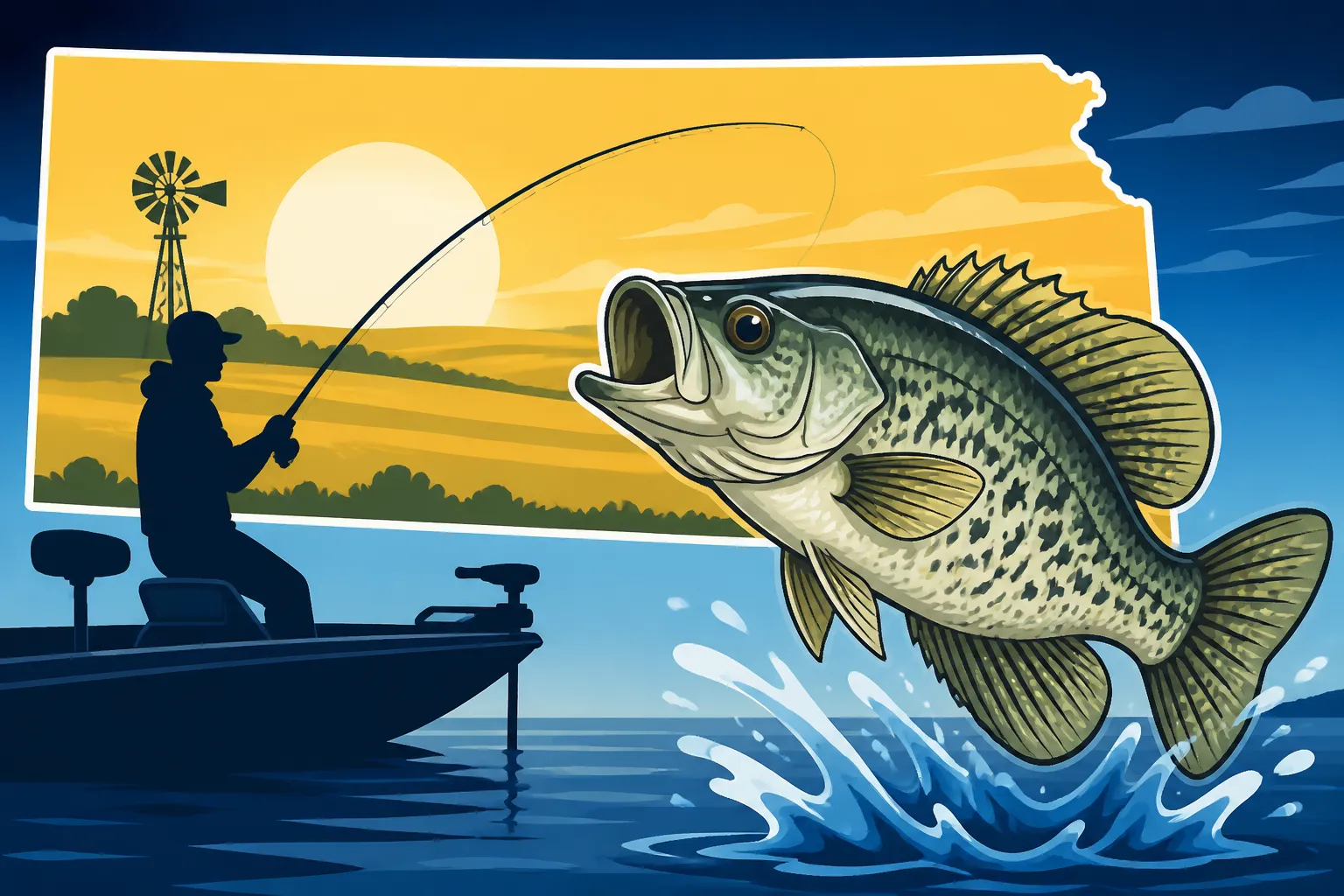
Black crappie, on the other hand, tend to be more "speckled" with irregular dark spots scattered across their sides, giving them a salt-and-pepper appearance. They boast more dorsal fin spines, usually 7 or 8, which is a definitive way to tell them apart from their white cousins. Black crappie are typically found in clearer waters with more abundant submerged vegetation, brush, or timber. They're often associated with denser cover and prefer quieter, less current-driven environments like back coves or ponds. Understanding Kansas Black Crappie Identification is crucial because their preference for clearer water and thicker cover might mean adjusting your approach.
Crappie Behavior and Seasonal Patterns
Crappie are masters of adaptation, and their behavior changes significantly throughout the year, primarily driven by water temperature and their reproductive cycle. Understanding these seasonal patterns is the biggest key to consistent success.
In the spring, as water temperatures begin to rise (typically into the 50s and 60s Fahrenheit), crappie move from deeper winter haunts into shallower waters to spawn. This is arguably the most anticipated time for crappie anglers, as the fish become more concentrated and aggressive. The actual timing of When Does Crappie Spawn Start? can vary year to year, but generally, late April through May is prime time. They'll seek out protected areas like shallow coves, bays, and areas with submerged brush, reeds, or fallen trees to lay their eggs. During this period, they are often very catchable near the banks.
As summer progresses and water temperatures soar, crappie typically retreat to deeper, cooler waters, often suspending over structure or relating to the thermocline (a layer in the water where the temperature changes rapidly). They'll still seek cover, but it will be deeper brush piles, submerged timber, bridge pilings, or channel edges. Fall sees crappie making another move, often returning to shallower, albeit still structured, areas as water temperatures cool. They're actively feeding to fatten up for winter, making them a good target, especially around baitfish schools. In winter, crappie congregate in deeper holes, channels, and around significant submerged structure, often moving slowly and requiring a very subtle presentation.
Why Kansas Crappie Are a Favorite Target
The popularity of crappie among Kansas anglers isn't just a coincidence; it's a combination of factors that make them an ideal quarry for everyone from seasoned veterans to families with young children. They're a truly accessible and rewarding fish.
Firstly, their sheer abundance in many Kansas waterways means that even a novice angler has a good chance of catching fish. Reservoirs like Milford, Cheney, and Tuttle Creek are renowned for their crappie populations, often producing impressive numbers of fish. This provides a fantastic opportunity for a high-volume catch, making for an exciting day on the water.
Secondly, crappie are celebrated for their delicate, flaky white meat, making them one of the finest eating freshwater fish you can catch. A fresh crappie fillet, lightly breaded and pan-fried, is a true culinary delight, and many anglers rate them above almost any other species for table fare. This promise of a delicious meal is a powerful motivator for many to hit the lakes.
Lastly, crappie provide an excellent challenge on light tackle. While they might not be the hardest fighting fish in the lake, their subtle bites and often structure-oriented nature require finesse and skill, especially during non-spawning periods. They offer a rewarding experience whether you're jigging a brush pile, spider rigging open water, or ice fishing a deep hole, keeping anglers engaged and coming back for more.
Where to Find Crappie: Top Kansas Hotspots and Habitat
You can have the best gear and techniques in the world, but if you're not fishing where the crappie are, you're just practicing casting. Kansas offers a fantastic array of fishing opportunities, from vast reservoirs to intimate community ponds. Knowing where crappie tend to congregate is the first step toward a successful outing.
Major Reservoirs and State Lakes Known for Crappie
Kansas boasts several large reservoirs that are legendary for their crappie fishing, attracting anglers from across the state and beyond. These expansive bodies of water offer diverse habitats and consistent populations, making them prime destinations.
Milford Lake Crappie Fishing is practically a rite of passage for crappie anglers. As the largest lake in Kansas, Milford offers countless coves, points, and submerged timber fields that hold crappie. Anglers often focus on the many creek arms and shallow flats in spring, transitioning to deeper channel edges and brush piles in summer and winter. Locals will tell you that finding the main river channel and its associated structure is key, especially during colder months. Milford is a massive lake, so breaking it down into smaller, manageable sections based on current conditions is a smart approach.
Cheney Reservoir is another consistent crappie producer, particularly known for its strong white crappie population. While known for walleye, Cheney's submerged timber, old creek channels, and riprap banks can hold excellent numbers of crappie. During the spawn, the numerous shallow coves warm up quickly, drawing crappie in. Anglers often find success around the flooded timber and brush piles that line the old riverbeds. Pay close attention to wind-blown points, as these can concentrate baitfish and, consequently, crappie. Cheney Reservoir Crappie and Catfish Spots also offer great mixed bag opportunities.
Other notable lakes include Tuttle Creek Lake, which offers fantastic crappie fishing, particularly in its upstream timbered areas and numerous coves. El Dorado Lake, Wilson Lake, and Perry Lake also have strong crappie fisheries, often with different peak seasons or preferred depths depending on the year. Even smaller state lakes like Pomona Lake or Melvern Lake can be crappie goldmines, often with less fishing pressure. For anglers near the state capital, Hillsdale Lake Crappie Fishing Spots are a popular choice, known for good numbers of both black and white crappie.
Deciphering Crappie Structure: Brush Piles, Docks, and Timber
Crappie are synonymous with structure. They are ambush predators that love to hide in or around cover, using it to escape predators and ambush unsuspecting baitfish. Learning to "read" the water and identify these key structural elements is paramount.
Brush piles, whether natural or man-made, are absolute crappie magnets. These can be sunken Christmas trees, cedar trees, or piles of logs deliberately placed by anglers or wildlife agencies. Crappie will suspend within and around these piles, often at specific depths depending on the time of year and water temperature. Using your electronics (a good fish finder is invaluable here) to locate these submerged brush piles is a game-changer. Once found, precise jigging or minnow presentations directly into or just above the brush can be incredibly effective.
Docks and marinas are another prime crappie habitat, especially in lakes with limited natural cover. The pilings, crossbeams, and even the boats themselves offer shade and protection, attracting baitfish and then crappie. Many docks will have submerged brush or tires placed underneath them by dock owners, creating even more attractive cover. Night fishing around lit docks can be phenomenal, as the lights attract plankton and baitfish, which, in turn, draw in crappie.
Standing timber (flooded trees that remain upright) and fallen logs along creek channels or old riverbeds are also classic crappie haunts. Crappie will relate to the vertical structure of the trees, often suspending at different depths among the branches. In areas like the upper reaches of Milford Lake or Tuttle Creek, vast fields of standing timber can hold immense schools of crappie. This kind of cover often requires a more snag-resistant approach, like vertical jigging with a sensitive rod.
Utilizing Community Ponds and River Backwaters
While the big reservoirs get a lot of attention, don't overlook the smaller, more accessible options for crappie fishing in Kansas. Community ponds and river backwaters can offer fantastic, often overlooked, opportunities.
Many Kansas towns have community fishing lakes or urban ponds that are regularly stocked and managed by the Kansas Department of Wildlife, Parks and Tourism (KDWPT). These smaller bodies of water often contain surprisingly robust crappie populations, especially black crappie, which thrive in clearer, more vegetated environments. These ponds are typically easier to access for bank anglers or those with kayaks and often have established fishing piers. While they might not yield trophy-sized fish as consistently as the reservoirs, they can offer fast action and are perfect for a quick trip or introducing kids to fishing. Always check local regulations, as some community lakes have specific rules regarding bait, tackle, or limits.
River backwaters and oxbows, particularly along the Kansas River, Marais des Cygnes, or Neosho River systems, can also hold excellent crappie. These areas are typically calmer than the main river channel, with less current and more abundant submerged vegetation or fallen timber. During periods of high water, crappie may move into these backwaters to escape strong currents and find food. Fishing these areas often requires a smaller boat, canoe, or even bank access, and the crappie found here can often be larger and more robust, having adapted to a riverine environment. Scouting these areas during low water can help you identify prime locations for when the water rises.
Essential Gear for Successful Crappie Angling
Having the right tools for the job can make all the difference in crappie fishing. While you don't need to break the bank, understanding what gear will improve your success and enjoyment is crucial. From the rod in your hand to the lures at the end of your line, every piece plays a role.
Rods, Reels, and Line: Choosing the Right Setup
Crappie have famously soft mouths and often give incredibly subtle bites, especially when they're not actively spawning. This means your rod, reel, and line choices are paramount for detecting strikes and successfully landing fish.
For rods, think light and sensitive. An ultralight or light-action spinning rod, typically 5 to 7 feet in length, is ideal. Longer rods, up to 10 or 12 feet, are popular for "spider rigging" (trolling multiple lines) from a boat or for reaching distant cover from the bank. The rod tip should be soft and flexible to telegraph those light bites, but the blank should have enough backbone to handle a good-sized crappie. A good quality graphite rod will offer the best sensitivity without being overly heavy. You can find excellent options for all budgets, whether browsing at your local tackle shop or looking for specific models on Amazon.
Pair your sensitive rod with a small, lightweight spinning reel (sizes 1000 to 2000 are perfect). The reel should have a smooth drag system, as you'll be using light line, and a crappie can make a surprisingly strong run when hooked. A good quality reel will also ensure smooth casting of those tiny jigs and baits. Best Rod and Reel Combo for Crappie often focuses on this balance of sensitivity, lightweight design, and smooth operation.
For line, 4 to 6-pound test monofilament is a classic choice. It has enough stretch to cushion the fight and prevent hooks from pulling out of those soft crappie mouths. Fluorocarbon line offers less stretch and better sensitivity, making it a good option if you struggle to feel bites. Braided line (6 to 10-pound test) with a fluorocarbon leader is another excellent choice, providing superior sensitivity, incredible strength, and minimal stretch, which is great for feeling subtle bites in deeper water or heavy cover. Just be mindful that braided line has no stretch, so a lighter drag setting is critical to avoid pulling hooks.
Baits and Lures: What Crappie Can't Resist
Crappie aren't overly picky, but they do have preferences that can change based on the season, water clarity, and forage availability. Having a versatile selection of baits and lures in your tackle box will keep you prepared for any situation.
Live minnows are arguably the most consistent crappie bait, especially when fished under a bobber or on a tight line near cover. A small fathead minnow or shiner impaled lightly through the lips or dorsal fin is irresistible to a hungry crappie. Using a small jig head or a plain hook (size 4 to 8) with a split shot will get your minnow down to the desired depth. This presentation is incredibly effective year-round, especially in cold water or when the bite is tough. Best Bait for Kansas Crappie is often a spirited debate, but minnows consistently top the list.
Soft plastic jigs, typically 1 to 2.5 inches in length, are incredibly versatile and a staple for any crappie angler. These come in various shapes like tubes, grubs, tiny swimbaits, and curly tails. The key is to match the jig head weight (1/32 to 1/8 ounce) to the depth and current you're fishing. Colors can be crucial; popular choices include chartreuse, white, black/chartreuse, pink, and various shad patterns. Experimenting with colors is always a good idea. Tipping a soft plastic jig with a small piece of minnow or a crappie nibbler can also increase its effectiveness, adding scent and taste.
Small crankbaits and spinnerbaits can also be very effective for crappie, especially when they are actively feeding or when you're covering a lot of water. Tiny crankbaits that dive to shallow or medium depths can imitate baitfish, while small in-line spinners with a single blade can be deadly in clear water. These are particularly useful for casting to schooling fish or trolling to find scattered crappie.
Must-Have Accessories for the Serious Crappie Fisherman
Beyond the basic rod, reel, and tackle, a few key accessories can significantly enhance your crappie fishing experience, making you more efficient, safer, and ultimately more successful.
A good pair of fishing pliers or a multi-tool is indispensable. You'll need them for removing hooks, cutting line, and making minor adjustments to your tackle. Look for a pair with a long nose for easy hook removal, especially from smaller crappie mouths, and line cutters. Another vital tool, especially if you plan on keeping fish, is a stringer or a livewell. Crappie taste best when kept alive and put on ice immediately after cleaning. A simple rope stringer works fine for bank fishing, while a well-aerated livewell is essential for boat anglers.
For boat anglers, a quality fish finder is almost a non-negotiable item. Modern fish finders, even budget-friendly ones, can show you baitfish schools, crappie suspended over structure, and help you pinpoint those crucial brush piles. Features like side imaging or down imaging can literally open up a whole new view of the underwater world, allowing you to "see" crappie hidden in cover before you even cast. You can find a fantastic array of Best Fish Finder for Kansas Reservoirs on platforms like Amazon, offering different price points and feature sets to match your needs.
Finally, don't forget the essentials for personal comfort and safety. A good pair of polarized sunglasses will help you spot submerged structure and even crappie in shallow, clear water. Sunscreen, a wide-brimmed hat, and appropriate clothing for the weather are also critical. A landing net with a soft, rubberized mesh is also highly recommended; it protects the fish's delicate slime coat if you plan to release it and prevents lost fish boat-side. While not specifically for crappie, a net like one optimized for larger fish can certainly handle multiple crappie.
Mastering Crappie Fishing Techniques Year-Round
Crappie fishing isn't a one-trick pony. To consistently catch these popular panfish, you need to adapt your techniques to the changing seasons and their associated behaviors. What works in spring won't necessarily work in winter, and vice-versa. Let's break down the most effective strategies for each season.
Spring Spawning Strategies: Shallow Water Gold
Spring is arguably the most exciting time for crappie anglers in Kansas. As water temperatures climb into the 50s and 60s Fahrenheit, crappie move into the shallows to spawn, making them more accessible and aggressive.
During the pre-spawn phase, as crappie move towards spawning grounds, they'll often stage in slightly deeper water adjacent to those shallow areas, such as points or channel bends near coves. Targeting these staging areas with jigs or minnows suspended under a bobber can lead to excellent catches. Focus on areas that receive a lot of sunlight, as these will warm up first.
Once the actual spawn begins, crappie will be right in the thick of it, often in water as shallow as 1 to 3 feet, especially around submerged brush, reeds, or fallen trees. This is when Kansas Spring Crappie Fishing Tips really shine. Pitching small jigs (1/32 to 1/16 ounce) or live minnows into and around this cover is incredibly effective. A slip bobber rig is perfect for presenting bait at a precise depth in these shallow, snaggy areas without disturbing the fish. Cast your jig or minnow near the cover, let it settle, and then retrieve it very slowly, pausing often. Crappie can be found in dense schools during this time, so once you catch one, there are likely more nearby. Patience and stealth are key in these shallow water scenarios.
Summer and Fall Tactics: Adapting to Deeper Water
As the Kansas summer heat sets in, crappie retreat from the hot, oxygen-depleted shallows and seek refuge in deeper, cooler water. This shift requires a change in tactics, moving from casting to more precise vertical presentations or covering large areas.
In summer, crappie often suspend over submerged brush piles, standing timber, or along creek and river channels in depths ranging from 10 to 30 feet, or even deeper in larger reservoirs. The key is to find the thermocline, if one exists, as crappie will often suspend just above it where oxygen levels are optimal. "Spider rigging" is a popular and effective summer technique. This involves using multiple long rods (often 10-16 feet) extended from the front of the boat, presenting jigs or minnows at various depths as you slowly troll over structure. This allows you to cover a wide area and pinpoint the exact depth where crappie are holding.
Fall sees crappie making a transition back towards shallower areas as water temperatures cool, but they won't be as shallow as during the spring spawn. They're actively feeding on baitfish to build up reserves for winter, making them aggressive. Look for them around major creek channels, submerged humps, and brush piles in depths of 8 to 20 feet. Trolling jigs or small crankbaits can be very effective for locating schools of feeding crappie in open water. Pay attention to your fish finder for schools of baitfish, as crappie will often be close by. How to Find Crappie in the Fall often involves a lot of searching until you locate those feeding fish.
Winter Crappie: Ice Fishing and Cold Water Success
Don't let the cold weather deter you; winter can offer some of the most consistent crappie fishing, especially through the ice or by targeting deep water on open lakes. Crappie are typically schooled up tightly in their wintering holes.
When ice fishing for crappie in Kansas, focus on deeper areas of lakes and ponds, particularly main lake basins, channel drops, and large submerged brush piles. Crappie will often suspend over these structures, sometimes just a few feet under the ice, but more commonly in the middle to lower portions of the water column. How Deep to Fish for Crappie in Winter can vary, but anywhere from 10 to 30 feet is common. Small tungsten jigs tipped with a wax worm, a tiny piece of plastic, or a crappie nibbler are incredibly effective. Presentation is everything; a slow, subtle jigging motion is usually best, with long pauses. Your ice fishing electronics (flasher or sonar) are invaluable for seeing your lure and the fish, allowing you to adjust your depth and presentation instantly.
For lakes that don't freeze solid or during warmer winter spells, traditional boat fishing can still be very productive. Target the same deep-water structures – channels, deep brush piles, and standing timber – using vertical jigging techniques. A sensitive rod is critical for detecting the often very light bites of cold-water crappie. Slow trolling or drifting with minnows or small jigs can also locate scattered fish. Remember, crappie metabolism slows down in cold water, so a slower, more patient approach is usually required.
Kansas Crappie Regulations: Limits, Laws, and Conservation
Understanding the rules and regulations for crappie fishing in Kansas isn't just about avoiding a fine; it's about being a responsible angler and contributing to the health of our fisheries for generations to come. The Kansas Department of Wildlife, Parks and Tourism (KDWPT) sets these rules to ensure sustainable populations.
Understanding Daily Creel and Length Limits in Kansas
One of the most important regulations to be aware of is the daily creel limit and any length limits for crappie. These numbers are put in place to manage the crappie population, allowing enough fish to survive and reproduce while providing ample harvest opportunities for anglers.
For crappie in Kansas, the statewide daily creel limit is generally 50 fish. This generous limit reflects the species' prolific nature and fast growth rates in many of our reservoirs. Kansas Crappie Length and Bag Limits are designed to ensure that anglers can take home a good meal while still leaving plenty of fish to sustain the population. It might sound like a lot, but Can You Keep 50 Crappie a Day in Kansas? is indeed true for many waters, provided you adhere to all other regulations. This high limit helps manage populations that might otherwise become overpopulated with smaller fish, leading to stunted growth.
However, it's crucial to remember that some specific lakes or bodies of water may have special length limits or reduced creel limits. These exceptions are often implemented to protect a specific fishery, encourage trophy growth, or address unique population dynamics. For example, a lake might have a 10-inch minimum length limit or a reduced daily limit to protect larger spawning females. Always, always check the current KDWPT fishing regulations booklet or their website for the specific lake you plan to fish before you go. Ignorance of the law is never an excuse.
Navigating General and Site-Specific Fishing Regulations
Beyond crappie-specific limits, there are a host of general fishing regulations that all anglers in Kansas must adhere to. This includes possessing a valid fishing license, understanding legal methods of take, and respecting private property.
First and foremost, nearly everyone fishing in Kansas needs a valid fishing license. There are specific exemptions for very young children, certain landowners, and during designated free fishing days, but for the vast majority of adults, a license is required. Our Kansas Fishing License Guide delves into all the details, including where to buy one and the different types available. Failure to possess a license can result in hefty fines and even confiscation of equipment.
Kansas Fishing Regulations Explained further details legal methods of fishing. For crappie, this typically means hook and line fishing, but it also covers things like the number of poles you can use, the legality of trotlines or jug lines (though these are more common for catfish), and restrictions on certain bait types or gear. Special rules might apply in certain areas, such as length limits on specific urban ponds, restrictions on motor sizes in small lakes, or requirements for state park vehicle permits if you're fishing within a state park. Always consult the official KDWPT regulations summary before heading out.
Practicing Responsible Angling and Future-Proofing Crappie Stocks
Beyond simply following the letter of the law, practicing responsible angling is vital for ensuring healthy crappie populations and enjoyable fishing experiences for everyone, both now and in the future.
This includes proper handling of fish, especially those you intend to release. Crappie have delicate mouths and slime coats. Handle them gently with wet hands, remove hooks quickly, and support their body weight. If a fish is deeply hooked and bleeding heavily, it's often best to keep it if it's within legal limits, rather than releasing it only for it to die. Using barbless hooks or crushing the barbs on your hooks can also make hook removal much easier and less traumatic for the fish.
Another aspect of responsible angling is respecting your fellow fishermen and the environment. This means cleaning up your trash, being mindful of noise levels, and giving other anglers ample space. Proper disposal of fishing line is also critical, as discarded line can be a serious hazard to wildlife. By adhering to both the spirit and letter of the regulations and practicing good etiquette, we all contribute to a vibrant and sustainable crappie fishery in Kansas.
Troubleshooting and Common Challenges on the Water
Even the most seasoned crappie anglers face frustrating days when the fish just aren't biting or conditions are less than ideal. It's part of fishing! But by understanding common challenges and having a few tricks up your sleeve, you can turn a tough day into a successful one.
When the Bite Goes Cold: Adjusting Your Strategy
You've found the perfect brush pile, your bait looks irresistible, but the crappie just aren't interested. This "cold bite" scenario is all too common, and it's a sign that you need to make some adjustments.
The first thing to consider is depth. Crappie are notorious for holding at very specific depths, sometimes just a foot or two one way or another can make all the difference. If you're using a bobber, try adjusting its position. If you're jigging, slow down your retrieve or allow your jig to sink longer. Experiment with different depths until you find where the fish are holding. Your fish finder is your best friend here, showing you not only the fish but also the depth of the baitfish they might be feeding on.
Next, think about your presentation. A slow, subtle twitch might be what they want in cold water, while a more aggressive snap can trigger bites in warmer water. Vary your retrieve speed and the amount of pause between movements. Sometimes, simply dead-sticking a minnow under a bobber or allowing a jig to hang perfectly still for an extended period is the key. Don't be afraid to change colors, jig sizes, or even switch from plastics to live bait. On Amazon, you can find multipacks of jigs in various colors, which are perfect for experimenting when the bite is tough.
Finally, if depth and presentation changes aren't working, it might be time to move. Crappie can be very localized. One brush pile might be dead, while another just a short distance away is teeming with fish. Trust your electronics and keep exploring until you find active fish.
Handling Environmental Factors: Wind, Current, and Weather
Kansas weather is famously unpredictable, and environmental factors like wind, strong currents, or sudden weather changes can dramatically impact crappie behavior and your ability to fish effectively.
Wind is perhaps the most common challenge. Strong winds make boat control difficult, casting accurately nearly impossible, and feeling light bites a monumental task. When faced with heavy wind, try to fish on the leeward (downwind) side of structures or islands, which will offer some protection. You can also use a drift sock or a trolling motor to slow your drift, allowing you to maintain better boat control and keep your bait in the strike zone longer. For bank anglers, fishing with the wind at your back can aid in casting distance, but it can also make it harder to detect bites.
Strong currents, especially in river systems or below dams, can also pose a challenge. Crappie will often tuck into eddies or behind current breaks (like submerged logs or rocks) to escape the flow and ambush bait. Position your boat or cast your bait so it drifts naturally into these calmer areas. You may need to use heavier jig heads or split shot to keep your bait down in the current.
Sudden weather changes, like a cold front, can shut down a bite instantly. When a cold front moves through, crappie often become lethargic and move to deeper water or tighter cover. In these situations, slow down your presentation even further, use smaller baits, and focus on vertical presentations directly to the fish you see on your electronics. Conversely, a warm front or stable weather can make crappie more active.
Preventing Lost Fish and Gear: Tips for Smooth Angling
Losing a nice crappie at the boat or snagging your favorite jig in a brush pile is incredibly frustrating. While some losses are inevitable, you can minimize them with a few proactive steps.
To prevent lost fish, pay attention to your drag settings. Crappie have soft mouths, and a drag that's set too tight can easily pull the hook out during a fight. Keep your drag light enough to allow line to slip when a fish pulls hard, especially on a stronger fish or if you're using braided line. When you feel a bite, don't set the hook with a violent jerk; instead, use a firm but gentle sweep of the rod tip to embed the hook. Keep constant pressure on the fish during the retrieve, and avoid "horsing" them in. If you're fishing a tournament or simply want to ensure every fish makes it into the boat, a good landing net is invaluable.
Snags are an inevitable part of crappie fishing, especially since they love to hang out in brush piles and timber. To minimize lost lures, use appropriate jig heads for the cover you're fishing. A weedless jig head can help, or for very heavy cover, consider a float-and-fly rig that keeps your jig above the snags. When you do get snagged, don't just pull hard immediately. Try giving your line some slack, then tightening it quickly. Often, the jig will pop free. If that doesn't work, try pulling the line from a different angle. A "jig retriever" tool can also be a wise investment for saving those expensive lures. Regularly check your line for nicks and abrasions, especially after fishing around heavy cover, and retie knots often.
From Water to Table: Cleaning, Cooking, and Enjoying Crappie
For many anglers, the best part of a successful crappie trip isn't just the fight; it's the feast that follows! Crappie are renowned for their delicious, mild, and flaky white meat. Knowing how to properly clean, cook, and store your catch ensures you get to enjoy the fruits of your labor to the fullest.
Filleting Crappie: A Step-by-Step Guide
Properly filleting a crappie is a skill that gets easier with practice. A sharp fillet knife is essential, making the process much smoother and yielding cleaner fillets. Our detailed guide on How to Fillet a Crappie covers everything, but here’s a quick overview:
- Preparation: Start with a fresh crappie, preferably kept on ice. Lay the fish on a clean, sturdy cutting board. Many anglers prefer to remove the scales first, but if you're skinning the fillet, it's not strictly necessary.
- First Cut: Locate the pectoral fin (the one just behind the gill plate). Make an incision behind this fin, cutting downwards until you feel the backbone. Do not cut through the backbone.
- Along the Spine: Turn your knife and run it along the backbone towards the tail. Keep the blade pressed against the bone to maximize your meat yield. This will separate the top portion of the fillet.
- Finish the Fillet: Once you reach the tail, you can either cut the fillet completely free or leave a small piece of skin attached to help with the skinning process.
- Skinning: Lay the fillet skin-side down. Hold the tail end firmly and slide your knife at a slight angle between the skin and the meat. Use a sawing motion, keeping the blade angled towards the skin, to separate the meat from the skin. Be careful not to cut through the skin.
- Rib Cage Removal: On the part of the fillet that was near the belly, you'll find a small section of rib bones. You can either slice these out by making two angled cuts or simply cut off this small belly strip, as it often contains pin bones.
- Repeat: Flip the fish over and repeat the entire process for the other side. You'll soon have two beautiful, boneless crappie fillets ready for cooking.
Delicious Crappie Recipes for the Table
Crappie's mild flavor and delicate texture make it incredibly versatile in the kitchen. While simple pan-frying is a classic, don't be afraid to experiment!
Classic Pan-Fried Crappie: This is the go-to for many Kansas anglers, and for good reason. Rinse your fillets and pat them dry. Season with salt, pepper, and your favorite fish seasoning blend. Dredge them lightly in seasoned cornmeal or a mix of flour and breadcrumbs. Heat a skillet with about a quarter-inch of oil (vegetable, canola, or peanut oil works great) over medium-high heat. Fry the fillets for 3-4 minutes per side, or until golden brown and flaky. Serve immediately with lemon wedges, coleslaw, and hushpuppies.
Baked or Broiled Crappie: For a lighter, healthier option, baking or broiling is fantastic. Place fillets on a lightly greased baking sheet. Drizzle with olive oil or melted butter, season with herbs like dill, parsley, and a squeeze of lemon juice. Bake at 375°F (190°C) for 10-15 minutes, or broil for 5-7 minutes, until the fish flakes easily with a fork. This method truly lets the delicate flavor of the crappie shine through.
Crappie Fish Tacos: For a fun and flavorful twist, use your crappie in fish tacos! Season fillets with chili powder, cumin, and garlic powder, then pan-fry or bake. Flake the cooked fish into warm tortillas and top with shredded cabbage, fresh salsa, avocado, and a squeeze of lime. Is Crappie Good to Eat? Absolutely, and these recipes prove it!
Proper Storage for Freshness and Flavor
To preserve the incredible flavor of your crappie, proper storage is just as important as proper cleaning and cooking. Handle your catch carefully from the moment it leaves the water.
Immediate Icing: The best way to maintain freshness is to get your crappie on ice as soon as possible after catching them. A cooler filled with ice will chill the fish quickly, slowing bacterial growth and preserving their quality. Even if you're not cleaning them immediately, keeping them cold until you get home is crucial.
Refrigeration: Fresh, unfilleted crappie should be stored on ice in the refrigerator and consumed within 1-2 days. Fillets, once cleaned, can be patted dry, placed in a sealed container or zip-top bag, and refrigerated for up to 2 days. The key is to keep air exposure to a minimum.
Freezing for Longer Storage: For longer-term storage, freezing is your best bet. Rinse and pat dry your fillets. The best method for freezing is to "water pack" them: place the fillets in a freezer-safe container or freezer bag, then cover them completely with cold water. This creates an ice barrier that prevents freezer burn. Seal tightly, leaving as little air as possible, and freeze. Crappie stored this way can maintain excellent quality for 6-12 months. When ready to cook, thaw them slowly in the refrigerator overnight. Avoid thawing at room temperature, as this can degrade quality.
| Feature | White Crappie | Black Crappie |
|---|---|---|
| Body Shape | More elongated, often slender | More rounded, disc-shaped, "chunkier" |
| Side Pattern | Distinct vertical bars (can be faint) | Irregular dark spots/speckles ("salt and pepper") |
| Dorsal Spines | 5 or 6 dorsal fin spines | 7 or 8 dorsal fin spines |
| Preferred Habitat | More tolerant of turbid (cloudy) water; larger reservoirs and rivers, open water cover | Prefers clearer water with abundant vegetation, brush, or timber; quieter coves, ponds |
| Diet | Primarily insect larvae, crustaceans, and small baitfish | Primarily insect larvae, crustaceans, and small baitfish |
| Average Size | Similar to black crappie, often slightly larger in some environments | Similar to white crappie, can be very stocky |
Disclaimer
This article is for general informational purposes only and does not constitute professional advice. Laws, prices and regulations vary by location and change over time. Consult a qualified professional for guidance on your specific situation.