Best Hooks for Kansas Crappie Fishing
It's incredibly frustrating when you feel that tell-tale tap, set the hook, and then the line goes slack – another crappie lost right at the boat. Or perhaps you're struggling to get a solid hookset in the first place, constantly missing those subtle bites. Choosing the right hook for crappie isn't just a minor detail; it's a critical component that can make or break your fishing day. This guide will dive deep into everything you need to know about selecting, using, and maintaining the best hooks for a successful crappie fishing experience in Kansas waters, from the big reservoirs to smaller community ponds.
Why Your Crappie Hook Choice Matters More Than You Think
Many anglers focus heavily on bait, line, or even the rod, but the hook often gets overlooked. For crappie, a fish known for its delicate mouth and subtle bite, the hook is arguably one of the most important pieces of tackle in your arsenal. The wrong hook can lead to endless frustration, while the right one can dramatically increase your catch rate and enjoyment.
Understanding the Delicate Mouth of a Crappie
Crappie, whether they are the striking Kansas White Crappie Identification or the distinct Kansas Black Crappie Identification, share a common characteristic: a paper-thin membrane in their mouths. This isn't like the boney jaw of a bass or the tough corner of a catfish's mouth. When a crappie bites, they inhale their prey, and the hook needs to find purchase in this delicate tissue. If the hook is too thick, too dull, or poorly shaped, it can tear a larger hole, allowing the fish to easily throw the hook during the fight, especially if it shakes its head.
Imagine reeling in what feels like a nice slab crappie, only for it to come unbuttoned just as you're reaching for the net. It's a common scenario, and often, the culprit isn't your angling skill, but a hook that simply couldn't hold its ground in that fragile mouth. A fine-wire hook, designed for quick penetration and minimal damage, is key to getting a secure hold without tearing through. This is why you'll often see veteran crappie anglers meticulously checking their hook points and opting for specific designs that respect this biological reality.
Impact on Bait Presentation and Sensitivity
Beyond hook-holding power, the type and weight of your hook also play a massive role in how naturally your bait is presented and how well you can feel those incredibly light crappie bites. Crappie are visual feeders, but they can also be finicky, especially when the water is clear or they are pressured. A heavy, clunky hook can make a live minnow swim unnaturally, or cause a small plastic jig to fall too fast, screaming "fake!" to a wary crappie.
Consider a tiny crappie minnow. If you hook it with a thick, heavy hook, its natural swimming action is immediately hampered. It might struggle to stay upright or move lethargically, making it less appealing to a hungry crappie. Conversely, a lightweight, fine-wire Aberdeen hook allows the minnow to dart and wiggle freely, mimicking natural prey. Similarly, for soft plastic jigs, a lighter jig head (with its integrated hook) allows for a slower, more enticing fall, which is often crucial when crappie are suspended or in deeper water. Furthermore, a lighter overall setup, including a lighter hook, transmits subtle bumps and taps more effectively up your line and into your rod, letting you detect those barely-there bites that you'd otherwise miss. This enhanced sensitivity is a game-changer when fish are just "nosing" the bait rather than committing fully.
Common Crappie Hook Styles and When to Use Them
When you walk into a tackle shop, the sheer variety of hooks can be overwhelming. But for crappie, a few specific styles tend to dominate due to their effectiveness. Understanding each type and its ideal application is crucial for success on the water.
Jigs and Jig Heads: The Crappie Staple
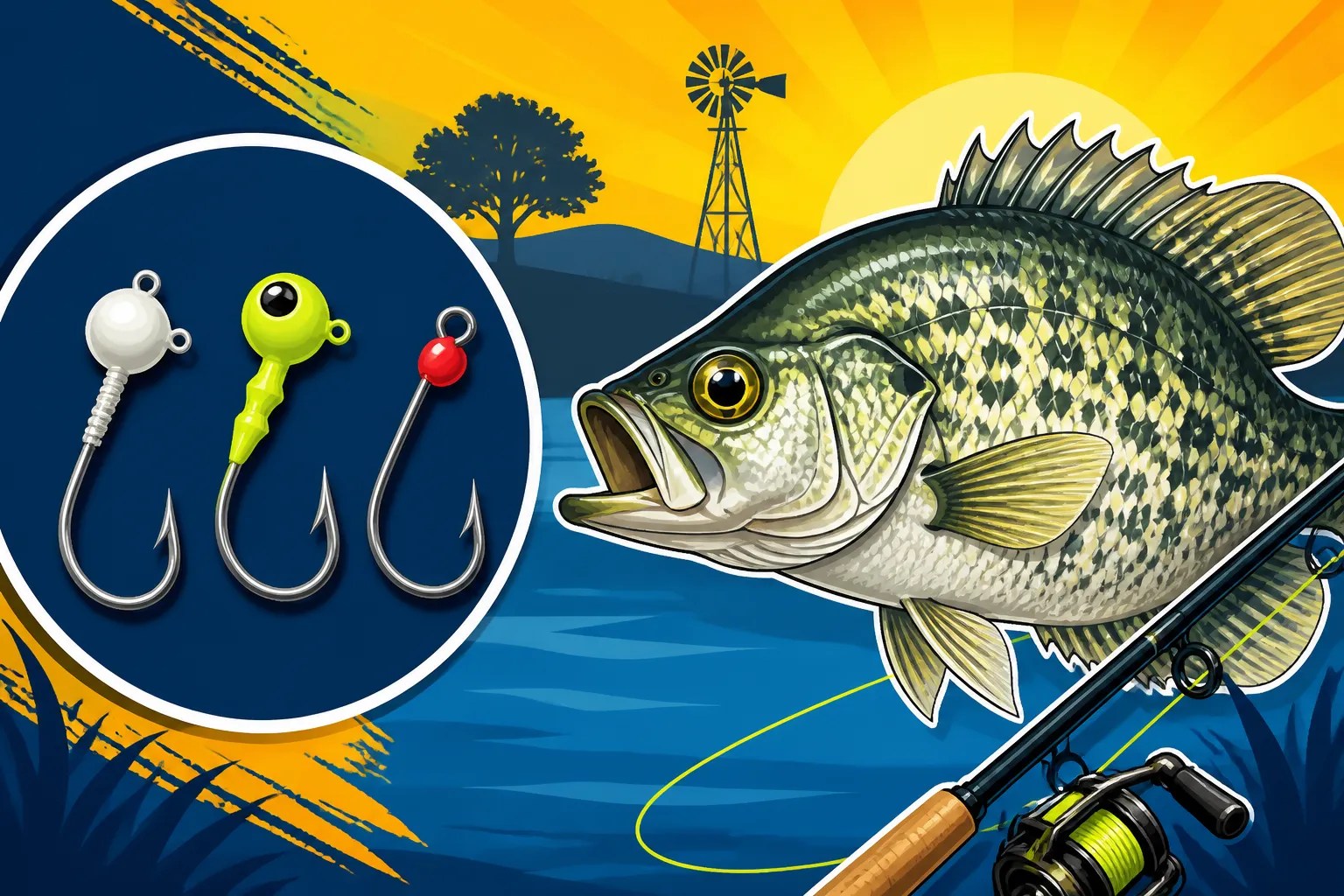
For many crappie anglers, especially those targeting them with artificial baits, the jig head is the starting point. A jig head is essentially a hook with a weighted head molded onto it, designed to be paired with soft plastic bodies, hair, or feathers. The hook is an integral part of the jig, and its quality is paramount. You'll find various styles:
- Ball Head: The most common, versatile jig head, good for nearly all presentations.
- Stand-Up Head: Designed to make your jig stand upright on the bottom, mimicking a feeding minnow.
- Mushroom Head: Often used for finesse techniques, providing a subtle presentation.
- Spider Head (or Crappie Buster): Features extra wire keepers to hold larger plastic bodies securely.
Regardless of the head shape, the hook itself on a jig head must be sharp and appropriately sized. While many inexpensive jig heads come with basic hooks, investing in jig heads with higher quality, chemically sharpened hooks can significantly improve your hook-up ratio. A dull hook on a jig is just a wasted cast. When using jigs, particularly for Jigging Techniques for Kansas Crappie around brush piles or ledges, the hook needs to be strong enough to withstand contact with cover yet sharp enough to penetrate with minimal effort. Look for brands that clearly state the quality of their hooks or have a reputation for sharp points.
Aberdeen Hooks: The Classic Live Bait Choice
The Aberdeen hook is perhaps the most traditional and widely used hook for live minnows when targeting crappie. Its design is almost perfectly suited for the task:
- Fine Wire: This is the hallmark of an Aberdeen. The thin wire minimizes damage to a live minnow, keeping it lively and natural on the hook for longer. It also allows for easier penetration into the crappie's mouth.
- Wide Gap: The distance between the hook point and the shank is generous, providing ample room for the minnow's body and ensuring the hook point is exposed for a solid hookset.
- Round Bend: The classic rounded bend is effective at holding fish once hooked.
Aberdeen hooks are fantastic when you're slow trolling, drifting, or even just suspended a minnow under a bobber. They come in various colors, with plain bronze or black being common, but some anglers swear by colored hooks like chartreuse or pink, especially in stained water, believing they add an extra visual attractant. One potential drawback of the fine wire is that it can bend out if you get snagged heavily, or if you hook into a very large fish like a hefty channel cat by mistake. However, many crappie anglers see this as a benefit, as a bent hook is often easier to retrieve from a snag than a broken line. You can often find a wide selection of these hooks at local tackle shops or large retailers like Bass Pro Shops.
Sickle Hooks: A Modern Alternative
In recent years, sickle hooks have gained immense popularity among crappie anglers, often challenging the traditional dominance of the Aberdeen. The defining feature of a sickle hook is its distinctive, almost "sickle" or "kirbed" bend in the shank, which creates a sharp angle rather than a smooth curve. This unique geometry is designed for a specific purpose: to grab and hold.
Many anglers report a significantly higher hook-up ratio with sickle hooks, attributing it to how the hook point naturally aligns and rotates into the corner of the crappie's mouth when tension is applied. Once engaged, the sharp angle of the sickle hook can make it harder for the fish to shake free compared to a more open, round bend. They often feature a wide gap similar to an Aberdeen, but with the added "bite" of that distinct bend. Sickle hooks are excellent for both live minnows and small soft plastic presentations where you want maximum hook exposure and holding power. They are typically made with fine wire to maintain the delicate presentation crappie often demand, but their unique shape provides surprising strength. If you've been struggling with fish coming off, giving sickle hooks a try, especially for Best Bait for Kansas Crappie, might be the answer you're looking for.
Hook Size: Getting It Just Right for Kansas Crappie
Choosing the correct hook size is a subtle art in crappie fishing, but it's one that can make a profound difference. Go too big, and you might spook fish or hinder your bait's action. Go too small, and you risk deep hooking or losing fish due to insufficient holding power. The goal is always that "Goldilocks" sweet spot.
Matching Hook Size to Bait and Crappie Size
Crappie hooks are typically measured in a "numbered" system, where smaller numbers (like #1 or #2) refer to larger hooks, and larger numbers (like #6, #8, #10, #12) refer to progressively smaller hooks. For crappie, you'll most often be dealing with sizes from #2 down to #12.
Here's a general guideline:
- #2 to #4 Hooks: These are on the larger side for crappie. You might use these with larger minnows (3 inches or more) or bigger soft plastics (2-3 inches) when you know bigger crappie are present, or when you're fishing areas with mixed species and might hook into a small bass or walleye. They offer more holding power but can be less subtle.
- #6 Hooks: A fantastic all-around size. This is a go-to for many anglers using standard 1.5-inch to 2-inch minnows or soft plastics. It offers a good balance of presentation and hook-up strength for average-sized Kansas crappie.
- #8 Hooks: Excellent for smaller minnows (1.5 inches), tiny soft plastics, or when crappie are being particularly finicky. They offer a very subtle presentation and are often preferred in clear water or during tough bites.
- #10 to #12 Hooks: These are tiny hooks, primarily used for very small baits like micro plastics, wax worms, or if you're "tightlining" with tiny minnows for extremely light biters. While they provide ultimate stealth, they can be harder to handle and may lead to deep hooking if not monitored carefully.
Consider the time of year too. When Crappie Move Shallow in Kansas during the spring spawn, they might be more aggressive and take a slightly larger bait and hook. In colder months, such as when How Deep to Fish for Crappie in Winter, fish are often more lethargic, requiring a smaller, more subtle offering.
The "Goldilocks" Principle for Crappie Hooks
The idea of "just right" is paramount here. A hook that's too large can intimidate smaller crappie, or it can be easily detected when a crappie mouths the bait, leading them to spit it out before you can set the hook. It can also impede the action of a small minnow or soft plastic. Imagine trying to make a tiny jig dance with a hook meant for a much larger fish – it simply won't have the natural movement you're hoping for.
On the other hand, a hook that's too small might get swallowed too deeply, making catch-and-release difficult and potentially harming the fish. It also might not have enough strength to hold a larger crappie, especially if you're battling it out of heavy cover. The goal is to match the hook to the size of your bait and the mouth of the average crappie you expect to encounter. If you're consistently catching small crappie and missing bites, try going down a hook size. If you're hooking fish but losing them frequently, consider sharpening your current hooks or going up a size if the bait allows.
Here's a quick reference table to help guide your choice:
| Hook Size (Approx.) | Typical Bait Size | Common Application | Pros | Cons |
|---|---|---|---|---|
| #2 – #4 | Large Minnows (3"+), 2-3" Plastics | Bigger fish, mixed species, aggressive bites | Stronger, better for bigger baits | Can spook smaller crappie, less subtle |
| #6 | Standard Minnows (1.5-2"), 1-2" Plastics | All-around versatile, good balance | Balanced presentation, good hook-up ratio | Can be too large for finicky fish, or too small for trophy |
| #8 | Small Minnows (1-1.5"), Micro Plastics | Finicky fish, clear water, subtle bites | Excellent presentation, very subtle | Less holding power, easier to miss larger fish |
| #10 – #12 | Tiny Plastics, Wax Worms, Smallest Minnows | Extreme finesse, very light bites, ultra-clear water | Ultimate stealth, can tempt wary crappie | Harder to handle, risk of deep hooking, can bend easily |
Key Features to Look For in Quality Crappie Hooks
Beyond just the style and size, the fundamental quality of a crappie hook dramatically affects its performance. Two hooks of the same size and style can perform vastly differently based on their construction and finish. Paying attention to these details will ensure you're not just buying a hook, but a tool designed for success.
Sharpness and Penetration Power
A needle-sharp hook is non-negotiable for crappie fishing. Period. A crappie's mouth is delicate, and you need a hook that can penetrate with minimal pressure. If you have to yank hard to set the hook, you're likely tearing a larger hole or pulling the bait right out of the fish's mouth. High-quality hooks often boast "chemically sharpened" or "laser sharp" points, meaning they've undergone a specialized process to achieve an incredibly fine, sharp tip that will readily penetrate.
To test a hook's sharpness, gently drag the point across your thumbnail. A truly sharp hook will "bite" into the nail and not slide across. If it slides, it's dull and needs sharpening or replacing. Dull hooks are a leading cause of missed strikes and lost fish. This isn't just about expensive hooks either; even some budget-friendly jig heads from brands you might find at Bass Pro Shops or on Amazon can have surprisingly good hooks, but you should always check them. Don't underestimate the impact of a sharp point – it's the first point of contact with the fish, and it needs to be perfect.
Wire Gauge and Strength
The "wire gauge" refers to the thickness of the hook wire. For crappie, you're looking for a balance.
- Fine Wire: As discussed with Aberdeen hooks, a fine wire is crucial for delicate presentations. It allows minnows to swim naturally and small jigs to have an enticing, slow fall. It also penetrates easily. The downside is that fine wire can bend out under extreme pressure, such as a heavy snag or a larger-than-expected fish.
- Medium/Heavy Wire: While generally avoided for crappie's delicate mouths, some jig heads might feature slightly heavier wire, especially in larger sizes. This offers more strength, making it less likely to bend out. However, it can make your bait less subtle and might require more force to penetrate, increasing the risk of tearing the crappie's mouth.
The trick is to find a hook where the wire is fine enough for stealth and easy penetration, yet strong enough to handle the size of crappie you expect without deforming. Most quality crappie-specific hooks strike this balance beautifully. If you're fishing exceptionally heavy cover, where snags are inevitable and you might be pulling fish out quickly, a slightly heavier wire might be a consideration, but usually, a good fine-wire hook is sufficient.
Offset and Barb Considerations
These two features affect how the hook sets and holds.
- Offset (or Kirbed/Reversed): An offset hook has its point slightly bent to the side (either left or right) relative to the shank. This slight bend is designed to increase the hook's "bite" and help it turn into the fish's mouth more effectively on the hookset. Many crappie jig heads and live bait hooks are subtly offset for this reason, aiming to improve hook-up ratios, especially with those light crappie bites. A straight hook, while simpler, might require a more precise hookset.
- Barb: The barb is that small, rear-facing projection near the hook point that helps prevent the fish from spitting the hook. For crappie, a small, sharp barb is generally sufficient. Large, aggressive barbs can create unnecessary damage to the crappie's delicate mouth, especially if you plan on releasing fish. There's a growing trend towards using barbless hooks or pinching down barbs, particularly in tournament fishing or for catch-and-release, as it minimizes harm and makes unhooking much quicker and easier. If you're fishing for dinner, a barbed hook is fine, but if conservation is a priority, consider going barbless. The trade-off is that barbless hooks require constant tension during the fight, as any slack can easily lead to a lost fish.
Crappie Hook Care and Maintenance for Longevity and Performance
You've invested time and perhaps a little money into choosing the right hooks, so don't let them go to waste by neglecting their care. Proper maintenance isn't just about making your tackle last longer; it's about ensuring every hook performs optimally when that trophy crappie bites. A well-maintained hook is a confident angler.
Checking and Sharpening Your Hooks
Hooks, especially those fine-wire crappie hooks, can become dull quickly. Bouncing off rocks, scraping against brush, or even just sitting in a damp tackle box can take the edge off. Developing a habit of inspecting your hooks regularly is crucial.
- Visual Inspection: Hold the hook up to the light and visually examine the point. Is it straight? Is it bent over? Does it look shiny and rounded at the tip instead of sharp and pointed?
- The Thumbnail Test: As mentioned earlier, gently drag the hook point across your thumbnail. If it slides, it's dull. If it digs in, you're good to go.
- Sharpening Tools: For dull hooks, you'll need a good hook sharpener. Small, diamond-grit files or sharpening stones are perfect for this. There are various shapes and sizes available, some specifically designed for fishing hooks.
- Sharpening Technique: Hold the hook securely. Use short, light strokes, filing from the outside of the point towards the tip. Focus on creating three distinct, sharp edges that meet at a fine point. Don't over-sharpen, as you can weaken the tip. Always re-test with your thumbnail after sharpening. This routine, applied to both your live bait hooks and the integrated hooks on your jig heads, will keep your crappie-catching tools in prime condition.
Proper Storage to Prevent Corrosion
Kansas weather can be unpredictable, and moisture is the enemy of sharp hooks. Rust will quickly degrade a hook's integrity, making it dull, brittle, and prone to breaking or failing to penetrate.
- Tackle Box Organization: Store hooks and jig heads in compartmentalized tackle boxes. This prevents them from rattling around and dulling each other, and it keeps different sizes and types organized.
- Moisture Control: Consider adding desiccant packets (like silica gel) to your tackle boxes, especially if you fish in humid conditions or after a rainy day. These packets absorb moisture and help prevent rust.
- Drying Hooks: After a fishing trip, especially if your hooks have gotten wet, it's a good practice to let them air dry completely before sealing them back into your tackle box. If you've been fishing in saltwater (less common for crappie in Kansas, but some might fish brackish areas out of state), rinse your gear thoroughly with fresh water.
- Dedicated Storage for Jigs: Many anglers use dedicated storage boxes or trays specifically for their jig heads, often with foam inserts or individual compartments that keep each jig separated and dry. This prevents the hooks from tangling and protects their points. You can find these specialized storage solutions at retailers like Bass Pro Shops or by browsing options on Amazon. Taking these few extra steps will save you money in the long run by extending the life of your hooks and, more importantly, ensure you're always ready for that next crappie bite. For tips on managing all your gear, check out Best Tackle Box Setup for Kansas Anglers.
Advanced Crappie Hook Rigs and Specialized Situations
Once you've mastered the basics of hook selection and care, you can explore more specialized rigging techniques and hook types designed for specific crappie fishing scenarios. These advanced methods can often turn a slow day into a productive one, especially when crappie are being particularly challenging.
Double Hook Rigs and Dropper Loops
Sometimes, crappie are scattered, or you're trying to determine what depth they're holding at. A multi-hook rig can allow you to present multiple baits at different depths or simply increase your chances of a hook-up.
- Dropper Loop Rig: This is a classic and highly effective rig. You tie a series of small loops (dropper loops) directly into your main line, leaving enough space between them. To each loop, you can attach a snelled hook (a hook tied to a short leader) or a small jig head. This allows you to present two or even three baits at varying depths simultaneously. For instance, you could have one minnow 10 feet down and another at 12 feet, quickly locating the crappie's preferred zone. This rig is particularly useful for vertical jigging over structure like brush piles or for slow trolling.
- Paternoster Rig: Similar in concept, but often involves a heavier weight at the bottom and snelled hooks above it. This keeps your baits off the bottom and allows them to flutter naturally. These rigs are excellent when you know fish are suspended, and you want to offer multiple targets. Be mindful of local regulations regarding the number of hooks allowed on one line, especially on public waters like those covered in Kansas Fishing Regulations Explained.
Weedless Hooks for Heavy Cover
Crappie love cover. Submerged brush, standing timber, lily pads – these are all prime crappie real estate. The problem, of course, is getting your bait in there without getting constantly snagged. This is where weedless hook options become invaluable.
- Jig Heads with Brush Guards: Many jig heads, especially those designed for crappie, come with wire or fiber brush guards that extend from the jig head past the hook point. These guards deflect snags, allowing your jig to slide through cover while still being soft enough to compress on a bite, exposing the hook.
- Weedless Hooks for Soft Plastics: If you're fishing soft plastics, you can rig them "Texas style" on a weedless hook. This involves burying the hook point back into the body of the plastic, making it completely snag-free. When a fish bites, the plastic compresses, exposing the hook point. While this method is incredibly effective at preventing snags, it can sometimes reduce hook-up percentages on light-biting crappie because you need a bit more pressure to expose the hook. However, the ability to fish prime, untouched cover often outweighs this small trade-off.
Using these specialized hooks and rigs can open up new areas to fish and provide more effective presentations in challenging conditions. Experiment with them to see what works best in your favorite Kansas crappie spots.
Hook Type Comparison Table
To help you quickly decide which hook might be best for your next crappie outing, here's a comparison of the primary types we've discussed:
| Hook Type | Key Characteristics | Best For | Pros | Cons |
|---|---|---|---|---|
| Jig Head | Weighted head, integrated hook, various shapes | Soft plastics, hair jigs, live minnows (often as part of a jig) | Versatile, great for vertical presentations, active fishing | Hook quality varies, can be heavier, less natural for live bait alone |
| Aberdeen | Fine wire, wide gap, round bend | Live minnows, especially with light line and bobbers | Excellent live bait presentation, minimal minnow damage | Can bend out on snags or larger fish, less aggressive hookset |
| Sickle | Distinctive "sickle" bend, often wide gap | Live minnows, small plastics, all-around crappie fishing | High hook-up ratio, good holding power, strong design | Can be slightly more visible than fine-wire Aberdeens |
| Weedless | Wire/fiber guard (jig heads) or Texas-rigged (plastics) | Heavy cover, brush piles, lily pads | Prevents snags, allows fishing in dense areas | Can reduce hook-up percentage on light bites, less natural for live bait |
Disclaimer
This article is for general informational purposes only and does not constitute professional advice. Laws, prices and regulations vary by location and change over time. Consult a qualified professional for guidance on your specific situation.