Best Sinkers for Kansas River Fishing
Fishing the rivers of Kansas can be an incredibly rewarding experience, offering up everything from channel cats to hefty flatheads and even walleye in certain stretches. But anyone who has spent time on the Kansas, Republican, or Smoky Hill rivers knows the frustrating reality: current, snags, and trying to keep your bait where the fish are. It's a constant battle against the river's relentless flow, and a poorly chosen sinker can mean the difference between a triumphant catch and a tangled mess. This guide is here to help you navigate those challenges, explaining exactly which sinkers are your best allies for a successful and less frustrating day of Kansas river fishing.
Understanding Kansas River Dynamics and Sinker Needs
Kansas rivers are dynamic environments, constantly changing with rainfall, dam releases, and natural erosion. This means what works one day might not work the next, and understanding these shifting conditions is key to choosing the right sinker. You're not just throwing a weight; you're using a tool designed to interact with the river itself.
The Challenge of River Currents
The sheer power of river currents is often underestimated until you're trying to hold bottom with a lure that's just too light. Imagine casting your favorite cut bait into a promising eddy, only to watch it sweep downstream at warp speed, well past the subtle current seam where those big channel catfish are likely lurking. It’s incredibly frustrating, and it wastes precious fishing time. This constant flow pushes lighter tackle relentlessly, making it nearly impossible to keep your bait in the strike zone, especially if you're trying to target specific structure or depth.
Using the correct sinker weight isn't just about anchoring your bait; it's about control. It allows you to present your offering naturally, letting it tumble or drift just enough to entice a bite, but not so much that it's out of reach or moving too fast. Matching your sinker to the current means your bait spends more time looking edible and less time doing an unwanted river tour. It also significantly reduces the amount of casting and re-casting you have to do, saving you energy and maximizing your actual fishing time.
Navigating Snags and Bottom Structure
Kansas rivers, with their natural meandering and powerful flows, are notorious for snags. We're talking about submerged logs, hidden rock piles, old tree roots, discarded tires, and all sorts of debris that the river collects. Nothing kills the joy of a fishing trip faster than feeling that tell-tale "thunk" followed by the dreaded inability to reel in, knowing your rig is now permanently decorating the river bottom. This constant battle against losing tackle can get expensive and really wear down your patience.
Understanding the river bottom is crucial. If you're fishing a relatively clear, sandy bottom, you might get away with certain sinker shapes. But often, you're dealing with gravel beds, rocky ledges, or areas littered with woody debris. Different sinker shapes are specifically designed to either hold firmly in current or to navigate these treacherous underwater landscapes with minimal hangups. Choosing the right sinker can literally save you money and prevent countless moments of frustration, allowing you to focus on the bite rather than the retrieve.
The Importance of Presentation in River Fishing
Fish in a river environment are often more accustomed to seeing food items drifting naturally with the current. An unnatural presentation, where your bait is dragging unnaturally or being violently swept along, can make even the hungriest fish wary. The sinker plays a critical role in how your bait behaves underwater, essentially dictating its "swim" or "drift" pattern.
If your sinker is too light, your bait might zoom past potential biting spots without giving the fish a chance to react. If it's too heavy and digging in, your bait might look stuck or unnatural, failing to mimic the free-floating prey items fish are used to encountering. A properly chosen sinker, paired with the right rig, allows your bait to move in a way that appears natural and enticing. Whether you're trying to bounce a jig along the bottom for walleye or keep a piece of cut bait stationary for a monster Kansas Flathead Catfish Daily Limit, the sinker is the unseen maestro directing the show. A good presentation, often aided by the correct sinker, can significantly increase your chances of getting a bite, especially from those bigger, more discerning river dwellers.
Common Sinker Types for Kansas River Fishing
Now that we understand the 'why' behind sinker choice, let's dive into the 'what'. There are several staple sinker types that every Kansas river angler should be familiar with and, ideally, have in their tackle box. Each has its strengths and weaknesses, making them suitable for different scenarios.
Pyramid Sinkers: The Bottom Huggers
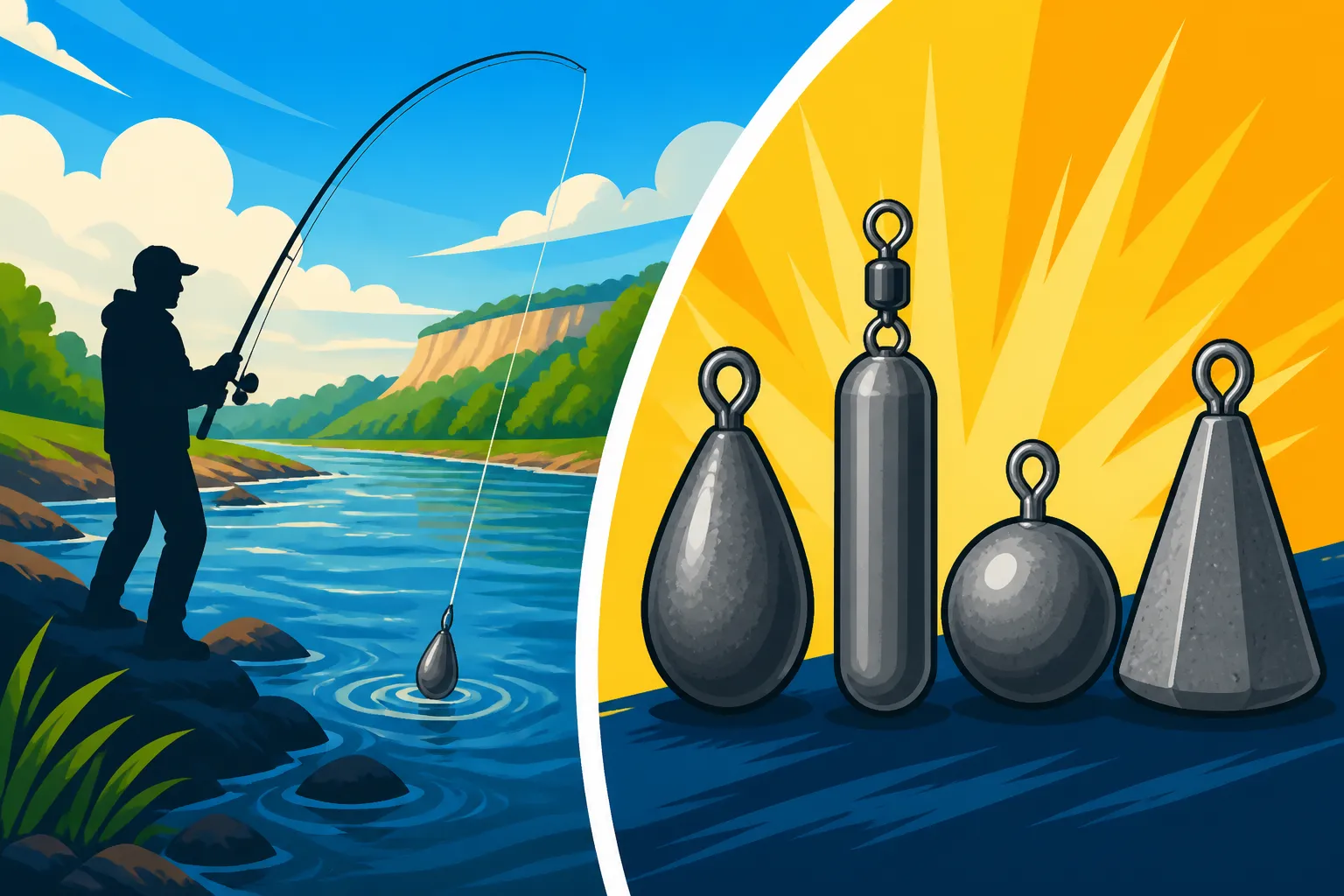
Pyramid sinkers are exactly what they sound like: shaped like a pyramid. This distinct design isn't just for show; it's incredibly functional in moving water. Their flat sides and pointed edges are engineered to dig into the riverbed, resisting the current and keeping your bait stationary. When you need your bait to stay put in a strong flow, especially in deep channels or when targeting species that feed on the bottom, these are often your go-to.
They excel when you're bait fishing for species like channel catfish or flatheads, where you want your offering to remain in one spot, releasing scent and waiting for a strike. You can rig them on a Carolina rig or a three-way swivel rig. While incredibly effective at holding bottom, their primary drawback is their shape, which, while great for digging in, can also make them prone to snagging on rocky bottoms or submerged timber. If you're fishing an area known for heavy snags, you might want to consider a different option to avoid constant tackle loss. However, for fishing clear, sandy, or gravelly river bottoms with strong currents, the pyramid sinker is an absolute champion.
Egg Sinkers and Bullet Weights: The Streamliners
Egg sinkers are oval-shaped, and bullet weights are, well, bullet-shaped, often used in bass fishing. Both share a key characteristic: they have a hole running through their center, allowing your fishing line to slide freely through them. This free-sliding nature is their superpower, particularly when you want a more natural bait presentation or are targeting fish that might drop a bait if they feel too much resistance.
These sinkers are excellent for Texas rigs and Carolina rigs, especially when using live bait like worms or cut bait, or soft plastic lures. Because the line can move through the sinker, a fish can pick up your bait and swim a short distance without feeling the weight of the sinker, giving them more confidence to fully inhale the offering. They are also less prone to snagging on relatively smooth bottoms compared to pyramid sinkers, as their rounded shape allows them to roll or slide over obstacles. However, in extremely strong currents, their smooth profile means they won't hold bottom as effectively as a pyramid sinker, making them better suited for moderate currents or when a natural drift is desired. You can find a great selection of these on Amazon or at your local Bass Pro Shops.
Bank Sinkers: The All-Around Workhorse
The bank sinker is a true classic and for good reason. It's typically a teardrop or bell shape, often with an eyelet at the top for easy tying. These sinkers offer a fantastic balance between holding power in current and resistance to snagging. While they don't dig in quite like a pyramid, their weight distribution and somewhat rounded, yet textured, profile allow them to maintain a good hold on the bottom without getting hopelessly wedged in every crevice.
Their versatility makes them a staple for river anglers. You can use them for everything from stationary bottom fishing with cut bait for Kansas Channel Catfish Daily Limit to drifting a live minnow for walleye. They are a reliable choice for a wide range of species and techniques across varying river conditions, from moderately swift currents to slower pools. If you're uncertain about the bottom composition or current strength in a new spot, a bank sinker is often a safe and effective starting point. They're easy to cast and retrieve, making them a practical choice for bank anglers and those fishing from a boat alike.
Specialized Sinkers for Specific River Techniques
While the common sinker types cover most bases, there are times when a specialized sinker can truly make a difference, especially when you're trying to outsmart finicky fish or navigate particularly challenging river features.
No-Roll Sinkers: For Still Water or Light Current
As the name suggests, no-roll sinkers are designed to not roll with the current. They typically have a flat, coin-like or rectangular shape, which gives them stability on the riverbed. Unlike the freely tumbling egg sinkers, a no-roll sinker is meant to sit firmly in place, minimizing movement and preventing your bait from being dragged away by light currents or underwater thermals.
These are excellent choices for specific situations where you want your bait to be absolutely stationary. Think about fishing a deep, slow eddy where catfish might be holding, or in relatively still backwater areas of a river. They are particularly effective when you're targeting fish that feed by scent and are willing to take their time finding a stationary offering. Because they don't roll, they also significantly reduce line twist, which can be a real headache with other sinker types. However, in strong currents, they might not hold as effectively as a pyramid sinker, and their flat profile can still get wedged in rocky crevices if not managed carefully.
Slinky Sinkers: The Ultimate Snag Avoiders
If you've ever fished a truly snag-filled stretch of a Kansas river – the kind where every other cast results in a lost rig – then the slinky sinker might just become your new best friend. These ingenious sinkers are essentially small lead weights (or sometimes lead-free alternatives) encased within a woven fabric tube, often made from parachute cord. The flexible, soft nature of the slinky allows it to bend, fold, and "slither" over submerged branches, rocks, and other obstacles that would instantly snag a rigid lead sinker.
The beauty of a slinky sinker lies in its ability to navigate heavily snag-ridden areas with minimal tackle loss. Instead of getting stuck, it often slides right over the obstacle. This makes them absolutely invaluable when you know fish are holding tight to cover – fallen trees, rock gardens, or brush piles – but you've been avoiding those spots due to the frustration of losing gear. While you can buy them pre-made, many anglers enjoy making their own, customizing the length and weight to suit their specific needs. They are particularly popular for bottom-bouncing presentations for walleye or targeting catfish right in their woody lairs. Once you try them in tough conditions, you'll wonder how you ever fished without them.
Split Shot and Pinch Weights: For Finesse and Light Tackle
Sometimes, you don't need a heavy cannonball to get your bait down; you just need a subtle nudge. That's where split shot and pinch weights come in. These tiny, usually round or oval, lead (or lead-free) weights have a small slit that allows you to pinch them directly onto your fishing line. They come in a wide range of sizes, from nearly imperceptible to a bit more substantial.
These weights are the epitome of finesse. They are perfect for adding minimal weight to a lightly weighted jig or a float rig, allowing your bait to drift naturally at a precise depth. If you're trying to get a small worm or grub down to panfish in a calm eddy, or if you're adjusting the buoyancy of a bobber for crappie, split shot are ideal. They offer precise adjustments without overpowering your light tackle setup. They're also commonly used to create a "drop shot" rig, keeping your lure suspended above a small weight on the bottom. While they won't hold up in strong currents on their own, their ability to fine-tune your presentation makes them indispensable for delicate presentations and small baits in lighter current or still waters found in river backwaters or Kansas Community Fishing Lake Rules. Always carry a variety of sizes in your tackle box – you never know when a subtle adjustment will make all the difference.
Choosing the Right Sinker Weight and Material
Selecting the right sinker isn't just about its shape; it's equally about its weight and even the material it's made from. These factors dramatically impact your ability to feel bites, maintain control, and even your environmental footprint.
Determining the Optimal Weight for Current
This is often the trickiest part, and it comes down to a bit of trial and error combined with keen observation. The goal is to use the minimum amount of weight necessary to get your bait to the desired depth and hold it there, or allow it to drift naturally, without getting swept away. Starting too heavy can make your presentation unnatural and reduce your ability to feel subtle bites. Starting too light will have you constantly reeling in and re-casting as your bait speeds downstream.
A good rule of thumb for Kansas rivers is to start with a moderately heavy sinker (say, a 1/2 oz or 3/4 oz bank sinker or pyramid sinker) and make a test cast. Observe how quickly your line settles and if your bait is digging in or being swept away. If it’s dragging hard and feeling stuck, you might be too heavy. If it’s sailing downstream too fast, go up in weight. The ideal scenario is when you can feel your sinker occasionally ticking the bottom, maintaining contact without getting snagged or becoming motionless. Factors like water depth, the speed of the current, the size and buoyancy of your bait, and even the type of line you're using (thicker line catches more current) all influence the optimal weight. Don't be afraid to experiment, and always pay attention to what the river is telling you.
Lead vs. Lead-Free Sinkers: Environmental and Performance Considerations
For decades, lead has been the standard material for fishing sinkers due to its density, low cost, and ease of molding. However, concerns about the environmental impact of discarded lead, particularly its toxicity to wildlife like waterfowl and loons that can ingest it, have led to a growing movement towards lead-free alternatives. While Kansas currently doesn't have a statewide ban on lead fishing tackle, it's a consideration many anglers are making for conservation.
Lead-free alternatives include materials like tungsten, steel, bismuth, and even brass. Tungsten is significantly denser than lead, meaning a smaller sinker can achieve the same weight, offering a more compact and sensitive presentation. This can be a huge advantage when fishing for Kansas Walleye Fishing Techniques or other species that require a delicate feel. Steel and bismuth are less dense than lead but still effective, though they may require slightly larger sinker sizes to achieve comparable weight. The primary downside to lead-free options is generally their higher cost. However, the benefits of potentially reducing your environmental impact and, in the case of tungsten, improving your fishing experience, often outweigh the initial expense for many anglers. If you're looking to explore these options, many sporting goods stores like Bass Pro Shops or online retailers like Amazon offer a wide range of lead-free sinkers.
Rigging Your Sinkers for Success
Knowing your sinker types is one thing, but knowing how to rig them effectively is another. Proper rigging ensures your bait performs as intended, minimizes tangles, and maximizes your chances of a hook-up.
One of the most popular and versatile rigs for river fishing is the slip sinker rig. This rig, often used for catfish, involves threading an egg sinker or a bullet weight directly onto your main line, followed by a bead (to protect your knot) and then tying on a swivel. Your leader and hook are then tied to the other end of the swivel. The slip sinker allows the line to pass through freely, meaning a fish can pick up the bait and run without immediately feeling the resistance of the weight. This is fantastic for wary fish.
For more stationary presentations in stronger currents, especially with a pyramid or bank sinker, a three-way swivel rig is incredibly effective. Here, you tie your main line to one eye of a three-way swivel. To the second eye, you tie a short leader (often lighter breaking strength than your main line) with your sinker attached – this acts as a sacrificial leader if the sinker gets snagged. To the third eye, you tie your bait leader and hook. This rig keeps your bait elevated off the bottom and allows it to waft enticingly in the current, perfect for Kansas Catfish Fishing Techniques or even drifting for walleye. Mastering these fundamental rigs will significantly improve your river fishing success.
Practical Tips for Maximizing Sinker Effectiveness
Choosing and rigging your sinkers properly is a fantastic start, but there are always little tricks and insights that can take your river fishing game to the next level. Think of these as the angler's secret sauce for sinker mastery.
Understanding Your Fishing Spot
Before you even make your first cast, take a moment to "read" the river. What does the current look like? Are there visible eddies, current seams, or slack water areas? Can you see any submerged cover like fallen trees or rock outcroppings? This visual scouting is your first clue to understanding the bottom and the flow, which directly informs your sinker choice. For example, a fast, turbulent section near a dam might call for a heavy pyramid sinker, while a slower, deeper pool might be better suited for a lighter bank sinker or even a no-roll.
If you have a fish finder, use it to map the bottom composition. Knowing if you're over sand, gravel, rocks, or mud will help you decide if a snag-resistant slinky sinker is needed or if a conventional bank sinker will suffice. Local knowledge is also invaluable. If you're fishing a new stretch of the Kansas River, don't hesitate to ask fellow anglers or check local forums for insights on common snags or productive bottom types. The more you know about your specific fishing spot, the more precisely you can select a sinker that works with, rather than against, the river.
The Art of the Drift: Using Current to Your Advantage
While sinkers are often thought of as tools to hold bait stationary, they can also be used to facilitate a natural drift, which is incredibly effective in river fishing. Many river fish, like walleye, white bass, and even some catfish, are opportunistic feeders that will grab prey items being carried along by the current. The key is to use just enough weight to get your bait down to the strike zone and keep it there, allowing it to tumble or drift along naturally with the flow, rather than digging into the bottom or being swept uncontrollably.
This technique, often called "controlled drifting" or "bottom bouncing," involves letting your sinker occasionally tap or tick the riverbed as your boat drifts or as you slowly reel in from the bank. It keeps your bait in constant motion, covering more water and mimicking a vulnerable prey item. A bank sinker or an egg sinker on a Carolina rig works exceptionally well for this. The trick is finding that sweet spot where your sinker maintains occasional contact with the bottom without getting hung up. It takes practice and feel, but once mastered, it can unlock a whole new level of success, especially when targeting active fish that are spread out. You can learn more about specific techniques in our guide on Kansas River Catfish Spots.
Carrying a Variety of Sinkers
The single biggest mistake a river angler can make is showing up with only one type or weight of sinker. As we've discussed, Kansas rivers are incredibly diverse, and conditions can change rapidly. What worked perfectly in the morning might be entirely ineffective in the afternoon if the current picks up or you move to a different section of the river. Having a well-stocked tackle box isn't just about having options; it's about being adaptable and ready for anything the river throws at you.
A good assortment should include various sizes of pyramid sinkers for strong currents, egg sinkers for slip rigs and natural drifts, bank sinkers for general versatility, and a few slinky sinkers for those notorious snag-filled zones. Don't forget a selection of split shot for finesse adjustments. Consider organizing them by weight or type in separate compartments in your tackle box to quickly find what you need. Many anglers find it helpful to purchase variety packs of sinkers, especially from online retailers like Amazon or larger stores like Bass Pro Shops, to ensure they have a good starting selection. Investing in a diverse collection of sinkers is investing in more successful and less frustrating days on the water.
Sinker Comparison for Kansas River Fishing
To help you visualize the choices, here's a quick comparison of the common sinker types we've discussed:
| Sinker Type | Shape | Primary Use | Current Holding Power | Snag Resistance | Best For | Pros | Cons |
|---|---|---|---|---|---|---|---|
| Pyramid | Four-sided pyramid | Strong current, stationary bottom fishing | High | Low-Moderate | Catfish, deep channels, heavy current | Digs into bottom, holds well in strong current | Prone to snagging on rocks/debris, can look unnatural if dragged |
| Egg Sinker | Oval/Egg-shaped | Slip rigs, natural drift | Low-Moderate | High | Live bait, soft plastics, Carolina rigs | Allows line to slide freely, natural presentation, good snag resistance | Rolls easily in strong current, doesn't hold bottom well |
| Bullet Weight | Bullet-shaped | Slip rigs, Texas/Carolina rigs | Low-Moderate | High | Soft plastics, light cover, subtle presentations | Excellent for Texas rigs, penetrates cover, less snagging | Similar to egg sinkers, less holding power in strong current |
| Bank Sinker | Teardrop/Bell | Versatile bottom fishing | Moderate | Moderate | All-around river fishing, moderate current | Good balance of holding power & snag resistance, easy to cast | Not as snag-proof as slinky, not as strong holding as pyramid in extreme current |
| No-Roll | Flat, rectangular | Still/slow water, stationary bait | Moderate | Moderate | Still pools, eddies, reducing line twist | Stays put in light current, minimizes line twist, good for scent trails | Less effective in strong current, can still snag on sharp rocks |
| Slinky | Flexible fabric tube with weights | Heavily snaggy areas | Moderate | Very High | Brush piles, rock gardens, timber | Virtually snag-proof, flexible, excellent for challenging bottoms | Less direct bottom feel, can be harder to cast heavy versions, DIY can be time-consuming |
| Split Shot | Small, round, clip-on | Finesse, weight adjustment, light tackle | Very Low | High | Float fishing, light line, drop shot rigs | Easy to add/remove, precise weight adjustment, minimal impact on presentation | Not for strong currents, can damage line if squeezed too hard, very light weight only |
This article is for general informational purposes only and does not constitute professional advice. Laws, prices and regulations vary by location and change over time. Consult a qualified professional for guidance on your specific situation.