Kansas Crappie Daily Limit of 50 Fish
There’s nothing quite like the excitement of a crappie bite in Kansas, especially when those slabs start stacking up. But let’s be honest, trying to keep track of all the rules and regulations can sometimes feel like a bigger challenge than actually catching the fish! Many anglers find themselves scratching their heads, wondering exactly how many of these delicious panfish they can take home. This comprehensive guide is here to clear up all that confusion, breaking down the Kansas crappie daily limit of 50 fish, why it exists, and what you need to know to stay compliant and enjoy a successful crappie outing.
Understanding Kansas Crappie Regulations
Fishing in Kansas comes with a set of rules designed to protect our fisheries while still providing fantastic angling opportunities. When it comes to crappie, the Kansas Department of Wildlife and Parks (KDWP) has some specific guidelines that are crucial for every angler to understand. Missing these details can quickly turn a great day on the water into a frustrating one, potentially leading to fines or even losing your fishing privileges.
The 50-Fish Daily Limit Explained
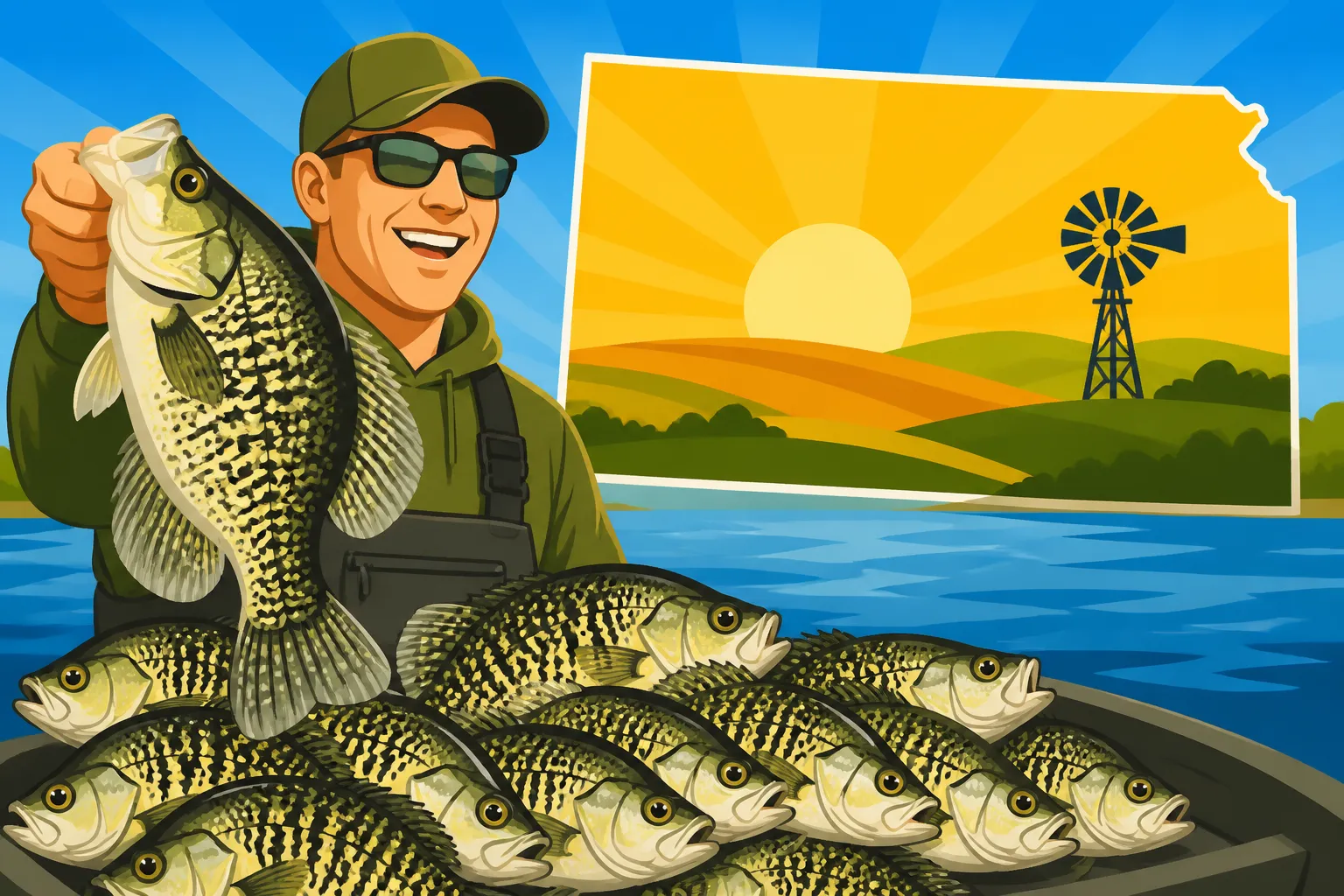
Let's get straight to the point: in most public waters across Kansas, the daily creel limit for crappie is indeed 50 fish. This means that, within a 24-hour period, you are legally allowed to harvest and possess up to 50 crappie. This generous limit is often a pleasant surprise for anglers coming from states with more restrictive regulations. The KDWP sets these limits after careful scientific study of fish populations, considering factors like spawning success, growth rates, and overall abundance within a particular body of water. For crappie, which are known for their prolific breeding and rapid growth in Kansas's fertile reservoirs and lakes, a 50-fish limit allows anglers to enjoy a productive day without significantly impacting the long-term health of the fishery.
It’s important to remember that this "daily limit" applies to the fish you harvest from midnight to midnight. So, if you're out on Milford Lake or Cheney Reservoir enjoying a sunrise bite, those fish count towards your 50 for that calendar day. Understanding these numbers is your first step to being a responsible and successful crappie angler in the Sunflower State. Failing to adhere to this limit is a violation and can carry consequences, so always keep a mental count or use a stringer with marks if you plan on keeping a large number of fish.
Minimum Length Limits for Crappie
Beyond just the number of fish, Kansas also often imposes a minimum length limit for crappie. This is a critical component of fish management, designed to protect younger fish and allow them to reach reproductive maturity, ensuring future generations of crappie. While the statewide daily limit is 50 fish, you absolutely must pay attention to the Kansas Crappie Length and Bag Limits, which often dictate a 10-inch minimum length for crappie in many of our popular fishing spots.
What does this mean for you? It means that any crappie you catch that measures less than 10 inches from the tip of its snout to the tip of its tail (with the mouth closed and tail squeezed) must be immediately released back into the water. This rule is in place to ensure that enough crappie survive to spawn and contribute to the population, and also to give fish a chance to grow into those desirable "slab" sizes we all love to catch. Always carry a reliable tape measure on your boat or in your tackle box. If you're looking for a good, compact option, many durable, waterproof tape measures are available on Amazon that are perfect for fishing. Releasing undersized fish unharmed is crucial, so gentle handling and quick release are key to their survival.
Possession Limits vs. Daily Limits
This is where some anglers can get a little mixed up, and it's a distinction you absolutely need to understand. The daily limit refers to the number of fish you can catch and keep within a single calendar day (midnight to midnight). The possession limit, however, refers to the total number of fish you can have in your possession at any given time, regardless of how many days you've been fishing. In Kansas, the general possession limit for most species, including crappie, is typically twice the daily creel limit.
For crappie, with a 50-fish daily limit, this means your possession limit is 100 fish. So, if you fish on Monday and keep 50 crappie, and then go out again on Tuesday, you can only keep another 50 crappie if you have already consumed or given away the fish from Monday. You cannot simply accumulate fish day after day in your freezer up to an unlimited amount. For example, if you fish on Saturday and keep 50 crappie, and then fish again on Sunday and want to keep more, you can only do so if your total count of crappie in your possession (including those at home, in your cooler, or in your vehicle) does not exceed 100. Always be mindful of both limits to avoid any issues, especially if you’re planning a multi-day fishing trip or have a freezer full of past catches.
Why Kansas Has a Generous Crappie Limit
Many anglers, especially those new to Kansas, are often surprised by the 50-fish daily crappie limit. It seems quite high compared to other states or even other species within Kansas. However, there's a sound biological and management reason behind it, rooted in the specific characteristics of crappie populations in our waters. The KDWP manages these fisheries with a focus on both ecological health and maximizing angler opportunities.
Crappie Abundance and Management
Crappie, both white crappie and black crappie, are incredibly prolific fish in Kansas lakes and reservoirs. They have a high reproductive rate, laying tens of thousands of eggs, and grow relatively quickly in our nutrient-rich waters. This abundance means that crappie populations can often sustain a higher harvest rate without suffering long-term declines. In fact, in many Kansas lakes, if crappie populations are under-harvested, they can become overpopulated.
When crappie populations become too dense, competition for food can become intense, leading to "stunted" growth. This means you end up with a large number of very small fish that never reach a desirable size for anglers. The KDWP's management strategies, including the 50-fish limit, aim to thin out these populations through angler harvest, allowing the remaining fish to grow larger and healthier. This is a common management technique for panfish, ensuring that the fishery remains vibrant and continues to produce quality catches for years to come.
Balancing Angler Opportunity and Conservation
The KDWP's mission isn't just about conservation; it's also about providing exceptional recreational opportunities for the people of Kansas and visitors. The generous crappie limit is a direct reflection of this commitment. Anglers want to catch fish, and they often want to take some home for a meal. By allowing a higher daily limit, the KDWP enables anglers to have a truly rewarding experience, filling their coolers without feeling overly restricted.
This balance is delicate, but it's one that Kansas has, for the most part, managed successfully with crappie. The combination of strong natural reproduction, favorable habitat in our numerous reservoirs and state fishing lakes, and thoughtful management by biologists allows for this liberal limit. It’s a testament to the health and vitality of our crappie fisheries. This approach ensures that while you're enjoying a fantastic day reeling in crappie, you're also inadvertently helping to manage the population by preventing overpopulation and promoting a healthy size structure in the lake.
Practical Tips for Crappie Anglers in Kansas
Knowing the regulations is one thing, but actually putting fish in the boat (or on the bank) and preparing them properly is another. Crappie fishing in Kansas can be incredibly rewarding, and a few practical tips can make your experience even better, ensuring you respect the fish and the regulations while maximizing your enjoyment.
Best Practices for Harvesting Crappie
If you're planning to take advantage of that 50-fish limit, proper handling and harvesting techniques are essential. First and foremost, only keep what you intend to eat or share. While the limit is high, ethical angling means not wasting resources. Once you decide to keep a fish, dispatch it quickly and humanely. A swift blow to the head is usually sufficient.
For transport, nothing beats a good cooler filled with ice. Getting your crappie on ice immediately after catching them is crucial for preserving their freshness and flavor. A quality cooler, readily available at sporting goods stores or online retailers like Amazon, will keep your catch cold throughout the day, ensuring the fillets you prepare later are at their peak. When it comes to cleaning, investing in a sharp, flexible fillet knife is a game-changer. Many anglers use electric fillet knives for quickly processing a large crappie catch, and these can drastically cut down on cleaning time after a successful day on the water.
Finding Crappie Hotspots and Techniques
Kansas boasts an incredible array of crappie fisheries, from massive reservoirs like Milford Lake and Wilson Lake to smaller community fishing lakes. To find crappie, focus on structure. These fish love to hang around brush piles, submerged timber, rock piles, bridge pilings, and even dock structures. In the spring, they’ll move shallow for the spawn, making it a prime time for Kansas Spring Crappie Fishing Tips. As waters warm in summer, they often move to deeper brush piles or migrate into open water where they suspend over baitfish. Come fall, they can be found staging in predictable patterns, often leading to excellent catches if you employ Kansas Fall Crappie Fishing Tips.
Common techniques include vertical jigging with small jigs (like Bobby Garland crappie jigs or Johnson Crappie Busters), especially around submerged cover. You can learn more about effective methods in our guide on Jigging Techniques for Kansas Crappie. Live minnows fished under a bobber or on a tight line are also perennial favorites. Remember, crappie are often schooling fish, so where you find one, you'll likely find more!
Essential Gear for Crappie Fishing
You don't need a boatload of expensive gear to catch crappie, but having the right tools makes a huge difference. A lightweight rod and reel setup is ideal. A 6 to 7-foot light or ultralight spinning rod paired with a small spinning reel spooled with 4-6 pound test monofilament or fluorocarbon line is perfect for feeling those subtle crappie bites. Check out our recommendations for the Best Rod and Reel Combo for Crappie if you're looking to upgrade.
Beyond your rod and reel, a selection of small jigs (1/32 to 1/8 ounce) in various colors, a box of live minnows (if allowed at your chosen spot), small bobbers, and some split shot sinkers are your core tackle. Don't forget that trusty tape measure for checking length limits, a pair of pliers for hook removal, and a comfortable tackle bag or box to keep everything organized. And, as mentioned, a good cooler for keeping your catch fresh is non-negotiable for a successful crappie outing.
Staying Compliant with Kansas Fishing Laws
Navigating fishing regulations can sometimes feel like a maze, but understanding the core requirements is straightforward and crucial. Ensuring you're compliant with Kansas fishing laws isn't just about avoiding penalties; it's about being a responsible angler who contributes to the healthy management of our natural resources.
Licensing Requirements and Enforcement
The absolute first thing you need before even thinking about wetting a line in Kansas is a valid fishing license. Most residents and nonresidents alike are required to purchase one. Our comprehensive Kansas Fishing License Guide breaks down all the different types and what you need to know. Remember that even young anglers have specific rules, so be sure to check Do Kids Need a Fishing License in Kansas? and Fishing License Age Requirements in Kansas. You can easily purchase your license online through the KDWP website or at numerous vendors across the state; our guide on Where to Buy a Kansas Fishing License can point you to local options. Many anglers also find the Kansas Fishing License Online Renewal process incredibly convenient to keep their license current.
Ignoring these requirements can have serious repercussions. The consequences for Fishing Without a License Penalties in Kansas can range from fines to confiscation of gear, so it’s simply not worth the risk. Kansas Department of Wildlife and Parks game wardens are dedicated professionals who enforce these regulations to protect our fisheries for everyone. They are out there patrolling lakes and rivers, ensuring everyone is following the rules, so always be prepared to show your license and adhere to all limits and regulations.
Special Regulations and Local Variations
While the 50-fish daily limit for crappie is a general statewide rule, it's vital to remember that specific bodies of water may have their own unique regulations. These special rules are often implemented to address localized population dynamics, protect vulnerable stocks, or enhance specific angling experiences. For instance, some smaller community fishing lakes might have different limits or even catch-and-release rules for certain species.
Always, always check the latest Kansas Fishing Regulations Explained before you head out, especially if you're visiting a new lake or river. This information is available on the KDWP website or in their annual fishing regulations summary booklet. For example, some Kansas Community Fishing Lake Rules might have specific provisions that differ from larger reservoirs. It’s your responsibility as an angler to be aware of the rules for the specific body of water you're fishing. A quick check of the KDWP website or current regulations summary can save you a lot of headache and ensure your fishing trip is enjoyable and compliant.
Kansas Crappie Regulations at a Glance
For quick reference, here's a summary of the general crappie regulations in Kansas. Always confirm with the latest KDWP regulations for any specific body of water, as exceptions may apply.
| Regulation Type | Standard Kansas Rule | Notes |
|---|---|---|
| Daily Creel Limit | 50 fish | Number of crappie (white or black) allowed to be harvested within a 24-hour period (midnight to midnight) in most public waters. |
| Minimum Length Limit | Often 10 inches | Many popular waters have a 10-inch minimum length. All crappie caught under this length must be immediately released unharmed. Check specific lake regulations. |
| Possession Limit | 100 fish | Total number of crappie an individual can legally possess at any given time, including those at home, in a cooler, or in a vehicle. (Generally twice the daily limit). |
| Fishing License | Required | A valid Kansas fishing license is required for residents aged 16-74 and most nonresidents 16 and older. Exemptions apply for children and seniors. |
| Trout Permit | Not Required | A trout permit is not needed for crappie fishing unless you are specifically targeting trout in designated trout waters during trout season. |
Disclaimer
The information provided in this guide is for general informational purposes only and is subject to change. While we strive to offer accurate and up-to-date content, fishing regulations are regularly reviewed and updated by the Kansas Department of Wildlife and Parks (KDWP). It is the sole responsibility of each angler to review and comply with all current KDWP fishing regulations before engaging in any fishing activities. Always consult the official KDWP website or their annual fishing regulations summary for the most current and specific rules pertaining to the body of water you intend to fish.