Kansas Spring Crappie Fishing Tips
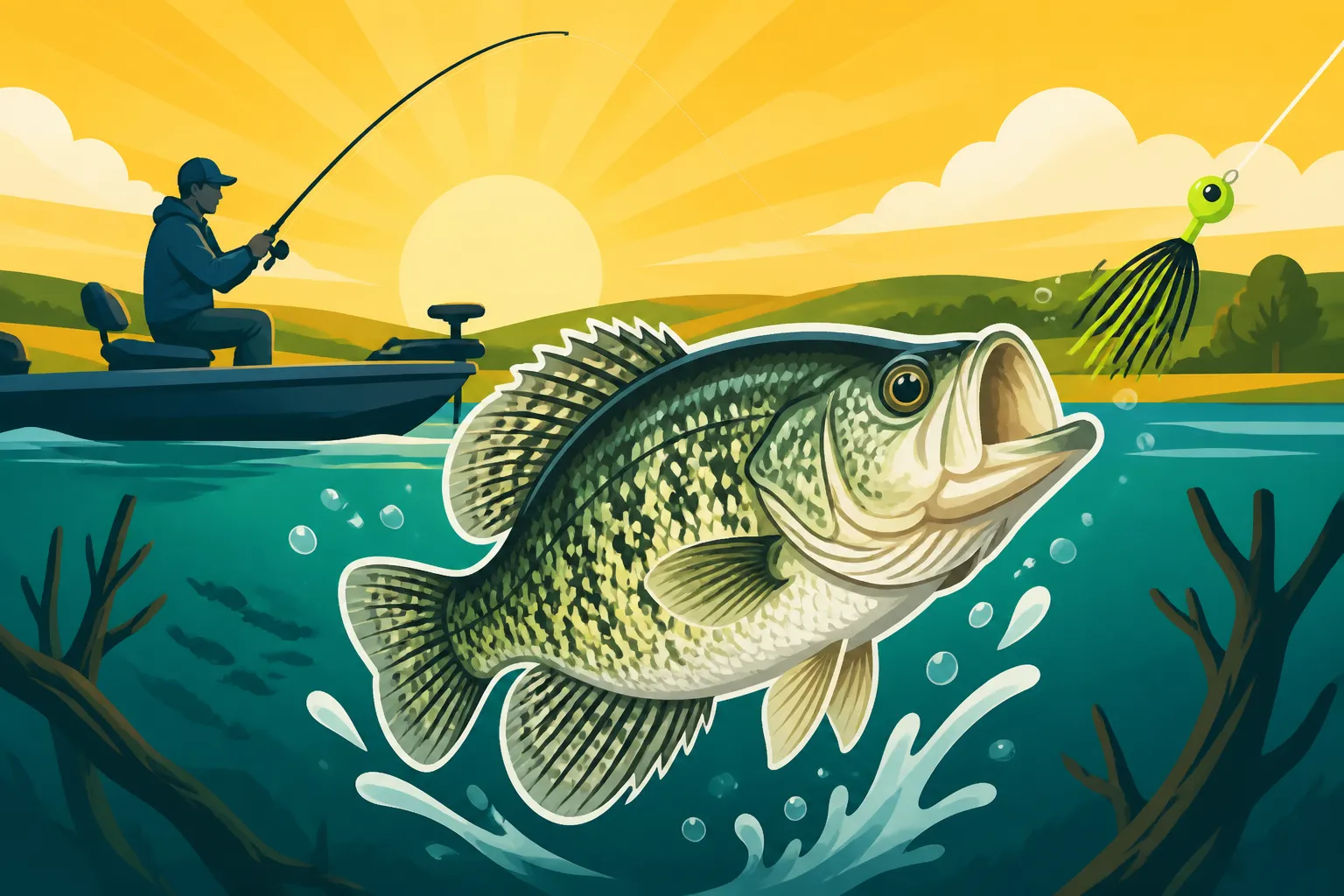
Spring crappie fishing in Kansas can be incredibly rewarding, but it often feels like a guessing game. One day the fish are biting everything you throw at them, and the next they've vanished without a trace. This guide cuts through the confusion, offering proven strategies and practical tips to help you understand crappie behavior throughout the dynamic spring season, ensuring you consistently find and catch these elusive slabs.
Understanding Spring Crappie Behavior
The spring season in Kansas is a period of massive change for crappie, driven almost entirely by water temperature. If you can understand what the crappie are doing at each stage, you're halfway to filling your livewell. It's a progression from deeper staging areas to shallow spawning beds, and then back out again as the water warms and the fish recover.
The Pre-Spawn Rush
Before the actual spawning begins, crappie enter what's known as the pre-spawn phase. This is arguably one of the best times to target them because they're actively feeding, bulking up for the energy demands of reproduction. As the ice melts and water temperatures slowly climb from the low 40s into the 50s Fahrenheit, crappie will start to move out of their deeper winter haunts. They're looking for transition areas where they can quickly access both deep water for safety and shallow water to feed.
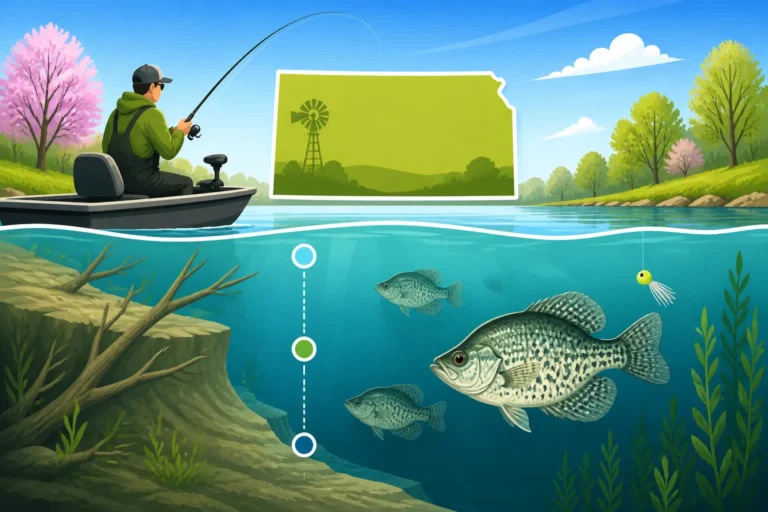
You'll often find these fish staging in concentrated schools along creek channels, at the edges of submerged timber, or on the deep side of brush piles that are close to future spawning grounds. Think about those main lake points or creek channel bends that offer quick access to shallow coves. They're still somewhat lethargic in the colder water, so slow presentations are key. They're not chasing aggressively yet, but they're definitely hungry. This period is all about finding those concentrations of fish before they scatter into the shallows.
The Spawning Frenzy
This is what most anglers think of when they talk about "spring crappie." Once the water temperatures consistently hit the sweet spot – typically between 58 to 68 degrees Fahrenheit – the crappie move inshore for their annual spawning ritual. The male crappie are usually the first to arrive, seeking out shallow, protected areas to fan out nests. These nests are often found around emergent vegetation like cattails or lily pads, submerged brush, rock beds, or even along riprap banks. In clearer Kansas lakes, you might even be able to sight-fish for them.
During the spawn, the fish are incredibly focused on reproduction, but they will strike out of aggression or if a bait presents an easy meal. Males will guard their nests, making them quite territorial. Females will move in, lay their eggs, and then typically retreat to slightly deeper water to recover. This phase can last for several weeks, depending on stable weather conditions. A good understanding of When Does Crappie Spawn Start? and Best Water Temperature for Crappie Spawn will greatly inform your efforts during this exciting time.
Post-Spawn Recovery
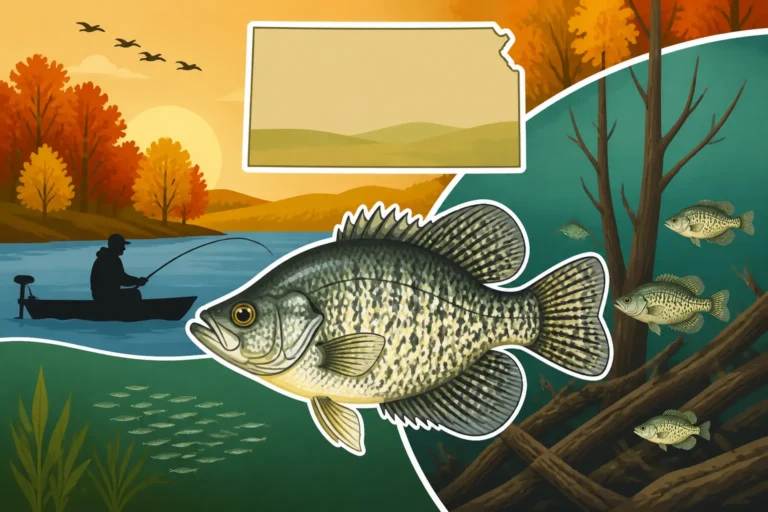
As the water continues to warm, usually into the mid-to-upper 60s and 70s Fahrenheit, and the spawning activity subsides, crappie enter the post-spawn phase. This can be one of the trickiest times to locate them. The fish, especially the females, are often exhausted from spawning and tend to scatter, seeking out deeper, cooler water to recover. They might suspend over deeper creek channels or retreat to the protection of brush piles located on pronounced drop-offs.
The males might linger on the nests for a short period, guarding the fry, but eventually, they too will disperse. The bite can be slower during this phase as fish aren't aggressively feeding. You might find them in smaller, less concentrated groups. Patience and covering a lot of water become crucial here. This is where knowing the nuances of Kansas Crappie Length and Bag Limits becomes important, as you'll want to ensure any fish you keep are within legal parameters while giving the post-spawn fish a chance to recuperate.
Timing Your Spring Crappie Trip
Beyond just knowing the stages, when you hit the water makes a world of difference. Spring weather in Kansas can be notoriously fickle, swinging from warm and sunny to cold and blustery in a matter of hours. Being aware of key indicators and adapting your approach accordingly is vital for consistent success.
Deciphering Water Temperature Cues
As we've discussed, water temperature is the absolute king when it comes to predicting crappie movement in spring. Having a reliable thermometer is non-negotiable for serious crappie anglers. In the early spring, when surface temperatures are creeping from the low 40s to the mid-50s, focus on deeper staging areas. Look for the warmest water pockets – often shallower, darker-bottomed coves that absorb more sunlight, or northern banks protected from cold winds. These areas will warm first and often attract baitfish, bringing crappie with them.
Once temperatures settle into the prime 58-68°F range, crappie will commit to the spawn. Monitor temperatures in different areas of the lake; the spawn might start in one cove weeks before another due to slight temperature differences. After the spawn, as temperatures push past 70°F, crappie will move deeper. Don't be afraid to fish those deeper breaks and creek channels as they transition to their summer patterns. Knowing how to read these subtle shifts can turn a slow day into a productive one.
Best Times of Day to Target Crappie
While the general rule of thumb is often early morning and late evening, spring crappie can be a bit more nuanced. During the pre-spawn and early spawn, particularly on brighter, sunnier days, crappie might hold a little deeper during the brightest parts of the day, moving shallower at dawn and dusk. However, on cloudy or overcast days, especially during the spawn, they might stay shallow and active all day long. The reduced light penetration makes them feel safer in the shallows.
Post-spawn, when fish are more scattered and lethargic, mid-day can sometimes be productive if the water has had a chance to warm up a bit after a cool night. Pay attention to shade lines created by trees or docks, as these can be magnets for crappie seeking comfort from bright sunlight. The takeaway here is flexibility: be prepared to adjust your fishing times based on the prevailing weather and the specific phase of the crappie season you're experiencing.
Navigating Weather Considerations
Kansas weather isn't just about temperature; wind, rain, and pressure changes play a huge role. Stable weather patterns, even if it's consistently cloudy or consistently sunny, are generally best. Crappie don't like drastic changes. A sudden cold front pushing through can immediately shut down a hot bite, sending crappie scurrying back to deeper water and making them incredibly difficult to entice. When a cold front hits, slow down your presentation, downsize your baits, and target areas with vertical cover where fish can quickly change depths.
Wind, surprisingly, can be your friend. A moderate wind can create current, concentrate baitfish, and push crappie to wind-blown banks where food is accumulating. However, too much wind makes boat control a nightmare and hinders precise presentations. Light rain can often be excellent, as it darkens the sky and washes terrestrial insects into the water, triggering a bite. But a heavy downpour can muddy the water, making it harder for crappie to see your bait. Always check the forecast before you go, and have a plan B for adverse conditions.
Essential Gear for Spring Crappie Fishing
You wouldn't head into battle without the right tools, and crappie fishing is no different. Having the correct rods, reels, line, and bait can drastically improve your chances, especially when dealing with the delicate bites often associated with spring crappie. Don't overthink it, but don't under-equip yourself either.
Rods, Reels, and Line
For spring crappie, sensitivity is paramount. You want to feel those subtle "ticks" or the sudden weightlessness that signals a bite. A good ultralight to light action spinning rod, typically between 5 to 7 feet in length, is ideal. These rods have a soft tip that detects light bites and protects thin lines, but enough backbone to handle a decent crappie. Paired with a small spinning reel (think 500 to 1000 series), spooled with 4 to 6 pound test monofilament or fluorocarbon line, you'll be able to make delicate casts and feel everything. Many anglers, including myself, find great value in brands like Berkley or St. Croix for their sensitivity without breaking the bank. You can often find excellent deals on sensitive rods and reels on online retailers like Amazon.
Some anglers opt for braided line with a fluorocarbon leader for added sensitivity and casting distance, especially when fishing deeper water or in windy conditions. The no-stretch properties of braid transmit even the faintest bite, but the mono or fluoro leader is crucial for stealth in clearer water. Check out guides like Best Rod and Reel Combo for Crappie for more specific recommendations on setting up your crappie rig.
Hooks, Sinkers, and Floats
The smaller the crappie's mouth, the smaller your hook needs to be. For live minnows, small, sharp Aberdeen hooks in sizes #2 to #6 are perfect. Their thin wire helps prevent snagging and bends out easily if you get hung up, saving your line. When using jigs, match the hook size to the jig body. For most crappie jigs, a good quality jig head with a sharp, small hook is what you're after. Small split shot sinkers are your friend for adding just enough weight to get your bait down without inhibiting its natural movement.
Perhaps one of the most underutilized tools for spring crappie is the slip bobber. Unlike fixed bobbers, a slip bobber allows you to fish at any depth, which is critical when crappie might be suspended or holding at a very specific depth in brush piles. A bobber stop slides up and down your line, letting your bait fall naturally until it hits the desired depth, at which point the bobber "slips" down to the stop. This setup is indispensable for precision presentations. For deeper dives into hook selection, refer to Best Hook Size for Crappie Jigs.
Baits and Lures
Variety is the spice of life, and crappie fishing is no exception. Live minnows are, and always have been, a go-to choice for spring crappie. Their natural movement is often irresistible. Hook them lightly through the lips or just behind the dorsal fin for the most natural presentation. Small jigs, typically ranging from 1/32 to 1/8 ounce, are incredibly versatile. Colors like chartreuse, pink, white, black/chartreuse, and various glitter combinations are staples in any crappie angler's tackle box.
Pair these jig heads with soft plastic bodies such as tiny tube jigs, grubs, or small paddle-tail swimbaits. These plastics come in an endless array of colors and profiles, allowing you to "match the hatch" or experiment until you find what the crappie prefer on a given day. You can find a huge selection of these soft plastics on Amazon, making it easy to stock up on different colors and styles. Don't overlook small, ultralight spinnerbaits or tiny crankbaits, especially in pre-spawn when crappie are more aggressively feeding. Guides like Best Bait for Kansas Crappie and Best Lures for Kansas Crappie offer detailed insights into what crappie are biting.
Top Techniques for Spring Crappie
Once you have your gear sorted, it’s time to talk strategy. Spring crappie can be caught in many ways, but certain techniques shine during this season, allowing you to effectively target fish in their various spring stages.
Mastering Jigging Presentations
Jigging is perhaps the most fundamental and versatile technique for crappie fishing, especially in spring. When crappie are holding tight to submerged brush piles, timber, or bridge pilings in deeper water (pre-spawn or post-spawn), vertical jigging is incredibly effective. Drop your small jig or jig-and-minnow combo directly into the cover, watching your fish finder closely for fish or structure. Use a slow, subtle lift-and-drop motion, letting the jig "breathe" naturally. Often, the bite will be a slight tap or just a feeling of added weight.
During the spawn, when crappie move shallow, casting and slowly retrieving a small jig near shorelines, fallen trees, or emergent vegetation can be deadly. A slow, steady retrieve with occasional pauses often triggers strikes. Another effective technique, particularly around docks or low-hanging cover, is "shooting" jigs. This involves holding the jig by the hook, bending your rod tip, and releasing the jig and rod tip simultaneously to send the lure skipping far under cover where traditional casts can't reach. It's a skill that takes practice but pays off big time in pressured areas. Learn more about effective methods in Jigging Techniques for Kansas Crappie and How to Jig for Crappie in Rocky Cover.
The Efficacy of Live Bait
While artificial lures are incredibly popular, nothing consistently out-fishes live bait for crappie, especially shy or finicky fish. Live minnows are the undisputed champion. There are a few primary ways to present them:
- Under a Slip Bobber: This is fantastic for fishing suspended crappie or those holding at a specific depth over or in cover. Set your bobber stop to the desired depth, cast it out, and let the minnow do the work. The bobber acts as a visual strike indicator, dipping or laying flat when a crappie takes the bait. This is particularly effective during the spawn when fish are shallow and often wary.
- Tight-Lining: Also known as "spider rigging" or "long-lining" with live bait, this involves fishing minnows on multiple rods (where legal, and often from a boat) at varying depths, without a bobber. You rely on the rod tip to indicate a bite. This is excellent for covering water when crappie are scattered (post-spawn) or for exploring different depths until you find them.
- Small Worms or Crickets: While less common for crappie, don't underestimate the power of a small piece of worm or a cricket, especially in farm ponds or smaller impoundments where crappie might be more accustomed to these natural food sources. Fished under a tiny bobber, they can be surprisingly effective.
Trolling and Spider Rigging
For covering large expanses of water and finding scattered crappie, especially during the pre-spawn and post-spawn periods, trolling and spider rigging are incredibly efficient techniques.
- Trolling: This involves slowly moving your boat while pulling baits or lures behind it. You can troll small jigs, crankbaits, or even live minnows at various depths. The key is to experiment with speed, depth, and lure color until you find what triggers a bite. Trolling is excellent for covering creek channels, main lake points, or flats in larger Kansas reservoirs like Milford Lake or Cheney Reservoir. It's a fantastic way to locate schools of fish that aren't concentrated in obvious cover.
- Spider Rigging: This technique is a variation of tight-lining where multiple rods (often 4-8 or more) are deployed from specialized rod holders around the front or sides of the boat, fanned out like a spider's legs. Each rod can present a different bait (jig, minnow, or combo) at a different depth. You slowly push or pull the boat, often with a bow-mounted trolling motor, over areas you suspect hold crappie. This method maximizes your chances of finding the right depth and presentation, making it very effective for catching numbers of crappie throughout the spring.
Where to Find Spring Crappie in Kansas
Knowing how to fish is only part of the equation; you also need to know where to go. Kansas offers a diverse range of fishing opportunities, from massive reservoirs to small community lakes and winding rivers, all of which can hold spring crappie if you know what to look for.
Key Habitat and Structure
Crappie are structure-oriented fish, and in spring, they prioritize cover that offers both protection and proximity to spawning areas. Submerged brush piles and standing timber are perennial favorites, providing sanctuary and ambush points. Look for these near creek channels or on points leading into coves. Rocky beds and riprap banks, especially those facing the sun, warm quickly and provide excellent spawning substrate, attracting crappie during the peak spawn.
Boat docks and bridge pilings are also crappie magnets. The vertical structure and shade they provide are irresistible. In areas with emergent vegetation like cattails, lily pads, or coontail moss, crappie will often move right into the thick stuff during the spawn. The key is to focus on transition areas – where deep water quickly gives way to shallow flats, or where two types of cover meet. These "edges" are where crappie will stage and move along. Remember, even a small piece of submerged wood can hold a dozen crappie.
Community Lakes and Reservoirs
Kansas is blessed with numerous public fishing waters that offer fantastic spring crappie opportunities. Many of the state's large reservoirs are renowned for their crappie fishing. Consider places like Clinton Lake near Lawrence, known for its crappie populations, or Hillsdale Lake in Miami County, which has dedicated Hillsdale Lake Crappie Fishing Spots that consistently produce. Melvern Lake and El Dorado Lake are also popular choices. For those closer to central Kansas, Milford Lake often has a prolific Milford Lake Crappie Spawn Timing in May, offering great action in its many coves.
Beyond the big reservoirs, Kansas has an excellent network of State Fishing Lakes and Community Fishing Lakes. These smaller, managed impoundments are often easier to access, have plenty of fish, and can be perfect for bank fishing or small boat anglers. The Kansas Department of Wildlife, Parks and Tourism (KDWP) actively manages and stocks many of these, providing detailed fishing reports. Always check Kansas Community Lake Fishing Rules before you go, as some smaller lakes have specific regulations.
Rivers and Smaller Impoundments
While not as universally known for crappie as the large reservoirs, several Kansas rivers and smaller impoundments can offer excellent, often less-pressured, spring crappie fishing. The backwaters and oxbow lakes along rivers like the Kansas River or the Marais des Cygnes River can hold good numbers of crappie that move in from the main channel as water levels stabilize and temperatures rise. Look for areas with slower current and plenty of woody debris.
Additionally, don't overlook private farm ponds. Many landowners are happy to let responsible anglers fish their ponds, and these can be absolute crappie goldmines, often holding larger, less pressured fish. Just remember to always ask for permission first. If you're considering fishing private waters, it's essential to be aware of regulations surrounding private pond fishing, as covered in Do You Need a License to Fish Private Water in Kansas?. Sometimes these smaller waters warm up faster than large lakes, giving you an earlier crack at spring crappie.
Overcoming Common Spring Crappie Challenges
Even with the best gear and knowledge, spring crappie fishing isn't always easy. There are common hurdles that every angler faces. Learning how to anticipate and react to these challenges is a mark of a seasoned crappie angler.
Dealing with Cold Fronts
Nothing can shut down a hot crappie bite faster than a sudden cold front. One day you're catching them hand over fist in the shallows, and the next, the skies are clear, the wind is blowing from the north, and the fish have vanished. Cold fronts typically bring bright, clear skies and dropping air temperatures, which in turn cool the water. When this happens, crappie often become lethargic and retreat to deeper water or bury themselves deep within dense cover.
The key to fishing after a cold front is to slow everything down. Downsize your baits, use lighter line, and reduce your retrieve speed to a snail's pace. Focus on vertical cover where fish can easily move up or down the water column, such as tall brush piles or standing timber near a drop-off. You might also find success fishing later in the day, after the sun has had a few hours to warm the shallowest areas slightly. Persistence is crucial; the bite will be tougher, but fish can still be caught if you adjust your approach.
High Fishing Pressure
Spring crappie, especially during the spawn, can draw a crowd. Popular spots on well-known lakes like Clinton or El Dorado can become veritable flotillas of boats. High fishing pressure can make crappie wary, causing them to move off popular spots, become less aggressive, or even alter their daily routines. It's a real frustration for many anglers who just want a peaceful day on the water.
To combat fishing pressure, consider these strategies:
- Seek Less Obvious Spots: Instead of hitting the community brush piles that everyone fishes, use your electronics to find smaller, less prominent pieces of cover that might be overlooked.
- Fish During Off-Peak Hours: Weekdays, early mornings before the rush, or later evenings can often provide a more peaceful and productive experience.
- Vary Your Presentation: If everyone is jigging a chartreuse tube, try a different color, a different soft plastic profile, or switch to a minnow under a bobber. Presenting something "new" can sometimes trigger bites from pressured fish.
- Cover More Water: Don't get stuck on one spot if it's crowded and not producing. Move to another cove or arm of the lake. Often, a short boat ride can put you on unpressured fish.
The Post-Spawn Doldrums
After the excitement of the spawn, many anglers experience the "post-spawn doldrums" – a period where crappie seem to disappear and the bite becomes incredibly tough. This is when the fish are recovering, scattered, and not aggressively feeding. They're spread out and often suspended in deeper water, making them harder to locate and tempt. This can be one of the most disheartening times for even experienced crappie anglers.
The trick to navigating the post-spawn slump is patience and covering water. Don't expect to sit on one brush pile and fill a cooler. Instead, focus on larger structural elements like creek channels, deep points, and suspended schools of baitfish. Trolling with multiple rods, as discussed earlier, becomes a highly effective strategy for finding these scattered fish. Try different depths and experiment with both jigs and live minnows until you locate active fish. Sometimes the bite will be very light, so use sensitive gear and pay close attention. Remember, this period won't last forever, and the crappie will eventually settle into their summer patterns and become more predictable again.
Essential Crappie Fishing Stages and Strategies
Understanding the different phases of spring crappie behavior is paramount. Here's a quick reference to help you tailor your approach based on water temperature and fish activity.
| Crappie Stage | Water Temp Range (°F) | Typical Depth (feet) | Preferred Cover/Structure | Best Techniques |
|---|---|---|---|---|
| Pre-Spawn | 45-55 | 8-20+ | Deep brush, creek channels, drops | Vertical jigging, slow trolling |
| Spawn | 58-68 | 1-5 | Shallow brush, emergent weeds, rocks | Jigging, slip bobber with minnow |
| Post-Spawn | 65-75 | 5-15 | Drop-offs, deeper brush, suspended | Trolling, tight-lining |
Disclaimer
Fishing conditions and regulations in Kansas can change. Always consult the latest Kansas Department of Wildlife, Parks and Tourism (KDWP) regulations before heading out. The information provided here is for general guidance and educational purposes only.