Kansas Fall Crappie Fishing Tips
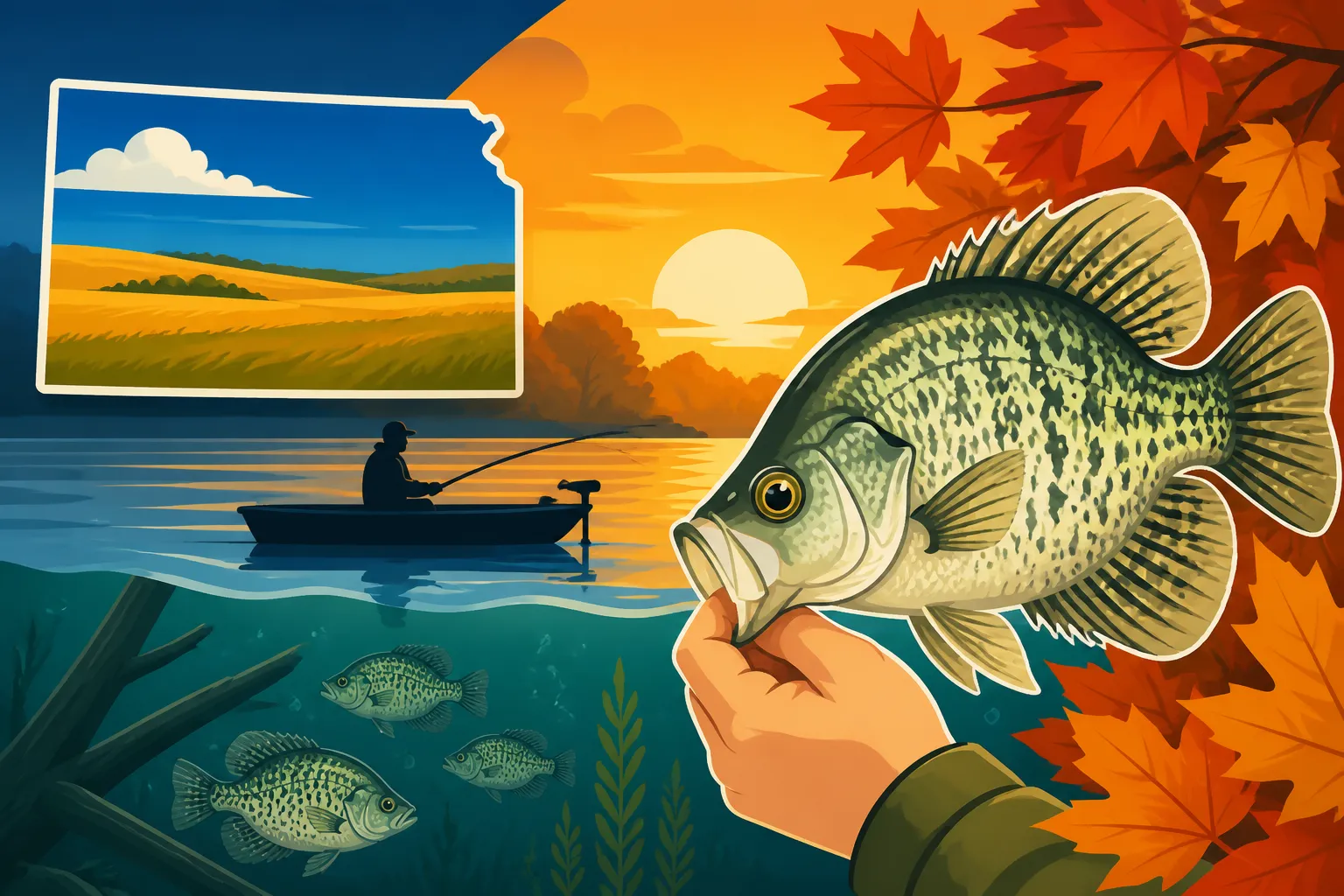
As the heat of summer fades and the leaves start to turn those beautiful amber and crimson hues, many Kansas anglers find themselves a bit lost when it comes to crappie fishing. The patterns that worked so well in July and August suddenly disappear, leaving you wondering where all the papermouths went. This comprehensive guide is here to unravel the mysteries of fall crappie fishing in Kansas, offering practical tips and techniques to help you consistently find and catch these delicious panfish as the water cools.
Understanding Fall Crappie Behavior
The transition from summer to fall is a dynamic period for crappie, marked by significant changes in their behavior, feeding patterns, and preferred habitats. It's not just about cooler air; it's about the entire aquatic ecosystem shifting, and understanding these shifts is key to successful fall crappie fishing.
The Autumn Transition: What Changes?
During the long, hot days of summer, crappie often seek refuge in deeper, cooler water, or dense, shallow cover to escape the sun and heat. They can be sluggish, feeding opportunistically. However, as autumn arrives, the water temperature begins to drop, signaling a vital change. This cooling trend, typically starting in late September and extending through November, invigorates crappie. Their metabolism picks up, and they enter a "feeding frenzy" phase, actively trying to pack on weight in preparation for the leaner winter months.
This transition means they'll move more, chase bait more aggressively, and often be found in different areas than their summer haunts. They're trying to build up fat reserves, so they become much more predictable in their pursuit of food. Think of it like kids getting ready for winter hibernation – they need to stock up! This is a fantastic time to target them because they are often less finicky than during the dog days of summer.
Following the Baitfish Migration
One of the most crucial aspects of successful fall crappie fishing in Kansas is understanding the behavior of their primary food source: baitfish. As water temperatures continue to drop, shad and other small forage fish start to move from the shallow coves and flats where they spent the summer, heading towards deeper, more stable water in the main lake basins or creek channels. Crappie are ambush predators, and they will follow these baitfish schools relentlessly.
If you can locate schools of shad, you're halfway to finding crappie. These baitfish often congregate in large, tight schools, making them easy to spot on your fish finder. They'll hug channel edges, suspend over deep water, or hold around main lake points. Sometimes, you'll even see them dimpling the surface on calm mornings or evenings, being pursued by predators. Understanding this critical link between baitfish and crappie movement is paramount; your goal becomes finding the buffet, because that's where the diners will be.
Deep Water vs. Shallow Water Patterns
The eternal question in fall: deep or shallow? The answer, as always in fishing, is "it depends!" Early in the fall, when water temperatures are still relatively mild (say, in the high 60s), you might still find crappie holding in some of the deeper ends of coves or along brush piles that were productive in late summer. However, as the mercury drops into the 50s and low 60s, a more pronounced deep-water pattern typically emerges.
Crappie will often suspend over deeper water, sometimes 15-25 feet down over a 30-40 foot bottom, particularly if there's structure like a submerged creek channel or standing timber nearby. They are often found relating to the thermocline if it still exists, but more commonly, they'll be at the same depth as the baitfish they're chasing. Don't be afraid to experiment with different depths, even in the same area. A fish finder becomes an invaluable tool here, allowing you to quickly identify schools of bait and the crappie holding beneath or within them. On rare, warmer fall days, or early mornings, they might make quick forays into shallower water, especially around weed lines or fallen timber, but the consistent bite is usually found deeper.
Key Locations for Fall Crappie
Knowing where to look for crappie in the fall is arguably more important than how you fish for them. Their movements are largely dictated by the baitfish and the availability of suitable structure in cooling waters.
Reservoir Main Lake Basins and Points
Kansas is home to numerous large reservoirs, and these expansive bodies of water offer prime fall crappie habitat. Once the water starts to cool significantly, crappie often migrate from the shallower arms and coves of the lake towards the main lake basins. Here, they find deeper, more stable water temperatures and an abundance of baitfish that have also moved out of the shrinking shallow water areas.
Focus your efforts on main lake points, especially those that drop off sharply into deeper water. These points act as natural highways and ambush points for crappie intercepting baitfish. Look for points that have submerged brush, rock piles, or old roadbeds running off them. The crappie won't necessarily be on the point itself, but rather suspended around its edges or at the depth where baitfish are holding. This is also where you'll find the larger, more consistent schools of crappie in lakes like Milford Lake or Cheney Reservoir.
Creeks and River Channels
Many of Kansas's reservoirs are formed by damming rivers, leaving behind distinct creek and river channels running through their depths. These submerged channels become vital highways and holding areas for crappie in the fall. As baitfish move into deeper water, they often use these channels as migration routes and congregation points. Crappie will patrol the edges of these channels, suspending above them or holding tight to any cover found along their banks.
When scanning with your electronics, look for sharp drops, bends, or intersections in these channels. A channel that necks down or has an old bridge abutment or timber nearby can be a goldmine. Crappie will often school up on the "inside turns" of these channels, waiting for baitfish to swim by. Understanding the topography of the lake bottom, often available through detailed mapping on modern fish finders, will give you a significant advantage in identifying these key structures.
Brush Piles and Submerged Timber
Even as crappie move deeper, they still relate to cover. Submerged brush piles, standing timber, and rock piles are magnets for fall crappie. These structures provide protection from predators, a place to ambush baitfish, and a sense of security. Many anglers, including the Kansas Department of Wildlife, Parks and Tourism (KDWP), have placed artificial brush piles in various lakes, and these are often marked on navigation charts or can be found using your electronics.
When targeting these structures, remember that crappie might be in them, above them, or around them. If you see a dense brush pile, the crappie might be suspended directly over the top of it, waiting for you to drop a jig. Or, they might be tucked right into the branches. Experiment with different depths and approaches to figure out exactly how they are relating to the cover on any given day. A good pair of polarized sunglasses from a brand like Costa or even an affordable option from Amazon can help you spot subtle variations in the water that might indicate submerged structure in shallower areas.
Essential Fall Crappie Gear and Tackle
Having the right tools for the job can make a huge difference, especially when crappie bites become more subtle in colder water. You don't need to break the bank, but investing in a few key items will pay dividends.
Rods, Reels, and Line Choices
For fall crappie, sensitivity is paramount. You're often dealing with light bites in deeper water, so a flimsy rod won't cut it. A light-to-medium light action spinning rod, typically in the 6-foot to 7-foot range, with a fast or extra-fast tip, is ideal. This type of rod allows you to feel those subtle "taps" or the sudden "weightlessness" that indicates a crappie has inhaled your bait. Paired with a small, lightweight spinning reel (like a 1000 or 2000 series), you'll have a balanced setup that minimizes fatigue during long fishing sessions.
When it comes to line, many anglers prefer a high-visibility monofilament line in the 4-6 pound test range. The high-vis color helps you detect bites by watching for line movement, which is often more apparent than feeling a subtle bite. Some anglers also opt for braided line with a fluorocarbon leader for maximum sensitivity, but the lack of stretch in braid can sometimes lead to pulling the hook out of a crappie's paper-thin mouth. For specific recommendations, check out our guide on the Best Rod and Reel Combo for Crappie.
Jigs, Minnows, and Preferred Baits
Fall crappie are aggressive feeders, and both artificial jigs and live bait can be incredibly effective.
- Jigs: Small lead-head jigs, typically 1/16 oz to 1/8 oz, dressed with soft plastic bodies, are staples. Grub tails, tube jigs, and tiny swimbaits in colors like chartreuse, white, black/chartreuse, or blue/pearl are consistent producers. Vary your jig head weight based on depth and wind; a heavier jig helps you get down faster in deeper water or windy conditions. You can find a huge variety of these on Amazon to stock up for the season. For more specific suggestions, dive into our article on the Best Lures for Kansas Crappie.
- Live Minnows: Don't underestimate the power of a lively minnow. A small fathead or shiner minnow, hooked lightly through the lip or back, is often irresistible to crappie. They provide natural scent and action that artificials sometimes can't replicate. Minnows are especially effective when the crappie are less active or when you're fishing in murky water. Our Best Bait for Kansas Crappie guide has more details.
- Combination Rigs: Many anglers combine the best of both worlds by tipping a small jig with a live minnow. This adds extra scent and an enticing live action to your artificial presentation.
Electronics for Locating Crappie
In the fall, a quality fish finder is no longer a luxury; it's practically a necessity. Locating those elusive baitfish schools and the crappie holding near them in deeper water is incredibly challenging without good electronics.
- Sonar: Traditional 2D sonar is excellent for seeing baitfish and crappie arches, especially when they are suspended.
- Down Imaging/Side Imaging: These technologies offer a more photographic view of the bottom and surrounding structure. Down imaging helps you differentiate between a brush pile and a school of fish directly beneath your boat, while side imaging can show you schools of fish off to the sides, allowing you to stay further away and avoid spooking them.
- GPS and Mapping: Integrated GPS with detailed lake maps allows you to mark waypoints for productive brush piles, channel edges, or even specific crappie schools. This is invaluable for returning to hot spots later. Brands like Humminbird and Lowrance offer excellent units with these features, though even more budget-friendly options available on Amazon can provide a significant advantage over fishing blind.
Effective Fall Crappie Techniques
Once you've located the fish and have your gear ready, it's time to put your techniques into action. Fall crappie respond well to a variety of presentations, but consistency and adaptability are key.
Vertical Jigging and Dipping
This is perhaps the most fundamental and effective technique for fall crappie, especially when you've pinpointed schools on your fish finder. Vertical jigging involves positioning your boat directly over a school of crappie or a brush pile and dropping your jig or minnow straight down into them.
- Jigging: Once your bait is at the desired depth, use subtle rod tip movements to impart action. A slow lift and fall, a slight twitch, or simply holding it still (dead sticking) can all be effective. Pay close attention to your line and rod tip for any indication of a bite.
- Dipping: This is essentially vertical jigging with a longer pole (often 10-14 feet) in closer quarters, like around the edge of a timber stand or a dense brush pile. The longer rod allows you to silently drop your bait into precise locations without getting too close with the boat.
- Spider Rigging: While more commonly associated with trolling, a modified spider rig setup can be used for vertical jigging multiple rods over a large school when drifting slowly. You can find more detailed instructions in our Jigging Techniques for Kansas Crappie article.
Spider Rigging and Trolling
When crappie are scattered over a large area, or when you're trying to cover water to find them, trolling or spider rigging can be incredibly efficient.
- Spider Rigging: This technique involves deploying multiple rods (often 4 to 8, sometimes more) from the front of your boat, fanned out like a spider's legs. Each rod typically has a different bait (jigs, minnows, or a combination) set at varying depths. You then move very slowly (0.5 to 1.5 mph) over submerged channels, flats, or main lake basins. This allows you to present multiple baits at multiple depths simultaneously, increasing your chances of finding the crappie's preferred depth and lure choice for the day.
- Trolling: Trolling can be done with jigs, crankbaits, or even simple minnow rigs. Similar to spider rigging, you're covering water, but often with fewer rods and sometimes at slightly higher speeds, especially if you're pulling small crankbaits designed for crappie or using lighter jigs. Pay attention to your speed; crappie often prefer a slower presentation in colder fall water.
Casting and Retrieving
While often seen as a shallow-water technique, casting can still be effective in the fall, particularly around distinct structures like main lake points, submerged humps, or the edges of river channels where crappie might be holding tighter to the cover.
Cast a small jig, grub, or crankbait towards the structure and work it back slowly. You'll want to experiment with retrieval speeds and pauses. Sometimes, a slow, steady retrieve just above the structure is all it takes. Other times, a stop-and-go retrieve, mimicking a dying baitfish, will trigger a strike. This technique is especially good on less windy days when boat control for vertical presentations might be challenging or when you want to explore areas without driving directly over them. Always be mindful of the subtle bites; sometimes, a crappie strike feels more like your lure just got "heavy" or "sticky" rather than a definitive tug.
Navigating Fall Weather and Water Conditions
Kansas fall weather can be a bit of a rollercoaster, swinging from warm, sunny days to sharp, frosty mornings. These changes directly impact crappie behavior, so being prepared and understanding how conditions affect the fish is vital.
Temperature Swings and Their Impact
One day it's 70 degrees, the next it's 40. This is typical Kansas fall. These temperature swings, while sometimes uncomfortable for us, play a huge role in crappie activity. A sudden cold front can often push crappie deeper and make them more lethargic for a day or two. They might "clam up," becoming less willing to chase baits.
Conversely, a stable period of cooling temperatures, especially if it's gradual, is usually fantastic for fishing. This is when crappie are most active and predictable, following the baitfish into deeper water and feeding heavily. On warmer days in early fall, crappie might temporarily move shallower in the morning or evening before retreating to deeper haunts. Always check the water temperature before you go out; it's a more reliable indicator of crappie behavior than air temperature alone. A surface temperature in the low to mid-50s is often a sweet spot for active fall crappie.
Wind and Clarity Considerations
Wind and water clarity are two other environmental factors that demand your attention.
- Wind: A moderate breeze can actually be your friend. It creates a "crappie chop" on the water's surface, which can break up light penetration and make crappie feel more secure, encouraging them to move and feed. It also helps with natural boat drift if you're spider rigging. However, high winds (over 15-20 mph) can make boat control challenging, make detecting bites nearly impossible, and can muddy up shallow areas. On very windy days, focus on protected coves or leeward sides of main lake points.
- Clarity: Fall can bring clearer water as algae blooms die off. Clear water means crappie rely more on sight, so presentation becomes even more critical. You might need to use smaller baits, lighter lines, and more natural colors. If the water is still stained or muddy, brighter colors like chartreuse or orange can be more effective, and the vibrations from a thumper or scented baits might help draw fish in. Always observe the water clarity at your specific location; it can vary greatly even across the same lake.
Best Time of Day to Fish
Unlike summer, when night fishing can be incredibly productive, or early morning bites are fleeting, fall often offers a more extended productive window. While early mornings and late evenings are still prime times, the middle of the day can also be excellent, especially as the season progresses and temperatures drop further.
As the sun warms the water even slightly during the day, it can spur crappie activity. Many veteran fall crappie anglers in Kansas will tell you that the bite often picks up significantly from late morning through mid-afternoon. This is especially true on colder days when the sun has had a chance to penetrate the water column. Don't be afraid to fish through midday, patiently working those deep structures. Remember, consistency in finding the right depth and structure is often more important than the exact time of day in fall. Our guide on Kansas Fishing Seasons Guide provides a broader overview of seasonal trends.
Conservation and Limits for Fall Crappie
As enthusiastic as we get about catching crappie, it’s always important to remember our role in conservation. Responsible angling ensures that future generations can enjoy the same fantastic fishing experiences we do.
Understanding Kansas Crappie Length and Bag Limits
Before you even make your first cast, you must know the current fishing regulations for crappie in Kansas. These rules are put in place by the KDWP to manage fish populations and ensure healthy fisheries. Crappie regulations can vary not just statewide, but sometimes by specific lake or river. For instance, some lakes might have a minimum length limit (e.g., 10 inches), while others might have a slot limit or no length limit at all. Daily creel limits, which define how many fish you can keep, are also strictly enforced.
Typically, in Kansas, the general daily creel limit for crappie (both white and black) is 50 fish, but this can change. Always consult the most recent Kansas Fishing Regulations Explained booklet or the KDWP website before each outing. Getting caught with undersized fish or over the limit can result in hefty fines and even loss of fishing privileges. It's truly not worth the risk. Keep a measuring board or tape handy, and if there's any doubt about a fish's legal length, it's always best to release it.
Practicing Catch and Release
While crappie are delicious table fare, practicing selective harvest and catch and release is crucial for maintaining robust populations.
- Selective Harvest: This means keeping some of the medium-sized fish (often called "eaters") that are within the legal limits, but releasing the largest, trophy-sized crappie. Those big females are often the most prolific spawners, contributing significantly to future generations. Releasing them helps ensure a strong gene pool and more big fish for everyone down the line.
- Careful Handling: If you plan to release fish, handle them as gently as possible. Use a rubber-coated net to minimize scale and slime loss, and wet your hands before touching the fish. Remove hooks quickly with pliers or a de-hooking tool. If a fish is deeply hooked and bleeding heavily, it's often best to keep it if it's legal, rather than releasing it to die.
- Barbless Hooks: Consider using barbless hooks or pinching down the barbs on your jigs. This makes hook removal much easier and less traumatic for the fish, increasing their survival rate upon release.
By understanding crappie behavior, mastering appropriate techniques, and respecting the regulations, you're not just ensuring your own success on the water this fall, but also contributing to the health and longevity of Kansas's incredible fishing resources. Happy fall fishing!
Disclaimer
The information provided in this guide is for general informational purposes only and is not intended to be legal advice or a substitute for professional guidance. Fishing regulations, conditions, and best practices can change rapidly. Always consult the official Kansas Department of Wildlife, Parks and Tourism (KDWP) regulations and local authorities before engaging in any fishing activities. Adherence to all local, state, and federal laws is the sole responsibility of the angler.