Free Fishing Access Programs for Disabled Kansans
It can be incredibly frustrating to feel excluded from something you love, especially when it comes to enjoying the great outdoors and the simple pleasure of fishing. For disabled Kansans, navigating the rules and finding truly accessible spots can sometimes feel like more trouble than it’s worth. This guide is here to break down the specific programs, exemptions, and resources available, ensuring that everyone has the chance to cast a line and experience the peace of Kansas’s beautiful waters.
Navigating Kansas Fishing License Exemptions for Disabled Anglers
One of the first hurdles many anglers face is understanding fishing license requirements. For disabled Kansans, there are specific exemptions and considerations that can make fishing more accessible, sometimes even free. It's crucial to know these rules to avoid any unexpected fines and ensure you're fishing legally and within your rights. The Kansas Department of Wildlife, Parks and Tourism (KDWP) has provisions to support anglers with disabilities, and understanding them is your first step toward hassle-free fishing.
Who Qualifies for Disability-Related Exemptions?
Kansas offers some thoughtful exemptions for certain individuals with disabilities. For instance, disabled veterans often qualify for special considerations when it comes to fishing licenses. Generally, if you are a Kansas resident who is a disabled veteran with a service-connected disability of 50% or more, you may be eligible for a free fishing license. This isn't just a small discount; it’s a full exemption, a small token of gratitude for immense sacrifice. The specific percentage of disability is key here, so it's always best to have your documentation in order. Beyond veterans, other forms of disability might qualify for special permits or reduced rates, though the "free" aspect is most prominently associated with disabled veterans. It's not always about a blanket "free for all disabilities," but rather specific criteria designed to assist those most in need. You can read more about specific eligibility criteria in our guide on Kansas Disabled Veteran Fishing License.
For example, imagine John, a disabled veteran from Wichita, who served our country bravely. He has a 60% service-connected disability. John can apply for a free fishing license through KDWP, allowing him to fish the local ponds and reservoirs without the annual license fee. This means more money for bait, gas, or even some new fishing lures. It's about removing a financial barrier to a beloved pastime.
The Application Process for Free or Reduced-Cost Licenses
Applying for these special licenses or exemptions isn't overly complicated, but it does require some documentation. For disabled veterans, you'll typically need proof of your veteran status and documentation from the U.S. Department of Veterans Affairs (VA) verifying your service-connected disability rating. This usually comes in the form of an official letter or benefits summary.
You can apply in person at a KDWP office, or sometimes through mail. The KDWP website or a quick call to their office will provide the most up-to-date forms and instructions. It’s not an instant process, so don't wait until the day before your planned fishing trip to apply! Give yourself a few weeks for processing. The system is designed to be helpful, not restrictive, so don’t hesitate to reach out to KDWP staff if you have questions. They are usually very willing to guide you through the specifics. It is important to know that these exemptions are specific to Kansas residents; out-of-state disabled individuals would need to check Kansas Nonresident Fishing License Guide for their options.
Let's consider Sarah, who recently moved to Topeka and is a disabled veteran. She calls KDWP and learns she needs her VA letter. She downloads the application form from the KDWP website, attaches a copy of her VA letter, and mails it in. A few weeks later, her free fishing license arrives, ready for her to use at nearby Lake Shawnee or Clinton Lake. It’s a straightforward process that simply requires a little proactive effort.
Understanding Companion Rules and Assistance
Sometimes, a disabled angler might need assistance while fishing. Kansas fishing regulations often have provisions regarding who needs a license and who doesn't, particularly when it comes to assisting another angler. While a licensed angler can generally assist another licensed angler without their helper needing a separate license for that specific act (like netting a fish), the rules can vary when one person is fully dependent on assistance.
If you have a physical disability that prevents you from casting, reeling, or handling a fish on your own, and a companion is performing these actions for you, the companion typically needs their own valid fishing license, unless they fall under one of the general Kansas Fishing License Exemptions, such as being below the minimum age for a license. The key is usually whether the companion is actively participating in catching the fish, even if it's on behalf of the disabled angler. It's always best to clarify these specifics with KDWP, especially for unique situations, to ensure both you and your companion are compliant. The spirit of these rules is to allow access, but also to prevent abuse of the exemption system.
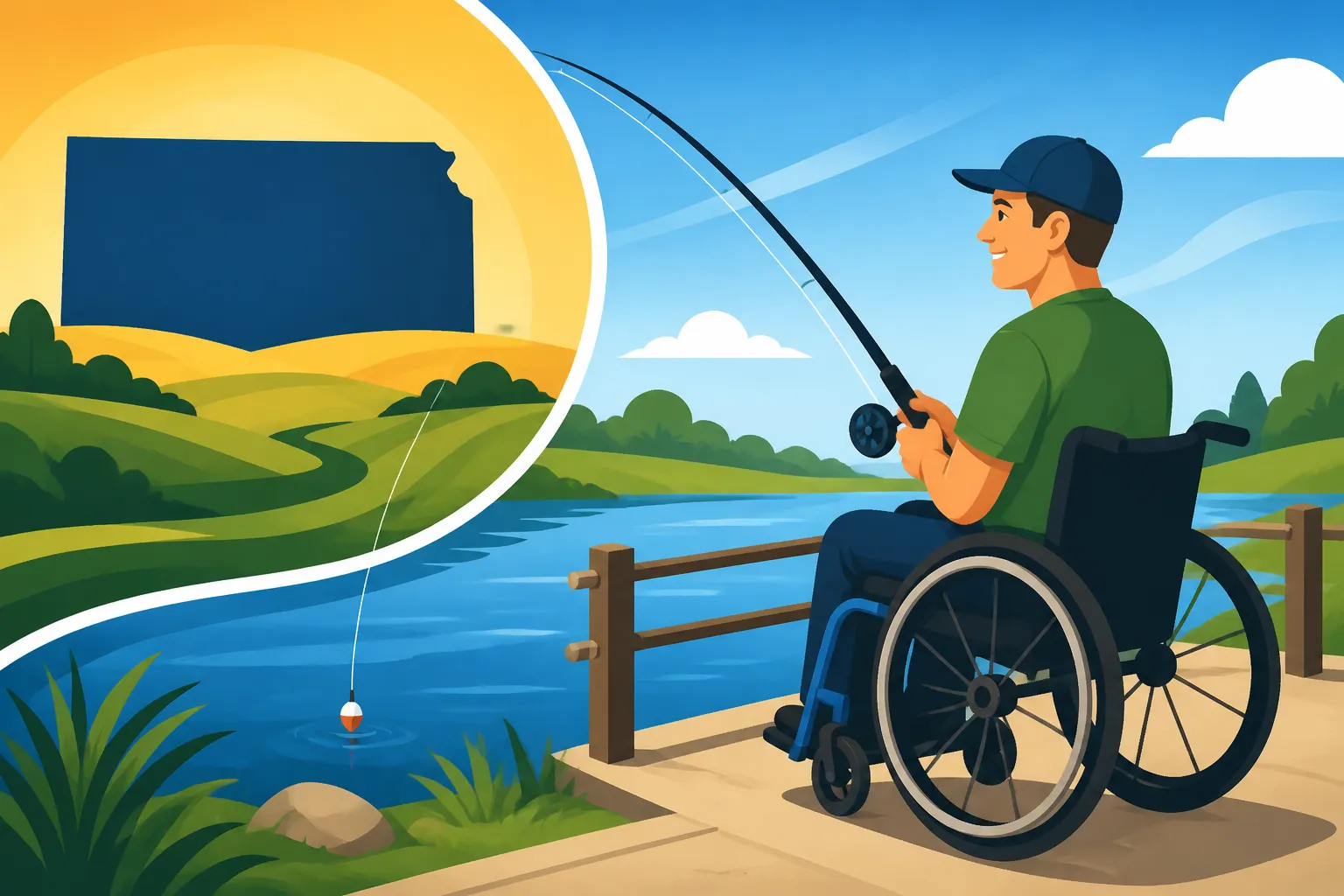
For example, Michael, who uses a wheelchair, loves to fish for crappie at Hillsdale Lake. His friend, Tom, often goes with him to help bait hooks and cast. If Tom is actively casting and reeling in fish for Michael, Tom needs his own license. However, if Michael can handle the rod once the bait is set, and Tom simply helps him get to the spot and untangles lines, Tom might not need a license for that assistance, assuming he isn't fishing himself. It's a fine line, and a quick phone call to KDWP clarifies it perfectly.
Discovering Accessible Fishing Locations Across Kansas
Having the right license is only half the battle; finding suitable places to fish is equally important. Kansas has made significant strides in recent years to improve accessibility at many of its popular fishing spots, from large reservoirs to smaller community lakes. These efforts aim to provide smooth paths, stable piers, and accessible facilities, removing physical barriers that might otherwise prevent disabled anglers from enjoying their time on the water.
ADA-Compliant Piers and Docks: Where to Find Them
One of the most important features for accessible fishing is a well-designed, ADA-compliant fishing pier or dock. These structures are built to specific standards, usually featuring gentle slopes, wider platforms, sturdy railings at appropriate heights (often with lower sections for wheelchair access), and non-slip surfaces. They allow anglers to get out over the water safely and comfortably, often reaching deeper water or different fishing grounds that might otherwise only be accessible by boat.
Many state parks and larger reservoirs across Kansas now boast such facilities. For instance, Milford Lake, near Junction City, has multiple accessible fishing areas, including improved fishing piers. Cheney Reservoir also offers several accessible spots. Even smaller waters, like many of the Kansas State Fishing Lakes Guide and community fishing ponds, are being upgraded with accessible features. When planning a trip, always look for information on "ADA accessible" or "handicap accessible" facilities on the KDWP website or through the individual park or lake's official pages. Our comprehensive list of Accessible Fishing Piers for Disabled Anglers in Kansas can be a great starting point for your next adventure.
Think about Emily, who loves fishing but uses a power chair. She used to struggle with uneven banks, but now she can easily roll onto the accessible pier at El Dorado Lake. The low railing allows her to cast comfortably, and the wide platform gives her plenty of room to maneuver and enjoy the view, feeling truly included in the fishing experience.
Accessible Paths and Restroom Facilities at Fishing Sites
Beyond the piers themselves, the journey to and from the fishing spot, and the availability of basic amenities, plays a huge role in true accessibility. Many KDWP-managed sites and state parks have invested in paved or hard-packed gravel paths leading to fishing areas, boat ramps, and restrooms. This makes it much easier for individuals using wheelchairs, walkers, or those with mobility challenges to reach their desired fishing spot without encountering difficult terrain.
Clean, accessible restrooms are another critical, often overlooked, aspect of a comfortable day out. Many major fishing destinations in Kansas have updated their facilities to include ADA-compliant restrooms, ensuring a comfortable and dignified experience for all visitors. When researching a location, checking for "accessible restrooms" or "paved access" is just as important as looking for the fishing pier itself. It's about providing a holistic accessible experience, not just a single feature.
Consider the example of the public fishing lake in Olathe, part of the Kansas Community Fishing Lake Rules program. Not only does it have an accessible pier, but the path from the parking lot is paved, and the nearby restroom facility has wide doors and grab bars. This level of detail makes a world of difference for someone like David, who relies on a walker and needs consistent, firm surfaces to navigate.
State Parks and Community Lakes with Enhanced Accessibility
Kansas is home to a fantastic network of state parks and smaller community lakes, many of which are actively improving their accessibility. State parks like Milford State Park, Wilson State Park, and El Dorado State Park are often at the forefront of these efforts, offering a range of accessible amenities beyond just fishing piers, including accessible campsites, picnic areas, and interpretive trails. These integrated facilities mean that a disabled angler can plan an entire weekend getaway with confidence, knowing that multiple aspects of their trip will be accessible.
Community fishing lakes, often managed by local municipalities in partnership with KDWP, are also excellent resources. These urban and suburban ponds are frequently stocked and tend to be smaller, making them easier to navigate. Their proximity to towns often means better infrastructure, including more accessible features. Always check with the specific park or city recreation department for the most current information on accessibility. These smaller, often overlooked gems can be perfect for a quick, accessible fishing trip close to home. Remember that some state parks may require a Kansas State Park Vehicle Permit for Anglers in addition to your fishing license.
For a family living near Kansas City, Shawnee Mission Park Lake offers several accessible spots, making it ideal for a day trip with Grandma, who uses a scooter. The flat, paved trails and accessible picnic tables mean the whole family can enjoy the outing together, not just the anglers. It's this commitment to broad accessibility that truly opens up the outdoors for everyone.
Leveraging Support Programs and Adaptive Resources for Disabled Kansans
Beyond licenses and accessible locations, there’s a whole world of support and adaptive resources that can enhance the fishing experience for disabled individuals in Kansas. From specific KDWP initiatives to local organizations and specialized gear, these programs and tools are designed to make fishing not just possible, but truly enjoyable and empowering.
KDWP Initiatives and Partnerships for Disabled Anglers
The KDWP isn't just a regulatory body; it actively promotes outdoor recreation for all Kansans. They often partner with local groups and organizations to host special fishing events specifically for individuals with disabilities. These events might offer specialized equipment, volunteer assistance, and a supportive environment for disabled anglers to learn and practice fishing skills. Such initiatives highlight the department's commitment to ensuring everyone has the opportunity to participate in Kansas's rich outdoor heritage.
These partnerships might involve providing access to private ponds, offering adaptive fishing instruction, or even subsidizing the cost of specialized equipment for participants. While specific programs can change year to year, keeping an eye on the KDWP's official announcements or contacting their outreach divisions can provide valuable information on upcoming events or ongoing initiatives tailored for disabled anglers.
For instance, KDWP might co-sponsor a "Fishing Fun Day" at a local lake, inviting disabled individuals and their families. Volunteers are on hand to help with baiting, casting, and fish handling, ensuring that everyone, regardless of their physical limitations, can experience the thrill of a catch. These events often create lasting memories and foster a strong sense of community.
Local Organizations and Events Promoting Accessible Fishing
Several non-profit organizations, both national and local, are dedicated to providing outdoor opportunities for individuals with disabilities. Chapters of national organizations like the Paralyzed Veterans of America (PVA) or Casting for Recovery (though primarily for breast cancer survivors, they offer adaptive fishing experiences) might have a presence in Kansas, organizing fishing outings and providing adaptive equipment.
Additionally, local groups, sometimes formed by passionate volunteers or fishing clubs, often host their own accessible fishing days. These grassroots efforts are invaluable, offering peer support, shared knowledge, and a welcoming environment. A simple search online for "Kansas adaptive fishing events" or contacting local bait shops and community centers can often connect you with these hidden gems of support. These groups understand the unique challenges faced by disabled anglers and strive to make every trip a positive one.
Imagine a local fishing club in Hays hosting an annual "Accessible Anglers Day" at Cedar Bluff State Park. They provide adaptive rod holders, specialized chairs, and even a pontoon boat with a ramp for easy access. This type of community support goes a long way in making fishing a reality for many who might otherwise feel left out.
Adaptive Fishing Gear and Equipment Considerations
Technology and innovation have brought about a wide array of adaptive fishing gear designed to assist anglers with various disabilities. This equipment can range from simple modifications to sophisticated devices, making tasks like casting, reeling, and holding a rod much easier. A quick search on platforms like Amazon reveals a surprising variety of options, demonstrating that the industry is recognizing and responding to the needs of disabled anglers.
- Adaptive Rod Holders: These can be mounted to wheelchairs, boat seats, or even attached to a chest harness, allowing anglers with limited arm mobility to secure their rod and reel in place. Some even have features that assist with setting the hook.
- One-Handed Casting/Reeling Aids: Devices exist that allow a single hand to perform both casting and reeling actions, perfect for individuals with the use of only one arm or hand.
- Electric Reels: For those with severe limitations in hand or arm strength, electric reels can take over the cranking action, making it possible to retrieve lines and fight fish with minimal effort.
- Specialized Grips and Handles: Ergonomically designed grips can make holding a rod more comfortable and secure for individuals with arthritis or other hand impairments.
- Accessible Seating: Lightweight, portable chairs that offer good back support and stability can be a game-changer for bank fishing, especially when traditional benches are unavailable or uncomfortable.
Choosing the right gear depends heavily on the specific needs of the individual. It's often a process of trial and error, but the availability of these tools means that many previously insurmountable challenges can now be overcome. While some items can be pricey, many effective adaptive aids are quite affordable. Our guide on Kansas Fishing Gear Guide provides a broader overview of equipment, but always consider the adaptive versions of standard gear.
For example, Mark, who has limited use of his left arm, found an adaptive rod holder on Amazon that attaches to his chair. This simple piece of equipment allowed him to cast with his right hand and then securely place the rod, waiting for a bite, without fatigue or frustration.
Planning Your Accessible Kansas Fishing Adventure
Successful fishing, especially when navigating accessibility needs, often comes down to good planning. Thinking ahead about logistics, safety, and how to maximize enjoyment can turn a potentially stressful outing into a relaxing and rewarding experience.
Essential Planning Checklist for Disabled Anglers
Before heading out, a comprehensive checklist can save a lot of headaches. It's not just about packing your fishing gear; it's about anticipating every aspect of the trip to ensure comfort, safety, and compliance.
- Check License Status: Double-check that all required licenses and permits are current, including any special disability exemptions. If you need a Kansas Trout Permit Guide, ensure that is also in order.
- Research Location Accessibility: Confirm that your chosen spot genuinely has the accessible features you need – paved paths, ADA-compliant piers, and accessible restrooms. Don't just rely on old information; call ahead if necessary.
- Weather Preparedness: Kansas weather can be unpredictable. Pack appropriate clothing for sun, rain, and varying temperatures. Sunscreen, hats, and rain gear are crucial.
- Assistive Devices: Bring all necessary personal assistive devices, such as wheelchairs, walkers, oxygen tanks, and any adaptive fishing gear you use. Make sure batteries are charged!
- Medication and Emergency Supplies: Always carry essential medications, a first-aid kit, water, and snacks.
- Communication: Ensure your phone is charged, and consider carrying a portable charger. Let someone know where you're going and when you expect to return.
- Companion Coordination: If fishing with a companion, discuss roles and responsibilities beforehand. Ensure they understand your needs and the game plan.
By taking the time to go through such a checklist, you minimize surprises and maximize the chances of a smooth, enjoyable fishing trip.
Safety Considerations and Best Practices
Safety is paramount, especially when facing mobility challenges or other disabilities. Water environments can pose unique risks, so a proactive approach to safety is essential.
- Life Jackets: Even if you're not planning to be in a boat, wearing a life jacket, especially around docks or piers, is always a good idea. Accidental falls can happen, and a life jacket provides critical buoyancy. There are even comfortable, low-profile options available.
- Awareness of Surroundings: Be mindful of slippery surfaces, uneven terrain (even on paved paths, cracks can be tricky), and potential obstacles. Keep an eye out for other anglers or boaters.
- Weather Monitoring: Keep an eye on weather forecasts, especially for sudden storms, high winds, or extreme temperatures. Know when to pack up and head for shelter.
- Hydration and Sun Protection: Dehydration and sun exposure are common issues. Drink plenty of water and reapply sunscreen frequently, even on cloudy days.
- Know Your Limits: Don't push yourself beyond your physical capabilities. If you feel fatigued or uncomfortable, take a break or call it a day. Fishing should be enjoyable, not an endurance test.
- Emergency Contacts: Have emergency contact information readily available, both on your person and shared with your fishing partner.
Following these safety guidelines ensures that you can focus on the fishing and the beauty of nature, rather than worrying about preventable hazards. Learning about Kansas Boating Safety Equipment Requirements is also a good idea if you plan to use a boat.
Maximizing Your Enjoyment on the Water
Fishing is as much about the experience as it is about the catch. For disabled anglers, finding joy often involves embracing the entire process and celebrating every small victory.
- Set Realistic Expectations: Not every trip will result in a trophy fish. Focus on the serenity, the connection with nature, and the simple pleasure of being outdoors.
- Learn and Adapt: Don't be afraid to experiment with different techniques or gear. The Kansas Fishing Techniques for Beginners guide can offer a lot of useful tips. What works for one angler might not work for another, and finding your personal rhythm is part of the fun.
- Embrace the Community: Connect with other anglers, both disabled and able-bodied. Share tips, stories, and camaraderie. The fishing community in Kansas is generally very welcoming.
- Document Your Experiences: Take photos, keep a journal, or simply take a moment to soak in the surroundings. These memories are often more valuable than any fish caught.
- Celebrate Small Wins: Whether it's successfully baiting a hook, making a perfect cast, or catching a small panfish, acknowledge and celebrate your achievements. Each outing is a chance to learn and grow.
- Plan for Comfort: Bring comfortable seating, a good cooler for drinks and snacks, and anything else that makes your time by the water more relaxing. Sometimes a simple, ergonomic cushion can make a world of difference for a long day on the pier.
By focusing on these aspects, fishing becomes a truly enriching activity, fostering independence, enjoyment, and a deep connection to Kansas's natural beauty. Whether you're chasing Kansas Walleye Fishing Techniques or simply enjoying the peaceful silence, accessible fishing opens up a world of possibilities.
Disclaimer
Please note that while every effort has been made to provide accurate and up-to-date information in this guide, fishing regulations and programs can change. It is always the angler's responsibility to consult the official Kansas Department of Wildlife, Parks and Tourism (KDWP) regulations or contact them directly for the most current information before planning a fishing trip.