When Does the White Bass Run Start at Milford Lake?
There's nothing quite like the electrifying anticipation of the white bass run at Milford Lake. For many Kansas anglers, it's the highlight of the spring, a chance to experience fast and furious action. But trying to pinpoint the exact start date can feel like chasing a ghost – one year it's early, the next it's late, leaving you wondering if you've missed the boat. This guide is here to cut through the confusion and equip you with the knowledge to predict and capitalize on the legendary Milford Lake white bass run.
The Annual Anticipation: Understanding the Milford Lake White Bass Run
The white bass run at Milford Lake isn't just another fishing event; it's a phenomenon. Every spring, as the ice recedes and water temperatures begin to climb, thousands of white bass begin their migration from the main lake body up into the inflowing rivers to spawn. This congregating behavior creates an incredible opportunity for anglers, as these normally widespread fish become concentrated in predictable areas, offering some of the most exciting and productive fishing of the year.
What Makes the White Bass Run So Special?
For starters, the sheer numbers involved are astounding. When the run is in full swing, it's not uncommon to catch dozens, or even hundreds, of fish in a single outing. The action is often non-stop, with multiple hook-ups for those fishing with multiple lines where permitted. This makes it an ideal event for seasoned anglers looking for a challenge, families introducing children to fishing, or even beginners who want to experience the thrill of catching fish consistently. It's a fantastic way to introduce someone to the sport, as success is often measured in volume rather than just a few elusive bites.
Beyond the quantity, white bass are feisty fighters for their size. They hit lures hard and put up a spirited battle, making each catch satisfying. Plus, they're excellent table fare, offering delicious white meat that's perfect for a fresh fish fry after a long day on the water. Many anglers freeze their fillets to enjoy throughout the year, extending the enjoyment of the spring run long after the frenzy has subsided. Understanding the excitement helps you appreciate why so many people anxiously await the question: When Does the White Bass Run Start at Milford Lake?
The "Where" of the Run: Republican River and Tributaries
While Milford Lake itself is teeming with white bass, the "run" specifically refers to their spawning migration into the shallower, moving waters of the rivers and larger creeks that feed the lake. The Republican River is the undisputed champion of this migration, drawing the vast majority of the spawning fish. Anglers will often focus on access points along the Republican River, especially in the areas immediately upstream from where it enters Milford Lake.
Other smaller tributaries and creeks can also see mini-runs, but the main event is always tied to the Republican River. The fish push upstream as far as they can go, often encountering natural barriers or areas where the water becomes too shallow. These choke points and transitions from deep to shallow water are prime locations. Knowing these specific areas is crucial because it's where the fish will gather, making them easier to target. Familiarizing yourself with the nuances of how to catch white bass on the Republican River will significantly improve your chances of success during this exciting time.
Decoding the Timing: When the Milford Lake Run Truly Kicks Off
Predicting the exact start of the white bass run at Milford Lake is less about a calendar date and more about a combination of environmental factors. Think of it like a puzzle where several pieces need to fall into place before the full picture emerges. While historical data can give us a general window, year-to-year variations in weather make precise predictions challenging. This is why staying informed about current conditions is far more important than marking a fixed date on your planner.
Water Temperature: The Ultimate Trigger
Without a doubt, water temperature is the single most critical factor in kicking off the white bass run. These fish are ectothermic, meaning their body temperature is regulated by the surrounding water, and their biological processes, including spawning, are highly dependent on specific thermal ranges. As a general rule of thumb, white bass begin to stage for their upstream migration once water temperatures consistently reach the upper 40s to low 50s Fahrenheit. However, the true spawning run typically hits its stride when the water climbs into the mid-50s to low 60s.
Fluctuations in temperature can cause the run to start, stall, or even temporarily reverse. A sudden cold snap after a warm spell can push fish back into deeper, warmer pockets of the lake, delaying the main event. Conversely, a sustained period of warm, sunny weather will accelerate the warming trend and kick the run into high gear. Monitoring real-time water temperatures, especially in the river arms and shallow bays, is your best bet. Many local bait shops and online fishing forums provide daily updates, helping anglers know when to grab their gear.
River Flow and Conditions: Crucial Environmental Cues
Beyond temperature, the flow rate and clarity of the Republican River play a significant role in the timing and intensity of the white bass run. Ideal conditions usually involve a moderate, steady flow. This current helps stimulate the fish's migratory instincts and also disperses eggs after spawning. If the river is running too low, it might not provide enough current or depth for the fish to comfortably move upstream.
On the other hand, excessively high water levels due to heavy spring rains can also put a damper on the early run. A massive influx of cold, muddy water can drop temperatures, reduce visibility, and make it difficult for fish to navigate or for anglers to locate them. While some muddy water fishing can be productive, extreme turbidity often scatters the fish or pushes them back into clearer, less affected areas. After a heavy rain, it’s often best to wait a day or two for the water to begin clearing and settling. You can check stream gauge data from the U.S. Geological Survey (USGS) for the Republican River near Milford to get real-time flow information.
Historical Trends and Local Lore
While every year is unique, looking at historical trends can provide a useful starting point. Generally, the white bass run at Milford Lake typically begins in late March or early April and can extend well into May, depending on the conditions. The peak action often occurs in mid-April. This is when a significant number of fish are actively spawning and accessible. Local bait shops, long-time residents, and experienced fishing guides are invaluable resources for understanding these patterns. They’ve seen countless runs come and go and often have a deep, intuitive understanding of what the current conditions mean for the upcoming fishing.
For those planning a trip, considering a booking through services like FishingBooker can connect you with experienced local guides who track these runs year after year. These pros live on the water and can offer real-time advice, ensuring you hit the run at its prime. They often have firsthand knowledge of specific honey holes that become active as the run progresses. Keeping an eye on local Kansas Fishing Seasons Guide information will help you align your trip with the general white bass season.
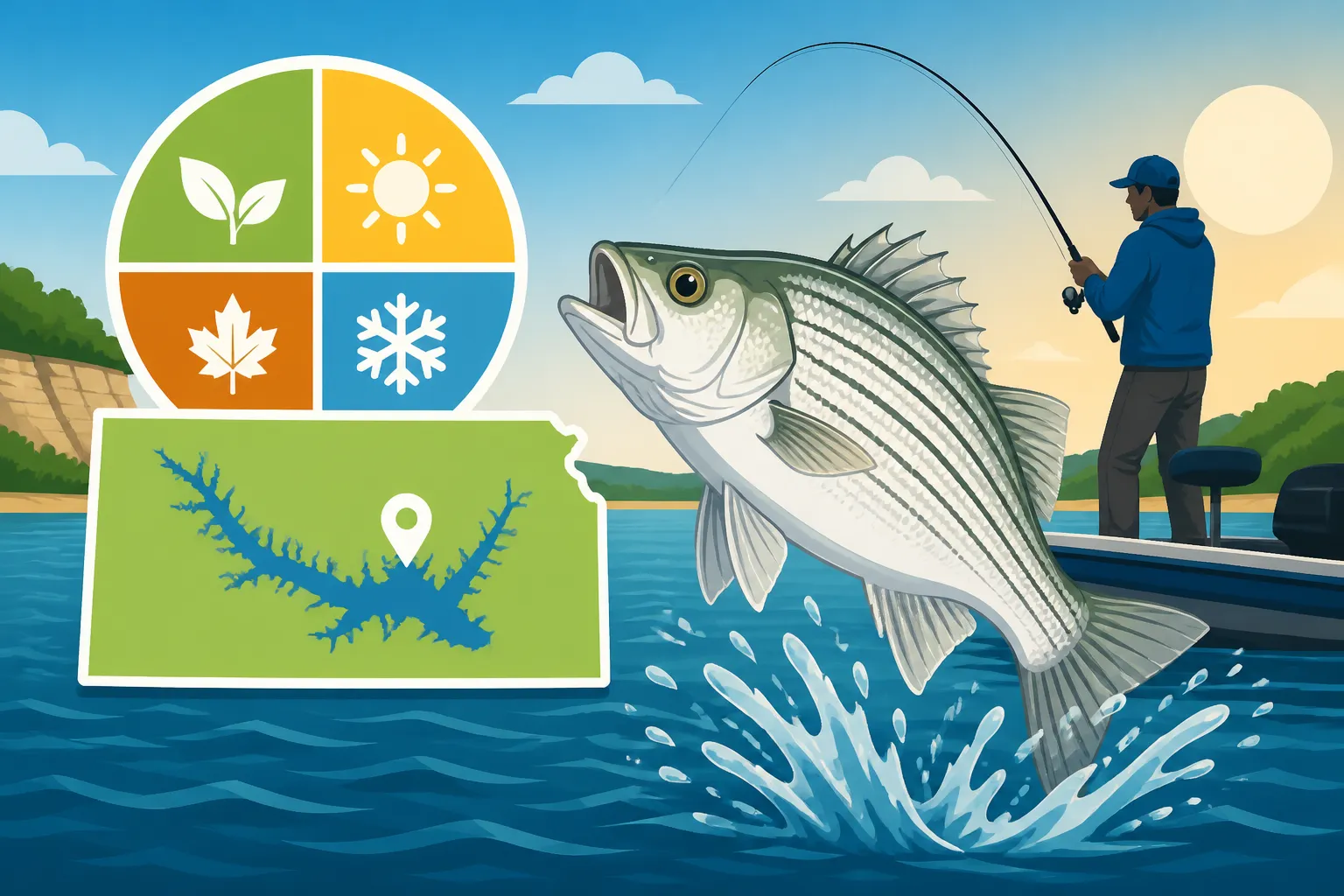
Here’s a general overview of the conditions and typical timing:
| Factor | Pre-Run (Staging) | Early Run (Initial Spawning) | Peak Run (Heavy Spawning) | Post-Run (Dispersal) |
|---|---|---|---|---|
| Water Temp | 40-49°F (4-9°C) | 50-54°F (10-12°C) | 55-62°F (13-17°C) | 63°F+ (17°C+) |
| River Flow | Stable or slightly increasing | Moderate, steady flow | Moderate to strong, steady flow | Varies, often subsiding |
| Water Clarity | Clearing or moderately stained | Clear to slightly stained | Clear to slightly stained | Can become muddy with heavy rain |
| General Timing | Mid-March to Early April | Early to Mid-April | Mid-April to Early May | Late May into June |
| Angler Success | Hit-or-miss, staging fish | Good, concentrated fish | Excellent, fast and furious | Declining, fish dispersing |
Strategies for Success: Tracking and Fishing the Early Run
Being prepared is half the battle when it comes to maximizing your success during the white bass run. While the fish will eventually show up, knowing how to track their movements and what gear to use for the initial surge can make all the difference between a few bites and a memorable day on the water.
Monitoring Conditions for the Optimal Window
The best way to catch the start of the Milford Lake white bass run is to become a diligent detective. Start paying attention to weather patterns in late March. Look for extended periods of warm, sunny days and mild nights that will consistently raise water temperatures. Monitor online resources such as the Kansas Department of Wildlife, Parks and Tourism (KDWPT) weekly fishing reports, which often provide updates on various species and water conditions, including the Milford Lake Fishing Guide updates.
Beyond official reports, join local Kansas fishing groups on social media. These communities are often buzzing with real-time reports from anglers who are out on the water every day. You’ll hear things like "Water hit 55 degrees today in the river arm!" or "Seeing a few white bass moving upstream by the old bridge!" This grassroots intelligence can be incredibly accurate and timely. Remember, the early bird often gets the worm – or in this case, the first schools of white bass. Checking for any updates regarding the Milford Lake White Bass Run can also give you crucial intel.
Essential Gear and Techniques for First Bites
When the run is just starting, the fish might be a bit more scattered or hesitant than during the peak. This means your gear and technique can be crucial. Light to medium-light spinning gear is ideal, allowing for accurate casts and sensitive detection of subtle bites. A 6- to 7-foot rod paired with a reel spooled with 6-8 pound monofilament or braided line is a versatile setup. For specific advice on rod selection, consider checking guides like Best Rod and Reel Combo for Walleye as some of these principles can cross over.
As for lures, white bass are typically aggressive, but in the early stages, smaller, more subtle presentations might be more effective. Small jigs (1/8 to 1/4 ounce) tipped with a white, chartreuse, or pink curly tail grub are perennial favorites. Small crankbaits, inline spinners like Rooster Tails, and Kastmasters or other spoon lures are also highly effective. Many anglers swear by the Best Lures for Kansas White Bass during the peak of the run. Look for lures that mimic small baitfish, as white bass are primarily piscivores. During the early run, focus on casting upstream and retrieving slowly, letting the current work your lure, or bouncing jigs along the bottom in deeper pockets.
Leveraging Local Knowledge and Resources
Never underestimate the power of local wisdom. The bait shops around Milford Lake, like those in Junction City or near Milford State Park, are treasure troves of information. The folks working there talk to anglers all day long, hear the latest reports, and often have a finger on the pulse of the run. They can tell you what lures are currently working best, which sections of the river are most productive, and what the water conditions are like.
Beyond bait shops, consider consulting with fishing guides. While you might not book a full trip, a quick chat or following their social media can provide valuable insights. Services like FishingBooker are not just for booking; they also host profiles of guides who often post updates and reports relevant to specific areas like Milford Lake. These professionals are on the water almost daily and their observations are often the most reliable indication of the run's progress. Don't forget to ensure you have your Kansas Fishing License Guide in order, and be aware of Kansas Daily Creel Limits by Species to stay compliant with regulations. It’s always best to be informed and prepared for a successful and legal fishing trip.
Disclaimer
Fishing conditions and regulations in Kansas can change rapidly. Always consult the official Kansas Department of Wildlife, Parks and Tourism (KDWPT) website for the most current rules, regulations, and advisories before heading out on the water. This guide is for informational purposes only and should not replace official sources.