How to Rig a Trotline
Trying to figure out how to set up a trotline can feel like learning a secret handshake – everyone talks about it, but actually getting the details right can be frustratingly elusive. You want to fish effectively, especially for those big Kansas catfish, but wading through vague instructions or outdated advice just wastes your precious time on the water. This guide is going to walk you through everything you need to know about rigging a trotline, from selecting the right materials to setting it up safely and effectively in Kansas waters, ensuring you're ready to haul in a great catch.
Understanding the Basics of a Kansas Trotline
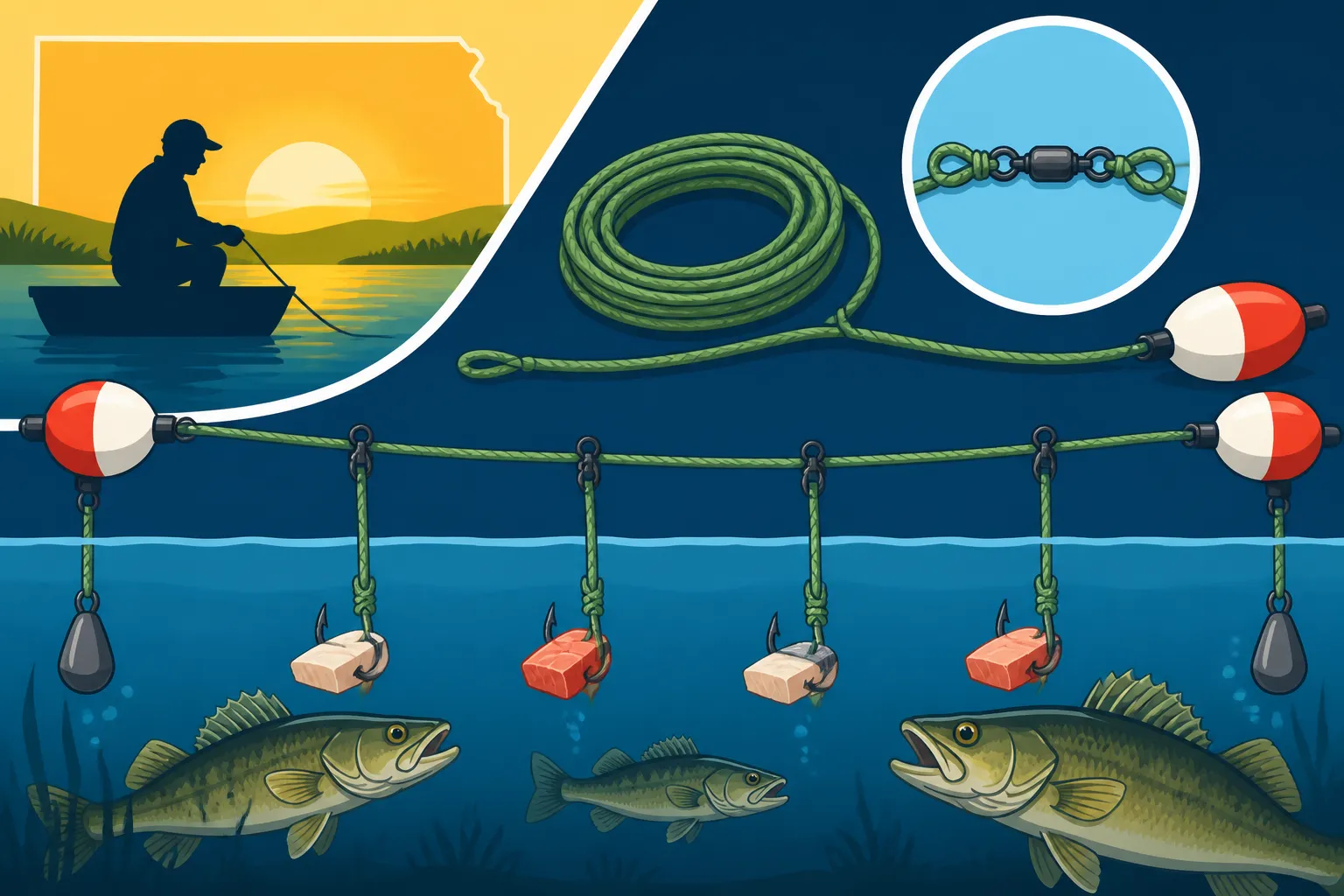
Before we even start talking about knots and hooks, let's get on the same page about what a trotline actually is in the context of Kansas fishing. It's essentially a long fishing line, often quite heavy-duty, stretched across a body of water or anchored securely at two points, from which multiple baited hooks dangle at intervals. It's a fantastic method for catching a good number of fish, particularly catfish, by allowing you to present many baits simultaneously over an extended period. But, as with any specialized fishing technique, there are specific regulations and best practices you absolutely need to follow to make sure you're fishing legally and responsibly.
What Makes a Trotline Different?
Unlike rod-and-reel fishing, where you're actively holding one line with one hook, a trotline is a passive fishing method. You set it, bait it, and leave it to do its work, checking it periodically. This allows you to cover more water and target more fish simultaneously, which can be incredibly efficient, especially for species like channel catfish, blue catfish, and flathead catfish. The sheer number of hooks you can deploy—up to 25 hooks in Kansas on a single trotline—means your chances of enticing a bite dramatically increase. It's less about the thrill of the immediate fight and more about the anticipation of what you'll find on your next check.
Kansas Regulations for Trotlines
Navigating fishing regulations can sometimes feel like deciphering ancient texts, but when it comes to trotlines in Kansas, it’s crucial to be informed. The Kansas Department of Wildlife, Parks and Tourism (KDWP) has very specific rules. For instance, each trotline can have no more than 25 hooks. You also need to make sure your name and Kansas hunting or fishing license number are clearly displayed on a tag attached to your trotline. This isn't just a suggestion; it's a mandatory requirement. You can find more comprehensive details on general fishing rules in our guide to Kansas Fishing Regulations Explained. The rules are there to prevent overfishing and ensure fair access for everyone, so understanding them isn't just about avoiding a fine – it's about being a responsible angler. Always double-check the latest KDWP regulations, as they can change.
Gathering Your Trotline Materials
Rigging a trotline isn't just about grabbing any old rope and hooks. The success and longevity of your trotline depend heavily on the quality and type of materials you choose. You want gear that can stand up to powerful fish, the elements, and the wear and tear of being submerged. Think heavy-duty and durable.
Mainline Selection and Length
Your mainline is the backbone of your entire trotline setup, so choosing the right one is paramount. You'll want something incredibly strong, abrasion-resistant, and relatively low-stretch. Many experienced anglers opt for braided nylon or polypropylene rope, typically between 1/4 inch and 3/8 inch in diameter. This kind of rope holds knots well, resists rot, and can handle the significant tension when multiple large fish are pulling on it.
When it comes to length, consider the water body you'll be fishing. Are you setting it across a narrow creek, a wider river, or a cove in a large reservoir like Milford Lake? You need enough length to span your chosen area, plus extra for anchoring securely at both ends. It's always better to have a bit too much than not enough. For example, if you're planning to set a trotline across a 100-foot channel, you might want a mainline of 120-150 feet to allow for adequate anchoring and some sag.
Snoods and Stagings
The snoods are the shorter lines that connect your hooks to the mainline. For these, a slightly lighter but still strong material is usually preferred, typically a braided nylon line in the 100-200 lb test range. The key here is strength that won't easily snap but also enough flexibility to allow the bait to move naturally and the fish to take the hook without immediate resistance.
The length of your snoods is important, too. If they're too long, the hooks might tangle with each other or the mainline. Too short, and the bait won't hang freely. A good rule of thumb is 12-18 inches. This allows the bait to flutter enticingly in the current without creating a mess. The distance between each snood on the mainline, sometimes called "stagings," is equally critical. You want enough space so that fish caught on one hook don't easily tangle with the next. Spacing snoods 3 to 5 feet apart is a common practice, depending on your target species and the size of the water.
Hook Types and Sizes
For trotlines, circle hooks are almost universally recommended, especially for catfish. Why circle hooks? Because they are designed to hook fish in the corner of the mouth, reducing the chance of gut-hooking and making release easier if you catch something you don't intend to keep. They are also incredibly effective at holding fish once they're hooked.
The size of your hooks will depend on your target species. For general catfish fishing in Kansas, a 5/0 to 8/0 circle hook is a solid choice. If you're targeting monster flatheads or blue cats, you might even go up to a 9/0 or 10/0. Brands like Mustad or Gamakatsu are popular choices and readily available on platforms like Amazon. Remember to use sturdy, sharp hooks that can penetrate tough mouths. Our guide on Best Bait for Kansas Catfish might give you some ideas for what to put on those hooks!
Anchors and Buoys
You need robust anchors to keep your trotline firmly in place, especially in moving water like the Kansas River. Depending on the bottom composition, you could use anything from heavy weights like concrete blocks or rebar anchors to specialized river anchors. The key is weight – enough to prevent the current or a struggling fish from dragging your line away. For each end of your trotline, you’ll need an anchor with at least 15-20 pounds of holding power, and potentially more in strong currents.
Buoys are essential for marking your trotline and making it easy to retrieve. Brightly colored buoys (think orange or yellow) are best for visibility, and they should be large enough to float the weight of your mainline and any fish you might catch. You'll typically attach one buoy to each anchor line, ensuring the line from the buoy to the anchor is long enough to reach the bottom with some slack, even at high water levels. This ensures your buoy stays visible on the surface.
Step-by-Step Trotline Rigging Process
Now that you've got all your materials, let's get down to the actual rigging. This isn't a race; take your time to ensure every connection is secure. A well-rigged trotline is a productive trotline.
Preparing the Mainline
First, unspool your chosen mainline. Lay it out neatly to avoid tangles as you work. You'll want to pre-tie your anchor points at each end. Create a strong loop at each end of the mainline using a bowline knot or a double surgeon's loop. These knots are incredibly strong and won't slip under tension. You’ll attach your anchor and buoy lines to these loops once you're on the water.
Next, you need to mark out where your snoods will attach. Remember that 3-5 foot spacing? Use a marker or a small piece of tape to indicate each attachment point along the mainline. This helps ensure consistent spacing and prevents overcrowding, which can lead to tangled lines and missed fish. For a 100-foot mainline with 4-foot spacing, you'd have about 24-25 hooks, which is right in line with Kansas regulations.
Attaching Snoods and Hooks
This is where the magic happens! For each marked point on your mainline, you'll attach a snood. There are a few ways to do this, but one of the most common and effective is using a trotline clip or a snood swivel. Trotline clips allow you to easily attach and detach snoods, which can be a real game-changer for baiting and removing fish. If using swivels, you'll want to tie a strong knot, like a triple surgeon's knot or a Palomar knot, to secure the snood directly to the mainline.
Once the snood is attached to the mainline, tie your chosen circle hook to the other end of the snood. Again, a strong, reliable knot like the Palomar or improved clinch knot is essential here. Make sure to cinch all knots down tightly, and trim any excess tag ends to prevent snags. Repeat this process for all 25 hooks. It's tedious, but crucial for durability.
A quick table to illustrate typical trotline components:
| Component | Material | Typical Size/Strength | Purpose |
|---|---|---|---|
| Mainline | Braided Nylon/Polypropylene | 1/4" – 3/8" diameter | The primary line, holds all hooks. |
| Snoods | Braided Nylon line | 100-200 lb test | Short lines connecting hooks to mainline. |
| Hooks | Circle Hooks | 5/0 – 10/0 | The business end, for catching fish. |
| Anchors | Concrete, Rebar, River Anchor | 15-20+ lbs each (min 2) | Securely holds trotline in place. |
| Buoys | Foam or Plastic | Brightly colored, visible | Marks trotline location for retrieval. |
| Trotline Clips | Stainless Steel | Heavy-duty | Optional: for easy snood attachment/detachment. |
| Swivels | Stainless Steel (barrel) | Heavy-duty | Prevents line twist, connects snood to hook. |
| Tag | Weatherproof | Clearly legible | Displays name and license number. |
Adding Anchor and Buoy Lines
Now for the final connections before deployment. To each end of your mainline, attach a separate length of rope for your anchor and buoy. This anchor line should be robust, perhaps 3/8-inch braided nylon, similar to your mainline. The length of this line needs to be sufficient to reach the bottom where your anchor will rest, plus enough extra to allow your buoy to float freely on the surface, even if water levels fluctuate. A good rule of thumb is to have at least 1.5 times the maximum water depth.
At the end of each anchor line, securely tie your chosen anchor. Ensure these knots are exceptionally strong, as they will bear the brunt of the entire system's weight and any fish pulling on it. Above the anchor, about 2-3 feet from where you attach it to the mainline, attach your buoy to the anchor line. This keeps your buoy visible without being so close to the mainline that it gets in the way. Don't forget to attach your KDWP identification tag to one of your buoy lines or directly to the mainline near a buoy.
Deployment and Maintenance Tips
Rigging your trotline is only half the battle; proper deployment and regular maintenance are what truly lead to consistent success and keep you within legal guidelines.
Strategic Placement for Success
Where you deploy your trotline makes a huge difference. Catfish, our primary target species for trotlines in Kansas, often prefer deeper channels, submerged structure, river bends, and areas with current breaks. Look for spots where a river or lake transitions from shallow to deep, or where there's submerged timber or rock piles. On a larger body of water like Cheney Reservoir, you might consider setting a trotline in a major creek arm or along a prominent channel. In rivers, current seams or deeper holes behind wing dikes are classic trotline locations.
Consider the time of year and water temperature, too. During warmer months, catfish are more active and might be found cruising shallower flats at night. In cooler weather, they'll often retreat to deeper, more stable water. If you're interested in more advanced tactics, check out our article on Trotline Fishing Techniques in Kansas. Remember to set your trotline in a way that minimizes interference with other boaters or anglers, and always leave ample room for navigation.
Baiting Your Trotline
This is where you truly entice those whiskered predators! Fresh bait is almost always best. Common choices for Kansas catfish include cut bait (shad, carp, perch), chicken livers, and various prepared stink baits. Some anglers even use live bait, like small sunfish or shad, for bigger flatheads, though you must ensure any live bait used is legal to possess and deploy in Kansas waters.
When baiting, make sure the bait is securely hooked. You don't want it to wash off in the current before a fish even gets a chance to find it. For cut bait, threading the hook through a chunk of fish multiple times often works well. For chicken livers, using a bait thread or small piece of pantyhose can help keep them on the hook. You can often find specialized bait rigs and storage on Amazon to keep your bait fresh. Our guide on How to Rig Cut Bait for Catfish has more in-depth advice.
Checking and Re-Baiting
Once deployed and baited, a trotline isn't a "set it and forget it" tool. You need to check it regularly, typically every 12-24 hours. The KDWP regulations might even have specific timelines for checking unattended fishing gear, so always verify. Regular checks are important for several reasons:
- Retrieve Caught Fish: The sooner you retrieve fish, the fresher they'll be. Plus, leaving fish on the line for too long can attract scavengers, damage your gear, or stress the fish unnecessarily.
- Re-Bait Hooks: Bait can get eaten, wash off, or become less attractive over time. Re-baiting ensures your trotline remains productive.
- Check for Damage/Tangles: Strong currents, snags, or large fish can cause damage or tangles. Early detection can save your entire setup.
- Comply with Regulations: Many regulations require periodic checks to prevent wasted fish.
When checking, approach carefully, especially if you suspect large fish are on the line. Wear gloves to protect your hands, and have a good set of pliers or a hook remover handy. A stout landing net or a gaff might be necessary for bigger catfish.
Safety and Environmental Considerations
Trotlining is a powerful fishing method, and with great power comes great responsibility. Safety for yourself and others, along with environmental stewardship, should always be top of mind.
Personal Safety While Handling
Handling trotlines can be tricky. The hooks are sharp, and if a large fish is on the line, it can create sudden, powerful movements. Always wear sturdy gloves to protect your hands from hooks and rough line. When pulling up the line, do so carefully and deliberately. If you're using a boat, be mindful of the boat's stability and how you distribute your weight.
If you hook yourself, remain calm. Trotline hooks are generally large and strong. Having a first-aid kit with antiseptic and bandaging supplies is always a good idea. Knowing basic hook removal techniques (or when to seek medical help) is also wise.
Minimizing Environmental Impact
As responsible anglers, we want to ensure our fishing practices don't harm the environment or other wildlife. Trotlines, by their nature, can be less selective than rod and reel. If you catch non-target species or undersized fish, handle them gently and release them quickly. This is where those circle hooks really shine, as they reduce harm to released fish.
Also, be vigilant about preventing your trotline from becoming lost or abandoned. Lost gear, known as "ghost fishing" gear, can continue to catch fish and wildlife indiscriminately for years, leading to unnecessary mortality. Double-check your anchor security, and consider attaching your name and contact information (beyond just your license number) to help with retrieval if it somehow breaks free. Always remove your trotline completely when you're finished fishing. This includes all lines, hooks, anchors, and buoys. Leaving any part of it behind is not only bad for the environment but also illegal in many places.
By understanding the regulations, carefully rigging your gear, deploying it strategically, and maintaining it responsibly, trotlining can be an incredibly rewarding way to enjoy fishing in Kansas. Tight lines, and may your trotlines be heavy!
Disclaimer
Please remember that fishing regulations, including those for trotlines, can change. Always consult the official Kansas Department of Wildlife, Parks and Tourism (KDWP) regulations and local ordinances before deploying any fishing gear. This guide provides general information and best practices but is not a substitute for official legal documents.