Best Bait for Blue Catfish
Trying to figure out the absolute best bait for those monster blue catfish in Kansas can feel like a never-ending quest. You hear so many different opinions at the bait shop or ramp, and it's frustrating to spend hours on the water with the "wrong" bait, watching other anglers reel in giants. This guide is here to cut through the noise, helping you understand exactly what blue cats crave in Kansas waters, so you can tie on the most effective bait and dramatically increase your chances of landing that trophy of a lifetime.
Understanding Blue Catfish Appetites in Kansas
Blue catfish are truly magnificent creatures, known for their immense size and powerful fights, especially in the big rivers and reservoirs of Kansas. But what makes them tick? What makes them decide to hit one bait over another? It all comes down to their natural instincts and what's available in their environment. These fish are primarily opportunistic predators and scavengers, with an incredibly keen sense of smell, making them highly attuned to detecting distressed or deceased prey in the water.
Natural Prey Preferences
In the wild, blue catfish in Kansas feed on a wide variety of organisms, essentially anything they can catch or find. Their diet is largely dictated by what's abundant in the water they inhabit. In our sprawling reservoirs like Milford Lake or Cheney Reservoir, and major river systems like the Kansas River, you'll find them gorging on various forage fish. Think gizzard shad, threadfin shad, small carp, drum (freshwater drum are a particular favorite), and even smaller species like bluegill or skipjack herring, where available. These fish are high in protein and fat, providing the energy blue cats need to grow to their impressive sizes.
When we talk about natural prey, it's not just live fish. Blue cats are fantastic scavengers. A dying or recently deceased shad drifting in the current is like a five-star meal to them. Their olfactory system is so powerful it can detect minute amounts of scent from miles away. This is crucial to remember because it informs why certain baits are so effective—they mimic these natural food sources in both scent and texture. Knowing what's naturally in the water, especially what local bait shops refer to as "local bait," is your first step to choosing the perfect offering.
Seasonal and Environmental Influences on Bait Choice
Just like us, blue catfish don't eat the exact same thing year-round, nor do they react to bait the same way in all conditions. Several environmental factors play a huge role in their feeding behavior and, consequently, your bait selection.
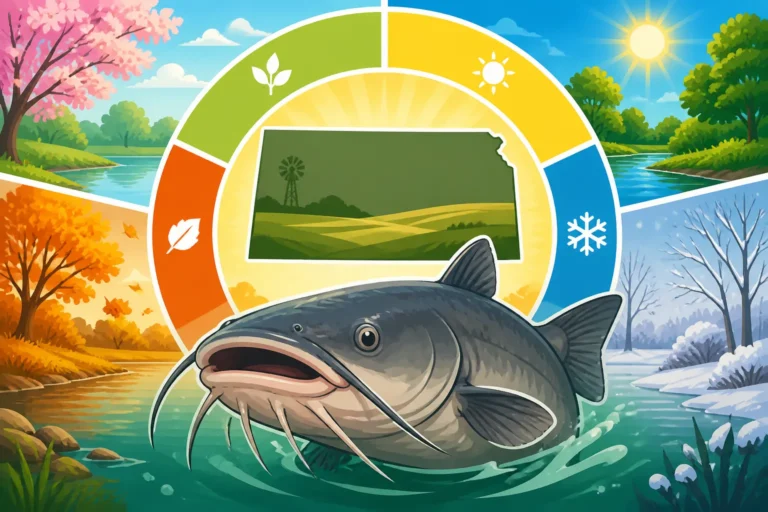
- Water Temperature: In warmer months, blue cats are highly active and aggressive feeders. They'll readily chase down live bait or quickly locate cut bait. As water temperatures drop in the fall and winter, their metabolism slows down. They become less inclined to expend energy chasing, making a slow-drifting, highly pungent piece of cut bait more appealing. During the coldest parts of winter, especially under the ice, they might be lethargic, preferring baits that require minimal effort to consume, often sitting right on the bottom.
- Current: Kansas rivers like the Kansas River or sections below dams on reservoirs create significant current. Blue cats are masters of using current to their advantage, often staging in eddies or behind structures to ambush prey or wait for food to drift to them. In strong currents, a durable piece of cut bait that stays on the hook and disperses scent effectively is key. A lighter, more delicate bait might just get ripped off. Conversely, in still lake waters, you might need a bait with a strong scent trail to draw them in from a distance.
- Time of Year/Spawn: During the spawn (typically late spring/early summer), catfish can be less interested in feeding as their focus shifts to reproduction. However, pre-spawn and post-spawn periods are prime feeding times as they bulk up for the energy demands of spawning or recover afterward. This is when they're particularly ravenous, making many baits highly effective.
Understanding these dynamics means you won't just throw out "any" bait; you'll choose a bait that makes sense for the current conditions, giving you a significant edge. For a broader understanding of different species, be sure to check out our Kansas Catfish Species Guide.
The Reigning Champions: Fresh Cut Bait for Blue Catfish
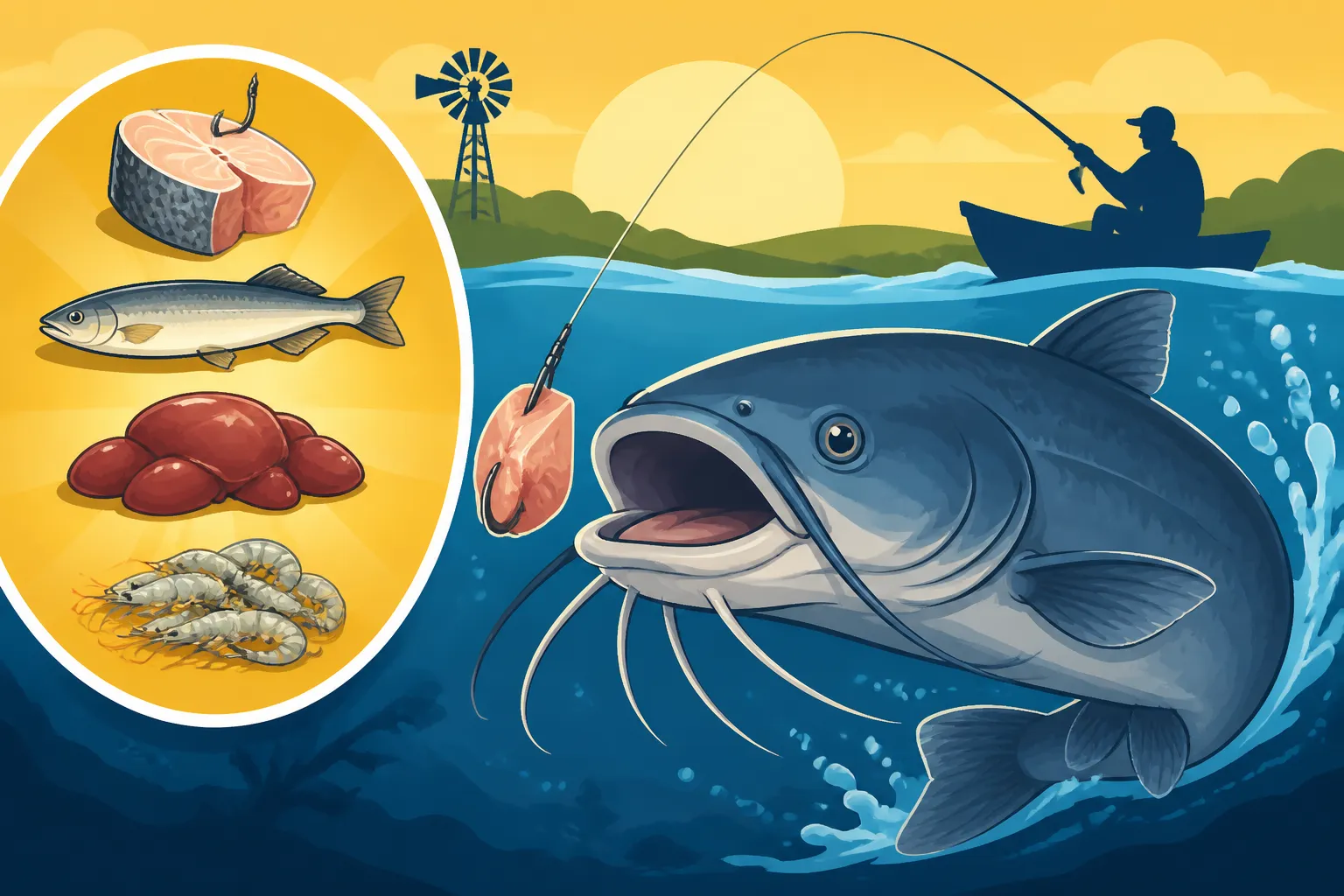
When you ask seasoned Kansas blue cat anglers what their go-to bait is, nine times out of ten, they'll tell you "fresh cut bait." This isn't just an old wives' tale; there's solid science and countless hours of on-the-water proof behind it. Cut bait reigns supreme because it perfectly mimics the natural food source blue cats actively seek: injured or dead fish that are easy meals and emit a powerful scent trail.
Fresh is Best: Types of Cut Bait
The single most critical factor for cut bait effectiveness is freshness. The fresher the bait, the more blood and natural oils it releases, creating that irresistible scent blue cats follow. Never, ever settle for frozen bait if you can get fresh, unless it was frozen within hours of being caught.
Here are the top contenders for fresh cut bait in Kansas:
- Gizzard Shad: If you can find fresh gizzard shad, you've hit the jackpot. They are a primary forage fish in many Kansas reservoirs and rivers, and blue cats absolutely devour them. The high oil content and soft flesh make them incredibly pungent once cut. You can often net them in shallow coves or below dam outflows on lakes like Clinton Lake.
- Common Carp: Carp are widely available in Kansas waters and make excellent cut bait, especially for larger blue cats. They're hearty, oily, and release a strong scent. Plus, they're relatively easy to catch if you're looking to procure your own bait. The firm flesh also holds up well to strong currents and small bait stealers.
- Freshwater Drum: Also known as "sheepshead," freshwater drum are another fantastic choice, particularly if you're fishing in lakes where they are prevalent, like Lake Perry. Their flesh is oily, and the scent is a known blue cat attractant.
- Buffalo: Like carp, various buffalo species are common in Kansas and make for tough, oily cut bait. They're a favorite among anglers targeting truly massive blue cats, as their larger size allows for bigger bait chunks that often deter smaller fish.
Where can you find these? Local bait shops near popular fishing spots like Milford Lake or Tuttle Creek Lake often carry fresh shad or carp, sometimes even drum. Calling ahead is always a good idea. If you're serious, learning how to cast net for your own shad or catching carp on dough balls can be a game-changer for consistently fresh bait.
Preparing Cut Bait for Maximum Appeal
Just tossing a whole fish out there isn't always the most effective strategy. How you prepare your cut bait can significantly impact its allure.
- Steaks vs. Strips vs. Chunks:
- Steaks: For larger baits targeting trophy blue cats, cutting a fish (like a carp or drum) into 1-inch thick "steaks" is often preferred. This allows for a large profile and maximum scent dispersion.
- Strips: For smaller blue cats or when fishing in areas with a lot of current, strips cut from the belly or side of the fish, roughly 1-2 inches wide and 3-5 inches long, work well. These flutter enticingly in the current.
- Chunks: The most common approach, especially with shad, is simply cutting the fish into 1-3 inch chunks, depending on the size of the baitfish. This is often the easiest and very effective.
- Skin On or Off? Generally, leave the skin on. It helps the bait stay on the hook better, and the scales and natural oils within the skin contribute to the scent trail.
- Head or Tail? Both can be effective. Heads have a lot of blood and scent, but can be bulky. Tails flutter well. The mid-section often provides the best balance of flesh and structure.
- Bleeding the Bait: If you catch your own baitfish and want to maximize scent, bleeding them immediately after capture can be beneficial. A quick cut to the gills and letting them bleed out will result in a more potent, bloody bait when cut into pieces. This fresh blood trail is a powerful attractant.
When fishing with cut bait, consider your hook selection. Circle hooks, like those from Gamakatsu or Owner, are highly recommended. They are incredibly effective at hooking fish in the corner of the mouth, which is safer for the fish if you plan to release them, and they rarely get swallowed deep. You can find a good selection of these and other essentials like sinkers and swivels on online retailers like Amazon, ensuring you're ready for your next trip. To learn more about proper rigging, check out our guide on How to Rig Cut Bait for Catfish.
Beyond Cut Bait: Other Effective Options
While fresh cut bait holds the crown, there are other situations and preferences where different baits truly shine for blue catfish in Kansas. Sometimes, variety is the spice of life, or simply what the fish are looking for on a particular day.
Live Bait Considerations
While blue cats are often thought of as scavengers, they are also formidable predators. In certain scenarios, live bait can be incredibly effective, especially for attracting more aggressive, larger fish.
- Live Shad: A lively gizzard or threadfin shad, hooked through the back or lips, can be deadly. The frantic swimming action sends out vibrations and distress signals that can trigger a predatory response from hungry blue cats. This is particularly effective when blue cats are actively hunting, often in areas with current or around structure.
- Live Perch or Sunfish: Smaller bluegill or other panfish can also be used as live bait. However, be absolutely sure to check current Kansas Fishing Regulations Explained for restrictions on using game fish as bait. In most cases, these are legal to use as bait if they adhere to length and creel limits. When using live bait, a simple Carolina rig or a three-way swivel rig works well, allowing the bait to swim somewhat freely. You'll want to use a sturdy hook that won't easily pull out of the baitfish.
The downside to live bait is acquisition and maintenance. Keeping baitfish alive requires aerated baitwells, and they can be harder to keep on the hook compared to robust cut bait, especially when dealing with smaller bait stealers.
Prepared Baits and Secret Ingredients
Sometimes, you just can't get fresh bait, or you're looking for something that's easy to store and use. That's where prepared baits come in.
- Stink Baits: These are a classic for a reason. Commercial stink baits, often in paste or dip form, are designed to emit an extremely potent aroma that catfish find irresistible. Brands like Catfish Charlie, Sonny's, or Secret 7 are popular among Kansas anglers. They work by slowly dissolving in the water, creating a long-lasting scent trail. Stink baits are particularly effective in slower currents or still waters where the scent can disperse widely without washing away too quickly. They are often fished on specially designed dip worms or sponges that hold the bait.
- Punch Baits: Similar to stink baits but usually firmer, punch baits are typically dough-like mixtures that you "punch" a treble hook into. They are known for their stickiness and ability to stay on the hook, making them a good option for casting or fishing in moderate current.
- Homemade Concoctions: Many veteran catfishermen swear by their own secret recipes, often involving aged cheese, chicken livers, garlic, or other potent ingredients. While fun to experiment with, these can be messy and require some trial and error to perfect.
While prepared baits can catch a lot of fish, especially channel catfish, they might not always be the top choice for the largest trophy blue cats, which often prefer natural, meaty offerings. However, they are certainly worth having in your arsenal for those days when the bite is slow or you're fishing in community lakes where bluegill and smaller channel cats might be the target. For a comprehensive look at various fishing tools, our Kansas Fishing Gear Guide has some excellent recommendations.
Rigging and Presentation: Making Your Bait Irresistible
Having the right bait is only half the battle; knowing how to present it effectively is just as crucial. A perfectly placed, natural-looking bait will outfish a poorly presented "best bait" any day of the week. Blue catfish are often found near structure or in areas with current, so your rigging needs to get your bait there and keep it there.
Essential Rigging for Blue Cats
When targeting blue catfish in Kansas, there are a few tried-and-true rigs that consistently produce results. The goal is to present your bait naturally while minimizing the chances of snags, especially in river environments.
- Carolina Rig (Santee Cooper Rig Variation): This is arguably the most popular and versatile rig for blue catfish. It consists of an egg sinker (or a no-roll sinker for current) on your main line, followed by a bead (to protect the knot), a swivel, and then a leader (usually 12-36 inches of fluorocarbon or monofilament) tied to your hook. The free-sliding sinker allows the fish to pick up the bait without immediately feeling the weight, leading to more confident bites. The Santee Cooper variation adds a peg float or small cigar float on the leader, just above the hook. This floats your bait slightly off the bottom, making it more visible and keeping it out of the mud or debris. This rig is fantastic for both lake and river fishing.
- Three-Way Swivel Rig: This rig is excellent for fishing in current, especially from a boat. You tie your main line to one eye of a three-way swivel, a short leader (6-12 inches) with a sinker to another eye, and your bait leader (12-36 inches) with the hook to the third eye. This keeps your bait near the bottom but allows it to drift naturally in the current.
- Fixed Sinker Rig (for vertical presentations): Sometimes, especially when targeting blue cats that are suspended or holding directly under the boat in deep holes, a simple fixed sinker rig can work. This involves tying a weight directly above your hook, often used with lighter tackle or when drift fishing from a boat with a fish finder.
Regardless of the rig, heavy-duty tackle is a must. Blue catfish can grow enormous, so you'll need stout rods, reels with strong drags, and heavy line. Many anglers prefer braided line for its sensitivity and strength, often paired with a monofilament or fluorocarbon leader. Our guide on Best Line Weight for Kansas Catfish can help you pick the right setup.
Locating Blue Catfish Hotspots
Even the best bait won't work if it's not where the fish are. Blue catfish are creatures of habit and prefer certain types of structure and depth depending on the season and time of day.
- River Channels and Deep Holes: In river systems like the Kansas River, blue cats will often congregate in the deepest parts of the channel, especially in holes or scour areas created by current. They use these spots for refuge and to ambush prey. The confluence of two rivers or major creek mouths emptying into a larger river are also prime locations. For specific locations, check out Kansas River Blue Catfish Spots.
- Reservoir Humps, Points, and Main Lake Channels: In larger reservoirs, blue cats relate heavily to underwater structure. Look for main lake points that drop off into the old river channel, humps that rise up from the bottom, or even submerged timber and rock piles. During warmer months, they might be shallower, but as temperatures cool, they often retreat to deeper water.
- Below Dam Outflows: The turbulent, oxygen-rich waters below the dams of Kansas reservoirs create fantastic feeding opportunities. Baitfish are often disoriented, and current concentrates food, making these areas magnets for blue cats.
- Drift Fishing: Many successful blue cat anglers employ drift fishing techniques, especially from a boat. This involves using the wind or current to slowly move your bait over large areas of prime habitat, covering more water and increasing your chances of finding actively feeding fish. This strategy is also used effectively with Trotline Fishing Techniques in Kansas and Jug Fishing Techniques in Kansas.
By combining the knowledge of what blue cats eat with effective rigging and a strategic approach to locating them, you're well on your way to consistent success on the water. Don't forget that having the right rod and reel combo is crucial for handling these powerful fish; our guide to the Best Rod and Reel Combo for Catfish is an excellent resource.
Comparison of Popular Blue Catfish Baits in Kansas
Here's a quick comparison of the most common blue catfish baits to help you decide what might work best for your next Kansas fishing adventure:
| Bait Type | Pros | Cons | Best Use Case |
|---|---|---|---|
| Fresh Cut Shad | High oil content, potent scent, natural prey, very effective. | Can be hard to obtain fresh consistently, delicate on the hook, attracts smaller fish. | Active blue cats in rivers/reservoirs, year-round. |
| Fresh Cut Carp | Widely available, very oily, durable on hook, excellent for large cats. | Might not be as "natural" a prey for all waters as shad, some anglers prefer other options. | Targeting trophy blue cats, strong current conditions. |
| Fresh Cut Drum | Oily, strong scent, good durability. | Availability can be localized, might be less common than carp. | Reservoirs/rivers where drum are abundant. |
| Live Shad | Triggers predatory strikes, often attracts larger, aggressive fish. | Requires aerated baitwell, harder to keep alive, can be more susceptible to bait stealers. | Active blue cats, pre-spawn and post-spawn periods. |
| Stink Baits | Easy to store, long-lasting scent, good for channel cats. | Less effective for trophy blue cats, messy, can attract non-target species. | Still water, slower current, general catfish angling. |
| Punch Baits | Stays on hook well, consistent scent. | Can be less appealing to large blue cats than fresh cut bait. | Moderate current, targeting multiple cat species. |
Disclaimer
Fishing regulations and best practices can change. Always consult the latest Kansas Department of Wildlife, Parks and Tourism (KDWPT) regulations before heading out. This guide is for informational purposes only and does not constitute legal advice. Adhere to all local, state, and federal laws and regulations. Fish responsibly and safely.