Trotline Fishing Techniques in Kansas
Trying to catch enough catfish for a proper family fish fry using just a single rod and reel can feel like you're fighting an uphill battle, especially when those Kansas channel cats are being particularly finicky. It's frustrating to spend hours on the bank with limited success, watching other anglers pull in their limits while you barely get a bite. This guide is all about demystifying trotline fishing in Kansas, providing you with practical, detailed techniques to significantly increase your chances of bringing home a bountiful harvest, legally and effectively.
Understanding Kansas Trotline Regulations
Before you even think about dropping a line in the water, it is absolutely paramount to understand the specific regulations governing trotline usage in Kansas. The Kansas Department of Wildlife, Parks and Tourism (KDWP) sets these rules for a reason, primarily to manage fish populations and ensure fair chase. Ignoring them isn't just a slap on the wrist; it can lead to hefty fines and even loss of fishing privileges, which nobody wants. Many anglers get tripped up here, often because rules change or they misinterpret the details, so let's get it straight.
Legal Requirements for Trotlines
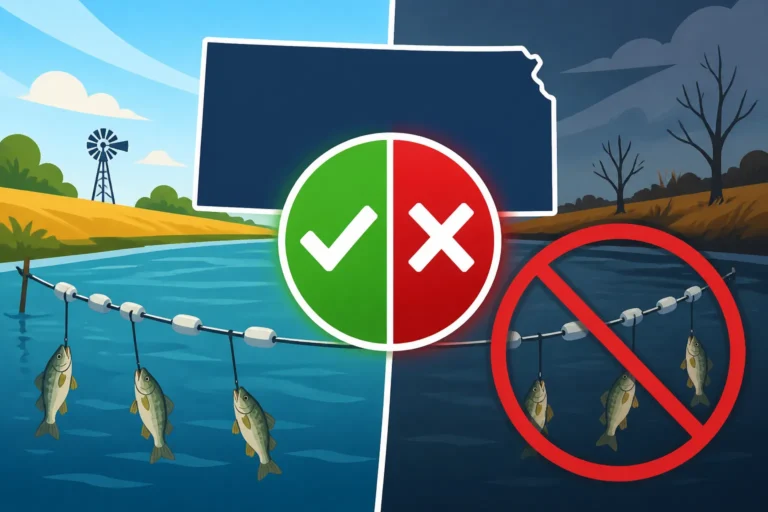
Kansas has clear stipulations about how trotlines must be constructed and marked. You can't just string up any old line with as many hooks as you want. First off, a trotline can have a maximum of 25 hooks. That's a hard limit, so double-check your setup before you head out. These hooks must be spaced at least 24 inches apart. This spacing isn't just arbitrary; it helps prevent entanglement and reduces the chances of catching non-target species. Each trotline must also have a legible tag attached, bearing the name and address of the owner or the owner's KDWP identification number. This is super important for identification and enforcement. Imagine the frustration of having your perfectly set trotline confiscated because it wasn't properly tagged – all that effort for nothing! Always ensure your gear is clearly marked and compliant. If you want to dive deeper into the specifics, check out the comprehensive resource on Kansas Fishing Regulations Explained.
The type of hooks also matters. While there isn't a strict "no treble hooks" rule for trotlines, using single, strong hooks is generally preferred for ease of baiting, removing fish, and minimizing damage if you catch something you don't intend to keep. The line itself needs to be robust enough to withstand the pull of potentially large catfish and the forces of currents. Heavy-duty nylon or braided synthetic lines are common choices, often with a test strength of 100 pounds or more. You're not just dealing with the fish; snags, current, and other underwater obstacles can put a surprising amount of strain on your line.
Permitted Waters and Seasons
Not every body of water in Kansas allows trotlines, and some might have seasonal restrictions. Generally, trotlines are permitted in most publicly accessible rivers and lakes across Kansas, but there are exceptions. For instance, specific community lakes or smaller reservoirs might prohibit them to reduce pressure on fish populations or to prevent conflicts with other recreational users like swimmers or pleasure boaters. It's vital to check the local regulations for the specific water body you plan to fish. You can often find this information on the KDWP website or by calling the local game warden. Don't rely on assumptions, because what's legal in one county might be forbidden just a few miles down the road.
While there isn't a blanket "trotline season" in Kansas, remember that fishing seasons and limits for different species still apply. If you're targeting catfish with your trotline, you must adhere to the daily creel limits and length limits for channel, blue, and flathead catfish. You can't just keep every fish your trotline catches if it's over the limit or under the minimum length. Be mindful of spawning seasons too; while legal, sometimes it's more ethical to avoid heavy fishing pressure on certain species during their most vulnerable times. Understanding the broader Kansas Fishing Seasons and Limits will help you make informed decisions.
Licensing and Permits
Just like with rod-and-reel fishing, you absolutely need a valid Kansas fishing license to legally set and fish a trotline. There's no special "trotline permit" per se, but your general fishing license covers this activity. If you're a Kansas resident, you'll need a resident fishing license. Non-residents will need a non-resident license. These licenses are typically annual, but there are also options for one-day, five-day, or even five-year licenses depending on your needs. Children under the age of 16 are generally exempt from needing a fishing license in Kansas, but they must still abide by all other regulations, including creel and length limits, if they are helping you with your trotline.
It's a common mistake for people to assume that if they're "just checking a line" they don't need a license, but that's not the case. Anyone involved in setting, checking, or retrieving a trotline that results in keeping fish must be properly licensed. If you're unsure about the specific license you need or where to get one, our guide on the Kansas Fishing License Guide provides all the details, including how to purchase one online or from authorized vendors. Make sure your license is current and always carry it with you when you're out on the water.
Essential Gear for Trotline Success in Kansas
Having the right gear is as crucial as knowing the regulations. Skimping on quality here can lead to lost fish, lost lines, and a whole lot of frustration. Trotlining isn't about fancy electronics, but it does require sturdy, reliable equipment that can withstand the elements and the powerful fights of Kansas's biggest catfish. Many folks try to cobble something together with whatever old rope they have lying around, only to learn the hard way that a strong, dedicated setup saves time and heartache in the long run.
Choosing the Right Line and Components
The backbone of your trotline setup is, naturally, the line itself. You want something strong, abrasion-resistant, and relatively easy to handle. Many experienced trotliners opt for braided nylon or polypropylene rope, often in the 1/4 to 3/8 inch diameter range, with a breaking strength of 100 pounds or more. This prevents big catfish from breaking off and helps the line stand up to snags on submerged timber or rocks. The color can even be a factor – some prefer darker lines that blend in, others use brighter colors for easier visibility.
Your hooks are equally important. For catfish, heavy-duty circle hooks are incredibly popular for trotlining. Sizes like 5/0 to 8/0 are common, depending on the average size of fish you expect to catch. Circle hooks are fantastic because they typically hook the fish in the corner of the mouth, reducing gut-hooking and making for easier, safer release of unwanted fish. Plus, fish are more likely to stay hooked once they bite down. You'll need durable swivels and clips to attach your leader lines (gangions) to the main trotline. Brass or stainless steel swivels are best, as they resist rust and maintain strength in freshwater. Pre-made trotline clips are widely available and make attaching and detaching leaders much simpler. You can find a wide array of these components, from hooks to swivels and clips, on Amazon with various strength ratings to match your fishing style.
Anchoring and Buoy Systems
Securing your trotline effectively is critical to ensure it stays put and doesn't drift into unwanted areas or become a navigational hazard. For anchors, you'll need at least two, one for each end of your line. Heavy weights like cinder blocks, old engine blocks, or specially designed anchor weights work well. The weight needed depends on the current and the length of your line. A good rule of thumb is to use enough weight that the current won't budge your anchor, even with a big fish tugging on the line. I've seen too many stories of folks losing an entire trotline because they skimped on the anchors.
Buoys are essential for marking your trotline, both for your own retrieval and to alert other boaters or anglers to its presence. KDWP regulations often require trotlines to be clearly marked. Standard plastic fishing buoys, often brightly colored, are perfect for this. Attach a buoy to each end of your main trotline with a sturdy rope that's long enough to reach the surface, even at high water levels. Some anglers also add a smaller, intermediate buoy in the middle of a very long line to help with visibility and retrieval, though this isn't strictly required. Make sure the ropes connecting the buoys to the trotline are strong enough not to break or fray against current and sharp edges.
Tools for Deployment and Retrieval
While the trotline itself is the main piece of equipment, a few ancillary tools will make your life much easier and safer. Heavy-duty gloves are non-negotiable. You'll be handling raw bait, potentially sharp hooks, and rough lines, often with slime and grit from the water. A good pair of waterproof, cut-resistant gloves will protect your hands from scrapes, hook pokes, and bait odors.
A bait needle or a strong, pointed stick can be incredibly helpful for threading tough baits like cut shad onto your hooks without piercing your fingers. A sharp knife or pair of heavy-duty shears is also useful for cutting bait, trimming line, or dealing with tangles. For storing your trotline when not in use, a large plastic tub or a specialized trotline reel/spool is ideal. This helps prevent tangles and keeps your hooks organized and contained. Some anglers also use a "hook box" – a small container where they can safely tuck the hooks as they retrieve the line, preventing them from snagging on everything. You can find robust baiting tools and durable storage solutions for your gear on Amazon, making setup and takedown much smoother.
Mastering Trotline Deployment Techniques
Once you've got your gear sorted and the regulations understood, it's time to talk about actually getting that trotline in the water effectively. This isn't just about throwing it out there; smart deployment can dramatically improve your catch rates and reduce headaches. Choosing the right spot, baiting correctly, and setting the line with precision are all critical steps for a successful trotline venture in Kansas.
Selecting Prime Locations
Catfish, much like real estate, are all about location, location, location. When deploying a trotline, you want to focus on areas that naturally attract catfish. Look for deeper channels in rivers, especially those with current breaks or nearby structure like submerged timber, rock piles, or old creek beds. In reservoirs, catfish will often congregate around main lake points, submerged humps, river channels that run through the lake, or near the mouths of creeks and coves. They love to patrol these areas for food.
Pay attention to depth and current. Flathead catfish often prefer slightly slower currents and deeper holes, especially where there's some kind of cover to ambush prey. Blue catfish are more at home in stronger currents, often found in the main river channels or deep bends. Channel catfish are perhaps the most adaptable, found in a wide range of habitats, but they still appreciate structure and access to deeper water. Don't set your trotline in the shallow, open water unless you're specifically targeting actively feeding fish during a certain time of year, like a late spring spawn. Consider checking out our guide on Kansas River Catfish Spots for some excellent location ideas.
Baiting Strategies for Kansas Catfish
The bait you use can make or break your trotline success. Catfish are primarily scavengers with an incredible sense of smell, but their preferences can vary by species and time of year.
- Channel Catfish: These guys are opportunistic eaters. Cut bait like fresh shad, carp, or even chicken livers are fantastic. Stink baits, especially commercially prepared varieties or homemade concoctions of cheese or blood, are also highly effective. The key with channel cats is strong odor.
- Blue Catfish: Blue cats prefer fresh cut bait. Shad, skipjack herring (if you can get it), or even large chunks of carp are excellent choices. They're less interested in strong "stink" and more attracted to the fresh scent of blood and oils. Live bait isn't typically used for blues on trotlines, as they're usually feeding on dead or stunned baitfish.
- Flathead Catfish: The undisputed king of live bait. Flatheads are ambush predators and overwhelmingly prefer live offerings. Small sunfish, bluegill, green sunfish, or even sturdy perch are ideal. Make sure your live bait is healthy and hooked in a way that allows it to swim naturally and stay alive for as long as possible. Hook them lightly through the back or lips.
Always ensure your bait is securely attached to the hook. A bait needle helps thread softer baits, and heavy-duty hooks with strong shanks prevent fish from stripping the bait easily. For more in-depth advice on what these whiskered critters like, you might want to read our detailed article on the Best Bait for Kansas Catfish.
Setting the Line
There are a few common ways to set a trotline, each with its own advantages.
- Bank-to-Bank (River/Creek): If you're fishing a narrower river or creek, you can anchor one end of your trotline to a sturdy tree or stake on one bank, stretch it across the water, and anchor the other end to the opposite bank. This is often the easiest method for deployment and retrieval from shore. Ensure your anchors are secure and the line is taut enough to keep the hooks at your desired depth without sagging too much in the current.
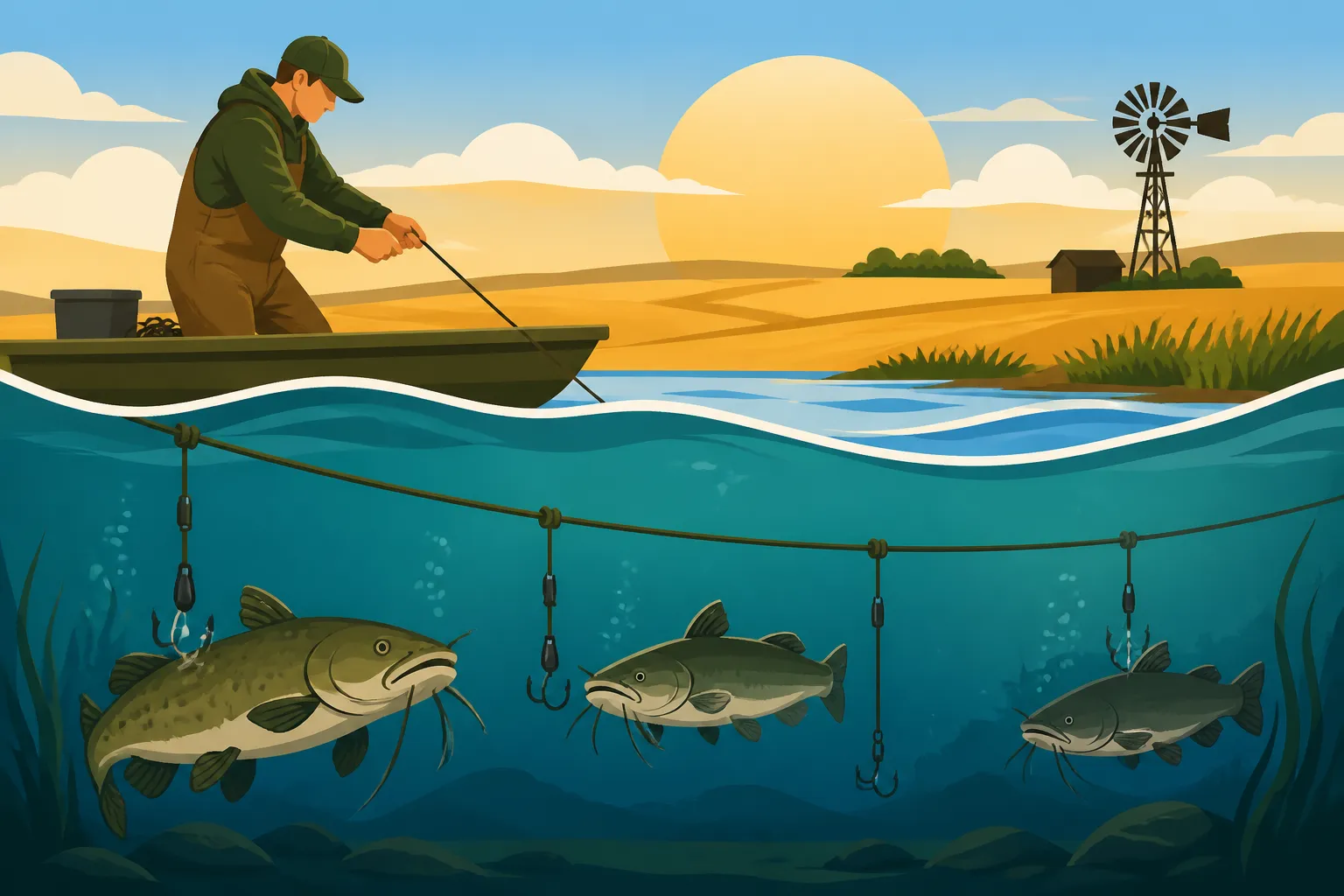
- Open Water (Lakes/Wider Rivers): For larger bodies of water, you'll need a boat. Drop one anchor with its attached buoy, slowly motor away while paying out the trotline and attaching your baited leaders, then drop the second anchor and buoy. The line should be suspended at the desired depth, typically just off the bottom or in the middle of the water column, depending on where the fish are holding. Aim for good tension but not so tight that it can't flex with the current. This prevents fish from getting leverage to break off.
- Depth Control: You want your baits to be at the depth where catfish are actively feeding. This might be right on the bottom, a few feet off the bottom, or even suspended in the water column if you're marking fish on a fish finder. You can control this by adjusting the length of your buoy ropes and the length of your leader lines (gangions). For flatheads, many prefer their baits to be closer to the bottom, often near structure. For channel and blue cats, varying depths can be effective.
Table: Common Trotline Baiting Strategies for Kansas Catfish
| Catfish Species | Preferred Bait Types | Typical Hook Size | Ideal Depth Placement | Key Considerations |
|---|---|---|---|---|
| Channel Catfish | Cut Shad, Carp, Chicken Livers, Stink Baits | 5/0 – 7/0 | Bottom to Mid-Water | Strong odor is crucial. Highly opportunistic. |
| Blue Catfish | Fresh Cut Shad, Carp, Skipjack Herring | 6/0 – 8/0 | Bottom in Current | Freshness and natural scent are key. Prefer stronger current. |
| Flathead Catfish | Live Sunfish, Bluegill, Perch | 7/0 – 9/0 | Near Bottom, by Structure | Live bait is almost always preferred. Ambush predators. |
Checking, Maintaining, and Retrieving Your Trotline
Setting your trotline is only half the battle. To maximize your catch, stay within regulations, and keep your gear in top shape, you need to have a consistent routine for checking, maintaining, and eventually retrieving your line. This active management is what separates a truly successful trotliner from someone who just leaves a line out to chance.
Frequency of Checks
The KDWP regulations on trotline checking are generally quite specific. In Kansas, trotlines (along with other passive gear like set lines or jug lines) must be checked at least once every 24 hours. This isn't just a legal requirement; it's a critical part of ethical and effective fishing. Checking your line frequently ensures that caught fish are removed promptly, reducing stress and mortality, and keeping your bait fresh for new catches. Leaving fish on the line for too long can attract scavengers, damage the fish, or simply result in rotten bait that won't catch anything.
Think about it: a big flathead could be hooked and fighting the current, exhausting itself. Retrieving it quickly is better for the fish if you intend to release it, and better for the quality of the meat if you plan to keep it. Plus, you want to re-bait those hooks as soon as possible to keep the action going. During warmer months, you might even consider checking more frequently than the legal minimum, perhaps every 12 hours, to combat bait spoilage and ensure the freshest catch. This constant vigilance is part of the fun and challenge of trotlining.
Handling Your Catch Safely
When you approach your trotline, do so cautiously. You don't know what's on the other end of those hooks! It could be a small channel cat, a monster blue cat, or even a non-target species. Start at one end of the line, slowly pulling it up, and inspecting each leader. When you encounter a fish, wear those heavy-duty gloves to protect your hands from hooks, fins, and the slime that often accompanies a good catfish.
If you plan to keep the fish, dispatch it humanely and place it in a cooler with ice immediately to preserve its freshness. For fish you intend to release, carefully remove the hook. The advantage of circle hooks here is that they often hook in the corner of the mouth, making removal easier. If a fish is deeply hooked and you can't remove it quickly without causing significant damage, it's often best to cut the leader as close to the hook as possible. This gives the fish the best chance of survival. Always have a pair of pliers or a hook remover handy for stubborn hooks. After removing a fish, re-bait that leader with fresh bait as quickly as possible and let it get back to fishing.
Proper Retrieval and Storage
When your fishing session is over, or if you're moving to a new spot, proper retrieval and storage of your trotline are essential for longevity and ease of use next time. Start by bringing in one anchor and its buoy. Then, slowly pull the main line into your boat or onto the bank. As you retrieve the line, remove any remaining bait, clean off any debris, and carefully unclip each leader, coiling it neatly. As you get to each hook, tuck it safely into a hook box or wrap it securely to prevent tangles or accidental pokes. Many anglers use a large plastic tote or a purpose-built trotline spool (available at tackle shops or online at Amazon) to neatly coil the main line and store the leaders separately. This prevents a tangled mess when you go to deploy it again.
Once the entire line, all leaders, hooks, and the second anchor and buoy are retrieved, give everything a good rinse with fresh water, especially if you've been fishing in brackish or silty conditions. Allow the line to air dry completely before storing it away. This prevents mildew and helps preserve the integrity of the line material. Storing your gear neatly not only makes future fishing trips smoother but also extends the life of your equipment, which can be a significant investment.
Targeting Kansas Catfish with Trotlines
Kansas is a fantastic state for catfish, boasting healthy populations of channel, blue, and flathead catfish. While trotlines are effective for all three, each species has its own quirks and preferences that, when understood, can make your trotlining efforts far more productive. Focusing your techniques on the specific species you want to catch can be the difference between a few bites and a loaded line. For general information, our main Kansas Catfish Species Guide is a great resource.
Channel Catfish Strategies
Channel catfish are the most widespread and arguably the most popular cat in Kansas. They're often found in nearly every reservoir, river, and larger creek throughout the state. Their adaptability makes them a prime target for trotlines.
- Habitat: Look for channel cats in areas with moderate current in rivers, or around structure in lakes such as brush piles, rocky areas, and channel drop-offs. They often roam the edges of weed beds and are comfortable in murky water.
- Baiting: As mentioned earlier, channel cats are highly attracted to strong smells. Cut baits like fresh shad or carp, chicken livers (especially if allowed to sit out and "toughen" slightly), or commercial stink baits are excellent. Some anglers swear by hot dogs or small pieces of soap. The key is to refresh your bait frequently, as the scent trail dissipates over time.
- Depth: Channel catfish can be found from just below the surface to the bottom, depending on water temperature and food availability. Often, setting your trotline with hooks staggered at different depths can help you locate where they are feeding. In cooler months, they might be deeper, while in warmer months, they might move shallower during low light conditions or at night. Keep in mind the Kansas Channel Catfish Daily Limit to ensure you're fishing responsibly.
Blue Catfish Tactics
Blue catfish are the true titans of Kansas waterways, known for their immense size and powerful fights. While less common than channel cats, they are present in significant numbers in larger river systems like the Kansas River and certain major reservoirs such as Milford Lake and Cheney Reservoir.
- Habitat: Blue cats are current lovers. Focus your trotlines in the main channels of large rivers and the deeper, open water areas of big reservoirs where there's good current flow. Look for deep holes, scour points, and abrupt depth changes. They often relate to baitfish schools, so if you can locate large schools of shad, blues won't be far behind.
- Baiting: Fresh cut bait is paramount for blue catfish. Fresh gizzard shad is often considered king, but large chunks of carp or even white bass can be effective. The fresher the bait, the better. Blues are less interested in "stink" and more in the natural scent of recently killed baitfish. Cut your bait into good-sized chunks, typically 2-4 inches, to appeal to their larger mouths and appetites.
- Depth: Blue catfish typically prefer deeper water, often holding right on the bottom or suspended just above it in river channels. Your trotline should be set to present baits in these deeper zones. Early mornings and evenings often see them more active, but they'll feed throughout the day in good current. For more details on these giants, explore our guide on Kansas Blue Catfish Facts and Limits.
Flathead Catfish Approaches
Flathead catfish are unique among the Kansas catfishes, being true ambush predators with a strong preference for live bait. They are solitary and often hold tight to heavy cover, waiting for an unsuspecting meal to swim by.
- Habitat: Forget the open water; flatheads live in the densest cover imaginable. Think log jams, submerged trees, rock piles, old bridge pilings, and deep, undercut banks. They prefer slower-moving water near these structures, where they can hide and ambush.
- Baiting: This is where flatheads differ most. They overwhelmingly prefer live bait. Small sunfish, bluegill, green sunfish, or bullheads (where legal) are excellent choices. Hook your live bait lightly through the back (above the lateral line, avoiding the spine) or through both lips to allow it to swim naturally and stay alive for as long as possible. The size of the bait should match the size of the flathead you're targeting – larger flatheads want larger baits.
- Depth: Flatheads will almost always be found near the bottom, nestled right in or around their chosen cover. Your trotline hooks should be positioned to present your live bait directly to these ambush points. The challenge with flatheads is getting your trotline into their preferred snaggy habitat without losing your gear. This might mean shortening your trotline and setting multiple shorter ones in strategic locations. Remember to check the Kansas Flathead Catfish Daily Limit before you start reeling them in.
Safety and Ethical Considerations
While trotlining is an effective way to catch a lot of fish, it comes with responsibilities. Safety for yourself and others, respect for the environment, and adhering to ethical fishing practices are just as important as knowing the legal rules. A well-placed trotline can bring a great harvest, but a carelessly managed one can cause harm or annoyance.
Personal Safety When Handling Trotlines
Working with trotlines involves several inherent dangers that you need to be mindful of.
- Hooks: You're dealing with multiple large, sharp hooks. Always wear heavy-duty, puncture-resistant gloves. Be extra careful when baiting, removing fish, and coiling the line. A momentary lapse in attention can result in a painful and potentially serious hook injury. Keep a first-aid kit handy, especially one equipped for hook removal.
- Fish: Large catfish, especially flatheads, can be incredibly strong and can thrash violently. Their pectoral and dorsal fins have sharp spines that can inflict deep wounds. Always control the head of a large fish and use a sturdy landing net or a gaff (where legal and appropriate for the size of fish) if necessary.
- Water and Weather: You're often working from a boat, sometimes in challenging conditions. Be aware of currents, submerged obstacles, and changing weather. Always wear a personal flotation device (PFD) when on the water, especially when deploying or retrieving lines, as you can easily lose your balance or get pulled into the water.
- Knives and Tools: Handling sharp knives for bait cutting or other tools requires caution. Ensure tools are sharp (a dull knife is more dangerous) and used away from your body.
A responsible angler prioritizes their safety, ensuring they come home from a successful fishing trip in one piece.
Respecting Other Anglers and Wildlife
Trotlines, by their nature, occupy a section of water for an extended period. It's crucial to be mindful of how your trotline impacts other users of the waterway.
- Navigation: Always mark your trotline clearly with visible buoys, as required by KDWP regulations. This prevents other boaters, kayakers, or jet skiers from accidentally running into or getting entangled in your line. A poorly marked line can be a serious hazard and lead to property damage or injury.
- Other Anglers: Avoid setting your trotline in popular rod-and-reel fishing spots, especially if it means taking up a significant portion of a fishing pier, popular bank access point, or a known fishing hole. Communication and courtesy go a long way. If you see other anglers, try to set your line a reasonable distance away.
- Wildlife: Be aware that trotlines can sometimes catch non-target species like turtles, birds, or protected fish. While rare, it can happen. If you catch a non-target species, release it quickly and gently, minimizing harm. The specific laws regarding trotlines are part of a larger framework, and understanding all the Kansas Fishing Law Enforcement and Penalties will help you be a responsible angler.
Minimizing Impact and Practicing Conservation
As anglers, we all have a role to play in protecting our natural resources. Trotlining should be done with a conservation mindset.
- Adhere to Limits: Always respect daily creel limits and length limits for all fish species. Only keep what you can legally and ethically harvest. If you've reached your limit, it's time to pull the line or practice catch and release.
- Proper Disposal: Never leave behind trash, old bait, or discarded fishing line. Monofilament line, in particular, can be a death trap for wildlife. Pack out everything you pack in.
- Fish Health: If you're releasing fish, do so quickly and gently. Minimize the time they are out of the water. Avoid rough handling, especially if the fish is large and likely to be a future breeder.
- Ecosystem Health: Be aware of any local advisories regarding specific water bodies, such as those related to water quality or invasive species. For example, if you're fishing a lake with zebra mussels, ensure your boat and gear are properly cleaned and dried before moving to another body of water to prevent their spread.
By following these safety and ethical guidelines, you not only ensure a more enjoyable and successful fishing experience for yourself but also contribute to the health and sustainability of Kansas's incredible fishing resources for generations to come.
Disclaimer
The information provided in this guide is for general informational purposes only and is not a substitute for official regulations. Fishing rules and regulations in Kansas are subject to change. Always consult the most current Kansas Department of Wildlife, Parks and Tourism (KDWP) regulations before engaging in any fishing activities. Ensure you have the proper licenses and adhere to all local, state, and federal laws.