Best Fillet Knife for Kansas Catfish
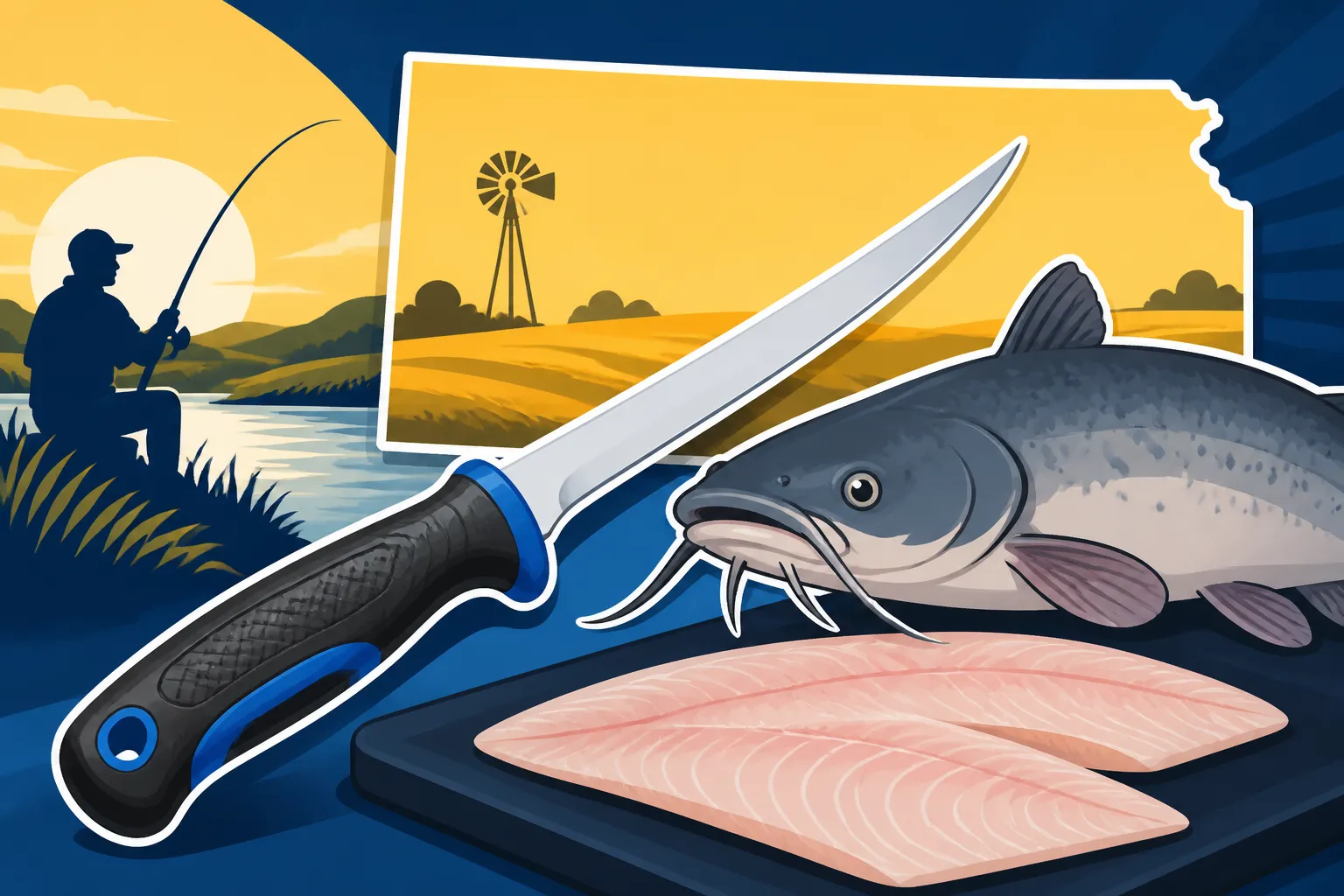
Filleting a freshly caught Kansas catfish can be one of the most rewarding parts of a successful fishing trip, but if you've ever struggled with a dull, flimsy, or simply inadequate knife, you know the frustration. It's a real challenge to cleanly remove those delicious fillets when your blade isn't up to the task of handling tough skin, sturdy bones, and slippery flesh. This guide is here to help you navigate the often-overlooked world of fillet knives, ensuring you pick the perfect tool to make quick work of your next big channel cat or flathead, turning a chore into a seamless experience.
Why Catfish Demand a Specific Fillet Knife
You might think any sharp knife will do, but when it comes to breaking down a robust fish like a Kansas catfish, that's simply not true. Catfish aren't delicate panfish; their unique anatomy and sheer resilience require a blade designed for the job. Trying to use a general kitchen knife or a small, flexible fillet knife meant for crappie will likely leave you frustrated, with jagged fillets and potentially a nicked finger.
The Unique Anatomy of a Catfish
Let's talk about what makes catfish different. Unlike many other species that have delicate scales and easily identifiable bone structures, catfish, particularly larger ones, possess a very distinct physiology. Their skin is thick and tough, almost leathery, especially on the larger specimens. This isn't your average trout skin that peels off with ease. Beneath that formidable exterior lies a sturdy bone structure, particularly around the rib cage and backbone, which can put a significant strain on a lesser blade.
Imagine trying to slice through a thick piece of rubber with a butter knife – that's often what it feels like if your fillet knife isn't up to par. The challenge isn't just cutting the flesh; it's navigating the skin and bone without getting bogged down or, worse, dulling your edge prematurely. A knife specifically designed for this will have the strength and sharpness to make clean, efficient cuts.
The Challenge of Thick Skin and Bones
The thick, rough skin of a catfish acts like a natural armor, protecting the fish and making it a formidable opponent on the filleting table. If your blade isn't incredibly sharp and robust, you'll find yourself sawing rather than slicing, which not only ruins the presentation of the fillet but also significantly increases your effort and decreases your safety. Nobody wants to force a knife when dealing with a slippery fish.
Beyond the skin, the skeletal structure of a catfish, particularly around the backbone and rib cage, requires a blade with enough backbone (pun intended!) to separate the meat cleanly. A flexible blade, while great for finesse work on smaller fish, can get hung up or bend excessively when trying to follow the contours of a large catfish's spine, leaving too much meat on the bone. The ideal knife needs to be stiff enough to push through cartilage and bone while still maintaining enough flexibility to get around tight corners. Understanding Kansas Catfish Daily Limits and their average sizes might also give you a better idea of the size of fish you'll be dealing with and, consequently, the knife strength required.
Key Features to Look for in a Catfish Fillet Knife
So, what exactly makes a fillet knife ideal for tackling Kansas catfish? It boils down to a few critical features that work in harmony to give you control, precision, and efficiency. Don't just grab the first knife you see; consider these elements carefully.
Blade Length and Flexibility
For catfish, especially the larger channel cats or impressive flatheads you might pull from Kansas River Catfish Spots or Milford Lake Catfish Fishing, you're going to want a longer blade than you'd use for crappie or bluegill. A blade in the 7-inch to 9-inch range is often considered the sweet spot. This length allows you to make long, sweeping cuts from head to tail, minimizing the number of individual cuts and thus creating smoother, more uniform fillets. A shorter blade forces you to take multiple, overlapping cuts, which can tear the meat and make the filleting process messier.
While some flexibility is good for contouring around bones, for catfish, you want a blade that's relatively stiff compared to a typical panfish fillet knife. Too much flex, and it becomes difficult to push through the thick skin and firm rib bones. A semi-flexible blade offers the best of both worlds: enough stiffness to get through the tough parts, but still pliable enough to separate meat from the backbone cleanly.
Handle Ergonomics and Grip
A good handle is arguably as important as the blade itself, especially when your hands are wet and potentially covered in fish slime. Filleting catfish can be a labor-intensive process, and a poorly designed handle will quickly lead to hand fatigue, discomfort, and a higher risk of slippage. Look for a handle that feels substantial and comfortable in your hand, with a non-slip texture.
Many high-quality fillet knives feature handles made from textured rubber, composite materials, or even some synthetics that maintain grip even when wet. A finger guard or bolster is also a huge plus, providing a barrier between your hand and the sharp edge, drastically reducing the chance of accidental cuts. Remember, you're often applying significant pressure, so a secure grip is paramount for safety and efficiency. Brands like Dexter-Russell or Rapala often excel in this area, offering handles that stand up to real-world use. You can often find a great selection of these on Amazon or at your local Bass Pro Shops.
Blade Material and Edge Retention
The material of your blade dictates its sharpness, how long it holds an edge, and its resistance to corrosion – all crucial factors for a catfish fillet knife.
- Stainless Steel: Most fillet knives are made from stainless steel, prized for its excellent corrosion resistance. This is vital when working in a wet environment and dealing with fish oils. However, not all stainless steels are created equal. High-carbon stainless steel blends the best of both worlds: the corrosion resistance of stainless with the edge-holding capabilities of carbon steel. This means less frequent sharpening sessions, which is a blessing after a long day on the water.
- High Carbon Steel: While offering superior edge retention and sharpness, pure high carbon steel is prone to rust if not meticulously cleaned and oiled after every use. For the average angler who might not want the extra maintenance, high-carbon stainless is usually the better compromise.
- Edge Retention: For catfish, you want a knife that can hold a razor-sharp edge for an extended period. Constantly stopping to sharpen your knife mid-fillet is inefficient and messy. A blade with good edge retention means you can process several fish before needing to touch it up.
Knife Types and Materials Best Suited for Kansas Catfish
When you start browsing, you'll quickly discover there's more than one way to skin a cat…fish! From traditional fixed blades to modern electric models, and different steel compositions, each has its pros and cons for the Kansas catfish angler.
Fixed Blade vs. Electric Fillet Knives
This is often the biggest debate among serious anglers. Both have their place, but one might be a better fit for your specific needs when targeting species like the channel catfish or Kansas Blue Catfish Facts and Limits.
- Fixed Blade Fillet Knives: These are the traditional choice and often preferred by purists who value control and precision. A well-designed fixed blade allows for incredible feel, letting you navigate bones and contours with finesse. They're silent, require no power source, and are typically more durable in the long run. For a few fish, or if you truly enjoy the craft of filleting, a high-quality fixed blade is hard to beat. They come in various lengths and stiffnesses, so you can tailor your choice specifically for the size of catfish you typically catch. You can find an excellent range of fixed blade knives, including many suitable for catfish, at Bass Pro Shops or online through Amazon.
- Electric Fillet Knives (EFK): If you're planning a monster day out on the water, bringing in dozens of catfish, or if you simply find manual filleting too strenuous, an electric fillet knife is a game-changer. These knives make quick work of fish, powering through skin and bone with minimal effort from the user. They are particularly effective on larger fish, where sheer power is an advantage. The trade-off is less precision for delicate work, they require a power source (either a wall outlet for home use or a 12V adapter for boat/camp), and they can be noisy. However, for sheer volume and speed, nothing beats an EFK. Just be sure to find one with interchangeable blades of different lengths and stiffness, as some are better suited for panfish than for heavy-duty catfish. Consider how you might use them in different scenarios, such as when practicing Kansas Summer Catfish Fishing Tips.
Stainless Steel vs. High Carbon Steel
We touched on this earlier, but let's dive a little deeper into the materials that actually form the cutting edge of your fillet knife.
- Stainless Steel (specifically high-carbon stainless steel): This is generally the recommended choice for a catfish fillet knife for the average angler. The chromium content in stainless steel makes it highly resistant to rust and corrosion, which is a massive advantage when dealing with water, fish guts, and blood. Cleaning is straightforward – a quick wash, rinse, and dry, and it's ready for storage. High-carbon stainless steel enhances this by adding carbon, improving the blade's ability to take and hold a sharper edge than standard stainless. This balance of corrosion resistance and edge retention makes it incredibly practical for the demands of catfish filleting.
- High Carbon Steel: While high carbon steel can achieve an incredibly fine, razor-sharp edge and often holds it longer than stainless steel, it comes with a trade-off. It's much more susceptible to rust and discoloration if not properly cared for. After each use, it absolutely must be thoroughly cleaned, dried, and often lightly oiled to prevent oxidation. For the dedicated enthusiast who doesn't mind the extra maintenance and prizes the absolute sharpest edge, it's a fantastic option. However, for most Kansas anglers who want a reliable, easy-care tool, high-carbon stainless steel remains the reigning champion.
| Feature | Fixed Blade Fillet Knife | Electric Fillet Knife (EFK) |
|---|---|---|
| Control/Precision | High – excellent feel for bone navigation | Moderate – powerful, but less finesse |
| Speed/Efficiency | Moderate – depends on user skill | High – powers through fish quickly |
| Power Source | None – completely manual | Required (AC outlet or 12V DC) |
| Noise Level | Silent | Variable – can be quite noisy |
| Maintenance | Sharpening, cleaning | Sharpening (blades), cleaning, motor care |
| Durability | Generally very high | Motor/cord can be vulnerable; blades replaceable |
| Best For | Few fish, intricate cuts, traditionalists | High volume, large fish, reducing fatigue |
| Catfish Suitability | Excellent for medium to large catfish, good feel | Excellent for larger, numerous catfish, fast processing |
Maintenance and Sharpening for Longevity
Even the best fillet knife won't perform if it's not properly cared for. A sharp knife is a safe knife, and a clean knife will last you for years, making your investment worthwhile. Neglecting your knife is like ignoring your fishing reel – it'll eventually fail you when you need it most.
Proper Cleaning and Storage
Immediately after filleting your catfish, the first step is to clean your knife. Don't let fish residue dry on the blade. Rinse it thoroughly under warm water, using a mild soap if necessary, and carefully wipe down the blade and handle with a dishcloth or sponge. Pay extra attention to the area where the blade meets the handle, as bits of fish can accumulate there.
After cleaning, it's crucial to dry the knife completely. Moisture is the enemy, even for stainless steel, as prolonged exposure can lead to rust spots or dulling of the edge. Use a clean towel to dry the entire knife. Once dry, store your fillet knife in a safe place where the blade is protected. Many knives come with a sheath, which is ideal. A knife block or a magnetic strip in your kitchen or garage can also work, as long as the blade isn't rattling against other metal objects, which can damage the edge. Improper storage can lead to needing to look for a Kansas Fishing License Replacement Cost if you nick yourself and lose your license information.
Sharpening Techniques and Tools
A dull knife is dangerous and ineffective. Regular sharpening is key to keeping your fillet knife in prime condition. How often you sharpen depends on how frequently you use it and the type of steel. For a Kansas catfish fillet knife, you'll want to aim for a razor-sharp edge.
- Sharpening Stones: These are the traditional choice and offer the most control. You'll typically want a coarse grit for significant edge repair and a finer grit for honing to a razor edge. Consistency in angle is crucial here, so practice is important.
- Pull-Through Sharpeners: These are convenient and easy to use, often featuring ceramic or carbide sharpeners set at a predetermined angle. While great for quick touch-ups, they can remove a lot of material and might not provide the precise edge a stone can.
- Electric Sharpeners: These offer speed and ease of use, often with multiple stages for sharpening and honing. They can be a good option if you have many knives to maintain, but some models can also be aggressive and remove too much material if not used carefully.
- Honing Rod: This isn't for sharpening, but for honing – realigning a slightly rolled edge. A few strokes on a ceramic or steel honing rod after each use (or even mid-session if you're doing a lot of filleting) can dramatically extend the life of your sharp edge before you need a full sharpening.
Regardless of the tool you choose, remember that the goal is to maintain a consistent angle while sharpening. A good starting point for most fillet knives is a 15-20 degree angle per side. A well-maintained knife not only makes filleting easier and more enjoyable but also extends the life of your valuable gear, ensuring you're always ready to process your catch after a successful day trying Kansas Catfish Fishing Techniques.
Disclaimer
This article is for general informational purposes only and does not constitute professional advice. Laws, prices and regulations vary by location and change over time. Consult a qualified professional for guidance on your specific situation.