When Does the White Bass Run Start?
That incredible surge of white bass moving upstream to spawn, often called the "white bass run," is one of the most exciting times for anglers in Kansas. It can feel like pure magic when you hit it just right, but figuring out exactly when it's going to kick off each year is a challenge that frustrates even seasoned veterans. This guide is here to demystify the timing, help you understand the environmental cues, and give you the best chance to be on the water when the action heats up.
Understanding the White Bass Run in Kansas
The white bass run isn't just a fun fishing event; it's a critical biological phase for these energetic fish. They leave the deeper waters of reservoirs and move into inflowing rivers and streams to reproduce, creating a concentrated opportunity for anglers. Knowing the why behind the run helps you predict the when.
The Biological Drive for Spawning
White bass, like many other fish species, are driven by an instinctual urge to reproduce when conditions are just right. Their annual spawning migration is a fundamental part of their life cycle. These fish are "broadcast spawners," meaning they release their eggs and milt (sperm) into the water column over gravel or rocky bottoms, where currents help distribute them. They don't build nests or guard their young like some other species. This method relies heavily on specific environmental conditions for successful fertilization and survival of the eggs and fry, making the timing of the run crucial. The sheer number of fish moving upstream at once is what creates the legendary "run," offering incredible fishing for those who catch it right. It’s a spectacular natural phenomenon, a true highlight of the Kansas Fishing Seasons Guide for many.
Key Environmental Triggers
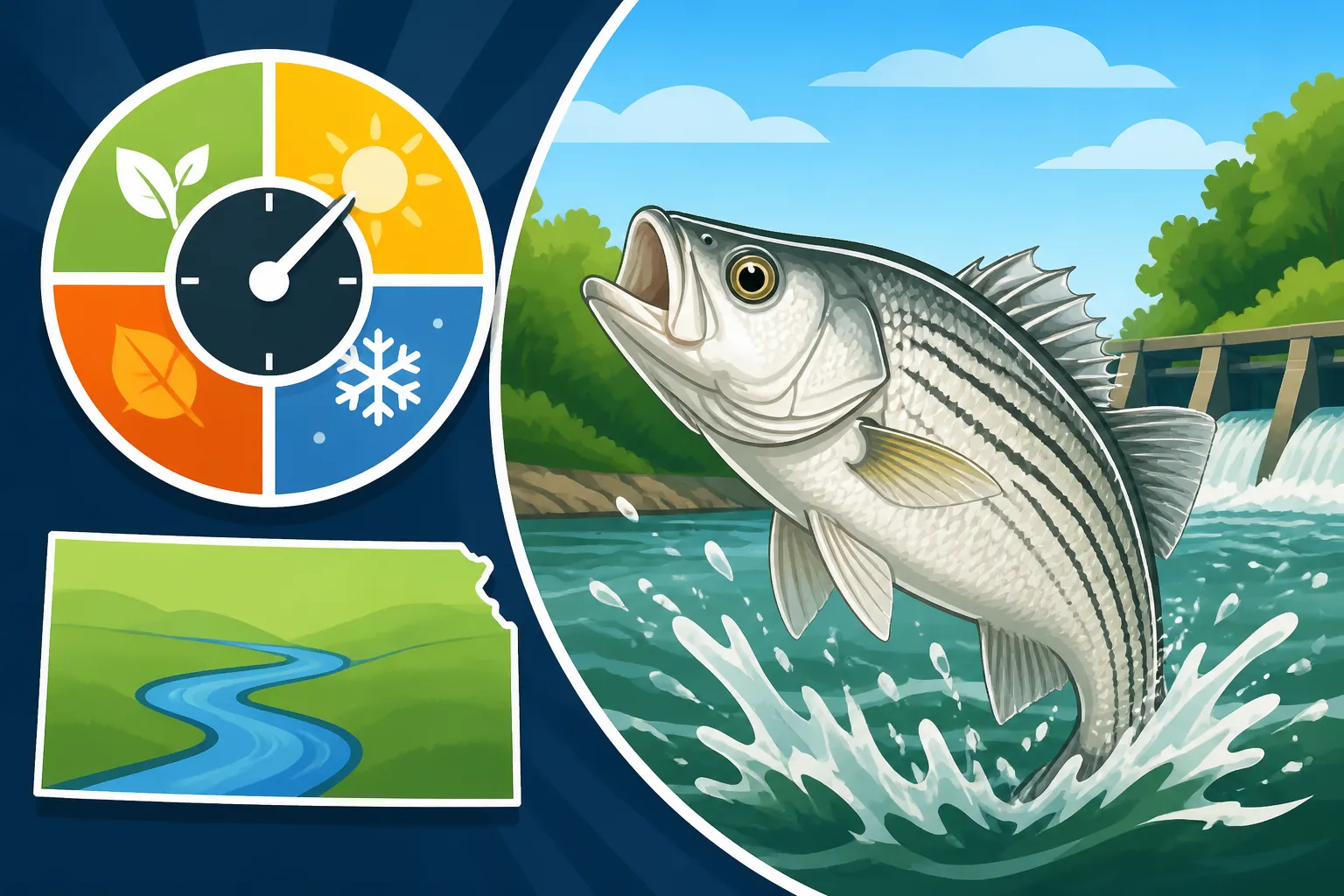
While instinct drives them, it's the external environmental factors that act as the precise alarm clock for the white bass. The primary triggers are water temperature and increased water flow. As winter loosens its grip and spring rains begin to swell rivers, the white bass in Kansas reservoirs start to feel the call.
- Water Temperature: This is arguably the most critical factor. White bass typically begin their upstream migration when water temperatures consistently reach the low to mid-50s Fahrenheit (around 50-58°F or 10-14°C). They will then actively spawn as temperatures climb closer to the mid-60s. Anything below 50°F is usually too cold for a full-fledged run, and sustained temperatures much above 70°F will signal the end of the main spawning activity.
- Water Flow and Level: Spring rains are essential. Increased rainfall leads to higher water levels and stronger currents in rivers and streams feeding into the reservoirs. This flow creates the perfect highway for white bass to travel upstream and provides the necessary current to disperse their eggs after spawning. A strong influx of fresh, warmer water can really kick the run into high gear. If Kansas experiences a dry spring, the run might be less pronounced or shorter in duration, as the fish don't have those strong current cues.
- Photoperiod (Daylight Length): While less immediate than temperature or flow, the increasing duration of daylight hours in spring also plays a role in signaling to fish that it's time to prepare for spawning. It's the subtle, underlying rhythm that sets the stage for the more direct triggers.
It's a delicate balance, and any abrupt changes in these conditions can pause or even briefly reverse the run. A sudden cold snap after a warm spell, for instance, can send the fish retreating to deeper waters, only for them to return when conditions stabilize.
Typical Timing and Regional Variations Across Kansas
The beauty and frustration of the white bass run lie in its variability. While we can talk about general timeframes, it's never an exact science. Kansas is a big state, and conditions can differ quite a bit from one reservoir to another.
Early Spring Indicators and Temperature Ranges
Generally speaking, you can start looking for the initial signs of the white bass run in Kansas from late March through early April. This is when you'll see those crucial water temperatures starting to creep into the low 50s. What you're looking for in these early days isn't necessarily a full-blown frenzy, but rather the first trickles of fish making their way upstream. Anglers who hit the water during this pre-spawn period might find fish staging in the deeper pools just below rapids or dam structures, getting ready for the main event.
- Initial Movement (Late March – Early April): Water temperatures 50-54°F. Fish begin to congregate near river mouths and major creek arms. This is a great time to target them with small jigs or inline spinners in areas with a bit more current.
- Active Spawning (Mid-April – Early May): Water temperatures 55-65°F. This is often the peak of the run, especially in systems like the Republican River arm of Milford Lake or the Ninnescah River arm of Cheney Reservoir. Fish are actively migrating and spawning, providing consistent action. This is the period when you'll find the most concentrated numbers of fish, making it a prime time for targeting them. If you're looking for specific spots, our Milford Lake White Bass Run guide has some fantastic insights.
Keep an eye on weather forecasts and historical data for your chosen fishing spot. A mild winter might mean an earlier start, while a prolonged cold spell could push things back.
Peak Run Periods in Major Reservoirs and Rivers
While the general window is late March to early May, specific locations in Kansas often have their own peak times due to varying geographies, water inflows, and sizes.
- Milford Lake (Junction City area): This is arguably the most famous white bass run in Kansas. The Republican River arm, where the river feeds into the reservoir, is legendary. The run here typically peaks in mid-April. Anglers flock to areas like the Republican River below Milford Dam and upstream in the river channel. The sheer volume of fish can be astounding. The fishing often starts picking up around the Wakefield area and continues upstream. Knowing How to Catch White Bass on the Republican River is key to success here.
- Cheney Reservoir (Wichita area): The Ninnescah River and its tributaries feeding Cheney also see a strong white bass run. This run often starts a little later than Milford, sometimes closer to late April, but can still offer fantastic action. Shore anglers often find success in the river channels upstream from the lake.
- Wilson Lake (Russell area): The Saline River arm can also produce a good run. The timing here is usually similar to Milford, peaking in mid-April, depending on local rainfall and warming trends.
- Other Reservoirs: Smaller runs, or at least concentrations of white bass, can be found in the inflowing rivers and larger creeks of most major Kansas reservoirs, including Tuttle Creek, Perry Lake, and Clinton Lake. While perhaps not as famed as Milford, these local spots can offer excellent fishing without the crowds.
It's important to remember that the run isn't a single "day" but a period. The duration can vary, but generally, the most intense action might last a few weeks. Our article on How Long Does the White Bass Run Last delves deeper into this.
Tracking Local Reports and Conditions
Given the variability, the best way to pinpoint the exact start and peak of the white bass run is to stay connected with local resources. Don't rely solely on what happened last year or even last week!
- Kansas Department of Wildlife, Parks and Tourism (KDWP) Reports: The KDWP website is an invaluable tool. They often publish weekly or bi-weekly fishing reports for major lakes and rivers, specifically mentioning white bass activity. These reports are usually updated by local biologists or park managers who are on the ground and can provide real-time conditions.
- Local Bait and Tackle Shops: These are goldmines of information. The folks working at your local bait shop near Milford Lake or Cheney Reservoir hear daily reports from dozens of anglers. They know who's catching what, where, and with what. Stop in, buy some bait or a new lure, and strike up a conversation. They'll likely give you the most accurate, up-to-the-minute scoop.
- Online Fishing Forums and Social Media Groups: Many Kansas-specific fishing groups on Facebook or online forums are active during the white bass run. Anglers are often eager to share their success (and sometimes frustrations). Search for "Kansas white bass fishing" or groups dedicated to specific lakes.
- Visual Cues: If you live close enough, driving by key areas like river access points or below dams can give you a clue. Are there a lot of cars parked? Are people actively fishing? That's a strong indicator something is happening. You might even see the tell-tale splashes of white bass breaking the surface while feeding.
By combining these sources, you'll develop a much clearer picture of when the white bass run is truly starting in your preferred fishing area.
Preparing for the Anticipated White Bass Run
Once you have a general idea of when the run is expected, it's time to get your gear in order. Being prepared means less time fumbling and more time reeling in those feisty white bass!
Essential Gear and Tackle for the Run
You don't need highly specialized, expensive equipment for white bass, which is part of their appeal. They're aggressive eaters, and if you find them, they'll often hit a wide range of offerings. However, having the right setup makes the experience much more enjoyable and effective.
- Rods and Reels: A light to medium-light spinning rod, around 6 to 7 feet long, paired with a matching spinning reel (sizes 1000-2500) is ideal. This setup provides enough sensitivity to feel lighter bites and enough backbone to handle multiple fish at once, which can happen during a strong run. For those considering an upgrade or new setup, our guide on Best Rods and Reels for Kansas Fishing offers excellent advice.
- Line: 6 to 10-pound monofilament or fluorocarbon line is usually sufficient. Some anglers prefer braided line (10-15 lb test) for its sensitivity and strength, often adding a fluorocarbon leader.
- Lures: White bass are not picky, but some lures are consistently effective:
- Jigs: Small lead-head jigs (1/8 to 1/4 ounce) dressed with soft plastic bodies (like curly-tail grubs, paddle tails, or tube baits) in white, chartreuse, or pearl are deadly.
- Inline Spinners: Brands like Roostertail or Mepps in sizes #1-3 are excellent, especially in clearer water or when fish are active. Silver, gold, or white blades are popular.
- Spoons: Small casting spoons (1/4 to 1/2 ounce) can imitate baitfish and cast a long distance, which is great for covering water.
- Small Crankbaits: Shallow-diving crankbaits that mimic baitfish can also be effective, especially in deeper pools or slower currents.
- Road Runners: These are a jig head with a small spinner blade attached, offering the best of both worlds.
- Hooks and Weights: If you're using live bait (like minnows), small Aberdeen hooks (size 4-8) with a split shot or small bullet sinker will work. For jigging, ensure your jig heads are sharp.
- Other Essentials: Pliers for hook removal, a small cooler for keeping your catch fresh, and a valid Kansas Fishing License Guide are non-negotiable. Don't forget sunscreen and a hat, even in early spring!
Many of these items, from soft plastics to spinnerbaits, can be found readily on Amazon, making it easy to stock up before the run truly begins.
Tactics for Locating and Catching Spawning White Bass
Finding white bass during the run often means finding current and structure. These fish are moving upstream, so they'll use anything that breaks the current or provides a resting spot.
- Focus on Inflow Areas: The mouths of rivers and large creeks that feed into reservoirs are prime starting points. As you move upstream, look for bottlenecks, bends, and areas where the current creates eddies or slack water.
- Below Dams and Weirs: If there are dam structures or low-head weirs on the rivers you're fishing, the pools immediately below them are often fantastic hotspots. Fish congregate here before attempting to navigate the obstruction.
- Rocky Riffles and Gravel Bars: White bass prefer to spawn over rocky or gravel bottoms. Look for these shallower, faster-moving sections of the river. Cast upstream and let your lure drift naturally through these areas.
- Shoreline and Bank Access: Many of the prime white bass run spots in Kansas are accessible from the bank. Look for public access points along rivers, especially within state parks or wildlife areas. Our guide to Best Bank Fishing Spots in Kansas might point you in the right direction.
- Boat or Kayak Fishing: If you have a boat or kayak, you can access more remote stretches of river and cover more water. Just be mindful of other anglers and respect local regulations on motor use in certain river sections.
- Retrieval Techniques: White bass are aggressive. A steady retrieve with jigs or spinners often works best. When jigging, a lift-and-drop motion is effective. Don't be afraid to experiment with retrieve speed until you find what they're hitting. Sometimes a faster retrieve triggers a reaction strike.
- Look for Birds: Diving birds, especially gulls or terns, feeding on baitfish pushed to the surface can indicate that white bass (or other predators) are actively feeding below.
Remember to be aware of the Kansas Daily Creel Limits by Species and other fishing regulations to ensure you're fishing legally and sustainably.
Factors That Can Delay or Accelerate the Run
Nature is unpredictable, and while we have general guidelines, specific conditions can significantly alter the white bass run from year to year. It's not uncommon for anglers to express frustration when the run they've waited for either happens too early or seems to disappear entirely.
Impact of Weather Patterns and Rainfall
Weather plays an enormous role in determining the start, intensity, and duration of the white bass run. It's a double-edged sword: you need some rain for good flow, but too much or too little, or extreme temperature swings, can throw things off.
- Warm, Stable Weather: A prolonged period of mild, sunny days in early spring is ideal. This gradually warms the water, triggering the fish to move. Consistent temperatures are key; rapid fluctuations can put the fish off the bite.
- Heavy Spring Rains: While some rain is good for increasing flow, excessively heavy rains can make rivers muddy and swollen. This can temporarily disperse the fish and make fishing difficult due to poor visibility and strong currents. White bass rely on sight to feed, so chocolate milk water isn't conducive to a good run. If the water clears quickly, the run can resume with renewed vigor after the high water subsides.
- Cold Fronts: A sudden drop in air temperature, especially after a warm spell, can immediately halt the white bass run. Fish will retreat to deeper, more stable water until the temperatures rise again. This is one of the most common reasons anglers find "the fish were here yesterday!" but none today.
- Drought Conditions: Conversely, a very dry spring with minimal rainfall can mean low water levels and weak currents in the inflowing rivers. This might result in a less concentrated run, with fish spawning in main lake areas or simply not moving as far upstream.
Checking the forecast not just for the day you plan to fish, but for the entire preceding week, can give you a much better idea of what to expect.
Reservoir Management and Water Flow
Beyond natural weather patterns, how a reservoir is managed by entities like the U.S. Army Corps of Engineers can also influence the white bass run. This is particularly true for lakes that are part of flood control systems.
- Water Release Schedules: Major reservoirs like Milford Lake or Tuttle Creek Lake have spillways and gates that control water releases. If water is being held back or released in large volumes, it can affect the current and water levels in the rivers immediately below and upstream from the dam. Significant water releases can make fishing below the dam dangerous or unproductive due to strong currents. Conversely, holding water back can reduce the current needed to draw fish upstream.
- Dam Maintenance and Operations: Occasionally, maintenance work or other operational needs at the dam can lead to unusual water levels or flows. While less common, it's something to be aware of if fishing below a major dam.
- Inflow vs. Outflow: The balance between the water flowing into the reservoir from rivers and streams and the water being released from the dam impacts the overall conditions. A strong inflow combined with stable outflow generally creates the best conditions for an upstream run.
While anglers typically can't influence these factors, being aware of them helps understand why the run might behave differently from one year to the next. Local KDWP offices or the reservoir management offices can sometimes provide information on release schedules if you're planning to fish directly below a dam. Understanding these dynamics is part of becoming a truly skilled Kansas angler, helping you adjust your approach whether you're fishing the Kansas River Fishing Guide or a major reservoir.
| Factor | Typical Impact on White Bass Run | When to Expect |
|---|---|---|
| Water Temperature | Most critical trigger, initiates migration. | 50-58°F (10-14°C) consistent |
| Increased Water Flow | Draws fish upstream, aids egg dispersal. | After spring rains, often March-April |
| Stable Warm Weather | Encourages consistent, strong run. | Prolonged mild periods |
| Heavy Rainfall | Can muddy water, temporarily halt run. | Can happen anytime in spring |
| Cold Fronts | Pauses or reverses migration. | Sudden temperature drops |
| Drought | Reduced flow, weaker or dispersed run. | Dry springs |
Always remember, fishing is about adapting. The white bass run is a dynamic event, and the most successful anglers are those who can read the conditions and adjust their plans accordingly. Happy fishing, and I hope you catch the run at its absolute peak!
Disclaimer
Fishing conditions and regulations in Kansas can change. Always consult the official Kansas Department of Wildlife, Parks and Tourism (KDWP) website or their current fishing regulations pamphlet before heading out on the water. This article is for informational purposes only and does not constitute official legal advice.