Best Boats for Kansas Reservoirs
For many Kansas anglers, the dream isn't just about catching fish; it's about having the right vessel to reach those elusive spots on our vast and often windy reservoirs. Choosing the perfect boat can feel like navigating a maze of options, from sleek bass boats to stable pontoons, all while balancing budget, fishing style, and family needs. This comprehensive guide is here to help you cut through the confusion and pinpoint the best boat for your Kansas reservoir adventures, ensuring you spend less time stressing and more time reeling in your next big catch.
Understanding Kansas Reservoirs and Their Unique Challenges
Kansas is home to an incredible network of reservoirs, each offering its own unique fishing opportunities and, let's be honest, its own set of challenges. Unlike smaller ponds or calmer rivers, these large bodies of water demand specific considerations when it comes to boat choice. Ignoring these nuances can lead to a less-than-ideal experience, or even an unsafe one.
The Impact of Size and Open Water
Our Kansas reservoirs, like Milford Lake, Cheney Reservoir, or Wilson Lake, are big. And "big" in Kansas often means "wide open and exposed." This isn't just a scenic detail; it directly impacts boat performance and safety. Large expanses of water allow wind to build up significant chop, especially when fetch (the distance wind travels over water) is long.
Picture this: you're out on Cheney Reservoir on a beautiful Saturday morning, the water is calm, and you're having a fantastic time. Suddenly, a cold front rolls in, and the wind picks up, whipping the water into whitecaps. If you're in a smaller, low-sided boat, that pleasant fishing trip can quickly become a white-knuckle journey back to the ramp. Higher sides and a deeper V-hull become your best friends in these conditions, providing a much safer and more comfortable ride. It’s not just about getting to your spot; it's about getting back safely, too.
Navigating Fluctuating Water Levels and Submerged Structure
Kansas reservoirs are often part of flood control systems, meaning their water levels can fluctuate significantly throughout the year. This can create challenges for launching, navigating, and even identifying productive fishing spots. What was a perfectly accessible boat ramp in spring might be a muddy bank by late summer.
Submerged timber, rock piles, and old creek beds are fantastic fish habitats, but they can be treacherous for boaters if you're not careful. These features can appear or disappear with changing water levels. A boat with a durable hull and good maneuverability becomes essential, especially if you plan to explore less-trafficked areas. You'll also want to consider a reliable fish finder to help you spot these underwater structures and avoid unexpected encounters. Understanding How to Read Kansas Reservoir Structure is key here.
Diverse Fish Species and Fishing Styles
From chasing trophy walleye in the open basin of Milford Lake to stalking largemouth bass in the timber of El Dorado Lake, or even drift fishing for massive blue catfish in Tuttle Creek, Kansas reservoirs offer a smorgasbord of fishing opportunities. Your target species and preferred fishing techniques will heavily influence your ideal boat choice.
Are you a dedicated walleye angler who loves to troll long lines across vast flats? A deep-V multi-species boat might be perfect. Do you primarily cast jigs and plastics into shallow cover for bass? A speedy bass boat could be your go-to. Perhaps you enjoy taking the family out for a leisurely day, mixing some panfishing with swimming? A pontoon boat might be the ultimate family-friendly option. Each style of fishing benefits from specific boat characteristics, so matching your vessel to your angling ambitions is paramount.
Key Factors When Choosing Your Kansas Fishing Boat
Picking a boat isn't just about what looks good on the water; it's about what works for your life and your fishing habits. There are several crucial factors to weigh before making such a significant investment. Think of this as your personal checklist for navigating the boat-buying journey.
Budget and Long-Term Costs
Let's be real: boats can be expensive, not just the initial purchase, but the ongoing costs too. Your budget needs to account for more than just the sticker price. Consider the cost of the boat itself, the motor, the trailer, and essential accessories like a trolling motor, fish finder, and safety gear.
Beyond the purchase, factor in fuel, maintenance, storage, insurance, and Kansas Boat Registration Cost and Renewal. A smaller boat might have a lower upfront cost but could also mean fewer features or less comfort on rough water. A larger, more powerful boat will offer more amenities but come with higher fuel consumption, maintenance, and storage fees. It's vital to create a realistic budget that encompasses both the immediate and long-term financial implications. Don't let the excitement of a new boat overshadow the practicalities of owning one.
Primary Fishing Style and Target Species
What kind of angler are you, and what fish are you most passionate about chasing? This is arguably the most critical question. Your fishing style dictates the layout, speed, and features you'll need.
If you're a serious tournament angler focused on bass or walleye, you'll need a boat designed for speed, precise boat control, and ample livewell space. If you're a calm-water crappie hunter, focusing on brush piles and structure, a more stable, smaller boat or even a kayak might be ideal. Kansas Walleye Fishing Techniques, Kansas Catfish Fishing Techniques, and Kansas Crappie Fishing Techniques all suggest different needs. For instance, trolling for walleye requires different deck space than jug fishing for catfish. Think about how you spend most of your time on the water and choose a boat that enhances that experience, rather than compromises it.
Passenger Capacity and Family Needs
Are you a solo angler, always heading out by yourself for some peaceful quiet time? Or do you envision weekend family outings, with kids, coolers, and maybe even a dog? The number of people you plan to regularly have on board dramatically impacts the size and type of boat you need.
A larger family will appreciate the space and comfort of a pontoon boat, offering room to spread out, a shaded canopy, and easy access for swimming. A solo angler might find a small jon boat or kayak more than sufficient, easier to launch, and cheaper to operate. Consider future needs as well: if your family is growing, investing in a boat that can accommodate more people down the line might save you from an upgrade sooner than expected. Remember, overcrowding a boat is not only uncomfortable but also unsafe and potentially illegal.
Storage and Towing Capabilities
Where will your boat live when it's not on the water? Do you have space in your garage or driveway, or will you need to pay for off-site storage? This dictates the maximum size boat you can realistically own. Also, consider your tow vehicle.
A massive 20-foot fiberglass bass boat requires a robust truck to tow it safely. A smaller aluminum jon boat or kayak can be towed by many SUVs or even transported on a roof rack. Don't forget the ease of launching and retrieving. A smaller, lighter boat is much easier to manage solo at the ramp, especially on a windy day. Check your vehicle's towing capacity and ensure it can handle the combined weight of the boat, motor, trailer, and all your gear. Best Boat Ramps on Kansas Reservoirs can vary in ease of access.
Top Boat Types for Kansas Reservoir Fishing
Kansas reservoirs demand versatility, stability, and often, the ability to handle a bit of chop. While there's no single "best" boat, several types consistently shine for anglers navigating our waters. Let's break down the most popular and effective options.
Bass Boats: Speed and Specialized Performance
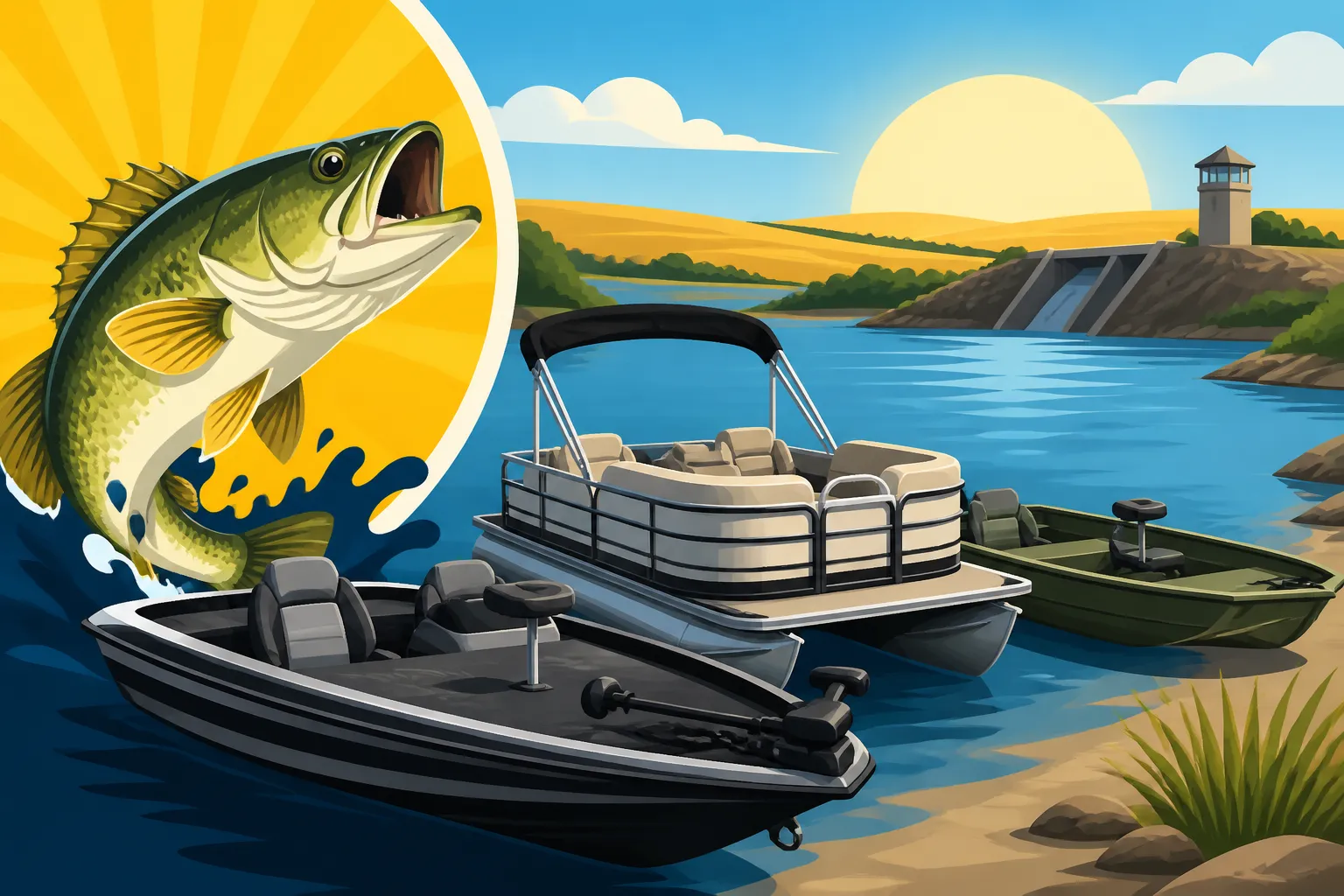
When you think of a fishing boat, often the sleek, powerful bass boat comes to mind. These vessels are engineered for serious anglers who demand speed, precise control, and a dedicated platform for targeting predatory fish like largemouth and smallmouth bass.
Advantages for Kansas Bass Anglers
Bass boats are built for one thing: fishing. They feature wide, stable casting decks that provide ample room for multiple anglers to cast simultaneously without bumping elbows. The low profile means less wind resistance while fishing, which is a huge benefit on breezy Kansas days when you're trying to hold position on a submerged point or a brush pile. Their powerful outboard motors allow for rapid transit across large reservoirs, letting you quickly move from one hotspot to another. This is crucial in tournaments or when a bite window is short. Plus, bass boats typically come equipped with large livewells that keep your catch healthy for weigh-ins, a must for conservation-minded anglers. For those who enjoy specific techniques like structure fishing for bass or topwater fishing, these boats are often optimized for that.
Considerations for Rough Kansas Waters
While bass boats excel in many areas, they do have some limitations, particularly when Kansas weather decides to get feisty. Their low freeboard (the distance from the water to the boat's gunwale) means they are more susceptible to taking on water in rough, choppy conditions. A sudden gust of wind and a couple of foot waves can make for a very wet and uncomfortable ride back to the ramp. They aren't generally built with deep V-hulls, which are designed to cut through waves smoothly. This means pounding through chop can be jarring and hard on both the boat and its occupants. So, while you can cover ground quickly, you might be forced to slow down considerably or even stay off the water entirely if the wind really starts to howl, making them less ideal for general comfort or family outings where conditions might be less than perfect.
Multi-Species/Walleye Boats: Versatility for Diverse Angling
If your fishing interests span across different species and techniques, a multi-species or walleye boat might be your perfect match. These boats are designed to offer a balance of speed, stability, and comfort, making them incredibly versatile for the varied fishing opportunities Kansas reservoirs present.
Handling Waves and Diverse Techniques
Multi-species boats, often recognized by their deeper V-hulls and higher gunwales, are engineered to handle rougher water conditions much better than their low-profile bass boat counterparts. This deeper V allows them to cut through waves rather than pound over them, providing a much smoother, drier, and safer ride when you're caught in a squall on a big lake like Wilson or Milford. They offer ample rod storage, often accommodating longer rods suitable for trolling or deep jigging, which are common techniques for walleye and crappie. The deck layout is also typically more open and versatile, allowing for different fishing setups – whether you're casting, jigging, or setting up multiple planer boards for trolling. Many also come with larger fuel tanks for extended runs and bigger livewells for diverse catches, making them excellent for Kansas Walleye Fishing Techniques or even Kansas Wiper Fishing Techniques.
Features and Layout for the All-Around Angler
These boats usually boast a wider beam (width), which translates to more stability when multiple anglers are moving around or when waves hit from the side. They often feature convertible seating, allowing you to easily switch from casting seats to comfortable passenger seating for family outings. The higher sides also provide a greater sense of security, especially if you have children on board. While they might not be as fast as a dedicated bass boat, they are still plenty quick to get you to your favorite fishing spots efficiently. Think of them as the SUV of fishing boats – capable, comfortable, and adaptable to many situations. Brands like Ranger, Lund, or even Alumacraft offer excellent multi-species options that are well-regarded by serious Kansas anglers. You can often find a great selection of these robust boats at retailers like Bass Pro Shops, where you can walk through different models and talk to experts about their features.
Pontoon Boats: The Family and Leisure Fishing Choice
For those whose primary goal is family fun, leisurely fishing, and comfortable cruising, pontoon boats are an undeniable winner. While not typically designed for high-speed runs or aggressive bass tournaments, their spacious decks and stability make them ideal for a relaxed day on the water.
Space, Comfort, and Stability
Pontoon boats are essentially floating platforms, offering unparalleled deck space for their length. This means plenty of room for family, friends, coolers, grills, and all the gear needed for a day of swimming, sunbathing, and casual fishing. The flat, stable deck makes it easy for kids and pets to move around safely, and it's also a fantastic platform for anglers who prefer to stand and fish from the bank or for those with mobility challenges. Their inherent buoyancy and wide stance provide incredible stability, virtually eliminating the rocking and rolling often associated with monohull boats. This makes them perfect for anchoring up in a quiet cove for some Kansas Panfish Guide action or simply enjoying a peaceful afternoon.
Best Uses for Kansas Reservoirs
While pontoons won't win any races, many models now come with powerful enough engines to comfortably pull tubes or wakeboarders, adding another layer of versatility. For fishing, they are fantastic for still fishing, slip bobber fishing for crappie, or even slow trolling. The open deck allows for various seating arrangements, ensuring everyone has a comfortable spot. Many modern pontoons can be outfitted with fishing-specific features like aerated livewells, rod holders, and even dedicated fishing stations, making them more capable than ever for serious anglers who still prioritize comfort. Just be mindful of their larger size and wind resistance, which can make docking in windy conditions a bit more challenging and speed slower in rough water. However, for sheer comfort, capacity, and family fun on our big lakes, a pontoon is tough to beat.
Jon Boats: Simple, Durable, and Accessible
If you're looking for an affordable, no-frills option that's easy to own and incredibly versatile for various waters, the humble jon boat deserves your attention. These flat-bottomed aluminum boats are workhorses, perfect for anglers who value practicality and accessibility.
Economical and Easy to Maintain
Jon boats are generally the most budget-friendly option when it comes to powered boats. Their simple aluminum construction means they are durable, low maintenance, and less prone to damage from bumps and scrapes – a real plus when navigating shallow, stump-filled backwaters or less-developed ramps. They are also lightweight, making them easy to launch and retrieve, often by a single person, and can be towed by a wider range of vehicles. This ease of transport and ownership makes them excellent for exploring smaller bodies of water, farm ponds, or secluded river stretches that larger boats can't access. You won't break the bank on fuel, and storage is typically a breeze.
Versatility in Shallow and Calm Waters
The flat bottom of a jon boat is its defining characteristic, allowing it to navigate incredibly shallow water with ease. This is a huge advantage for accessing hidden coves, backwaters, and stump fields on Kansas reservoirs where trophy fish might be hiding. They are perfect for targeting Kansas Catfish Species Guide in the shallow river arms or crappie in flooded timber. While they can be a bit bumpy in rough chop due to their flat hull, they are remarkably stable for their size, providing a steady casting platform. You can easily customize a jon boat with aftermarket accessories like trolling motors, depth finders, and even custom decks, tailoring it to your specific fishing needs without the premium price tag of a factory-built fishing machine. For those who prioritize utility and access to diverse fishing environments without the high cost, a jon boat is an excellent choice.
Kayaks and Canoes: Stealth and Unmatched Access
For the ultimate in stealth, accessibility, and a true connection to the water, kayaks and canoes are becoming increasingly popular choices for Kansas anglers. They might not be motorized, but their advantages are significant for a particular style of fishing.
Unrivaled Access and Stealth
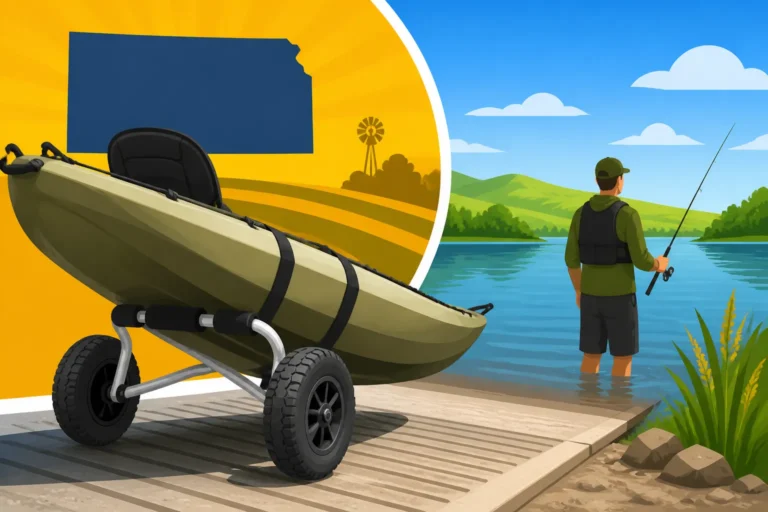
The biggest advantage of a kayak or canoe is its ability to get into places no other boat can. Shallow creeks, tight coves, dense timber, and remote backwaters become accessible, opening up a world of untouched fishing spots on even the largest reservoirs. Their silent propulsion, whether by paddle or pedal drive, allows you to approach fish without spooking them, often leading to more bites. This stealth factor is invaluable when targeting wary species like bass or crappie in clear water. They are also incredibly easy to launch and retrieve, often requiring nothing more than a small bank or shoreline, bypassing crowded boat ramps entirely. For those who enjoy the solitude and challenge of hunting down fish in undisturbed areas, these vessels are unmatched. You can check out Kansas Kayak Fishing Gear Guide for more specifics.
Portability and Cost-Effectiveness
Compared to motorized boats, kayaks and canoes are remarkably affordable, both in initial purchase and ongoing costs. There's no fuel, no complex maintenance, and often, less stringent registration requirements depending on how you power them. They are also incredibly portable; many can be transported on a car roof rack or in the bed of a truck, eliminating the need for a trailer. While space is limited, modern fishing kayaks are surprisingly well-equipped with rod holders, gear tracks, and even integrated fish finders. While they are susceptible to wind and can be challenging to paddle long distances on large, windy reservoirs, the ability to get to those hidden gems and fish in absolute peace makes them a fantastic option for dedicated, adventurous anglers. For smaller accessories or specific rigging components, online retailers like Amazon offer a vast selection to customize your paddle craft.
Outfitting Your Boat for Kansas Reservoir Fishing
Once you've chosen the right type of boat, the next step is outfitting it to maximize your fishing success and ensure safety on Kansas's diverse reservoirs. Think of it as tailoring your vessel to become a true fishing machine.
Essential Electronics: Fish Finders and GPS
Modern fishing success often hinges on good electronics. A quality fish finder is no longer a luxury but a necessity for most serious anglers. It helps you locate fish, identify submerged structure, and understand depth contours, which are all critical on our vast reservoirs.
A good fish finder, especially one with side imaging or down imaging capabilities, can reveal hidden brush piles, rock ledges, and schools of baitfish that are invisible from the surface. This is invaluable when targeting species like walleye, crappie, or catfish that relate closely to structure. Pair that with a GPS unit (often integrated into newer fish finders), and you can mark waypoints for productive spots, navigate back to the ramp in low light or fog, and follow contour lines with precision. Features like mapping and charting capabilities are also extremely helpful for navigating large, unfamiliar bodies of water. For finding the Best Fish Finder for Kansas Reservoirs, you'll want to consider screen size, transducer quality, and ease of use, keeping in mind that clear detail becomes more important in deeper, more complex environments.
Trolling Motors: Precision Boat Control
A good trolling motor is arguably as important as your main outboard for fishing effectively. It provides silent, precise boat control, allowing you to hold position against wind or current, slowly work a shoreline, or precisely troll baits.
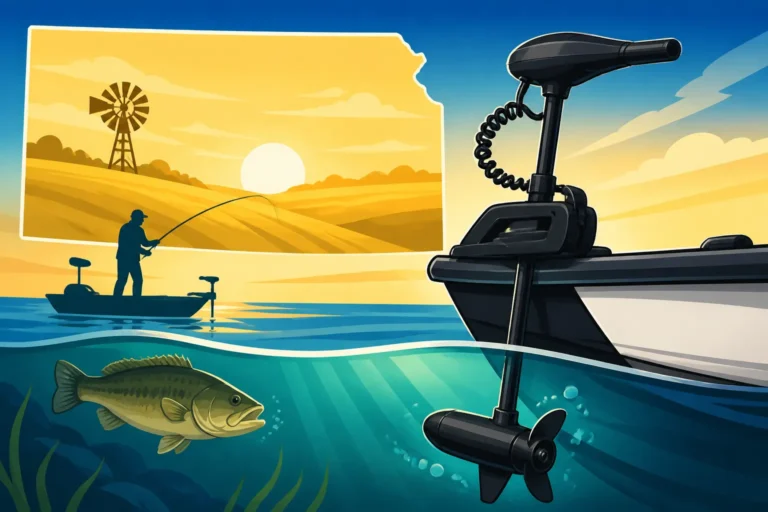
For Kansas reservoirs, where wind can be a constant factor, a bow-mount electric trolling motor with adequate thrust and a foot pedal or remote control is essential. Features like "spot-lock" or "anchor mode" (found on advanced models) use GPS to automatically hold your boat in position, freeing your hands to fish. This is a game-changer when jigging for crappie over a brush pile, or casting to a submerged point. When choosing a trolling motor, consider the size of your boat, the weight of your boat, and the typical wind conditions you'll encounter to ensure you have enough power. Many anglers find a 24-volt or 36-volt system offers the best performance for larger boats on our reservoirs. Best Trolling Motor for Kansas Lakes should be high on your list of accessories.
Safety Gear: Life Jackets, Anchors, and First Aid
No matter how experienced you are, safety should always be your top priority. Kansas reservoirs can turn treacherous quickly, and being prepared is non-negotiable.
Always ensure you have enough properly fitted life jackets for everyone on board, readily accessible. These are legally required in Kansas for children and often recommended for all adults, especially in rough conditions or when alone. A robust anchor system with sufficient rope is crucial for holding your boat in place, whether fishing a hot spot or waiting out a storm. Consider a heavier anchor for larger boats and muddy bottoms. Beyond the basics, a well-stocked first-aid kit, a throw cushion or ring, a fire extinguisher, a paddle, a whistle or horn, and navigation lights (if fishing at dawn, dusk, or night) are all essential. A marine radio or fully charged cell phone in a waterproof bag is also wise for emergencies. Familiarize yourself with Kansas Life Jacket and Boating Safety Guide regulations before heading out.
Maintenance and Ownership Considerations
Owning a boat is a fantastic experience, but it also comes with responsibilities. Proper maintenance and understanding the local regulations will ensure your vessel remains safe, reliable, and compliant for years of enjoyment on Kansas waters.
Registration and Licensing
Before you even hit the water, your boat needs to be properly registered with the Kansas Department of Wildlife, Parks and Tourism (KDWPT). This process ensures your vessel is legally recognized and helps fund conservation efforts.
The registration typically involves submitting paperwork, proof of ownership, and paying a fee. You'll receive a registration card and decals that must be displayed on your boat. Remember, this isn't a one-time thing; registrations need to be renewed periodically. If you're new to boating, it's also worth checking if you need to take a boating safety course, especially if you were born after a certain date. While Kansas doesn't typically require a "boat driver's license" for adults, understanding safe boating practices is crucial. Make sure to keep your Kansas Boat Registration Guide handy and understand the Kansas Boat Titling Rules as well. Neglecting these steps can lead to fines and a ruined fishing trip.
Routine Maintenance for Longevity
A boat is a significant investment, and like any vehicle, it requires regular care to perform optimally and last for many seasons. Neglecting routine maintenance can lead to costly repairs and unexpected breakdowns on the water.
This includes checking fluid levels (oil, trim fluid, lower unit gear lube), inspecting propellers for damage, cleaning spark plugs, and ensuring your battery is charged and terminals are clean. After each trip, it's a good practice to rinse your boat thoroughly, especially if you've been in murky or silty water, to prevent algae and grime buildup. Regularly inspect your trailer tires, lights, and bearings, as trailer issues can sideline your boat just as effectively as an engine problem. Consider having your motor professionally serviced annually, even if it seems to be running fine, to catch potential issues early. This proactive approach will save you headaches and keep you on the water.
Winterization and Storage
Kansas winters can be harsh, and improper winterization is a common cause of severe damage to boat engines and plumbing systems. Protecting your boat during the off-season is absolutely essential.
Winterization involves preparing your engine to withstand freezing temperatures, which typically includes stabilizing fuel, changing the oil and filter, fogging the engine cylinders, draining the cooling system, and adding antifreeze to other systems like livewells or fresh water tanks. The specifics will vary depending on your engine type (inboard vs. outboard) and the boat's features. Beyond the engine, clean your boat thoroughly, remove all gear, and ensure it's stored in a way that protects it from the elements. This might mean a fitted cover, shrink wrap, or indoor storage. Taking the time to properly winterize your boat will ensure it's ready to go when spring fishing season arrives and prevent expensive repairs due to freeze damage. How to Winterize a Boat in Kansas is a topic every boat owner should be familiar with.
Making Your Final Decision: A Comparison
Choosing the best boat for Kansas reservoirs is a personal journey, blending your passion for fishing with practical considerations. To help bring it all together, here's a quick comparison of the popular boat types we've discussed.
Ultimately, the "best" boat is the one that best fits your individual needs, budget, and fishing aspirations. Don't be afraid to visit boat shows, talk to experienced anglers, and even test drive different models. Many dealers and outdoor retailers like Bass Pro Shops will have staff who can guide you through the options, and for specific gear, you might even find great deals on Amazon.
| Boat Type | Primary Advantages | Primary Disadvantages | Ideal for Kansas Angler |
|---|---|---|---|
| Bass Boat | Speed, dedicated casting platforms, excellent for bass/walleye tournaments. | Poor rough water ride, lower freeboard (wetter), higher cost, less family-friendly. | Serious bass or walleye tournament anglers, those who prioritize speed and specialized features. |
| Multi-Species/Walleye Boat | Handles rough water well, versatile for various species, comfortable ride, good storage. | Not as fast as bass boats, can still be pricey, less deck space than pontoons. | Anglers targeting walleye, crappie, catfish; those who fish various techniques and value comfort. |
| Pontoon Boat | Unmatched stability, spacious for family/friends, comfortable, versatile for leisure. | Slower speeds, poor rough water handling, wind resistance, not ideal for aggressive casting. | Families, leisure cruisers, panfish anglers, those prioritizing comfort and capacity. |
| Jon Boat | Economical, durable, great for shallow water access, easy to customize/maintain. | Rough ride in chop, limited features/comfort, less suited for large, open water. | Budget-conscious anglers, those fishing shallow rivers/coves, custom builders. |
| Kayak/Canoe | Unrivaled access to shallow/tight spots, silent, portable, very cost-effective. | Limited capacity, slower, susceptible to wind, physically demanding, less comfortable. | Solo anglers, those seeking stealth and remote access, eco-conscious adventurers. |
No matter which boat you choose, remember that the true joy of Kansas fishing lies in the experience. Investing in the right vessel means more time doing what you love, safely and comfortably, on our beautiful Kansas reservoirs.
Disclaimer
This article is for general informational purposes only and does not constitute professional advice. Laws, prices and regulations vary by location and change over time. Consult a qualified professional for guidance on your specific situation.