Best Crankbait Colors for Walleye
It can be incredibly frustrating to stand at the edge of a Kansas reservoir or river, staring at a tackle box overflowing with crankbaits, and wonder which color will actually tempt a walleye today. We've all been there – the water looks murky, the sun is blazing, or maybe it's just a cloudy, calm morning, and you're second-guessing every choice. This guide is here to cut through that confusion, helping you understand the best crankbait colors for walleye in various Kansas fishing conditions, so you can spend less time guessing and more time reeling in those elusive, delicious fish.
Understanding Walleye Vision and Forage Preferences
Before we dive into specific colors, it’s really helpful to understand how a walleye actually perceives its underwater world. They're not like us, seeing a full spectrum of vibrant colors; their vision is uniquely adapted to their low-light hunting grounds.
How Walleye See Underwater
Walleye possess large, light-sensitive eyes, which is why they’re often most active during dawn, dusk, or on cloudy days, and why night fishing for them can be so productive. Their eyes are packed with rods, which are cells that excel at detecting movement and contrast in dim light. While they do have cones for color perception, it's generally understood that bright, distinct colors that create a strong silhouette or reflect light effectively will grab their attention, especially when light is scarce.
Think about it: in clear, bright water, a subtle, natural baitfish imitation might be invisible if it doesn't reflect light just right. But in murky water or low light, that same subtle bait might get completely lost. This is where contrasting colors or those with a strong silhouette become crucial. Walleye are ambush predators, and their excellent low-light vision gives them a huge advantage in detecting prey, making the right color choice even more impactful.
Mimicking Natural Prey
A huge part of successful walleye fishing in Kansas revolves around understanding what they’re eating. Our reservoirs and rivers are teeming with various baitfish, and the most common ones are usually the best to imitate. Shad, various types of minnows, and small perch are staples in a walleye's diet.
If you can match the local forage in terms of size, shape, and color, you're already halfway there. For instance, in lakes like Milford Lake or Cheney Reservoir, where shad populations thrive, a crankbait mimicking a silver or white shad can be deadly. If you're fishing a lake with a strong yellow perch presence, a crankbait with perch-like markings – greens, oranges, and yellows – could be a game-changer. Observing the baitfish jumping, or even checking the stomach contents of a previously caught fish (if you're brave enough!), can provide invaluable clues. Understanding What Walleye Eat Reservoirs is a key component to selecting the right color.
Top Crankbait Colors for Clear Water Conditions
When the water clarity is high, and you can see a good distance into the water, walleye can be a bit pickier. They have a better chance to scrutinize your offering, so subtlety and realism often pay off.
Natural and Translucent Patterns
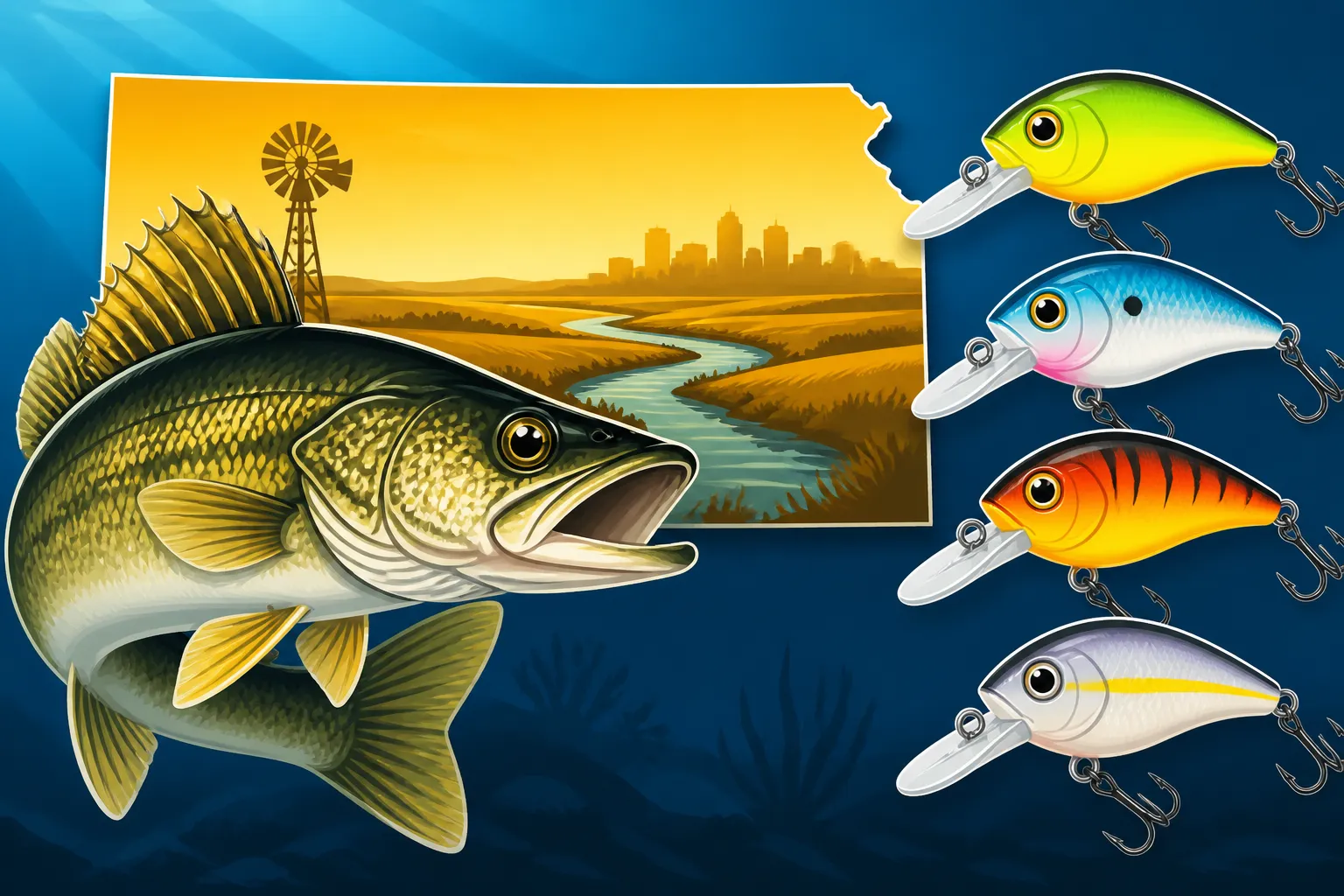
In clear water, especially on bright, sunny days, natural colors that perfectly mimic the local baitfish are often the most effective. Think about light silver, pearl white, translucent clear, or even subtle greens and browns that imitate a distressed minnow. These colors don't scream "predator!" but rather whisper "easy meal."
Imagine a sunny afternoon on Wilson Lake, known for its clearer waters. A crankbait with a clear body and a bit of silver flake, or a subtle shad pattern, will blend into the environment while still offering a tantalizing shimmer. Walleye in these conditions are less likely to be attracted by loud, obnoxious colors and more by something that looks genuinely edible and non-threatening. They'll follow it, analyze it, and then often strike out of instinct. You want your lure to look as natural as possible, almost invisible until it twitches just right.
Subtle Flashes and Reflective Finishes
Even in clear water, a little flash can go a long way. Crankbaits with chrome sides, metallic finishes, or subtle iridescent scales can perfectly imitate the flash of a fleeing or injured baitfish. This isn't about blinding the walleye with bright colors, but rather giving them a realistic glint that triggers their predatory instinct.
Consider a crankbait that is predominantly silver or gold, perhaps with a slight blue or black back. As it wobbles through the water, the sun's rays catch the metallic finish, sending out subtle signals that mimic the natural scales of a shad or small panfish. This reflective quality is particularly effective when the walleye are suspending in the water column and need a visual cue to draw them in. Many anglers find these subtle, reflective patterns available from brands like Bass Pro Shops, which often carry a wide selection of proven walleye crankbaits.
Effective Crankbait Colors for Stained or Murky Water
When the water takes on a tea stain, or after a good rain turns it a bit muddy, visibility drops dramatically. This is when you need colors that stand out and create a strong presence, rather than blending in.
Bright and High-Contrast Colors
In stained or murky water, walleye rely more on their lateral line (which detects vibrations) and their ability to see strong contrasts. This is your cue to reach for the loud and proud colors. Chartreuse, neon orange, firetiger (a mix of bright green, yellow, orange, and black stripes), and even hot pink or bright red can be incredibly effective.
These colors don't necessarily exist in nature in such intensity, but their vibrancy allows them to be seen from a greater distance in low-visibility conditions. A walleye might not see the intricate details, but it will certainly notice that bright blob moving through the murk. Think about fishing Tuttle Creek Lake after a heavy rain; a firetiger crankbait retrieved along a weed line or rocky point could be just the ticket to provoke a strike. These colors create a visual "hot spot" that screams "food here!" even when light penetration is minimal.
Darker Silhouettes
While bright colors scream for attention in murky water, sometimes a strong, dark silhouette is what really seals the deal. This is especially true during low-light conditions, like dawn, dusk, or when night fishing for walleye. A dark crankbait, such as solid black, dark purple, or a very deep blue, creates a stark contrast against the lighter sky above or even the slightly brighter water at shallower depths.
Imagine a walleye looking up from below. A dark lure passing overhead presents a clear, defined shape that looks like a large baitfish or even a crayfish. This simple, strong profile can be incredibly effective when walleye are actively hunting in very poor visibility. Many experienced anglers swear by dark-colored crankbaits for evening or night fishing, especially when the water is stained. It's not about the color itself, but the absence of light it represents, making it an undeniable target. You'd be surprised how effective a simple black crankbait can be when How to Fish a Jig for Walleye at Night is your game plan.
Situational Color Choices and Advanced Considerations
Beyond water clarity, there are other factors that play a role in choosing the perfect crankbait color for walleye. Being adaptable and understanding these nuances can significantly improve your success rate.
Matching the Hatch and Local Forage
We touched on this earlier, but it bears repeating: knowing what your target walleye are currently feeding on is paramount. This isn't just about general baitfish, but specifically what is most abundant or vulnerable at that moment. Sometimes, it's a specific size of shad, or a certain hue of minnow.
For example, if you notice schools of small, silvery shiners flashing near the surface, then a small, silver crankbait is a smart choice. If you're fishing a lake known for its abundant bluegill population, a crankbait with blue and orange accents might be more effective. Checking local fishing reports or talking to bait shop owners can provide up-to-date information on the "hatch." Learning Kansas Walleye Fishing Techniques will often emphasize the importance of matching your presentation, including color, to current conditions.
Experimentation and Confidence Colors
While there are general guidelines, walleye can be notoriously finicky, and what works one day might not work the next. This is why experimentation is so critical. Don't be afraid to try a color you wouldn't normally consider, especially if your tried-and-true favorites aren't producing. Keep a variety of colors in your tackle box – natural, bright, and dark – to cover all your bases.
Beyond scientific reasoning, there's also the "confidence color" factor. If you've caught a lot of walleye on a particular color in the past, you'll naturally fish it with more conviction, which often leads to more bites. This isn't magic; it's about presentation. When you're confident in your lure, you're more likely to fish it at the right speed, depth, and with the right retrieve, making it more appealing to the fish. Many anglers find it easy to stock up on a variety of colors and patterns through online retailers like Amazon, ensuring they have plenty of options for their confidence picks. Remember, the Best Lures for Kansas Walleye are often the ones you have faith in.
The Role of Depth and Light Penetration
The deeper your crankbait goes, the less light penetrates the water, and thus the more colors start to disappear or change their appearance. Red is the first color to vanish, appearing as a dull gray or black at certain depths. Blue and green penetrate deeper.
This means that if you're trolling a crankbait 20 feet down, a bright red lure might just look like a dark blob to a walleye. This is why sometimes brighter colors like chartreuse, or those that create strong contrast, are still effective at moderate depths, as they maintain some visual integrity. For really deep presentations, or when targeting structure deep in a reservoir, focus on strong silhouettes or lures that incorporate glow-in-the-dark features, as these can be seen even in near-total darkness. Consider the Water Temperature Kansas Walleye Prefer too, as fish often hold at certain depths based on temperature and dissolved oxygen, impacting light penetration.
Seasonal Color Strategies for Kansas Walleye
The time of year dramatically influences walleye behavior and, consequently, which crankbait colors might be most effective.
Spring Spawning and Post-Spawn Colors
In the spring, as water temperatures rise and walleye move to shallower rocky areas or tributary rivers to spawn, they can be quite aggressive. During this period, especially just before and after the spawn, brighter, more attention-grabbing colors can be highly effective. The walleye are focused on procreation and then on recovering and feeding aggressively.
Chartreuse, orange, and firetiger patterns can really shine here. These colors can mimic a variety of baitfish that might be in the area, or simply trigger an aggressive reaction strike from a fish that is either defending its territory or trying to regain energy. After the spawn, as they scatter and start feeding heavily, a blend of bright and natural colors can work as they become less territorial and more focused on easy meals. These patterns can be especially productive if you're out employing Kansas Spring Walleye Fishing Tips.
Summer and Fall Feeding Frenzies
During the warm summer months, walleye often retreat to deeper, cooler water during the day, coming shallower to feed at dawn, dusk, or throughout the night. In the clearer waters often found in summer, natural baitfish patterns in silver, white, or subtle greens can be excellent during the low-light feeding windows. However, if you're fishing stained waters or on overcast days, those bright chartreuse and firetiger colors still hold their own.
As fall approaches, walleye begin their major feeding push in preparation for winter. This can be a fantastic time for both natural and brighter patterns. Many anglers find success with metallic golds and silvers, as walleye are often keying in on larger baitfish that are also fattening up. The walleye are actively hunting, and a well-presented crankbait in a confidence color, whether natural or attention-grabbing, can be incredibly productive. When targeting these fish, be sure to check out Kansas Fall Walleye Fishing Tips for more specific advice.
Winter and Ice Fishing Considerations
While crankbaits are less commonly used for traditional ice fishing, they still have their place during open-water winter fishing (if conditions allow) or when discussing color theory for cold water. In the frigid water, walleye metabolism slows down, and they become less aggressive. Subtlety is often key.
For open-water winter walleye, smaller crankbaits in natural, translucent colors (like clear with silver flake) can be effective. They offer a more realistic and less threatening profile to sluggish fish. For ice fishing, while jigging lures are more common, the principle of color visibility still applies. Glow-in-the-dark or UV-reactive colors are paramount for deep or dark ice fishing conditions, as they absorb and emit light, making them visible when nothing else is. When it's cold, every little advantage helps, and understanding these color nuances can make a big difference, even if you’re typically focused on Kansas Ice Fishing Guide techniques.
| Water Clarity | Light Conditions | Suggested Crankbait Colors | Key Characteristic |
|---|---|---|---|
| Clear | Bright Sun | Silver, Pearl, Translucent, Natural Shad | Realistic, Subtle Flash |
| Overcast/Low | Silver/Blue, Perch Patterns, Chartreuse | Natural with Contrast | |
| Stained | Bright Sun | Firetiger, Chartreuse, Orange, Hot Pink | High Visibility, Contrast |
| Overcast/Low | Firetiger, Chartreuse, Dark Purple, Black | Strong Silhouette, Bright | |
| Murky/Muddy | Any | Black, Dark Purple, Firetiger, Orange | Strong Silhouette, Vibrancy |
This article is for general informational purposes only and does not constitute professional advice. Laws, prices and regulations vary by location and change over time. Consult a qualified professional for guidance on your specific situation.