Best Gear Checklist for a Kansas Fishing Trip
You know that feeling when you're finally hitting the road for a much-anticipated fishing trip in Kansas, only to realize halfway there that you've forgotten something absolutely crucial? Or worse, you arrive, and the conditions are completely different than expected, and your gear isn't quite right? It’s a common frustration that can really put a damper on what should be a relaxing day on the water. This guide is all about helping you avoid those "oops" moments by providing a comprehensive checklist of the best gear for any Kansas fishing adventure, making sure you’re prepared for whatever the Sunflower State throws your way.
The Absolute Must-Haves: Core Fishing Gear
Every successful fishing trip starts with the right foundational equipment. Without these core items, you’re basically just sight-seeing with a rod in your hand! We're talking about the trusty tools that connect you directly to the fish, and trust me, skimping here can lead to a lot of missed opportunities and heartache. Getting these right sets the stage for a great day.
Rod and Reel Combos for Versatility
When you're fishing across Kansas, from the vast reservoirs like Milford Lake to the winding rivers, you need a rod and reel setup that can handle a variety of situations. A medium-power, fast-action spinning rod, typically in the 6.5 to 7.5-foot range, paired with a matching spinning reel (like a 2500 or 3000 series), is a fantastic all-around choice. This setup offers the sensitivity to detect subtle bites from crappie and walleye, but also has enough backbone to handle a feisty bass or a respectable channel catfish. It's the kind of combo that won't leave you feeling under-gunned in most scenarios.
Think about it: you might be casting small jigs for panfish one minute, and then switching to a heavier crankbait for walleye the next. A versatile spinning combo lets you do just that without needing to haul three different setups. It's forgiving for beginners, allows for long, accurate casts, and is generally easier to manage than a baitcasting setup for many common Kansas fishing techniques. Investing in a quality, balanced combo from a reputable brand like those found at Bass Pro Shops will pay dividends in sensitivity and durability, helping you feel every twitch and bump.
For those looking to target specific species, you might eventually branch out. For instance, a heavier baitcasting setup might be preferred for flipping and pitching for largemouth bass in heavy cover, or a longer, more sensitive rod for finesse walleye presentations. But for getting started and covering most bases, that medium-power spinning outfit is your best friend. It truly allows you to adapt on the fly, which is key when you're exploring new waters or dealing with changing fish behavior.
Fishing Line Selection for Kansas Waters
The fishing line is often the most overlooked piece of gear, yet it's your only direct connection to the fish. Choosing the right line type and strength is critical for success in Kansas, where you might encounter everything from clear-water walleye to snag-laden catfish holes. Monofilament, fluorocarbon, and braided lines each have their place, and understanding their characteristics will greatly improve your fishing game.
Monofilament line is a classic for a reason: it’s affordable, easy to tie knots with, and offers good stretch, which can be forgiving when fighting strong fish or using treble-hooked lures. For general-purpose fishing in Kansas, an 8 to 12-pound test monofilament is a solid choice. It's versatile enough for crappie, walleye, bass, and even smaller catfish. However, its stretch can sometimes make subtle bites harder to detect, and it's less abrasion-resistant than other options, which can be an issue around rocky bottom or submerged brush.
Fluorocarbon line, on the other hand, is nearly invisible underwater, making it a favorite for targeting wary fish like walleye in clear lakes or pressured bass. It has less stretch than mono, providing better sensitivity and hook-setting power. Many anglers use it as a leader material, tying a 6-10 foot section of fluorocarbon to the end of their main braided line. This gives you the best of both worlds: the strength and sensitivity of braid, with the stealth of fluorocarbon. The downside is that it can be a bit stiffer and more expensive.
Braided line offers incredible strength-to-diameter ratio, no stretch, and excellent abrasion resistance. It’s perfect for fishing in heavy cover, throwing large crankbaits, or targeting big catfish. A 20 to 30-pound braided line, often paired with a fluorocarbon leader, is a popular choice for many Kansas anglers. Its lack of stretch provides unparalleled sensitivity, allowing you to feel every nibble. Just be aware that it can be highly visible, which is why that fluorocarbon leader is often a good idea, especially in clearer waters. Consider checking out specialized lines for specific species, such as those recommended in Best Line Weight for Kansas Catfish or Best Line Weight for Kansas Walleye.
Beyond the Basics: Essential Tackle and Terminal Gear
Once you have your rod, reel, and line sorted, it’s time to fill up your tackle box. This is where the real fun begins – picking out all the bits and bobs that will actually entice a fish to bite. Having a well-organized and thoughtfully stocked tackle box is like having a fishing superpower; you're ready for any situation or species you might encounter, without wasting precious fishing time fumbling around.
The Well-Stocked Tackle Box
Your tackle box or bag is your mobile command center, holding all the little pieces that make your fishing possible. Don't just throw things in there; organize it! A good setup includes a variety of hooks, sinkers, swivels, and leader materials. For hooks, think about having an assortment of sizes and styles. J-hooks are standard, but circle hooks are fantastic for catfish and promote safer catch-and-release by often hooking in the corner of the mouth. You'll also want some treble hooks for your crankbaits, or even some offset worm hooks for soft plastics.
Sinkers are next on the list. You'll need split shot for light presentations, bullet weights for Texas-rigging soft plastics, and egg or no-roll sinkers for bottom-fishing for catfish. Having a range of weights, from tiny 1/8 oz to hefty 1 oz or more, allows you to adjust to current, depth, and wind conditions. Swivels, both barrel and snap varieties, are invaluable for preventing line twist and allowing quick lure changes. A small selection of leader material, usually fluorocarbon, is also smart for when you need a little extra stealth or abrasion resistance. Many anglers find great organizational options for their tackle boxes, whether it's modular boxes from Bass Pro Shops or various containers available on Amazon. For specific advice on setting up your box, you might find Best Tackle Box Setup for Kansas Anglers helpful.
Beyond the hardware, don't forget essential tools. A good pair of fishing pliers or forceps is absolutely non-negotiable for safely removing hooks, cutting line, and crimping weights. A sharp fishing knife or a multi-tool can be a lifesaver for all sorts of unexpected tasks. And speaking of safety, always consider having a small measuring tape or scale if you're keen on knowing your catch's specs or adhering to specific length limits in Kansas, such as the Kansas Walleye Minimum Length Limit of 21 Inches or Kansas Crappie Minimum Length Limit of 10 Inches.
Baits and Lures for Kansas Fish
This is where your strategy truly comes alive! The types of baits and lures you pack depend heavily on what you're targeting and the time of year. Kansas fish have varied diets and preferences, so a diverse selection is always a smart move. For live bait, staples like nightcrawlers and minnows are universal attractors, working well for panfish, bass, walleye, and even smaller catfish. If you're serious about catfish, don't forget cut bait (like shad or sunfish) or stink baits, which are often irresistible to channel and blue catfish, especially during warmer months.
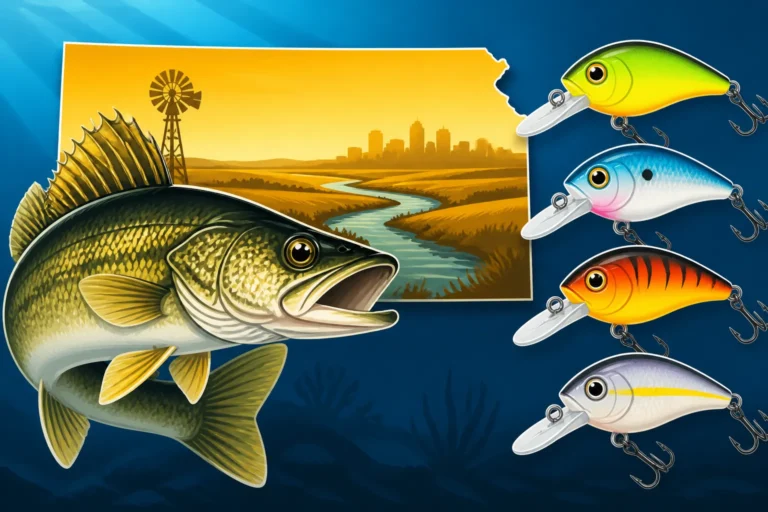
When it comes to artificial lures, the options are vast, but a few categories are absolute must-haves for Kansas. Jigs, in various sizes and colors, paired with soft plastic trailers or grubs, are incredibly versatile. They're deadly for crappie, walleye, and bass when fished near structure or on the bottom. Crankbaits, both shallow and deep-diving, are excellent search baits for covering water and triggering strikes from aggressive walleye, bass, and white bass. Having a few different sizes and color patterns to mimic local baitfish (like shad or crawfish) is key. For more specific guidance, check out Best Bait for Kansas Catfish or Best Lures for Kansas Walleye.
Spinnerbaits and chatterbaits are power-fishing tools that excel at drawing strikes from bass in cover, while topwater lures can provide exhilarating blow-ups from bass during low-light conditions. Don't forget soft plastic worms, creature baits, and swimbaits, which can be rigged in countless ways to entice bites from bass and walleye in different scenarios. It’s all about matching the hatch and adapting to what the fish are telling you on any given day. Many local bait shops around Kansas lakes, as well as large online retailers like Amazon, offer an extensive selection, making it easy to replenish your supply or try something new.
Personal Preparedness: Safety and Comfort on Kansas Waters
Fishing should be enjoyable, not an endurance test against the elements or an exercise in discomfort. Being prepared with the right personal gear ensures you can focus on the fishing, stay safe, and have a good time, no matter what surprises Mother Nature throws your way. The weather in Kansas can be notoriously unpredictable, so planning for a range of conditions is always wise.
Protection from the Elements
The Kansas sun can be intense, especially during the long summer days on open water. Sun protection isn't just about comfort; it's about health and safety. A wide-brimmed hat, good quality polarized sunglasses, and broad-spectrum sunscreen are non-negotiable. Polarized sunglasses not only protect your eyes but also cut glare, allowing you to see deeper into the water, which can be a huge advantage for spotting structure or even fish. Trust me, a sunburned neck or eye strain can ruin a trip faster than a tangled line.
Layering your clothing is another crucial strategy for dealing with Kansas weather. Early mornings can be chilly, even in summer, but by midday, temperatures can soar. A moisture-wicking base layer, a fleece or insulated mid-layer, and a waterproof, windproof outer shell will keep you comfortable through changing conditions. A lightweight rain jacket and pants, even if the forecast looks clear, are a smart addition. I've been caught in unexpected Kansas thunderstorms more times than I care to admit, and having reliable rain gear, like options found on Amazon, made all the difference between a miserable retreat and a successful post-storm bite. You might want to consider Best Rain Gear for Spring Fishing in Kansas for specific recommendations.
Finally, don't forget insect repellent, especially if you're fishing near wooded areas or during dawn and dusk. Mosquitoes and ticks can be more than just annoying; they can be a health concern. A good pair of comfortable, sturdy shoes that can get wet, or even wading boots if you plan to do any stream or bank fishing, will complete your elemental protection. Best Waders for Kansas Bank Fishing offers more specific insights if bank fishing is your preference.
Safety and Essential Accessories
Beyond comfort, personal safety on the water is paramount. A small, waterproof first-aid kit is an absolute must-have. Hooks happen, cuts happen, and having the essentials for cleaning and covering minor injuries can prevent a small mishap from becoming a big problem. I always include antiseptic wipes, band-aids, gauze, and some pain relievers in mine.
Communication is key, especially if you're fishing alone or in remote areas. A fully charged cell phone is a given, but consider a portable power bank for extended trips. For boaters and kayakers, a whistle or other sound-producing device is often legally required and crucial for attracting attention in an emergency. A dependable headlamp or flashlight is also invaluable for early morning launches, late-night fishing sessions (especially if you're targeting catfish after dark), or simply packing up your gear after sunset. Having hands-free lighting can make a huge difference, whether you're rigging up or navigating back to your vehicle. Best Headlamp for Night Fishing in Kansas delves into this more.
And for anyone venturing out in a boat, kayak, or even a float tube, a Coast Guard-approved life jacket (PFD) that fits properly is non-negotiable. Wear it, don't just stow it! Accidents can happen in an instant, and a PFD can save your life. It's not just a recommendation, it's often a legal requirement in Kansas. Make sure you understand the regulations by reviewing guides like Kansas Life Jacket and Boating Safety Guide and Kansas Boating Safety Equipment Requirements.
Specialized Additions for Different Kansas Adventures
While the core gear forms the backbone of your fishing setup, certain types of Kansas fishing demand specific additions. Whether you're gliding silently across a lake in a kayak or braving the cold for some hard-water action, having the right specialized gear can make or break your experience and even expand your fishing horizons.
Kayak Fishing Enhancements
Kayak fishing has exploded in popularity across Kansas, offering a stealthy and intimate way to explore countless waterways, from the quiet coves of Clinton Lake to the flowing stretches of the Kansas River. While your basic rod and reel combo will work, a few specialized pieces of gear make kayak fishing much more efficient and enjoyable. First, a paddle leash is crucial. Losing your paddle in the middle of a lake means you're literally up a creek without one!
A dry bag is another non-negotiable for kayak anglers. It keeps your phone, wallet, keys, and any extra layers completely dry, even if you capsize or are splashed. Storage space in a kayak is often limited, so organizing your tackle in smaller, waterproof boxes that fit snugly in your kayak's hatches or a fishing crate is ideal. Many kayak anglers rig a fishing crate on the stern for easy access to tackle, rod holders, and even a small cooler. For more specific recommendations on optimizing your setup, check out Best Kayak Fishing Gear for Kansas Lakes.
Finally, consider an anchor trolley system and a small grapnel anchor. This allows you to deploy and retrieve your anchor from either the bow or stern, providing much more control over your position in wind or current without having to move. A PFD specifically designed for kayak fishing, with larger armholes and multiple pockets, also adds comfort and utility. Brands often have specific products for kayak fishing, and you can find a wide array of specialized accessories on Amazon or at Bass Pro Shops.
Cold Weather and Ice Fishing Gear
When winter blankets Kansas with ice, a whole new fishing opportunity opens up. Ice fishing can be incredibly rewarding, but it demands a completely different set of gear for both safety and success. First and foremost, safety gear: ice picks worn around your neck for self-rescue, a spud bar or ice chisel to check ice thickness as you go, and a reliable ice auger for drilling holes. You definitely don't want to be caught on thin ice, so always check local conditions and follow safety guidelines. Articles like How Thick Does Ice Need to Be to Fish? are vital reading before heading out.
For comfort, an ice shelter is a game-changer. Whether it’s a pop-up hub style or a more portable flip-over, a shelter protects you from the wind and cold, often allowing for a small portable heater inside. This transforms a frigid day into a cozy experience. Layered, insulated clothing, including thermal boots and gloves, are also critical. Forget your regular fishing rod; specialized short, sensitive ice rods and reels are designed to detect subtle bites in the cold water. Many ice fishing enthusiasts swear by specific products they find at Bass Pro Shops for durability in harsh conditions. If you're new to the sport, Kansas Ice Fishing Gear Guide offers a comprehensive overview.
Beyond the basics, specialized tackle like small jigs (often tipped with wax worms or plastics) and spoons are essential for enticing panfish, walleye, and even crappie under the ice. A flasher or an ice fishing sonar unit can also dramatically increase your success by showing you fish and your lure in real-time beneath the ice. This kind of technology can be found on Amazon and helps locate fish quickly in vast frozen environments.
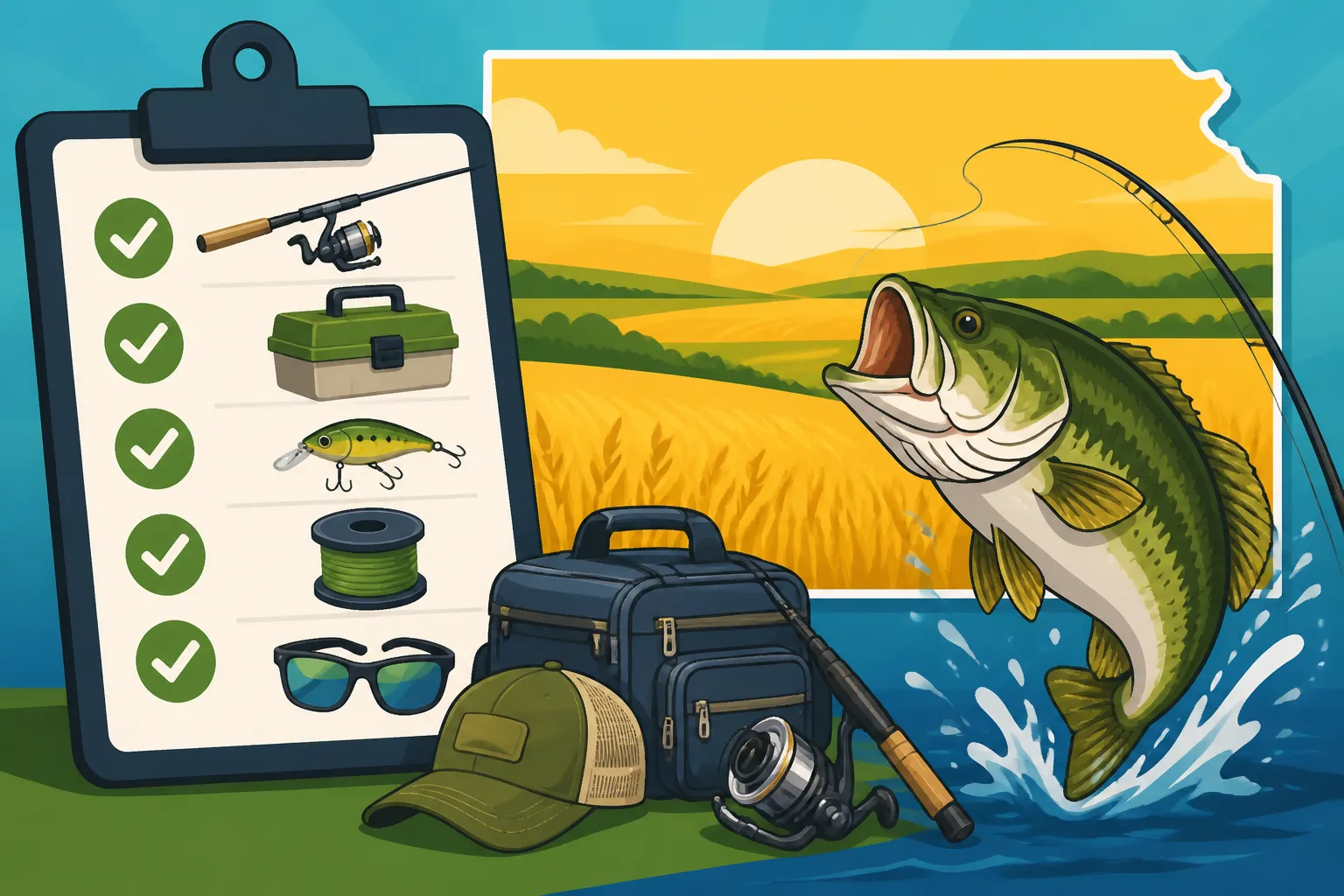
Here's a handy checklist to get you started:
| Category | Item | Why It's Essential | Notes |
|---|---|---|---|
| Core Fishing Gear | Valid Kansas Fishing License | Legal requirement for all anglers (with few exemptions) | Always carry it! Kansas Fishing License Guide is a great resource. |
| Versatile Rod & Reel Combo | Handles various species and techniques | Medium power, fast action spinning is ideal general-purpose. | |
| Assorted Fishing Line (Mono, Fluoro, Braid) | Match to conditions, target species, and presentation | Have 8-12lb mono, 6-10lb fluoro leader, 20-30lb braid. | |
| Well-Organized Tackle Box/Bag | Stores and protects your terminal tackle and lures | Compartments are key for efficiency. | |
| Baits & Lures | Assorted Hooks (J, Circle, Treble) | Sizes and styles for various baits and fish mouths | Essential for different rigs and species. |
| Various Sinkers/Weights (Split shot, Bullet, Egg) | Get your bait to the right depth and keep it there | Adapt to current, depth, and wind. | |
| Swivels & Snaps | Prevents line twist, allows quick lure changes | Barrel swivels for line twist, snap swivels for lure swaps. | |
| Go-To Baits (live: worms, minnows; artificial: jigs, crankbaits, soft plastics) | Attracts target species; covers various presentations | Research local favorites for your chosen lake/river. | |
| Personal Safety & Comfort | Fishing Pliers/Forceps | Safe hook removal, line cutting, tackle adjustments | Protects fish and your fingers! |
| Multi-Tool or Fishing Knife | General utility and emergencies | Always sharp and accessible. | |
| Small, Waterproof First-Aid Kit | Addresses minor injuries quickly | Be prepared for cuts, scrapes, and hook pokes. | |
| Sun Protection (Wide-brim hat, polarized sunglasses, SPF sunscreen) | Prevents sunburn, eye strain, and improves visibility | Crucial for long days under the Kansas sun. | |
| Layered, Weather-Appropriate Clothing | Adapts to changing Kansas weather conditions | Moisture-wicking base, insulating mid-layer, waterproof outer. | |
| Rain Gear (Jacket & Pants) | Stays dry in unexpected showers or persistent drizzle | Lightweight and packable is best. | |
| Insect Repellent | Protects against mosquitoes and ticks | Especially important near standing water or wooded areas. | |
| Ample Water & Snacks | Stay hydrated and fueled for a productive day | Always pack more than you think you'll need. | |
| Headlamp/Flashlight | Essential for low-light conditions and night fishing | Hands-free models are a blessing. | |
| Charged Cell Phone (with power bank) | Communication and emergencies | A dead phone is useless. | |
| PFD/Life Jacket (for boat/kayak/float tube) | Critical safety item for all watercraft | Wear it; don't just store it! See Kansas Life Jacket and Boating Safety Guide. | |
| Specialized (if applicable) | Kayak-Specific PFD | Enhanced comfort and utility for paddle anglers | Designed for freedom of movement. |
| Kayak Paddle Leash | Prevents losing your paddle | A simple item that saves a lot of trouble. | |
| Kayak Dry Bag | Keeps electronics and valuables safe and dry | Essential for all kayak trips. | |
| Kayak Cart (for transport) | Makes getting to and from the water easier | Saves your back and your gear. | |
| Small Kayak Anchor & Trolley System | Holds your position in wind or current | Increases fishing efficiency and enjoyment. | |
| Ice Auger (Manual or Powered) | Drills holes through the ice | Choose based on ice thickness and frequency of use. | |
| Ice Shelter (Portable or Flip-over) | Protection from wind and cold for comfort | Extends your time on the ice. | |
| Specialized Ice Rods & Reels | Designed for sensitivity in cold water | Shorter and more delicate than open-water gear. | |
| Ice Safety Picks | Self-rescue tool for falling through ice | Worn around the neck, crucial for ice safety. | |
| Insulated Boots & Clothing | Stay warm in extreme cold | Layers are critical for ice fishing comfort. |
Disclaimer
This article is for general informational purposes only and does not constitute professional advice. Laws, prices and regulations vary by location and change over time. Consult a qualified professional for guidance on your specific situation.