Kansas Bass Fishing Guide
There's nothing quite like the thrill of a bass hitting your line here in Kansas. Many anglers, myself included, have spent countless hours frustrated trying to unlock the secrets to consistently catching these powerful fish, whether it's the elusive largemouth in a weed bed or a feisty smallmouth in river current. This comprehensive guide is here to demystify Kansas bass fishing, covering everything from identifying the different species to the best techniques and spots, helping you turn those frustrating days into memorable catches.
Types of Bass You'll Encounter in Kansas Waters
When we talk about "bass" in Kansas, it’s easy to think of just one type, but our state is actually home to three distinct species of black bass, each with its own characteristics and preferred habitats. Knowing the difference can make a huge impact on how and where you target them. It's not just about what bait to use, but understanding their behavior can save you a lot of time and effort out on the water.
Largemouth Bass: The Undisputed King
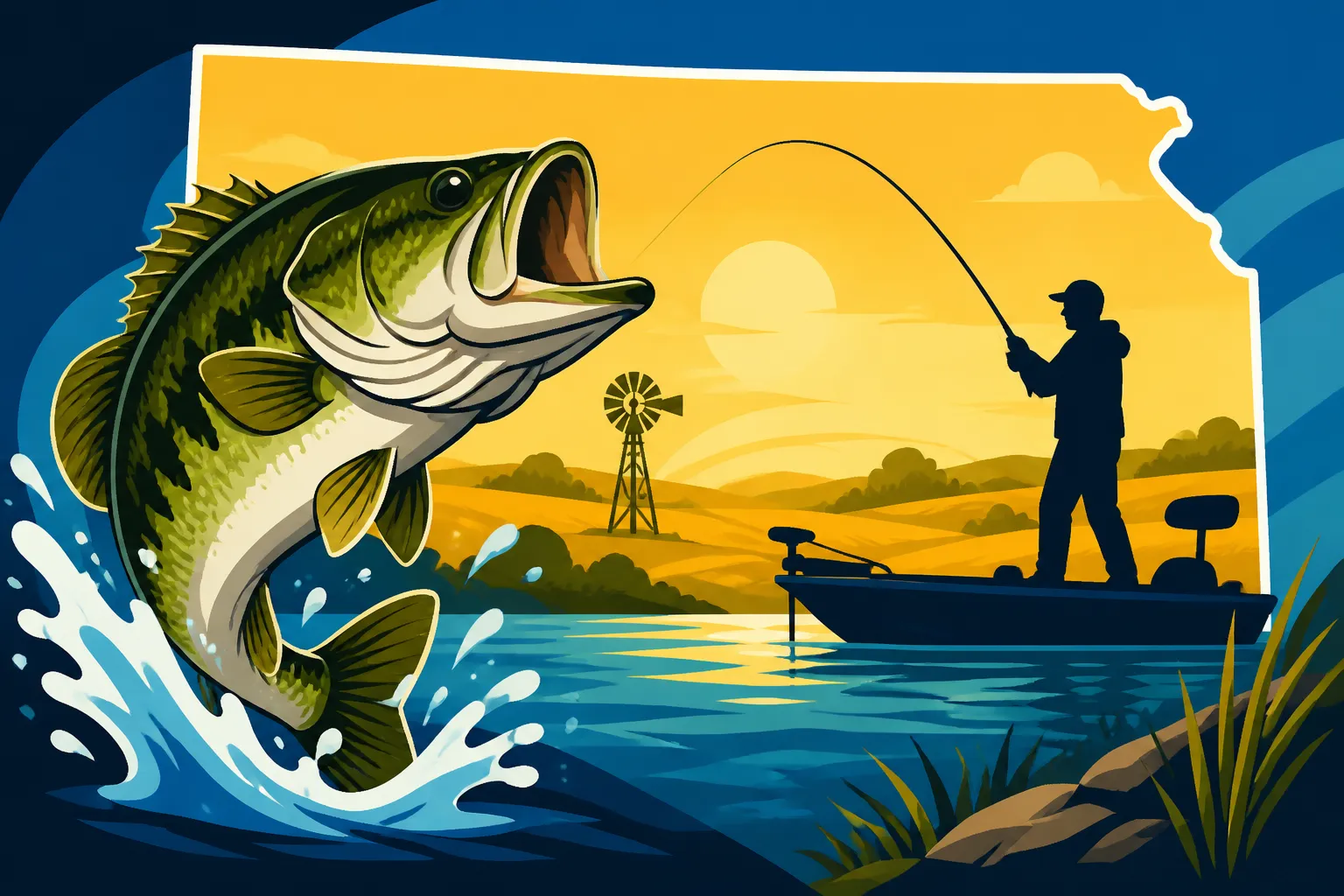
Ah, the largemouth bass – often considered the ultimate freshwater game fish, and for good reason! These fish are powerful, aggressive, and can grow to impressive sizes, making them a favorite target for anglers across the state. You’ll find them in a wide variety of waters, from large reservoirs to small farm ponds, often lurking in dense cover.
Identifying a largemouth is usually pretty straightforward. Look for that prominent horizontal stripe or a series of dark blotches along its flanks. The most defining feature, and the one that gives them their name, is a mouth that extends beyond the eye when closed. Their body is generally a deeper green, sometimes almost black, fading to a lighter belly. They love warm, somewhat murky water with plenty of vegetation, submerged timber, or rocky structure. Think about those shallow coves in Milford Lake or the flooded timber in El Dorado Lake; that's prime largemouth territory. They are ambush predators, often hiding and waiting for an unsuspecting meal to swim by, so pitching a jig into heavy cover is a classic approach. Catching a true Kansas lunker takes patience and precision, but the reward is immense. Kansas Largemouth Bass Facts delve deeper into their biology.
Smallmouth Bass: The River and Reservoir Scrapper
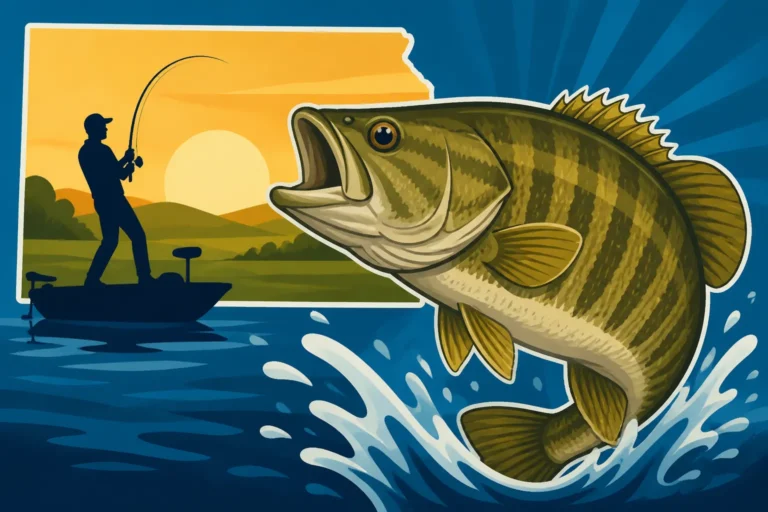
If the largemouth is the king of the cover, then the smallmouth bass is definitely the baron of the rocks and current. These guys are known for their incredible fighting spirit, often making acrobatic leaps and strong runs once hooked. They prefer cooler, clearer water than largemouths, making rocky lakes and flowing rivers their ideal homes.
Smallmouth bass have a more bronze or brownish coloration, often with vertical bars or tiger stripes along their sides, which are much less distinct than the largemouth's horizontal stripe. Their mouth, as the name suggests, does not extend past the eye when closed. You’ll typically find them in places like Wilson Lake, known for its rocky shores and clear water, or along the Kansas River where there's plenty of current and rock formations. They feed heavily on crayfish and smaller baitfish, so presentations that mimic these prey items are often highly effective. When you hook into a smallmouth, be ready for a fight – they don't give up easily! I've had many days on the Kansas River where these scrappers made my arms ache in the best possible way.
Spotted Bass: The Often Overlooked Fighter
The spotted bass is often the forgotten middle child in the Kansas bass family, sometimes mistaken for either a smallmouth or a largemouth, but they are a distinct species with their own charm. They tend to inhabit waters that are a bit of a mix between what largemouths and smallmouths prefer – often found in moderately clear water with some current, but also willing to relate to structure.
To identify a spotted bass, look for the horizontal stripe similar to a largemouth, but with distinct rows of small black spots on their lower flanks, below the lateral line. Crucially, their mouth extends to about the middle of the eye, not past it like a largemouth, nor stopping short like a smallmouth. Another key identifier is a tooth patch on their tongue, which neither largemouths nor smallmouths possess. They're common in many of Kansas's larger reservoirs, often occupying deeper main lake points or creek channels where current flows. They're aggressive eaters and often school up, meaning if you find one, you might find a whole bunch! While they don't usually grow as large as largemouths, they offer a fantastic fight, often pulling hard and deep. They are a real blast to catch, especially when you figure out their patterns.
Understanding Kansas Bass Habits and Habitats
To become a consistently successful bass angler in Kansas, it’s absolutely vital to understand how these fish live, move, and react to their environment. It’s not just about casting a lure; it’s about thinking like a bass and knowing where they're likely to be at any given time. This ecological knowledge is truly the foundation of angling success, saving you from casting into barren water.
Seasonal Movements of Bass
Bass are creatures of habit, but their habits are deeply tied to the changing seasons, especially water temperature. This means your approach in spring will be vastly different from your approach in summer or fall. It's a dance with Mother Nature, and knowing the steps is key.
In spring, as water temperatures start to climb, bass begin to move from their deeper winter haunts towards shallower spawning areas. This pre-spawn period is a fantastic time to catch big, hungry bass that are bulking up before the rigors of spawning. They'll often be found staging on points or secondary submerged humps near spawning flats. As the water warms further, usually into the 60s Fahrenheit, they'll move onto beds to spawn. During this time, they're fiercely protective of their nests, making them vulnerable to sight-fishing techniques. After the spawn, they'll disperse and often be a bit lethargic for a short period before resuming their feeding. Best Spring Fishing Spots in Kansas can offer more insights into this exciting season.
Summer in Kansas means hot water, and bass will often seek refuge in deeper, cooler water, especially during the brightest parts of the day. They might move to main lake points, channel swings, or relate to offshore submerged timber. Early morning, late evening, and night fishing can be incredibly productive as bass move shallower to feed under the cover of darkness. Don't be afraid to fish deep crankbaits or Carolina rigs during the day, or switch to topwater lures and buzzbaits as the sun begins to set. Best Summer Night Fishing Spots in Kansas are often where these elusive fish can be found.
As fall approaches and water temperatures cool down, bass enter their "fall feed" mode. They know winter is coming and they need to pack on the pounds. This is a time when they can be incredibly aggressive and often move shallow again, chasing baitfish that are also schooling up. Spinnerbaits, jerkbaits, and crankbaits can be incredibly effective as bass actively pursue their prey in open water or along transitional banks. They're often less spooky than in spring, making them a joy to target.
Finally, in winter, bass generally retreat to deeper, more stable water, often suspending over structure or hunkering down in deep channels. Their metabolism slows, so they aren't as active, but they can still be caught with slow, methodical presentations like jigging spoons or suspending jerkbaits. They'll typically be less aggressive, so a subtle approach is often best.
Ideal Water Conditions for Bass
Bass are sensitive to their environment, and water conditions play a huge role in their behavior and where they decide to hang out. Things like temperature, clarity, and oxygen levels are constantly influencing their movements and feeding patterns.
Water temperature is arguably the most critical factor. As mentioned, bass have preferred temperature ranges for different activities, with the ideal spawning temperature for largemouths often being in the mid-60s Fahrenheit. Outside of these comfort zones, they will seek areas that offer more suitable temperatures, such as deeper water in summer or shallower, sun-warmed coves in early spring. Even a few degrees can make a difference, sending fish from one side of a point to the other.
Water clarity also dictates where and how bass feed. In clearer waters, bass rely more on sight and might be spookier, requiring longer casts and more natural presentations. Think fluorocarbon lines and subtle baits. In murkier or stained waters, bass rely more on their lateral line to detect vibrations, making noisier lures, like chatterbaits or dark-colored jigs, more effective. Heavy rains can muddy up the water, but sometimes this can actually turn on the bite, especially for largemouths, as the stained water gives them more cover to ambush prey. How to Fish Muddy Water After Rain provides great tips.
Oxygen levels, while often overlooked by recreational anglers, are also vital. During hot summer months, especially in stagnant backwaters, oxygen can deplete, forcing bass to move to areas with more circulation or deeper, cooler water. Conversely, during periods of high wind or turnover, oxygen can be distributed throughout the water column, making more areas habitable. Understanding these subtle shifts can give you a significant advantage.
Key Structures and Cover Where Bass Hide
Bass are masters of camouflage and ambush, always looking for places to hide, hunt, and feel secure. If you can identify these key structures and cover types, you're halfway to finding the fish. It's like finding their secret clubhouses!
Structure refers to changes in the lake or river bottom. This could be a rocky point jutting out into a main lake, a submerged creek channel that winds through a flat, or even a sudden depth change like a drop-off. Bass use these features as highways and feeding zones. For example, a sharp drop-off might hold bass suspending at different depths, ambushing baitfish moving along the edge. Main lake points are classic bass magnets, especially during transitional periods like spring and fall, as fish move between shallow and deep water. Submerged humps or ridges in the middle of a lake also act as prime ambush points.
Cover, on the other hand, refers to physical objects in the water that provide shelter or ambush opportunities. This is where the term "structure fishing" can sometimes cause confusion, but remember, cover is something tangible the fish can relate to. This includes:
- Vegetation: Think lily pads, hydrilla, cattails, or even submerged grass beds. Largemouth bass absolutely love dense vegetation, using it to hide from prey and predators, and to ambush unsuspecting baitfish. Flipping jigs or punching heavy Texas-rigged plastics into thick mats can be incredibly effective.
- Wood: Fallen trees (laydowns), submerged stumps, brush piles, or flooded timber are all fantastic bass cover. These provide shade, a place to hide, and often attract baitfish. Casting a squarebill crankbait near a laydown or pitching a Texas-rigged worm into a brush pile can yield great results.
- Rocks: Boulders, rock piles, riprap banks, and rocky points are prime smallmouth and spotted bass habitat. Crayfish, a favorite food source, live in these areas. Crankbaits, jigs, and shaky head worms are excellent choices for fishing rocky areas.
- Docks and Man-Made Structures: Boat docks, bridge pilings, and even old submerged foundations can be excellent bass hangouts. They offer shade, cover, and a vertical element that bass often relate to. Skipping jigs or wacky-rigged worms under docks is a popular and effective technique.
By understanding these elements and how bass interact with them, you can start to form a mental map of where fish are likely to be, even before you make your first cast. Always keep an eye out for these tell-tale signs on your fish finder or while visually scanning the water.
Essential Gear for Kansas Bass Anglers
Alright, let's talk gear! You don't need to break the bank to catch bass in Kansas, but having the right tools for the job can certainly make your life easier and more productive. There are so many options out there, it can feel overwhelming, but we’re going to simplify it and focus on the essentials that will set you up for success.
Rods, Reels, and Line: Matching Your Setup
Choosing the right rod, reel, and line is like picking the right tools for a specific task; you wouldn't use a hammer to drive a screw. For bass fishing, a versatile setup is often best, but as you get more serious, specializing your gear can make a big difference.
For rods, a good all-around choice for a beginner would be a 6'6" to 7' medium-heavy power, fast-action spinning rod. This setup is incredibly versatile for casting a variety of lures, from soft plastics to smaller crankbaits, and the fast action gives you good sensitivity and hook-setting power. As you advance, you'll find baitcasting setups dominate for heavier lures and cover. A 7' medium-heavy fast-action baitcasting rod is often considered the workhorse for bass, capable of handling jigs, Texas rigs, spinnerbaits, and medium crankbaits. For more specialized techniques like frogging in heavy cover, you might opt for a heavy power rod, or a lighter, more parabolic (moderate action) rod for crankbait fishing. You can find a good selection of quality rods on Amazon that suit various budgets and styles.
When it comes to reels, spinning reels are generally easier for beginners to master, especially for lighter lures. A 2500 or 3000 series spinning reel balances well with a 6'6" to 7' rod. For baitcasting reels, look for a gear ratio that suits your fishing style. A 6.4:1 or 7.1:1 ratio is a good all-around choice, providing enough speed for many techniques while still having torque for pulling fish out of cover. Faster reels (8.1:1+) are great for burning baits or quickly retrieving slack line, while slower reels (5.x:1) are often preferred for deep-diving crankbaits or large swimbaits where power is more important than speed.
And then there's fishing line, which can truly make or break your day. Monofilament, fluorocarbon, and braided line each have their strengths.
- Monofilament (mono) is typically the most budget-friendly, has good knot strength, and is very forgiving due to its stretch. It's a decent all-around choice, especially for topwater lures where its buoyancy is an advantage.
- Fluorocarbon (fluoro) is nearly invisible underwater, has less stretch than mono, and offers excellent sensitivity. It's a fantastic choice for bottom-contact baits like jigs and worms, or for fishing in clear water. However, it can be a bit stiffer and more prone to memory.
- Braided line is incredibly strong for its diameter, has virtually no stretch, and offers maximum sensitivity. It's ideal for fishing heavy cover where you need to muscle fish out, or for long casts where sensitivity is key. However, its visibility can be a drawback in clear water, so many anglers will tie a fluorocarbon leader to their braid. Best Line Weight for Kansas Catfish discusses line in another context, but the principles of matching line to target species and conditions are universal.
Lure Selection for Different Bass Species and Conditions
This is where the fun really begins! The world of bass lures is vast and exciting, but don't let it overwhelm you. Focusing on a few key categories will cover most Kansas bass fishing scenarios.
- Soft Plastics: These are incredibly versatile and effective. Think Texas-rigged worms, creature baits, flukes, and senkos. They can be fished weedless in heavy cover, on a shaky head for finesse, or weightless for a subtle presentation. Colors like green pumpkin, junebug, and black/blue are perennially popular in Kansas waters. Soft plastics are a must-have in every bass angler's tackle box and are super effective when bass are pressured or finicky.
- Jigs: Jigs, whether skirted jigs for pitching into cover or football jigs for dragging on rocky bottoms, are killer bass baits. They mimic crayfish or baitfish and can be worked slowly and methodically. Black and blue, green pumpkin, and brown are classic jig colors. Adding a soft plastic trailer can enhance their profile and action.
- Crankbaits: These lures are designed to dive to specific depths and imitate baitfish. Shallow-diving squarebills are great for bumping off wood and rocks in shallow water, while medium and deep-diving crankbaits are essential for targeting fish on points, ledges, or channel swings. Experiment with natural baitfish patterns in clear water and brighter colors in stained water. Best Lures for Kansas Walleye also shows how crankbaits are vital for other species.
- Spinnerbaits and Chatterbaits: These are "reaction" baits, designed to trigger aggressive strikes. Spinnerbaits feature spinning blades that create flash and vibration, while chatterbaits use a hexagonal blade to create a unique wobble and vibration. Both are excellent for covering water, especially in stained conditions or around grass and sparse cover. White, chartreuse, and black/blue are common effective colors.
- Topwater Lures: Nothing beats the explosive thrill of a topwater strike! Poppers, walking baits, and buzzbaits are designed to be fished on the surface, enticing bass to strike visually. They are most effective in low light conditions (early morning, late evening, cloudy days) or when bass are actively feeding on the surface.
Don't forget to stock up on a variety of these baits. You can often find great value packs and individual lures on Amazon to build out your collection.
Terminal Tackle and Accessories
Beyond the main rods and reels, a collection of essential terminal tackle and accessories will complete your bass fishing arsenal. These are the small but mighty components that often determine success.
First up, hooks. You'll need a variety of sizes and styles for soft plastics, including Extra Wide Gap (EWG) hooks for Texas rigging, straight shank hooks for punching, and wacky rig hooks for those unique presentations. Always have some treble hooks on hand for replacing dull ones on your crankbaits. Weights are crucial for getting your soft plastics down to the desired depth and through cover. Bullet weights (lead or tungsten) for Texas rigs, drop shot weights, and jig heads are all vital. Tungsten weights are more sensitive and smaller for their weight, making them a popular, albeit pricier, choice.
Swivels and snaps can be useful for certain applications, especially if you're frequently changing lures or want to prevent line twist. However, many bass anglers prefer to tie directly to their lure for maximum sensitivity and strength.
Beyond tackle, consider these accessories:
- Pliers/Forceps: Essential for removing hooks safely from a fish's mouth and for cutting line.
- Line Cutters: Small, sharp scissors or clippers make clean cuts, important for knot strength.
- Lip Grippers/Net: For safely landing and handling larger bass, especially if you plan to release them. A good landing net can prevent a lost fish right at the boat. Best Net for Landing Kansas Catfish also applies generally to larger fish.
- Tackle Box/Bag: Keeps all your lures and terminal tackle organized. A good tackle bag from Amazon can make it easy to carry and access everything you need.
- Sunscreen and Hat: Protect yourself from the Kansas sun, especially during long days on the water.
- Polarized Sunglasses: These are invaluable for spotting fish, seeing submerged structure, and reducing glare off the water.
Having these basics ready means you'll be prepared for whatever the Kansas bass fishing scene throws at you.
Top Techniques for Catching Bass in Kansas
Now that you know what to look for and what gear to bring, let's dive into the "how-to" of catching bass in Kansas. There's a wide spectrum of techniques, often categorized into "finesse" and "power" fishing, and mastering a few from each category will make you a well-rounded angler. The key is knowing when to apply which technique, adapting to the conditions and the mood of the fish.
Mastering Finesse Fishing for Tricky Bass
Finesse fishing is all about subtle presentations, lighter line, and smaller baits. It's your go-to strategy when the bite is tough, the water is clear, or bass are heavily pressured. Think of it as a delicate dance, coaxing a strike rather than forcing it.
One of the most popular finesse techniques is the Drop Shot Rig. This involves a small hook tied directly to the main line, with a weight attached at the tag end. This allows your soft plastic bait (often a small worm or creature bait) to suspend horizontally at a specific depth, making it incredibly appealing to suspended or finicky bass. It’s excellent for fishing deep points, ledges, or vertical cover, and you can hold the bait perfectly still in the strike zone. I’ve seen this technique turn a slow day around countless times on clear Kansas reservoirs.
Another staple is the Shaky Head Jig. This involves a jig head with a screw-lock keeper, allowing you to attach a worm or soft plastic. The design makes the worm stand upright on the bottom, mimicking a feeding or injured baitfish. You simply cast it out, let it sink, and "shake" your rod tip to impart a subtle, quivering action. It’s fantastic for probing rocky bottoms, scattered timber, or when bass are holding tight to cover but aren't aggressive. The lightweight nature and subtle presentation make it a go-to for many anglers.
The Wacky Rig is another incredibly effective finesse technique, particularly for largemouth bass. You simply hook a stick bait (like a Yamamoto Senko) directly through its middle. When it sinks, both ends of the worm shimmy and undulate in a very natural, irresistible way. It’s often fished weightless, allowing for a slow, tantalizing fall, or with a small O-ring and nail weight for a slightly faster descent. It excels around docks, brush piles, and shallow vegetation, offering a different kind of subtle presentation that bass often can't resist. These finesse methods often require lighter rods and reels, typically spinning gear, for optimal performance.
Power Fishing: Covering Water and Triggering Bites
When bass are active, aggressive, and willing to chase, it's time to switch gears to power fishing. This approach uses heavier gear, larger lures, and faster retrieves to cover a lot of water quickly and trigger reaction strikes. It's about finding those active fish and getting them to commit.
Crankbait Fishing is a prime example of power fishing. Whether you're throwing a shallow-diving squarebill around laydowns or a deep-diving crankbait along a main lake ledge, the goal is to make contact with cover or structure, deflecting the lure and creating an erratic action that triggers a bite. Different crankbaits are designed to run at different depths, so having a selection allows you to effectively fish various parts of the water column. How to Fish a Crankbait for Walleye offers insights into this versatile lure type, which applies broadly to bass as well.
Spinnerbaits and Chatterbaits are also fantastic power fishing tools, especially in stained water or around moderate cover like scattered grass or brush. The flash and vibration they emit make them easy for bass to locate, even in low visibility. They're excellent for covering vast expanses of water quickly, trying to locate active schools of fish. You can slow-roll them, burn them, or yo-yo them through cover – versatility is key.
Another classic power fishing technique, especially for largemouths in dense vegetation or heavy timber, is Flipping and Pitching Jigs or Texas Rigs. This involves making short, accurate casts to specific pieces of cover. You use heavy line and a stout rod to drop your bait quietly into small openings. Once it hits the bottom, a series of short hops and shakes can entice a lurking bass. This is a highly effective way to extract big bass from places other anglers can't reach, but it requires precision and a willingness to get into the thick stuff. Often, fishing a Kansas Crappie Minimum Length Limit of 10 Inches or other specific species means a more refined approach, but power fishing can be great for aggressive bass.
Specific Techniques for Rivers vs. Reservoirs
Kansas offers both sprawling reservoirs and winding rivers, and while bass are bass, the unique characteristics of each environment often call for different tactical approaches. The presence of current in rivers, in particular, dramatically changes how bass relate to their surroundings.
Reservoir Bass Fishing typically involves covering larger expanses of water and understanding how bass relate to both natural and man-made structures. You'll spend a lot of time targeting main lake points, submerged humps, creek channel swings, and areas with standing timber or brush piles. Trolling motors with GPS and fish finders become invaluable tools for navigating these larger bodies of water and pinpointing subtle structures. Techniques like deep cranking, Carolina rigging, football jigging, and using a drop shot are highly effective for offshore bass. For shallower reservoir bass, especially in spring and fall, spinnerbaits, chatterbaits, and flipping jigs into coves and shallow pockets work wonders. Wilson Lake Fishing Guide or Milford Lake Fishing Guide offer excellent starting points for understanding reservoir bass.
River Bass Fishing introduces the element of current, which bass will use to their advantage. Instead of wide-open spaces, you're often looking for current breaks – eddies behind rocks, fallen trees, bridge pilings, or sharp bends in the river. These are places where bass can sit out of the main flow, conserving energy, while still having easy access to food that drifts by. Smallmouth and spotted bass are often the primary targets in rivers. Lures like tube jigs, small crankbaits, spinnerbaits, and soft plastic grubs worked along current seams and around submerged rocks are very effective. Fly fishing can also be incredibly productive in rivers for smallmouth bass. When fishing rivers, always be mindful of water levels and clarity, as these can change rapidly and impact the bite. Kansas River Fishing Guide can help you navigate these unique environments.
Remember, flexibility is key. What works one day might not work the next, so be prepared to experiment with different techniques until you crack the code.
Best Kansas Bass Fishing Lakes and Rivers
Kansas might be known for its vast prairies, but underneath the surface, we've got some incredible bass fishing opportunities. From trophy-producing reservoirs to hidden river gems, there's a spot for every type of angler. Knowing where to go is just as important as knowing how to fish, and thankfully, our state offers a diverse range of options.
Premier Reservoir Destinations for Trophy Bass
If you're dreaming of a wall-hanger largemouth or a hard-fighting smallmouth, Kansas's major reservoirs are where you'll want to focus your efforts. These large bodies of water offer diverse habitats and the potential for truly memorable catches.
Milford Lake holds the title of the largest lake in Kansas, and it's a phenomenal bass fishery. Known for its clear water in the lower end and stained water in the upper reaches, it offers varied conditions that largemouth, smallmouth, and even spotted bass thrive in. The lake is vast, with numerous coves, points, and rocky banks that provide excellent habitat. Look for largemouths in the flooded timber and brush piles in the upper, shallower end, especially around the timbered points. Smallmouths tend to gravitate towards the rocky bluffs and riprap in the lower, clearer section near the dam. Early spring and late fall are prime times for big bass here. Milford Lake Fishing Guide provides a wealth of information for planning your trip.
Wilson Lake, often dubbed the " clearest lake in Kansas," is a smallmouth bass angler's paradise. Its rocky shores, deep drop-offs, and crystal-clear water create ideal conditions for bronzebacks. You'll find them around the numerous rock outcroppings, submerged humps, and steep ledges throughout the lake. Largemouths are also present, often found in the limited standing timber or along the riprap of the causeways. Crankbaits, jigs, and soft plastics that mimic crayfish are incredibly effective here. The clear water can make the fish a bit spooky, so long casts and a stealthy approach are often rewarded.
El Dorado Lake is another powerhouse reservoir, especially for largemouth bass. This lake is well-known for its extensive standing timber, brush piles, and abundant aquatic vegetation in many of its coves and creeks. These features provide excellent cover for largemouths to ambush prey. Flipping and pitching jigs or Texas-rigged plastics into the heavy cover is a go-to technique here. Spinnerbaits and chatterbaits also shine when bass are active around the edges of the grass beds. El Dorado also boasts a healthy population of spotted bass, often found on main lake points and channel swings. El Dorado Lake Bass Fishing details the best strategies for this exciting fishery.
Productive River Stretches and Smaller Lakes
Beyond the big reservoirs, Kansas rivers and smaller state lakes offer fantastic bass fishing experiences, often with less pressure and unique challenges. These waters can be incredibly rewarding for those willing to explore.
The Kansas River, especially stretches near Lawrence, Topeka, and Manhattan, is a hidden gem for smallmouth and spotted bass. The river's current, diverse bottom structure of rock, gravel, and sand, and numerous snags and log jams create ideal habitat. Smallmouths will hold in eddies behind structure, current seams, and riffle areas, eagerly ambushing baitfish and crayfish. Drifting jigs, small crankbaits, and tube baits through these areas can be highly effective. Largemouths can also be found in calmer backwater sloughs and oxbows off the main river channel. Fishing the Kansas River requires a keen understanding of current and finding those subtle current breaks where bass can conserve energy. Kansas River Fishing Access Points Near Lawrence can help you find spots.
Kansas also has a fantastic network of State Fishing Lakes, which are smaller, often managed lakes spread across the state. While some are known for catfish or crappie, many hold thriving populations of largemouth bass. Lakes like Clinton Lake, Hillsdale Lake, and Melvern Lake, though smaller than the mega-reservoirs, can be very productive. These lakes often have good aquatic vegetation, submerged timber, and brush piles, making them excellent for targeting largemouths with soft plastics, spinnerbaits, and crankbaits. They offer a more intimate fishing experience and can be less intimidating for anglers without large bass boats.
Community Lakes and Ponds: Hidden Gems
You don't always need to travel far to find excellent bass fishing in Kansas. Our urban and rural community lakes and countless private ponds often hold surprisingly large and abundant bass populations. These are perfect spots for a quick after-work trip or a weekend family outing.
Many Kansas cities maintain Community Fishing Lakes that are regularly stocked and managed for angler success. These urban ponds, often found in parks, provide easily accessible fishing opportunities, especially for youth and those who prefer bank fishing. While they might not yield state record bass, they consistently produce good numbers of healthy largemouths, making them perfect for honing your skills or introducing someone new to the sport. Techniques like wacky rigging, Texas rigging small worms, or throwing small spinnerbaits are often highly effective here. Always check local regulations, as some community lakes have specific rules for hours, bait, or catch limits. Kansas Community Fishing Lake Rules are definitely worth reviewing before you go.
And let's not forget the multitude of private farm ponds scattered across the Kansas landscape. If you can gain permission to fish one of these, you might find some of the best bass fishing the state has to offer. Untouched or lightly fished ponds can harbor truly monstrous largemouths that have seen very little pressure. These often have abundant natural forage, plenty of cover (like cattails, submerged timber, or even old farm equipment), and offer a quiet, serene fishing experience. Always remember to ask for permission before fishing private property, as trespassing is illegal and bad for angler relations. A simple Texas-rigged worm or a topwater popper can be deadly in these smaller, often shallower, waters. Is a License Required to Fish Farm Ponds in Kansas? explains the license rules for these waters.
| Lake/River Type | Primary Bass Species | Key Features/Habitat | Recommended Techniques |
|---|---|---|---|
| Large Reservoirs | Largemouth, Smallmouth, Spotted | Deep points, channels, standing timber, rocky banks, riprap | Deep cranking, jigs, soft plastics, Carolina rigs, spinnerbaits |
| Rivers | Smallmouth, Spotted, some Largemouth | Current breaks, eddies, rocky riffles, log jams, snags | Tube jigs, small crankbaits, spinnerbaits, drop shots |
| State Fishing Lakes | Largemouth | Aquatic vegetation, brush piles, submerged timber, docks | Soft plastics, spinnerbaits, shallow crankbaits, jigs |
| Community Ponds | Largemouth | Docks, limited vegetation, open water, brush | Wacky rigs, Texas rigs, small spinnerbaits, topwater |
Kansas Bass Fishing Regulations and Conservation
As passionate anglers, we all have a responsibility to protect our resources. Understanding and adhering to Kansas fishing regulations isn't just about avoiding penalties; it's about ensuring healthy fish populations for generations to come. Conservation is a core part of the angling lifestyle, and it starts with each one of us.
Understanding Length and Creel Limits
The Kansas Department of Wildlife, Parks and Tourism (KDWP) sets specific regulations for bass to manage populations and promote sustainable fishing. These regulations include length limits (minimum or slot limits) and creel limits (the maximum number of fish you can keep per day).
For largemouth bass, many Kansas waters have a 13-inch minimum length limit, meaning any largemouth bass shorter than 13 inches must be immediately released. Some waters may have a slot limit, which means fish within a certain size range (e.g., 13-18 inches) must be released, while those smaller or larger can be kept. This is often done to protect a certain age class of fish and promote trophy growth. The daily creel limit for largemouth bass is generally five fish per day, but this can vary by specific lake or river. Always check the current KDWP fishing regulations summary before heading out, as these rules can change.
Smallmouth and spotted bass often have similar, if not identical, regulations to largemouth bass, but again, it’s crucial to verify for the specific body of water you're fishing. It's a common mistake to assume all bass species have the same rules, but variations exist to manage local populations effectively. Being familiar with Kansas Fishing Regulations Explained can save you a lot of headache and keep you on the right side of the law.
These limits are not arbitrary; they are carefully determined by fisheries biologists to maintain a balanced ecosystem. Minimum length limits protect juvenile fish, allowing them to reach spawning age and contribute to the next generation, while slot limits can help maintain a healthy size structure in a population. It's truly a science that helps keep our bass fisheries thriving.
Catch and Release Practices for Bass
Beyond adhering to legal limits, practicing responsible catch and release is one of the most impactful things a bass angler can do for conservation, especially for larger, older fish that are vital for spawning. A trophy bass released today can be caught again tomorrow, and more importantly, it can reproduce many times over.
Here are some best practices for catch and release:
- Minimize Handling: Try to keep the fish in the water as much as possible. If you must remove it for a photo, do so quickly.
- Wet Your Hands: Always wet your hands before touching a fish. Dry hands can remove the protective slime coat, leaving the fish vulnerable to disease.
- Support the Fish: When holding a bass, support its body horizontally with one hand under its belly and the other gripping its lower jaw (lip grippers can assist with larger fish). Avoid hanging larger bass vertically by only their lower jaw, as this can damage their internal organs.
- Remove Hooks Quickly: Use pliers or forceps to quickly and gently remove hooks. If the fish is deeply hooked, it’s often best to cut the line as close to the hook as possible rather than tearing tissue trying to extract it. Barbless hooks can make removal much easier.
- Revive the Fish: If the fish seems stressed, hold it gently in the water, facing into any current, and allow water to flow over its gills until it swims away under its own power. Don't just toss it back; make sure it's strong enough to survive.
These simple steps make a huge difference in the survival rate of released bass. We all want to catch big fish, so let’s make sure those big fish can continue to grow and reproduce.
Protecting Bass Habitats for Future Generations
The health of our bass populations is directly linked to the health of their habitats. As anglers, we have a responsibility to advocate for and participate in efforts to protect and improve the aquatic environments where bass live.
Preventing the Spread of Invasive Species: One of the biggest threats to Kansas waters is the introduction and spread of invasive species, such as zebra mussels or noxious aquatic vegetation. These can outcompete native species, disrupt food webs, and degrade habitat. Always follow the "Clean, Drain, Dry" protocol for your boat and gear:
- Clean all plants, mud, and debris from your boat, motor, trailer, and fishing gear.
- Drain all water from your livewell, bilge, and engine before leaving the ramp.
- Dry your boat and equipment thoroughly before launching into another body of water.
Reducing Pollution: Anything we put into or leave near the water can impact bass habitat. Be mindful of litter, properly dispose of old fishing line (which can entangle wildlife), and avoid spilling fuels or chemicals near the water. Simple acts like packing out everything you pack in can make a huge difference.
Supporting Conservation Organizations: Many local and state organizations, including the KDWP, work tirelessly to improve fishing habitats through stocking programs, habitat restoration projects (like installing brush piles), and water quality initiatives. Support these efforts through license purchases, donations, or volunteering your time. Even a simple online search for Kansas Wildlife and Parks License Phone Number can connect you to resources and opportunities to help. By taking an active role, we can ensure that Kansas continues to be a fantastic place to fish for bass for many years to come.
Disclaimer
This article is for general informational purposes only and does not constitute professional advice. Laws, prices and regulations vary by location and change over time. Consult a qualified professional for guidance on your specific situation.