White Crappie vs Black Crappie Identification
Kansas anglers learn white crappie identification features including vertical bars, elongated body shapes, and six dorsal spines.
Know what’s on the line.
Gamefish and panfish profiles — identification, behavior, feeding habits, and species-specific strategies for every catch.

Kansas anglers learn white crappie identification features including vertical bars, elongated body shapes, and six dorsal spines.
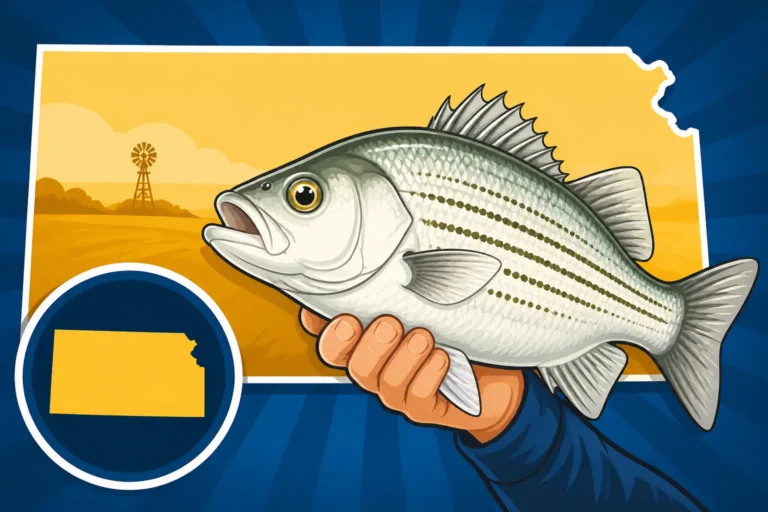
Kansas state record white bass history details the 1996 Cheney Reservoir catch weighing five pounds, fourteen ounces by Randy and Randy.
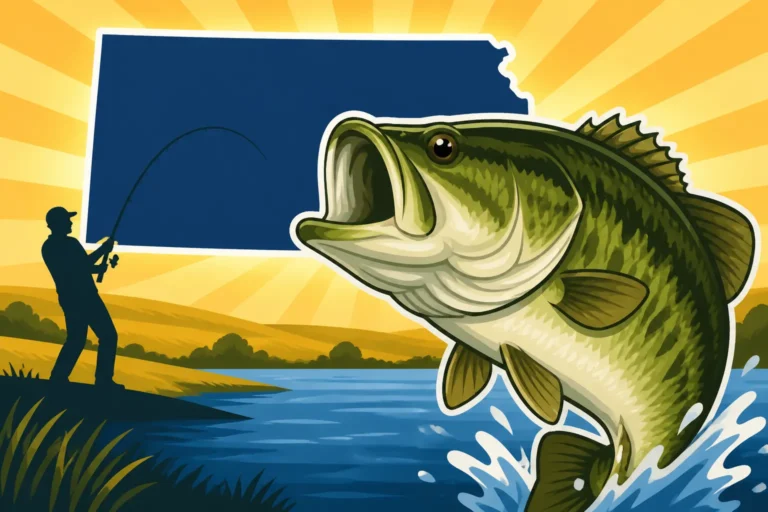
Kansas state record largemouth bass weight is eleven pounds and twelve ounces, caught by Kenneth Audrey in October 1984.

Kansas state record crappie weights and species benchmarks help anglers identify exceptional white and black crappie catches.

Kansas flathead catfish habitats, ambush behaviors, and official record weights maintained by the Kansas Department of Wildlife and Parks.
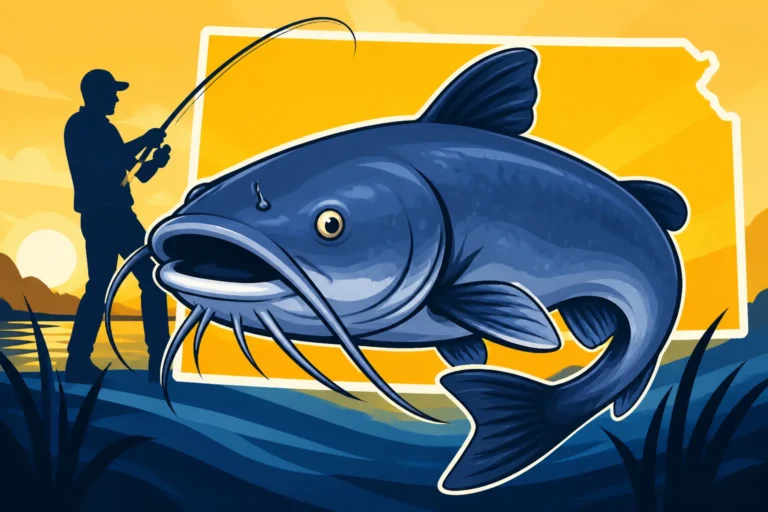
The Kansas state record blue catfish weighs 102.8 pounds, and official verification requires a certified scale and witnesses.
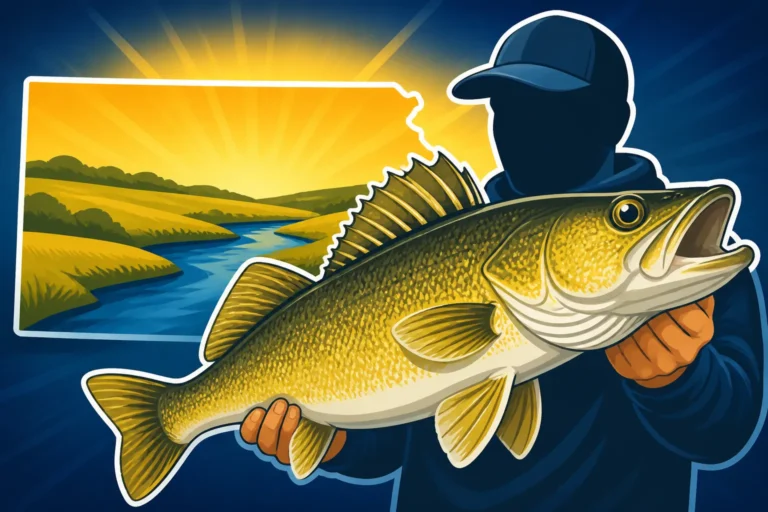
The official Kansas state record walleye weight is thirteen pounds and two ounces, established by a fish caught in 1996.

Kansas lakes like Milford Lake produce trophy flathead catfish exceeding thirty or forty pounds using live bait and complex deep structure.

Kansas lakes produce trophy blue catfish because large reservoirs, gizzard shad forage, and deep river channels support massive growth.

Kansas lakes known for producing large channel catfish and the habitat factors and management strategies influencing their growth.