What Largemouth Bass Eat Ponds
Largemouth bass in Kansas ponds consume bluegill, minnows, frogs, salamanders, and crayfish to satisfy their natural hunger.
Know what’s on the line.
Gamefish and panfish profiles — identification, behavior, feeding habits, and species-specific strategies for every catch.
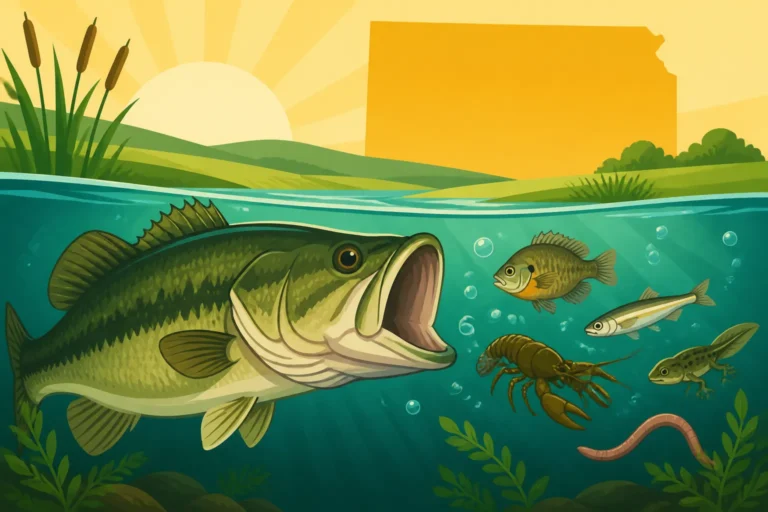
Largemouth bass in Kansas ponds consume bluegill, minnows, frogs, salamanders, and crayfish to satisfy their natural hunger.
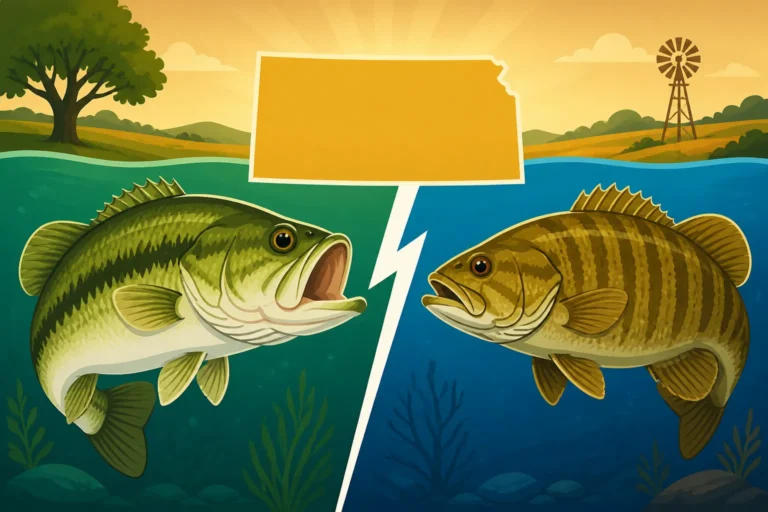
Kansas bass identification details jawline, dorsal fin, and body shape differences between largemouth and smallmouth species.
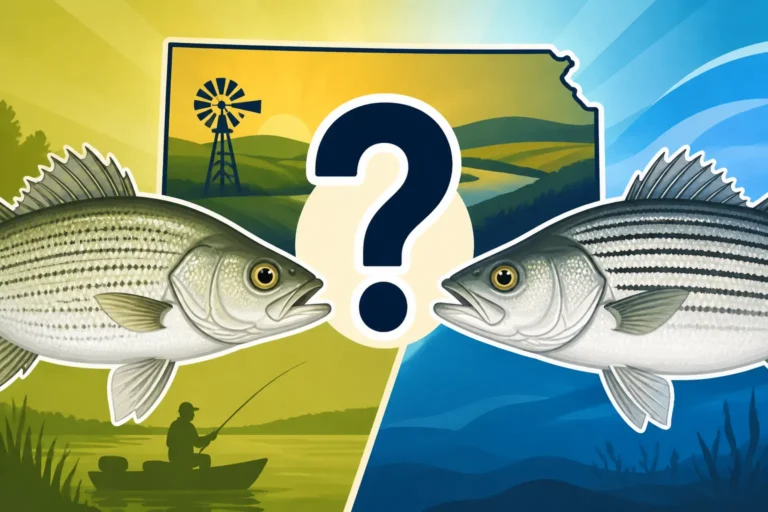
Striped bass and wipers compared by body shapes, stripe patterns, and hybrid origins across Kansas reservoirs for anglers.
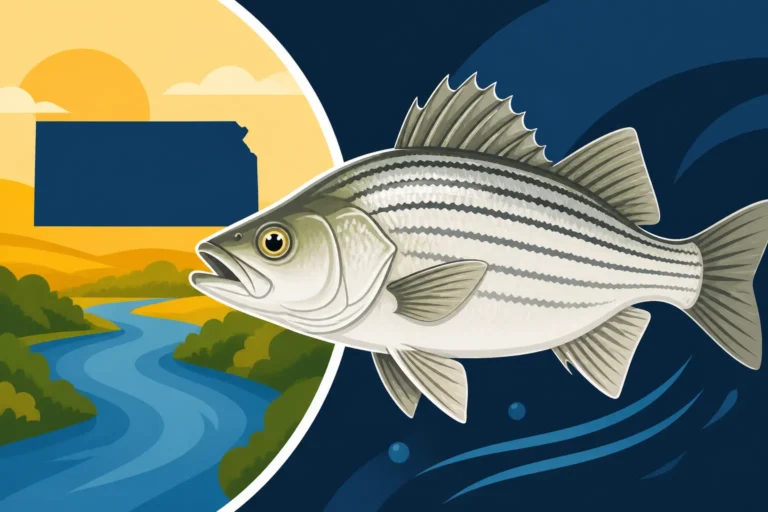
Kansas wiper fish are hatchery-stocked hybrids created by crossing female striped bass with male white bass for anglers.
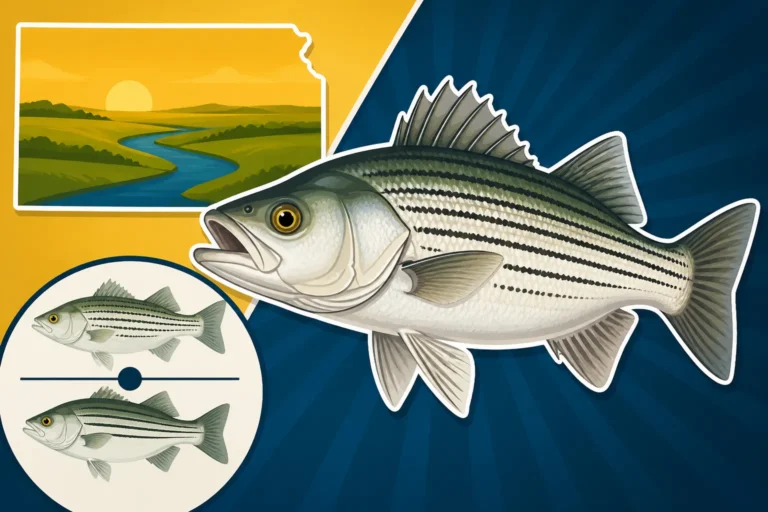
Hybrid striped bass identification tips help Kansas anglers distinguish wipers from white bass using broken body stripes.
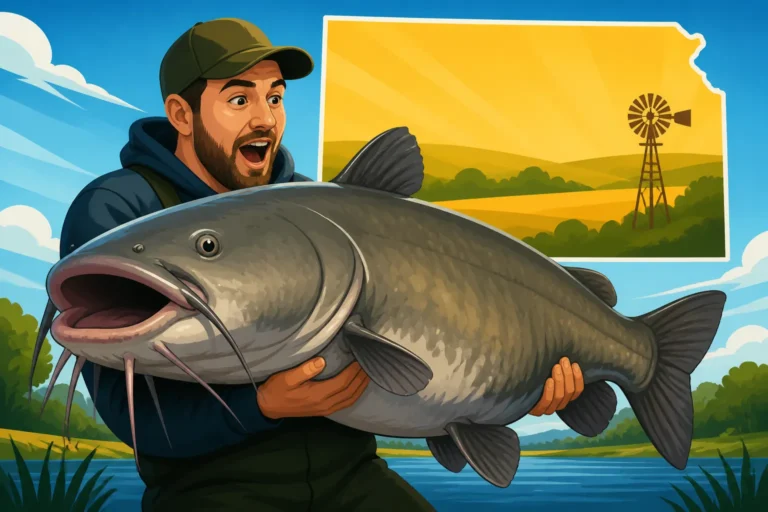
Kansas state record fish catches and legendary anglers detailing massive blue catfish and flathead catfish in local waters.
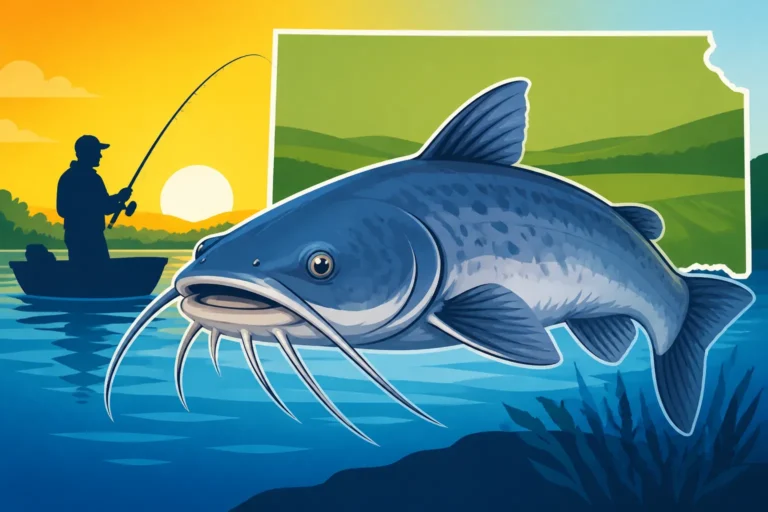
Blue catfish lifespan in Kansas lakes typically spans ten to twenty years, while exceptional trophy fish can reach up to forty years.
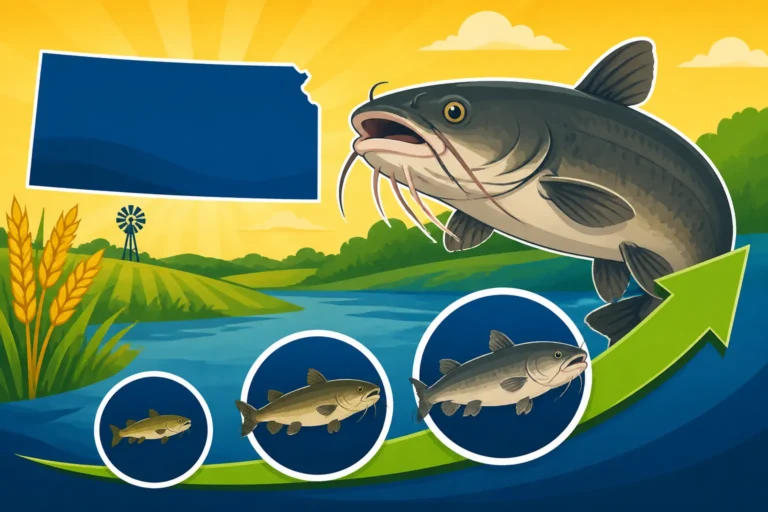
Channel catfish growth rates in Kansas waters depend on environmental factors, habitat, food availability, and temperature.
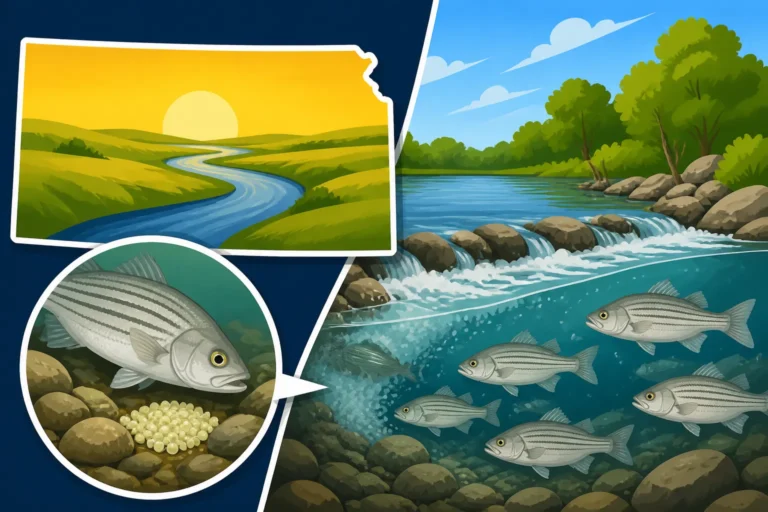
White bass spawning locations in Kansas rivers and reservoirs, plus temperature triggers and seasonal migration patterns.
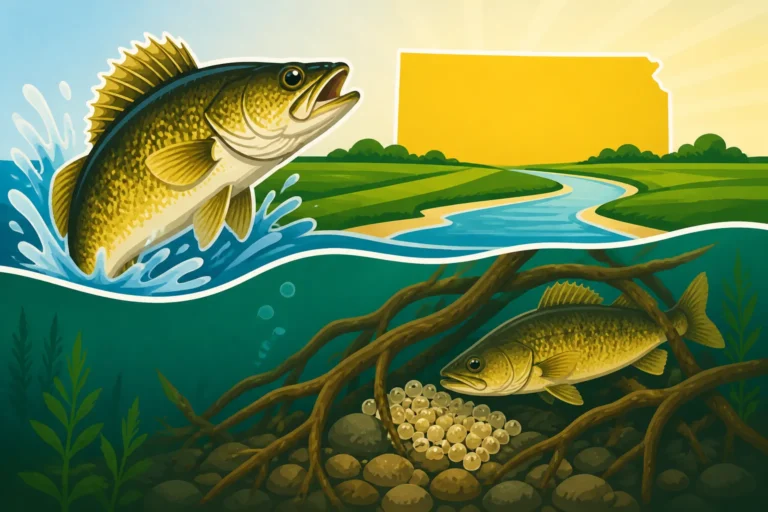
Kansas walleye spawning locations, ideal water temperatures, and springtime timing help anglers find fish during the annual run.