Are Striped Bass Native to Kansas?
Purebred striped bass are not native to Kansas reservoirs, surviving only through managed stocking programs because they cannot naturally reproduce.
Know what’s on the line.
Gamefish and panfish profiles — identification, behavior, feeding habits, and species-specific strategies for every catch.
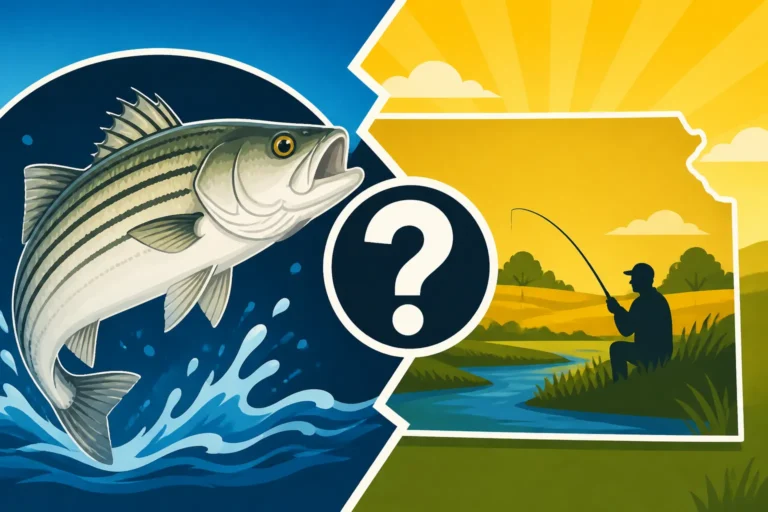
Purebred striped bass are not native to Kansas reservoirs, surviving only through managed stocking programs because they cannot naturally reproduce.
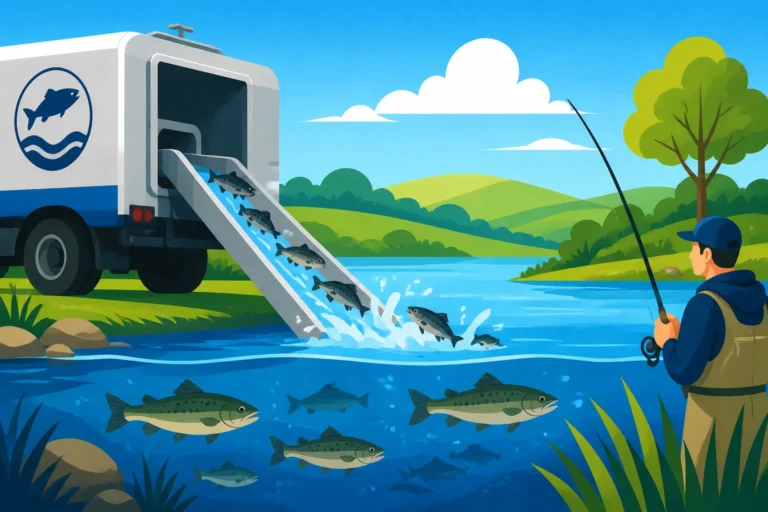
Kansas community lakes provide accessible fishing spots stocked by the Kansas Department of Wildlife and Parks with various fish species.
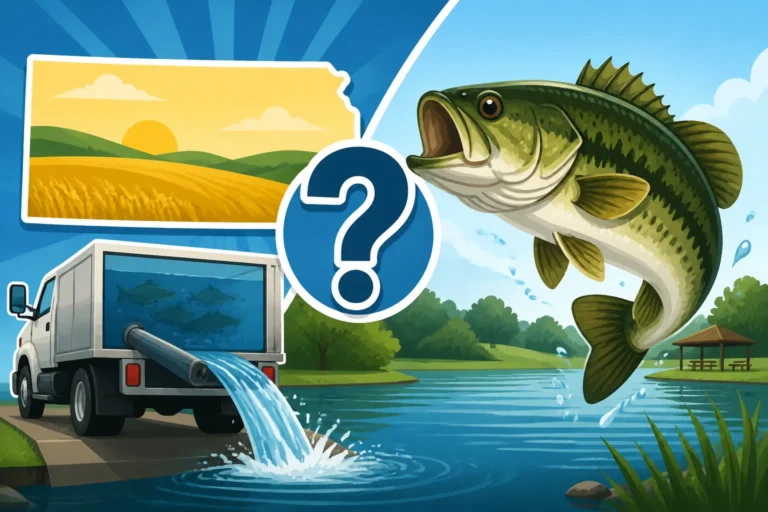
Kansas largemouth bass stocking policies and fisheries management practices determine fish populations in local community lakes.
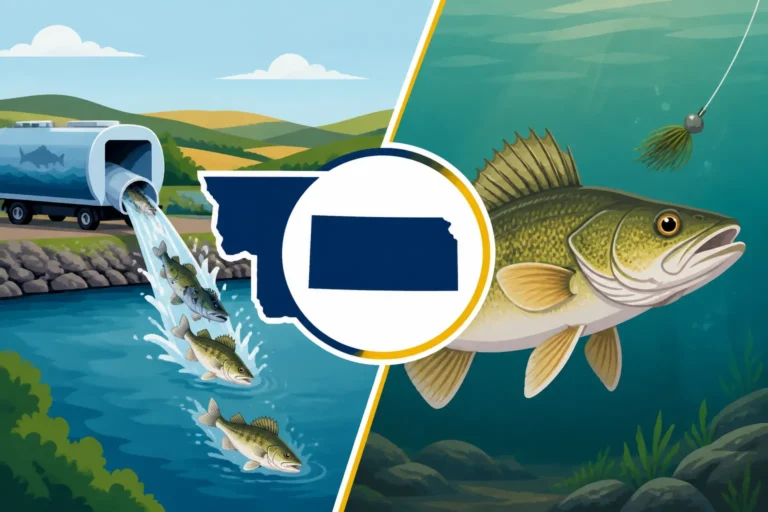
Kansas reservoirs maintain thriving walleye populations through a science-backed partnership between natural reproduction and hatchery stocking.
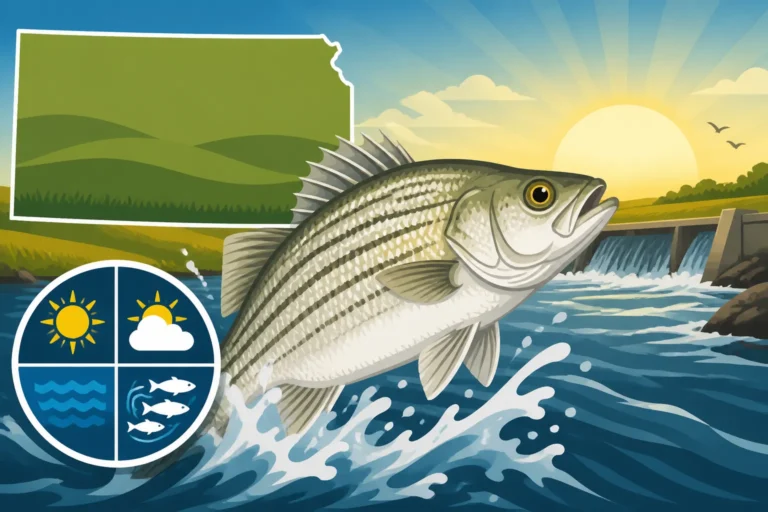
Kansas white bass river run timing depends on water temperatures reaching the low fifties for successful spring spawning.
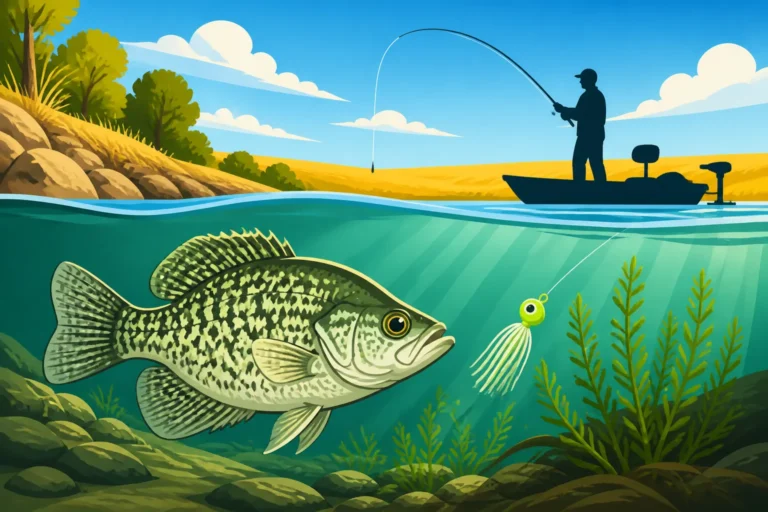
Kansas crappie migrate to shallow water for reproduction and feeding when temperatures consistently reach fifty-five to sixty-five degrees.
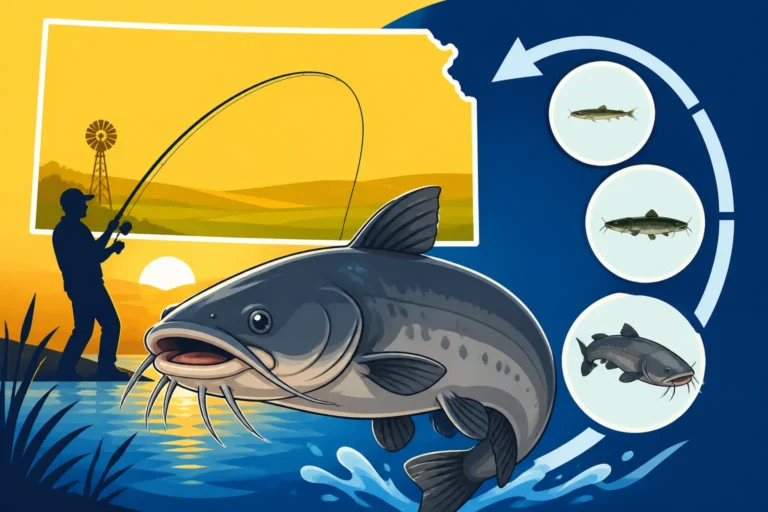
Kansas catfish lifespan, covering channel, blue, and flathead species, depends on genetics, water quality, and food availability.
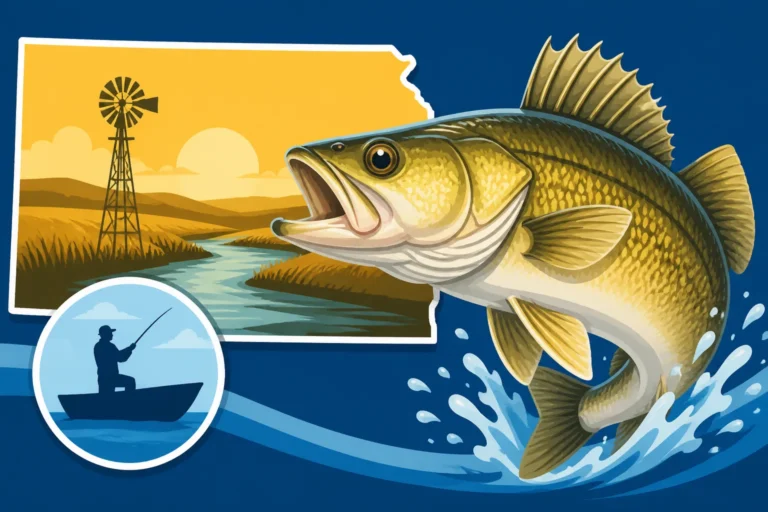
Kansas walleye typically live three to seven years, while older fish in reservoirs like Milford and Cheney can reach sixteen years.
Freshwater drum local nicknames in Kansas, such as sheepshead and gaspergou, explained with regional origins and history.
Kansas reservoirs lack sturgeon populations due to unsuitable river biology, but anglers can target other large native species.