Do Kansas Reservoirs Have Sturgeon?
The dream of hooking into a prehistoric sturgeon in a Kansas reservoir is one many anglers share, but it's often met with disappointment or confusion about what truly swims beneath our waters. It's frustrating when you hear tales of monster fish in other states and wonder if Kansas holds similar secrets. This guide aims to clear up the mystery, explaining why sturgeon are rarely, if ever, encountered in our reservoirs and what incredible, equally impressive native fish you can target for that trophy experience right here in the Sunflower State.
The Reality: Sturgeon in Kansas Waters?
Let's get straight to it: for the vast majority of Kansas anglers, encountering a sturgeon in one of our reservoirs is an exceedingly rare, if not entirely impossible, event. While some sturgeon species are native to river systems that eventually feed into or are connected to Kansas, the likelihood of finding a sustainable, fishable population in our impoundments is almost non-existent. It’s not like heading to the Great Lakes or some of the major river systems further east or north where these ancient fish thrive.
There's a common misconception that because Kansas has large bodies of water, all types of large freshwater fish must inhabit them. However, a reservoir environment is very different from the sprawling, deep, cold, and free-flowing river systems that many sturgeon species require for their entire life cycle. Even if a stray sturgeon found its way into a reservoir, the conditions typically wouldn't support a breeding population, which is crucial for any species to truly "exist" there.
The Absence of Native Sturgeon Populations
Kansas is simply not within the primary native range for most sturgeon species, especially those known to grow to immense sizes like the lake sturgeon or white sturgeon. Historically, the Missouri River, which borders Kansas, did have pallid sturgeon, a federally endangered species. However, these are extremely rare, highly protected, and their presence is almost entirely confined to the main stem of the river, not the impounded reservoirs further inland. Even there, they are accidental catches, and specific regulations are in place if one is encountered.
Think about the unique biology of sturgeon: they are bottom-feeders, often thriving in deep, cold waters with specific substrate requirements for spawning. Our reservoirs, while vast, often have fluctuating water levels, different temperature profiles, and sediment compositions that don't align with these particular needs. For a species to truly establish itself and be a viable target for anglers, it needs to be able to complete its entire life cycle, including spawning, and that’s just not happening for sturgeon in Kansas reservoirs.
Misidentification and Common Confusion
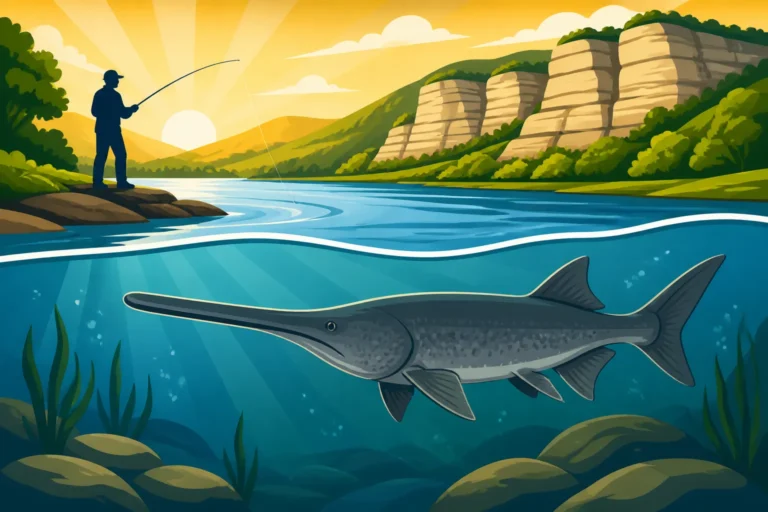
It's entirely possible that what some anglers perceive or hope to be a sturgeon is actually one of Kansas's own magnificent large fish species. The most common candidate for misidentification, especially when glimpsed briefly or caught unexpectedly, is the [Paddlefish]. These unique fish, with their long, paddle-like snouts and shark-like bodies, can grow very large and have a somewhat prehistoric appearance that might, to an untrained eye, suggest a sturgeon.
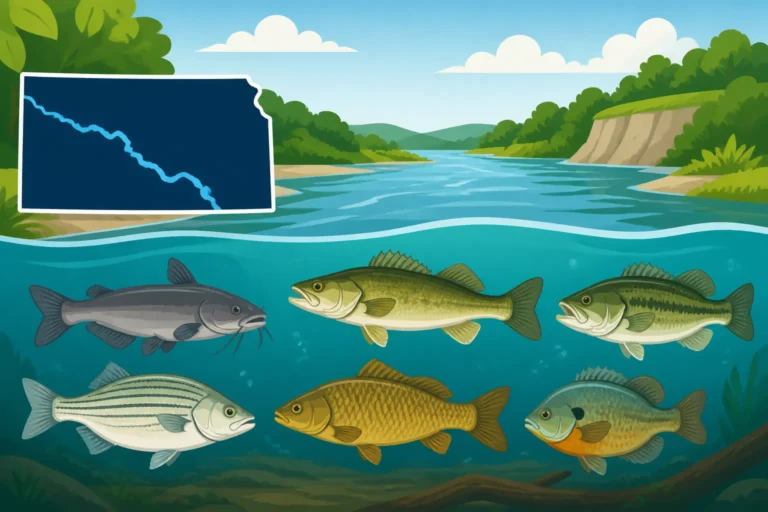
Other large species like enormous Kansas Catfish Species Guide (channel, blue, and flathead) or the various Kansas Gar Species Guide can also be mistaken for something more exotic. A big flathead catfish, with its broad head and mottled coloring, can look quite unusual, especially when hauled from the depths. Similarly, longnose or shortnose gar, with their elongated bodies and hard scales, can certainly give an angler a surprise if they're not used to seeing them. This is why knowing your local fish species is so important, and resources like a detailed Kansas Fish Species Guide can be incredibly helpful, even purchased from retailers like Amazon for a quick reference on your phone or in print.
Why Sturgeon Aren't Common in Kansas
The factors preventing sturgeon from thriving in Kansas reservoirs are primarily ecological and geographical. It's not a matter of whether a single fish could survive there for a time, but whether the conditions support a self-sustaining population that anglers could realistically target. The answer, unfortunately, leans heavily towards no.
Kansas, for all its natural beauty and incredible fishing opportunities, simply doesn't fit the typical sturgeon habitat profile. These fish are highly specialized and require very particular environmental conditions that are largely absent in our impounded waters.
Habitat and Water Body Requirements
Sturgeon species generally prefer large, free-flowing rivers, often with connections to larger lakes or even saltwater in some cases, depending on the species. They require deep pools, clean gravel, and rocky substrates for spawning, and long migratory routes. Our Kansas reservoirs, while large, are still essentially man-made impoundments. They have different flow patterns (or lack thereof), temperature fluctuations, and sediment characteristics compared to the natural riverine systems sturgeon call home.
Consider the life cycle of a lake sturgeon, for example. They might live for decades, grow to immense sizes, and require pristine, unsilted rivers for spawning runs. The young sturgeon then need specific conditions to grow before migrating back to larger waters. While Kansas has some impressive rivers, the extensive damming for flood control and reservoir creation has fragmented many of these systems, making it incredibly difficult for migratory species like sturgeon to complete their life cycles naturally. This habitat alteration is a significant barrier to their presence and establishment.
Geographic Range and Historical Presence
Most native sturgeon populations in North America are found much further north and east in the Great Lakes basin, or in major river systems like the Mississippi, Ohio, and various coastal rivers. While the Missouri River forms a northern border for Kansas, the specific stretch along Kansas is not typically prime sturgeon habitat for sustainable populations, especially after extensive river modifications.
The pallid sturgeon, a truly unique and endangered species, is found in the Missouri and Mississippi River systems. However, their numbers are critically low, and they are protected under federal law. They are extremely rare, and their survival is a conservation priority, not a recreational fishing opportunity. If by some incredible chance an angler were to catch one, immediate release without harm is not just encouraged, but legally mandated. This reinforces that while a type of sturgeon might exist in the broader regional watershed, it's not present in Kansas reservoirs in any meaningful or targetable way.
Climate and Water Temperature
Sturgeon, particularly the larger, longer-lived species, often prefer cooler, more stable water temperatures than what's typically found in many Kansas reservoirs during the hot summer months. Our reservoirs can experience significant temperature swings, particularly in shallower areas, which can stress species not adapted to these conditions.
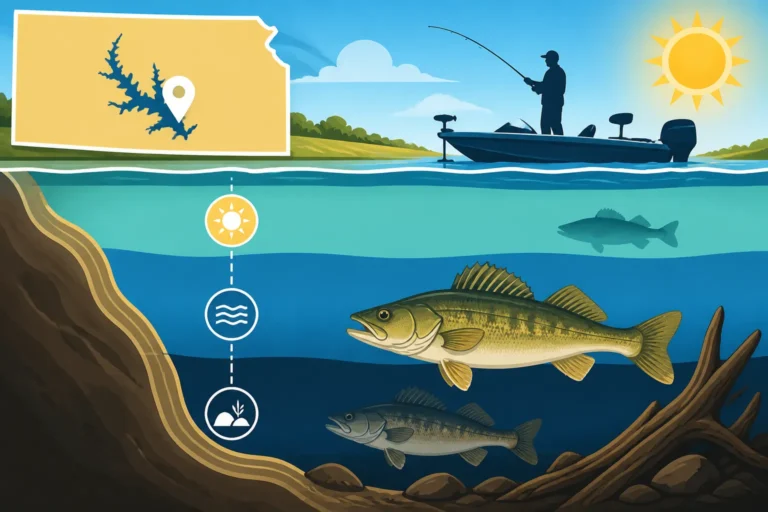
While some deeper reservoirs might maintain cooler bottom temperatures, the overall thermal regime and the dynamic nature of Kansas weather patterns can pose challenges for species that are accustomed to more consistent, colder environments or large systems where they can seek thermal refuge. This climatic difference, combined with the habitat limitations, further explains their absence from our reservoir ecosystems.
Kansas's True Giants: What Large Fish You Will Find
While you won't be reeling in sturgeon from a Kansas reservoir, don't despair! Kansas offers truly incredible opportunities to catch large, powerful, and challenging fish that will certainly test your tackle and your angling skills. These are the real giants of our waters, and they provide that thrilling, trophy-worthy experience many anglers crave.
Anglers specifically looking for the "biggest fish" in Kansas often turn their attention to species like our impressive catfish, the unique paddlefish, or the surprisingly challenging gar. These fish are not only abundant in many of our waters but also provide unique fishing experiences. Make sure you're familiar with Kansas Fishing Regulations Explained to understand limits and seasons for these impressive species.
The Mighty Catfish: Channel, Blue, and Flathead
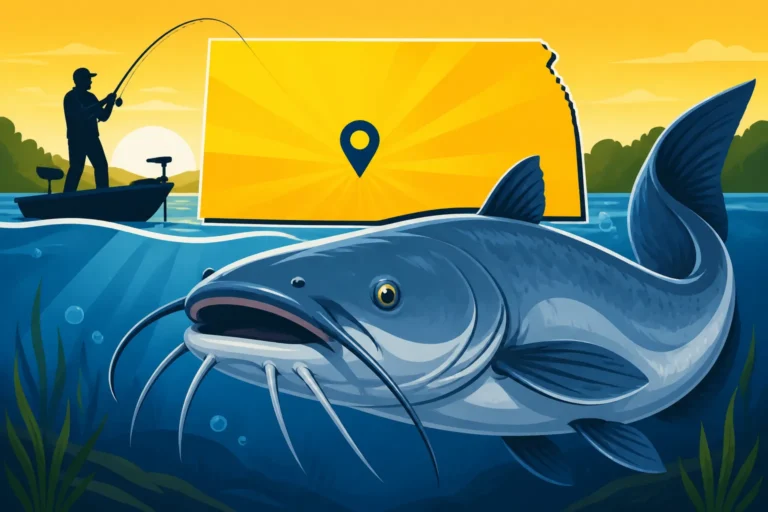
Kansas is a mecca for catfish anglers. Our reservoirs and rivers are home to three main species that grow to impressive sizes: channel catfish, blue catfish, and flathead catfish.
- Channel Catfish: These are the most widespread and frequently caught catfish in Kansas. While many are pan-sized, they can grow into double-digit monsters, with state records exceeding 30 pounds. They are aggressive eaters, found in nearly every body of water, and offer fantastic fights. You can target them with everything from stink bait to cut bait, often found near submerged cover or channel edges.
- Blue Catfish: If you're looking for sheer size, blue cats are your best bet. They are the undisputed heavyweight champions of Kansas, with state records pushing over 100 pounds! These magnificent fish prefer large rivers and deeper sections of major reservoirs. Best Catfish Lakes in Kansas are often prime spots for blues. They are powerful fighters, and catching a true trophy blue requires heavy tackle and patience. Many anglers use fresh cut bait or large shad to entice these giants.
- Flathead Catfish: Known as the "river monster," flatheads are ambush predators that prefer live bait and often hide in dense cover like log jams or rock piles in rivers and deeper parts of reservoirs. While they don't reach the extreme weights of blue cats, flatheads commonly hit 30-60 pounds, and the state record is substantial. They are incredibly strong and offer a brutal, tug-of-war fight. If you're looking to target these, a sturdy rod and reel combo, perhaps something you’d research on Amazon for heavy-duty fishing, is essential. They are truly unique fish and a major draw for many Kansas anglers. Kansas Flathead Catfish Daily Limit often differs from other catfish, so always check the rules.
The Prehistoric Paddlefish
Often mistaken for sturgeon due to their unique appearance, paddlefish are truly one of Kansas's most extraordinary fish. With their long, paddle-shaped rostrum (snout) and plankton-filtering mouths, they are a marvel of evolution. These fish can grow incredibly large, with state records exceeding 100 pounds.
Paddlefish are primarily found in the Missouri and Osage River systems, but they also inhabit some of the larger reservoirs connected to these rivers, such as Lake of the Ozarks and Truman Lake in Missouri, with spillover into Kansas waters. They are filter feeders, so they are not caught on traditional bait and hook. Instead, they are typically harvested through a specialized technique called snagging during specific seasons. Kansas Paddlefish Snagging Season is a highly anticipated time for many anglers, requiring specific permits and adherence to strict regulations. Catching one of these immense, prehistoric fish is an unforgettable experience, and they offer a unique angling challenge.
The Elusive Gar Species
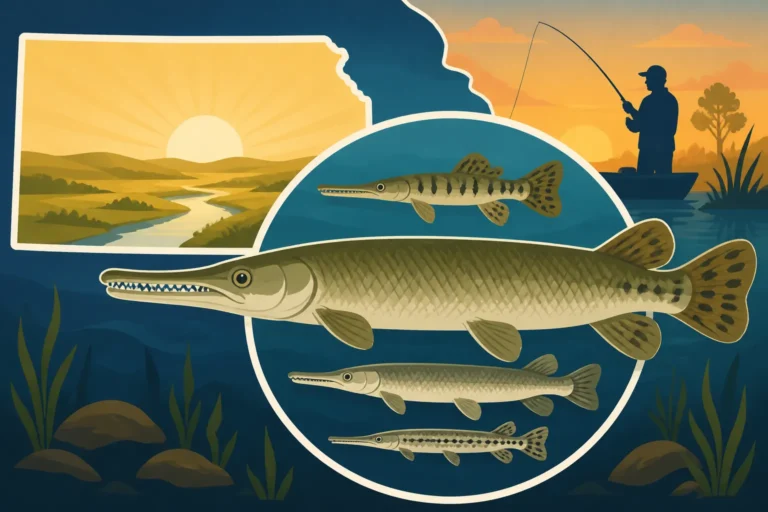
While perhaps not as widely pursued for their meat as catfish, gar are undeniably impressive and challenging fish to catch, often drawing comparisons to alligators or other ancient creatures. Kansas is home to several species, including longnose, shortnose, and spotted gar, with longnose gar being the most common and growing to significant sizes.
Gar are predatory fish with elongated, tooth-filled jaws and a body covered in tough, diamond-shaped ganoid scales. They are found in many Kansas rivers and reservoirs, often lurking near submerged structure or in calmer backwaters. While not traditionally targeted for sport by everyone, they offer a thrilling fight on appropriate tackle. Many anglers pursue them with specialized rope lures (where the gar's teeth get tangled in the fibers) or with conventional baits on heavy-duty wire leaders. They are tough, feisty, and provide a unique challenge for those looking to diversify their fishing pursuits. Learning Types of Gar Found can help you distinguish between species.
Identifying Large Fish: Sturgeon vs. Kansas Natives
Understanding the key differences between a sturgeon and the large fish species native to Kansas is crucial, both for accurate identification and for proper handling, especially if you ever encounter a protected species. While it's highly unlikely you'll see a sturgeon in a Kansas reservoir, knowing what to look for can prevent misidentification. A comprehensive How to Identify Kansas Game Fish guide is an invaluable resource.
Many anglers find online resources or physical field guides, easily found on platforms like Amazon, extremely helpful for visual identification. Having a good fish identification app on your phone or a laminated guide in your tackle box can be a game-changer when you're on the water and encounter something unusual.
Key Features of Sturgeon
Sturgeon have several distinct characteristics that set them apart:
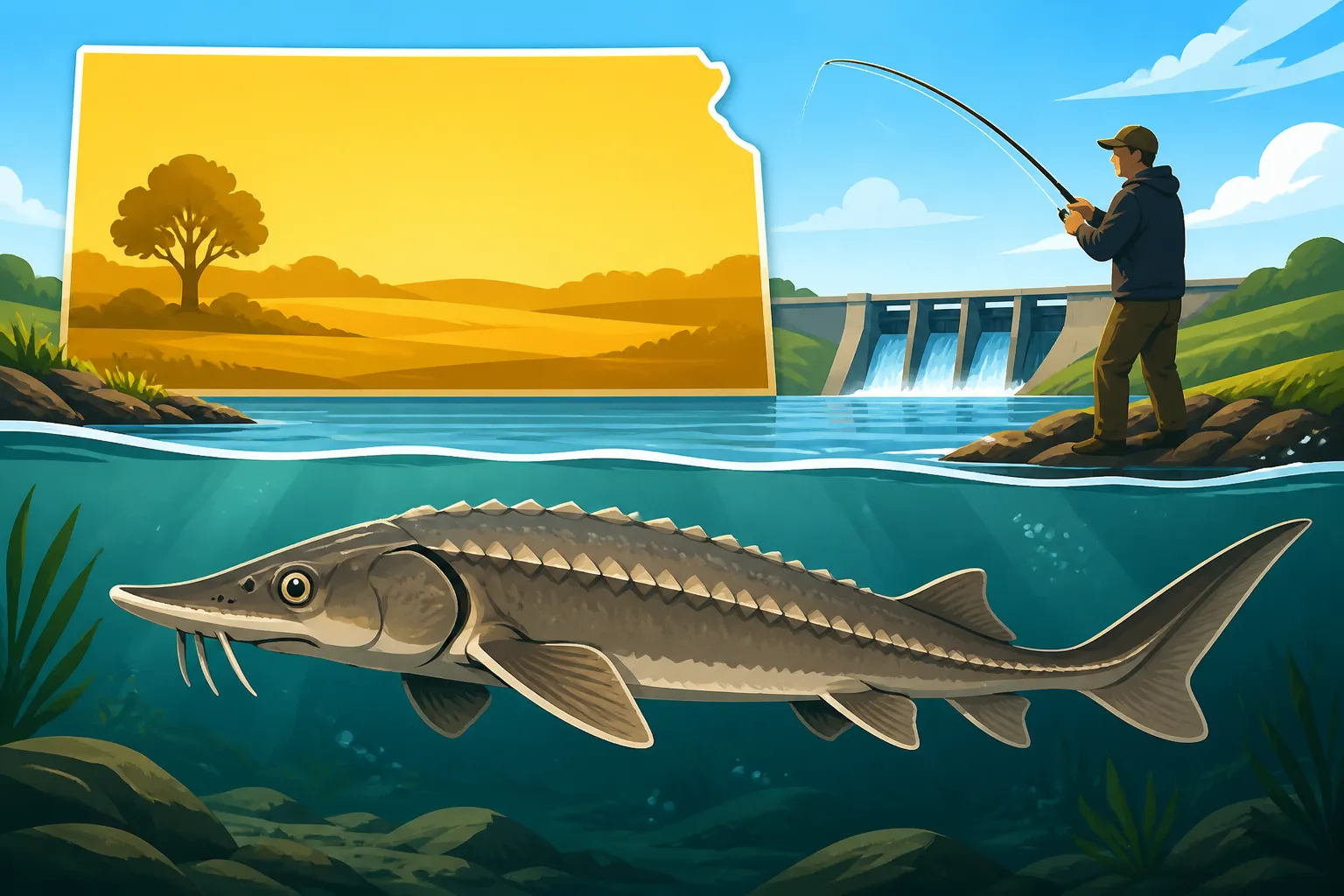
- Armored Plates (Scutes): Unlike the smooth skin of catfish or the fine scales of most game fish, sturgeon have five rows of bony plates, or scutes, running along their bodies. These are very prominent.
- Ventral Mouth: Their mouths are located on the underside (ventral) of their head, designed for suctioning food from the bottom, and they lack teeth in their adult stage.
- Barbels: Four sensitive barbels are located in front of their mouth, used to feel and taste for food on the bottom.
- Heterocercal Tail: The upper lobe of their tail fin is longer than the lower lobe, similar to a shark.
- Long Snout: While the paddlefish has a long rostrum, a sturgeon's snout is typically more conical or shovel-shaped, not broad and flat.
- No Scales: Despite the bony scutes, sturgeon do not have traditional overlapping fish scales.
If you ever see a fish in Kansas with prominent bony plates, an underside mouth with barbels, and a shark-like tail, it's worth taking a photo (if legal and safe) and immediately releasing it, then contacting wildlife authorities. It might be an extremely rare pallid sturgeon or a non-native release, and their protection is paramount.
Distinguishing Kansas's Big Three
Let's look at how Kansas's major large fish contrast with sturgeon:
| Feature | Sturgeon (General) | Paddlefish (Kansas) | Catfish (Kansas) | Gar (Kansas) |
|---|---|---|---|---|
| Body Covering | 5 rows of bony scutes (plates), no scales | Smooth, shark-like skin, no scales | Smooth, scaleless skin | Diamond-shaped ganoid scales, very hard |
| Mouth Position | Ventral (underside) | Terminal (front), large filter-feeding | Terminal (front) or slightly subterminal | Terminal (front), elongated jaw with teeth |
| Snout/Rostrum | Conical or shovel-shaped snout | Very long, flat, paddle-like rostrum | Broad or somewhat flattened head | Elongated, toothy snout |
| Barbels | 4 sensitive barbels | None | Whiskers (barbels) around mouth | None |
| Tail Fin | Heterocercal (upper lobe longer) | Homocercal (evenly lobed) | Homocercal (evenly lobed) | Homocercal (evenly lobed) |
| Primary Food | Bottom-dwelling invertebrates | Plankton (filter-feeder) | Omnivorous/predatory, varies by species | Predatory (other fish) |
| Likelihood in KS Reservoirs | Extremely rare/non-existent | Present, especially in major rivers/reservoirs | Abundant | Common |
This table highlights the clear anatomical differences. If you catch a fish and you're unsure, a quick check of these features, especially the body covering and mouth/snout, should help you quickly identify if it's one of Kansas's native powerhouses or something truly out of the ordinary. And remember, for any species, always double-check Kansas Fishing Seasons and Limits before you decide to keep your catch.
Kansas reservoirs may not be home to sturgeon, but they are absolutely bursting with other colossal fish species that promise heart-pounding action and lifelong memories. From the brute strength of blue catfish to the ancient mystique of paddlefish and the toothy challenge of gar, our waters offer diverse opportunities for anglers seeking that true "big fish" thrill. So, gear up with your heavy-duty tackle (perhaps after browsing some options on Amazon), learn your species, and get ready to discover the true giants swimming right here in Kansas.
Disclaimer
This article is for general informational purposes only and does not constitute professional advice. Laws, prices and regulations vary by location and change over time. Consult a qualified professional for guidance on your specific situation.