Do Channel Catfish Have Teeth?
Channel catfish mouth anatomy features abrasive dental pads instead of sharp teeth, creating a sandpaper grip for holding prey.
Know what’s on the line.
Gamefish and panfish profiles — identification, behavior, feeding habits, and species-specific strategies for every catch.

Channel catfish mouth anatomy features abrasive dental pads instead of sharp teeth, creating a sandpaper grip for holding prey.
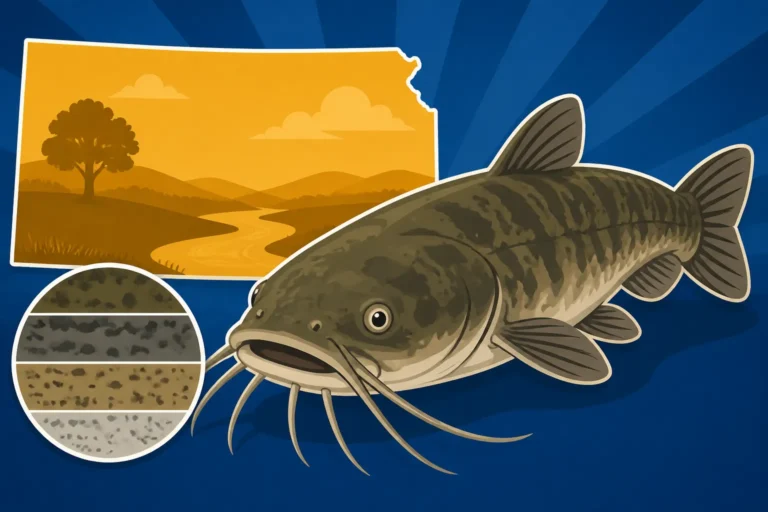
Flathead catfish feature mottled yellowish brown or dark green colors and square tails to help anglers identify catches in Kansas waters.
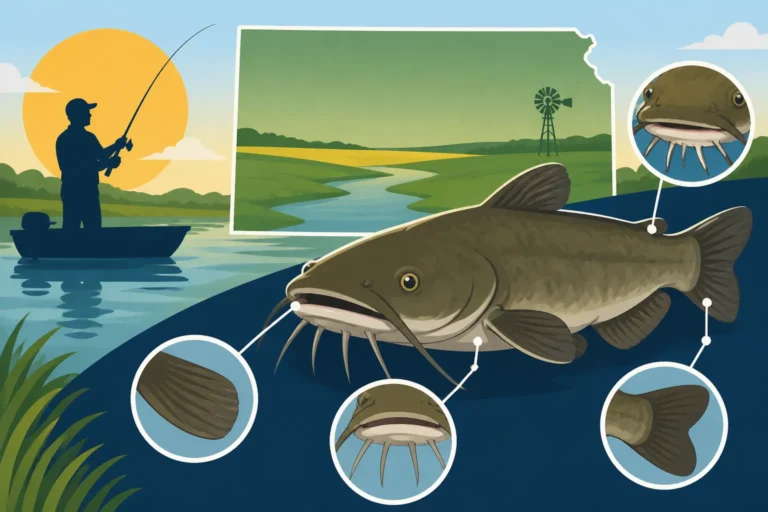
Flathead catfish identification tips help Kansas anglers follow state fishing regulations and protect local aquatic ecosystems.
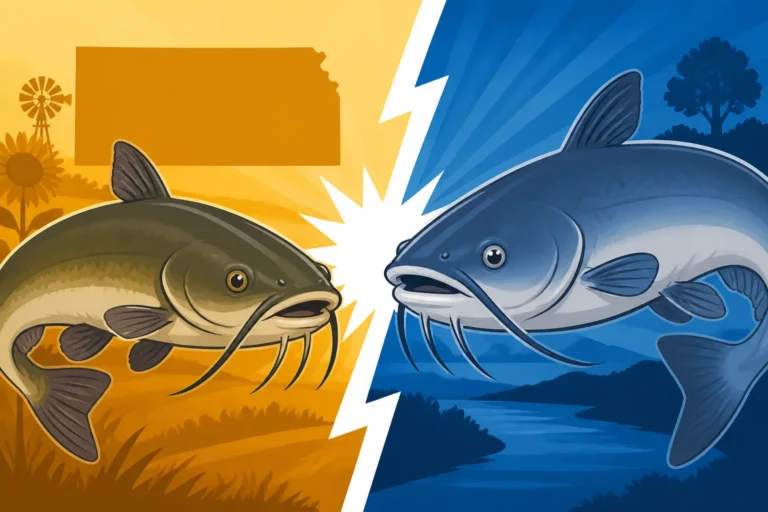
Channel Catfish and Blue Catfish physical traits help Kansas anglers identify catches for regulations and fishing strategies.
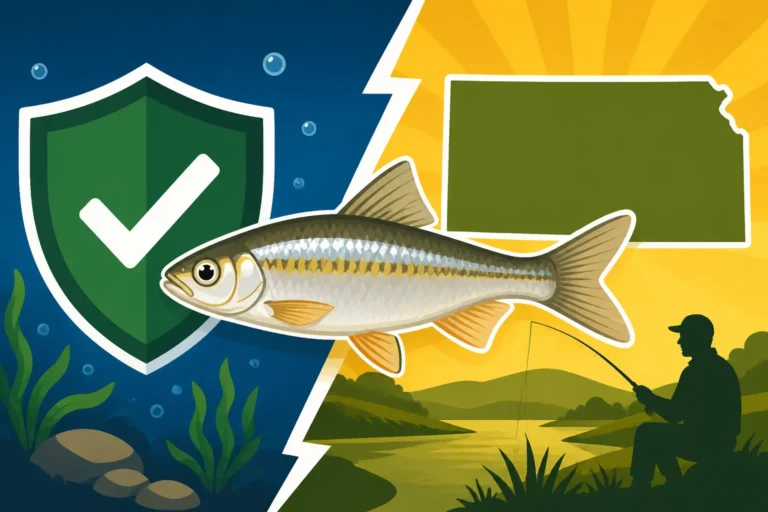
The Topeka Shiner holds protected status in Kansas as an endangered freshwater minnow species measuring two to three inches long.
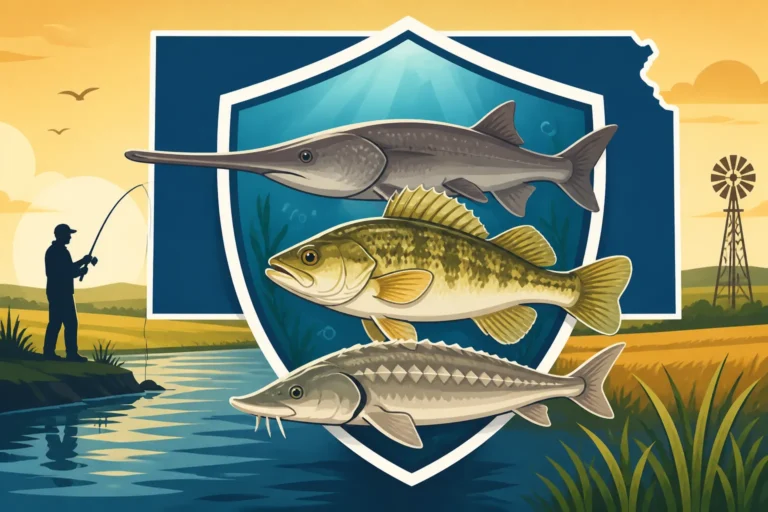
Protected fish species in Kansas include the endangered Topeka shiner, governed by the Kansas Department of Wildlife and Parks.
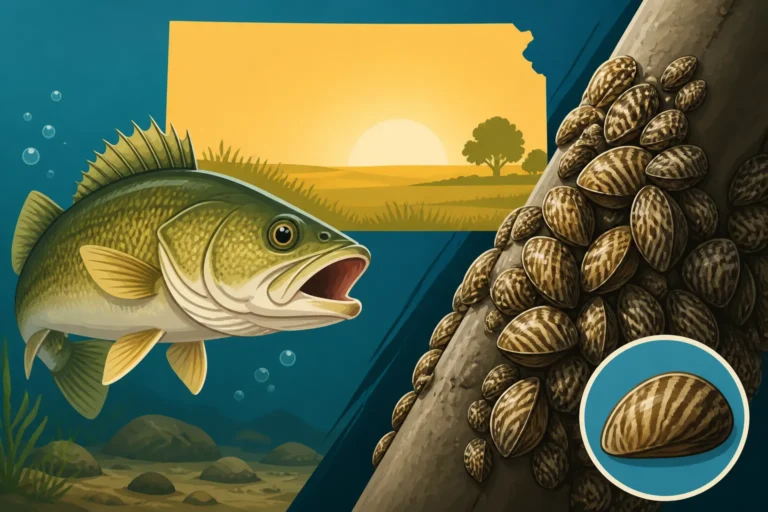
Invasive zebra mussels impact Kansas fish populations by filtering out phytoplankton and disrupting the aquatic food web.
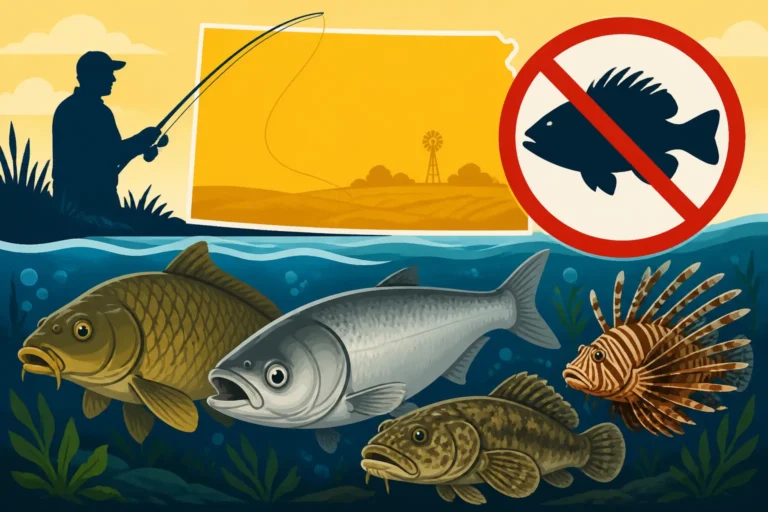
Invasive fish species in Kansas waters disrupt local ecosystems, outcompete native fish, and harm native fisheries.

Kansas carp from clean rivers and reservoirs like Milford Lake offer mild, sweet meat when proper filleting techniques are used.

Carp fishing in Kansas offers thrilling fights and abundant opportunities for anglers targeting these robust, widespread sport fish.