Freshwater Drum Local Nicknames
Few things are as confusing in the fishing world as trying to figure out what a fish is really called, especially when you're talking to different folks around the state. One minute you're hearing about a "sheepshead," the next it's a "gaspergou," and then someone just calls it a "drum." If you've ever felt lost in translation while discussing a catch in Kansas, you're not alone! This guide is here to untangle the web of local nicknames for the common, yet often misidentified, freshwater drum, helping you understand what anglers are talking about on the water.
The Freshwater Drum: A Kansas Native Often Misunderstood
The freshwater drum (scientific name: Aplodinotus grunniens) is a fascinating fish that calls many Kansas waters home. Despite its abundance and widespread presence, it’s one of those species that often gets overlooked or confused with others, primarily because of the array of different names people have for it. Let's get to know this unique fish a little better.
What is a Freshwater Drum, Anyway?
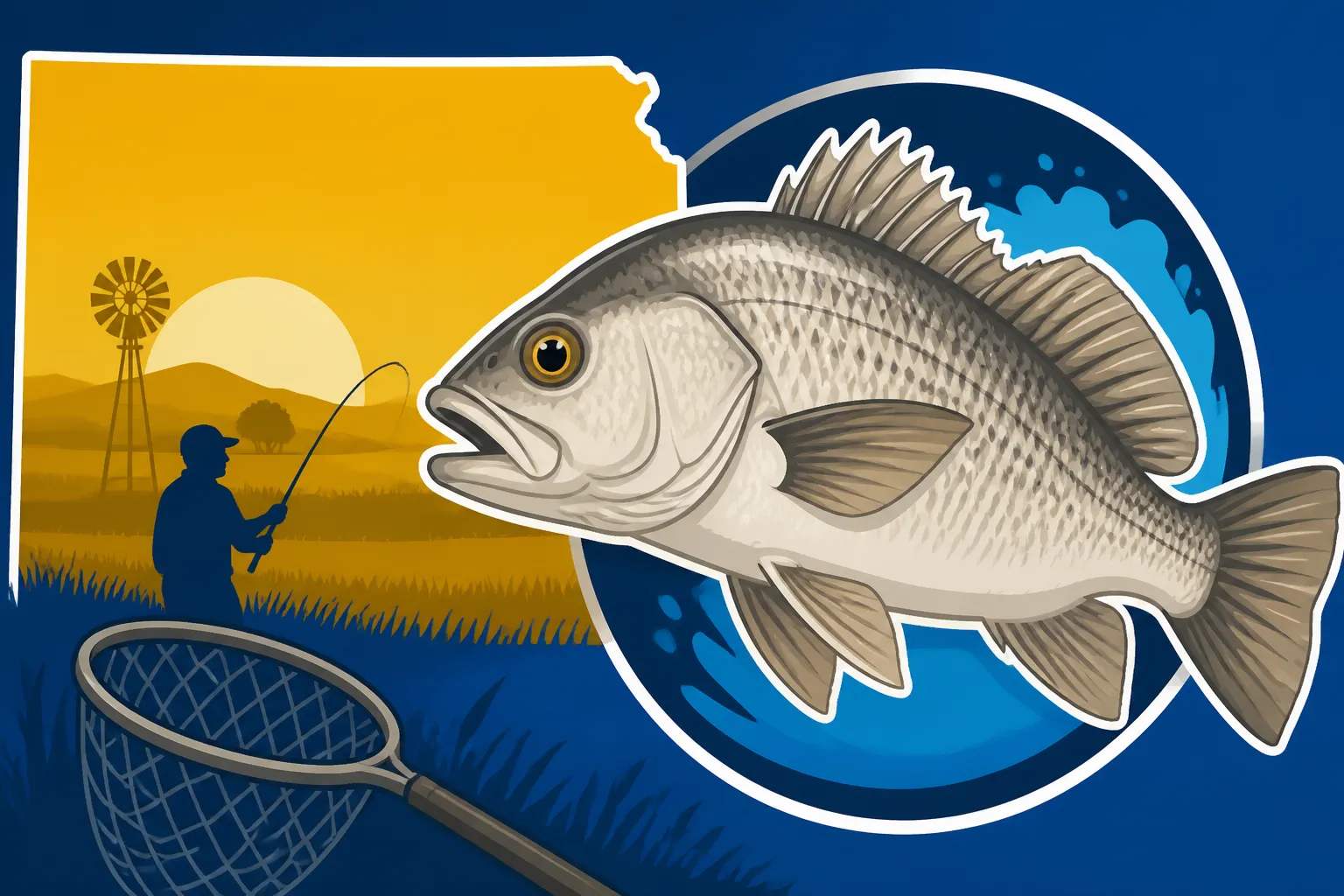
Imagine a fish with a rather deep, somewhat compressed body, often with a silvery-gray or brownish hue, and a distinct arched back. That's your typical freshwater drum! They have a rather blunt snout and a mouth that points downward, which is a big clue to their bottom-feeding habits. Unlike some of the sleek, torpedo-shaped game fish we chase, the drum has a more robust build, indicative of its powerful fighting nature. You'll find these guys thriving in most of Kansas's large reservoirs like Milford Lake and Cheney Reservoir, as well as our major river systems such as the Kansas River and the Republican River. Kansas River Fishing Guide
Their adaptability is truly impressive. Freshwater drums aren't picky eaters, sifting through the bottom for insects, crustaceans, mollusks, and smaller fish. This makes them a vital part of the aquatic ecosystem, helping to keep things balanced. While some anglers might view them as less glamorous than a walleye or a largemouth bass, anyone who's hooked into a decent-sized drum knows they put up an incredible fight – often described as a strong, bulldogging pull. And as for table fare? While they might not be as universally praised as crappie, many seasoned Kansas anglers will tell you that a properly cleaned and cooked drum can be quite delicious, especially when taken from cooler, clean waters. Are Drum Fish Good to Eat?
Why So Many Nicknames?
So, why does one fish end up with so many different aliases? It often comes down to regional jargon, historical context, and sometimes, a bit of mistaken identity. Common, widespread fish like the freshwater drum, which populate waters across a vast geographical area, naturally accumulate a diverse set of local names. These names become part of the local fishing lexicon, passed down through generations of anglers.
Think about it: before readily available field guides or the internet, people named things based on what they looked like, where they were found, or even the sounds they made. The freshwater drum, with its unique "drumming" sound produced by vibrating muscles against its swim bladder, practically invites a descriptive nickname. This sound, often heard when the fish is stressed or during spawning, is a key characteristic that sets it apart and undoubtedly contributed to its "drum" moniker and variations. This cultural aspect of naming fish creates a rich tapestry of language around our fishing experiences, even if it can be a little bewildering at times.
Unpacking the Most Common Freshwater Drum Nicknames in Kansas
Let's dive into the specific nicknames you're most likely to hear around Kansas and clarify where they come from, and why they might stick around. Knowing these can help you better understand what fellow anglers are talking about and avoid confusion.
The "Sheepshead" Moniker and Its Origins
Without a doubt, "sheepshead" is probably the most common and widely used nickname for the freshwater drum in Kansas and many other landlocked states. It's a name that causes quite a bit of head-scratching, primarily because there's a completely different, unrelated saltwater fish called a sheepshead (Archosargus probatocephalus) found in coastal waters. The marine sheepshead is famous for its human-like teeth and striped pattern.
So, why the confusion? It seems the freshwater drum acquired this name due to a superficial resemblance in head shape or overall body profile to its saltwater cousin, or perhaps simply because it's a bottom-feeding fish with a relatively thick skull. For an angler new to Kansas or inland fishing, hearing someone excitedly talk about catching "sheepshead" can lead to visions of saltwater species, only to be surprised by the actual freshwater drum. I remember a buddy from Missouri who moved to the Kansas City area, went fishing at Clinton Lake, and came back convinced he'd found some ocean fish. It took a while to explain he'd just tangled with a big freshwater drum! This kind of misnomer is a classic example of how local names can persist despite scientific inaccuracies.
"Gaspergou" and Other Regionalisms
Beyond "sheepshead," another notable nickname you might encounter, especially in certain river drainages, is "gaspergou." This name sounds a bit more exotic, doesn't it? It's a regional term, often more prevalent in parts of the southern and southeastern United States, but it has certainly made its way into the lexicon of some Kansas anglers, particularly those with roots in areas where the term is more common. It’s thought to be derived from an indigenous language or possibly an older French Creole term, reflecting the rich history of fishing cultures that have influenced our region.
You might also hear less common, but still used, terms like "croaker" or "grunt," which are again tied to the drumming sound the fish makes. Occasionally, I've even heard them referred to as "silver bass" by someone unfamiliar with true white bass, likely due to their silvery coloration. This highlights the importance of asking for clarification if you're ever unsure. While these nicknames add character to our fishing conversations, they can also obscure the true identity of the fish, especially when discussing regulations or specific fishing techniques. It's a reminder that language in the fishing world is as diverse as the fish themselves!
The Importance of Knowing Your Fish (and Its Real Name!)
While nicknames are a fun part of fishing culture, understanding the actual species you're catching is crucial for responsible angling. It's not just about sounding smart; it's about adherence to regulations, conservation, and improving your fishing success.
Why Accurate Identification Matters for Anglers
Firstly, and perhaps most importantly, accurate identification is essential for complying with fishing regulations. Kansas Fishing Regulations Explained All official rules regarding length limits, daily creel limits, and possession limits are based on the scientific, common name of the fish, not its local nicknames. Imagine if you mistakenly identified a freshwater drum as a white bass and kept more than the legal limit for white bass, or a different size. Even an honest mistake could lead to a citation from a Kansas Department of Wildlife, Parks and Tourism game warden. For example, if you think you've caught a "silver bass" (meaning a drum), but you mistakenly identify it as an actual white bass, and that lake has a specific slot limit for white bass, you could be in trouble. Always double-check the Kansas Fish Species Guide if you're unsure about a catch.
Beyond regulations, proper identification plays a role in conservation efforts. Understanding the species helps us appreciate its ecological niche and support efforts to maintain healthy fish populations. If we don't know what we're catching, it's harder to advocate for its protection or to understand its role in the complex web of our Kansas waters. Accurate identification also refines your fishing techniques. Different species have different behaviors, preferred baits, and habitats. Knowing you're targeting a freshwater drum means you'll likely focus on bottom-fishing rigs with baits like worms or cut bait, rather than casting topwater lures typically used for bass. This precision can significantly improve your success rate and overall enjoyment on the water. Kansas Fishing Techniques for Beginners
Clearing Up Confusion: Freshwater Drum vs. Other Kansas Fish
Because of the "sheepshead" and "silver bass" nicknames, the freshwater drum is often confused with other species. It's vital to learn the key visual cues that differentiate them. For instance, while some might call a drum a "silver bass," actual white bass (Morone chrysops) are typically more streamlined, have a more terminal (forward-pointing) mouth, and a distinct pattern of horizontal stripes along their silvery sides. Kansas White Bass Identification The drum, by contrast, has that distinct downward-pointing mouth and a generally thicker, more compressed body with less pronounced markings, and a more rounded, less forked tail.
Another potential mix-up could be with some of the larger panfish or even smaller catfish for very inexperienced anglers, but the drum's unique physical characteristics generally set it apart once you know what to look for. The presence of that peculiar "drumming" sound when handled is, of course, the ultimate giveaway for the freshwater drum. It's truly a fish unlike any other in our Kansas waters, and once you get to know it, you'll appreciate its distinct qualities, no matter what you call it. You can often find great field guides on platforms like Amazon that help clear up these tricky identifications with clear illustrations and descriptions.
To help clear up any lingering confusion, here’s a quick comparison between the often-mistaken freshwater drum and the white bass:
| Feature | Freshwater Drum (Sheepshead, Gaspergou) | White Bass (Often called "Silver Bass") |
|---|---|---|
| Body Shape | Deep, compressed, arched back, often stocky | More elongated, streamlined, less deep |
| Mouth | Downward-pointing, sucking mouth | Terminal, upward-pointing mouth |
| Tail Fin | Rounded or slightly emarginate (not deeply forked) | Distinctly forked tail fin |
| Lateral Line | Distinct, extends straight to tail | Clear, often appears broken or indistinct |
| Scales | Large, rough | Smaller, smoother |
| Color | Silvery-gray to brownish, often with subtle iridescence | Bright silver, sometimes with yellowish tint, distinct dark stripes |
| "Drumming" Sound | Yes, audible grunt or drumming when stressed | No |
| Typical Habitat | Bottoms of lakes, rivers; often near structure | Open water, schooling; often near dam outflows |
| Kansas Daily Limit | Check KDWP regulations for specific water bodies | Check KDWP regulations; often generous |
Understanding the true names and characteristics of our Kansas fish, from the common channel catfish Kansas Channel Catfish Daily Limit to the unique freshwater drum, makes us better anglers and more responsible stewards of our aquatic resources. So next time you're out on the water, and someone mentions catching a "sheepshead," you'll know exactly what they're talking about – our beloved freshwater drum!
Disclaimer
This article is for general informational purposes only and does not constitute professional advice. Laws, prices and regulations vary by location and change over time. Consult a qualified professional for guidance on your specific situation.