Kansas Bluegill Identification
It’s a scenario every Kansas angler has faced, especially when you’re just starting out or introducing kids to the joys of fishing: you pull in a beautiful, feisty panfish, and immediately the question pops into your head – "Is this a bluegill, a green sunfish, or something else entirely?" It can be genuinely frustrating to stare at your catch, knowing it’s a sunfish, but feeling uncertain about the exact species. This guide is here to cut through that confusion, helping you confidently identify Kansas bluegill, understand their unique traits, and appreciate these feisty little fighters that populate so many of our state's waters.
Why Accurate Bluegill Identification is Key for Kansas Anglers
Knowing exactly what you’ve caught isn't just about showing off your angling prowess (though that’s a nice bonus!). It plays a crucial role in adhering to regulations, making you a more effective angler, and even contributing to the health of our local fisheries. Misidentifying a fish might seem like a small detail, but in the world of fishing, it can have ripple effects.
Importance for Regulations and Bag Limits
Let's be real: nobody wants to accidentally break the rules. While bluegill often have very generous bag limits in Kansas, allowing you to fill a cooler for a delicious fish fry, other panfish species might have different regulations. Imagine you're out for a day of fishing and you’re scooping up what you think are bluegill, but a few are actually green sunfish, which occasionally have slightly different rules in specific community ponds or lakes. Suddenly, what seemed like a harmless oversight could put you at odds with the Kansas Fishing Regulations Explained.
Understanding the specific traits that separate a bluegill from a redear sunfish or a longear sunfish ensures that you're always fishing within the legal framework. It’s not just about avoiding a penalty; it’s about respecting the guidelines put in place to ensure sustainable fishing for everyone. Taking the time to learn these distinctions means you can confidently count your catch and enjoy your day without a nagging worry about legality.
Enhancing Your Fishing Experience
Think about it: when you know your target species inside and out, your whole fishing approach changes for the better. If you can confidently identify a bluegill, you'll inherently know more about where they like to hang out, what baits they prefer, and what tackle works best. For instance, bluegill are notorious for lurking around submerged timber and weed beds. If you're consistently pulling them from those spots and recognizing them immediately, you can then apply that knowledge to other similar-looking cover.
This specific knowledge allows you to fine-tune your tactics. You might realize that small worms or tiny jigs are consistently outperforming larger baits when targeting bluegill specifically, leading to more hook-ups and a more successful outing. It makes you a more thoughtful and strategic angler, transforming a casual outing into a more informed and rewarding experience. This deeper understanding adds a whole new layer of enjoyment to every tug on your line, as you're not just catching "a fish" but a specific, identifiable species with its own unique habits.
Contribution to Conservation Efforts
Every angler plays a role in conservation, whether they realize it or not. When you can accurately identify the fish you catch, you're better equipped to participate in citizen science efforts or simply to spread accurate information. Imagine you're fishing a local pond and consistently catching what you believe are stunted bluegill. If you can confidently identify them as such, you can relay this information to local wildlife agencies, helping them assess population health. Perhaps that pond could benefit from a management plan to improve bluegill growth rates.
Beyond formal reporting, accurate identification helps foster a greater appreciation for biodiversity. When you educate a child or a fellow angler on the specific markings of a bluegill versus a green sunfish, you're not just teaching them how to fish; you're instilling a respect for nature's intricacies. This kind of grassroots education contributes to a broader understanding of fish populations and habitats, ensuring that Kansas waters remain healthy and vibrant for generations to come.
Key Physical Characteristics of Kansas Bluegill
Bluegill, or Lepomis macrochirus as scientists call them, are one of the most beloved and widespread panfish in Kansas. They're often the first fish a child catches, sparking a lifelong love affair with angling. But while they are common, they do have some distinct features that, once you know them, make identification pretty straightforward.
Distinctive Coloration and Markings
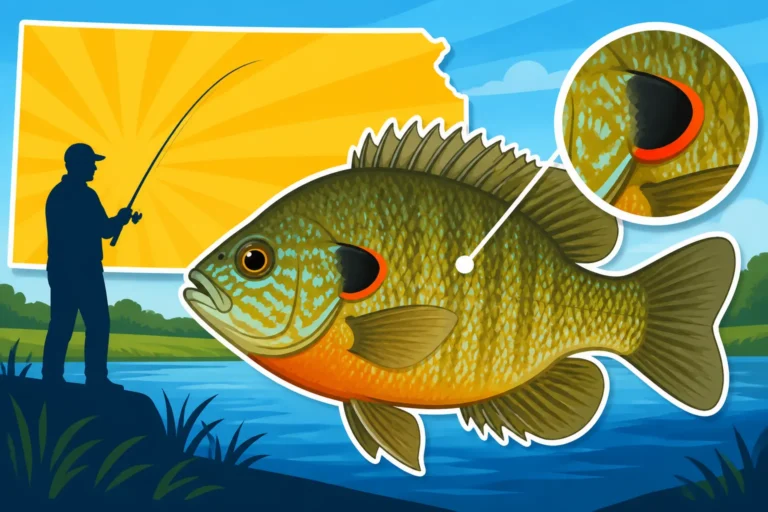
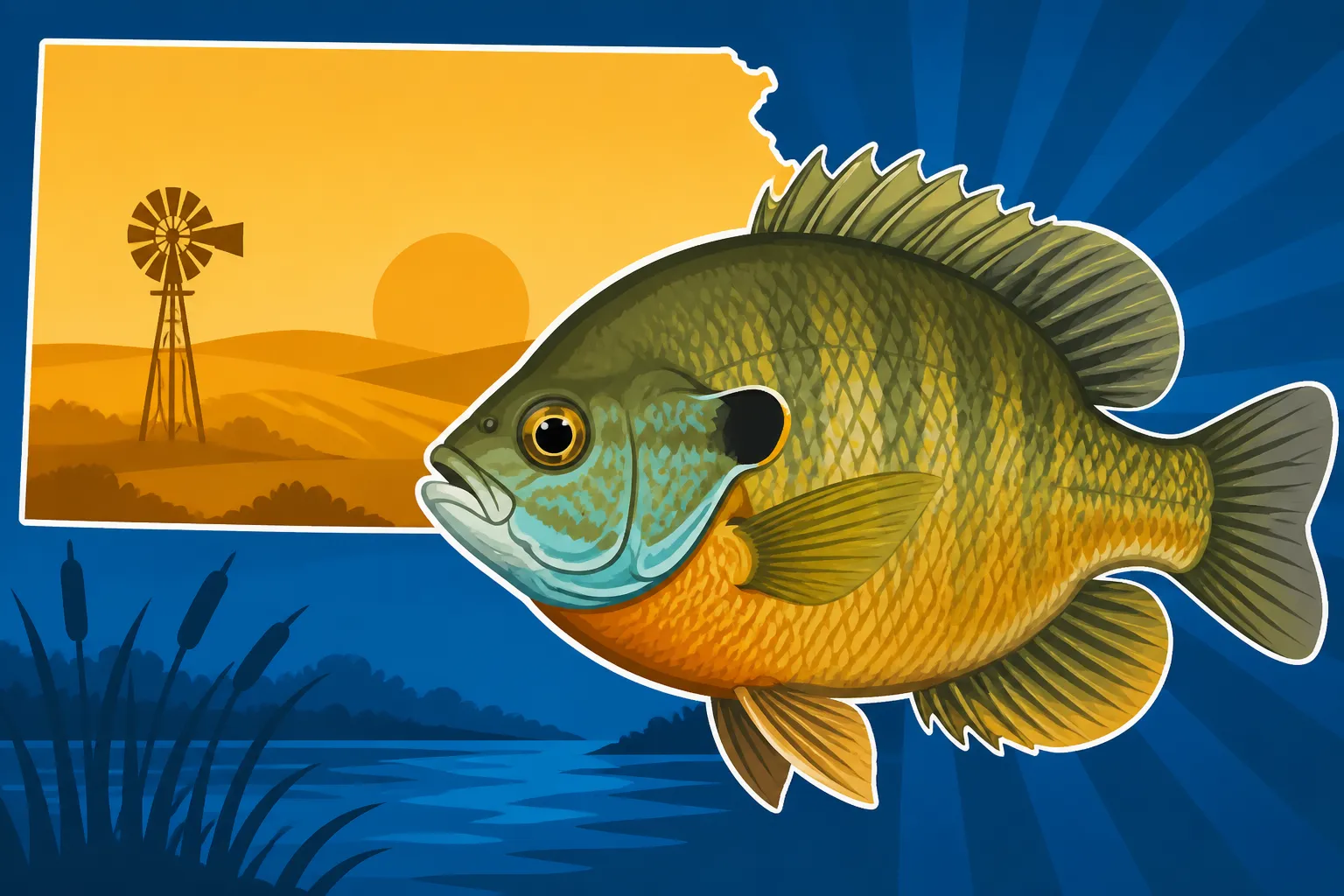
One of the first things you'll notice about a bluegill is its general color scheme. They typically have an olive-green to dark blue coloring on their back, fading into a lighter, often yellowish-orange or even golden belly. This color can vary quite a bit depending on the water clarity, diet, and age of the fish, so don't let subtle variations throw you off. Fish from clear, rocky lakes might appear darker and more vibrant, while those from murky, vegetated ponds could be paler.
What really stands out are the 6-8 indistinct vertical bars or stripes that run down their sides, especially noticeable on younger fish or those stressed from being caught. These bars can be faint or quite prominent, creating a subtle tiger-stripe effect. Another beautiful trait, and where they get their "bluegill" name, is the iridescent blue or purplish sheen on their operculum, which is the gill cover just behind the eye. This shimmery patch is a tell-tale sign that you’re likely holding a true bluegill. Many anglers find field guides available on Amazon incredibly helpful for comparing these subtle color differences on the spot, especially when dealing with fish from different environments.
Body Shape and Fin Structure
The body shape of a bluegill is quite distinctive. They are what we call "deep-bodied" and "compressed." Imagine taking a football and flattening it between your hands – that's the kind of side-to-side compression you see in a bluegill. This flat, roundish profile is a key differentiator from some other sunfish, which might be more elongated. This body shape is perfectly adapted for navigating through dense aquatic vegetation, where bluegill often forage and seek shelter.
Their dorsal fin, which is the fin on their back, is continuous, meaning it's not divided into two separate fins. It starts with a spiny, rigid front section and transitions smoothly into a soft-rayed, flexible rear section. Look closely at the spiny rays; there are typically 10-12 of them. Their pectoral fins, located just behind the gills on each side, are relatively small and pointed. They're not excessively long or rounded like some other sunfish species, another small detail that helps confirm your identification.
Opercular Flap Ear Flap and Mouth Features
This is perhaps the single most important characteristic for positive bluegill identification: the opercular flap, often called the "ear flap" because it looks like a little ear tab extending backward from the gill cover. On a true bluegill, this flap is entirely black, from edge to edge, without any colored margin or trim around it. It's like a solid black thumbnail, with no red, orange, or white border whatsoever. This solid black ear flap is your best friend when trying to distinguish a bluegill from other sunfish.
Finally, consider the mouth. Bluegill have a relatively small, terminal mouth. If you try to stick your thumb in their mouth, you'll quickly realize it's a tight fit, if possible at all. They're not designed for swallowing large prey, reflecting their diet of small insects and invertebrates. This small mouth is a critical feature to compare, especially when you're trying to differentiate them from a green sunfish, which has a surprisingly large mouth for its size. If you can confidently identify these three key features – coloration (especially the blue sheen), deep/compressed body, and the solid black opercular flap with a small mouth – you're well on your way to mastering bluegill identification.
Distinguishing Bluegill from Similar Kansas Sunfish
Kansas waters are teeming with various panfish, and while bluegill are prominent, they share their aquatic homes with several cousins that can look strikingly similar at first glance. Learning the subtle differences is where the real fun of identification begins!
Bluegill vs. Green Sunfish
This is perhaps the most common identification challenge for Kansas anglers. Green sunfish (Lepomis cyanellus) often inhabit the same waters as bluegill and can look very similar, especially when they're small. However, there are some clear distinctions. The biggest giveaway for a green sunfish is its mouth: it's noticeably larger, extending back at least to the middle of the eye, sometimes even past it. Imagine trying to stick your thumb in a green sunfish's mouth – it’s a much easier fit than with a bluegill!
Another key difference lies in the opercular flap. While a bluegill's ear flap is solid black, the green sunfish's flap will typically have a pale, often yellowish or whitish, margin around the black spot. Their body shape is also slightly different; green sunfish tend to be a bit more elongated and robust than the rounder, more compressed bluegill. Coloration-wise, green sunfish usually have a blotchier pattern, often with iridescent green or blue spots and wavy lines on their cheeks, and their fins might have a yellowish or orange tint, especially at the edges. They also often have three prominent dark blotches on their side, rather than the faint vertical bars of a bluegill.
Bluegill vs. Redear Sunfish
Redear sunfish (Lepomis microlophus), often called "shellcrackers" because of their diet, are another popular panfish in Kansas and can sometimes be confused with bluegill. The most obvious difference, and the source of their common name, is the opercular flap. Instead of a solid black flap, redear sunfish have a distinct red or orange margin around the black spot on their ear flap. It looks like a little "red ear" or a splash of paint on the back edge. This bright color is usually present and quite vibrant, making them fairly easy to distinguish from bluegill once you know what to look for.
Redear also tend to have a slightly more pointed snout compared to the bluegill's rounded face. Their bodies are typically flatter and often grow larger than bluegill, with a somewhat more silver or brassy overall coloration, lacking the prominent vertical bars. Internally, Kansas Redear Sunfish Identification reveals they have crushing plates in their throats specifically adapted for eating snails and other hard-shelled invertebrates, a diet that differs significantly from bluegill. So, if you're catching a sunfish with a bright red or orange "ear," you've likely found yourself a redear.
Bluegill vs. Longear Sunfish and Hybrids
Longear sunfish (Lepomis megalotis) are true gems of Kansas waters, boasting some of the most vibrant coloration among our panfish. While stunning, their appearance can sometimes cause momentary confusion with bluegill, though their distinct features usually quickly dispel any doubts. The most obvious difference is, again, the opercular flap. Longear sunfish have an extremely long, flexible ear flap, often elongated like a stretched-out oval, and it's always trimmed with a colorful margin, usually bright red, orange, or white. Their bodies are adorned with brilliant wavy blue and orange lines on their cheeks and gill covers, and their overall body color is a spectacular mix of olive, orange, and blue. They truly live up to their "longear" name!
Then we come to the trickiest part: hybrids. Hybrid sunfish, often a cross between a bluegill and a green sunfish, can make identification a real head-scratcher, even for seasoned anglers. These fish often display a mix of traits from both parent species. A bluegill x green sunfish hybrid, for example, might have an ear flap that's mostly black but with a faint, indistinct pale margin, or a mouth that's slightly larger than a pure bluegill but not as pronounced as a pure green sunfish. Their body shape and coloration can also be intermediate. This is where patience and close observation really come into play. While specific regulations for hybrids are rare, being aware that they exist helps you understand why some fish might not perfectly fit the textbook description. Specialized fishing apps, many of which can be downloaded from app stores accessible via a quick search on Amazon, often include detailed identification charts for common Kansas fish, including hybrids, which can be invaluable when you're stumped.
To help you keep track, here's a quick comparison:
| Feature | Bluegill | Green Sunfish | Redear Sunfish | Longear Sunfish |
|---|---|---|---|---|
| Opercular Flap | Entirely black, no colored margin | Black spot with a pale (yellow/white) margin | Black spot with a red/orange margin | Very long, flexible, colorful (red/orange) margin |
| Mouth Size | Small, doesn't extend past front of eye | Large, extends to middle or past eye | Small, pointed snout | Small, similar to bluegill |
| Body Shape | Deep, very compressed, roundish | More elongated, robust | Deep, compressed, often larger | Deep, compressed, but with longer profile |
| Coloration | Olive/blue back, yellow belly, faint vertical bars, blue sheen on gill plate | Green/olive, blotchy, iridescent spots/lines on cheek, yellowish fin margins | Brassy/silver, no distinct bars, pointed snout | Brilliant blue/orange wavy lines on face, very colorful body |
| Pectoral Fin | Small, pointed | Rounded, slightly larger | Pointed, often longer | Rounded, relatively long |
Understanding Bluegill Habitat and Behavior in Kansas
Identifying a bluegill isn't just about what it looks like; it's also about understanding where and how it lives. Knowing their preferred haunts and habits can give you a leg up in finding them and can even help confirm your identification by context.
Preferred Habitats in Lakes and Ponds
Bluegill are incredibly adaptable and can be found in a vast array of Kansas waters, from small farm ponds to large reservoirs and state fishing lakes. However, they do have a "happy place." They absolutely adore structure and cover. Think about those shallow, weedy areas with submerged aquatic vegetation like pondweed or milfoil. They love hanging out around fallen trees, brush piles, old dock pilings, or even large rocks. This cover provides them with both ambush points for feeding and protection from larger predators like bass and catfish.
You'll often find bluegill in depths ranging from just a few feet in shallow ponds to 10-15 feet in larger lakes, always gravitating towards areas with some sort of irregularity on the bottom or edge. They are social fish and tend to congregate in schools, especially during the non-spawning seasons. If you find one, chances are there are more in the immediate vicinity! Understanding these preferences will help you pinpoint their locations, whether you’re fishing a quiet local spot or a larger body of water like those managed under Kansas Community Lake Fishing Rules. For those exploring smaller, more secluded areas, remember that Kansas Farm Pond Fishing Tips often highlight these same types of bluegill-friendly habitats.
Spawning Habits and Nest Identification
Bluegill are enthusiastic spawners, and observing their spawning behavior is one of the coolest parts of spring and early summer fishing. They typically begin spawning when water temperatures consistently reach the upper 60s to low 70s degrees Fahrenheit. In Kansas, this usually means late spring through early summer, but it can extend later into the season with favorable conditions. You might recall that When Does Crappie Spawn Start? focuses on slightly cooler temperatures, highlighting how different species have their own schedules.
During the spawn, male bluegill create circular, dish-shaped nests or "beds" in shallow, firm-bottomed areas. These nests are usually found in sandy, gravelly, or hard clay bottoms, often clustered together in colonies, forming what looks like a moonscape on the lakebed. They'll fan out debris with their tails, creating a clean depression a foot or two in diameter. These spawning beds are often in 1-5 feet of water, making them visible in clear conditions. Males are fiercely protective of their nests, fanning the eggs and fry until they are free-swimming. If you spot these distinctive clusters of circular depressions in shallow water, you can bet bluegill are actively spawning nearby!
Dietary Preferences and Feeding Behavior
Bluegill are opportunistic feeders and, like many panfish, they're not particularly picky, which is why they are so much fun to catch! Their diet primarily consists of aquatic insects and their larvae, small crustaceans, snails, and even tiny minnows or fish eggs. Terrestrial insects that fall into the water, like grasshoppers or beetles, are also fair game. They have small, brush-like teeth designed for grasping rather than tearing, perfectly suited for their invertebrate-heavy menu.
You'll often find bluegill feeding actively throughout the day, especially during dawn and dusk. They can be found cruising just under the surface, snapping at insects, or rummaging through submerged vegetation for hidden treats. They're also known to pick off bait suspended in the water column or lying on the bottom. Their aggressive feeding behavior is what makes them such a fantastic fish for beginners and kids, as they are often eager to bite. For catching bluegill, a simple tackle box with small hooks, bobbers, and light line, easily found on Amazon, is usually all you need to appeal to their diverse appetite. This willingness to strike at various offerings, from a simple worm to a tiny jig, is part of their widespread appeal to anglers of all skill levels.
Practical Tips for Identifying Bluegill in the Field
Even with all this knowledge, sometimes you need a quick cheat sheet or a confirmation when you're out on the water. Here are some practical tips to help you make those on-the-spot identifications with confidence.
Visual Cues for Quick Identification
When you've just reeled in a sunfish and need to quickly figure out if it's a bluegill, run through this mental checklist:
- Check the "Ear Flap": Is the opercular flap (the little extension on the gill cover) entirely black? No red, orange, or light-colored trim around it? If yes, that's a HUGE bluegill indicator.
- Examine the Mouth: Is the mouth small? Can you barely fit your pinky finger (let alone your thumb) into it? A small mouth points strongly to bluegill. If it's a big gaping maw, it's likely a green sunfish.
- Look at the Body Shape: Is the fish very round and flat, like a dinner plate? Bluegill are generally deeper-bodied and more compressed than most other sunfish.
- Observe the Coloration: Does it have a hint of blue or purple iridescence on its gill plate, just below the ear flap? Are there faint vertical bars on its sides, especially if it's smaller or stressed? These are classic bluegill traits.
By quickly scanning these four features, you can often make a positive bluegill identification in seconds. Remember, practice makes perfect! The more panfish you catch and examine, the faster and more accurate your identification skills will become.
Using a Reference Guide or App
Even the most experienced anglers carry some form of reference. For those just learning, a waterproof field guide specific to Kansas fish species can be an absolute lifesaver. You can keep it right in your tackle box or boat and quickly flip to the sunfish section for a side-by-side comparison. Many reputable outdoor brands offer excellent pocket-sized guides.
In this digital age, smartphone apps are also incredibly popular. There are several fish identification apps available that allow you to quickly look up species, compare photos, and read descriptions right on the water. Some even have community features where you can upload a photo of your catch and get crowd-sourced identification help. Always remember to protect your device while fishing; a waterproof phone case, also a great find on Amazon, can protect your device while you're out on the water using a fish identification app or even just taking photos of your catch. These tools can clarify any lingering doubts, especially when dealing with those tricky hybrid specimens.
Photographing and Documenting Your Catch
This is a fantastic habit to get into, whether you're releasing your fish or keeping them. If you're unsure about a fish's identity, a clear photograph is your best friend. Take a few pictures from different angles: one showing the full side of the fish, one close-up of the head and opercular flap, and perhaps one showing the fin structure. Make sure the lighting is good and the fish is clearly visible, not obscured by your hand or shadows.
Later, you can review these photos at home with your reference guide, compare them online, or even share them with more experienced anglers in local fishing forums or groups for confirmation. Documenting your catches also serves as a personal record of your angling adventures and learning journey. It allows you to track species caught, sizes, and even the locations, making you a better angler over time. Plus, a good photo is always a great memory! Whether you're fishing a large lake like Milford Lake or a smaller private pond, developing these identification skills and practices will make every trip more informative and enjoyable, cementing your role as a knowledgeable and responsible Kansas angler. Don't forget, if you're bringing the kids along, knowing the fish you're catching can really help their understanding. Do Kids Need a Fishing License in Kansas? is a common question, and teaching them identification goes hand-in-hand with learning about responsible angling. For those thinking ahead, even a Kansas Children's Lifetime Fishing License Cost can be an investment in a future of knowledgeable fishing.
Disclaimer
This article is for general informational purposes only and does not constitute professional advice. Laws, prices and regulations vary by location and change over time. Consult a qualified professional for guidance on your specific situation.