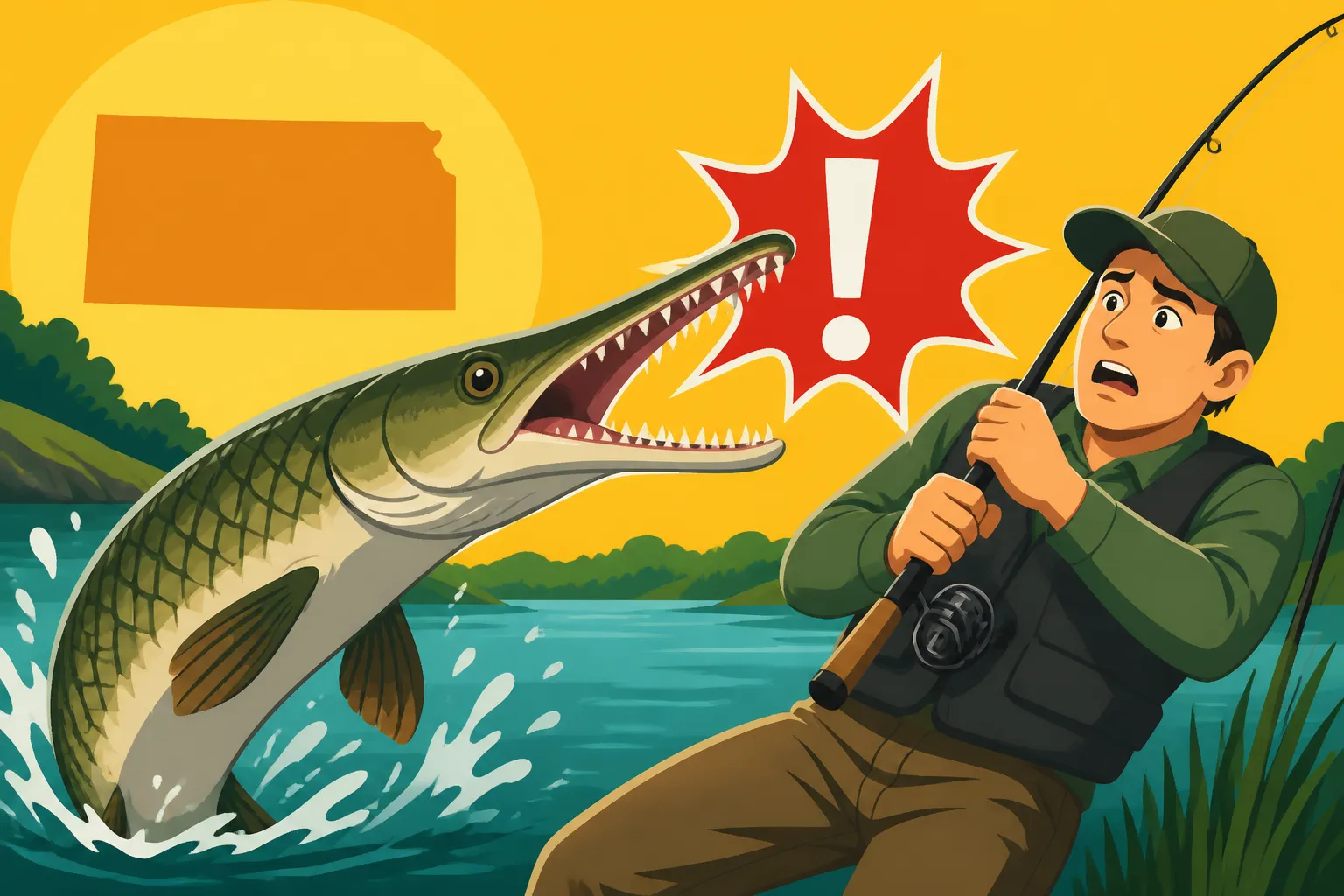
Are Gar Dangerous to Catch?
There's a common misconception swirling around the Kansas fishing community, often fueled by their prehistoric look and intimidating rows of teeth: "Are gar dangerous to catch?" It's a valid question, especially if you've never tangled with one of these unique fish. The sight of their long, toothy snouts can certainly give you pause. But let me assure you, while gar definitely demand respect and the right handling techniques, they are not inherently dangerous or aggressive towards anglers. This guide will walk you through everything you need to know to safely and confidently target these fascinating creatures, turning potential fear into an exciting fishing adventure.
Understanding Kansas Gar Species and Their "Threats"
Before we dive into the nitty-gritty of safe handling, it's helpful to understand the different types of gar you might encounter in Kansas waters and what exactly gives them their formidable reputation. Knowing your quarry is the first step to a successful and safe fishing trip.
Common Gar Species in Kansas
While there are several species of gar across North America, a few are more prevalent in Kansas. Each has its own characteristics, though their general appearance and handling considerations are quite similar.
The Longnose Gar is perhaps the most common species targeted by anglers in Kansas. They are easily identified by their exceptionally long, slender snouts, which are typically more than twice the length of their head. These fish can grow quite large, sometimes exceeding four feet in length, and are found throughout many of our larger rivers and reservoirs, including the Kansas River and Milford Lake. Their elongated bodies are covered in tough, diamond-shaped ganoid scales, which act like armor. When you hook a Longnose Gar, you'll immediately understand why they're such a challenge – they are powerful, acrobatic fighters, often leaping clear out of the water.
Next, we have the Shortnose Gar. As their name suggests, these gar have a shorter, broader snout compared to their longnose cousins, though it's still quite formidable. They generally don't reach the same trophy sizes as the Longnose, typically staying under three feet. Shortnose Gar often inhabit similar waters, preferring slow-moving backwaters, oxbows, and less turbulent sections of rivers. They share the same armor-plated body and toothy grin, requiring similar handling precautions. Many anglers encounter them incidentally while targeting other species like catfish.
The Spotted Gar is another species present in Kansas, though perhaps less common in some areas than the longnose or shortnose. They are distinguished by distinct dark spots on their head, body, and fins, giving them a more patterned appearance. Their snout length falls somewhere between the longnose and shortnose, but they share the same predatory nature and physical characteristics. Like other gar, they prefer calmer, weedier waters, where they can ambush prey. Understanding these distinctions helps you appreciate the biodiversity of Kansas Fish Species Guide.
A common question that arises is about the Alligator Gar. It's important to clarify that while the Alligator Gar is the largest and most imposing of the gar species, they are extremely rare or effectively absent from recreational fishing opportunities in Kansas waters. Their primary range is further south, in the Gulf Coast states. If you're fishing in Kansas, you are highly unlikely to encounter an Alligator Gar. However, the reputation of the Alligator Gar often contributes to the general fear surrounding all gar species, which is something we aim to address here.
What Makes Gar Seem Dangerous?
So, what exactly contributes to the perception that gar are dangerous? It boils down to a few key physical features and their natural behavior when hooked. It's a classic case of appearance versus reality, where their menacing look belies their true disposition towards humans.
First and foremost are their impressive teeth and elongated jaws. Gar possess numerous needle-sharp teeth lining their long, bony snouts. These teeth are designed for seizing and holding prey, not for tearing. While they can inflict a nasty puncture wound if you're careless, they aren't designed for biting or chewing. The primary "danger" here is accidental injury during unhooking or handling if fingers get too close to their mouth. Their jaws are extremely hard and boney, making hook removal a challenge if you're not prepared with the right tools.
Secondly, their armor-like scales are incredibly tough. These ganoid scales are interlocking, hard, and bony, providing excellent protection for the fish. However, for an angler, these scales can be quite abrasive. A gar thrashing against your bare arm or leg can cause scrapes and rashes, even if the fish isn't actively trying to "attack" you. This is why protective gear is so important, as we'll discuss shortly. It's like trying to wrestle a fish covered in miniature chainmail.
Finally, their thrashing behavior when caught can certainly be startling. When a gar is hooked, it's going to put up a vigorous fight. They're powerful fish, often rolling, twisting, and jumping out of the water. This isn't aggression directed at you; it's a natural instinct to escape. However, a large, thrashing fish with a mouthful of teeth and a body covered in sharp scales can easily become a flailing hazard in a boat or on the bank. Many anglers have been bruised or scraped by an out-of-control gar simply trying to free itself. It’s not malice, it’s just pure, powerful instinct.
Essential Gear and Techniques for Safe Gar Handling
Dealing with gar safely isn't about being fearless; it's about being prepared and knowing the right techniques. Just like you wouldn't try to handle a snapping turtle with your bare hands, gar require a specific approach. Investing in a few key pieces of gear and understanding how to use them will make all the difference.
The Right Tools for the Job
Having the correct equipment at your disposal is paramount for safely handling gar, minimizing stress on both you and the fish. Trying to manage a gar without these tools is where most potential "dangers" arise.
First on the list are jaw spreaders or long-nose pliers. These are absolutely essential for hook removal. Gar have exceptionally hard, boney mouths, and those teeth mean you do not want your fingers anywhere near the hook. Jaw spreaders can be used to prop their mouth open safely, giving you clear access to the hook. Long-nose pliers, especially those with an extended reach, allow you to grasp the hook securely and twist it free without putting your hands in harm's way. You can find excellent, durable options for both on platforms like Amazon, making sure you have a pair that can stand up to the tough job.
Next, don't underestimate the value of heavy-duty gloves. Forget your thin latex or even regular fishing gloves; for gar, you want something robust. Leather work gloves or specialized fish handling gloves with puncture resistance are ideal. These gloves provide crucial protection from both the gar's sharp teeth and its abrasive, armored scales. Even a light brush against a thrashing gar can leave an unpleasant scrape, and these gloves offer a necessary barrier. Think of it as armor for your hands against their armor-plated bodies.
A landing net or specialized gripper is also incredibly helpful for control. While you might be tempted to hand-land a gar, it's far safer to use a large, rubberized landing net to secure the fish boat-side or on the bank. The rubber coating helps protect the fish's slime coat if you plan to release it. Alternatively, specialized fish grippers can provide a firm, secure hold on the gar's lower jaw, allowing you to control its head and keep its body from thrashing wildly. However, ensure the gripper you use is robust enough for the gar's tough mouth structure. Some anglers even prefer to simply grip the gar firmly behind the head with a gloved hand for maximum control, but this takes practice. Choosing the right gear for Kansas Fishing Techniques for Beginners is always a smart move.
Finally, consider using wire leaders on your main line. Gar have an incredible ability to bite through monofilament or fluorocarbon lines with their sharp teeth. A short, sturdy wire leader, typically 6-12 inches long, attached to your main line and then to your hook or lure, will prevent frustrating bite-offs. This not only saves your gear but also prevents the fish from swimming off with a hook in its mouth, which is not ideal for its survival. You can easily find pre-made wire leaders on Amazon or construct your own.
Handling a Gar Once Landed
So, you've hooked a gar, fought it to the boat or bank, and now it's time for the critical moment: handling it. This is where those essential tools come into play and where proper technique ensures safety for everyone involved.
Once the gar is landed, the first step is to subdue and secure it. If you're fishing from a boat, a large net is invaluable. Once in the net, try to keep the gar's head submerged if possible, or at least keep it contained. If you're on the bank, guide it onto a soft, wet surface like grass or a wet towel, rather than dry concrete or rocks, which can damage the fish. The goal is to minimize its ability to thrash wildly. Some experienced anglers will carefully pin the gar's head down with a gloved hand, or use a fish gripper to control its head movements, keeping that toothy snout away from your body.
Now comes the safe unhooking process. This is where your long-nose pliers and jaw spreaders are indispensable. With the gar secured, use your jaw spreaders to gently but firmly open its mouth. This gives you a clear view of the hook and prevents the gar from clamping down. Then, using your long-nose pliers, carefully grip the hook and twist it out. If you're using single hooks, this process is much simpler. Treble hooks can be a nightmare to remove from a gar's bony mouth, often getting fouled in multiple spots. Many gar anglers choose to replace treble hooks on their lures with strong single hooks for this very reason, making release much quicker and safer for the fish. For those interested in sustainable fishing practices, learning Kansas Fishing Regulations Explained and how to effectively release fish is important.
If you plan to release the gar, which many anglers do, minimizing harm to the fish is crucial. Keep the gar out of water for the shortest time possible. Avoid holding it vertically by its jaw alone, as this can damage its internal organs, especially with larger fish. Instead, support its body horizontally with two hands (gloved, of course!), one near the head and one supporting the tail. If the hook is deeply set and removal seems impossible without severely injuring the fish, it's sometimes better to cut the line as close to the hook as possible. Gar are incredibly resilient, and a small hook will often rust out or be absorbed. Remember, the goal is a safe catch and release, ensuring these unique predators continue to thrive in Kansas waters.
Debunking the Myths: Are Gar Really Aggressive?
Despite their fierce appearance and the need for careful handling, gar are often misunderstood. The idea that they are "dangerous" often stems from a lack of knowledge about their natural behavior and a bit of Hollywood exaggeration. Let's set the record straight.
Gar Behavior and Angler Interaction
It's true that gar are formidable predators in their aquatic environment. They lie in wait, often blending into submerged vegetation or structure, and then ambush unsuspecting baitfish, sometimes with a lightning-fast sideways snap of their jaws. This predatory nature is crucial for maintaining healthy ecosystems in our Kansas lakes and rivers. However, being a predator in the water does not equate to being aggressive towards humans.
Gar are generally not aggressive towards humans. They are not looking to bite you or attack you. Any interaction an angler has with a gar that results in a scrape or puncture wound is almost always accidental, a result of the fish thrashing defensively during the fight or improper handling when landed. They are simply trying to escape a perceived threat, which is you with your hook! Think of it this way: a hooked deer might kick wildly, but it's not trying to "attack" the hunter; it's trying to get away. The same principle applies to gar. They want out of your net or off your line, not a piece of your hand.
Compared to other fish that might be considered "dangerous" to handle, like catfish with their sharp pectoral and dorsal spines, or even some larger bass with their spiny fins, gar present a different kind of challenge. Catfish spines can deliver a painful poke and sometimes even venom, whereas gar primarily threaten with their teeth and abrasive scales. Neither is inherently trying to "hurt" you, but both require respect and appropriate handling. For instance, knowing how to safely handle a large channel catfish is just as important as knowing how to handle a gar, perhaps even more so if you're targeting Kansas Catfish Daily Limits.
Mitigating Risks and Enjoying the Fight
The key to a safe and enjoyable gar fishing experience lies in mitigating risks through preparation and smart choices. With the right mindset and gear, you can turn what some perceive as a dangerous encounter into an exhilarating battle.
Firstly, always be aware of your surroundings, especially when landing a large gar. Make sure there's clear space, whether on your boat deck or on the bank, so the fish has room to thrash without knocking over gear or causing you to stumble. If you're in a boat, secure loose items that could be damaged or fall overboard. Wearing proper safety gear like eye protection can also be a smart move, just in case a thrashing gar throws a hook or debris your way.
The thrill of catching a gar is truly unique. They are incredibly strong fish, and their aerial acrobatics are a sight to behold. Landing a four-foot Longnose Gar after a spirited fight is a rewarding experience that many anglers actively seek out. It’s a true test of your tackle and angling skill. Instead of fear, focusing on the powerful fight and the unique challenge they present can enhance your appreciation for these ancient fish. They demand a heavier setup than what you might use for panfish or even some bass, often calling for a medium-heavy rod with a stout reel and stronger line. Getting the right gear for Best Rods and Reels for Kansas Fishing can make a huge difference.
Why gar fishing is growing in popularity is clear once you experience it. Beyond the exciting fight, gar are present in many Kansas waters, offering an accessible challenge. They can be targeted with a variety of methods, from traditional bait fishing with cut bait to more active lure presentations with unique "rope lures" designed to tangle in their teeth without a hook, allowing for easy release. Some anglers even pursue them with fly fishing gear or bowfishing. Learning Types of Gar Found in your specific area can help you tailor your approach.
So, are gar dangerous to catch? No, not if you approach them with respect, knowledge, and the right tools. They are a fascinating, powerful, and challenging species that deserves a spot on any Kansas angler's target list.
Here's a quick comparison of the common gar species in Kansas and handling considerations:
| Species | Max Length (Approx.) | Snout Shape | Primary Habitat | Handling Notes |
|---|---|---|---|---|
| Longnose Gar | 4-5 feet | Very long, slender; >2x head length | Rivers, large reservoirs (e.g., Milford Lake Fishing Guide) | Most common large gar, powerful thrashers. Jaw spreaders/pliers, heavy gloves essential. |
| Shortnose Gar | 2-3 feet | Shorter, broader than longnose | Slow-moving waters, oxbows, less current | Smaller, but still toothy. Similar handling tools. |
| Spotted Gar | 2-3 feet | Intermediate length, distinctive body spots | Calmer, weedier areas, backwaters | Less common, but still requires care with teeth and scales. |
| Alligator Gar | Up to 8 feet | Very broad, duck-bill shaped snout | Primarily Gulf Coast states (Extremely rare in Kansas) | Not applicable for Kansas recreational angling. |
Disclaimer
This article is for general informational purposes only and does not constitute professional advice. Laws, prices and regulations vary by location and change over time. Consult a qualified professional for guidance on your specific situation.