Types of Gar Found
It's easy to dismiss some fish as "rough fish" or "trash fish," especially when you're used to targeting bass, walleye, or crappie. But if you're an angler in Kansas, ignoring gar means you're missing out on some truly unique, challenging, and exhilarating fishing experiences. These prehistoric-looking predators are a fascinating part of our aquatic landscape, and understanding the different types you might encounter can completely change your perspective – and your fishing game. This guide is all about helping you identify the various gar species swimming in Kansas waters and appreciating these incredible creatures.
Understanding Gar: The Ancient Predators of Kansas Waters
Gar are often misunderstood, perceived by some as nuisance fish or even a threat to sportfish populations. But this couldn't be further from the truth. These remarkable fish have been around for millions of years, evolving incredible adaptations that have allowed them to thrive. Their torpedo-shaped bodies, hard, ganoid scales (which act like armor), and tooth-filled, elongated jaws make them unmistakable. They're true survivors, playing a vital role in the health of our Kansas waterways.
General Characteristics and Why They're Misunderstood
When you hook into a gar, you know it's a gar. Their distinct appearance, often described as "prehistoric," sets them apart from almost every other fish you'll find in Kansas. Unlike most fish, gar possess a swim bladder that functions almost like a lung, allowing them to gulp air at the surface in low-oxygen environments. This adaptation is part of why they can survive in conditions where other fish might struggle, often leading to the misconception that they "take over" poor quality waters. In reality, they're simply built to endure.
Their long, toothy snouts, which vary in length and slenderness depending on the species, are perfectly designed for ambushing unsuspecting prey. While their teeth might look intimidating, gar are generally not aggressive towards humans. The biggest challenge they pose to anglers is their bony mouth, which can make setting a hook notoriously difficult. This can be frustrating for beginners, but it's also part of what makes catching a gar so rewarding – it's a true test of skill and patience. Many anglers, unfortunately, don't know how to handle them properly or even target them, leading to their underserved reputation.
Gar in the Kansas Ecosystem
Gar are integral predators in the food chain, primarily feeding on smaller fish, crustaceans, and even insects. By preying on abundant forage species, they help maintain balance in the aquatic environment, much like other apex predators. They aren't indiscriminately eating all the "good" sportfish; they're opportunistic hunters that take what's readily available and often help control populations of less desirable fish species, contributing to a healthier overall fishery.
These hardy fish are found across a wide range of habitats, from large reservoirs to slow-moving rivers and their backwaters. They are often associated with submerged vegetation, woody debris, or other structures where they can lie in wait for prey. Understanding their role helps us appreciate why they are important to Kansas's diverse fishing opportunities. Kansas Fish Species Guide offers a broader look at the state's aquatic residents, and gar are a significant part of that tapestry.
The Gar Species You'll Encounter in Kansas
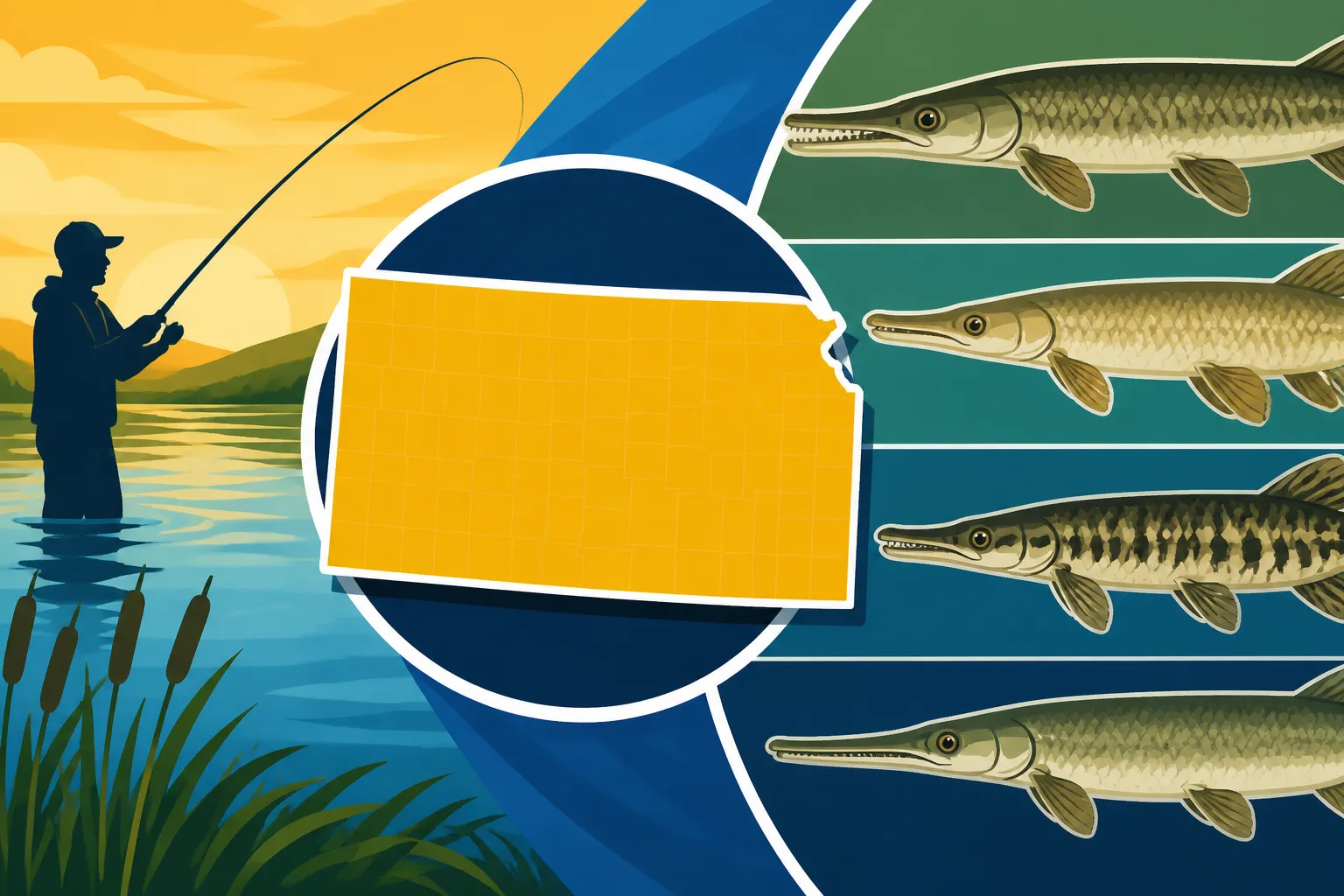
Kansas is home to several species of gar, each with its own unique characteristics. While they all share the general gar body plan, paying attention to specific features, especially their snouts and markings, will help you tell them apart. Knowing which species you're targeting can even influence your fishing approach.
Longnose Gar
The Longnose Gar is probably the most commonly recognized and widespread gar species in Kansas. True to its name, it has an exceptionally long and slender snout, often two or more times the length of the rest of its head. Their bodies are typically olive-brown to dark green on the back, fading to a lighter, often silvery belly. You might notice some dark spots, especially on their fins and sometimes faintly on their sides, but these are generally less pronounced than on a spotted gar.
Longnose gar can grow to impressive sizes, with individuals over 3 feet long being common, and some reaching upwards of 5 feet. They are powerful fighters, known for their thrashing and aerial displays once hooked. You'll find them in slow-moving rivers, larger reservoirs, and even quieter sections of faster rivers like the Kansas River Fishing Guide focuses on. They tend to prefer areas with plenty of submerged vegetation or standing timber, where they can blend in and ambush prey.
Shortnose Gar
Shortnose Gar are, as their name suggests, distinguished by a shorter, broader snout compared to their long-nosed cousins. While still elongated and full of teeth, the snout of a shortnose gar is noticeably shorter and more tapered, typically less than twice the length of the rest of its head. Their body coloration is similar to the longnose – olive to brown on the back, lighter on the belly – but they often have more distinct dark spots on their body and fins.
These gar are generally smaller than longnose gar, typically ranging from 2 to 3 feet in length, though larger specimens are certainly caught. They often inhabit similar areas to longnose gar but might be found in slightly muddier or more turbid waters, including oxbow lakes and slower river sections. Don't let their "shortnose" moniker fool you; they are just as feisty and challenging to catch as any other gar species, offering a great fight on appropriate tackle.
Spotted Gar
The Spotted Gar is perhaps the easiest to identify due to its prominent, distinct dark spots covering its head, body, and fins. These spots are usually larger and more numerous than those you might see on a longnose or shortnose gar, making them quite striking. Their snout is of medium length, falling somewhere between the longnose and shortnose, but it's the pattern of spots that truly gives them away.
Spotted gar usually don't reach the same trophy sizes as longnose gar, typically staying in the 2 to 3-foot range. They prefer clear, vegetated waters, often found in oxbow lakes, backwater sloughs, and quiet coves of larger lakes and rivers where vegetation provides ample cover. If you're fishing in a clear, shallow area with lots of aquatic plants, chances are good you might encounter a spotted gar. They're particularly beautiful fish, and their unique markings make them a memorable catch.
Alligator Gar
The Alligator Gar is the undisputed monarch of the gar family, and the largest freshwater fish in North America. Historically, these giants were present in the very southeastern corner of Kansas, particularly in the lower portions of the Verdigris and Neosho Rivers. However, their populations suffered significant declines throughout the Midwest due to habitat loss and historical eradication efforts, and they are now considered extremely rare, possibly even extirpated, from Kansas waters.
Distinguishing an Alligator Gar is fairly easy by its sheer size alone (they can exceed 8 feet and weigh hundreds of pounds!) and its very broad, short, alligator-like snout with two rows of formidable teeth in the upper jaw. Unlike other gar species, the alligator gar has much wider, overlapping scales and its overall appearance is much more robust. While it's highly unlikely you'll encounter one in Kansas today, it's important to be aware of their historical presence and the ongoing conservation efforts in states where they are still found, like Texas and Oklahoma. If by some incredible chance you were to catch one, it should be immediately released unharmed, and you should probably contact the Kansas Department of Wildlife and Parks. For more information on Kansas Fishing Law Enforcement and Penalties, it's always good to be aware of what to do in unusual situations.
Here's a quick comparison of the gar species you might find in Kansas:
| Gar Species | Snout Description | Key Distinguishing Feature | Typical Size Range (Kansas) | Primary Habitat |
|---|---|---|---|---|
| Longnose Gar | Very long, slender (2x+ head length) | Few to no body spots, clear fins | 3-5+ feet | Rivers, reservoirs, clear slow-moving water |
| Shortnose Gar | Shorter, broader (less than 2x head length) | Distinct spots on body and fins | 2-3 feet | Rivers, oxbows, slightly turbid backwaters |
| Spotted Gar | Medium length, tapered | Numerous, distinct spots everywhere | 2-3 feet | Clear, heavily vegetated waters, shallow coves |
| Alligator Gar | Very broad, short, alligator-like snout | Massive size, wide head, two tooth rows | Historically giant, rare to none | Large rivers, oxbows (SE Kansas historical) |
Fishing for Gar in Kansas: Techniques and Considerations
Gar fishing isn't for the faint of heart, but it can be incredibly rewarding. Their bony mouths and strong fights make them a true challenge, but with the right techniques and a bit of patience, you can have a blast targeting these unique fish. It's a completely different experience than targeting typical panfish or bass.
Popular Techniques for Gar
One of the most popular and effective methods for catching gar, especially longnose and shortnose, involves a "rope lure." This isn't a traditional hook-and-bait setup. Instead, you take a length of frayed nylon rope (often white, cut from a larger piece you might find on Amazon), perhaps 6-10 inches long, and attach it to your line. When a gar strikes, its teeth get entangled in the individual strands of the rope. This method minimizes harm to the fish since there's no hook to swallow. It's a fantastic way to fish for them and increases your hook-up (or rather, entanglement) rate significantly.
Another common technique is using cut bait, particularly shad or carp, fished on a large circle hook. Gar have a keen sense of smell, and a fresh piece of cut bait can be irresistible. You'll want a strong, medium-heavy rod and a reel spooled with at least 20-30 lb braided line, as these fish can put up a significant struggle. Some anglers also have success casting large artificial lures, like spinnerbaits or large jerkbaits, near weed lines or submerged timber where gar are known to lurk. Remember, setting the hook can be tricky due to their bony mouths; a sharp, strong hook is paramount if you're not using a rope lure.
Handling and Releasing Gar Safely
Due to their sharp teeth and hard scales, handling gar requires caution and the right tools. A good pair of long-nosed pliers or a jaw spreader is essential for removing any hooks. If you're using a rope lure, simply gripping the gar's snout firmly with a gloved hand or a specialized fish gripper (again, something you can easily find on Amazon) and carefully untangling the rope works well. Never try to hold a gar by its eyes or gills, as this can severely injure the fish.
Many gar anglers practice catch and release, especially for the larger specimens, to help conserve these unique populations. If you plan to release a gar, try to minimize its time out of the water. Support its body horizontally, and if it's a larger fish, consider reviving it gently in the water before letting it go. Their scales are incredibly tough, so they can be surprisingly resilient if handled correctly. Respect for these ancient fish ensures they continue to thrive in our Kansas waters.
Gar as a Food Fish
While often overlooked, gar can absolutely be a delicious table fare if prepared correctly. The main challenge lies in their tough, armor-like skin and the fact that their eggs (roe) are toxic to humans and other mammals, so they must always be removed carefully. The meat itself, usually white and firm, has a mild, sweet flavor, often compared to cod or even chicken, and is excellent when fried, baked, or smoked.
To prepare a gar for cooking, you'll need heavy-duty shears or tin snips to cut through their tough hide. Many anglers fillet them by running a knife along their back, then peeling the tough skin away from the meat. Some even create "gar balls" – essentially chopping the meat, mixing it with seasonings and breading, and then frying it. If you're adventurous and want to try something different, don't dismiss gar as purely a sportfish; they can be a surprisingly good meal! However, always proceed with caution and ensure you remove all roe if present.
Where to Find Gar in Kansas Waters
Finding gar isn't usually the biggest challenge; these fish are relatively widespread. The key is knowing where they prefer to hang out and then targeting those specific environments. Their preference for certain types of cover and water conditions can guide you to some fantastic gar fishing spots.
Prime Gar Habitats
Gar love areas with slow-moving water and plenty of cover. Think about places where they can ambush prey without expending too much energy. This includes:
- Backwater sloughs and oxbow lakes: These areas, often connected to larger rivers, provide stagnant or slow-moving water with abundant vegetation and baitfish.
- River bends and eddies: Slower currents on the inside bends of rivers, or eddies where water collects, create ideal ambush points.
- Submerged vegetation and timber: Weed beds, lily pads, standing timber, or fallen trees offer perfect camouflage for gar. They will often lay motionless, blending in, waiting for a meal to swim by.
- Shallow flats and coves in reservoirs: Especially during warmer months, gar will move into these areas to feed and bask in the sun.
You might even see them "gulping" air at the surface in these low-oxygen or warm water areas, which is a dead giveaway to their presence. If you observe this behavior, you know you're in a gar-rich spot.
Key Waterbodies for Gar Fishing
Kansas has numerous rivers and reservoirs that offer excellent gar fishing opportunities. The larger river systems are particularly good. The Kansas River, for instance, with its extensive stretches of slower water, backwaters, and tributaries, is a prime location. You'll find a healthy population of longnose and shortnose gar throughout its length. Similarly, the Neosho River and the Verdigris River in southeastern Kansas are known for their gar populations. Kansas River Catfish Spots often overlap with gar habitat, as both species thrive in many of the same river environments.
When it comes to reservoirs, many of the larger impoundments hold good numbers of gar, especially in their shallower, vegetated coves and upstream arms. Lakes like Milford Lake Fishing Guide, Cheney Reservoir Fishing Guide, and Tuttle Creek Lake Fishing Guide all have thriving gar populations. Focus your efforts on the calmer, less exposed sections of these lakes, particularly those with standing timber, brush piles, or extensive weed lines. Exploring the feeder creeks and shallower embayments of these reservoirs can also be highly productive.
Remember to check local regulations for specific water bodies, as limits and rules can sometimes vary. Overall, gar offer a fantastic, accessible, and exciting fishing challenge for anyone looking to try something new in Kansas.
Disclaimer
This article is for general informational purposes only and does not constitute professional advice. Laws, prices and regulations vary by location and change over time. Consult a qualified professional for guidance on your specific situation.