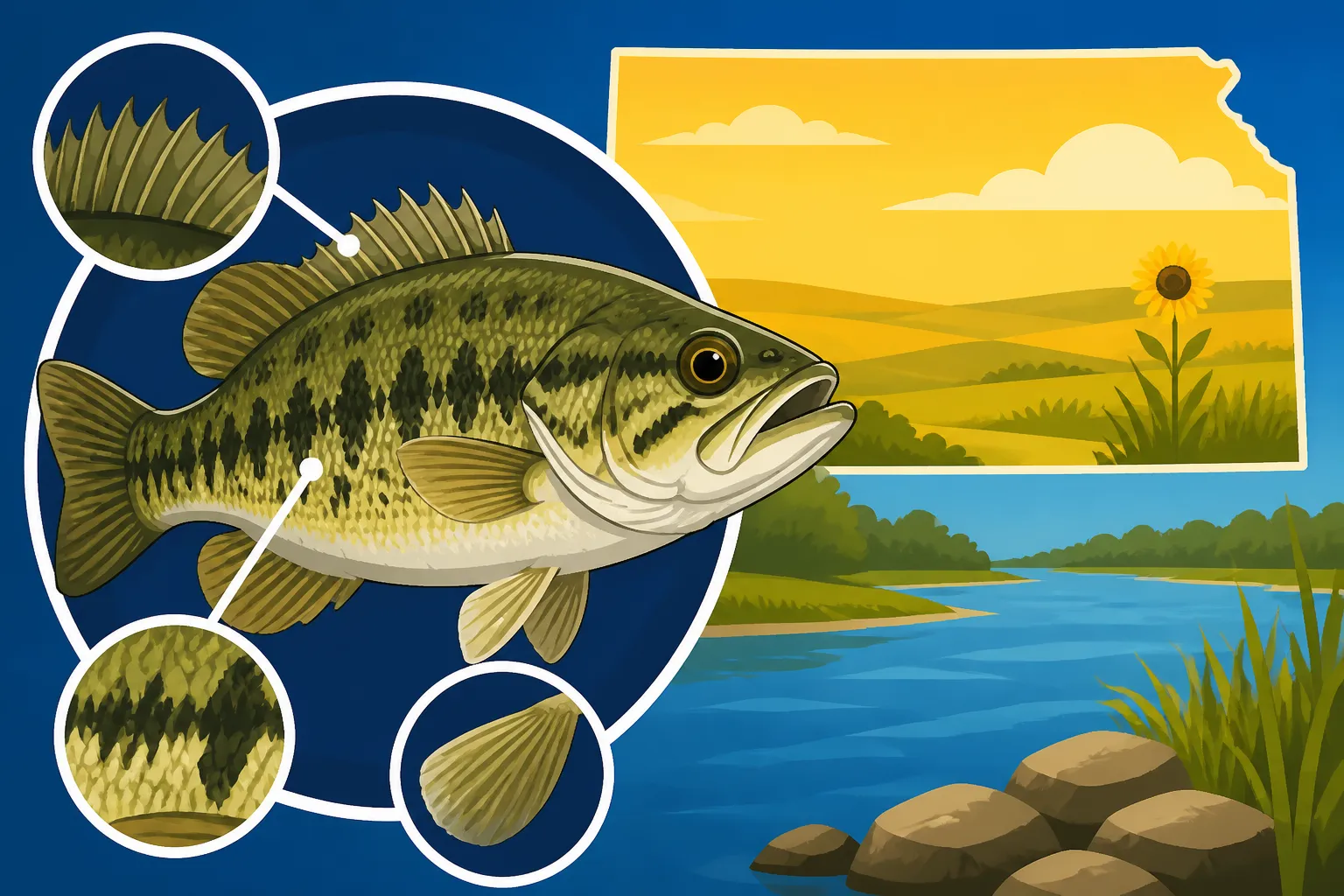
Spotted Bass Identification in Kansas
It can be incredibly frustrating to be out on a beautiful Kansas lake, hook into a spirited bass, and then stare at it, wondering, "Is this a largemouth? A smallmouth? Or something else entirely?" The subtle differences between bass species can truly stump even experienced anglers, especially when it comes to the often-misunderstood spotted bass. This guide is here to unravel that mystery, giving you clear, actionable tips to confidently identify a spotted bass the next time you reel one in.
The Importance of Knowing Your Bass in Kansas
Before we dive into the nitty-gritty of identifying spotted bass, let's talk about why it even matters. It's not just about winning bragging rights with your fishing buddies, although that's certainly a perk! Accurate fish identification is crucial for a few very practical reasons that directly impact your fishing experience and the health of our Kansas waters.
Legal Implications and Daily Limits
Every angler in Kansas operates under a set of rules, and these rules often vary by species. Think about it: the daily creel limits for largemouth bass might be different from those for smallmouth or spotted bass, depending on the specific body of water and current regulations. If you mistakenly identify a spotted bass as a largemouth and keep more than the allowed limit for that particular species, you could find yourself in a sticky situation with a game warden. It’s not about malicious intent; it's simply about knowing the fish you’re catching. Having a clear understanding helps you stay compliant and avoid unnecessary penalties. You can always check the Kansas Fishing Regulations Explained for the latest specifics.
Conservation and Ecosystem Health
Beyond the legalities, proper identification plays a role in conservation. Each bass species has its own ecological niche, feeding habits, and reproductive cycles. By knowing what you're catching, you contribute to a broader understanding of the local fish populations. For instance, if you're frequently catching small, stunted spotted bass in a particular area, it might signal an overpopulation issue or a lack of suitable forage for that species. This kind of information, even from individual anglers, helps state agencies like the Kansas Department of Wildlife and Parks manage our fisheries more effectively. Plus, if you're practicing catch and release, correctly identifying the fish ensures you're applying appropriate handling techniques for that specific species, giving it the best chance of survival. Healthy fisheries mean better fishing for everyone, for years to come.
Key Identifying Features of a Spotted Bass
Okay, let's get down to the actual "how-to." Spotted bass, sometimes affectionately called "spots" or "Kentucky spotted bass," have several distinct characteristics that set them apart from their more famous cousins, the largemouth and smallmouth bass. Once you know what to look for, you'll start spotting these differences right away.
The Jawline Test
This is often the first and easiest test to perform when you're holding a bass. Gently close the fish's mouth and observe where the corner of its jaw (the maxilla) extends relative to its eye. For a largemouth bass, that jawline will typically extend beyond the back edge of the eye. However, with a spotted bass, its jaw typically does not extend beyond the back edge of the eye. It will usually end somewhere under the middle or back of the eye, but crucially, it won't pass it. This is a quick and dirty way to rule out a largemouth right off the bat. Get a good grip and take a careful look; it's a telling feature.
Patch on the Tongue
This feature is a definitive giveaway for a spotted bass, and it's something that neither a largemouth nor a smallmouth bass possesses. Carefully open the fish's mouth and gently depress its tongue. Look for a small, rough patch of teeth right in the center of the tongue. It feels a bit like sandpaper. You can even run your finger over it gently to feel the texture. If that patch is present, congratulations, you've got yourself a spotted bass! It's an internal characteristic, so it’s not always the first thing you notice, but it's a 100% reliable identifier once you check for it. Many experienced anglers keep a small, blunt tool on their boat to make this check easier without harming the fish.
Dorsal Fin Connection
Take a close look at the fish's back, specifically where the spiny dorsal fin meets the soft-rayed dorsal fin. In a largemouth bass, these two parts of the dorsal fin are almost completely separated by a deep notch, appearing as two distinct fins. With a spotted bass, however, the spiny dorsal fin and the soft-rayed dorsal fin are clearly connected, forming a single, continuous fin. There might be a slight dip or indentation, but it's not a deep, clear separation like you'd see on a largemouth. This connection is another excellent visual cue that helps distinguish it from the more common largemouth. This is one of those features that, once you see it, you can't unsee it.
Lateral Line Markings
All bass have a lateral line, which is a sensory organ that runs horizontally along their side. However, the markings around and below this line are key for spotted bass. Spotted bass often have distinct rows of dark spots or markings below their lateral line. These spots are usually arranged in horizontal rows, giving the fish a somewhat "spotted" appearance (hence the name!). While largemouths can have a dark, often broken, lateral stripe, they usually lack these clear, distinct rows of spots beneath it. Smallmouth bass, on the other hand, tend to have vertical bars or blotches, particularly when young or in clear water, rather than horizontal spots. So, if you see those neat rows of spots below the lateral line, you're likely holding a spotted bass.
Common Misidentifications and How to Avoid Them
It's easy to confuse bass species, especially when they're young or when different environmental factors affect their coloring. The key to avoiding misidentification is to methodically check for multiple characteristics rather than relying on just one. Let’s break down the most common mix-ups. This is where your knowledge of Kansas Bass Fishing Guide truly comes into play.
Spotted vs. Largemouth Bass
This is by far the most frequent mix-up. Both largemouth and spotted bass share a similar overall body shape and often similar green coloration, especially in slightly turbid water. They can both be found in many of the same Kansas reservoirs and ponds.
The biggest visual differentiators, as we discussed, are the jawline and the dorsal fin. Remember:
- Largemouth: Jaw extends past the eye, dorsal fins are deeply separated.
- Spotted Bass: Jaw does not extend past the eye, dorsal fins are connected.
Beyond those, consider the pattern. While both can have a dark lateral band, the spotted bass will often have more distinct rows of spots below that line. Largemouth bass tend to have a larger mouth, as their name implies, and their overall body profile can sometimes appear chunkier or more elongated, whereas spotted bass can be a bit more streamlined. If you're really unsure, always check for that rough patch of teeth on the tongue – it's a definitive "yes" for a spotted bass and a "no" for a largemouth. If you want to learn even more about its cousin, check out Kansas Largemouth Bass Facts.
Spotted vs. Smallmouth Bass
Confusing a spotted bass with a smallmouth bass is less common, but it can happen, especially with smaller fish or in waters where both might exist. Smallmouth bass generally prefer cooler, clearer water, often found in rocky areas or rivers, but some Kansas lakes can hold both. Kansas Smallmouth Bass Facts can provide more specific details on their preferences.
Here's how they typically differ:
- Coloration: Smallmouth bass usually have a bronze, brown, or olive-green coloration, often with distinct vertical bars or tiger stripes along their sides, especially when stressed or in clear water. Spotted bass tend to be greener with those horizontal spot rows.
- Jawline: Like the spotted bass, the smallmouth's jaw typically does not extend beyond the back of the eye. So, this feature won't help you differentiate between these two species, though it rules out a largemouth.
- Body Shape: Smallmouth bass are often described as having a more torpedo-like, streamlined body shape. Spotted bass are also fairly streamlined but can appear slightly deeper-bodied than a smallmouth.
- Tongue Patch: The absolute clincher here, once again, is the tongue patch. A smallmouth bass will not have a rough patch of teeth on its tongue. If you find one, it's a spotted bass.
Here's a handy table to summarize these key differences at a glance:
| Feature | Spotted Bass | Largemouth Bass | Smallmouth Bass |
|---|---|---|---|
| Jawline | Ends under or slightly behind the eye | Extends past the back of the eye | Ends under or slightly behind the eye |
| Tongue Patch | YES (rough patch of teeth) | NO | NO |
| Dorsal Fins | Connected, forming one continuous fin | Deeply separated, almost two distinct fins | Connected, usually without a deep notch |
| Lateral Markings | Rows of distinct dark spots below lateral line | Dark, often broken, lateral stripe | Vertical bars or tiger stripes (bronze/brown) |
| Body Color | Greenish, sometimes with olive hues | Dark green to lighter green, often with dark stripe | Bronze, brown, or olive-green |
When you're out on the water, having a clear photo or even a laminated guide from a resource found on Amazon can be incredibly helpful for quick checks. Remember, practice makes perfect. The more bass you catch and examine, the quicker you'll become at identifying them.
Habitat and Behavior Clues for Spotted Bass
While visual identification is the most reliable method, understanding where spotted bass like to hang out and how they typically behave can also give you a strong clue as to what you've caught. Fishing smarter means knowing your fish's preferred home turf.
Preferred Kansas Habitats
Spotted bass in Kansas tend to favor areas that blend elements of both largemouth and smallmouth habitats. They often thrive in clearer reservoirs and larger streams or rivers that have a mix of rock, gravel, and submerged timber. Unlike largemouths, which often bury themselves in thick weeds and shallow cover, spotted bass are more comfortable in deeper water, particularly around rocky points, ledges, and submerged humps. They're often found around bluff walls, standing timber in the middle of a lake, or along creek channels that wind through a reservoir.
In Kansas, you might find spotted bass coexisting with largemouths in the same reservoir but occupying slightly different niches. For example, while largemouths might be cruising the weed lines in a shallow cove, spotted bass could be holding tighter to a rocky drop-off or a channel bend in deeper water nearby. They appreciate current more than largemouths, so they can often be found near dam structures or river confluence areas if fishing a river system. This preference for deeper, rockier structure can sometimes make them a bit trickier to target than largemouths, but incredibly rewarding.
Spotted Bass Behavior Patterns
Spotted bass are known for being aggressive eaters and strong fighters, often punching above their weight class. They tend to school up more readily than largemouth bass, especially in open water, which means if you catch one, there are often more in the vicinity. This schooling behavior makes them a favorite for anglers using methods like drop-shotting, jigging spoons, or throwing small swimbaits around schooling baitfish. They're also notorious for hitting moving baits, like crankbaits and spinnerbaits, with a vengeance.
Their diet often consists of crawfish, shad, and other small baitfish. You'll find them actively chasing down prey rather than ambushing from dense cover. In terms of seasonal patterns, spotted bass will follow similar movements to other bass species, moving to shallower spawning areas in the spring and retreating to deeper, more stable temperatures in the summer and winter. However, their affinity for rocky, open-water structure means they might not be as accessible in the extreme shallows as largemouths during certain times of the year. Understanding these behaviors can help you predict where they might be, allowing you to specifically target them. Many anglers carry a selection of lures, which can be easily purchased through retailers like Amazon, to cover the range of conditions spotted bass might prefer.
Knowing the subtle yet definitive characteristics of a spotted bass will not only make you a more informed angler but also increase your confidence on the water. No more guesswork, just solid identification and the satisfaction of knowing exactly what you've hooked into. The more you familiarize yourself with these key features and preferred habitats, the easier it will be to tell your largemouth from your smallmouth, and most importantly, confidently identify that hard-fighting Kansas spotted bass.
Disclaimer
This article is for general informational purposes only and does not constitute professional advice. Laws, prices and regulations vary by location and change over time. Consult a qualified professional for guidance on your specific situation.