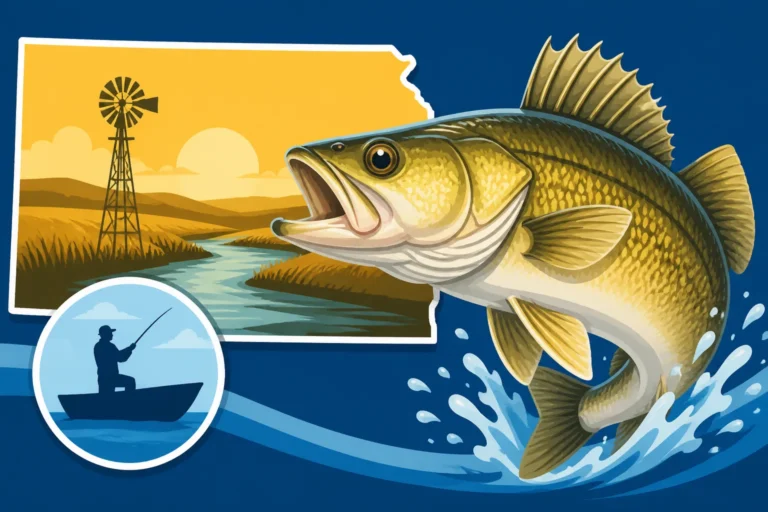
Are Spotted Bass Found in Kansas Lakes?
It's incredibly frustrating when you're trying to identify the fish you've caught, especially when you're sure it's a bass, but it doesn't quite fit the mold of a largemouth or smallmouth. Many Kansas anglers find themselves wondering about the elusive spotted bass, asking if these distinctive fish truly call our Kansas lakes home. This comprehensive guide is here to clear up the confusion, delve into the presence (or lack thereof) of spotted bass in our waters, and give you the tools to correctly identify the black bass species you encounter.
The Diverse World of Kansas Black Bass
Kansas offers some fantastic bass fishing opportunities, primarily for two beloved species: the largemouth bass and the smallmouth bass. These two fish are pillars of our freshwater angling scene, each with its unique characteristics and preferred habitats. Anglers across the state spend countless hours chasing these exciting game fish, whether it's in the shallow, weedy coves of a reservoir or the rocky stretches of a clear-water lake.
Largemouth Bass: The Classic Kansas Fighter
The largemouth bass is arguably the most recognized and sought-after bass species in Kansas. You'll find them in almost every lake, pond, and slow-moving river channel with ample vegetation or submerged structure. They're notorious for their aggressive strikes and powerful fights, making them a favorite among both seasoned pros and weekend warriors. From farm ponds to vast reservoirs like Clinton Lake, largemouths thrive in diverse environments, often preferring warmer, murkier water.
Identifying a largemouth is usually straightforward. They have that signature large mouth, where the jaw extends beyond the eye when closed, and a deep notch in their dorsal fin that almost separates it into two distinct fins. Their bodies are typically greenish with a prominent, often broken, lateral line that forms a dark stripe along their sides. They are true apex predators, preying on everything from baitfish to frogs, crayfish, and even small birds or rodents. Understanding their habits is key to successful Kansas Bass Fishing Guide.
Smallmouth Bass: The Rocky River and Reservoir Dweller
While not as widespread as their largemouth cousins, smallmouth bass hold a special place in the hearts of many Kansas anglers. These feisty fish prefer cooler, clearer, rocky waters, often found in the deeper, more open areas of our larger reservoirs or in certain river systems. They're celebrated for their acrobatic jumps and dogged fights, making them an exciting catch on light tackle. Lakes like Wilson Lake and some stretches of the Kansas River are known for their smallmouth populations, offering a different kind of bass fishing experience.
Smallmouth bass are easily distinguished by their smaller mouth, which does not extend past the eye, and a more uniform dorsal fin without the deep notch found on a largemouth. Their coloration tends to be bronze or brown with vertical bars or blotches on their sides, rather than a distinct lateral stripe. They're often nicknamed "bronze backs" for good reason. Understanding the subtle differences between these two species is crucial, especially when trying to differentiate them from other potential bass species. We have a detailed guide on Largemouth vs Smallmouth Bass Identification if you want to dive deeper.
Spotted Bass: A Rare Sighting in Kansas Waters
Now, let's address the burning question: are spotted bass found in Kansas lakes? The short answer is, for most anglers, not in any significant or established populations that are routinely targeted. While there might be occasional isolated reports or misidentifications, the spotted bass is not considered a native or widely distributed game fish in Kansas. The Kansas Department of Wildlife, Parks and Tourism (KDWPT) primarily manages and monitors largemouth and smallmouth bass populations, reflecting their widespread presence and importance to our fisheries.
Understanding the Spotted Bass's Range
Spotted bass, also known as Kentucky bass, are more commonly found in the southeastern and south-central United States. Their native range includes river systems flowing into the Gulf of Mexico, extending north into the Mississippi River basin. They typically prefer clear, flowing streams and rivers with rocky bottoms, and also thrive in reservoirs that have these characteristics. So, while Kansas is technically within the broader Mississippi River basin, the specific conditions and native distribution don't typically place Kansas lakes as prime spotted bass territory.
It’s important to note that fish species can sometimes be introduced outside their native range, either intentionally or accidentally. However, this has not led to established, self-sustaining populations of spotted bass across Kansas. Anglers often confuse young largemouth bass or even smallmouth bass with spotted bass due to certain shared physical traits, which we'll explore next. For a comprehensive look at all the fish species you might encounter, check out our Kansas Fish Species Guide.
Misidentification: The Most Common "Spotted Bass" Catch
What most anglers in Kansas think might be a spotted bass is, more often than not, a largemouth or smallmouth with some unique coloration or markings. Young largemouths, for instance, can sometimes have faint spots below their lateral line, leading to confusion. Smallmouth bass, especially those in transition between habitats or under certain light conditions, can also display blotchy patterns that might be mistaken for spots.
This misidentification isn't uncommon. Anglers eager to catch a new species might jump to conclusions, and without a side-by-side comparison or deep knowledge of distinguishing features, it's an easy mistake to make. This is why understanding the subtle anatomical differences is so important, not just for bragging rights, but for proper conservation and adherence to regulations, which vary by species. You can find more specific rules in our Kansas Fishing Regulations Explained.
How to Distinguish Spotted Bass from Other Black Bass
Proper identification is key, not just for your fishing log, but for understanding the ecology of our Kansas waters. While spotted bass are rare, knowing their features can help you confidently identify the largemouth and smallmouth bass you do catch. The differences are subtle but consistent.
The Jawline Test: Beyond the Eye
This is one of the most reliable ways to tell black bass species apart. For a largemouth bass, if you close its mouth, the upper jaw (maxilla) extends noticeably beyond the rear edge of the eye. Think "large mouth" – it's a fitting descriptor. For a smallmouth bass, the upper jaw typically ends directly under the eye or even slightly before it. It’s a more compact jaw structure.
Now, for the spotted bass, its jaw extends just to the back of the eye, or perhaps a hair past it, but never as far as a largemouth. It's often described as an intermediate jaw length. This can be tricky, as it requires a keen eye, but with practice, it becomes second nature. Many anglers keep a small ruler or even a credit card in their tackle box, easily found on Amazon, to help with quick measurements when they're uncertain.
Dorsal Fin Separation: A Clear Indicator
Another key identifier lies in the dorsal fin, the fin on the fish's back. The largemouth bass has a very distinct, deep notch in its dorsal fin, almost creating two separate fins. You can easily slide a finger into this separation. The smallmouth bass, on the other hand, has a continuous dorsal fin with a much shallower, barely noticeable notch, if any. It appears as one unified fin.
The spotted bass shares a trait with the smallmouth here – it also has a more continuous dorsal fin, with only a shallow notch. This is where the confusion between smallmouths and spotted bass often begins, as they both lack that pronounced separation seen in the largemouth. This means you can't rely solely on the dorsal fin to differentiate a smallmouth from a spotted bass; you need other clues.
| Feature | Largemouth Bass | Smallmouth Bass | Spotted Bass (for comparison) |
|---|---|---|---|
| Upper Jaw (Maxilla) | Extends well past the rear of the eye | Does not extend past the rear of the eye | Extends to or slightly past the rear of the eye |
| Dorsal Fin | Deep, distinct notch, almost separated | Shallow or no notch, appears continuous | Shallow or no notch, appears continuous |
| Lateral Line | Prominent dark horizontal stripe (often broken) | Faint, if present; vertical bars/blotches | Distinct dark lateral line |
| Spots Below Lateral Line | Generally absent, or faint/irregular on young fish | Absent; vertical bars instead | Rows of distinct dark spots, especially below lateral line |
| Tongue Patch | Absent | Absent | Present (rough patch of teeth on tongue) |
| Pyloric Caeca | Biforked (two-branched) | Biforked (two-branched) | Unforked (single-branched) |
(Note: The pyloric caeca are internal organs, requiring dissection, and are generally not used for field identification but are a definitive scientific distinction.)
Lateral Line and Body Markings: Look for the Spots
This is where the "spotted" in spotted bass comes from, though it requires careful observation. While all black bass have a lateral line, the pattern of spots below it is crucial. The largemouth bass usually has a prominent, dark, horizontal band running down its side, sometimes broken or blotchy, but typically not distinct individual spots below it. Young largemouths might have faint dark blotches that some mistake for spots.
The smallmouth bass typically lacks a distinct lateral line stripe and instead displays a series of vertical bars or tiger stripes along its sides, especially when stressed or in clear water. There are no individual spots below the lateral line.
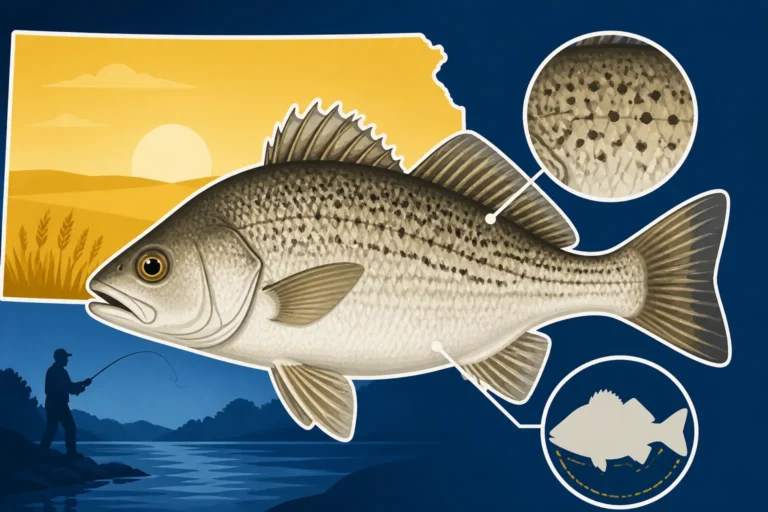
The spotted bass (should you ever encounter one) truly lives up to its name. It will have rows of distinct, dark spots, almost like little thumbprints, running in horizontal lines below its lateral line, all the way to its belly. This is its most defining external characteristic beyond the jaw. If you're comparing a fish from Kansas waters and you don't see those clear, defined rows of spots, it's almost certainly not a spotted bass.
The Tongue Patch: A Definitive Internal Clue
This is a surefire way to tell a spotted bass apart from both largemouth and smallmouth, but it requires you to open the fish's mouth and feel its tongue. A spotted bass will have a small, rough patch of teeth-like structures on its tongue. This is completely absent in both largemouth and smallmouth bass. If you catch a bass in Kansas that has spots below its lateral line and a tongue patch, then you've truly found something exceptional and potentially outside its typical range!
It’s always a good idea to bring a field guide with you, perhaps one you ordered from Amazon, when you're hitting new waters or trying to identify tricky species. These guides often have clear illustrations that can help you cross-reference features. Proper Spotted Bass Identification in Kansas is a skill that comes with practice and keen observation.
The Angler's Role in Species Management
Even though spotted bass aren't prevalent in Kansas, understanding species identification is a fundamental part of being a responsible angler. Misidentifying fish can lead to inadvertently violating regulations, such as keeping an undersized fish or exceeding creel limits for a specific species. All game fish in Kansas have specific rules about size and how many you can keep in a day. You can review current regulations in Kansas Daily Creel Limits by Species.
Conservation and Reporting
If you ever believe you've caught a spotted bass in Kansas, especially one that exhibits all the identifying characteristics (jaw, dorsal fin, body spots, AND tongue patch), it's a good idea to take clear photos and report your catch to the KDWPT. While it's unlikely to be an established population, monitoring unusual sightings helps wildlife agencies understand the distribution of species and potential ecological shifts. Your observation could contribute valuable data to their ongoing efforts.
Responsible angling goes beyond just catching fish; it involves protecting the resources for future generations. This means adhering to size and bag limits, practicing catch and release when appropriate, and being mindful of fish habitats. Whether you're fishing for largemouths in a community pond or chasing smallmouths in a rocky reservoir, every angler plays a part in keeping Kansas fisheries healthy and vibrant. If you're new to fishing, our Kansas Fishing Techniques for Beginners can help you get started on the right foot.
Exploring Other Kansas Bass and Game Fish
Even without a robust spotted bass population, Kansas offers incredible opportunities for bass anglers. Our lakes and rivers are teeming with healthy populations of largemouth and smallmouth bass, providing thrilling action throughout the year. Beyond bass, there's a huge variety of other exciting game fish to pursue, making Kansas a fantastic destination for any freshwater angler.
Beyond Black Bass: Wipers, White Bass, and More
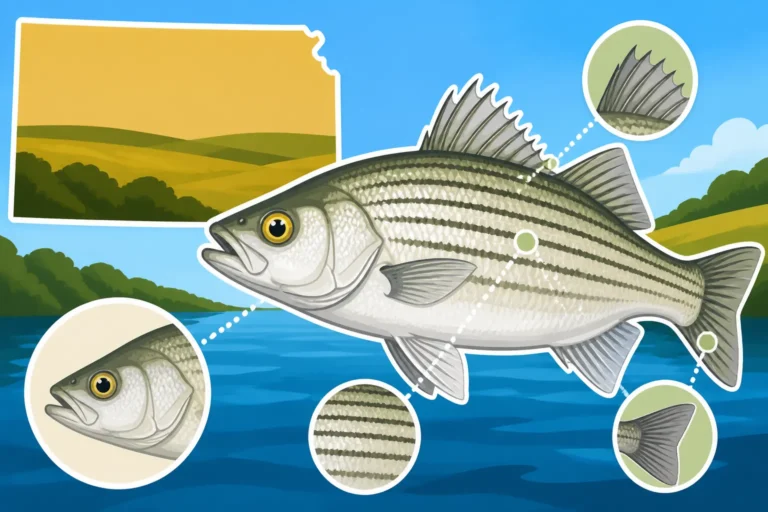
Don't forget about other exciting species like wipers (hybrid striped bass), which provide some of the most intense fights you'll experience. These hard-fighting hybrids are stocked in many of our large reservoirs and offer a unique angling challenge. White bass are also incredibly popular, especially during their spring spawning runs up tributary rivers. These schools of aggressive feeders can offer non-stop action, perfect for a fun day on the water.
You might also consider pursuing channel catfish, flathead catfish, or blue catfish, especially during the warmer months. These powerful fish offer a completely different kind of fight and are excellent table fare. And for those who enjoy a more serene experience, panfish like crappie and bluegill provide steady action, particularly for families and younger anglers. Each species has its own charm and challenge, ensuring that there's always something new to learn and catch in Kansas. To truly maximize your potential, consider upgrading your gear; many anglers turn to Amazon for their rod and reel combo for bass.
Conclusion: Focus on What's Here and Thriving
So, to wrap things up, while the idea of catching a spotted bass in Kansas might spark some excitement, the reality is that they are not a common or established species in our lakes and reservoirs. The bass you're most likely to encounter, and what Kansas proudly offers in abundance, are the magnificent largemouth and smallmouth bass. By understanding the key identification features, you can confidently distinguish between these two and appreciate the fantastic fishing opportunities they provide.
Always refer to the latest KDWPT fishing regulations, hone your identification skills, and enjoy the incredible diversity of fish species that Kansas waters have to offer. Happy angling!
Disclaimer
This article is for general informational purposes only and does not constitute professional advice. Laws, prices and regulations vary by location and change over time. Consult a qualified professional for guidance on your specific situation.