Best 12-Volt Trolling Motor for Boats
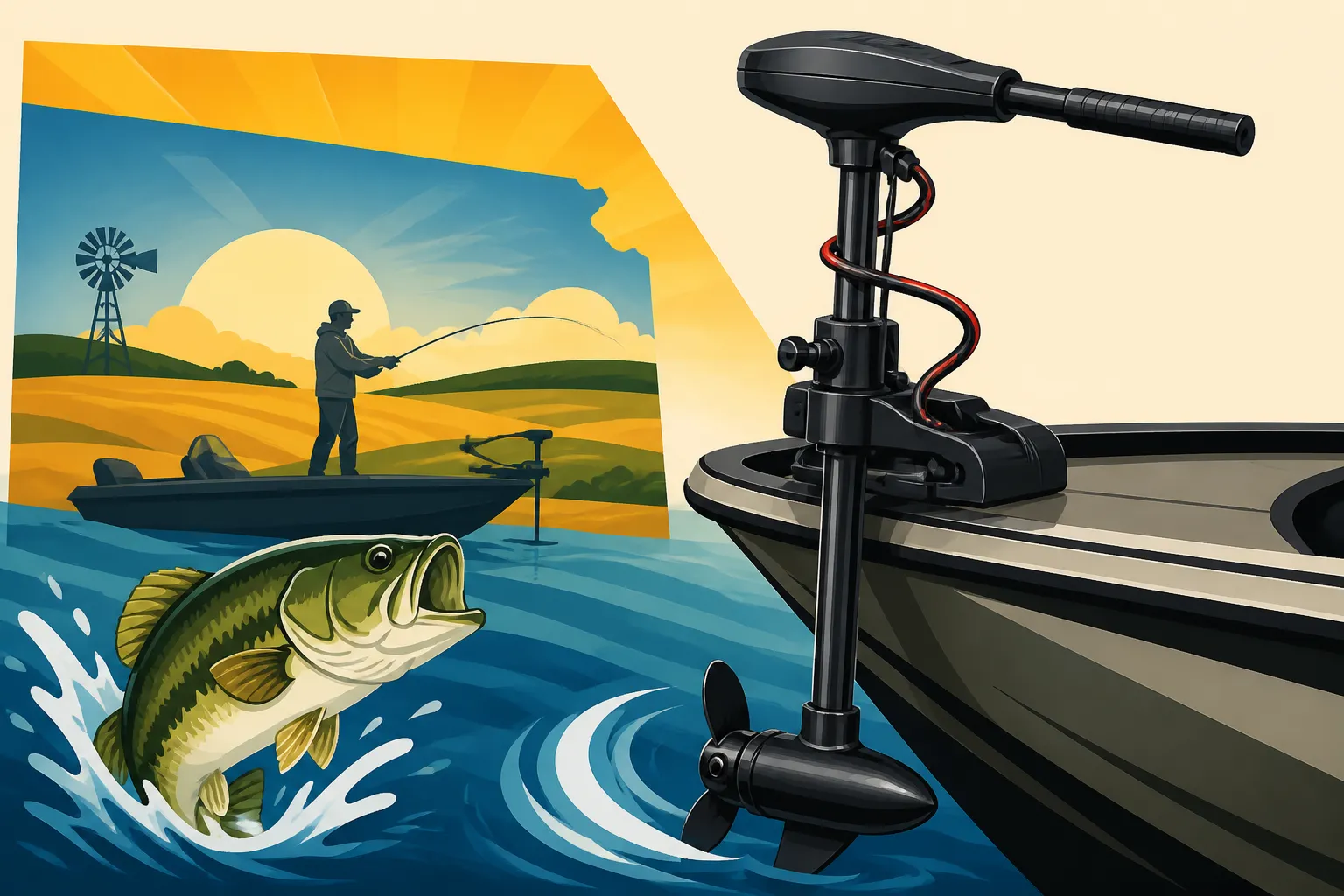
Oh, the humble trolling motor! If you've spent any time on Kansas lakes trying to hold your boat over a submerged brush pile in a stiff breeze or sneak into a shallow cove without spooking every fish for a mile, you know the frustration of relying solely on your main engine. It's loud, it's cumbersome, and it's certainly not built for precision. This guide is all about helping you understand and choose the best 12-volt trolling motor, making your time on the water more productive and, let's be honest, a whole lot more enjoyable.
Why a 12-Volt Trolling Motor is a Game-Changer for Kansas Anglers
For many of us who fish the vast reservoirs and calmer state lakes across Kansas, a 12-volt trolling motor isn't just a luxury; it's a fundamental piece of equipment. It opens up a world of possibilities that simply aren't feasible with your outboard engine alone. Imagine being able to subtly position your boat exactly where you want it, making precise casts along a weed line or gently slipping into a quiet backwater without all the noise and commotion.
The Stealth Advantage for Shallow Water and Structure Fishing
One of the biggest reasons to invest in a quality trolling motor is the sheer stealth it offers. Whether you're chasing crappie in the timber at Milford Lake or targeting largemouth bass around the flooded cover at El Dorado Lake, noise is your enemy. A quiet electric motor allows you to approach fishing spots without sending ripples of alarm through the water. It’s the difference between catching wary fish and watching them scatter.
Picture this: you’ve found a promising drop-off on your fish finder, perhaps on Cheney Reservoir, and you want to work it thoroughly. With an outboard, you might make one or two passes, but the constant starting and stopping, or trying to idle slowly, creates too much disturbance. A trolling motor, on the other hand, lets you hold your position with remarkable ease, slowly drift along the contour, or even nudge the boat forward a few feet at a time. This quiet operation is crucial for sensitive species and in areas where fishing pressure is high. It also saves your main engine from excessive wear and tear during slow, precise maneuvers.
Precision Boat Control in Diverse Kansas Conditions
Kansas weather, as we all know, can be… unpredictable. One minute it's dead calm, the next, a stiff wind is whipping across the lake. This is where a good trolling motor truly shines, especially a 12-volt unit that’s properly matched to your boat. It gives you an unparalleled level of boat control, allowing you to maintain your course even when the wind and current are trying to push you around.
Think about battling a strong gust on Wilson Lake while trying to present a lure to a specific rock pile. Without a trolling motor, you'd be constantly adjusting, possibly drifting off target, and certainly using a lot more fuel. With a powerful 12-volt model, you can engage features like spot-lock (if your motor has it) or simply use the foot pedal or remote to hold your boat steady, freeing up your hands for casting and reeling. This precision is not just about staying on target; it’s about increasing your fishing efficiency and reducing fatigue from constantly fighting the elements. For serious anglers, it’s about putting more fish in the boat.
Key Factors When Choosing Your 12-Volt Trolling Motor
Picking the right 12-volt trolling motor isn't as simple as grabbing the first one you see. There are several critical factors to consider that will directly impact its performance and suitability for your specific fishing needs on Kansas waters. Getting these right will ensure you have a motor that works with you, not against you.
Thrust Power: Matching Motor to Boat Size and Conditions
Thrust is arguably the most important specification for any trolling motor, measured in pounds (lbs). It dictates how much pushing or pulling power the motor has. Too little thrust, and you'll struggle to move your boat effectively, especially in wind or current. Too much, and you might be overspending on power you don't truly need, though extra thrust rarely hurts!
A common rule of thumb is to have at least 2 pounds of thrust for every 100 pounds of fully loaded boat weight. This includes your boat, motor, gear, passengers, and anything else you'll typically have on board. For a typical aluminum jon boat or a smaller fiberglass bass boat that runs on a 12-volt system, motors in the 30-55 lb thrust range are often sufficient. However, if you have a heavier V-hull boat or frequently fish larger, windier lakes like Milford Lake Fishing Guide or Cheney Reservoir Fishing Guide, you might want to lean towards the higher end of that 12-volt spectrum, perhaps 55 lbs, to give you that extra oomph when needed. Always overestimate your loaded weight slightly to ensure you have enough power. Remember, you can always dial down a stronger motor, but you can't make a weaker one more powerful.
Shaft Length: Critical for Proper Submergence
The shaft length of your trolling motor is crucial for ensuring the prop stays submerged in various conditions, preventing it from cavitating (spinning in the air) or blowing out when you hit a wave. If the shaft is too short, your propeller will come out of the water too often, losing thrust and potentially damaging the motor. If it's too long, it might drag in shallower water or be awkward to deploy and retrieve.
To determine the ideal shaft length, measure the distance from where the motor will be mounted (either the bow or transom) to the waterline. Then, add about 10-20 inches to that measurement for bow-mount motors to account for waves and boat bounce. For transom-mount motors, you usually want the propeller to be submerged about 6-12 inches below the bottom of your hull. For most boats on Kansas lakes, common shaft lengths range from 36 to 52 inches. For example, if you have a modest V-hull fishing boat that sits higher in the water, you'd likely need a longer shaft than someone with a low-profile flat-bottom boat. When in doubt, a slightly longer shaft is generally better than one too short, as you can always adjust the motor's depth if it's too long, but you can't extend a short shaft.
Control Type: Foot Pedal, Hand, or Wireless Remote
How you control your trolling motor significantly impacts your fishing experience and efficiency. The three primary types are foot pedal, hand control, and wireless remote. Each has its pros and cons, and the best choice often comes down to your fishing style and boat layout.
-
Foot Pedal Control: This is a favorite among bass anglers and those who prefer to keep their hands free for casting and reeling. A foot pedal allows for precise steering and speed adjustments with your foot, leaving your hands available for your rod and reel. Modern foot pedals are very responsive and often have buttons for features like momentary on/off or spot-lock. The downside is that the pedal takes up floor space and is tethered, limiting where you can stand. For someone sight fishing for bass in a shallow c in El Dorado Lake Bass Fishing, a foot pedal can be invaluable for quick, silent adjustments.
-
Hand Control: Transom-mount trolling motors almost exclusively use hand control, where you steer and control speed directly from a tiller handle. These are simple, reliable, and often more budget-friendly. They are excellent for smaller boats like canoes, kayaks, or jon boats where the angler is typically seated near the transom. While it keeps one hand occupied, for a leisurely day of trolling for catfish on a river like the Kansas River, a hand control is perfectly sufficient.
-
Wireless Remote Control: Many modern bow-mount motors, especially those with GPS features, offer wireless remotes (either handheld or wrist-mounted). This provides incredible freedom, allowing you to control the boat from anywhere within range – whether you're at the bow, stern, or even moving around the boat to land a fish. This is particularly advantageous for multi-species anglers who might move between the front and back of the boat, or for those who like to stand while fishing. Some systems also integrate with fish finders for advanced navigation. While incredibly convenient, these systems tend to be more expensive and require charging the remote.
When considering the control type, think about how you typically fish. Do you stand and cast? Do you move around your boat a lot? Do you prioritize hands-free operation? Your answers will guide you to the right choice.
Powering Your 12-Volt Trolling Motor
A trolling motor is only as good as the battery powering it. Understanding battery types, capacity, and proper charging is essential for maximizing your time on the water and ensuring your motor performs optimally throughout the day. It’s not just about getting any battery; it’s about getting the right battery and taking care of it.
Battery Types and Capacity for 12-Volt Systems
For a 12-volt trolling motor, you'll need at least one 12-volt deep cycle marine battery. Unlike starting batteries, which deliver a strong burst of power, deep cycle batteries are designed to provide a steady, lower current over a long period and can be discharged and recharged many times without significant damage.
- Lead-Acid Deep Cycle Batteries: These are the most common and economical choice. They come in two main types:
- Flooded (Wet Cell): These are traditional batteries that require occasional maintenance (checking and topping off water levels). They are generally the least expensive but can be a bit messy and require venting.
- AGM (Absorbed Glass Mat): These are sealed, maintenance-free, and more resistant to vibration. They charge faster and last longer than flooded batteries, but they also cost more upfront. They are a great choice if you want less hassle and don't mind the higher price.
- Lithium (LiFePO4) Batteries: These are the premium option. They are significantly lighter, last much longer (more charge cycles), maintain a more consistent voltage throughout their discharge, and can be discharged deeper without harm. However, their initial cost is substantially higher. While a 12-volt lithium battery will provide incredible performance and longevity, for many 12-volt trolling motor setups, it might be overkill unless weight savings or ultimate performance is a primary concern.
When choosing capacity, look for the Amp-Hour (Ah) rating. A higher Ah rating means a longer run time. A good starting point for a typical 12-volt trolling motor on a medium-sized boat is a 100Ah deep cycle battery. If you have a powerful 55lb thrust motor or plan on long days of heavy use on a windy day, consider bumping up to a 120Ah or even dual 100Ah batteries wired in parallel for extended run time. Remember, the Best Battery for Kansas Fishing Trips will depend on your specific motor's power draw and how long you need to run it.
Proper Charging and Maintenance
Proper charging and maintenance are crucial for extending the life of your deep cycle batteries. Neglecting them can lead to premature failure and leave you stranded on the water.
- Use a Multi-Stage Charger: Always use a marine-specific multi-stage (or "smart") charger. These chargers optimize the charging process, preventing overcharging and desulfation, which can damage batteries. They typically have bulk, absorption, and float stages. Avoid using automotive chargers, as they can overcharge deep cycle batteries. Many quality chargers are available from retailers like Bass Pro Shops or online on Amazon.
- Charge After Every Use: Even if you only used your motor for a short time, recharge your battery as soon as possible after each outing. Leaving a battery in a discharged state can lead to sulfation, which reduces its capacity and lifespan.
- Store Fully Charged: If you're not going to use your boat for an extended period, ensure the battery is fully charged before storing it. A smart charger that has a "maintain" or "float" mode is ideal for long-term storage, keeping the battery topped off without overcharging. For those cold Kansas winters, you'll definitely want to ensure your battery is properly maintained.
- Check Connections: Regularly inspect battery terminals for corrosion and ensure connections are clean and tight. Loose or corroded connections can reduce performance and even pose a safety hazard.
By following these simple guidelines, you can significantly extend the life of your batteries, ensuring your 12-volt trolling motor is ready to go whenever you hit the water.
Installation and Essential Accessories
Once you've chosen your ideal 12-volt trolling motor, proper installation and selecting the right accessories are key to maximizing its performance and your overall fishing enjoyment. A well-installed motor with the right supporting gear will make a huge difference.
Mounting Your Trolling Motor: Bow vs. Transom
The two main mounting options for trolling motors are on the bow (front) or the transom (back) of your boat. The choice largely depends on your boat type and fishing style.
-
Bow-Mount Trolling Motors: These are typically preferred by serious anglers in larger boats (bass boats, deep V-hulls) because they pull the boat rather than push it. Pulling a boat offers much finer control, especially in wind and waves, allowing for precise steering and positioning over structure. Bow mounts are usually stronger, more feature-rich (like GPS and spot-lock), and are often paired with a foot pedal or wireless remote. Installation typically involves drilling holes in the bow for the mounting plate and running wiring to your battery compartment. It’s a more involved installation but offers superior control. For someone wanting to work a rocky point for walleye on Clinton Lake Fishing Spots, a bow mount is almost indispensable.
-
Transom-Mount Trolling Motors: These motors clamp directly onto the transom of your boat. They are simpler, more portable, and generally more affordable. Transom mounts are ideal for smaller boats like jon boats, canoes, kayaks, or even inflatables, and for anglers who might not need the advanced features of a bow mount. They are controlled by a tiller handle. While they push the boat, which can be less precise in some conditions, they are perfect for basic maneuvering and getting into tight spots. Installation is usually quick and requires no drilling, simply clamping it on and connecting to a battery. These are often excellent choices for those who enjoy Kansas Farm Pond Fishing Tips.
Regardless of the mounting style, ensure your chosen motor's mounting bracket is compatible with your boat's design. If you're unsure about drilling or electrical work, consider having a marine technician handle the installation to ensure it's done safely and correctly.
Essential Accessories for Enhanced Functionality
Beyond the motor itself, a few key accessories can greatly improve your trolling motor's performance and your overall fishing experience.
- Quick-Release Mount: For bow-mount motors, a quick-release bracket allows you to easily remove the motor for security, storage, or transport. This is invaluable, especially if you store your boat outside or frequently trailer it long distances.
- Circuit Breaker: An inline circuit breaker is a non-negotiable safety device. It protects your trolling motor and wiring from electrical overloads, preventing damage to the motor and potential fires. Ensure it's rated appropriately for your motor's maximum amperage draw.
- Battery Box: A sturdy battery box protects your deep cycle battery from the elements and provides a safe enclosure, especially in open boats. Some even include external terminals and a built-in battery meter.
- Propeller Guard: While not always necessary, a prop guard can protect your propeller from damage in shallow, rocky areas, or from hitting submerged stumps. It can be a wise investment if you fish in challenging environments.
- Extension Handle (for transom mounts): If you're using a transom-mount motor and find yourself reaching uncomfortably for the tiller, an extension handle can make a world of difference in comfort and control, especially on longer fishing trips.
- Built-in Transducer (Optional): Some trolling motors come with a built-in transducer for your fish finder. This keeps your transducer protected and provides a clean, clutter-free installation. If you're looking for an integrated setup, this can be a fantastic feature.
Investing in these accessories not only enhances the performance of your 12-volt trolling motor but also adds a layer of safety and convenience to your Kansas fishing adventures. You can find a wide range of these accessories at most marine retailers, including Bass Pro Shops, or through online vendors like Amazon, allowing you to customize your setup to perfection.
Choosing the Right 12-Volt Trolling Motor
Making the final decision on a 12-volt trolling motor can still feel a bit daunting with all the options out there. To help simplify it, let's break down some common scenarios and how different features might cater to them.
Best for Smaller Boats and Casual Angling
If you're primarily fishing smaller jon boats, canoes, or kayaks on Kansas's quieter state lakes or community ponds, a simple, reliable 12-volt transom-mount motor will likely be your best bet. These motors are easy to install, lightweight, and perfectly adequate for maneuvering in calm conditions.
For example, if you're exploring Kansas Community Lake Rules with your kids in a 12-foot jon boat, a 30-40 lb thrust transom motor will provide plenty of power. You won't need advanced GPS features or heavy-duty construction. The focus here is on ease of use, portability, and getting into those tighter, shallower spots that bigger boats can't access. You can control it directly with the tiller, keeping things simple and direct. Look for models known for their quiet operation, which is a big plus when fishing smaller waters where fish are easily spooked.
Best for Mid-Sized Boats and Serious Anglers
For those with larger aluminum boats, smaller fiberglass bass boats, or V-hulls up to about 17-18 feet, a 12-volt bow-mount trolling motor in the 45-55 lb thrust range becomes the optimal choice. This setup offers the superior boat control and features that more serious anglers demand for targeting specific species like walleye or bass on larger reservoirs.
Consider the angler who spends weekends chasing walleye on Milford Lake Walleye Fishing or working the submerged timber for crappie at Wilson Lake Fishing Guide. They need a motor that can hold the boat precisely against wind and current, allowing them to cast accurately and work structure thoroughly. Features like a responsive foot pedal or a wireless remote are invaluable, as they keep your hands free for fishing. Many top brands offer excellent 12-volt bow-mount options in this thrust range, often with built-in transducers for your fish finder, which is a huge convenience. These motors are designed for prolonged use and offer robust construction to handle the demands of big water.
| Feature | Small Boats/Casual Angling | Mid-Sized Boats/Serious Angling |
|---|---|---|
| Boat Type | Jon boats, canoes, kayaks, small aluminum | Larger aluminum, small fiberglass bass boats, V-hulls |
| Thrust Range | 30-45 lbs | 45-55 lbs |
| Mounting | Transom Mount | Bow Mount |
| Control Type | Hand Control (Tiller) | Foot Pedal, Wireless Remote |
| Key Priorities | Portability, simplicity, affordability, ease of use | Precision control, hands-free operation, durability, features |
| Typical Use | Pond fishing, calm lake cruising, river access | Structure fishing, trolling, windy conditions, active targeting |
| Battery Req. | One 100Ah Deep Cycle | One 100-120Ah Deep Cycle |
Advanced Features to Consider
While 12-volt motors might not always boast the full suite of features found on larger 24 or 36-volt systems, many modern 12-volt models now offer some fantastic advancements that are worth considering:
- GPS and Spot-Lock: This is a game-changer. Motors with GPS integration can automatically hold your boat's position against wind and current with incredible accuracy. Imagine casting to a specific brush pile or drop-off, hitting "spot-lock," and having your boat stay put while you focus purely on fishing. This is a premium feature but can drastically improve your fishing efficiency.
- Digital Maximizer: This technology helps extend battery life by only drawing the necessary amount of power, rather than a constant full draw. It allows for variable speed control, which is much more efficient than traditional 5-speed systems. This means more time on the water, which is always a good thing!
- Universal Sonar: Motors with a built-in, protected transducer make connecting your fish finder a breeze, eliminating messy cables and external mounts. This provides a clean setup and reduces potential snags or damage.
When browsing for your next 12-volt trolling motor, especially at places like Bass Pro Shops or online retailers such as Amazon, keep these features in mind. While they might add to the cost, the benefits in terms of convenience, control, and ultimately, catching more fish, can be well worth the investment for a dedicated Kansas angler. Best Trolling Motor Thrust for Lakes is just one piece of the puzzle; considering these other factors will lead you to the best overall choice for your boat and fishing style.
Disclaimer
This article is for general informational purposes only and does not constitute professional advice. Laws, prices and regulations vary by location and change over time. Consult a qualified professional for guidance on your specific situation.