Is Ice Fishing Safe on Lakes?
There's nothing quite like the crisp air, serene silence, and unique challenge of ice fishing on a frozen Kansas lake. However, let's be real: the prospect of stepping out onto that seemingly solid surface can make even the most adventurous angler a little nervous. The big question, "Is ice fishing safe on lakes?", isn't one to take lightly. This guide will walk you through the realities of ice safety, what to look for, essential gear, and how to prepare for a successful and secure hard-water adventure in our beloved Sunflower State.
Understanding the Real Risks of Ice Fishing in Kansas
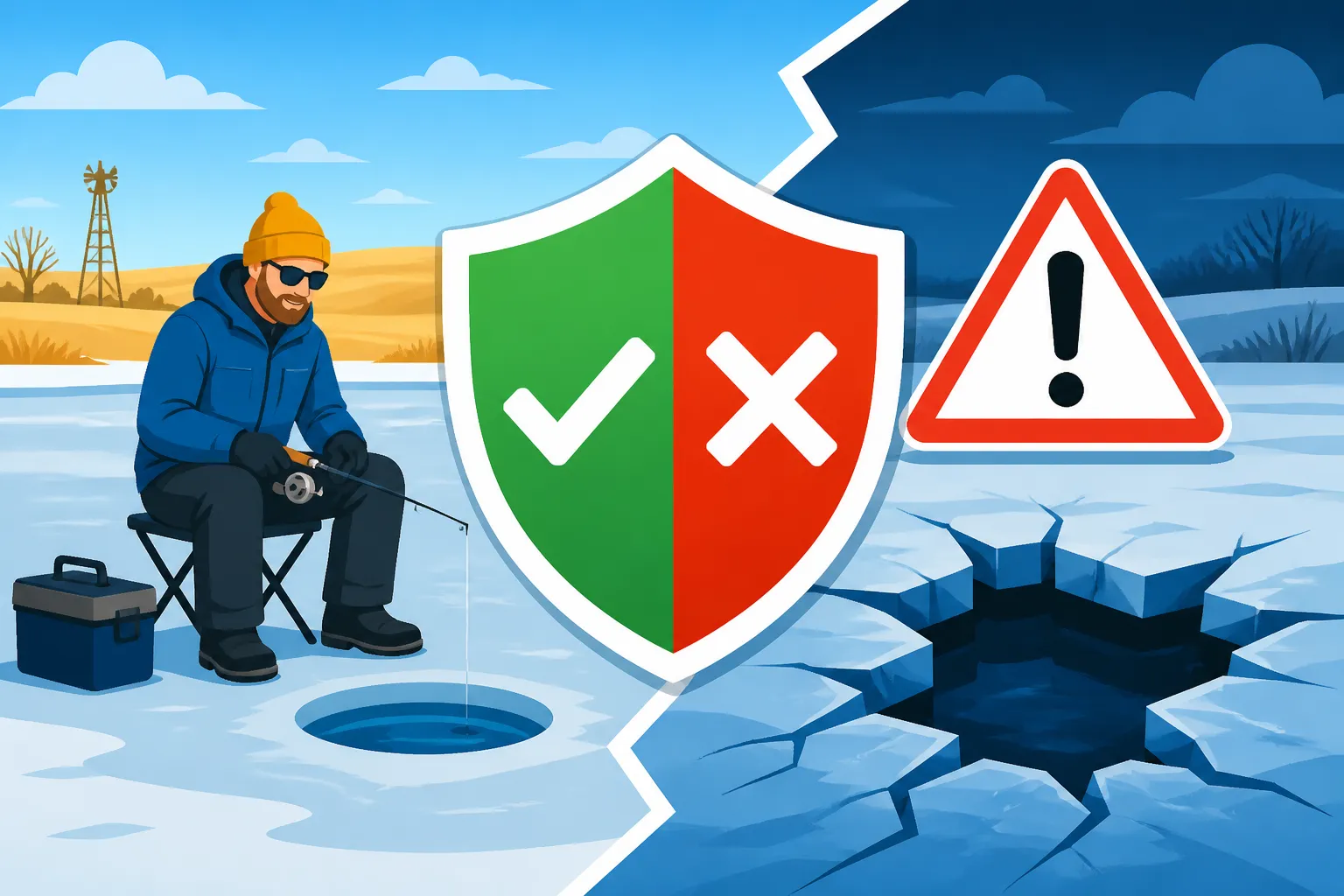
While the thought of falling through the ice is terrifying, it's a risk that can be significantly mitigated with knowledge and preparation. No ice is ever 100% safe, and conditions can change rapidly, even on the same lake within hours. Ignoring these risks is where true danger lies, not in the activity itself when approached with respect and caution. The key is understanding how ice forms, how it weakens, and what precautions you can take.
The Dynamics of Ice Formation and Weakness
Ice doesn't form uniformly, and its strength can vary wildly even within a few feet. Several factors influence how strong or weak the ice is. Clear, "black" ice formed during a prolonged cold snap with little wind or snow is generally the strongest. This ice builds slowly and densely. Conversely, ice that forms quickly, contains trapped air bubbles (giving it a milky appearance), or is layered with snow and slush, is often much weaker.
Consider a scenario where a lake in central Kansas, like Melvern Lake, has a few days of cold weather. The bays might freeze solid with decent black ice, but near the main lake channels or where springs feed in, the ice could be paper-thin due to constant water movement. River systems, especially the Kansas River, are notorious for unpredictable currents that can thin ice from below, creating dangerous pockets even when surface conditions look promising. Always remember that snow acts as an insulator, slowing down ice formation and often concealing weak spots.
Common Ice Fishing Hazards to Avoid
Beyond thin ice, there are other hazards that new and experienced ice anglers need to be aware of. Pressure ridges, where sheets of ice push against each other and buckle, create unstable areas that are best avoided. These can look like mini mountain ranges on the ice and are often weakest at their peaks and bases. Open water or areas of slush, even if shallow, can indicate underlying issues like currents or recent thaws.
Another often overlooked danger is the weight distribution of people and equipment. Piling up shanties, augers, coolers, and multiple anglers in one small area can stress the ice. This is why spreading out is not just good for fishing, but also for safety. Driving vehicles onto the ice adds a whole new layer of risk, which we'll discuss, but it amplifies the need for extensive ice thickness and a thorough understanding of the lake's topography and potential weak spots.
The Golden Rules of Ice Thickness: What's Safe and What's Not
The most critical factor in ice fishing safety is the thickness and quality of the ice. There are widely accepted guidelines for safe ice, but these are general rules, not guarantees. Always err on the side of caution.
Minimum Ice Thickness Guidelines
The Kansas Department of Wildlife, Parks and Tourism (KDWPT) and other outdoor safety organizations provide clear guidelines for how much ice is generally considered safe for various activities. However, it's paramount to understand these are for clear, solid, new ice. Slushy, milky, or "rotten" ice can be significantly weaker. For instance, 4 inches of clear ice might support a person, but 4 inches of slush ice could be dangerously unstable.
Here’s a general guideline for new, clear ice:
| Activity | Minimum Ice Thickness (Clear, New Ice) | Notes |
|---|---|---|
| Foot travel | 4 inches | This is the absolute minimum for individual foot travel. Always proceed with extreme caution and use safety gear. |
| Snowmobiles / ATVs | 5-7 inches | One snowmobile or ATV. Always maintain distance from other vehicles and check conditions frequently. Heavier utility ATVs might need more. |
| Small Group on Foot | 7.5 – 9 inches | For small groups of anglers or multiple ice fishing shelters that aren't overly heavy. Spread out to distribute weight. |
| Small Car / Light Truck | 10-12 inches | Extremely risky. Not recommended for most public lakes in Kansas. If attempting, verify thickness every few feet and know the lake's history and regulations. |
| Medium Truck | 15 inches | High-risk. Very rarely safe on Kansas public waters. |
| Heavy Truck / Equipment | 18-20+ inches | Do not attempt on natural Kansas lakes. This is typically for heavily managed, specific ice roads in very cold climates, not typical ice fishing conditions. |
It's really important to read our more in-depth guide on How Thick Does Ice Need to Be to Fish? for a full breakdown, as those extra inches make a huge difference in safety. Remember, these are minimums. More ice is always better!
How to Safely Check Ice Conditions
You can't just look at the ice and know it's safe. You must check it, continuously and thoroughly. The best way to do this is with an ice spud bar or an auger. As you walk out, tap the ice ahead of you. If it breaks with one or two taps, you're on thin ice. If it takes several solid swings, it's likely thicker. You should be drilling test holes every 10-20 feet as you venture out, especially if you're exploring new areas or conditions have changed.
Don't just check near the shore. Ice near the shore can be stronger due to shallower water, but further out, currents or deeper water can create thinner spots. Pay close attention to the color of the ice: clear or blue ice is generally stronger, while white or opaque ice with trapped air bubbles is weaker. Slushy areas, cracks, or any discoloration should be treated as potential danger zones. And always, always, always communicate with fellow anglers you encounter; they might have just checked ice conditions further out.
Essential Gear for Safe Ice Fishing Adventures
Being prepared with the right safety gear isn't just a good idea; it could literally save your life. Think of it as your insurance policy for enjoying the hard water without unnecessary stress.
Personal Safety Equipment You Can't Afford to Skip
First and foremost, ice picks are non-negotiable. These are two pointed handles connected by a cord that hangs around your neck. If you go through, you can use them to pull yourself back onto the ice. They're inexpensive and can be found easily, even on Amazon. Another crucial item is a whistle, attached to your life vest or ice picks, to signal for help if you're in distress.
Next up, a personal flotation device (PFD) or a float suit. A PFD, like a life vest, provides buoyancy and will keep your head above water, conserving critical energy in icy water. Many ice anglers opt for specialized float suits, which are insulated for warmth and designed with built-in flotation. They offer an incredible peace of mind and are well worth the investment if you plan to do a lot of ice fishing. If you don't have a float suit, wear layers of warm clothing that can shed water somewhat, and keep a dry change of clothes in a waterproof bag on shore. It's also a good idea to check out our Kansas Life Jacket and Boating Safety Guide to understand why these are so vital, even when you're not on a boat.
Tools for Assessing Ice and Navigating Safely
An ice spud bar is your best friend for checking ice thickness as you move. It’s a heavy metal bar with a chisel-like point that allows you to test the ice ahead of you. It's much safer than blindly walking onto unknown ice. You'll also need a good ice auger to drill fishing holes and, more importantly, test holes. Whether you prefer a hand auger, a propane auger, or a battery-powered one, make sure it's sharp and efficient for quickly assessing ice depth. For tips on choosing the right one, check out our guide on the Best Ice Fishing Auger for Kansas Lakes.
Don't forget a rope or throw bag. A simple coil of rope (at least 50 feet) can be invaluable for assisting someone who has fallen through, allowing them to grab on while you pull them from a safe distance. Keep it easily accessible, not buried in your tackle box. Finally, a small shovel or scoop can be handy for clearing snow from potential ice testing spots, helping you see the ice quality more clearly.
What to Do When the Unthinkable Happens: Ice Safety Emergency Plans
While we always aim for prevention, it's essential to know what to do if an ice emergency occurs. Panic is the enemy in such situations; a clear head and practiced response can make all the difference.
Self-Rescue Strategies
If you fall through the ice, your immediate reaction might be shock and panic. Fight that instinct. The first thing to do is to try and remain calm, controlling your breathing. Turn towards the direction you came from, as that ice was strong enough to hold you moments before. Extend your arms onto the ice, using your ice picks if you have them, and kick your feet vigorously, trying to propel yourself horizontally onto the ice. You're trying to "swim" or kick out onto the surface like a seal.
Once you get some purchase, roll away from the hole to distribute your weight, rather than standing up. Crawl on your belly or hands and knees back to thicker ice. Once you're out, immediately seek warmth. Get to a vehicle, a shelter (like those discussed in Best Ice Fishing Shelter for Kansas), or head back to shore. Change into dry clothes if you have them, and warm up with hot liquids. Hypothermia sets in quickly in icy water.
Assisting Others Safely
Seeing someone fall through the ice is terrifying, but rushing to their aid without thinking can put both of you in danger. Remember the "Reach, Throw, Go" mantra:
- Reach: If the person is close to shore and you can reach them with a branch, a coat, or a boat oar from a safe, stable position on solid ground, do so.
- Throw: If they are further out, do not walk out to them. Instead, throw them something buoyant they can grab onto, like a rope, a spare tire, a life preserver, or even a cooler. Lie flat on your stomach to distribute your weight as you throw, and maintain a safe distance from the edge of the weak ice.
- Go: As a last resort, if the person is too far and you have no equipment, and you are trained in ice rescue, you might consider attempting a crawl out on your stomach while pushing a ladder or long board ahead of you to distribute your weight. However, for most recreational anglers, the safest "Go" is to get help. Call 911 or emergency services immediately and direct them to the precise location. Never attempt a rescue that puts your own life at extreme risk without proper training and equipment.
It's also a good practice to always fish with a buddy. A lone angler is at a much greater disadvantage if an accident occurs. A fishing partner can monitor conditions, assist in an emergency, or call for help.
Planning Your Safe Kansas Ice Fishing Excursion
A safe day on the ice starts long before you ever step foot on a frozen lake. It involves research, preparation, and a healthy dose of respect for Mother Nature.
Researching Local Ice Conditions and Forecasts
Before you even think about heading out, do your homework. Check local ice reports from bait shops, online fishing forums, and the KDWPT website. Conditions can vary significantly from one lake to another, and even within different areas of the same lake. For instance, the ice on a smaller state fishing lake might be solid, while a large reservoir like Milford Lake could still have vast areas of open water or dangerously thin ice, especially around river inlets.
Pay close attention to the weather forecast. Rapid temperature fluctuations, extended warm spells, and heavy snowfall can all compromise ice safety. Snowfall can insulate the ice, preventing it from thickening, and can also conceal dangerous slush pockets or open water. Wind can create currents under the ice, further weakening it. For more insights into how weather affects fishing, you might want to read about Weather Patterns and Kansas Fishing Success.
Dressing for Success and Survival
Layers are your best friend for ice fishing. Start with a moisture-wicking base layer, add insulating middle layers (fleece, down), and top it off with a waterproof and windproof outer shell, ideally a float suit or a warm, waterproof bib and jacket. Don't forget a warm hat, gloves, and waterproof, insulated boots. Frostbite is a real concern in Kansas winters, especially on windy days.
Bring extra layers and a complete change of dry clothes, stored in a waterproof bag or container, just in case. It's easy to get wet, whether from slush, melting ice, or an accidental dip. Staying warm and dry is paramount to enjoying your time and staying safe.
Following Kansas Regulations and Best Practices
Always be aware of the Ice Fishing Rules on Kansas Lakes and general Kansas Fishing Regulations Explained. These rules are in place not just for conservation, but often for safety too. For instance, knowing the Kansas Fishing Seasons and Limits will keep you out of trouble, and understanding any local restrictions on ice fishing shelters or vehicle access can prevent fines or dangerous situations.
Beyond regulations, establishing personal best practices is key. Always tell someone where you are going and when you expect to return. Carry a fully charged cell phone in a waterproof case, but don't rely solely on it, as cold can drain batteries quickly and signal can be spotty. When moving around, spread out from your fishing partners to distribute weight. Avoid areas that look suspicious – large cracks, pressure ridges, or unusual dark spots. Ice fishing is a fantastic winter activity, but like any outdoor pursuit, it demands respect and preparation. By understanding the risks, having the right gear, and knowing how to react in an emergency, you can enjoy many safe and fruitful days out on the frozen lakes of Kansas.
Disclaimer
The information provided in this guide is for general informational purposes only and does not constitute professional advice. Ice conditions are highly unpredictable and can change rapidly. Always exercise extreme caution, use appropriate safety gear, and assess ice conditions carefully before venturing onto frozen water. Fishing on ice carries inherent risks, and individual responsibility for safety is paramount.