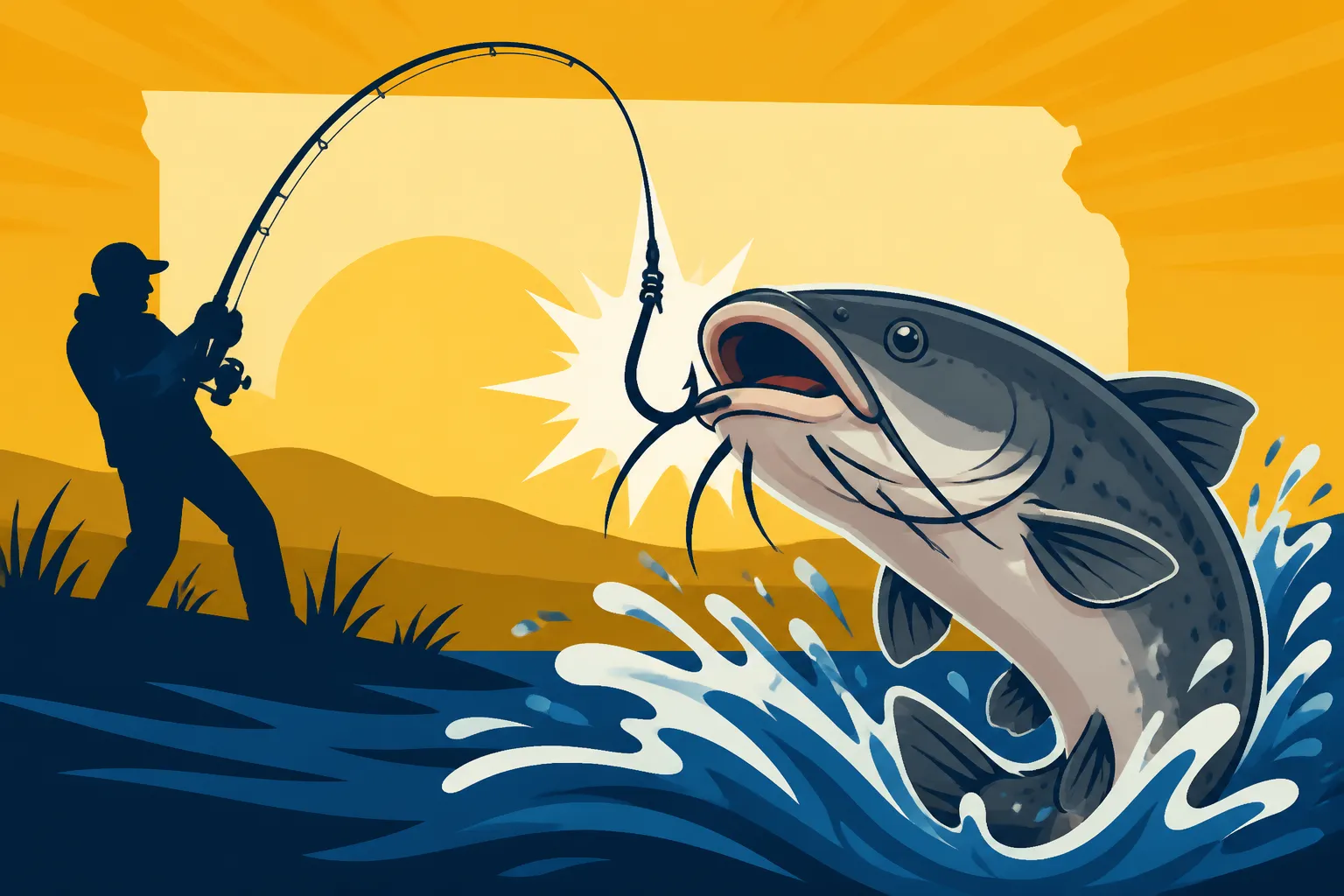
How to Set the Hook on a Kansas Catfish
There's nothing quite like the surge of adrenaline when you feel that tell-tale tug on your line, only to reel in… nothing. If you've spent any time fishing for catfish in Kansas, you know this feeling all too well. It’s frustrating, demoralizing, and can make you second-guess everything you thought you knew about angling. This comprehensive guide is all about turning those missed opportunities into solid hook-sets, helping you truly understand how to effectively set the hook on a Kansas catfish and bring more whiskered giants to the bank or boat.
Understanding the Catfish Bite in Kansas
Before you can even think about setting the hook, you have to understand what a catfish bite actually feels like. Catfish aren't always subtle, but they're not always a jarring strike either. Their feeding habits, the type of bait you're using, and even the specific species of catfish can all influence how that bite translates to your rod. Ignoring these nuances is a surefire way to miss out on fish.
The Subtle Nibble vs. the Aggressive Strike: What to Expect
Kansas is home to a fantastic variety of catfish, primarily channel, blue, and flathead cats, and each can have a slightly different "table manner." Understanding these can greatly improve your timing.
Channel catfish are often the most common catch, and their bite can range widely. Sometimes, especially with smaller channels, you'll feel a rapid series of light taps – a classic "peck, peck, peck" as they mouth the bait before committing. Other times, a larger channel might just bend your rod tip slowly and steadily, like a current pulling it down, as it leisurely inhales your offering. If you're using live bait, you might feel the baitfish get nervous just before the strike, followed by a more deliberate pull.
Blue catfish, particularly the larger ones found in reservoirs like Milford Lake, often have a more aggressive take. You might feel a solid thump, followed by a steady, heavy pull. They're big fish with big mouths, and they tend to suck in bait with conviction. However, sometimes even a big blue will just slowly load the rod, especially if they’re just nudging the bait or if the current is strong.
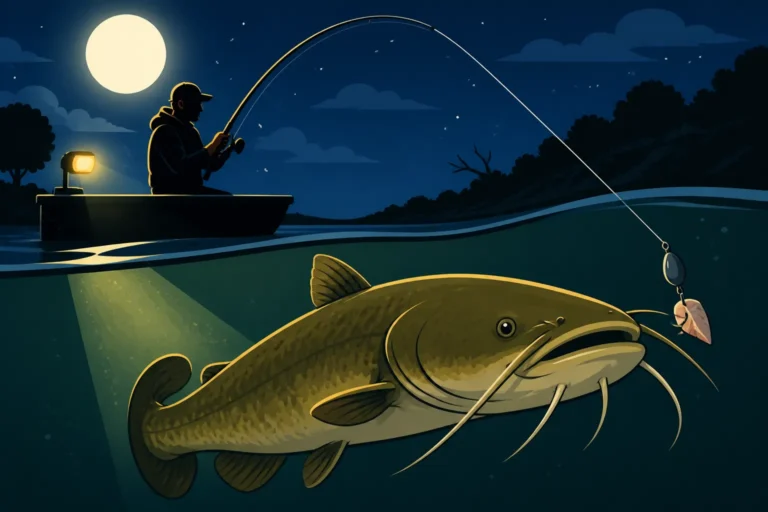
Flathead catfish, the ambush predators of the cat world, often deliver a distinct, powerful thud as they engulf a live baitfish. They don't mess around. When a flathead hits, it’s usually a strong, singular pull that immediately moves off. You'll know it's a flathead because they often try to swim straight into heavy cover once hooked. It's crucial to react quickly but not too hastily with these powerful fish.
It’s easy to get excited and yank the rod at the first twitch, but that's often where anglers go wrong. Patience is a virtue, especially when the bite feels tentative. You want to give the fish a moment to fully take the bait into its mouth.
Reading Your Rod Tip and Line: Crucial Indicators
Your rod and line are your direct connection to the fish, and they’ll tell you everything you need to know if you pay attention.
For bank anglers, especially those using rod holders, the rod tip is your primary indicator. A slight twitch, a gentle bob, or a slow bend are all signals. If the rod tip consistently dips and holds, or continues to bend steadily, it's a strong indication that a fish has the bait. If the rod suddenly yanks down violently, often accompanied by the sound of your reel's drag screaming, that's the unmistakable sign of an aggressive take, likely from a bigger fish. Watching for repeated, confident pulls is key.
If you’re holding the rod, you’ll feel these movements directly in your hands. Even the slightest vibration or shift in pressure can signal a fish investigating your bait. If you feel a subtle bite, try letting the fish take a little more line. Free-spooling for a count of three or five seconds can give the fish confidence to fully swallow the bait, especially with finicky eaters.
Your fishing line also offers vital clues. If you see slack suddenly disappear, or if your line starts moving purposefully sideways, it often means a fish has picked up your bait and is swimming off with it. Conversely, if your line goes completely slack when it was previously taut, it could mean a fish has moved towards you after taking the bait – requiring a quick reel-in to take up slack before setting the hook. This is particularly common when using heavier weights or bottom-fishing techniques. Pay close attention to these visual cues, as they can sometimes be more reliable than what you feel, especially on windy days or when fishing in current. For deeper dives into setting up your tackle, check out our guide on Best Rod and Reel Combo for Catfish.
Here’s a quick guide to interpreting bites:
| Bite Type | Rod Tip Reaction | Line Reaction | Ideal Hook Set Action |
|---|---|---|---|
| Subtle Nibble/Tap | Slight, repeated twitches | Slight slack or quiver | Wait for sustained pressure or steady pull. |
| Slow Pull/Bend | Steady, slow bend downwards | Line slowly tightens | Slowly lift rod to confirm weight, then set firmly. |
| Aggressive Thump/Run | Sudden, sharp yank downwards | Line rips off spool | Immediately lift rod high with a powerful sweep. |
| Line Slackens | Rod tip straightens | Line goes suddenly limp | Reel down quickly to take up slack, then set hook. |
| Baitfish Agitation | Minor twitches | Erratic, small movements | Anticipate an aggressive strike, prepare for big pull. |
The Art of the Hook Set: Step-by-Step
Once you've identified a definitive bite, the next critical step is the hook set itself. This isn't just a random yank; it's a deliberate, powerful motion designed to drive the hook point firmly into the fish's mouth. The technique can vary slightly depending on the type of hook you're using.
Different Techniques for Different Rigs
The type of hook you're using dictates a lot about how you should set it. This is a common point of confusion for new anglers, and getting it right can drastically improve your catch rate.
Using J-Hooks (Kahle, Octopus, Treble): When you're fishing with traditional J-hooks, whether they're Kahle hooks for cut bait, Octopus hooks for worms, or even treble hooks on certain lures, a strong, sweeping hook set is generally required. Once you feel a confident bite—meaning the fish is definitely moving off with the bait and loading your rod—you need to react. Point your rod tip directly at the fish, quickly reel down to remove any slack in the line, and then, in one fluid motion, sweep the rod upwards and slightly to the side with force. Imagine driving a nail with a hammer, but with your rod. Your body should be engaged, using your core and shoulders, not just your wrists. The aim is to drive that point home. It's often better to err on the side of a more powerful hook set than a weak one, as a weak set can lead to the hook simply pulling out or tearing a shallow hold.
Using Circle Hooks: Circle hooks are a game-changer for catfish anglers, especially those practicing catch and release, because they are designed to hook the fish in the corner of the mouth, causing less damage. The key difference with circle hooks is that you do not need to perform a traditional, hard hook set. In fact, doing so is often counterproductive and can pull the hook right out of the fish's mouth.
With a circle hook, when you feel the bite and the rod loads up, simply let the fish take the bait and swim off. Allow the line to come tight. Then, instead of yanking, just slowly and steadily sweep the rod forward or simply begin reeling. The design of the circle hook allows it to rotate and catch in the corner of the fish's mouth as the line tightens. It's a much more passive, yet incredibly effective, method. Many anglers miss fish on circle hooks because they still try to set them like J-hooks. Resist the urge! Just let the fish do the work. You can find a great selection of Best Circle Hooks for Catfish on Amazon, which can significantly improve your hook-up ratio.
The Importance of the Right Gear for a Solid Hook Set
Having the right equipment isn't just about comfort; it's about functionality, especially when it comes to translating that powerful hook set into a secure connection with the fish.
Rod Action and Power: For catfish, you generally want a rod with a medium-heavy to heavy power and a fast or moderate-fast action. The "power" refers to how much weight the rod can handle, and catfish often require substantial power to turn their heads and control them. The "action" refers to where the rod bends. A fast action rod bends mostly in the tip, providing sensitivity to detect bites and enough backbone for a quick, powerful hook set. A moderate-fast action offers a bit more flex through the mid-section, which can be forgiving and help absorb the shock of a big catfish thrashing, while still having plenty of power. If your rod is too light or too "noodly," your hook set will be weak, regardless of how much force you put into it. For a deep dive into suitable rods, our guide on Best Rod and Reel Combo for Catfish offers great insights.
Line Strength and Type: Your fishing line is the ultimate link. For catfish, you'll want strong line that can withstand their powerful runs and the abrasive environments they often inhabit. Monofilament line has some stretch, which can be forgiving and act as a shock absorber for hard strikes, but too much stretch can hinder a strong hook set. Braided line, on the other hand, has virtually no stretch, offering incredible sensitivity and direct power transfer for hook sets. Many anglers use braided line as their main line for this reason, often with a monofilament or fluorocarbon leader to provide a bit of shock absorption or invisibility. The specific Best Line Weight for Kansas Catfish will depend on the size of fish you're targeting and the water you're fishing. Heavier line is crucial when targeting trophy blues or flatheads.
Sharp Hooks: This might seem obvious, but it's often overlooked. A dull hook simply won't penetrate. Even new hooks can sometimes benefit from a quick sharpen. Carry a small hook file or sharpener with you and give your hooks a quick touch-up if they feel even slightly dull. A sharp hook means less force is required to set it, leading to more successful hook-ups and fewer lost fish. Always double-check your hook points, especially after a few casts or if you've snagged bottom.
Common Hook Setting Mistakes and How to Avoid Them
Even seasoned anglers sometimes fall victim to common hook-setting errors. Recognizing these pitfalls is the first step toward correcting them and improving your catch rate. It's all about finding that sweet spot between eagerness and patience.
The Premature Hook Set: Patience is Key
This is probably the most common mistake in catfish angling. You feel a bump, your heart races, and you instinctively yank the rod as if swatting a fly. What often happens? You either pull the bait right out of the fish's mouth before it's fully taken it, or you simply set the hook on a fish that was just mouthing the bait, resulting in a swing and a miss. The frustration is real, and it happens to everyone.
To avoid the premature hook set, practice patience. As we discussed earlier, really read the bite. Is it a tentative tap, or a confident, sustained pull? With J-hooks, wait until the rod is truly bent over, and the fish is moving purposefully. Don't set on the first "tap." With circle hooks, as mentioned, there's no need for a hard set at all—just let the rod load up naturally.
One trick many successful catfish anglers use is to count in their head. When they feel the first positive sign of a bite, they might count "one Mississippi, two Mississippi" before reeling down and setting the hook (for J-hooks). This short delay often gives the fish enough time to fully commit to the bait. This patience is especially important when you're using larger baits for bigger fish; they need more time to get the whole thing in their mouth. For more on angling strategies, check out our Kansas Catfish Fishing Techniques guide.
The Weak Hook Set: Putting Your Back into It
On the flip side of the coin is the weak hook set. This usually happens for a few reasons: the angler is too tentative, they're using gear that's too light for the job, or they simply aren't putting enough power into the motion. A weak hook set often results in the hook barely catching the fish, leading to it pulling free during the fight, or not penetrating at all. Catfish have tough, bony mouths, and it takes real force to drive a hook deep enough for a secure hold.
To overcome a weak hook set, remember to use your entire body, not just your arms. When setting a J-hook, brace your feet, keep a slight bend in your knees, and use a strong, upward and sweeping motion. You should feel your core engage. It's not a delicate wrist flick; it's a powerful, controlled sweep of the rod. Imagine the tip of your rod traveling a good 3-4 feet during the hook set. Ensure you've reeled down all the slack before you execute the set, so all your power is transferred directly to the hook point.
If you find yourself consistently making weak hook sets, it might be worth evaluating your gear. Is your rod too flexible? Is your line too stretchy? Are your hooks sharp enough? Sometimes, upgrading one component, like switching to a non-stretch braided line (which you can easily find on Amazon), can make a huge difference in the effectiveness of your hook set by providing a more direct connection. The goal is to feel the power transfer directly through the line and into the hook, ensuring a solid, unyielding connection with the fish.
After the Hook Set: Fighting Your Kansas Catfish
Congratulations, you've felt the bite, set the hook, and now you're connected to a powerful Kansas catfish! But the job isn't over yet. The fight can be just as crucial as the hook set in determining whether you land the fish or lose it. Catfish are notoriously strong fighters, often using their broad tails and sheer mass to pull against the line.
Keeping Constant Pressure
Once that hook is set, the most important thing you can do is maintain constant, steady pressure on the fish. Any slack in the line can give the fish an opportunity to shake the hook free, especially if it's not deeply embedded. Think of it like a tug-of-war where your line must always be taut.
When the fish pulls, let your rod absorb the shock and your drag do its job by slowly giving line. Do not try to muscle the fish in by cranking down your drag completely or by reeling against a strong run. This can break your line, pull the hook, or even snap your rod. Instead, when the fish runs, hold the rod high, let the drag sing, and patiently wait for the fish to tire itself out. As soon as the fish stops running, begin reeling again, taking up any slack and regaining control. This continuous dance of yielding to the fish's runs and then recovering line is how you bring them in effectively.
You want to keep the rod tip up, creating a natural arc in your rod. This arc acts as a shock absorber. If you point your rod directly at the fish, you lose that shock absorption, putting all the stress directly on your line and hook. Always keep your rod bent and your line tight. For anglers targeting larger specimens, mastering the art of the fight is critical. You might even want to consider a Best Net for Landing Kansas Catfish to safely secure those bigger fish.
Playing the Fish and Landing It Safely
"Playing" the fish means guiding it, tiring it out, and slowly bringing it closer to you. It's a strategic battle of wills. Catfish, especially flatheads and big blues, will often make strong, deep runs. They might try to dive into submerged brush, logjams, or rocks—anything that can break your line. Your job is to steer them away from these hazards. Use the power of your rod to subtly guide their head away from cover during their runs.
As the fish tires and gets closer to the bank or boat, you'll feel its runs become shorter and weaker. At this point, you can start to bring it in more steadily. Be prepared for a final burst of energy near the surface or at the edge of the bank. Many fish are lost right at this critical moment! When the fish is finally close enough, be ready to net it. If you're bank fishing, slide the fish onto a clear, flat spot on the bank, or use a net. If you're on a boat, a large net is often the safest and most humane way to land a big catfish. Remember, catfish can be quite slippery and powerful, even out of the water. Handle them with care. If you plan to release the fish, do so quickly and gently. For those seeking more information on the various Kansas Catfish Species Guide, understanding their typical behavior can further aid in the fight. Sometimes, having specialized tools, like heavy-duty gloves or a fish gripper (available on Amazon), can make landing and handling these strong fish much easier and safer for both you and the fish.
Disclaimer
This article is for general informational purposes only and does not constitute professional advice. Laws, prices and regulations vary by location and change over time. Consult a qualified professional for guidance on your specific situation.