Best Net for Landing Kansas Catfish
There's nothing quite like the surge of adrenaline when a big Kansas catfish hits your line. You battle it out, reel it in close, and then… the panic sets in. How do you actually get this slippery, powerful beast into the boat or onto the bank without it getting away? Many anglers have felt that heartbreaking snap of the line or the frustrating splash as a hard-fought fish throws the hook right at the final moment, all because they didn't have the right landing net. This guide is here to ensure that doesn't happen to you, walking you through everything you need to know to choose the best net for safely landing those prized Kansas catfish.
The Catfish Landing Net Dilemma: Why the Right Net Matters
Let's face it, landing a feisty catfish isn't like scooping a bluegill. These fish have serious power, sharp fins, and a knack for finding any weakness in your gear the moment they see daylight. Without the right net, you're not just risking losing your catch; you're risking injury to yourself or the fish, and nobody wants that.
The Frustration of Losing a Monster Cat
Picture this: you've been soaking cut bait all evening on the Kansas River, patiently waiting. Suddenly, your rod doubles over, and the drag starts screaming. After a heart-pounding battle, you finally guide what looks like a genuine trophy blue cat alongside your boat. Your buddy grabs the flimsy net he usually uses for crappie, and as he tries to scoop, the hoop bends, the mesh tangles around a fin, and with one violent head shake, the fish throws the hook and disappears back into the murky depths. Sound familiar? It’s a gut-wrenching experience that seasoned anglers know all too well. Or maybe you're bank fishing Kansas River Catfish Spots and finally get a huge flathead to shore, only to realize your net's handle is too short, and you can't reach the fish without getting uncomfortably close to its powerful tail. The right net turns that potential heartbreak into a triumphant photo opportunity.
Beyond Just a "Net": Understanding Catfish Needs
A landing net for catfish isn't just a generic piece of equipment; it's a critical tool designed to handle strong, often large, and sometimes ornery fish. Catfish, especially big channel cats, blue cats, and flatheads, have specific characteristics that dictate what kind of net you need. They have tough, slimy skin, sharp pectoral and dorsal fins, and incredible strength. A net that's too small won't contain them, a mesh that's too fine will tangle their fins and can strip off their protective slime coat, and a weak handle will fold under pressure. Thinking strategically about your net means considering the fish's welfare, your safety, and the success of your fishing trip. It’s an investment that pays off in landed fish and fewer missed opportunities.
Key Features to Look for in a Catfish Landing Net
When you're out there on Milford Lake Catfish Fishing or any other productive Kansas waterway, you need gear that can stand up to the challenge. A landing net for catfish has several crucial components, each playing a vital role in its effectiveness and durability.
Handle Length and Material for Reach and Leverage
The handle of your landing net is its backbone. For catfish, you'll want something robust and long enough to reach your target comfortably, whether you're in a boat or on shore.
- Fixed vs. Extendable Handles: Fixed handles offer maximum strength and rigidity, often preferred by boat anglers for quick, decisive scoops. They're typically made of heavy-duty aluminum or fiberglass. Extendable handles, on the other hand, provide versatility. They're fantastic for bank fishing where varying water levels or distances from shore require extra reach. Imagine you're fishing a steep bank on Tuttle Creek Lake; an extendable handle allows you to safely reach a fish that's a few feet below you. Just make sure the extension mechanism is solid and doesn't wiggle or collapse under weight. Many anglers prefer nets with a strong, push-button or twist-lock extension system to prevent unwanted retraction when a big fish hits the net.
- Handle Material and Grip: Aluminum is a common choice for its balance of strength and light weight, but fiberglass or composite materials can offer even more rigidity and less flex, especially in longer handles. A good grip is paramount. Look for handles with textured rubber or EVA foam grips. This is especially important when your hands are wet, slimy from handling bait, or cold from early morning fishing. A secure grip prevents the net from slipping out of your hands right when you need it most. When a huge blue cat starts thrashing, you'll be thankful for that secure hold.
Hoop Size and Shape for a Clean Scoop
The hoop is the frame that defines the net's opening, and for catfish, size definitely matters. A small hoop is an invitation for a big fish to escape.
- Generous Hoop Dimensions: Catfish have broad bodies and can get surprisingly bulky. You need a hoop that's wide enough to easily encompass the fish without forcing it. For average channel cats (say, 5-15 pounds), a hoop of 20-24 inches across might suffice. But for larger blue cats or flatheads, especially those 20 pounds and up, you'll want a hoop that's at least 30 inches, or even 36-40 inches, in diameter or length. This generous size ensures you can scoop the fish headfirst or tail-first in one swift motion, minimizing stress on the fish and reducing the chance of it flopping out. Trying to squeeze a 40-pound flathead into a 24-inch net is a recipe for disaster.
- Hoop Shape (Round vs. Teardrop/Rectangular): Round hoops are common and work well for many species. However, many catfish anglers prefer teardrop or rectangular hoops. These shapes often provide a wider entry point at the mouth of the net while tapering towards the back, making it easier to guide a long, powerful fish like a flathead into the net. The wider opening at the front can be a real advantage when you have a limited window to net a surging fish. They also tend to distribute the load of a heavy fish more effectively once it's in the net.
Netting Material and Mesh Size for Fish Safety and Durability
The actual netting is where the fish will rest, and its material and mesh size are critical for both the fish's health and the net's longevity.
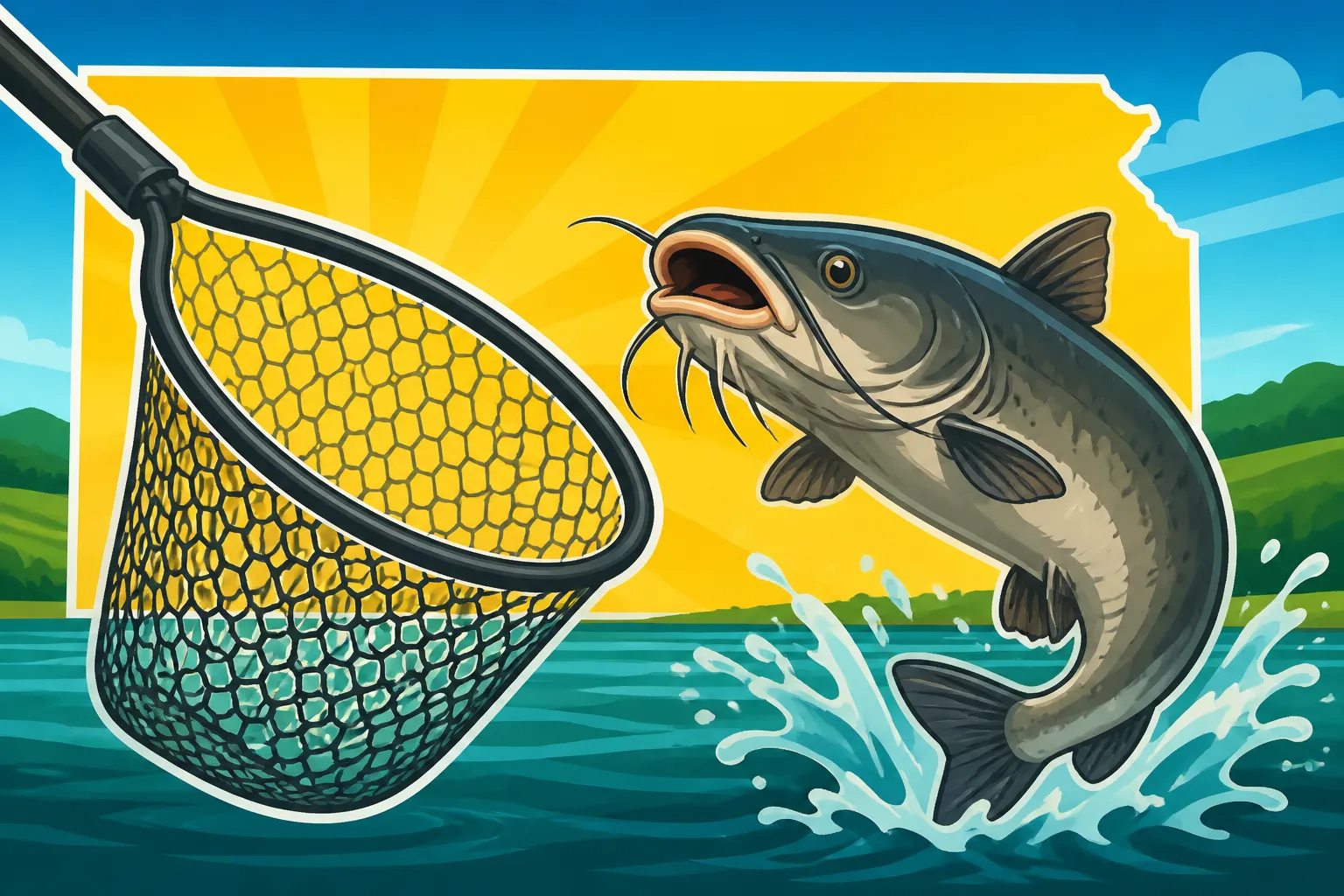
- Rubberized or Knotless Mesh: This is a non-negotiable feature for serious catfish anglers, especially those who practice catch and release. Traditional knotted nylon mesh can strip off the fish's protective slime coat, leading to potential infections. It can also cause severe fin and gill damage, and hooks get incredibly tangled in it, making release a nightmare. Rubberized or knotless nylon mesh, on the other hand, is much gentler on the fish. It slides over their scales and fins with minimal abrasion, preserving their slime coat and reducing injury. Plus, hooks rarely snag in rubberized mesh, making for quick and easy unhooking and release. This is particularly important for species like channel catfish, which are often caught for sport and then released.
- Mesh Size: While rubberized is preferred, the size of the mesh squares is also important. Smaller mesh might seem safer, but it creates more drag in the water, making it harder to scoop a fast-moving fish. It also holds more water, making the net heavier. For catfish, a medium to large mesh (1.5 to 2.5 inches) is ideal. It's small enough to securely hold the fish without allowing fins to poke through excessively, but large enough to minimize drag and reduce water retention. Some catfish-specific nets feature a finer mesh at the very bottom of the bag to support the fish's weight more evenly, transitioning to a larger mesh on the sides.
- Net Depth: Catfish are long and powerful. A shallow net bag allows them to easily flip out before you can secure them. Look for a net with a deep bag – at least 24-36 inches, or even deeper for trophy nets. This depth ensures that once the fish is in the net, it’s truly contained, preventing those last-ditch escape attempts. A deep bag also allows the fish to remain submerged in the water while you prepare for handling or release, reducing stress.
Types of Landing Nets Best Suited for Kansas Catfish
Just like there are different ways to catch catfish, there are different nets designed for various fishing scenarios. Choosing the right type depends on whether you're fishing from a boat, the bank, or specifically targeting truly enormous fish.
Boat Nets for Maneuverability and Power
Fishing from a boat, especially on vast Kansas reservoirs like Milford Lake Fishing Guide or Cheney, offers unique advantages but also demands a specific type of net.
- Short, Strong Handles: When you're in a boat, you don't need a super long handle for reach, but you do need one that's exceptionally strong and easy to maneuver. A handle around 4-6 feet (fixed or short extendable) is often ideal. This length allows you to get a good two-handed grip for leverage when scooping a heavy fish. The shorter length also makes it easier to handle in tight boat quarters and store away when not in use. You want to be able to net the fish quickly and decisively alongside your boat, not struggle with an unwieldy, overly long handle.
- Large, Robust Hoops: Boat nets for catfish typically feature large, strong hoops. They need to be capable of handling not just the weight of the fish, but also the shock of a thrashing fish hitting the net. Look for hoops made from thick, reinforced aluminum or even stainless steel if you're targeting truly giant catfish. The larger hoop allows for a quicker, more confident scoop, which is crucial when a powerful fish is making its last surges at the boat.
- Quick Deployment and Storage: In a fast-paced boat fishing scenario, you need a net that can be deployed instantly. Some boat nets feature folding hoops or retractable handles that make storage compact but can be opened and locked into position in seconds. This is a great feature for keeping your deck clear while running to your next spot, then having the net ready the moment you hook up. Many anglers keep their net stowed along the gunwale, within arm's reach for those unexpected trophy encounters. Bass Pro Shops often carries a wide selection of robust boat nets perfect for Kansas waters.
Bank Fishing Nets for Reach and Portability
Bank fishing for catfish is incredibly popular in Kansas, from community lakes to riverbanks. This style of fishing requires a net that emphasizes reach and ease of transport.
- Long, Extendable Handles: This is the hallmark of a good bank fishing net for catfish. You'll often be fishing from varying heights above the water, or needing to reach out over vegetation. An extendable handle, ideally one that can reach 6-10 feet or more, is essential. The ability to extend and retract the handle means you can adapt to different situations, from a gentle slope to a steep drop-off. When fishing for Kansas Channel Catfish Daily Limit from a sandy bank, a medium extension might be perfect, but on a rocky bluff, you'll appreciate the full reach.
- Lightweight yet Durable Construction: While length is important, you don't want a net that's excessively heavy. You'll be carrying it along the bank, so a balance of lightweight materials (like aluminum or composite) and robust construction is key. The hoop should still be substantial enough to handle a good-sized catfish, but the overall design should consider portability.
- Compact Storage: Many extendable bank nets also feature folding hoops, making them incredibly compact for transport. You can strap them to a backpack, carry them easily from your vehicle to your fishing spot, or stash them in a small trunk. When you're hiking to that secret spot on the river, a net that packs down small is a lifesaver. Just make sure the folding mechanism is sturdy and doesn't rattle or feel flimsy when deployed.
Specialized Nets for Trophy Catfish
For those anglers dedicated to chasing the truly gargantuan blue cats and flatheads that Kansas rivers and reservoirs can produce, a standard net simply won't cut it.
- Extra-Large, Heavy-Duty Construction: We're talking about nets designed for fish that can weigh well over 50 pounds, or even 100 pounds for Kansas State Record Catfish contenders. These nets feature massive hoops (40 inches or larger), ultra-deep bags (40-60 inches deep), and handles that are thick, rigid, and often made of heavy-gauge aluminum or even solid wood for ultimate strength. Everything about a trophy net is scaled up to handle immense weight and power.
- Super Strong Mesh and Netting: The netting material in trophy nets is typically the most robust rubberized or heavy-duty knotless nylon available, designed to withstand the thrashing of a truly massive fish without tearing. The mesh is usually quite large to reduce drag and prevent tangles with the fish's thick fins.
- Designed for Two-Person Operation: While a skilled angler might manage a medium trophy net solo, many of the largest models are truly designed for two people to operate effectively. One person controls the fish with the rod, guiding it to the netter, who then scoops it with precision and power. Having a partner ensures the fish is landed safely and efficiently, reducing stress on both the fish and the anglers. If you're serious about catching Kansas Blue Catfish Facts and Limits in the trophy class, investing in a specialized net is non-negotiable.
| Net Type | Typical Handle Length | Hoop Size (Approx.) | Key Feature | Best For |
|---|---|---|---|---|
| Boat Net | 4-6 feet (fixed/short ext.) | 24-36 inches | Robust, maneuverable | Fishing from a boat, quick scoops |
| Bank Net | 6-10+ feet (extendable) | 20-30 inches | Long reach, portable | Shore fishing, varying bank heights |
| Trophy Net | 6-8+ feet (heavy-duty) | 36-50+ inches | Extreme strength, large | Giant blue/flathead catfish (>50 lbs) |
Selecting the Right Net for Your Kansas Catfish Adventures
Now that you understand the different features and types of nets, let's put it all together to help you make the best choice for your specific needs when fishing in Kansas. It's about matching your gear to your ambition.
Matching Your Net to Your Target Species and Size
The type and size of catfish you typically pursue should heavily influence your net choice.
- Channel Catfish: For the ubiquitous channel cats, especially those in the 5-15 pound range commonly found in community lakes and farm ponds, a good all-around medium-sized net will serve you well. A hoop of 24-28 inches with a decent depth and a rubberized mesh is usually plenty. If you're targeting larger channels, perhaps up to 20 pounds, sizing up slightly to a 30-inch hoop is a wise move. Consider a net like those found on Amazon for good value and variety.
- Blue Catfish: Kansas is known for its incredible blue cat fishery, particularly in big reservoirs and rivers. These fish can grow enormous. If you're chasing Kansas Blue Catfish Facts and Limits that regularly hit 20, 30, or even 50 pounds, you absolutely need a large, heavy-duty boat net with a minimum 30-inch hoop and a deep, strong bag. For the true giants, a specialized trophy net is a must. Remember, a smaller net means you'll be fighting the fish longer at the boat, increasing the chance of it throwing the hook.
- Flathead Catfish: Flatheads are powerful, broad-shouldered fish with a stubborn fight. They often live in snaggy areas, making a clean scoop even more important. Like blue cats, if you're targeting big flatheads, particularly those over 20 pounds, a large, robust boat or trophy net is essential. Their powerful, wide tails require a net with excellent hoop integrity and deep bag to prevent them from thrashing out.
Considering Your Fishing Environment and Style
Where and how you fish for catfish in Kansas also plays a huge role in your net selection.
- Boat Fishing: If you primarily fish from a boat on large reservoirs or rivers, a sturdy boat net with a shorter, strong handle is your best bet. Think about the layout of your boat. Do you have a lot of deck space, or are things a bit tighter? This will influence whether a fixed handle or a compact folding net is more practical. The ability to quickly stow the net out of the way is also a factor. Anglers often secure their net in rod holders or along the gunwale for easy access when a fish strikes. This is especially true when using Kansas Catfish Fishing Techniques like drift fishing or trolling, where a hook-up can happen at any moment.
- Bank/Shore Fishing: For bank fishing at state fishing lakes, community ponds, or river access points, the extendable handle is king. You need that extra reach to get past riprap, vegetation, or simply to reach fish from varying bank heights. Portability is also a prime concern; you don't want to haul a cumbersome net a long distance. Look for models with folding hoops that pack down well, making your trek to the water much easier.
- Kayak Fishing: Kayak fishing for catfish is growing in popularity in Kansas. For this, compact and lightweight is critical. A shorter handled boat net or a small extendable net that can be easily stowed on the kayak is ideal. The net needs to be manageable with one hand while you maintain balance and control your kayak. Rubberized, tangle-free mesh is paramount here, as untangling hooks in a small kayak can be a major headache.
- Catch and Release vs. Harvest: If you primarily practice catch and release, prioritizing a rubberized, knotless mesh net is absolutely essential for the fish's health. This minimizes damage to their slime coat and fins, ensuring they swim away healthy. If you're harvesting fish, while still good practice to use a fish-friendly net, you might consider slightly tougher (though still knotless) materials that can withstand frequent use and the occasional hook entanglement, as the fish's long-term health isn't the primary concern post-harvest.
Maintenance and Care for Longevity
A good landing net is an investment, and like any fishing gear, it will last longer and perform better with proper care.
- Rinse After Every Use: Catfish are often caught in murky water, and their slime can stick to the net. Always rinse your net thoroughly with fresh water after each fishing trip. This removes dirt, debris, fish slime, and any residual bait or scent that could attract pests or degrade the netting over time. If you fish in brackish water (though less common for catfish in Kansas, it can happen in some river stretches), a good rinse is even more vital to prevent salt buildup.
- Dry Completely: Before storing your net, ensure it's completely dry. Storing a wet net can lead to mildew, unpleasant odors, and can weaken netting materials, especially traditional nylon. Hang it in a well-ventilated area, perhaps on your porch or in the garage, until all moisture has evaporated.
- Inspect Regularly: Take a few moments to inspect your net periodically. Check the mesh for any tears, snags, or weak spots. Examine the hoop for bends or cracks. Look at the handle for any signs of corrosion, loose grips, or issues with extendable mechanisms. Addressing minor issues early can prevent a catastrophic failure when you have a trophy fish on the line. Small tears in rubberized mesh can sometimes be repaired with specialized adhesives or patches, extending the life of your net.
- Proper Storage: Store your net in a way that protects it from damage. If it's a folding net, ensure it's properly folded and secured. If it's a fixed-handle net, hang it or lay it in a spot where it won't be stepped on or have heavy objects placed on it. Protecting it from prolonged direct sunlight can also extend the life of plastic or rubberized components. You can find specialized net storage solutions at retailers like Bass Pro Shops or even simple DIY solutions for keeping your net in top shape.
By considering these factors and investing in a high-quality landing net, you'll be well-prepared to successfully land those hard-fighting Kansas catfish and enjoy many memorable fishing adventures. Whether you're targeting a modest channel cat for dinner or a giant blue cat for a photo and release, the right net makes all the difference.
Disclaimer
This article is for general informational purposes only and does not constitute professional advice. Laws, prices and regulations vary by location and change over time. Consult a qualified professional for guidance on your specific situation.