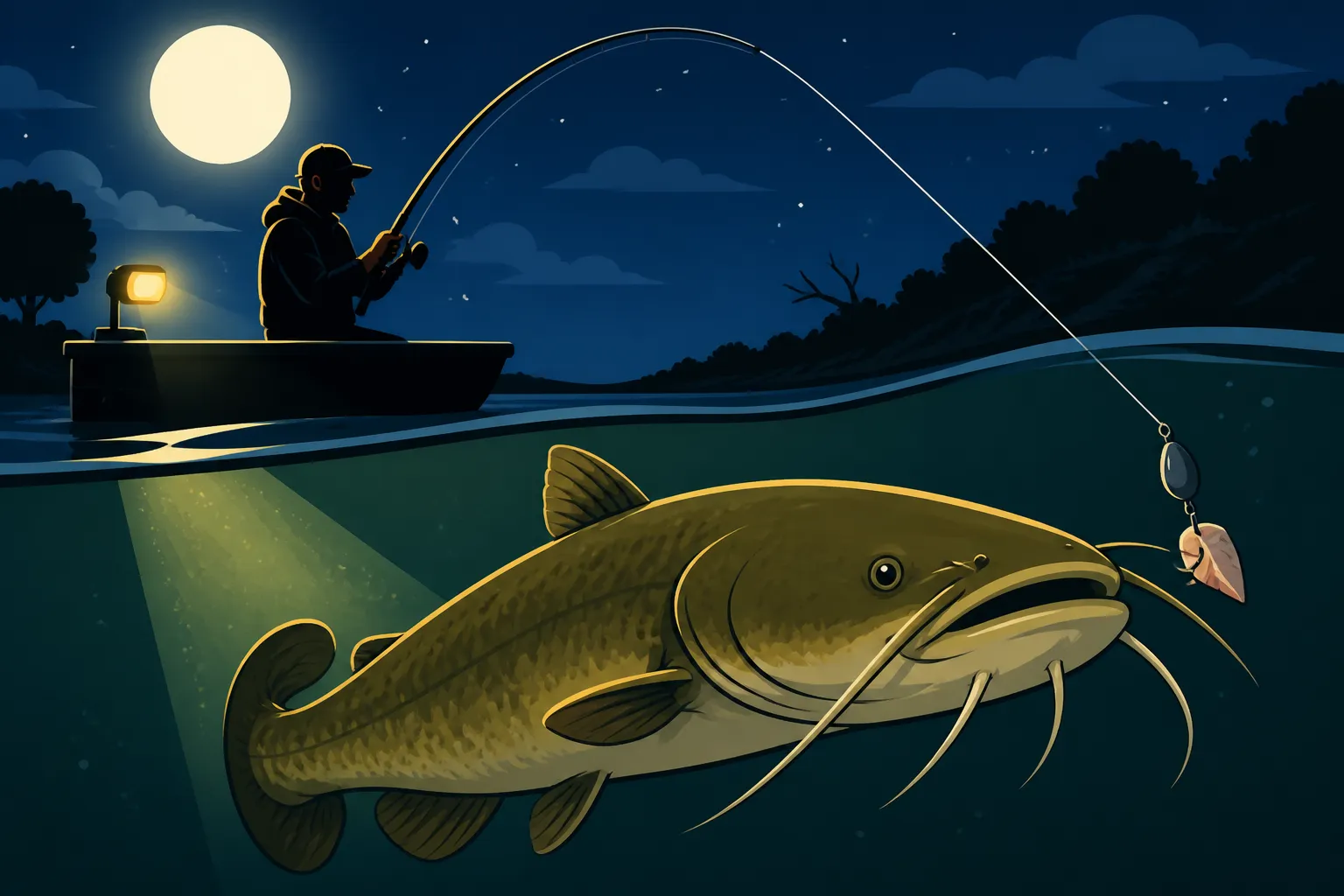
How to Catch Flathead Catfish at Night
Few experiences in Kansas fishing are as exhilarating and challenging as targeting flathead catfish after the sun dips below the horizon. These monstrous bottom-dwellers transform into active predators once darkness falls, making them an elusive yet incredibly rewarding catch for dedicated anglers. If you've ever found yourself wondering how to crack the code on these nocturnal giants, feeling frustrated by daytime skunkings, this guide is your comprehensive roadmap to successfully catching flathead catfish at night, complete with all the tips, gear, and techniques you'll need.
The Nocturnal Prowler: Why Flatheads Come Alive at Night
Flathead catfish are truly creatures of the night. While you might occasionally stumble upon one during the day, their primary hunting hours begin when the last rays of sunlight fade. Understanding this fundamental behavioral shift is key to putting more of these impressive fish in your net.
Understanding Their Nighttime Habits
Unlike their cousins, the channel and blue catfish, flatheads are predominantly ambush predators that prefer live prey. During the day, they tend to hug heavy cover – submerged timber, rock piles, deep scour holes, or dense brush – waiting for an unsuspecting meal to swim by. This daytime inactivity is a survival mechanism, as they are less vulnerable to predators and bright light conditions.
When twilight settles over a Kansas lake or river, something primal stirs in the flathead. The reduced visibility offers them a significant advantage. Their keen sense of smell and lateral line system become even more effective tools in the murky darkness, allowing them to detect vibrations and scents of baitfish with incredible precision. They'll leave the safety of their daytime lairs and actively patrol the edges of cover, current breaks, and drop-offs, searching for an easy meal. This makes nighttime the absolute prime time to intercept them.
Pinpointing Prime Nighttime Flathead Haunts
Knowing that flatheads are out hunting in the dark is one thing, but knowing where they'll be is another entirely. During the night, they don't stray far from the structure they inhabit during the day, but they will position themselves more aggressively for feeding.
Look for areas with significant current. On rivers like the Kansas River, focus on deep bends, the confluence of tributaries, and areas downstream from wing dams or large log jams where current creates eddies and slack water. These spots offer a perfect ambush point where baitfish gather. On larger reservoirs like Milford Lake or Tuttle Creek Lake, target main lake points that drop off into deep water, the edges of creek channels, and any prominent submerged timber or rock ledges. When you’re trying to figure out Kansas River Catfish Spots, remember that those deeper, snag-filled holes are often flathead magnets after dark. The key is to find complex underwater topography where a flathead can hide just out of the main current, waiting to dart out. Don't be afraid to fish tight to heavy cover, even if it means losing a few rigs; that's often exactly where the biggest flatheads are lurking.
Gearing Up for After-Dark Flathead Success
Successfully battling a large flathead in pitch-black conditions requires more than just luck; it demands specialized gear that can withstand the incredible power of these fish and make your experience safe and enjoyable. Skimping on tackle here is a surefire way to end up disappointed.
Rods, Reels, and Line: Building Your Battle Rig
When it comes to flathead fishing at night, think heavy-duty. You're not looking for finesse here; you're looking for brute strength and reliability.
- Rods: Opt for a medium-heavy to heavy action casting rod, typically 7 to 9 feet in length. Longer rods give you better casting distance, leverage for fighting big fish, and the ability to maneuver around shoreline obstacles or boat railings. Look for rods with a strong backbone that can absorb powerful runs and turn a fish away from cover. A rod designed for musky or heavy-duty saltwater applications might even be appropriate for truly monster flatheads. For a good starting point, check out our guide on the Best Rod and Reel Combo for Catfish to see some popular setups.
- Reels: A high-quality baitcasting reel with a robust drag system is non-negotiable. Look for models with a high line capacity (at least 200 yards of heavy line) and smooth, consistent drag. Brands like Abu Garcia, Penn, and Daiwa offer excellent options that can handle the stress of a big flathead.
- Line: Spool up with strong, abrasion-resistant line. Many flathead anglers prefer 50-80 pound test braided line because of its incredible strength, zero stretch, and sensitivity, which helps detect subtle bites in the dark. If you prefer monofilament, go with 30-50 pound test, ensuring it's a high-quality, low-memory line. Since you'll be fishing around heavy cover, the abrasion resistance of braided line can be a huge advantage. Using a heavy leader of 60-100 pound fluorocarbon or tough monofilament is also highly recommended, as it adds an extra layer of protection against sharp teeth and underwater snags.
The Undeniable Appeal of Live Bait
While other catfish species might fall for cut bait or stink bait, flatheads have a strong preference for live, struggling prey. This makes bait selection one of the most critical aspects of night fishing for them.
- Preferred Baitfish: Bluegill, sunfish, carp, suckers, and shad are all excellent choices. The key is to use baitfish that are legal to use in Kansas (always check the Kansas Fishing Regulations Explained for specifics on baitfish rules) and are appropriately sized. A 6-8 inch bluegill or an 8-10 inch sucker is not too big for a trophy flathead. Remember, flatheads have enormous mouths and aren't shy about swallowing a substantial meal.
- Keeping Bait Lively: A lively baitfish is a visible and attractive target for a flathead. Invest in a good aerated bait tank or bucket to keep your baitfish active and healthy throughout your night fishing session. You can find excellent options on Amazon. A struggling baitfish sends out vibrations and distress signals that flatheads can detect from a distance, even in total darkness. Hook your bait through the back, just below the dorsal fin, or through the lips to allow it to swim naturally and stay alive longer.
Essential Night Fishing Accessories for Safety and Comfort
Night fishing isn't just about the fish; it's about being prepared for the dark environment. Having the right accessories makes the experience safer, more comfortable, and ultimately more productive.
- Lighting: This is non-negotiable. A quality headlamp with a red light option (to preserve your night vision) is essential for tying knots, rigging bait, and moving around. A powerful lantern or a green submersible fishing light can illuminate your fishing area and even attract baitfish, which in turn can draw in flatheads. For more details, our Best Headlamp for Night Catfishing guide has some great recommendations. Many anglers swear by green lights that attract plankton and small baitfish, creating a miniature ecosystem around your bait.
- Rod Holders: You'll be using heavy rods and waiting patiently, so sturdy rod holders are a must. Bank fishing requires stout, metal rod holders that can be firmly driven into the ground, capable of withstanding the violent strike of a big flathead. If you're boat fishing, heavy-duty rail-mounted or flush-mount rod holders are essential.
- Landing Gear: A massive fish net or a heavy-duty lip grip/gaff is crucial for safely landing a large flathead, especially in the dark. Trying to hand-land a thrashing flathead at night is a recipe for disaster. Check out our advice on the Best Landing Net Size for Trophy Flathead Catfish to ensure you're prepared.
- Comfort and Safety: Don't forget bug spray, a comfortable chair, warm clothing (even in summer, nights can get cool), and plenty of water or other refreshments. A first-aid kit is always a good idea. If fishing from a boat, ensure all your navigation lights are working and readily accessible.
Mastering the Art of Night Fishing for Flatheads
Once you have your gear and have picked your spot, it's time to put your plan into action. Night fishing for flatheads is often a game of patience, but strategic rigging and careful attention can make all the difference.
Rigging Your Live Bait for Maximum Attraction
The right rig ensures your live bait is presented naturally and effectively, maximizing its appeal to a cruising flathead.
- The Slip-Sinker Rig (Carolina Rig): This is the most common and effective rig for flathead catfish. It consists of an egg sinker or disc sinker (often 1-4 ounces, depending on current and bait size) threaded onto your main line, followed by a bead to protect the knot, a heavy-duty swivel, and a leader (typically 12-24 inches of 60-100 lb test mono or fluorocarbon). At the end of the leader, tie on a large, strong hook. The slip sinker allows the line to run freely, so a flathead can pick up the bait and run without feeling immediate resistance from the weight.
- Hook Choice: Circle hooks are highly recommended for flathead fishing, especially when using live bait. Sizes ranging from 7/0 to 10/0 are common. Circle hooks are designed to hook fish in the corner of the mouth, minimizing gut hooks and making release easier. They also tend to be self-setting when the fish swims away with the bait, reducing the need for an aggressive hookset, which can be tricky in the dark. We delve into this more in Best Circle Hooks for Catfish.
- Baiting Up: Hook your live baitfish in a way that allows it to swim freely and stay alive. Through the back, just below the dorsal fin, is a popular choice as it keeps the bait horizontal and lively. Alternatively, hooking through both lips from the bottom up allows the bait to swim more naturally and makes it harder for a flathead to steal.
The Patient Game: Deploying and Detecting Bites
Night fishing for flatheads is rarely fast-paced. It requires patience and an understanding of how these fish typically strike.
- Strategic Placement: Cast your rig precisely to the edges of the cover, current seams, or drop-offs you identified earlier. If fishing multiple rods, spread them out to cover different depths or structural elements. Consider placing one rod shallower, near a submerged log, and another deeper, along a channel edge.
- Waiting for the Strike: This is where the patience comes in. Flatheads don't always hit like a freight train. Sometimes it's a slow, deliberate take. Other times, it might just feel like a heavy weight, or your rod tip will slowly bend over. With a slip-sinker rig and circle hooks, let the fish take the bait. Resist the urge to yank the rod immediately. Wait until the rod bends over steadily or line starts peeling off the reel.
- Detecting Bites in the Dark: This is where good lighting helps, but your other senses are crucial. Watch your rod tips for any subtle movement. Listen for the sound of line being pulled from your reel's clicker (if using one). Keep your hand near your rod so you can feel vibrations. The sensitivity of braided line can also be a significant advantage here.
The Thrill of the Fight: Landing a Nighttime Giant
Once you've got a flathead on the line, the real battle begins. These fish are incredibly powerful and will fight dirty, especially when hooked near heavy cover.
- Hookset (for J-hooks) or Lean into It (for Circle Hooks): If you're using a traditional J-hook, a solid, sweeping hookset is necessary to bury the point. With a circle hook, simply start reeling when the fish takes the bait and swims off. The hook will typically find its mark in the corner of the mouth as tension increases.
- Turn and Burn: Flatheads will immediately try to dive into the nearest snag or heavy cover. Your heavy-duty rod and strong line are crucial here. Apply maximum pressure, lean into the fish, and try to turn its head away from danger immediately. Don't let it get the upper hand and bury itself in a log jam, or you'll likely lose it. This is where a boat can give you an advantage, allowing you to quickly reposition.
- Patience and Persistence: Once you've turned the fish from cover, it's a powerful, dogged fight. They'll make strong, deep runs. Let your drag do its job, but keep constant pressure. Work the fish steadily towards you, taking line when you can, and giving line only when absolutely necessary.
- The Landing: Once the flathead is exhausted and at the boat or bank, use your large net or lip grip to secure it. If using a net, try to scoop it headfirst. Be extremely careful when handling flatheads; they have sharp pectoral and dorsal fins that can inflict painful wounds. It’s definitely part of the adventure of How to Catch Flathead Catfish at Night.
Staying Safe and Legal Under the Stars
As thrilling as night fishing for flatheads can be, it comes with its own set of challenges and responsibilities. Prioritizing safety and adhering to Kansas fishing regulations are paramount.
Prioritizing Personal Safety in the Dark
The darkness can be disorienting, and what seems familiar during the day can become a hazard at night.
- Buddy System: Whenever possible, fish with a friend or two. There's safety in numbers, especially if you encounter an emergency or need help landing a big fish.
- Know Your Location: Before you even set out, familiarize yourself with your chosen fishing spot during daylight hours. Note any uneven terrain, drop-offs, obstacles, or dangerous areas. This knowledge will be invaluable when navigating in the dark.
- Adequate Lighting: We've mentioned headlamps and lanterns, but ensure they are fully charged and bring spare batteries. Good visibility is crucial for everything from rigging to avoiding falls.
- Emergency Preparedness: Carry a fully charged cell phone. Let someone know where you're going and when you expect to return. A basic first-aid kit, whistle, and even a signaling mirror can be lifesaavers. If boating, make sure your boat is equipped with all required safety gear, including life jackets for everyone on board. It's not just a good idea; it's often legally required to have Kansas Boating Safety Equipment Requirements met.
- Wildlife Awareness: Kansas waters are home to a variety of nocturnal wildlife, from raccoons and opossums to snakes. Be aware of your surroundings, avoid leaving food out, and give any wildlife plenty of space.
Navigating Kansas Regulations for Nighttime Catfishing
Just because the sun is down doesn't mean the rules go away. Always be aware of the specific regulations for fishing in Kansas, especially concerning catfish.
- Kansas Fishing License: First and foremost, ensure you have a valid Kansas Fishing License Guide in your possession. Law enforcement officers may check licenses at any time, day or night.
- Species-Specific Limits: While flathead catfish generally have generous daily creel limits in Kansas, it's always wise to double-check the current Kansas Catfish Daily Limits before you go. These regulations can change, and knowing them prevents potential fines or penalties.
- Baitfish Rules: Be aware of regulations regarding the collection and use of baitfish. Some waters may have restrictions on what species you can use as live bait or where you can collect them.
- Trotlines and Jug Fishing: If you plan on using alternative methods like trotlines or jug lines for catfish, understand that these have very specific regulations regarding labeling, number of hooks, and placement. Consult the official Kansas Department of Wildlife and Parks (KDWP) regulations for full details.
- Public vs. Private Land: Know whether you are on public or private land. If on private land, ensure you have permission from the landowner to be there, especially at night. Many public parks or access points may have specific hours or closures for vehicles at night, even if fishing is permitted.
By being prepared, staying safe, and respecting the rules, your nighttime flathead adventures in Kansas will be both productive and memorable. Tight lines!
Flathead Night Fishing Gear Checklist
To help you get organized for your next nocturnal flathead adventure, here’s a quick checklist of essential gear. You can often find many of these items conveniently on Amazon.
| Item Type | Specific Gear | Key Considerations |
|---|---|---|
| Rods | Heavy/Medium-Heavy Casting Rod (7-9 ft) | Strong backbone, good leverage |
| Reels | High-Quality Baitcaster | Robust drag, high line capacity |
| Line | 50-80 lb Braided or 30-50 lb Monofilament | Abrasion-resistant, strong, sensitive |
| Leader | 60-100 lb Fluorocarbon or Monofilament (12-24") | Added protection against abrasion and teeth |
| Hooks | 7/0 – 10/0 Circle Hooks | Self-setting, minimizes gut-hooks |
| Weights | 1-4 oz Egg Sinkers or Disc Sinkers | Varies with current and depth |
| Swivels & Beads | Heavy-duty Barrel Swivels, Knot Protector Beads | Prevents line twist, protects knot |
| Bait | Live Bluegill, Sunfish, Carp, Suckers, Shad | Legal, lively, appropriately sized |
| Bait Management | Aerated Bait Tank/Bucket, Bait Net | Keeps bait fresh and lively |
| Lighting | Headlamp (red light option), Lantern/Green Light | Hands-free illumination, preserves night vision |
| Rod Holders | Sturdy Bank Rod Holders or Boat Rod Holders | Securely holds heavy rods |
| Landing Gear | Large Fish Net (big hoop) or Heavy-Duty Lip Grip | Safe landing of large fish |
| Safety & Comfort | First-Aid Kit, Bug Spray, Warm Clothing, Water | Emergency preparedness, comfort, hydration |
| Navigation (Boat) | Running Lights, Anchor, PFDs (Life Jackets) | Legal compliance, safety on water |
Disclaimer
The information provided in this guide is for general informational purposes only and is not intended as legal advice. Fishing regulations in Kansas can change frequently. It is the responsibility of every angler to consult the most current Kansas Department of Wildlife and Parks (KDWP) regulations and obtain all necessary licenses and permits before fishing. Always prioritize safety when on the water or bank, especially during nighttime hours.