Does Moon Phase Affect Kansas Fishing?
We've all been there, staring at a glassy lake or a flowing river, wondering why the fish aren't biting despite perfect weather. Sometimes, when all else fails, the conversation inevitably turns to the moon. "Is it a full moon tonight? That's why they're off!" or "New moon means they'll be shallow!" This guide will dive deep into the age-old question of whether moon phases truly affect your fishing success in Kansas, exploring the folklore, the science, and, most importantly, the factors that really matter.
Understanding Moon Phases and Angler Beliefs
For generations, anglers have looked to the sky, not just for weather predictions, but for lunar guidance. The idea that the moon, with its powerful gravitational pull influencing tides and even human behavior, could also dictate when fish decide to feed is deeply ingrained in fishing culture. It’s a compelling thought, offering a mystical explanation for those frustrating days on the water.
The Science (or Lack Thereof) Behind Lunar Influence
When we talk about the moon's effect, we're mostly referring to its gravitational pull. This pull is strongest during a full moon and new moon (when the sun and moon align), creating higher tides and stronger currents in oceanic environments. In landlocked Kansas, we don't experience ocean tides. However, some theories suggest that this gravitational pull might still subtly influence water movement in large reservoirs or rivers, or even affect fish metabolism and feeding patterns on a more biological level. Yet, solid, peer-reviewed scientific evidence specifically linking moon phases to predictable increases or decreases in fish catch rates in freshwater environments like Kansas lakes is, shall we say, pretty scarce. Many studies have been inconclusive, or the effects observed were so minor they were overshadowed by other, more dominant environmental factors. It's not to say there's absolutely no effect, but it's often negligible compared to the usual suspects.
How Anglers Traditionally Interpret Moon Phases
Despite the scientific ambiguity, many anglers swear by the moon. Common beliefs include:
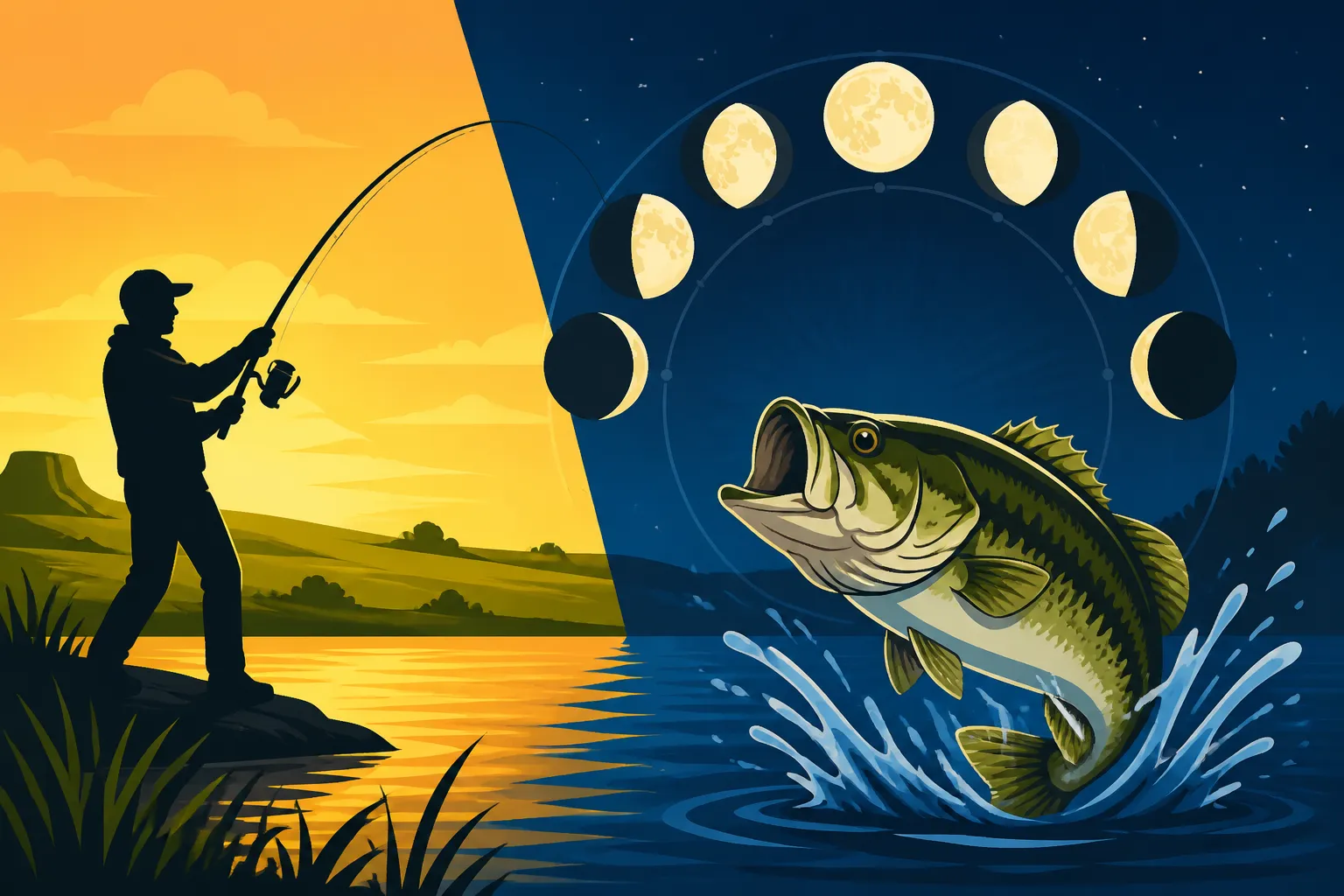
- New Moon (Dark Moon): Often considered a prime fishing time, especially at night. With less ambient light, fish might feel bolder and feed more actively, particularly predatory species. Anglers targeting species like walleye or catfish often report good success during these darker nights.
- Full Moon: This is a mixed bag. Some believe the bright moonlight means fish feed throughout the night, making them less active during the day. Others report excellent night fishing under a full moon, as the enhanced visibility helps both predator and prey. It often comes down to specific species and location.
- Quarter Moons (First and Last Quarter): These periods, representing intermediate lunar phases, are often considered average or less predictable fishing times. The gravitational pull is less intense than during new or full moons.
- Solunar Theory: This theory goes beyond just the phase, focusing on specific "major" and "minor" feeding times determined by the moon's position relative to the earth and sun. These times are often published in fishing calendars and apps, suggesting windows of heightened fish activity. While many anglers consult these tables, it’s worth noting that they are more of a predictive tool than a guarantee.
The truth is, these traditional beliefs are largely anecdotal. While many anglers have had great days under specific moon phases, it's difficult to isolate the moon's influence from the myriad of other factors at play.
Key Factors That Definitely Impact Kansas Fishing
Instead of solely relying on lunar cycles, successful Kansas anglers know to prioritize a host of environmental and behavioral factors that have a much more immediate and measurable impact on the bite. These are the elements you can observe, measure, and adapt to in real-time. Understanding these dynamics is crucial for anyone looking to improve their chances, whether they are a beginner or a seasoned pro. You might even find that paying attention to these factors will unlock more consistent success than just checking a moon calendar.
Weather Conditions: The Unsung Hero (or Villain)
Hands down, local weather conditions are one of the most significant determinants of fishing success in Kansas. The moon might influence things subtly, but a sudden cold front or a steady warm rain will send ripples through the entire aquatic ecosystem, directly affecting fish behavior. Understanding Weather Patterns and Kansas Fishing Success is paramount.
- Temperature Swings: Drastic changes in air temperature can rapidly cool or warm shallow waters, making fish either sluggish or hyperactive. A sharp cold front often shuts down the bite for a day or two as fish adjust to the new conditions and seek stable temperatures. Conversely, a warming trend in spring can trigger aggressive feeding, particularly for species preparing to spawn.
- Barometric Pressure: This is a big one for many serious anglers. A stable, high-pressure system often means stable weather and can lead to consistent fishing. A rapidly falling barometer, usually indicative of an approaching storm, can often trigger a pre-front feeding frenzy, as fish sense the change and try to gorge before the weather turns nasty. Once the front passes and the barometer stabilizes at a high pressure, fishing can slow down significantly until the fish acclimate.
- Wind: Wind direction and speed play a massive role. A moderate, consistent wind can create current, push baitfish, and oxygenate the water, often concentrating game fish on wind-blown points and shorelines. Too much wind, however, can make fishing impossible or uncomfortable, stir up excessive turbidity, and disperse bait. Light wind or calm conditions can make fish spooky, especially in clear water, making for tougher fishing.
- Precipitation: Rain can wash nutrients and insects into the water, exciting baitfish and attracting game fish. Light, steady rain can sometimes be excellent for fishing, especially for species like catfish. Heavy downpours, however, can muddy the water extensively, reduce visibility, and cause rapid water level fluctuations, often slowing the bite until conditions stabilize.
Water Conditions: Clarity, Temperature, and Depth
Beyond the weather, the immediate characteristics of the water itself are critical. Fish are cold-blooded creatures, and their activity levels, metabolism, and location are heavily dictated by the water they inhabit.
- Water Temperature: This is perhaps the single most important factor. Every fish species has an optimal temperature range for feeding, spawning, and general activity. For example, spring crappie will move shallow when water temperatures reach a certain threshold for their spawn. Walleye prefer cooler water, often deeper in the summer. Knowing the preferred Water Temperature Kansas Walleye Prefer or Water Temperature Kansas Catfish Prefer can make all the difference. Using a thermometer is far more valuable than checking a moon calendar.
- Water Clarity/Turbidity: Clear water can make fish wary and more difficult to approach, often necessitating lighter lines and smaller baits. Murky or stained water provides cover for fish, making them feel safer and potentially more aggressive, but also reduces their visibility, so louder or scent-filled baits become more effective. Heavy runoff after a storm can turn entire lakes chocolate brown, making fishing extremely challenging until the water clears.
- Water Depth and Structure: Fish relate to structure and changes in depth. Drop-offs, submerged timber, rock piles, ledges, and creek channels all provide cover, ambush points, and access to different temperature zones. Learning How to Read Kansas Reservoir Structure or using a fish finder to locate these features is essential for consistent success. Fish move up and down in the water column based on light, temperature, and prey availability, so understanding how deep to fish for walleye in summer or crappie in winter is more important than the moon phase.
- Current: In rivers or below dams, current is a major factor. Fish will position themselves in current breaks to conserve energy while waiting for food to drift by. Understanding how current affects fish positioning is vital for river anglers.
Forage and Fish Behavior: What Drives the Bite
Ultimately, fish are driven by basic needs: food, safety, and reproduction. The availability and activity of their prey, along with their own biological clocks, are major drivers of when and where they feed.
- Baitfish Activity: If the baitfish (shad, minnows, etc.) are schooling and active, game fish will be close by, actively feeding. If baitfish are scattered or inactive, the predators will likely follow suit. A good Fish Finder Buying Guide can help you locate these crucial bait schools.
- Spawning Cycles: Reproduction is a primary driver of fish behavior. During the spawn, fish often move into shallower water, can become very aggressive (territorial), and then sometimes become lethargic after expending so much energy. Understanding When Does Crappie Spawn Start? or the timing of the Kansas White Bass Run Timing is crucial for targeting these species. The moon might coincide with these cycles, but it doesn't cause them.
- Predator-Prey Dynamics: Fish are always looking for an easy meal while avoiding becoming one. Low light conditions, whether from heavy clouds or the darkness of night, can make fish feel more secure and increase their willingness to move into shallower, more exposed areas to feed. Conversely, bright, sunny conditions might push them into deeper cover. This is why Kansas Night Fishing Guide can be so effective for certain species.
Integrating Moon Phases into Your Fishing Strategy (with a Grain of Salt)
So, does this mean you should completely ignore the moon? Not necessarily. While not a primary factor, if you’ve accounted for all the major influences like weather and water conditions, and you're still looking for an edge, then paying some attention to the moon phase can be another piece of the puzzle. Just remember, it's a minor piece, not the whole picture. Think of it as seasoning, not the main ingredient.
Using Solunar Tables as a Guide, Not a Rule
Many angling resources, from specialized fishing apps to even basic wall calendars you might find at your local tackle shop or on Amazon, publish solunar tables. These tables predict "major" and "minor" feeding times based on the moon's position.
- How They Work (Supposedly): Major periods are said to occur when the moon is directly overhead or directly underfoot (opposite side of the earth), correlating with peak gravitational pull. Minor periods occur when the moon is rising or setting. These times are usually short, often lasting an hour or two.
- Practical Application: If you're planning a day trip, you might try to schedule your most intensive fishing efforts (like moving to your best spots or trying a new technique) around these predicted peaks. For example, if the solunar table suggests a major feeding window from 9 AM to 11 AM, you might make sure your lines are wet and you're actively working your lures during that time. However, if the weather is terrible or the water conditions are off, these predictions often fall flat. Don't let a "poor" solunar rating stop you from fishing if everything else looks good, and don't expect miracles if the conditions are otherwise unfavorable.
- Personal Experimentation: The best way to use solunar tables is to keep a fishing log. Note the moon phase, solunar predictions, and your actual results alongside all the other environmental factors. Over time, you might notice a correlation for certain species in certain Kansas locations, or you might confirm that other factors are far more influential for your specific style of fishing.
Combining Lunar Data with Other Environmental Factors
The most effective way to consider moon phases is to integrate them into a holistic understanding of the environment. Think of it as the cherry on top of a well-researched fishing plan, not the foundation.
- Prioritize the Big Three: Always, always start with weather, water conditions, and fish behavior/forage. Are you fishing during the Kansas Spring Fishing Guide or colder months? Is there a cold front moving in? What's the water temperature? Is the water clear or muddy? Are baitfish visible? Are fish in a spawning cycle? If these fundamental factors are unfavorable, a "perfect" moon phase is unlikely to save the day.
- Moon as a Tie-Breaker: Imagine two days with otherwise identical, good conditions. Day A has a new moon and a predicted major feeding time in the morning. Day B has a quarter moon with no strong solunar prediction. In this scenario, some anglers might lean towards Day A, hoping the moon provides that extra nudge for active fish. This is where the moon phase can become a minor, additional consideration.
- Species-Specific Tendencies: Some anglers claim certain species, like the highly migratory white bass during their annual runs, are more sensitive to moon phases or gravitational pulls. You might find a stronger anecdotal correlation for species that exhibit schooling or migratory behavior, especially during the Kansas White Bass Run Timing. For others, like a sedentary flathead catfish in a log jam, the local conditions of current and available prey will almost certainly dominate.
- The Power of Observation: Ultimately, nothing beats being on the water and observing the conditions directly. The most seasoned anglers learn to read the water, watch for signs of baitfish, feel the subtle changes in the wind, and adapt their Kansas Fishing Techniques for Beginners or advanced tactics accordingly. A good rod and reel from a reputable brand you can find on Amazon, like a medium-action spinning combo perfect for Kansas walleye fishing techniques or crappie, will always be more impactful than the moon phase alone. Investing in quality gear, like those found on Amazon, can improve your fishing experience regardless of what the moon is doing. You can find excellent Best Rods and Reels for Kansas Fishing there.
To illustrate the point, consider the following simplified comparison:
| Factor | Direct Impact on Kansas Fishing | Moon Phase Impact (Anecdotal) |
|---|---|---|
| Water Temperature | High (Fish metabolism, location) | Minimal |
| Barometric Pressure | High (Fish comfort, feeding drive) | Minimal |
| Forage Availability | High (Direct food source) | Minimal |
| Wind & Current | High (Bait concentration, oxygen) | Minimal |
| Water Clarity | High (Fish visibility, security) | Minimal |
| Moon Phase | Minimal (Gravitational pull theories) | Varied (New/Full often favored) |
| Solunar Times | Minimal (Predicted feeding windows) | Moderate (If other factors align) |
In conclusion, while the moon's mystique adds an intriguing layer to fishing, your success in Kansas will predominantly hinge on your understanding and adaptation to tangible environmental factors. Focus on the weather, the water, and the fish's natural instincts, and let the moon be a fun, supplementary consideration rather than a primary decision-maker. After all, the best time to fish is whenever you can!
Disclaimer
This article is for general informational purposes only and does not constitute professional advice. Laws, prices and regulations vary by location and change over time. Consult a qualified professional for guidance on your specific situation.