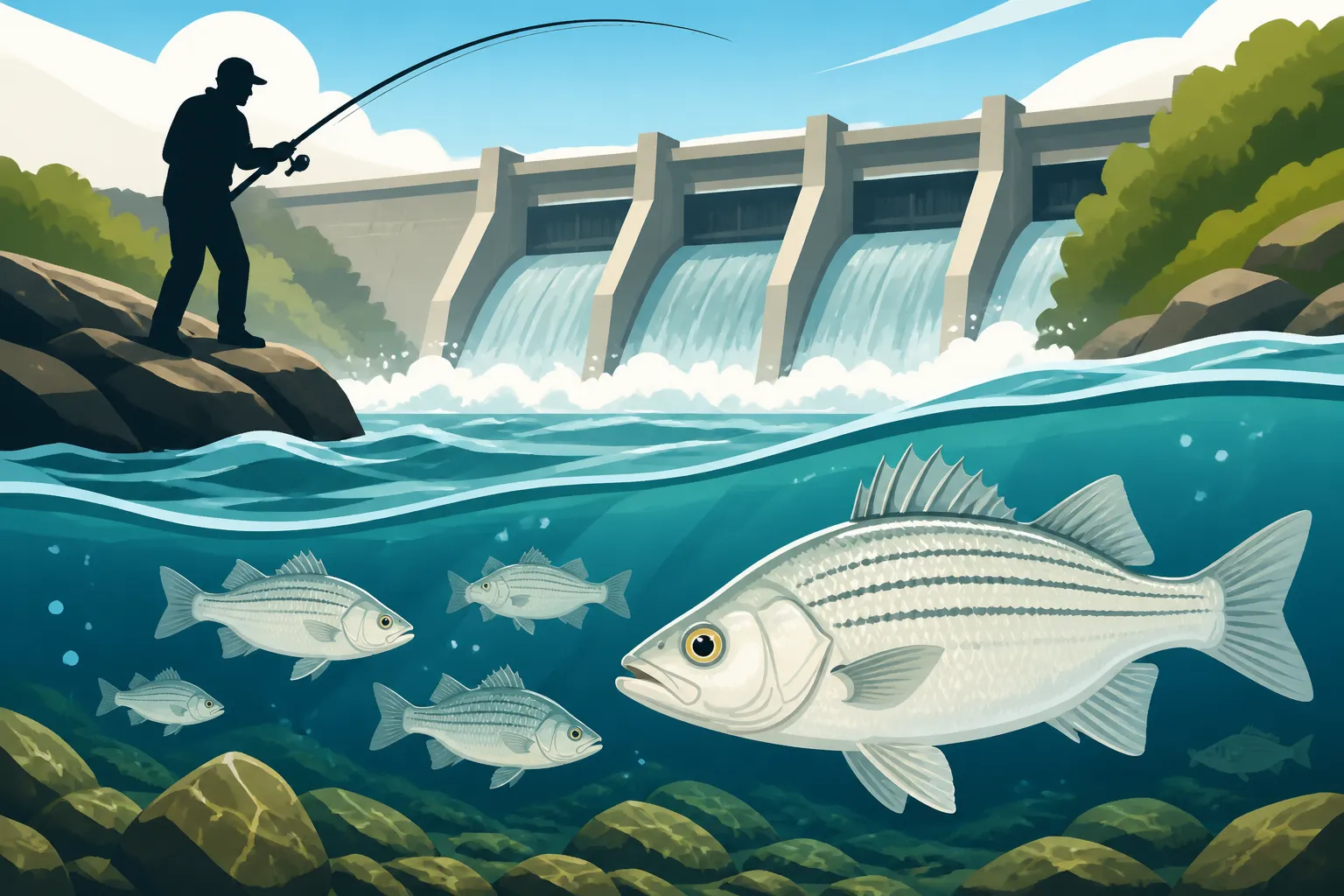
How to Find White Bass Below a Dam
There’s nothing quite like the electrifying fight of a white bass, especially when they’re schooling up below a dam, thick as thieves. But if you've ever stood there, casting fruitlessly into the swirling current, you know the frustration. Finding these fast-moving fish in the chaotic environment below a dam can feel like a guessing game. This guide will cut through the confusion, helping you understand why white bass congregate in these unique spots and how to pinpoint their locations for consistent catches, turning those frustrating days into memorable ones.
The Allure of Dams: Why White Bass Gather Here
Dams aren't just obstacles for water; they're magnets for white bass, especially during their spawning runs and in periods of strong generation. The sheer force of water coming through the gates creates a dynamic and nutrient-rich environment that draws in baitfish, and where baitfish go, white bass are sure to follow. Understanding this ecosystem is the first step to unlocking their secrets.
Understanding the Current and Oxygen Rush
Think of the water below a dam as a natural treadmill for fish. The discharge from the dam creates a powerful, oxygen-rich current that white bass absolutely thrive in. Unlike many other species that prefer calmer waters, white bass are built for battling currents. This moving water brings a constant supply of fresh oxygen, which is vital for their metabolism, especially when they're feeding aggressively. They'll often position themselves just out of the strongest flow, in current seams or eddies, conserving energy while waiting for food to be delivered to them. This strategic positioning allows them to feed without expending too much energy.
The churning water also disorients baitfish, making them easier targets. It's a natural ambush point, and white bass are expert opportunists. The more current, often the more active the fish, as long as it's not so powerful that they can't hold their position. This is why watching the dam's generation schedule, if available, can be a crucial part of your strategy.
The Buffet Line: Baitfish Concentration
The primary reason white bass flock to dam tailwaters is the abundance of food. The force of the water flowing through the dam dislodges and washes baitfish downstream, creating an irresistible buffet line. Shad, minnows, and other small forage fish struggle in the turbulent water, becoming easy prey for the hungry white bass. This congregation of baitfish below the dam is essentially a natural feeding frenzy waiting to happen.
You'll often find white bass positioned strategically along the edges of the main current, in calmer pockets, or in any area where baitfish might be temporarily disoriented or trapped. They're not just waiting; they're actively hunting, herding baitfish against structures or into eddies. It's a highly competitive environment, which means they're usually aggressive biters once you find them. Being able to spot baitfish schools or even just baitfish flicking on the surface can be your biggest clue that the white bass are nearby.
Timing Your Visit for the White Bass Run
While white bass can be caught below dams at various times of the year, there's one period that stands out: the annual spawning run. This is when massive schools migrate upstream, often as far as they can go, until they hit the dam. The dam essentially acts as a blockade, concentrating huge numbers of fish in the tailwaters. This run typically happens in spring, when water temperatures begin to rise, but the exact timing can vary significantly from year to year based on weather patterns and water conditions. Knowing the Kansas White Bass Run Timing is absolutely essential for hitting these peak periods.
During the run, the fish are not only numerous but also incredibly aggressive, making for some of the most exciting fishing of the year. Beyond the spring spawn, white bass will also gather below dams during cooler periods, like late fall, to feed heavily before winter, and even during hot summer months when the oxygenated, cooler water discharged from the bottom of a deep reservoir offers a welcome refuge. Pay attention to local fishing reports and observe water temperatures for the best results.
Gearing Up for Dam Success
Fishing below a dam demands specific gear that can handle strong currents, powerful fish, and potentially snag-filled environments. You don't need the most expensive equipment, but having the right tools for the job will make a world of difference in your success and enjoyment.
Rods, Reels, and Line Choices
For white bass fishing below a dam, you'll want a setup that offers a good balance of sensitivity for detecting subtle bites and backbone for fighting strong fish in heavy current. A medium-light to medium action spinning rod, typically 6 to 7 feet in length, is often ideal. This rod length provides good casting distance while allowing you to accurately present lures in tricky currents. Pair it with a reliable spinning reel in the 2000-3000 size range, spooled with 6-10 lb test monofilament or fluorocarbon line. Many anglers prefer braided line for its sensitivity and strength, often in the 10-15 lb range, with a fluorocarbon leader for stealth. The low stretch of braid helps you feel those quick taps in the current.
Having a sturdy reel with a smooth drag system is non-negotiable, as these fish hit hard and pull strong. You might even consider having a second setup rigged differently to quickly switch tactics if one isn't working. For example, one rod with a jig, another with a spoon. This adaptability is key when dealing with changing conditions and fish preferences.
The Right Lures and Baits for Aggressive Biters
White bass are aggressive feeders, and a variety of lures can be incredibly effective below dams. The key is to select lures that can get down to the fish in the current and mimic their natural forage.
- Jigs: Small lead-head jigs (1/8 to 3/8 oz) tipped with soft plastic grubs, paddle tails, or hair jigs are perennial favorites. White, chartreuse, and pearl are classic colors. The weight of the jig needs to be sufficient to reach the bottom without being swept away too quickly by the current.
- Spoons: Casting spoons, like a Kastmaster or Little Cleo, are excellent for imitating injured baitfish. Their erratic flutter on the retrieve or fall can trigger aggressive strikes. Silver, gold, or flashy colors are usually best.
- Inline Spinners: Brands like Rooster Tail or Mepps are fantastic, especially when fish are suspended or feeding closer to the surface. Their spinning blade creates flash and vibration that white bass can't resist.
- Small Crankbaits: Shallow to medium-diving crankbaits in shad patterns can also be effective, particularly in areas with less current or when fish are holding slightly deeper.
- Live Bait: If artificials aren't cutting it, live minnows or shad can be deadly. Rig them on a simple hook with a split shot or a small jig head, allowing them to drift naturally in the current.
You can find a huge variety of these lures and baits on platforms like Amazon, making it easy to stock up before your next trip. To learn more about specific presentations, check out our guide on the Best Lures for a White Bass Run.
Essential Accessories for Safety and Comfort
Fishing below a dam isn't just about catching fish; it's about doing it safely and comfortably. The powerful currents and often uneven terrain require some crucial accessories.
- Life Jacket: If you're fishing from a boat or wading in strong currents, a properly fitted life jacket is non-negotiable. Even when bank fishing near fast-moving water, safety should be your top priority.
- Wading Boots/Sturdy Footwear: The banks below dams can be rocky, slippery, and uneven. Good wading boots or sturdy, non-slip hiking boots will provide crucial traction and support.
- Net: A long-handled landing net is invaluable for scooping up feisty white bass, especially when you're dealing with strong currents or high banks. This helps protect both you and the fish.
- Pliers/Forceps: Essential for safely removing hooks, particularly from aggressive fish that may swallow a lure.
- Sun Protection: Sunglasses (polarized lenses help cut glare and spot fish/structure), a hat, and sunscreen are vital for long days on the water, even on cloudy days. You might even find a wide selection of fishing-specific sunglasses on Amazon to enhance your visibility.
- Water/Snacks: Stay hydrated and energized, especially during warmer months.
- First-Aid Kit: A small, basic kit for minor cuts or scrapes is always a good idea.
- Stringer or Cooler: If you plan on keeping your catch for a delicious meal, have a way to keep them fresh. Remember to review the Kansas Daily Creel Limits by Species before you go.
Master Strategies for Pinpointing White Bass
Once you're geared up, the real fun begins: finding those elusive schools. It's a combination of reading the water, understanding their habits, and adapting your techniques.
Decoding the Water: Current Seams and Eddies
White bass are masters of efficiency. They want to be in the feeding zone but not expend unnecessary energy fighting the main current. This means they'll often hold in areas where the current is broken or slowed down.
- Current Seams: Look for lines in the water where fast-moving current meets slower water. These seams are prime ambush points. White bass will often sit in the slower water, darting out into the faster current to snatch disoriented baitfish.
- Eddies: An eddy is a swirling pocket of water where the current actually flows in the opposite direction or forms a circular pattern. These are fantastic places for white bass to rest and feed, as baitfish often get trapped in the swirling water. Look for them behind large rocks, submerged structures, or points extending into the flow.
- Scour Holes: The powerful discharge from dams often carves out deeper holes directly below the gates. These can be holding areas for larger white bass, especially during non-spawning times.
- Structure: Any submerged structure, like old timber, rock piles, or concrete slabs, that offers a current break can hold fish. These provide cover and a place to rest out of the main flow.
Observing the water for these features will drastically increase your chances of finding actively feeding fish. Sometimes, it's just a subtle ripple or a slight change in the water's surface that indicates a fish-holding spot.
Effective Casting and Retrieval Techniques
Once you've identified a promising spot, how you present your lure is critical. White bass are fast, so you need to keep your lure moving.
- Fan Casting: Start by casting directly upstream and letting your lure drift down and across the current, covering a wide fan-shaped area. Vary your retrieve speed as the lure swings through different current speeds.
- Retrieve Speed: Generally, a medium to fast retrieve works best for white bass. They are aggressive and often prefer a lure that's darting and fleeing. Don't be afraid to experiment with erratic retrieves, adding pauses and jerks, to mimic a struggling baitfish.
- Jigging: If you're fishing deeper scour holes or vertical drops, vertical jigging can be incredibly effective. Let your jig hit the bottom, then snap it up a foot or two, letting it fall back on a semi-slack line. Most bites will occur on the fall.
- Drifting: If you're in a boat, or even bank fishing in an area with a consistent current, letting a live minnow or a small jig drift naturally downstream can be very productive. Just make sure you can feel the bottom or detect light bites.
Remember, the white bass will often be concentrated in schools, so once you catch one, keep casting in the same area! Action can be fast and furious for a short period. For specific tips on fishing a particular river, check out our guide on How to Catch White Bass on the Republican River. Also, understanding the Best Time of Day to Fish in Kansas can significantly boost your success, as white bass often have peak feeding times.
Bank vs. Boat: Advantages of Each Approach
Both bank and boat fishing have their merits when targeting white bass below a dam. Your choice often depends on access, personal preference, and the specific dam you're fishing.
-
Bank Fishing Advantages:
- Accessibility: Many dam tailwaters offer excellent public bank access, making it easy to get started. You don't need a boat or trailer.
- Simplicity: Less gear is required compared to boat fishing.
- Safety: Generally safer, as you're not dealing with boating hazards in turbulent water.
- Specific Spots: Often, bank anglers can target very specific eddies or current seams close to shore that boats might struggle to reach or hold position in.
- For great spots, consider looking into Best Bank Fishing Spots at Tuttle Creek Lake, which often includes dam tailwater areas. Remember to check if Do You Need a License to Fish From the Bank in Kansas?. (Spoiler: Yes, usually!)
-
Boat Fishing Advantages:
- Mobility: Offers the ability to cover much more water and reach offshore structures, deeper holes, and different current patterns.
- Anchoring: With a good anchor system, you can position your boat precisely to target active schools or structure.
- Electronics: Fish finders can be invaluable for locating schools of white bass and baitfish, as well as identifying underwater structure. Understanding How to Use a Fish Finder on a Kansas Lake can give you a significant edge.
Regardless of your chosen method, always prioritize safety. The water below dams can be unpredictable and dangerous due to strong currents, changing water levels, and slippery surfaces.
Overcoming Challenges and Staying Safe
Fishing below a dam can be incredibly rewarding, but it also presents unique challenges. Being prepared and respectful of the environment and regulations will ensure a successful and safe outing.
Adapting to Changing Water Levels
One of the biggest variables when fishing below a dam is the water level and flow rate. Dams are managed for flood control, power generation, and other purposes, meaning discharge rates can change quickly.
- High Water/Heavy Flow: While some current is good, excessive flow can make fishing difficult or even dangerous. White bass might hold tighter to structure, deeper, or in larger eddies. You'll need heavier jigs or spoons to reach them. Always be aware of rising water and strong currents that could sweep you or your boat away.
- Low Water/Reduced Flow: During periods of minimal discharge, white bass might disperse or move to deeper, more central channels. The bite might slow down, and you might need to scale down your lures and presentation. It also exposes more bottom, revealing structure that could be fish-holding during normal flows.
- Fluctuating Conditions: Always check the dam's release schedule if publicly available, or call the managing authority if possible. Be vigilant while on the water; a sudden increase in flow can catch you off guard. Adapt your tactics to the conditions you face, and if conditions become unsafe, it's always best to pack up and try another day.
Respecting Regulations and Limits
Just like any other fishing spot, dams and their tailwaters are subject to specific rules and regulations designed to protect fish populations and ensure angler safety. It’s not just about common courtesy; it's the law.
- Licensing: Always ensure you have a current Kansas fishing license. Our Kansas Fishing License Guide can help you get sorted. There are also specific rules about who needs a license, so understanding Kansas Fishing License Exemptions might be helpful.
- Daily Creel and Length Limits: White bass often have generous daily limits due to their abundance, but it's crucial to know these specific numbers for the waterbody you're fishing. This helps maintain healthy fish populations for everyone. You can find detailed information in our Kansas Daily Creel Limits by Species guide.
- Prohibited Areas: Some areas directly below dams are designated "no fishing" zones for safety reasons or to protect spawning fish. Always observe signage and respect these boundaries.
- Gear Restrictions: Certain methods or types of tackle might be restricted in specific tailwater areas. Familiarize yourself with all local regulations. You can get a comprehensive overview in our Kansas Fishing Regulations Explained article. Also, some dam areas might fall under state park rules, so checking Kansas State Park Fishing Permit Rules could be wise.
Always consult the latest regulations from the Kansas Department of Wildlife, Parks and Tourism (KDWP) before heading out. Ignorance of the rules is not an excuse for violations.
Prioritizing Your Safety at the Dam
Fishing below a dam offers incredible opportunities, but it also comes with inherent risks due to the powerful forces of water. Your safety, and the safety of anyone with you, should always be the absolute priority.
- Awareness of Currents: The water below a dam can be deceptively strong. Even seemingly calm areas can have powerful undertows. Never turn your back on the current, and be especially cautious if wading.
- Slippery Surfaces: Rocks and concrete near the water's edge are often covered in slick algae. Wear appropriate non-slip footwear and take slow, deliberate steps. A fall into fast-moving water can be extremely dangerous.
- Changing Water Levels: As mentioned earlier, water levels can rise or fall rapidly without warning. Always have an escape route planned, especially if you've ventured onto an exposed sandbar or rock formation.
- Boating Safety: If you're fishing from a boat, ensure all occupants are wearing life jackets, especially in turbulent waters. Be aware of submerged hazards that strong currents can make difficult to spot.
- Weather Conditions: Pay attention to weather forecasts. Thunderstorms can bring lightning and sudden strong winds, making fishing in open areas or near tall structures dangerous.
- Emergency Plan: Always let someone know where you are going and when you expect to return. Carry a fully charged cell phone (though service might be spotty in some remote areas).
A little caution and preparation go a long way in ensuring your day of white bass fishing below the dam is not only successful but also safe and enjoyable. For those looking for night fishing opportunities, remember to consult Night Fishing Tips for White Bass but always exercise extreme caution around dam structures in the dark.
| Lure Type | Best Conditions | Retrieval Style | Notes |
|---|---|---|---|
| Jigs | All conditions, especially deeper water & strong current | Lift-fall, steady retrieve, bounce along bottom | Versatile, can be tipped with plastics or bait. Vary weight with current. |
| Casting Spoons | Moderate to heavy current, searching for schools | Steady retrieve with occasional jerks, vertical jigging | Mimics injured baitfish, good for distance casting. |
| Inline Spinners | Moderate current, surface activity, clear water | Steady retrieve, varied speed | Creates flash & vibration, excellent search bait. |
| Small Crankbaits | Less turbulent water, targeting specific depths | Steady retrieve, stop-and-go | Good for imitating shad, choose appropriate diving depth. |
| Live Minnows/Shad | Tough bite, finicky fish, or any conditions | Drift naturally with current, under a bobber | Often irresistible, but requires live bait care. |
Disclaimer
This article is for general informational purposes only and does not constitute professional advice. Laws, prices and regulations vary by location and change over time. Consult a qualified professional for guidance on your specific situation.