Best Technique for Trophy Crappie
Catching crappie in Kansas can be a blast, but when you're specifically targeting those truly enormous, slab-sized trophy crappie, it often feels like you're playing a different game entirely. Many anglers get frustrated because they catch plenty of smaller fish, but those giants seem to evade them, always just out of reach. This comprehensive guide is here to unravel the mysteries of landing trophy crappie in Kansas, diving deep into the precise techniques, seasonal strategies, and nuanced approaches that will consistently put bigger fish in your livewell.
Understanding Trophy Crappie Behavior in Kansas
Before you can consistently catch trophy crappie, you've got to think like one. These aren't your average 8-inch panfish; they're older, wiser, and often much more elusive. They have different needs and habits than their smaller counterparts, and understanding these distinctions is the first step to success. In Kansas, we have both black and white crappie, and while their behaviors are similar, subtle differences can exist based on the specific body of water you're fishing.
Habitat Preferences: Where Big Crappie Live
Trophy crappie aren't usually found in the same shallow, brushy cover as younger fish. While they might venture into those areas during certain times, their preferred year-round homes are typically deeper and offer more substantial cover. Think about massive brush piles, submerged timber, old creek channels, or even isolated rock piles. These spots provide excellent ambush points for feeding and a sense of security from predators. Large crappie often relate to the thermocline in summer, or suspend over deep water near structure during colder months. They want easy access to food but also refuge.
In large Kansas reservoirs like Milford Lake or Cheney Reservoir, big crappie will often gravitate towards the deeper ends of standing timber forests or sunken roadbeds. They might be nestled right in the thickest part of a brush pile 20 feet down, or suspended just off the edge of a deep drop-off where they can dart out to feed on passing baitfish. Look for areas with a significant depth change nearby, or where current might sweep food past their hiding spots. Understanding Kansas Fish Species Guide can also help in identifying what crappie look like and what kind of environment they prefer.
Forage and Feeding Habits of Mature Crappie
Big crappie need more substantial meals to sustain their size. While they'll still eat smaller insects and larvae, their primary diet shifts towards larger baitfish like shad, minnows, and even smaller panfish. This means your bait selection needs to reflect their predatory nature. They are opportunistic feeders, but they can also be surprisingly selective, especially when pressured. Matching the hatch, or at least presenting something that mimics their natural forage, is crucial.
Their feeding windows can be shorter and more defined than smaller crappie. They might only be active for brief periods at dawn, dusk, or during specific weather patterns. This is why persistence and being on the water during prime times are so important. They aren't constantly grazing; they're waiting for the right moment to strike. Watching your electronics for bait balls near crappie schools can give you a huge advantage, as you know they're positioned for a meal.
Understanding Their Seasonal Movements
Crappie movements in Kansas are heavily dictated by water temperature and the spawn cycle. Trophy crappie will move from deep wintering holes to shallower spawning areas in spring, and then back to deeper, more stable environments as summer progresses and water temperatures rise. Learning these patterns is key to intercepting them at different times of the year.
- Pre-Spawn: As water temperatures start to rise into the upper 40s and 50s, crappie begin moving towards shallower staging areas, often congregating near deep creek channels or main lake points adjacent to spawning flats.
- Spawn: When water hits the mid-50s to low 60s, crappie move into incredibly shallow water to spawn, often in less than 5 feet, seeking out brush, weeds, or even riprap. This can be a prime time for big fish if you know where to look.
- Post-Spawn/Summer: After the spawn, crappie often retreat to deeper, cooler waters, suspending over structure or relating to the thermocline. They can be found in 15-30 feet of water, often near submerged timber or brush piles.
- Fall: As water temperatures cool, crappie become highly active again, feeding aggressively to build up fat reserves for winter. They'll often move back towards creek channels and main lake points, sometimes suspending higher in the water column.
- Winter: Crappie will return to deep water, often congregating in large schools in deep holes, creek channels, or near dam faces. They can be sluggish but are still catchable with the right techniques. You can find more specific guidance in the Kansas Fishing Seasons Guide.
Mastering the Best Techniques for Trophy Crappie
Once you understand where and when these big crappie are, the next step is perfecting the techniques to actually catch them. Unlike simply catching numbers of smaller fish, targeting trophy crappie often requires more precision, patience, and specialized gear.
Spider Rigging and Trolling for Deep Crappie
Spider rigging, sometimes called "long-lining" or "drift fishing," is a highly effective method for covering water and presenting multiple baits at various depths, which is perfect for locating and enticing big, suspended crappie in open water or along deep structure. This technique involves deploying multiple long rods (often 10 to 16 feet) out from the front, sides, and even back of the boat, creating a "spider web" of lines. Each rod typically has a small jig or minnow rig.
You control your boat speed very slowly, usually 0.5 to 1.5 mph, either with a trolling motor or by drifting with the wind, allowing your baits to move slowly through potential crappie holding areas. The key is to experiment with different depths until you find the crappie. This method is especially potent on large Kansas reservoirs where crappie might be scattered over vast areas or suspended in the middle of a creek channel. For a good start, you can find a suitable multi-rod holder on platforms like Amazon. This helps keep your rods organized and secure while you focus on boat control.
When spider rigging, pay close attention to your rod tips. A trophy crappie bite can be incredibly subtle – sometimes just a slight twitch or a softening of the line, rather than a violent strike. Setting the hook with a smooth, sweeping motion is usually more effective than a hard jerk. Remember to check local regulations regarding the number of lines you can legally fish.
Vertical Jigging Structure for Suspended Slabs
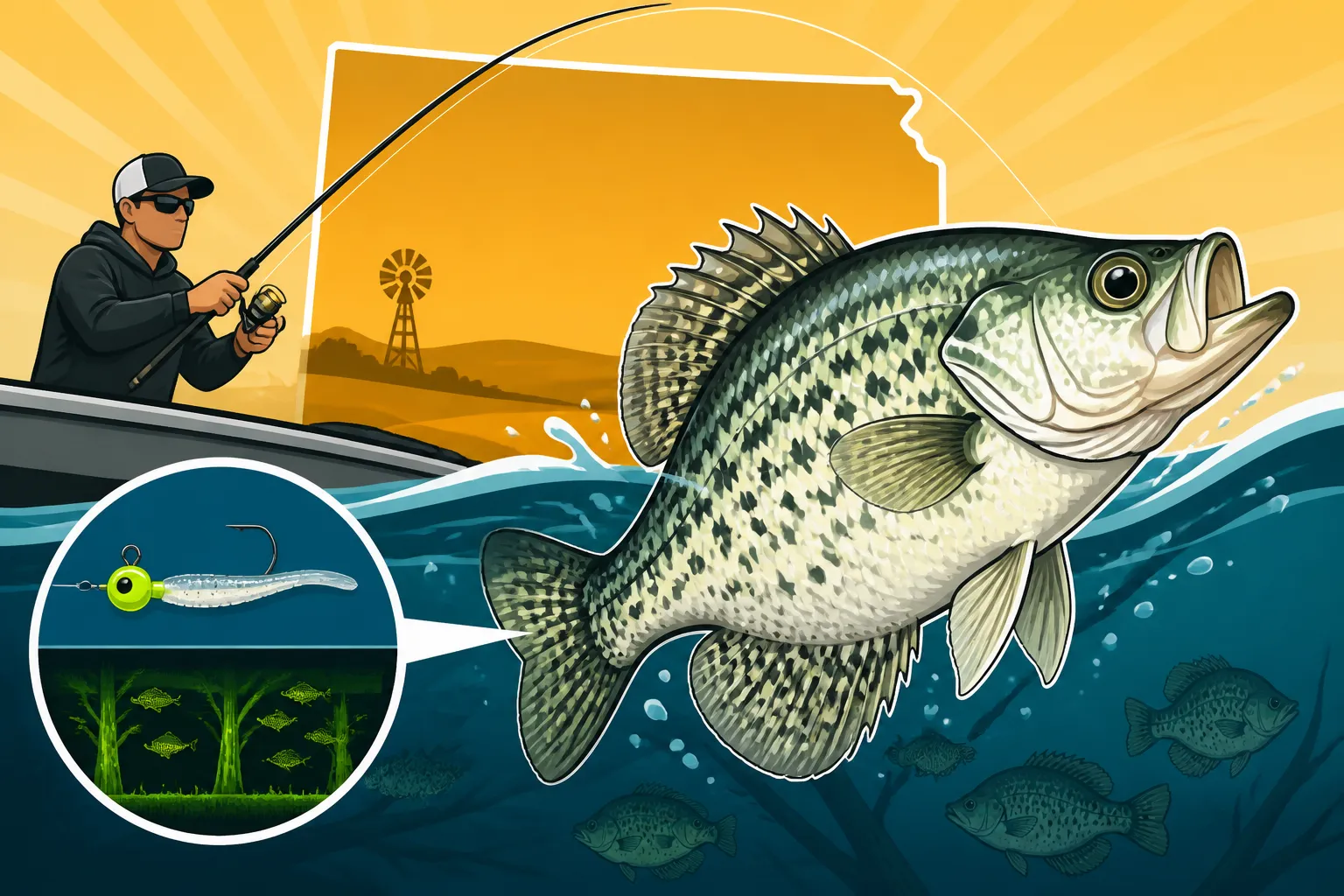
Vertical jigging is perhaps the most precise and often the most rewarding technique for targeting trophy crappie once you've located them on your electronics. This method involves positioning your boat directly over a brush pile, submerged timber, or other structure where crappie are holding, and then dropping your bait straight down to their depth.
The beauty of vertical jigging is that it allows for extremely accurate bait presentation. When you see a big crappie (or a school of them) on your sonar at, say, 18 feet, you can drop your jig or minnow right down to 18 feet and keep it in their strike zone. This minimizes wasted casts and maximizes your chances when fish are concentrated. Small jigs, typically 1/16 to 1/8 ounce, tipped with a soft plastic grub or a live minnow, are popular choices. Some anglers even use a dropper rig with two small jigs to present more options.
The retrieve is often very subtle: a gentle lift and fall, or simply holding the bait still for several seconds. Often, the bite comes on the fall or when the jig is completely motionless. This technique requires good boat control, especially in windy conditions, to stay directly over the structure. A strong, responsive trolling motor is invaluable here. Jigging Techniques for Kansas Crappie goes into more detail on specific jigging approaches.
Casting and Retrieving: Target Shallow Cover
While trophy crappie generally prefer deeper water, during the spawn and sometimes in early spring or late fall, they will move into surprisingly shallow areas. When they are in these shallow, cover-laden spots – think flooded timber, submerged bushes, or dock pilings – casting and retrieving can be highly effective.
The key here is precision casting. You need to get your lure right into the heart of the cover without spooking the fish. Small crankbaits, spinnerbaits designed for crappie, or jigs under a float are excellent choices. A popular tactic is to cast a small jig (1/32 to 1/16 ounce) with a soft plastic grub past the cover and slowly retrieve it, letting it flutter down into the strike zone. If you're using a float, set it so your jig suspends just above the cover.
This method often requires a stealthy approach. Approach cover quietly, make accurate casts, and be prepared for a bite as soon as your lure hits the water. Trophy crappie in these shallow spots can be surprisingly aggressive. When fishing around private docks or structures, always be mindful of property lines and access rules. This tactic is especially effective during the pre-spawn and spawn periods discussed in Kansas Spring Crappie Fishing Tips.
Seasonal Strategies for Giant Crappie
Knowing your techniques is one thing, but knowing when to apply them is another. Trophy crappie behave differently throughout the year, and adapting your strategy to the season is paramount.
Springtime Slab Seeking: Pre-Spawn and Spawn
Spring is often considered the prime time for catching trophy crappie in Kansas. As water temperatures rise, these big fish move out of their deep winter haunts and begin staging for the spawn.
- Pre-Spawn (Water Temp: 45-55°F): Focus on creek channels, main lake points, and secondary points that lead into known spawning flats. Crappie will often congregate in these areas, suspended around deep brush piles, submerged timber, or ledges. This is a fantastic time for spider rigging with live minnows or small jigs, covering water slowly until you find the schools. Vertical jigging these staging areas once located is also highly effective. Look for them around 10-25 feet deep.
- Spawn (Water Temp: 55-65°F): When the water hits the sweet spot, trophy crappie move shallow, often into just a few feet of water. They'll seek out submerged brush, reeds, willow trees, or even riprap to lay their eggs. This is when casting small jigs, tiny crankbaits, or even using a bobber and jig/minnow combination can produce giants. Stealth is crucial here; approach quietly and make precise casts. Don't be afraid to target dense cover that smaller fish might shy away from. Always check Kansas Crappie Length and Bag Limits before heading out to ensure you're compliant with current regulations.
Summer Deep Dives: Beating the Heat
Kansas summers can get hot, and so can the surface water in our lakes. Trophy crappie will often retreat to deeper, cooler waters, seeking out the thermocline (the layer where warm surface water meets cooler deep water) or congregating on deep structure.
During summer, look for crappie in 15-30 feet of water, often suspended over old creek channels, river bends, or around the deepest, thickest brush piles you can find. Spider rigging is still a great way to locate them, particularly when they're suspended over open water. Once a school is found, vertical jigging with minnows or soft plastics becomes the go-to. Night fishing can also be incredibly productive in summer, as crappie often move up in the water column to feed under the cover of darkness. Bright underwater lights can draw in baitfish, and in turn, big crappie.
Fall Feeding Frenzies: Building Winter Reserves
As autumn arrives and water temperatures begin to drop, crappie go on a feeding binge, aggressively packing on weight for the upcoming winter. This can be another fantastic time to catch trophy-sized fish.
Crappie will often move back to main lake points and creek channels, similar to the pre-spawn period, but they might be higher in the water column or relating to structure at slightly different depths. Look for schools of baitfish, as crappie will be actively chasing them. Trolling crankbaits that imitate shad can be very effective, as can vertical jigging brush piles and submerged timber. The fall bite can be some of the most consistent action for big crappie, as they are less pressured and more focused on feeding. For more tips on this season, check out How to Find Crappie in the Fall.
Winter Wonders: Ice Fishing and Cold Water Tactics
Don't hang up your rods just because it's cold! Winter can be a fantastic time for trophy crappie in Kansas, especially through the ice or when fishing open water in cold conditions.
- Ice Fishing: On lakes that freeze sufficiently, crappie will often school up tightly in deep holes, creek channels, or around deep timber. Small jigs (1/32 to 1/64 ounce) tipped with wax worms, minnow heads, or tiny soft plastics are deadly. Focus on slow, subtle presentations. A good sonar unit designed for ice fishing is invaluable for locating these tight schools and presenting your bait precisely. Remember, ice safety is paramount. Check How Deep to Fish for Crappie in Winter for specific depth recommendations.
- Open Water (Cold): If the lakes remain open, crappie will still be in deep water, often 20-40 feet down, congregating in tight schools. Vertical jigging with minnows is extremely effective. Slow trolling with a single minnow on a light jig head can also entice sluggish fish. Look for these schools near dam faces, deep creek channel bends, or protected coves with profound depth. Fish can be extremely sensitive to pressure changes and subtle presentations in winter.
Advanced Tips for Consistent Trophy Crappie Success
Beyond the basic techniques and seasonal adaptations, there are finer points that can make all the difference when you're truly hunting for those exceptional crappie.
Reading Your Electronics: Sonar Secrets
Your fish finder is your most valuable tool for trophy crappie fishing. Learning to interpret what you see on the screen will dramatically increase your success.
- Distinguish Crappie from Baitfish: Crappie often appear as distinct arches or blobs, while baitfish will show as dense clouds. Trophy crappie often appear as larger, more defined arches, sometimes solitary.
- Identify Structure: Learn to read your sonar to identify brush piles, standing timber, rock piles, and old creek channels. Side imaging and down imaging are incredible for locating these hidden gems.
- Find the Thermocline: In summer, locating the thermocline (the distinct band on your sonar where water temperature changes rapidly) is key. Crappie will often suspend right on or just above this layer.
- Adjust Sensitivity: Don't be afraid to crank up your sensitivity to pick up faint returns, especially for suspended fish or subtle bites.
- Understand Depth: Pay close attention to the depth numbers. If crappie are at 17 feet, drop your bait to 17 feet, not 15 or 20. Precision matters. For a reliable unit, consider checking out models like the Garmin Echomap series or Humminbird Helix units, often available on Amazon.
Bait and Lure Selection for Discerning Slabs
Trophy crappie can be picky. While live minnows are almost always a solid choice, specific artificial lures can out-produce live bait on certain days or in certain situations.
- Live Minnows: The gold standard. Shiners or fathead minnows are often preferred. Hook them lightly through the lips or dorsal fin.
- Jigs: Small jigs (1/32 to 1/8 ounce) are versatile.
- Soft Plastic Grubs: Curly tail grubs (1-2 inches) in chartreuse, white, or natural baitfish colors are classics.
- Tubes: Small tube jigs (1.5-2 inches) offer a different profile.
- Hair Jigs: Especially effective in cold water, often mimicking small aquatic insects.
- Marabou Jigs: The pulsating action of marabou is irresistible to crappie.
- Crankbaits: Tiny shallow-diving or suspending crankbaits (1-2 inches) can be excellent for trolling or casting into shallow cover. Colors that mimic shad or crawfish work well.
- Blade Baits/Spoons: Very small blade baits or vertical jigging spoons can be effective in deeper water, especially in winter.
- Colors: Experiment. While chartreuse and white are staples, sometimes natural baitfish colors (silver, grey, pearl) or even dark colors (black, blue) can be more effective. For specific options, look for brands like Strike King, Bobby Garland, or Johnson, available widely on Amazon. Best Bait for Kansas Crappie has more recommendations.
The Importance of Boat Control and Stealth
Trophy crappie are often wary. Your approach and boat handling can make or break your day.
- Quiet Approach: Use your trolling motor judiciously. Avoid slamming tackle box lids or making excessive noise in the boat, especially in shallow water.
- Maintain Position: A good trolling motor with GPS Spot-Lock or Anchor Mode is a game-changer for vertical jigging structure, allowing you to hold position precisely over fish.
- Drift or Troll Speed: Maintain a slow, consistent speed when spider rigging or trolling. Trophy crappie are less likely to chase a fast-moving bait.
- Wind Management: Learn to use the wind to your advantage, or compensate for it. A drift sock can slow your drift in windy conditions, giving your baits more time in the strike zone.
- Distance: When casting to shallow cover, stay far enough away to avoid spooking the fish, but close enough for accurate casts. Sometimes, a longer cast from a distance is better than a close, noisy approach.
By understanding the distinct behaviors of trophy crappie, mastering these specialized techniques, adapting to seasonal patterns, and paying attention to these advanced details, you'll significantly increase your chances of landing those elusive giants on your next Kansas fishing adventure. It takes patience, persistence, and often a willingness to try something different, but the reward of a true slab crappie is absolutely worth it.
Disclaimer
This article is for general informational purposes only and does not constitute professional advice. Laws, prices and regulations vary by location and change over time. Consult a qualified professional for guidance on your specific situation.