Best Bait for Winter Trout
The chill in the air and the ice forming at the edges of Kansas lakes might make some anglers pack away their gear, but for those of us who love chasing trout, winter is a season of unique opportunities. The biggest challenge is coaxing a bite out of these cold-blooded beauties when they're less active, but with the right bait and presentation, you can absolutely enjoy some rewarding winter trout fishing. This guide is all about helping you discover the most effective baits to tempt those winter trout, making your cold-weather excursions worthwhile.
Understanding Winter Trout Behavior and Feeding Habits
Before we even get to the tackle box, it’s crucial to understand how winter conditions affect trout. These aren't the same aggressive, bug-chasing fish you encounter in spring or fall. Their world slows down significantly when water temperatures drop, and that dramatically changes what they’re looking for in a meal.
How Cold Water Affects Trout Metabolism
Imagine trying to run a marathon after eating a tiny snack – that's kind of how a trout feels in cold water. Their metabolism slows to a crawl, meaning they digest food much more slowly and don't need to eat as often or as much. This reduction in metabolic rate makes them more lethargic and less willing to expend energy chasing down a fast-moving meal. Instead, they're looking for something easy, appealing, and energy-efficient. They’ll often hold tight to cover or structure, waiting for an opportune moment to grab a passing morsel rather than actively hunting. This is why a subtle, high-scent, or slow-moving bait often outperforms flashy, fast retrieves in the winter.
Where Trout Hold in Winter Months
Trout are smart, and they seek out comfort and safety in winter. This usually means deeper water where temperatures are more stable and slightly warmer, or areas with slower currents that require less energy to hold their position. Look for them in deep holes, along drop-offs, near submerged structures like brush piles or rock formations, and even under ice cover. In streams, they'll often be found in slower runs or eddies. Knowing these holding patterns is key because the best bait in the world won't do you any good if it's not presented where the fish are. Consider areas where the Kansas Department of Wildlife, Parks and Tourism (KDWP) regularly conducts its winter trout stockings, as these are often designed to be easily accessible and hold fish well. You can often find details on the Kansas Trout Stocking Schedule for December or other winter months.
Top Baits for Enticing Passive Winter Trout
When trout are less active, the baits you choose need to compensate by being highly appealing with minimal effort from the fish. This often means focusing on scent, natural presentation, and small, digestible offerings.
Scented Dough Baits and Nuggets
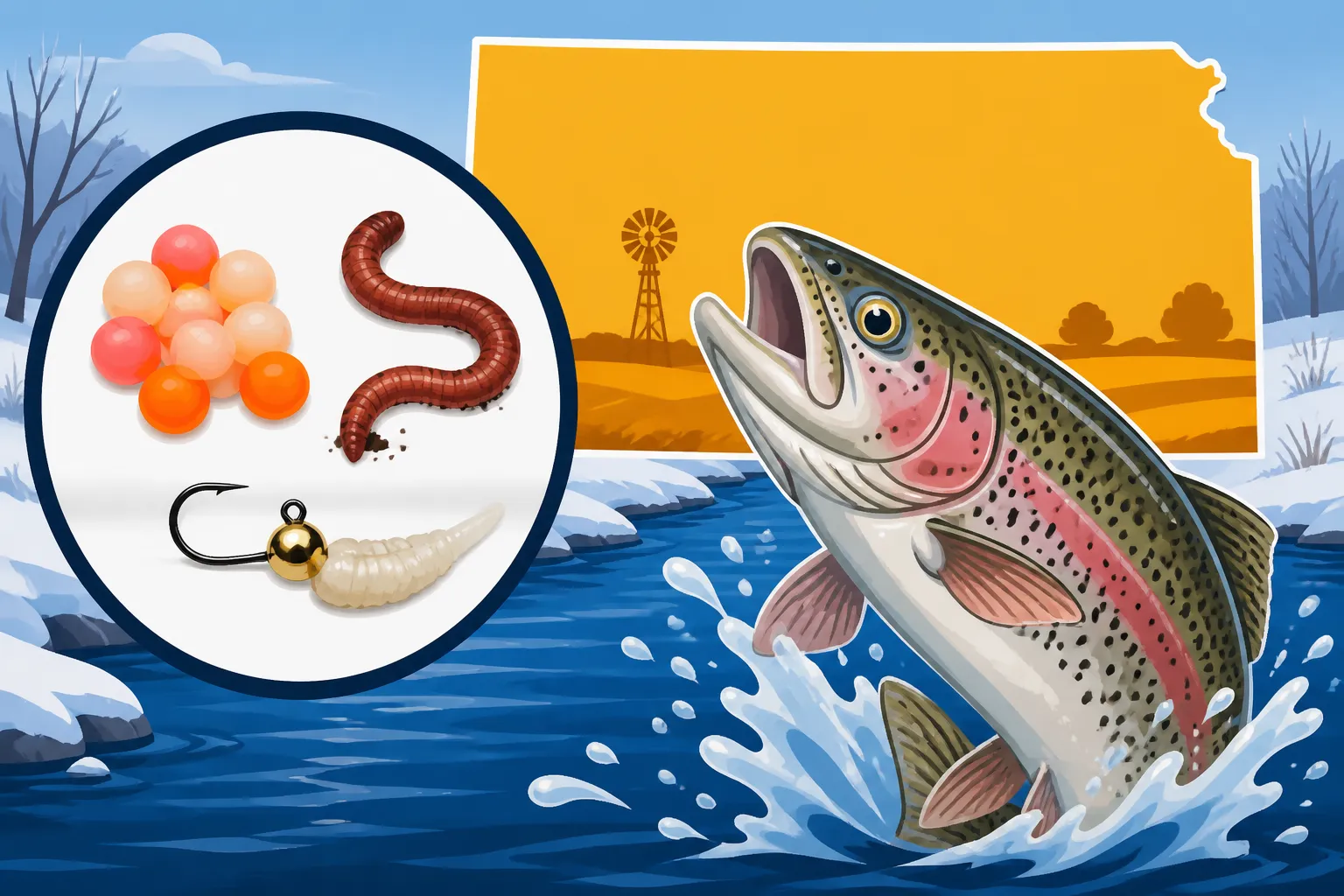
This is arguably the king of winter trout baits, especially in Kansas's stocked community lakes and ponds. Products like Berkley PowerBait or similar scented dough baits are incredibly effective because they release a strong scent and come in bright, attractive colors. The dough itself is designed to float, which allows you to present it just off the bottom, directly in the trout’s strike zone.
The Appeal of PowerBait and Its Variations
PowerBait comes in various forms – small nuggets, moldable dough, and even soft plastic worms infused with the same scent. The moldable dough is fantastic because you can shape it around your hook to ensure it floats naturally. Its strong scent trail is a huge advantage when trout aren't actively foraging by sight. They can smell it from a distance, drawing them in even if they're not in an aggressive mood. Popular colors often include chartreuse, rainbow, orange, and white. Having a variety on hand can make a big difference, as trout can show preferences on any given day. Many anglers will stock up on different colors and scents, often finding a great selection of these on Amazon.
Rigging Scented Baits for Optimal Presentation
The most common and effective way to rig PowerBait is with a small treble hook or a single baitholder hook, paired with a small slip sinker and a swivel. The slip sinker allows the line to run freely through it, so when a trout takes the bait, it doesn't feel the weight of the sinker, preventing it from spitting the hook. A leader of about 12-24 inches (fluorocarbon is great for its invisibility in clear winter water) connects the swivel to your hook. The goal is to pinch off enough PowerBait to cover your hook completely and make it float naturally, keeping it suspended just above the lakebed. This setup keeps your bait in plain sight without being dragged along the bottom, which is often where winter trout are holding. For more on getting set up, you might find tips in our Kansas Fishing Techniques for Beginners guide.
Small Jigs and Micro Plastics
When trout are finicky, downsizing your presentation can be a game-changer. Tiny jigs and micro plastics imitate small insects, larvae, or baitfish that are natural food sources for trout, even in winter. The key here is subtlety and a slow, almost imperceptible movement.
Imitating Natural Forage with Tiny Lures
Micro jigs, often with marabou or chenille bodies, and small soft plastics that mimic minnows or aquatic insects are highly effective. Think small, 1/32 or 1/64 ounce jigs. Colors like olive, black, white, and brown can be very natural, while brighter colors like pink or chartreuse can sometimes trigger a reactionary bite. Brands like Trout Magnet or Crappie Magnet offer tiny jig heads and tails that work wonders. These baits are all about offering a small, easy meal that doesn't require much effort to consume. They're particularly good when trout are keying in on tiny invertebrates that are still active in cold water.
Presenting Jigs and Plastics Effectively
The presentation of these tiny baits is paramount. You want them to sink slowly and enticingly. Use ultralight spinning gear with very light line (2-4 lb test fluorocarbon or monofilament). Cast out and allow the jig to sink slowly, watching your line for any twitch or hesitation. A very slow, almost dead-stick retrieve with tiny twitches of the rod tip can mimic a struggling insect or a dying minnow. Under ice, simply jiggling them gently just above the bottom is often all it takes. This sensitive approach allows you to detect the often subtle "thump" or slackening of the line that indicates a winter trout bite. For ice fishing, specialized ice fishing rods with spring bobbers can be incredibly effective at detecting these light bites.
Live Bait for Irresistible Appeal
Sometimes, nothing beats the real thing. Live bait offers natural movement, scent, and texture that can be utterly irresistible to even the most sluggish winter trout. Just be sure to check local regulations, as not all live baits are permitted everywhere.
Worms, Mealworms, and Other Live Offerings
Good old nightcrawlers, cut into smaller pieces, are fantastic. Their natural scent and wiggling action are hard for a trout to ignore. Mealworms, wax worms, and even tiny redworms are also excellent choices, especially for smaller trout. These baits are naturally appealing and provide a sustained scent trail. Minnows can also be effective, particularly if larger trout are present, but their use might be restricted in some waters to prevent the spread of disease or invasive species. Always verify the rules before you head out.
Rigging Live Bait for Natural Movement
For live bait, a simple split-shot rig or a small bobber setup works wonders. With a split-shot rig, use a small hook (size 8-12 depending on the bait) and pinch a small split shot about 6-12 inches above it. Cast out and let the bait slowly drift or settle to the bottom. For worms, thread a small section onto the hook, leaving the ends dangling for maximum movement. When using a bobber, set your depth so the bait is suspended just above where you expect the trout to be. The bobber also provides excellent visual strike detection, which is crucial for light winter bites. Remember, a light touch is key; don't use too much weight that hinders the bait's natural action.
Here's a quick comparison of popular winter trout baits:
| Bait Type | Pros | Cons | Best Use Case |
|---|---|---|---|
| Scented Dough Baits (e.g., PowerBait) | Strong scent, floats, various colors, easy to use | Can be messy, not always natural texture | Stocked lakes/ponds, targeting passive trout, still fishing |
| Small Jigs & Micro Plastics | Mimics natural forage, subtle action, versatile | Requires sensitive gear, subtle bite detection | Finesse fishing, clear water, active jigging, sight fishing |
| Live Worms/Mealworms | Natural scent & movement, irresistible | Can be messy, requires proper storage, regulations | When other baits fail, targeting finicky trout, still fishing |
| Small Spoons/Spinners | Flash and vibration can trigger bites | Less effective on very lethargic fish | More aggressive trout, searching for active fish |
Presentation is Key: Making Your Bait Irresistible
Even with the "best bait for winter trout," if your presentation is off, you'll likely go home empty-handed. Winter trout fishing is a game of patience, finesse, and subtle movements.
Slow and Subtle Approaches for Finicky Fish
Forget fast retrieves and aggressive jerks. Winter trout demand a much slower, more deliberate approach. Think of your bait as an easy target that just happens to drift by.
Dead-Sticking and Slow Drifting Techniques
"Dead-sticking" is exactly what it sounds like: casting your bait out and letting it sit motionless on the bottom or suspended under a bobber. This is incredibly effective with PowerBait or live worms, allowing the scent to disseminate and the bait to look as natural as possible. Similarly, slow drifting your bait with the current in a stream or with a light breeze on a lake can cover water subtly without alarming the fish. The idea is to keep the bait in the strike zone for as long as possible, giving the trout ample time to approach and commit to a bite. Even a slight current or wave action can impart enough subtle movement to make your bait look alive without being overtly active.
Minimal Movement and Sensitive Strike Detection
Any movement you impart should be minimal. If you're using a jig, a tiny tremor from your hand or a very slow lift-and-drop is often all that's needed. The key is to watch your line intensely. Winter trout bites are often incredibly subtle – a slight twitch, a brief pause in the line's drift, or even just a feeling of added weight. This is where ultralight rods with fast actions and sensitive tips really shine, helping you detect those almost imperceptible takes. Many anglers even opt for bright colored braided line with a fluorocarbon leader for better visibility of line movement.
Rigging for Success in Cold Water
Your rigging setup plays a huge role in how naturally your bait is presented and how well you detect bites.
Light Line and Small Hooks for Enhanced Sensitivity
In clear, cold winter water, trout can be incredibly line-shy. Using the lightest line you can get away with (2-4 lb test fluorocarbon or monofilament) will drastically increase your bites. Fluorocarbon is particularly good because it's nearly invisible underwater and has less stretch than mono, providing better sensitivity. Pair this with small, sharp hooks (size 8-12) that match the size of your bait. A smaller hook is easier for a trout to inhale, and a sharp hook ensures a solid hookset on a light bite. Remember, the trout's mouth tissues are also colder, so a good, sharp hook is essential.
Mastering the Slip Sinker and Bobber Rigs
The slip sinker rig (also known as a Carolina rig for smaller baits) is a go-to for PowerBait, allowing the bait to float freely above the bottom. A small bullet or egg sinker slides on your main line, followed by a small barrel swivel, then a 1-2 foot fluorocarbon leader tied to your hook. This setup ensures your bait is presented naturally while the sinker holds it in place. For bobber fishing, choose a small, sensitive bobber that offers minimal resistance. Set your depth so your bait is suspended in the desired water column. Slip bobbers are excellent as they allow you to cast further and set your depth much deeper than fixed bobbers. These techniques are often elaborated on in articles like the Kansas Fishing Techniques for Beginners.
Additional Tips for Winter Trout Anglers
Beyond just bait and presentation, a few other considerations can significantly improve your winter trout fishing experience in Kansas.
Location, Location, Location
Finding the fish is half the battle, especially when they're not roaming much.
Targeting Deeper Holes and Structures
As mentioned, winter trout congregate in areas that offer them stability and a bit of refuge from the cold. Focus your efforts on the deepest parts of ponds and lakes, especially near submerged humps, rock piles, or old creek channels. If fishing a river, look for deep pools, eddies behind large boulders, or slow stretches. These areas provide current breaks and slightly warmer, more stable water. If you're visiting a Kansas State Fishing Lake, check for bathymetric maps that can show you underwater contours and structures, helping you pinpoint these key holding areas.
Understanding Stocking Schedules and Fish Movement
Kansas, through KDWP, regularly stocks trout in specific community lakes and ponds during the cooler months. Knowing the Kansas Winter Trout Fishing Guide and checking the most recent stocking reports can guide you to freshly stocked locations where trout are more abundant and often more willing to bite initially. While these fish might disperse over time, the initial week or two after a stocking event often provides excellent opportunities. Also, be aware of specific regulations like the need for a Kansas Trout Permit Guide in addition to your general fishing license during trout season.
Gear Considerations for Cold Weather Comfort and Success
Being comfortable helps you focus, and having the right gear enhances your chances.
Appropriate Apparel for Staying Warm
Don't underestimate the Kansas winter. Dress in layers, including thermal underwear, waterproof outer layers, warm hats, gloves, and insulated boots. Hypothermia is a serious risk, and being cold will make you miserable and unproductive. Hand warmers are a lifesaver. Being warm allows you to concentrate on those subtle bites and enjoy your time on the water.
Specialized Rods and Reels for Winter Finesse
While not strictly necessary, an ultralight rod (5-6 feet) with a fast action tip and a small spinning reel spooled with light line (2-4 lb test) will maximize your bite detection and presentation finesse. Some anglers even use "noodle rods," which are very long, limber rods designed for detecting light bites. For ice fishing, short, sensitive rods specifically designed for jigging are ideal. The rod's sensitivity is paramount for feeling those subtle taps or pressure changes that indicate a trout has taken your bait. Many excellent options for sensitive ultralight gear can be found and reviewed on Amazon, from brands like St. Croix or Ugly Stik, which are popular for their durable and sensitive blanks. Don't forget to review your Kansas Fishing License Guide to ensure you're compliant before heading out!
Disclaimer
Fishing conditions and regulations can change. Always consult the latest Kansas Department of Wildlife, Parks and Tourism (KDWP) fishing regulations before heading out. This guide is for informational purposes only and does not replace official state publications.