How to Catch Catfish in a Kansas River
There's nothing quite like the thrill of river catfishing in Kansas, but for many anglers, the winding currents and varied depths of our rivers can feel a bit intimidating compared to the more predictable lakes. You might have found yourself staring at a murky stretch of the Kansas River, wondering where the catfish are hiding, what bait they prefer, and how on earth to keep your line from getting snagged. This guide is here to untangle those frustrations, providing you with a clear roadmap to successfully target channel, blue, and flathead catfish in Kansas's vibrant river systems.
Understanding Kansas River Catfish and Their Habits
Before you even think about casting a line, it helps immensely to understand the creatures you're after. Kansas rivers are teeming with catfish, but not all catfish are created equal, and knowing their preferences can make all the difference between a slow day and a banner one.
The Three Main Species: Channel, Blue, and Flathead
In Kansas rivers, you'll primarily be chasing three fantastic species of catfish, each with its own unique personality and preferred hangouts. Getting to know them is your first step to consistent success.
-
Channel Catfish (Ictalurus punctatus): These are perhaps the most common and widespread catfish in our rivers, found in nearly every water body with decent flow. Channel cats are characterized by their deeply forked tails, scattered spots (though these can fade in older, larger fish), and a generally sleek body shape. They're opportunistic feeders, meaning they'll eat just about anything, from insects and crustaceans to smaller fish and even rotting matter. You'll often find them in moderate currents, especially around structure like submerged logs, rock piles, or brush. They're excellent fighters and, in my opinion, some of the best eating fish our rivers offer. When it comes to daily limits, understanding the Kansas Channel Catfish Daily Limit is crucial to ensure you're fishing responsibly.
-
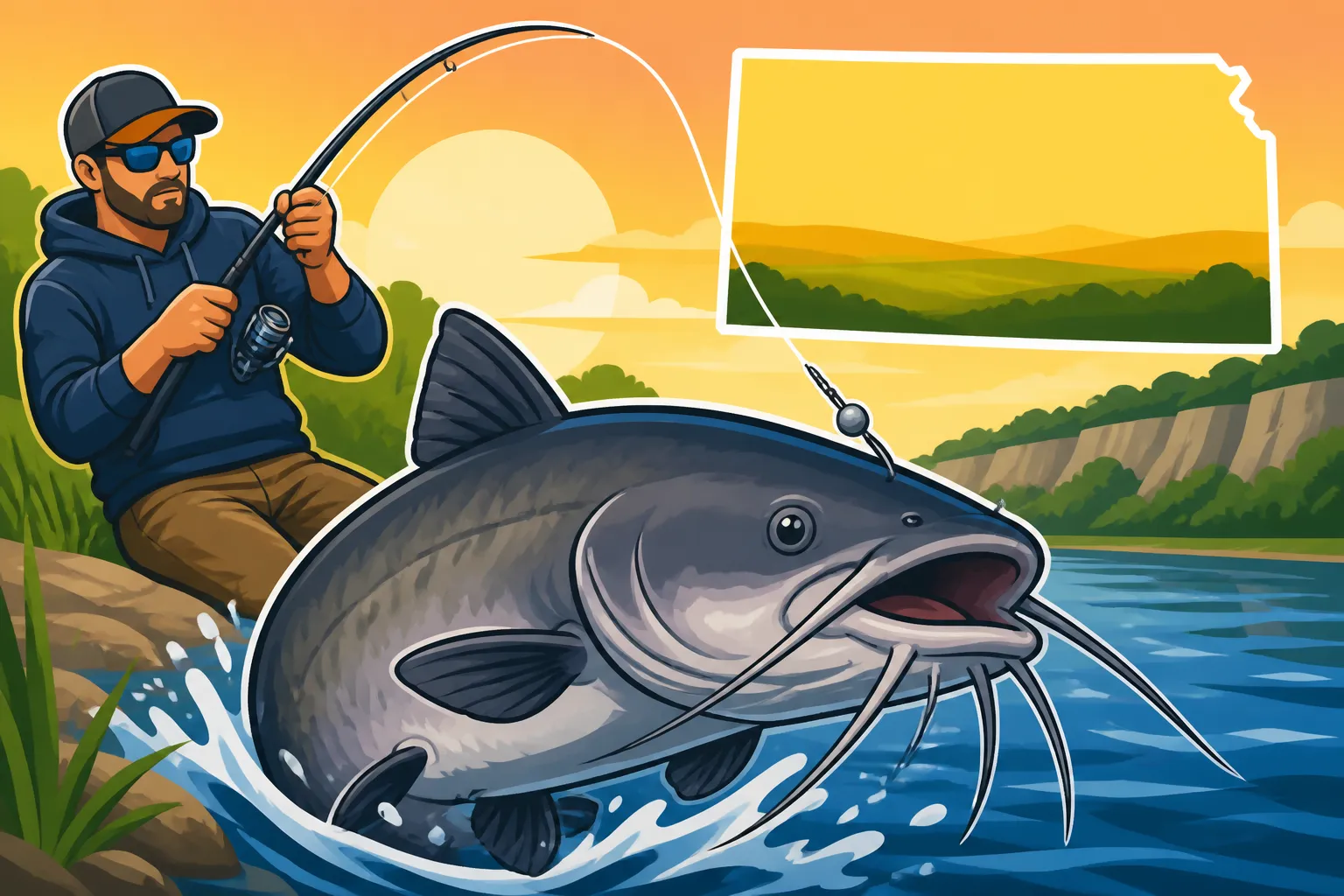
Blue Catfish (Ictalurus furcatus): If you're looking for a true river monster, the blue catfish is your target. These giants have deeply forked tails, a distinct hump on their back, and a smooth, scaleless body that ranges from slate blue to silvery grey. Unlike channel cats, blue cats are primarily piscivores, meaning they love to eat other fish, especially shad, carp, and even smaller catfish. They prefer deeper, faster-moving water in larger rivers like the Kansas River or the Missouri River, often congregating in deep holes, scour pits, or below dams. Catching a trophy blue cat requires heavy tackle and patience, but the fight they put up is legendary. For more in-depth information on these impressive fish, check out our guide on Kansas Blue Catfish Facts and Limits.
-
Flathead Catfish (Pylodictis olivaris): The flathead is a unique beast among the catfish family, easily identifiable by its flattened head, lower jaw that protrudes past the upper, and a rounded, unforked tail. Their coloration is typically mottled brown and yellow, offering excellent camouflage in the river bottom. What really sets flatheads apart is their diet and habits: they are almost exclusively ambush predators, preferring live bait. You won't typically find them scavenging on stink baits. They're solitary creatures, often found tucked away in heavy cover—think log jams, root wads, or deep undercut banks—waiting to pounce on an unsuspecting meal. They're also primarily nocturnal hunters. Targeting flatheads demands a different approach than channel or blue cats, and knowing the Kansas Flathead Catfish Daily Limit is important. To maximize your chances, understanding How to Catch Flathead Catfish at Night is a game-changer.
Reading the River: What Attracts Catfish?
Rivers are dynamic environments, and catfish use the current, structure, and depth to their advantage. Learning to "read" the river means understanding where these fish hold and why. It's not just about randomly casting; it's about making educated guesses based on the environment.
-
Current Seams: These are critical hotspots. A current seam is where fast-moving water meets slower water. Catfish love to sit just outside the main current in the slower water, waiting for food to drift by in the faster lane without having to expend too much energy fighting the flow. Look for these seams around points, wing dikes, bridge pilings, or even behind large submerged rocks. You might notice a visible line on the surface where the water flow changes. Mastering How to Fish a Current Seam for Catfish will significantly boost your success.
-
Structure, Structure, Structure: Like real estate, it's all about location. Catfish are drawn to structure for cover, ambush points, and as places where baitfish congregate. In rivers, this means fallen trees, log jams, rock piles, bridge pilings, old submerged cars, and even scour holes created by current around obstructions. Heavy cover provides protection from predators and offers shade and cooler water during hot summer days. The more complex the structure, the better, but it also means more potential for snags, so be prepared with extra tackle.
-
Depth Changes and Holes: Rivers aren't uniform. They have deep holes, shallower flats, and varying bottom contours. Catfish, especially larger blues and flatheads, will often retreat to deeper holes during the day or in colder water. These holes offer refuge and consistent temperatures. Identifying where a flat drops off into a deeper channel or where the river has scoured out a hole near a bend or obstruction is key. Your fish finder, if you have one, will be invaluable here, but even without one, you can often find these by paying attention to the river's flow and bank erosion.
Essential Gear and Bait for River Success
You wouldn't show up to a fancy dinner in your pajamas, and you shouldn't show up to a serious river catfishing trip with inadequate gear. The powerful currents and strong fish of Kansas rivers demand a reliable setup.
Rods, Reels, and Line: Building Your Foundation
Your rod, reel, and line are your primary connection to the fish, so choosing wisely is paramount. You need strength and durability.
-
Rods: For river catfishing, you'll want a medium-heavy to heavy action rod, typically 7 to 9 feet long. This length gives you better casting distance, leverage to fight bigger fish, and the ability to maneuver around bank obstacles. A rod with a stout backbone is essential for setting the hook in a catfish's tough mouth and pulling it out of heavy current or snags. Look for rods designed specifically for catfishing or heavy-duty freshwater applications. You can often find great options on sites like Amazon that clearly state their intended use.
-
Reels: A good reel for river catfishing needs to handle heavy line and provide a smooth, powerful drag system. Baitcasting reels (also known as conventional reels) are often preferred for their strength, line capacity, and ability to handle heavy weights. Look for reels with a high-quality, smooth drag that won't stutter under pressure, and a sturdy gear system. Spinning reels can work for smaller channel cats or if you prefer the ease of use, but ensure it's a larger, robust model built for heavy-duty fishing, not your average bass reel. Our guide on the Best Rod and Reel Combo for Catfish offers excellent recommendations tailored for different catfishing scenarios.
-
Line: When it comes to line, forget the finesse. You need strength and abrasion resistance. Monofilament line in the 20-30 lb test range is a popular choice for its shock absorption and knot-tying ease. However, many serious river catfishermen prefer braided line for its incredible strength-to-diameter ratio, zero stretch (which helps with hook sets and detecting subtle bites), and superior abrasion resistance against rocks and logs. If using braid, consider a leader of heavy monofilament or fluorocarbon to make it less visible to fish and to provide a sacrificial point against snags. For blue cats and flatheads, don't shy away from 50 lb test or even higher for braid.
Terminal Tackle: Rigs That Get Results
The business end of your line, where the bait meets the water, requires specific rigs to be effective in river currents.
-
Sinkers (Weights): Forget those small split shots. River catfishing requires heavy sinkers to keep your bait on the bottom and prevent it from being swept away by the current. Pyramid sinkers, no-roll sinkers, and flat bottom sinkers (like bank sinkers) are excellent choices because they dig into the bottom and resist rolling. Depending on the current, you might need anywhere from 2 ounces to 8 ounces or more. Always carry a variety!
-
Hooks: For catfish, a strong, sharp hook is paramount. Circle hooks are highly recommended, especially when using live bait, as they are designed to hook fish in the corner of the mouth, reducing gut-hooking and making for easier release. Sizes typically range from 5/0 to 10/0, depending on the bait size and target species. Kahle hooks or J-hooks can also be effective, particularly for cut bait, but require a more timely hook set.
-
Swivels and Leaders: Heavy-duty barrel swivels or ball-bearing swivels are essential to prevent line twist, especially when using cut bait or fishing in strong currents. Leaders of tough monofilament or fluorocarbon, often heavier than your main line, will provide extra abrasion resistance and are easier to replace if they get frayed or snagged. For flatheads and big blues, a 50-80 lb leader can be a good idea.
-
The Carolina Rig (or Slip Sinker Rig): This is a go-to for many river catfishermen. It consists of a slip sinker (pyramid or no-roll) threaded onto your main line, followed by a bead (to protect your knot), then tied to a strong swivel. A leader of 12-24 inches is then tied to the other end of the swivel, and your hook is tied to the end of the leader. This rig allows the fish to pick up the bait and move off with it without feeling the weight of the sinker, leading to more positive hook sets.
The Best Baits for Kansas River Catfish
When it comes to bait, variety is key. What one catfish species craves, another might ignore.
-
For Channel Catfish: These guys aren't picky.
- Prepared "Stink Baits": Dough baits, dip baits, and punch baits that have a strong, often pungent odor are highly effective. Brands like Danny King's, Sonny's, and Secret 7 are popular among Kansas anglers.
- Cut Bait: Shad, carp, sunfish, or even hot dogs cut into chunks are excellent. The scent trail they leave is irresistible.
- Worms: Nightcrawlers or large chunks of red wigglers can work wonders, especially in slower currents.
- Chicken Livers: A classic for a reason. Messy but effective.
- For a deeper dive into bait options, consult our article on Best Bait for Kansas Catfish.
-
For Blue Catfish: These predators want meat!
- Cut Bait: Freshly caught shad, carp, drum, or even smaller bluegill are top choices. The fresher, the better. Cut them into steaks or strips that are proportional to the size of fish you expect to catch.
- Live Bait: Smaller live shad or sunfish can be deadly, though more challenging to keep alive. The movement attracts big blues.
- Want to really entice those big blues? Check out Best Bait for Blue Catfish for more specific tactics.
-
For Flathead Catfish: Live bait is almost universally preferred.
- Live Perch, Sunfish, or Small Carp: A lively baitfish, hooked through the back or lips, presented near heavy cover, is a flathead's weakness. The size of the bait can vary, from 4-inch sunfish to 8-inch carp, depending on the trophy potential of your target river stretch.
- Live Shad: Also highly effective where available.
Proven Techniques for Targeting River Catfish
With your gear and bait ready, it's time to put some strategies into action. River fishing often requires a bit more finesse and understanding of water movement than lake fishing.
Anchor and Wait: The Classic Bottom Rig
This is arguably the most common and effective method for river catfishing. You find a promising spot, set up, and wait for the fish to come to you.
- Choosing Your Spot: Look for those current seams, deep holes, or areas with heavy cover (like log jams or brush piles) that are accessible from the bank or boat. If you're bank fishing, look for bends in the river where the current has scoured out a deeper hole on the outside bend. How to Catch Channel Catfish From the Bank provides more excellent tips for shore-based angling. Bridge pilings and wing dikes (those rock structures that jut out into the river) are also prime locations, as they create current breaks and eddies where catfish hold.
- Setting Up: Cast your Carolina rig (or similar bottom rig) upstream and let it drift naturally into the desired target zone. The heavy sinker should hold your bait firmly on the bottom. If your weight is consistently rolling, you need a heavier sinker. Use multiple rods, if permitted, and spread them out to cover different depths or current breaks.
- Patience and Observation: Catfish bites can range from a subtle tap-tap to a rod-bending thumper. Keep a close eye on your rod tips. If you're using circle hooks, resist the urge to set the hook immediately. Let the fish take the bait, and the hook will usually set itself as the fish turns away. When you feel a steady pull, reel down, lift your rod, and fight the fish!
Drift Fishing: Covering More Water
If anchoring isn't producing, or if you're trying to locate fish over a larger area, drift fishing can be incredibly productive, especially from a boat.
- Controlled Drift: Whether you're drifting from a boat or even slowly walking the bank with a rod, the idea is to let the current present your bait naturally. From a boat, you can use a trolling motor or a drift sock to control your speed, ensuring your bait stays near the bottom without constantly snagging.
- Bottom Bouncing: A variation of drift fishing, especially good for blue and channel cats. You use a heavy enough sinker that it occasionally "bounces" along the bottom as you drift. This motion can attract curious catfish.
- Targeting Depth: As you drift, pay attention to depth changes, humps, and holes. These variations in the river bottom are where catfish often congregate. By covering different depths, you increase your chances of finding actively feeding fish. This technique is fantastic for finding where the fish are holding on a particular day.
Targeting Current Seams and Structure
We talked about why catfish like current seams and structure; now let's discuss how to fish them effectively.
- Precision Casting: This is where accuracy pays off. You want to cast your bait precisely into the "sweet spot" of the current seam—right where the fast water meets the slow water. This allows your bait to be in the path of food drifting by, but in an area where the catfish don't have to fight the current as hard.
- Vertical Presentation (for Boats): If you're in a boat directly over a log jam or bridge piling, sometimes a vertical presentation is best. Drop your bait straight down, perhaps a foot or two off the bottom, or directly into pockets within the structure. This reduces snags and puts your bait right in their living room.
- Heavy Tackle is Your Friend: When fishing heavy cover, expect snags. But also expect big fish. Use your heaviest line and strongest hooks here, as you'll often need to muscle a fish out of its hiding spot before it can wrap your line around a submerged branch. A robust net or a gaff might also be necessary for landing larger specimens.
- Many of the Kansas River Catfish Spots will involve these types of structures and current breaks, making these techniques essential for success.
Seasonal Strategies and River Dynamics
The river is a living entity, constantly changing with the seasons and weather. Adapting your approach to these dynamics will improve your chances dramatically.
Spring and Summer: Prime Time Action
These seasons are often the most productive for river catfishing in Kansas, but each has its nuances.
- Spring: As water temperatures rise in spring, catfish become increasingly active. They move out of their deeper wintering holes and start feeding heavily to prepare for spawning. Look for them in areas with moderate current, slightly shallower flats adjacent to deeper channels, and around new growth near the banks. Pre-spawn activity can be phenomenal, with fish aggressively hitting various baits. Post-spawn, they might be a bit lethargic for a short period, but soon resume heavy feeding.
- Summer: The heat of summer pushes catfish into deeper, cooler water during the day, often near oxygen-rich current breaks or deep log jams. However, summer nights are prime time for river catfishing! The fish move shallower and become much more active under the cover of darkness. This is when flatheads really shine, coming out of their cover to hunt. Target major river bends, deep scour holes, and areas below dams. The Kansas Fishing Seasons Guide provides excellent overviews of year-round fishing opportunities.
Fall and Winter: Adapting to Colder Water
Don't put your catfishing gear away just because the leaves are changing or snow is falling. River catfishing can still be excellent, it just requires different tactics.
- Fall: As water temperatures cool, catfish go on a major feeding binge to fatten up for winter. This can be one of the best times to catch large channel and blue cats. They'll be active throughout the day, often found in a wider range of depths. Look for them concentrated near baitfish schools, often in deeper runs and holes as winter approaches. The Best Time to Fish a Kansas River After Rain during the fall can be especially productive as runoff can wash new food into the river, stimulating a feeding frenzy.
- Winter: Catfish activity slows down significantly in cold water, but they don't stop eating entirely. They typically retreat to the deepest, most stable holes in the river, often in large schools. Your approach needs to be slower and more methodical. Present baits directly in front of them with minimal movement. Live bait is often less effective, and cut bait or even large chunks of nightcrawlers fished slowly on the bottom in these deep holes can still entice bites. Winter fishing requires patience, but catching a big blue cat from a chilly Kansas river is incredibly rewarding.
Remember, every river stretch is unique, and conditions can change rapidly. Pay attention to water levels, current speed, and clarity. Don't be afraid to experiment with different baits and techniques. And above all, enjoy the peace and challenge that comes with river catfishing in the heart of Kansas! You can find a wide array of specialized catfishing rods, heavy-duty reels, and durable braided lines on Amazon to get you started or upgrade your existing setup.
Disclaimer
This article is for general informational purposes only and does not constitute professional advice. Laws, prices and regulations vary by location and change over time. Consult a qualified professional for guidance on your specific situation.