Kansas River Catfish Spots
Trying to navigate the expansive, often murky waters of the Kansas River, affectionately known as the Kaw, in search of elusive catfish can feel like a daunting task. It's easy to get overwhelmed by its size and current, leaving many anglers wondering where to even cast a line for those hard-fighting channel, blue, and flathead cats. This comprehensive guide is designed to cut through that frustration, giving you the insider knowledge and practical advice you need to pinpoint productive catfish spots and reel in some impressive catches on the Kaw.
Understanding the Kansas River for Catfishing
The Kansas River isn't just a waterway; it's an ecosystem, a living, breathing entity that changes with the seasons and water levels. To consistently catch catfish here, you first need to understand its unique characteristics and how they influence the fish.
The Lay of the Land: River Characteristics
The Kaw stretches approximately 170 miles, flowing eastward from where the Republican and Smoky Hill rivers converge near Junction City, eventually emptying into the Missouri River at Kansas City. It’s primarily a slow-moving, meandering river, often characterized by its turbid (muddy) waters, especially after rainfall. This turbidity isn't a bad thing for catfish; in fact, they thrive in it, using their keen sense of smell and barbels to locate food. The riverbed varies, featuring everything from sandy flats to rocky stretches and substantial submerged timber. Understanding this diverse underwater landscape is key to locating where catfish prefer to ambush prey or rest.
The constant flow and periodic flooding carve out deep holes, create sandbars, and deposit large amounts of woody debris, all of which become prime habitat for different catfish species at different times. The river's dynamics are always at play, making it a challenging but rewarding fishery. Knowing the river's overall flow, the location of major bends, and where tributary creeks enter can give you a significant advantage in predicting where the fish will be.
Prime Catfish Species in the Kaw
The Kansas River is a fantastic destination for all three major catfish species found in Kansas: channel catfish, blue catfish, and flathead catfish. Each has its preferred habitat and feeding habits, which means you can tailor your approach depending on what you're targeting.
Channel catfish are by far the most abundant and widespread. They're opportunistic feeders, found almost everywhere in the river, from swift currents to quiet backwaters. You'll often find them in moderate currents, near structure, or along channel edges. They're willing biters and a great target for anglers of all skill levels. If you're looking for sheer numbers and consistent action, channels are your best bet.
Blue catfish are the true river giants, known for their immense size and powerful fights. While not as universally distributed as channels, they are present in significant numbers, especially in the deeper, swifter portions of the lower and central Kaw, particularly downstream of Topeka and closer to Kansas City. Blues prefer strong currents and deeper water, often holding along ledges, in deep holes, and around submerged structures where current funnels food to them. Catching a trophy blue cat here is a bucket-list item for many Kansas anglers, and the Kansas River offers legitimate opportunities for truly massive fish. For more detailed information, be sure to check out our Kansas Blue Catfish Facts and Limits guide.
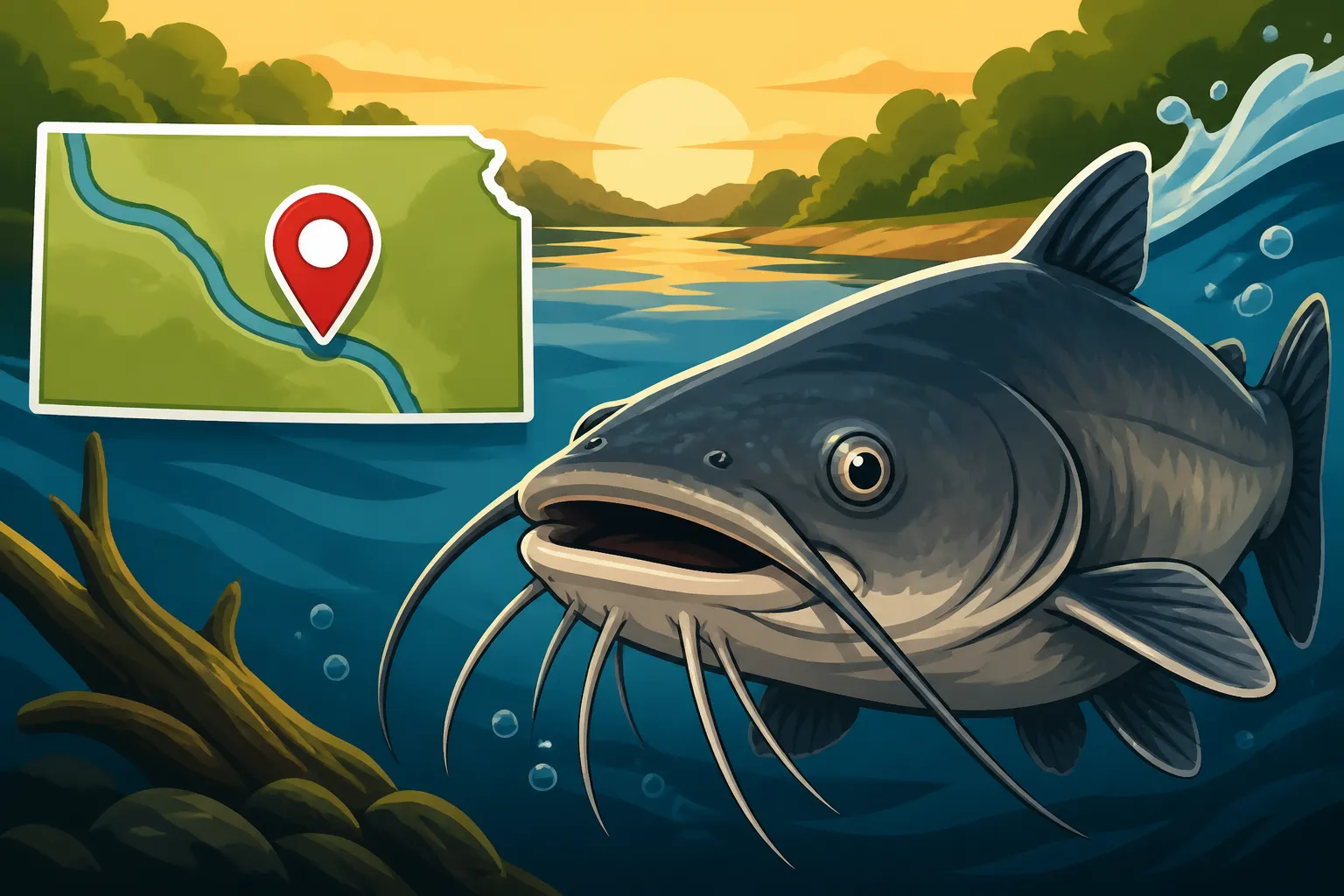
Flathead catfish are the river's apex predators, preferring live bait and often found in heavy cover like logjams, submerged trees, and undercut banks. They're ambush hunters and will often stake out a territory in slow-moving, deep water near structure. Unlike channels and blues, flatheads are solitary and territorial. While you might catch multiple channel cats from one spot, a flathead spot often yields one or two big fish. Targeting flatheads requires patience and specific tactics, but the reward of a huge, powerful fish is unparalleled. You can learn more about these fascinating fish in our Kansas Flathead Catfish Daily Limit resource.
Seasonal Catfish Movements
Catfish movements in the Kaw are highly seasonal, dictated by water temperature, flow, and spawning cycles. Understanding these patterns will dramatically improve your success.
In spring, as water temperatures rise, catfish begin to become more active. Channel cats will often move into shallower, warmer backwater areas and creek mouths, feeding aggressively before the spawn. Blue cats and flatheads will also start to move out of their deep wintering holes, looking for food in moderately deep areas with good current. This is an excellent time for targeting channels with stink baits or cut bait in areas where the water warms up first. As spring progresses, the prespawn bite can be furious, especially for channels and blues fattening up.
Summer is prime catfishing season. Post-spawn, channel catfish disperse throughout the river, actively feeding. They can be found in a variety of habitats, including shallow flats at night, deeper holes during the day, and around any available cover. Blue cats will be in deeper, faster water, often congregating in channel bends and scour holes. Flatheads will remain tightly associated with heavy cover. Night fishing becomes incredibly productive as the water is cooler, and catfish become more comfortable moving into shallower areas to feed. For more tips on summer fishing, check out our Kansas Summer Catfish Fishing Tips guide.
As fall approaches and water temperatures begin to drop, catfish start to migrate to their wintering grounds. This often means deeper holes, slower current areas, and places with stable temperatures. The fall can offer another fantastic bite, especially for larger blue and flathead catfish as they gorge themselves in preparation for winter. Look for them in deep bends, below dams, and in confluence areas where the river meets a major tributary.
In winter, catfishing becomes more challenging but not impossible. Catfish become sluggish, congregating in the deepest, slowest-moving holes in the river where they can conserve energy. While they will still eat, their metabolism slows down significantly. Fishing during warm fronts or on sunny days can sometimes coax a bite, but it requires patience and precise bait presentation.
Essential Gear and Techniques for River Catfish
Successfully landing a big Kansas River catfish requires not just knowing where they are, but also having the right tools and strategies. This river can test your gear and your patience, so coming prepared is crucial.
Rods, Reels, and Line for Big River Cats
When you're dealing with hard-fighting catfish in strong currents and around heavy structure, your gear needs to be up to the task. Forget the lightweight panfish setups; you need serious muscle.
For channel catfish, a medium-heavy action rod, typically 7 to 8 feet long, paired with a reliable baitcasting or spinning reel spooled with 20-30 pound monofilament or braided line is a good starting point. This setup offers enough backbone to handle channels in the 5-15 pound range while still providing sensitivity for detecting lighter bites. A quality reel with a smooth drag system is non-negotiable, as even channel cats can peel line in the current.
When targeting blue or flathead catfish, especially the trophy-sized ones that roam the Kaw, you need to step it up significantly. Heavy action rods, 7 to 9 feet in length, are ideal. These rods provide the leverage needed to turn large fish away from snags. Pair them with robust baitcasting reels designed for heavy line and big fish, such as those from Abu Garcia or Penn. Spool your reels with 40-80 pound braided line, often with a 30-50 pound monofilament or fluorocarbon leader. Braided line offers superior strength, sensitivity, and resistance to abrasion, which is critical when fishing around logs and rocks. Check out our detailed guide on Best Rod and Reel Combo for Catfish for specific recommendations.
Best Baits and Rigs for the Kaw
Catfish are not particularly picky eaters, but certain baits and rigs are far more effective on the Kansas River, especially when dealing with current and snags.
For channel catfish, almost any strong-smelling bait will work. Cut bait (shad, carp, perch), chicken livers, stink baits, and shrimp are all highly effective. Prepare your cut bait by slicing it into strips or chunks; the oilier the fish, the better. Chicken livers are notoriously messy but irresistible to channels. Dough baits and commercially prepared stink baits also work wonders, especially when fishing for numbers.
When it comes to blue catfish, fresh cut bait is king. Shad is arguably the most effective, but fresh carp, drum, or even small panfish cut into chunks or fillets will entice them. Blues are primarily piscivorous (fish-eaters), so mimicking their natural forage is key. For more in-depth advice on what these powerful fish prefer, consult our Best Bait for Blue Catfish guide.
Flathead catfish are distinct in their preference: they overwhelmingly prefer live bait. Green sunfish, bluegill, small carp, or suckers are excellent choices. The bait needs to be lively and presented near their cover. Hook your live bait through the back, behind the dorsal fin, or through the lips to keep it active and swimming naturally.
As for rigs, the slip-sinker rig (also known as a Carolina rig) is a workhorse on the Kaw. It allows the line to run freely through the sinker, meaning the fish doesn't feel resistance when it picks up the bait. A heavy bell or pyramid sinker (2-6 ounces or more, depending on current), a bead, a barrel swivel, and a 12-24 inch leader tied to a stout circle hook (size 5/0-10/0) is a go-to setup. This rig keeps your bait on the bottom where catfish feed while minimizing snags. The Santee Cooper rig, which incorporates a small float on the leader, is excellent for lifting your bait slightly off the bottom, making it more visible and keeping it out of debris, especially when drifting.
Techniques for Different River Conditions
Fishing the Kansas River means adapting to its ever-changing moods. Conditions like high water, low water, and strong currents demand different approaches.
When the current is strong, especially after heavy rains, catfish often move out of the main flow and into areas with slower water, such as eddies, slack water behind islands, or the inside bends of the river. Focus your efforts on these current breaks. Use heavier weights to hold your bait in place, and consider anchoring your boat securely to precisely target specific spots. Drifting baits downstream can also be effective, allowing your offering to cover more ground and appear natural.
During low water periods, the river exposes more sandbars and often runs clearer. This can make catfish more wary, especially during the day. Focus on fishing the deepest holes, main channel edges, and any remaining structure that provides cover. Night fishing becomes even more critical in clear, low-water conditions, as catfish are more inclined to move and feed under the cover of darkness. Try targeting the deeper scour holes or the confluence areas where tributary creeks meet the main river.
For bank fishing, finding accessible spots can be a challenge. Look for public access points in parks or wildlife areas. When fishing from the bank, you'll want to cast to the edges of the main channel, into eddies, or near visible structure like fallen trees. Longer rods can help with casting distance and managing line in the current. If you're targeting those bigger blues and flatheads, a boat can often get you to the most productive, inaccessible spots. For boaters, ensure you understand the Kansas Boat Registration for Anglers rules.
Top Public Access Catfish Hotspots on the Kansas River
While the entire Kansas River holds catfish, certain stretches and access points are known for being particularly productive. I'm talking about places where anglers consistently haul in respectable numbers and even trophy-sized fish.
Eastern Kansas River Gems
The eastern stretch of the Kansas River, particularly from Topeka eastward to its confluence with the Missouri River in Kansas City, offers some incredible catfishing opportunities, especially for blue catfish.
Kansas City Area (Confluence with Missouri River): This is arguably one of the best areas for trophy blue catfish on the entire river. The sheer volume of water and the confluence of two major rivers create incredibly dynamic currents, deep holes, and abundant food sources. Public access exists at parks like Riverfront Park or along sections of the river in Wyandotte County. Fishing below the old Central Avenue Bridge or near the KCK Levee can be very productive. The swift currents here demand heavy tackle and often require a boat to reach the best spots, but the reward can be a monster blue cat. Be mindful of barge traffic and strong currents when navigating this section.
Lawrence Area (Bowersock Dam and Riverfront Park): The area around Lawrence is a fantastic hotspot. The Bowersock Dam, while not directly fishable from its face, creates significant current breaks and scour holes both upstream and downstream that attract all three species of catfish. Below the dam, the turbulence and oxygenated water draw fish in. Public access is available at Riverfront Park in Lawrence, offering excellent bank fishing opportunities. Many anglers have success casting cut bait or chicken livers into the seams and eddies created by the dam's outflow. Access is generally good, and this area can be productive year-round, with particularly good action in spring and fall.
Central Kansas River Stretches
Moving westward, the central portion of the Kaw, encompassing areas around Topeka and Manhattan, provides consistent action for channel catfish and good chances at blues and flatheads.
Topeka Area (Kaw River State Park & Willard Bridge): Near Topeka, you'll find accessible areas that yield plenty of channel catfish and a good number of blues. Kaw River State Park offers excellent public access for bank anglers and often has areas where you can launch a small boat or kayak. Fishing upstream or downstream from the I-70 bridge and the Willard Bridge (west of Topeka) can be very productive. These bridge pilings create current breaks and deep pockets that catfish love. Use heavier weights to keep your bait stationary in the current, and don't be afraid to try different depths along the channel ledges. This area is also a good spot to hire a local guide if you're unfamiliar with the river, as they can quickly put you on fish.
Manhattan Area (Kaw Valley Access & Tuttle Creek Downstream): The Manhattan area, where the Big Blue River joins the Kansas River, is another prime location. The confluence itself is a major draw for catfish, as it brings in new food sources and creates complex current patterns. Access points like Kaw Valley Access provide a good starting point. Additionally, the Kansas River downstream from Tuttle Creek Lake can be very productive, as water releases from the lake can push baitfish downstream and create consistent flows. Look for deeper holes and logjams in this section. This area often holds a good mix of channels, blues, and flatheads, particularly in the larger bends and deeper sections.
Western Kansas River Opportunities
While perhaps not as famous for its trophy blues as the lower river, the westernmost stretch of the Kansas River, near its headwaters, offers excellent fishing, especially for channel and flathead catfish.
Junction City Area (Confluence of Republican and Smoky Hill Rivers): This is where the Kansas River officially begins, formed by the convergence of the Republican and Smoky Hill Rivers. This confluence area near Junction City is a natural magnet for catfish. The turbulent mixing of these two rivers creates diverse habitats, from faster riffles to deeper pools, all holding catfish. Access can be found in various spots near Junction City, often requiring a bit of exploration to find the best bank fishing holes. This area is fantastic for those seeking a more rugged, less crowded river experience.
Ogden/St. George Area: Further downstream from Junction City, past Fort Riley, the river continues to offer great opportunities. Public access in towns like Ogden or St. George can lead to less pressured stretches of river. Look for areas with visible logjams, deep cut banks, or noticeable current breaks. These quieter sections can be excellent for targeting flatheads with live bait, as they prefer undisturbed heavy cover. Many of these spots might require a short walk, making them ideal for anglers willing to put in a little effort for potentially bigger rewards.
Reading the River: Locating Catfish Structure
Catfish don't just swim randomly; they relate to specific underwater structures and current dynamics. Learning to "read the river" is perhaps the most critical skill for consistent success on the Kansas River. It's like deciphering a secret map only visible to those who know what to look for.
Identifying Prime Current Breaks and Eddies
Current is everything on a river, and catfish use it to their advantage. They don't want to fight the full force of the current all day, but they also want to be close to it so food washes directly to them. This is where current breaks and eddies come in.
A current break is any obstruction that slows down the main flow of water. This could be a submerged log, a rock pile, a bridge piling, a point of land jutting into the river, or even a sudden change in depth. Catfish will sit in the slower water just downstream of these breaks, conserving energy while waiting for food to drift by. Imagine a calm pocket just behind a large boulder in a fast-moving stream – that's prime real estate for a hungry cat. Look for boils, seams, or areas where the water looks calmer adjacent to faster flow. Casting your bait right into these seams, allowing it to settle in the slower water, is often deadly effective.
Eddies are areas where the current forms a circular motion, often found on the inside bends of the river or downstream from major obstructions. These areas typically have much slower current or even reverse flow. Eddies accumulate debris and often hold baitfish, making them prime feeding stations for catfish. They also provide resting spots where catfish can ambush prey without expending much energy. Pay close attention to the size and depth of eddies; larger, deeper ones are more likely to hold bigger fish. Bank anglers often find good success by casting into the heart of an eddy or along its current-facing edge.
Fishing Deeper Holes and Channel Swings
The main channel of the Kansas River isn't a straight, uniform trough. It winds and deepens, creating critical habitat features that catfish utilize throughout the year.
Deeper holes are essential, especially during periods of high current, low water, or cold weather. These holes provide sanctuary from strong flows and stable water temperatures. They are often found on the outside bends of the river, where the current scours away the bottom, creating deep pockets. They can also be found downstream of significant obstructions like bridge abutments or natural rock formations. Using a depth finder from a boat is the most efficient way to locate these holes. For bank anglers, identifying outside bends and looking for slower, darker water can indicate a deeper area. Dropping a heavy weight into these holes and letting your bait sit on the bottom for extended periods can produce some of the largest flatheads and blue cats.
Channel swings refer to the way the main river channel carves from one side of the river to the other. Where the channel swings close to the bank, it creates a deeper, often steeper drop-off, forming an underwater "ledge" or "shelf." Catfish will patrol these ledges, moving up and down to feed. This is especially true for blue catfish, which prefer these deeper, current-swept areas. Fishing along these channel edges, allowing your bait to sit right where the drop-off begins, can be incredibly productive. These are often overlooked spots by less experienced anglers, but they hold consistent numbers of quality fish.
Understanding Wood Piles and Submerged Cover
Woody debris, in all its forms, is a magnet for catfish in the Kansas River. From small snags to massive logjams, this submerged cover provides critical shelter, ambush points, and food sources.
Logjams and brush piles are natural attractors for all three species of catfish, but especially for flatheads. These areas offer protection from predators, a break from the current, and a concentration of baitfish and other invertebrates that shelter within the timber. Fishing directly into or very close to these snags requires patience and often results in lost tackle, but the payoff can be a trophy fish. If you're using live bait for flatheads, present it right at the edge or slightly into the heaviest cover. For channel catfish, casting cut bait or stink bait around the perimeter of a brush pile can be very effective. Remember to use heavy line and a stout rod to muscle fish out of this heavy cover quickly before they can wrap you up.
Undercut banks are another form of submerged cover, often created by erosion on the outside bends of the river. The current washes away the soil beneath the bank, creating a cavernous area where catfish, particularly flatheads, love to hide. These are often difficult to fish from the bank without snagging, but they are prime targets for boat anglers. Carefully position your boat and drop baits vertically along these banks, allowing them to drift into the undercut section. These spots can be particularly productive after high water events, as the river will have reshaped and created new hiding spots.
Safety and Regulations for Kansas River Catfishing
Fishing the Kansas River is an incredible experience, but it comes with responsibilities. Knowing the regulations and prioritizing safety are paramount for an enjoyable and legal trip.
Navigating River Currents and Hazards
The Kansas River can be deceptively powerful. Even on calm-looking days, strong currents, hidden obstacles, and rapidly changing conditions can pose serious risks.
If you're fishing from a boat, always wear a life jacket. It's not just a good idea; it's often legally required, especially for children. The Kansas Department of Wildlife, Parks and Tourism (KDWP) has clear guidelines on Kansas Life Jacket and Boating Safety Guide. The turbid water of the Kaw often hides submerged logs, sandbars, and other hazards that can damage your propeller or even capsize a small vessel. Navigate slowly and cautiously, especially in unfamiliar areas. Keeping a close eye on the current and being aware of downstream hazards is crucial. Always let someone know where you're going and when you expect to return, especially if you're fishing alone.
Bank anglers also face risks. The banks can be muddy, slippery, and unstable, especially after rain or during periods of high water. Always watch your footing, and be aware of steep drop-offs or undercut banks that could collapse. Never turn your back on the river, particularly if the water level is rising. Flash floods can occur, and the current can be incredibly strong near the water's edge.
Important Kansas Fishing Regulations
Adhering to state fishing regulations is not just about avoiding fines; it's about preserving the fishery for future generations. The KDWP sets specific rules for bag limits, length limits, and tackle restrictions on the Kansas River.
You'll need a valid Kansas Fishing License Guide to fish the Kaw if you're 16 years or older. This is non-negotiable. Always carry your license with you, whether it's a physical copy or a digital version on your phone.
The daily creel limits for catfish species are generally generous, but it's essential to know the specific rules. For instance, while channel catfish often have a daily limit of 10, blue catfish may have more restrictive length and bag limits, especially for larger fish, to protect trophy populations. Flatheads also have specific regulations. These can vary by water body, so always check the latest Kansas Fishing Regulations Explained before you head out. Familiarize yourself with the Kansas Channel Catfish Daily Limit, Kansas Blue Catfish Facts and Limits, and Kansas Flathead Catfish Daily Limit to ensure compliance.
Certain tackle restrictions might apply, especially concerning trotlines or jug fishing. While these methods can be highly effective for catfish, they have specific rules regarding the number of lines, hooks per line, and identification requirements. Always check the current regulations if you plan to use these methods.
Respecting Private Property and Public Access
The Kansas River flows through a mix of public and private lands. It's your responsibility as an angler to know where you can legally access the river and respect private property.
While the riverbed itself is generally considered public up to the ordinary high-water mark, accessing it often requires crossing private land. Stick to designated public access points, such as state parks, county parks, boat ramps, and wildlife areas. Never trespass on private property. If you're unsure whether an area is public or private, err on the side of caution and find another spot. Asking for permission from landowners is always a good idea if you believe a private stretch of bank offers good fishing.
When you're at public access points, be considerate of other users. Don't block boat ramps, leave trash behind, or monopolize prime fishing spots. Pack out everything you pack in, including any discarded fishing line. The health and accessibility of our fishing spots depend on all of us doing our part to keep them clean and respected. Leaving a place better than you found it ensures that others can enjoy it too, and it fosters goodwill with landowners and local communities.
Planning Your Kansas River Catfishing Adventure
A successful catfishing trip on the Kansas River isn't just about showing up with a rod and reel. It involves thoughtful planning, leveraging local expertise, and being prepared for whatever the river throws your way.
Best Times to Hit the Water
Timing is everything in fishing, and catfishing on the Kansas River is no exception. Understanding the best times can dramatically increase your chances of success.
Generally, late spring through early fall offers the most consistent action for all three catfish species. As mentioned earlier, the prespawn bite in late spring (May-June) can be incredible as fish feed heavily. Summer nights are iconic for catfishing, with cooler temperatures and active fish moving into shallower areas. Many anglers swear by the moon phase, often finding success during the new or full moon periods when tidal forces might influence river currents and fish activity. However, any time you can get out is a good time!
When it comes to the time of day, catfish are often most active during low-light conditions. This means dawn, dusk, and throughout the night are prime times, especially during the hot summer months. During the day, particularly in clear or low water, catfish tend to hold in deeper, darker holes or heavy cover. If you're fishing during the day, focus on these deeper, structured areas. After a significant rain, when the water is rising and turning murky, catfish often go on a feeding frenzy at any time of day, taking advantage of the increased current and washed-in food.
Using Local Knowledge and Guides
Sometimes, the best way to crack the code of a complex river like the Kaw is to tap into the knowledge of those who fish it regularly.
Local bait and tackle shops are invaluable resources. The folks working there live and breathe local fishing. They can tell you what baits are working, what sections of the river are producing, and what the current conditions are like. Don't be shy about asking for advice on the Best Bait Shops Near Milford Lake or other areas. They often have the most up-to-date information on river levels, recent catches, and specific hotspots that might be overlooked.
Hiring a local fishing guide is an investment that can pay dividends, especially if you're new to the Kansas River or want to target a specific trophy species. A good guide knows the river's secrets, where the deep holes are, which snags hold big flatheads, and what baits are working on any given day. They can also provide all the necessary gear and ensure a safe trip. Websites like FishingBooker are excellent platforms to find and book experienced Kansas River catfish guides. They provide details on guides' specialties (e.g., targeting trophy blue cats), their available dates, and even reviews from other anglers, taking the guesswork out of finding a reputable expert to put you on fish. This can save you countless hours of trial and error and significantly increase your chances of a memorable catch.
Preparing for a Successful Trip
Being well-prepared goes beyond just having the right gear. It means anticipating the needs of your trip and ensuring comfort and efficiency on the water.
Check the weather and river conditions before you leave. Heavy rains upstream can cause rapid rises in water levels and increased current, making some areas unfishable or unsafe. Websites like the USGS provide real-time river gauges. Pack appropriate clothing, including rain gear if there's any chance of precipitation, and plenty of water, especially during hot summer days. Bug spray is also a must for river fishing.
A good cooler filled with ice is essential for keeping bait fresh and, more importantly, for properly storing any fish you plan to keep. Know your daily limits and only keep what you'll eat. Pack a first-aid kit, a headlamp for night fishing, and a sharp fillet knife if you plan to process your catch on the spot. For larger fish, a sturdy landing net or a set of lip grippers is crucial for safely landing and handling them. Ensure your Best Net for Landing Kansas Catfish is ready for action. Having these essentials in order means you can focus on the fishing, not on unexpected inconveniences.
| Catfish Species | Preferred Habitat | Best Baits | Typical Rig | Prime Season |
|---|---|---|---|---|
| Channel Catfish | Moderate current, structure, backwaters | Cut bait, chicken livers, stink bait, shrimp | Slip-sinker, Santee Cooper | Spring, Summer, Fall |
| Blue Catfish | Deep, swift current, channel bends, ledges | Fresh cut bait (shad, carp, drum) | Heavy slip-sinker, Santee Cooper | Spring, Summer, Fall |
| Flathead Catfish | Heavy cover (logjams, undercut banks), deep, slow water | Live bait (sunfish, bluegill, suckers) | Heavy slip-sinker, three-way swivel | Summer, Fall |
Disclaimer
Fishing conditions and regulations in Kansas can change. Always check the latest Kansas Department of Wildlife, Parks and Tourism (KDWP) regulations before fishing. This guide is for informational purposes only and does not guarantee fishing success. Exercise caution and prioritize safety when on or near the water.