Best Lures for Hybrid Striped Bass
Chasing after hybrid striped bass in Kansas can be a real thrill, but sometimes it feels like they're playing hard to get, especially when you're not sure which lures will truly grab their attention. It's frustrating to cast all day with no bites, wondering if your tackle box is just missing that one magic bait. This guide is all about cutting through that confusion, helping you understand the best lures to entice those hard-fighting wipers, ensuring your next trip out on the water is more successful and, dare I say, more fun.
Understanding Hybrid Striped Bass Behavior and Forage
Before we even dive into specific lures, it’s absolutely crucial to understand what makes a hybrid striper tick. These fish, often called "wipers" here in Kansas, are a cross between a striped bass and a white bass. This unique genetic blend gives them the aggressive feeding habits of a striper with the schooling tendencies of a white bass, making them incredible fighters but also presenting a challenge in knowing how to approach them. They grow large, fight hard, and are almost always on the hunt for food.
The Primary Diet of Kansas Wipers
Wipers are opportunistic predators, but their diet in Kansas reservoirs like Milford Lake or Cheney Reservoir is overwhelmingly dominated by baitfish. Think gizzard shad and threadfin shad. These silvery, schooling fish are the primary forage base for wipers, and understanding this is the first step in selecting the right lures. If your lure doesn't imitate a shad, either in appearance, action, or vibration, it’s likely going to be less effective. They often ambush schools of shad, driving them to the surface or pinning them against structures. This behavior dictates a lot about where and how we fish for them.
It's not just about what they eat, but how they eat it. Wipers are highly visual predators, especially in clear water, but they also rely on their lateral line to detect vibrations from struggling baitfish. This means lures that create a strong "thump" or flash can be incredibly effective, even if the water isn't perfectly clear. When you're out on the water, pay attention to any signs of baitfish, like nervous ripples on the surface or birds diving, as these are often indicators that wipers are actively feeding nearby. Understanding these patterns is key to applying your lure knowledge effectively.
Where and When Wipers Feed Most Actively
Wipers are creatures of habit to some extent, and knowing their general patterns can significantly improve your chances. They thrive in large, open water reservoirs, often congregating around main lake points, submerged humps, creek channels, and dam faces. During certain times of the year, particularly spring and fall, they will chase baitfish into the shallower coves or up into river arms, leading to exciting surface action. This makes the spring and fall prime seasons, but they can be caught year-round. For more detailed insights, checking out our guide on Kansas Wiper Fishing Techniques can provide excellent context.
The time of day also plays a huge role. Early mornings and late evenings, or even night fishing during the summer, can be incredibly productive. During these low-light conditions, wipers often push baitfish to the surface, creating explosive feeding frenzies. On bright, sunny days, they tend to drop deeper, holding in cooler, darker water near thermoclines or deep structure. This means you’ll need a versatile tackle box, with lures suitable for both shallow, aggressive surface feeding and deeper, more subtle presentations. Don't forget, understanding Kansas Fishing Seasons Guide will also help you pinpoint the best times to target these magnificent fish.
Top Lure Categories for Hybrid Striped Bass in Kansas
Now for the fun part: picking out the best lures! Because wipers are so aggressive and often key in on schooling baitfish, your lure choices should reflect that. We're looking for lures that mimic shad, have erratic action, or create significant vibration. Having a good selection of these in your tackle box is paramount for consistent success.
Crankbaits and Lipless Crankbaits
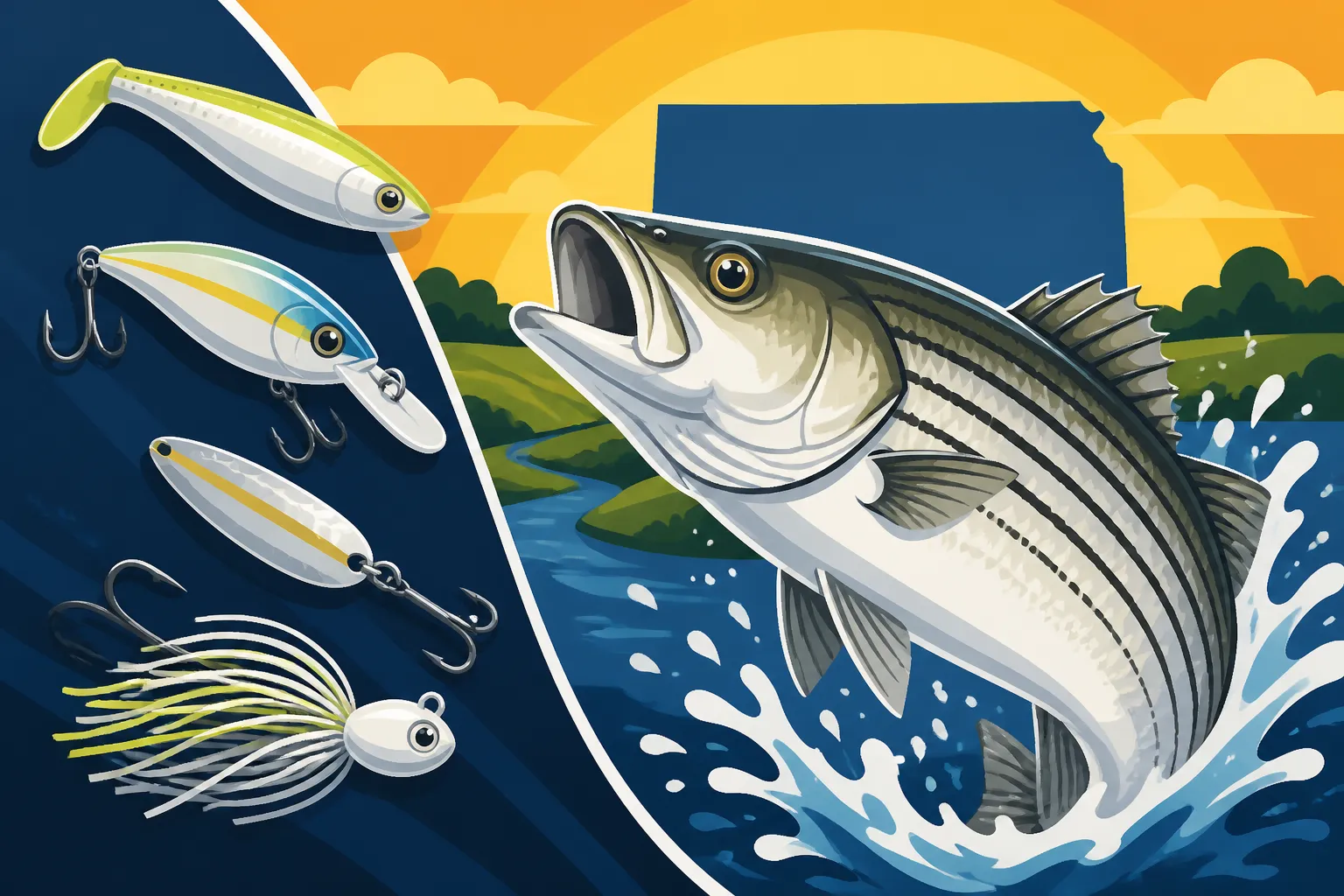
Crankbaits are absolute workhorses for wiper fishing, especially when fish are suspended or feeding in the mid-depths. Lipless crankbaits, like a classic Rat-L-Trap or Bill Lewis's Rat-L-Snare, are fantastic for covering a lot of water quickly. Their tight wobble and loud rattles call fish from a distance, making them deadly when wipers are actively chasing shad. Look for chrome, white, or shad-pattern colors – these are almost universally effective. You can rip them, steady retrieve them, or even yo-yo them off the bottom. These are particularly useful when you're exploring new areas or trying to locate active schools.
Deep-diving crankbaits come into their own when wipers are holding deeper, say 15-25 feet down, often around submerged humps or channel edges. Brands like Strike King and Norman make excellent deep divers that get down quickly and stay there. Again, shad patterns are king. A fast retrieve with an occasional pause can often trigger a strike from a hesitant wiper. When you're fishing areas like the main lake points at El Dorado Lake, where fish can be holding tight to structure, a crankbait that can reach those depths is invaluable. Finding a good assortment of these on Amazon is usually pretty straightforward, giving you plenty of options for different depths and colors.
Soft Plastic Swimbaits and Grubs
Soft plastic swimbaits, especially those with a paddle tail, are incredibly versatile and often imitate shad almost perfectly. Rigged on a jig head, they can be cast and retrieved, slow-rolled along the bottom, or vertically jigged when you've found a school on your fish finder. Sizes from 3 to 6 inches are generally best, with colors like white, pearl, chartreuse, or natural shad being top producers. The subtle tail kick of a swimbait can be incredibly enticing to wipers, especially when they're a bit finicky or the baitfish are smaller.
Grubs, particularly curly-tail grubs, on a jig head are another staple. They offer a more subtle action than a paddle tail but still provide plenty of movement and vibration. They are often overlooked but can be killer, especially when fish are keying in on smaller baitfish. The beauty of soft plastics is their adaptability. You can easily adjust the jig head weight to control your depth and fall rate, making them effective from the surface all the way down to the bottom. For targeting wipers deeper, pair a 4-inch swimbait or grub with a 1/2 oz or 3/4 oz jig head. This combination works wonders on fish holding near the bottom in places like Tuttle Creek Lake.
Jigs and Spoons
Metal spoons are fantastic for vertical jigging, especially when you've marked a school of wipers directly beneath your boat. A Kastmaster or a Johnson Silver Minnow, in silver or chrome, dropped right into the school and jigged aggressively can produce fast action. The erratic flash and flutter mimic a dying baitfish, which wipers can't resist. Spoons are particularly effective during the colder months when fish are less active and concentrated in deeper water, but they can also work well when fish are schooling up in summer thermoclines.
Bucktail jigs, or similar hair jigs, are another classic. Their pulsating action and ability to be fished at almost any depth make them extremely effective. Tipped with a piece of cut bait or a soft plastic trailer, they can be deadly. These are especially good for casting into areas where wipers are busting bait on the surface, or for working deeper ledges. Similarly, weighted swim jigs with a grub or paddletail trailer combine the best of both worlds, offering a weedless presentation for fishing around submerged cover. When considering your Kansas Fishing Gear Guide, ensure you have a variety of jig types to adapt to different conditions.
Topwater Lures
When wipers are actively crashing bait on the surface, there's nothing more exciting than a topwater explosion. Poppers, walk-the-dog style lures like a Zara Spook, or prop baits can be incredibly effective. The commotion they create on the surface draws aggressive strikes. White, chrome, and bone are classic colors. The key here is to observe the feeding behavior. If you see fish blowing up on bait, get a topwater lure there quickly. Sometimes a slower, steady retrieve works, and other times a fast, erratic walk-the-dog is the ticket.
Don't be afraid to experiment with your retrieve; sometimes a long pause after an initial pop can be what triggers a strike from a hesitant fish. Topwater lures are particularly effective during the early morning or late evening hours, and on overcast days when fish are more comfortable feeding closer to the surface. It's truly a sight to behold when a big wiper annihilates a topwater lure just a few feet from your boat. For those exciting moments, having a few topwater options from reputable brands you can find on Amazon will make sure you're ready.
Matching Lures to Fishing Conditions and Locations
Choosing the right lure isn't just about having the best options; it's about understanding when and where to deploy them. The conditions on the water – water clarity, wind, depth, and even the time of year – significantly impact what lures will perform best.
Adapting to Water Clarity and Depth
In clear water conditions, which you often find in Kansas reservoirs like Wilson Lake, wipers become more visual hunters. This means natural-looking lures, subtle actions, and realistic shad patterns become paramount. Soft plastic swimbaits, clear-bodied crankbaits, or even small jerkbaits that mimic a struggling shad can be incredibly effective. Consider using fluorocarbon leader for a less visible presentation. When fishing deeper, your electronics are your best friend. A good Kansas Fish Finder Buying Guide can help you pick the right equipment to mark those deep-holding schools, allowing you to drop jigs or spoons directly to them.
Conversely, in stained or murky water, visibility is reduced, and wipers rely more on their lateral line to detect prey. This is when lures that create a lot of vibration, flash, or sound truly shine. Lipless crankbaits with loud rattles, spinnerbaits with large thumping blades, or even bright, chartreuse-colored jigs can be highly effective. The key is to help the fish find your lure. Depth also matters immensely. When wipers are feeding shallow, topwater and shallow-running crankbaits are perfect. When they're hugging deeper contours, deep divers, heavy jigs, or spoons are the way to go.
Lure Choices for Specific Kansas Hotspots
Kansas has some fantastic lakes for hybrid striped bass, and each can present slightly different scenarios.
- Milford Lake: As the largest lake in Kansas, Milford is a prime wiper destination. Anglers here often find success around the dam area, main lake points, and the upper river arms during the spring run. Lipless crankbaits are excellent for covering wide flats, while spoons and jigs are great for probing deeper structure near the dam. For more specific insights on this angling paradise, refer to our Milford Lake Fishing Guide.
- Cheney Reservoir: Known for its clear water and excellent wiper population, Cheney often calls for more subtle presentations in shallower areas, but also deep-diving crankbaits and jigs for its vast open water. The many coves and points make it ideal for casting soft plastics and crankbaits. Our Cheney Reservoir Fishing Guide offers more tailored advice.
- El Dorado Lake: This lake is another consistent producer, particularly known for its abundance of baitfish. Wipers here respond well to lures that imitate large schools of shad. Fast-moving crankbaits and vertical jigging with spoons are common tactics, especially when fish are found suspended in the main lake basin.
- Other Reservoirs: Smaller state fishing lakes or community ponds might not hold the same trophy wipers, but many still have healthy populations. Here, smaller swimbaits and grubs can be just as effective, especially if the baitfish are smaller. Always check the local regulations and stocking reports for community lakes.
No matter where you're fishing, remember that observation is critical. Watch for baitfish, look for bird activity, and pay attention to what other successful anglers are using.
| Lure Type | Best Conditions | Target Depth | Key Action/Feature | Common Colors |
|---|---|---|---|---|
| Lipless Crankbait | Locating active schools, stained to clear water, wind | Shallow to Mid | Loud rattle, tight wobble, fast retrieve | Chrome, White, Shad |
| Deep-Diving Crankbait | Deeper structure, suspended fish, clear to stained | Mid to Deep | Aggressive wobble, deep diving bill | Shad, Chrome/Blue |
| Soft Plastic Swimbait | Versatile, active to finicky fish, all water types | All depths | Realistic profile, subtle paddle tail kick | White, Pearl, Shad, Chartreuse |
| Metal Spoon | Vertical jigging, deep suspended schools, cold water | Deep | Erratic flash, dying baitfish flutter | Silver, Chrome, Gold |
| Topwater Lure | Surface feeding, low light, calm water | Surface | Popping, walking, buzzing, creates commotion | White, Bone, Chrome |
| Bucktail/Hair Jig | Versatile, subtle presentation, current breaks | All depths | Pulsating action, natural movement | White, Chartreuse, Grey |
Retrieval Techniques and Presentation Tips
Having the right lure is only half the battle; knowing how to present it effectively is the other, equally important part. Wipers are aggressive, but they can also be particular, so experimenting with your retrieve is key.
Varying Your Retrieve Speed and Action
One of the biggest mistakes anglers make is using a monotonous retrieve. Wipers are often attracted by erratic, unpredictable movements that mimic a panicked or injured baitfish. For crankbaits, try a fast, steady retrieve with occasional sudden jerks or pauses. On a lipless crankbait, ripping it hard a few times, letting it fall, and then ripping it again can be incredibly effective, especially when fish are less active. This "stop-and-go" motion often triggers a reaction strike.
With soft plastic swimbaits, a simple straight retrieve can work, but adding small twitches of the rod tip or varying your retrieve speed can make a huge difference. Sometimes a slow-roll just above the bottom is what they want, while other times a faster retrieve through suspended schools is best. Think about how a shad would swim when being pursued – quick bursts, sudden turns, then brief pauses. Your lure should try to emulate this natural chaos. For more specific guidance on retrieval, our article on Kansas Wiper Fishing Techniques delves into this in greater detail.
Mimicking Baitfish Behavior
The ultimate goal with any lure presentation is to mimic the natural behavior of the wipers' primary forage: shad. When wipers are driving shad to the surface, causing those spectacular "boils," you want to cast a topwater lure or a shallow-running crankbait into the fray and retrieve it quickly and erratically. The goal is to make your lure look like one of the panicking shad trying to escape.
When wipers are deeper, maybe you've marked them on your fish finder at 20 feet, a vertical presentation with a spoon or a heavy jig is often best. Drop it down, let it hit bottom, then sharply snap your rod tip up, letting the lure flutter back down on a semi-slack line. Many strikes occur on the fall, as the lure resembles a dying shad. Even for bank anglers, casting a swimbait or lipless crankbait and retrieving it to cover as much water column as possible can draw strikes from cruising wipers. Don't be afraid to experiment with different lure weights to adjust your fall rate and retrieve depth; you can easily find a range of jig heads on Amazon.
The Importance of Confidence and Observation
Ultimately, the "best" lure is often the one you have the most confidence in and present effectively. If you believe in your lure, you'll fish it with more conviction, and that often translates to more strikes. Pay close attention to what the fish are telling you. Are they hitting lures on a fast retrieve or a slow one? Are they reacting to bright colors or more natural patterns? Don't be afraid to change lures, colors, or retrieve styles until you crack the code.
Also, observe your surroundings. Are there gulls diving? That's a huge clue that baitfish are being pushed to the surface by feeding wipers. Is the wind blowing into a particular cove? That often pushes baitfish into that area, concentrating the wipers. Being observant and adaptable are just as important as having a well-stocked tackle box. Understanding the general behavior of fish, like what Kansas Crappie Length and Bag Limits teach us about local fisheries, helps build a broader understanding of how fish interact with their environment.
Advanced Strategies and Gear Considerations
Once you've got the basics down, there are always ways to refine your approach and make the most of your time on the water chasing these powerful fish. Sometimes, it’s the little things that make the biggest difference in turning a slow day into a memorable one.
Electronics and Locating Fish
Modern fish finders have revolutionized wiper fishing. These fish often suspend in open water, making them tough to target without good electronics. Look for large schools of baitfish, and then watch for the distinctive arches or blobs of larger fish beneath or within those schools. Once you've marked them, you can deploy your chosen lures with precision. A good fish finder can show you the depth, the presence of bait, and the location of the wipers, allowing you to fine-tune your presentation.
For boat anglers, a quality GPS-enabled fish finder can mark productive spots, allowing you to return to them later or to troll specific contours. Whether you're drift fishing with live bait or casting artificials, knowing exactly where the fish are holding will save you countless hours of blind casting. Remember, even the best lures won't catch fish if you're not putting them in front of the fish! For beginners, even a basic portable fish finder can offer significant advantages, many of which are available through retailers like Amazon.
Line and Rod Choices for Wipers
Because wipers fight hard and can reach impressive sizes, having appropriate gear is essential. A medium-heavy action rod, 6'6" to 7'6" in length, paired with a reliable spinning or baitcasting reel, is a good starting point. This setup provides enough backbone to handle a powerful fish while still offering the sensitivity to feel subtle bites. For line, 10-20 lb monofilament or fluorocarbon is common, but many anglers prefer 20-30 lb braided line with a 15-20 lb fluorocarbon leader for increased sensitivity, casting distance, and abrasion resistance, especially when fishing around submerged timber or rocky points.
The choice of line type can significantly impact your lure's action and feel. Braided line, with its lack of stretch, offers immediate feedback on bites and contact with structure. Fluorocarbon is nearly invisible in water, which can be an advantage in clear conditions. Don't skimp on quality hooks either; wipers have tough mouths, and sharp, strong hooks are crucial for solid hooksets and preventing lost fish. Our guide to Best Rods and Reels for Kansas Fishing can help you select the ideal setup for these powerful fighters.
The Value of Live Bait Options
While this guide focuses on artificial lures, it's worth noting that live bait, particularly live shad, can be incredibly effective for wipers, especially when they're not aggressively chasing artificials. If you have access to a bait seine or cast net, catching your own shad can be a game-changer. Presented on a Carolina rig or under a slip bobber, live shad are often irresistible to wipers.
However, the beauty of artificial lures is their convenience and durability. You don't need to keep them alive, and they can be cast repeatedly into aggressive schools. By mastering the artificials, you gain a versatile toolset that works across various conditions without the added hassle of managing live bait. Plus, the satisfaction of fooling a powerful wiper on a lure you've carefully selected and presented is hard to beat!
Embracing the Challenge
Fishing for hybrid striped bass in Kansas is a dynamic and rewarding experience. They are powerful, challenging, and provide an incredible fight, making them a favorite target for many anglers. By understanding their behavior, selecting the right lures, and adapting your presentation to the conditions, you'll be well on your way to consistent success. Don't get discouraged if one day is tougher than the last; every outing is a learning opportunity. Keep experimenting, keep observing, and most importantly, keep enjoying your time on the beautiful waters of Kansas!
Disclaimer
Fishing regulations, license requirements, and local conditions can change. Always consult the latest Kansas Department of Wildlife, Parks and Tourism (KDWPT) regulations before heading out. This guide provides general information and recommendations, but it is the angler's responsibility to comply with all current laws and safety guidelines.