How to Fish for Striped Bass in Deep Water
For many Kansas anglers, the idea of chasing striped bass often conjures images of powerful runs and exciting battles. But when those powerful fish decide to dive deep, perhaps seeking cooler water or schooling bait, it can feel like they’ve vanished into thin air. It’s incredibly frustrating to know trophy stripers are in the lake, but you just can’t get your presentation to them. This guide is dedicated to solving that very problem, diving deep into the strategies and gear you’ll need to consistently catch striped bass when they’re holding in the deeper reaches of our beautiful Kansas reservoirs.
Understanding Kansas Striped Bass and Their Deep-Water Habits
Striped bass, often simply called "stripers," are incredible game fish, but they can be elusive, especially when they retreat to deeper water. Unlike some other species, stripers are highly migratory within a lake, constantly following their food source and seeking comfortable conditions. Cracking the code on their deep-water habits is the first step to consistent success.
Why Stripers Go Deep in Kansas Reservoirs
In the heat of a Kansas summer, the reasons stripers head for the depths become crystal clear. Surface waters can get uncomfortably warm, often exceeding the preferred temperature range for these cool-water-loving fish. But it’s not just about temperature; it’s also about oxygen levels. As surface waters warm, the oxygen content can decrease, making the cooler, deeper layers with stable oxygen levels much more attractive. This phenomenon often creates a thermocline – a distinct layer in the water column where the temperature drops rapidly. Baitfish, like gizzard shad, will congregate around this thermocline, as it offers a comfortable temperature zone and often acts as a barrier from predators lurking above.
So, when you're out on a lake like Milford Lake or El Dorado Lake, and you're struggling to find fish in the shallows, it's highly probable that the stripers, along with their primary forage, have descended below this thermocline. This can happen earlier in the day during clear skies or become the predominant pattern throughout the summer. It's a huge challenge for anglers accustomed to shallower techniques, requiring a complete shift in strategy and equipment to reach these deep-dwelling giants.
Identifying Prime Deep-Water Striper Haunts
Knowing that stripers go deep is one thing; finding exactly where they go deep is another. In Kansas reservoirs, these prime deep-water haunts are almost always associated with significant underwater structure. Think about what would provide ambush points or concentrate baitfish in deeper sections. Submerged humps, those underwater hills that rise from the bottom, are absolute magnets. Stripers will cruise the slopes and often hold right on top or just off the sides, waiting for baitfish to swim by. Similarly, deep ledges and old creek channels provide vertical structure that baitfish and, consequently, stripers, will relate to.
Another often overlooked hotspot can be the faces of the main lake dam, especially around intake structures or riprap that extends deep. These areas offer both structure and often a current, which stripers absolutely love. The key is understanding that these fish don't just suspend randomly; they relate to something. They might be hugging the bottom of a creek channel at 50 feet, or they could be suspended 20 feet over a 70-foot hump. Your electronics, which we'll discuss shortly, become your eyes into this hidden world, revealing not just the fish, but the structure they are using. The type of structure might vary between lakes; for example, what works on Cheney Reservoir for walleye or wiper might also hold deep stripers on Wilson Lake. Understanding these patterns is crucial for consistent success.
Essential Gear for Deep-Water Striped Bass Fishing
Chasing deep-water stripers isn’t something you can effectively do with your ultralight panfish setup. These fish are powerful, and the depths they inhabit require specialized gear to reach them, present baits properly, and then haul them up from the abyss. Investing in the right tools isn't just about catching more fish; it's about making the experience less frustrating and more rewarding. Our comprehensive guide on Kansas Fishing Gear Guide can provide a broader overview, but here, we'll focus on the deep-water specifics.
Rods, Reels, and Line Built for Depth
When you’re sending baits down to 30, 40, or even 60 feet, sensitivity and power are paramount. For rods, think medium-heavy to heavy power with a fast action. A rod in the 7 to 8-foot range is ideal. The added length helps with longer casts, better leverage when fighting a fish, and more efficient vertical jigging directly under the boat. A fast action tip allows you to feel subtle bites even with a lot of line out, while the powerful backbone helps you set the hook and muscle those hard-fighting stripers away from structure.
For reels, you'll want a high-capacity baitcasting reel for serious trolling and deep jigging, or a robust spinning reel for casting heavy lures and handling powerful runs. The key is sufficient line capacity, as a big striper can make long, powerful runs, especially when hooked deep. Look for models with smooth, strong drag systems – a must for these hard-fighting fish.
Line choice is critical. Braided line, in the 30 to 50 lb test range, is almost non-negotiable for deep-water stripers. Its lack of stretch provides incredible sensitivity, allowing you to feel every bump and subtle take, even at extreme depths. It also cuts through the water better than monofilament, reducing line bow. However, braid is visible and has no abrasion resistance, so always tie on a fluorocarbon leader. A 15 to 30 lb test fluorocarbon leader, typically 3 to 6 feet long, offers invisibility in clear water and protects your main line from sharp rocks and the striper's abrasive mouth. You can find excellent options from reputable brands on platforms like Amazon, ensuring you get quality gear that stands up to the task. If you're looking for more details, our article on Best Rods and Reels for Kansas Fishing offers further insights into optimal setups.
The Importance of Electronics: Fish Finders and Mapping
Trying to find deep-water stripers without a good fish finder is like trying to navigate a dark room blindfolded. It's simply not going to happen efficiently. Modern marine electronics are your absolute best friend in this scenario. A quality fish finder, whether it's a Garmin, Humminbird, or Lowrance unit, isn't just about marking fish; it’s about reading the entire underwater environment.
You’ll want a unit with excellent 2D sonar capabilities to mark individual fish and bait balls in the water column. Crucially, side imaging and down imaging technologies will transform your understanding of the bottom. Side imaging allows you to scan wide areas to either side of your boat, revealing submerged humps, ledges, and even individual brush piles that might be holding stripers or baitfish. Down imaging gives you a photo-like view directly below your boat, making it easy to discern rocks, timber, or baitfish schools with incredible clarity. Imagine seeing a tight school of gizzard shad nestled into a deep creek channel, and then spotting the tell-tale arches of stripers lurking just below them – that’s the power of good electronics. For a deeper dive into options, check out our guide on Best Fish Finder for Kansas Reservoirs.
Beyond just seeing what’s below, integrated GPS mapping is equally vital. Kansas reservoirs often have detailed contour maps available. Use these maps to identify potential deep-water structure, then use your sonar to verify. When you find a promising spot or mark a school of fish, immediately drop a waypoint. This allows you to return to that precise location easily, troll back over it, or anchor and vertically jig. Without these tools, you're just guessing, and deep-water striper fishing is far too precise for guesswork.
Proven Techniques for Targeting Deep Striped Bass
Once you've got your gear dialed in and your electronics are showing you the underwater world, it's time to put those insights into action. Deep-water stripers demand specific techniques to get your lure or bait into their strike zone and trigger a bite. It’s a different game than casting to a bank, requiring precision and patience.
Vertical Jigging and Downrigging Strategies
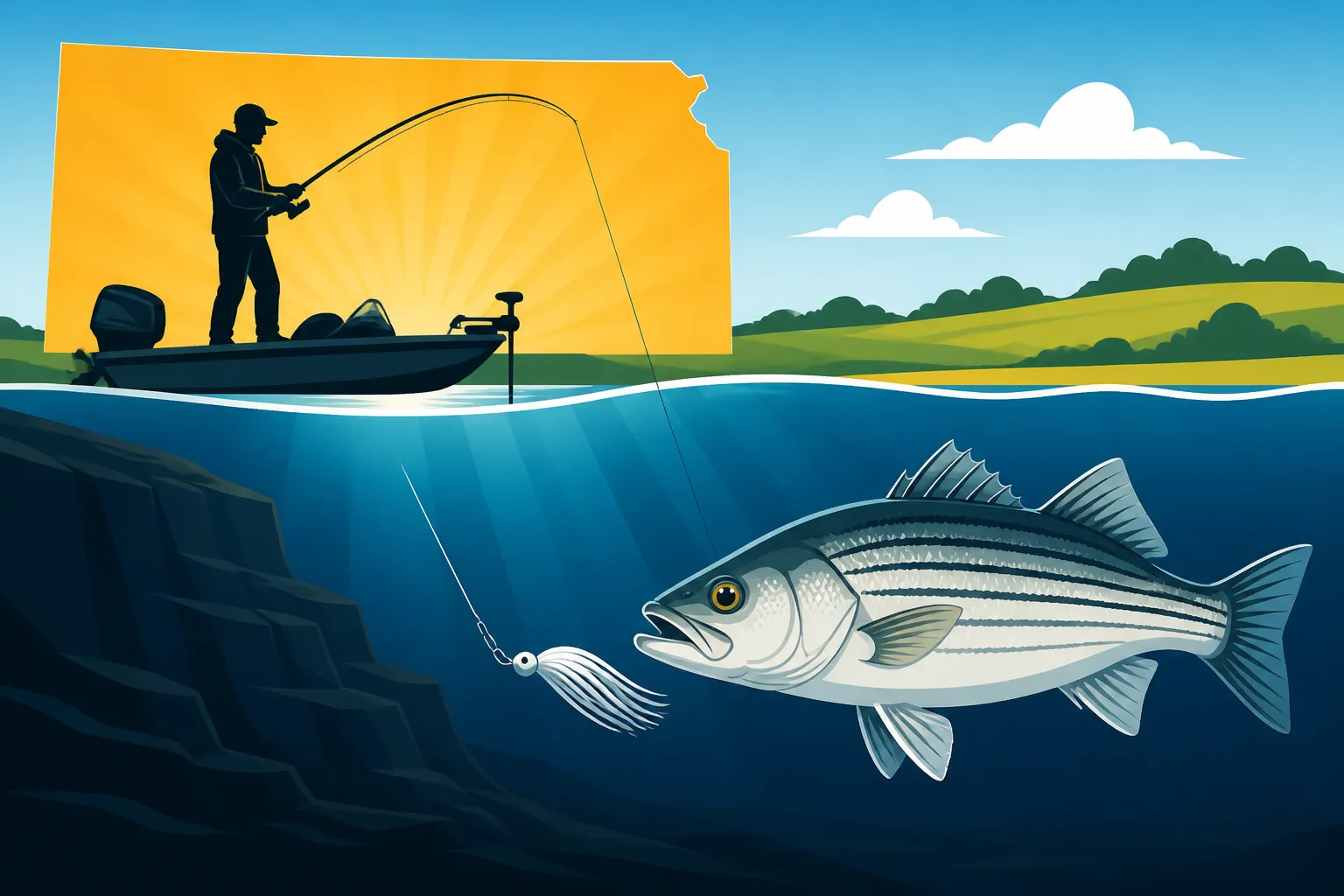
When you see fish suspended directly below your boat, or tightly grouped on a deep point, vertical jigging is often the most effective approach. This technique involves positioning your boat directly over the fish using your trolling motor and dropping a heavy lure straight down. Slab spoons, often in the 1 to 3-ounce range, are deadly for this. Their erratic flutter on the fall and flash on the lift mimics a dying baitfish, irresistible to hungry stripers. Heavy bucktail jigs, tipped with a soft plastic or a piece of cut bait, can also be incredibly effective, especially when worked with a lift-and-drop motion.
The key to successful vertical jigging is boat control. You need to stay directly over the fish as much as possible, using your trolling motor to correct for wind or current. Once your lure reaches the desired depth, a sharp rip followed by a controlled fall can elicit ferocious strikes. It’s also important to watch your sonar as you jig; sometimes, you’ll see stripers rise off the bottom to investigate your lure.
Downrigging, while less common for many Kansas anglers, is a highly effective method for targeting suspended stripers in open water. This technique allows you to precisely control the depth of your lure. A heavy lead ball, attached to a cable on the downrigger, pulls your line down to a set depth. Your fishing line is then clipped to the downrigger release, and when a fish strikes, the line pops free, allowing you to fight the fish directly. Downriggers are excellent for presenting deep-diving crankbaits, swimbaits, or even umbrella rigs at exact depths where fish are holding. This is particularly useful on massive bodies of water like Wilson Lake where stripers might be scattered across wide areas. Our guide on Kansas Striped Bass and Wiper Guide delves into identifying these hard-fighting fish and understanding their behavior, which is crucial for downrigging success.
Live Baiting and Trolling Deep Structure
Sometimes, stripers are finicky, and nothing beats the real thing. Live baiting is a classic technique, and for deep-water stripers, large gizzard shad or shiners are king. These natural baits, when presented correctly, can entice even the most reluctant stripers. You can deploy live bait in a couple of ways:
- Bottom Bouncing: Using a slip sinker rig, allow your live bait to swim freely near the bottom. This is excellent for targeting stripers holding close to deep ledges, humps, or creek channels. Ensure you use a circle hook, which helps prevent gut-hooking and improves survival rates for released fish.
- Suspended Live Bait: If stripers are holding off the bottom, you can use a three-way swivel rig or a Carolina rig to suspend your bait at the desired depth. This might involve slow trolling with your live bait, using your trolling motor to keep your bait swimming naturally at the marked depth.
Deep trolling is another highly effective tactic, especially for covering vast expanses of water and locating scattered fish. This involves dragging heavy spoons or large, deep-diving crankbaits behind your boat. Lures like the Bomber Deep Long A or Rapala Deep Divers are excellent choices, designed to reach significant depths. The key here is to match your trolling speed and lure choice to the depth where you're marking fish and bait. You want your lure to be running just above or through the zone where the stripers are holding. Varying your trolling speed and making subtle turns can impart an erratic action to your lures, often triggering strikes. Remember to check the Kansas Walleye Length Limits and other regulations, as sometimes limits can vary by species even if techniques overlap.
Here’s a quick reference for deep-water striper techniques:
| Technique | Best Lure/Bait | Target Depth | Key Considerations |
|---|---|---|---|
| Vertical Jigging | Slab Spoon, Heavy Bucktail Jig | Marked fish/structure | Precise boat control, aggressive retrieves, feel for strikes |
| Downrigging | Deep Diving Crankbait, Swimbait | Specific water column | Accurate depth control, covering open water, consistent speed |
| Live Bait (Bottom) | Gizzard Shad, Large Shiner | Near bottom structure | Circle hooks, patience, detecting subtle bites |
| Deep Trolling | Large Spoon, Deep Diving Crankbait | Varying deep contours | Speed control, lure selection, covering wide areas |
Seasonal Considerations and Advanced Tips
Understanding the nuances of deep-water striper fishing isn't just about gear and techniques; it's also about understanding the rhythm of the seasons and being flexible in your approach. Kansas weather can be unpredictable, and fish behavior often shifts with it.
Seasonal Movements of Deep-Water Stripers
Striped bass are highly sensitive to environmental changes, particularly temperature and oxygen levels. This means their deep-water habits aren't static throughout the year.
- Spring: As waters begin to warm after the long winter, stripers might still be somewhat deep, but they often move shallower for spawning or to feed aggressively on baitfish moving into warmer coves. However, a sudden cold front or bright, sunny days can push them back into deeper pockets quickly. Our Kansas Spring Fishing Guide can offer more general insights into this transitional period.
- Summer: This is prime time for deep-water striper fishing. As surface temperatures soar, the thermocline becomes well-defined, and stripers will consistently seek refuge in the cooler, oxygenated layers below. This is when deep vertical jigging, downrigging, and slow-trolling live bait or deep cranks become most effective. Focus on the deepest parts of reservoirs like Wilson Lake, El Dorado, or Cheney.
- Fall: As water temperatures begin to drop, stripers might start to move shallower again, especially during the morning and evening hours, following baitfish schools. However, they can still be found deep during midday or after a cold snap. The key is to check multiple depth ranges. The guide to Best Time of Year to Catch Wipers provides similar insights into how falling temperatures can shift fish patterns.
- Winter: During the coldest months, stripers often hold deep and become less active. Slow, methodical presentations, like slow vertical jigging with smaller lures or patiently soaking live bait, will be the most productive. Ice fishing for stripers is less common, but they can be caught in open water during mild winter days.
Reading the Water and Adjusting Your Approach
Fishing, especially for deep-water stripers, is rarely a "set it and forget it" affair. The most successful anglers are those who constantly read the water, pay attention to subtle cues, and are willing to adjust their approach.
Keep an eye out for surface activity. While deep-water stripers won’t always be busting on top, diving birds or ripples from schooling baitfish can indicate where the forage is concentrated, even if the stripers are holding underneath them. Similarly, monitor your fish finder for bait balls. Where there’s bait, stripers are usually not far behind.
Wind and current are also huge factors. Strong winds can create current and push baitfish, which in turn influences where stripers position themselves. Always try to fish into or with the wind if it aligns with your strategy, or use it to your advantage for controlled drifts.
Finally, be flexible with your lure and bait choices, and your retrieval speeds. If one technique isn't producing, don't be afraid to switch it up. Try a different color spoon, change the size of your live bait, or alter your trolling speed. Sometimes, a slight modification is all it takes to trigger a bite. These fish are incredibly strong, so ensure your drag is set correctly. Our guide on Kansas Fishing Regulations Explained provides all the detailed rules you need to be aware of before you head out, ensuring you're always fishing legally and responsibly.
It can be a long day without a bite, but that moment your rod doubles over from a powerful deep-water striper makes all the effort worthwhile. It’s about being prepared, persistent, and precise.
Disclaimer
Fishing conditions and regulations in Kansas can change. Always consult the latest official Kansas Department of Wildlife, Parks and Tourism (KDWPT) regulations before heading out. This guide is for informational purposes only and does not supersede state fishing laws.