Flathead Catfish Identification Tips
There’s nothing quite like the thrill of feeling a heavy tug on your line, fighting a powerful fish, and finally bringing it to the boat or bank. But when you look down, you might find yourself wondering, "Is this a channel cat, a blue cat, or a flathead?" This common mix-up can lead to confusion, especially when different species have different regulations and size limits. This guide is here to clear up that confusion, giving you all the distinctive flathead catfish identification tips you need to confidently identify your catch in Kansas waters and understand Kansas Flathead Catfish Facts and Limits.
Why Accurate Catfish Identification Matters for Kansas Anglers
You might think, "A catfish is a catfish, right?" While all catfish share some common traits, like smooth skin and whiskers, the nuances between species are significant. For anglers in Kansas, knowing exactly which type of catfish you've landed isn't just about showing off; it's crucial for legal compliance, conservation efforts, and even your fishing strategy. Misidentifying your catch can lead to some real headaches down the line.
Understanding Kansas Fishing Regulations
The Kansas Department of Wildlife, Parks and Tourism (KDWPT) sets specific rules for different fish species, including varying Kansas Catfish Daily Limits and length restrictions. These regulations are put in place for a good reason: to manage fish populations, ensure sustainable fishing for future generations, and protect trophy-sized fish. If you mistakenly identify a flathead as a channel catfish and keep it when it's under the flathead's minimum length limit, you could face penalties. Nobody wants a fishing trip to end with a fine or, worse, a confiscated catch. Knowing the difference empowers you to be a responsible angler and helps maintain the health of our Kansas fisheries. Always double-check the current Kansas Fishing Regulations Explained before you head out.
Contributing to Conservation Efforts
Every angler plays a role in conservation, whether they realize it or not. By correctly identifying and reporting your catches, or adhering to species-specific limits, you contribute to the overall health of Kansas' aquatic ecosystems. Flathead catfish, in particular, are unique predators in our waters. Understanding their populations through accurate angler reporting helps biologists make informed decisions about stocking programs, habitat improvements, and future regulations. It’s about more than just catching fish; it’s about nurturing the environment where they thrive.
Enhancing Your Fishing Strategy
Beyond regulations, accurate identification can directly impact your success on the water. Flathead catfish have distinct preferences when it comes to habitat, bait, and even the time of day they’re most active. If you’re targeting flatheads but mistaking smaller channel cats for them, you might be fishing the wrong structure or using the wrong approach. Knowing your target species inside and out allows you to tailor your gear, bait, and technique, significantly increasing your chances of landing that trophy fish. It’s about working smarter, not just harder, to get the fish you’re truly after, especially when you're trying to figure out How to Catch Flathead Catfish at Night.
The Distinctive Features of a Kansas Flathead Catfish
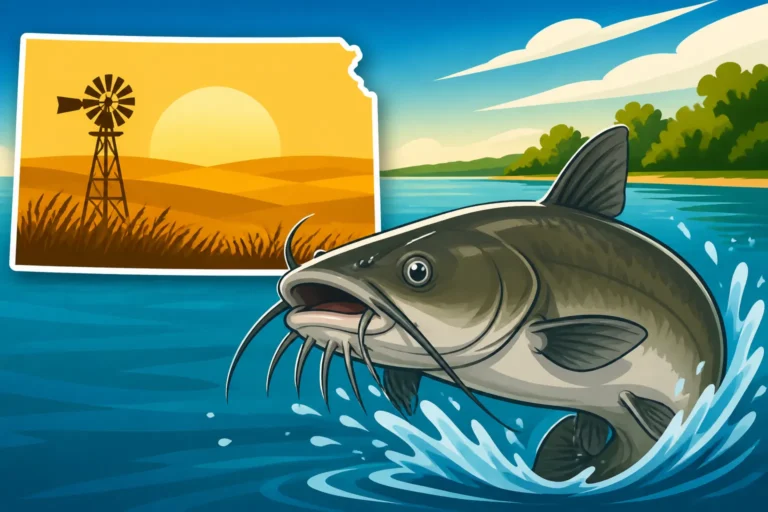
Flathead catfish are truly magnificent creatures of the deep, often earning their reputation as powerful, solitary predators. Once you learn their key identification markers, you'll find them quite easy to distinguish from their whiskered cousins. They have a look all their own, which helps them ambush prey in the cover they prefer.
Head and Jaw Structure
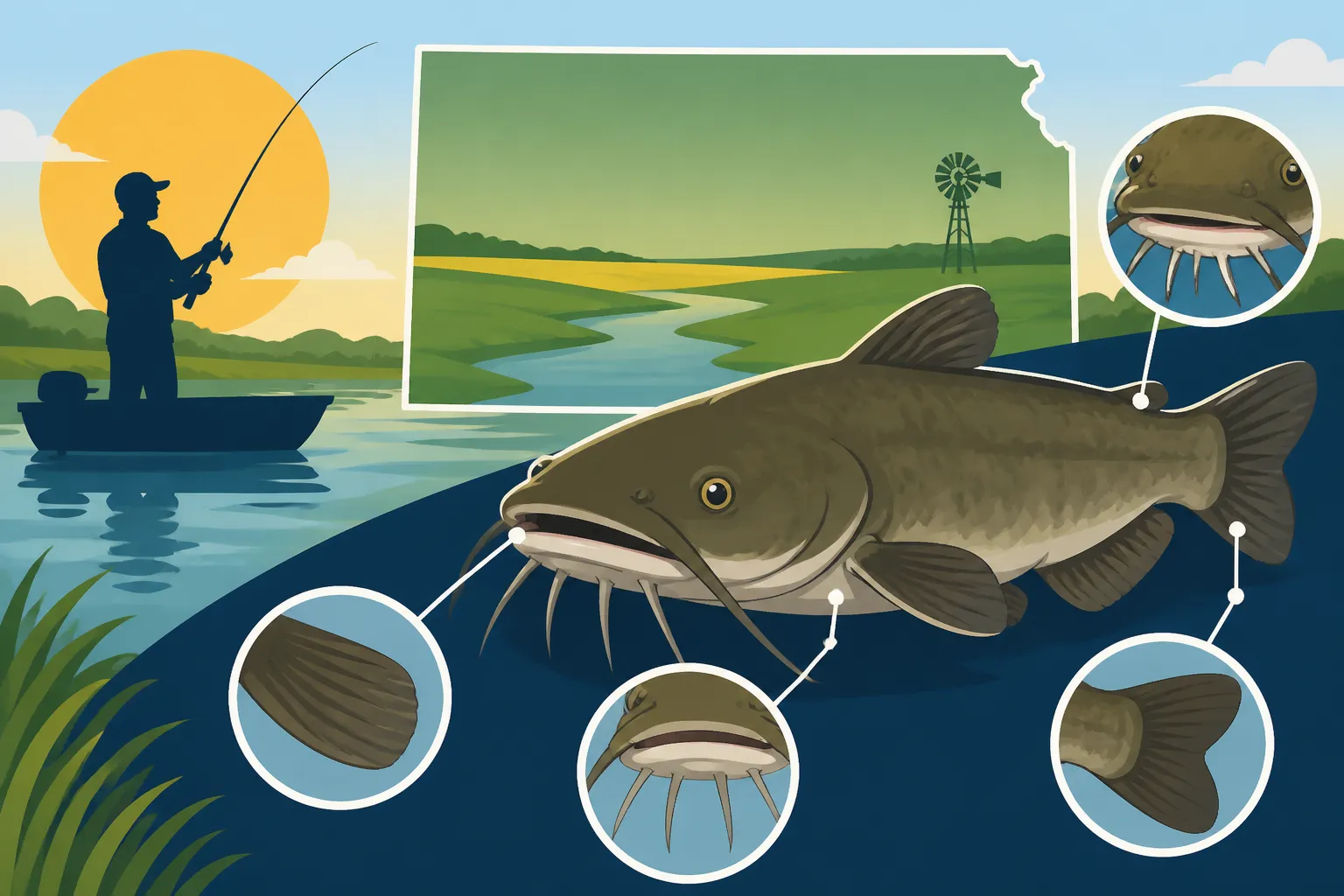
The most obvious clue, as their name suggests, lies right in their head. Flatheads have a distinctly broad, flattened head, almost like it's been pressed down. Unlike the upper jaw on a channel or blue catfish, a flathead's lower jaw protrudes noticeably past the upper jaw, giving them a perpetually "grumpy" or "underbite" appearance. This unique jaw configuration is perfect for snatching up live baitfish from the bottom. When you look at their eyes, you'll notice they are relatively small, set somewhat high and forward on that flattened head. It all contributes to a very predatory look.
Body Shape and Coloration
Flathead catfish have a long, somewhat slender body that tapers towards the tail. Their coloration is usually a mottled yellow, brown, or olive, often with darker spots or blotches across their back and sides. This irregular pattern provides excellent camouflage as they lay in wait among logs, rocks, and other underwater structure. The belly is typically a creamy white or pale yellow, providing a stark contrast to their darker dorsal side. This dappled coloring is a key differentiator from the more uniform grey of a blue catfish or the often silver-to-olive of a channel cat. A good waterproof field guide, easily found on Amazon, can be invaluable for quickly comparing patterns.
Unique Tail Fin and Whiskers
Another critical identifier is their tail fin. Unlike the deeply forked tails of channel catfish and blue catfish, the flathead's tail is only slightly notched, appearing almost square or rounded at the ends. It's often described as a "square" or "paddle-shaped" tail, which, while still powerful, looks quite different from the sleek, hydrodynamic forks of the other major Kansas catfish. Their barbels, or whiskers, are also often darker than those of other catfish species, though color can vary with water clarity and diet. Pay close attention to the shape of that tail; it's a dead giveaway once you know what to look for.
Comparing Flathead Catfish to Other Kansas Catfish Species
When you're out on the water, especially during a hot bite, it's easy to get excited and maybe even a little confused about exactly what you've reeled in. Kansas is home to several species of catfish, and while they all share the whiskered, scaleless traits, understanding their specific differences is key. Let's break down how flatheads stack up against the other common catfish you'll encounter. For a broader overview, check out our Kansas Catfish Species Guide.
Flathead vs. Channel Catfish
Channel catfish are arguably the most widespread and frequently caught catfish in Kansas. They are often what people picture when they think of a "catfish."
Here’s how to tell them apart:
- Head Shape: Channel cats have a more tapered, less flattened head than a flathead. Their lower jaw usually does not protrude beyond the upper jaw.
- Tail: This is a big one. Channel catfish have a distinctly deeply forked tail, almost like a swallow's tail. Flatheads have a mostly square or slightly notched tail.
- Coloration: Channel cats are typically olive, grey, or silvery-grey, often with small black spots on their sides, especially when younger. Older, larger channel cats might lose these spots. Flatheads, as we discussed, have that mottled yellow/brown/olive pattern without distinct spots, especially not small, uniform ones.
- Body Shape: Channel cats are generally more streamlined and uniformly shaped. Flatheads tend to be heavier-bodied in the front, tapering more noticeably toward the tail.
Flathead vs. Blue Catfish
Blue catfish are the giants of Kansas waters, known for their immense size and incredible fight. They share some similarities with channel cats but are distinct from flatheads. Learning Channel Catfish vs Blue Catfish Identification is also very helpful.
- Head Shape: Blue cats have a more rounded, humped profile to their back just behind the head, and their head is less flattened than a flathead. Their upper jaw typically protrudes slightly past the lower jaw, the opposite of a flathead.
- Tail: Like channel catfish, blue catfish have a deeply forked tail, though it can sometimes appear less dramatically forked on very large specimens. Still, it's never the square or paddle-shaped tail of a flathead.
- Coloration: Blue catfish are typically uniform bluish-grey on their back and sides, fading to white on their belly. They lack the spots of younger channel cats and the mottled pattern of flatheads. Their coloring is very consistent.
- Anal Fin: This is a very reliable distinguishing feature for blue cats! Blue catfish have a very long, straight-edged anal fin with 30-35 rays. Channel catfish have a shorter, more rounded anal fin with 24-29 rays. Flatheads have a much shorter, rounded anal fin with 14-17 rays. This is a subtle but scientific way to confirm your catch.
Here’s a quick comparison table to help you keep these distinctions straight:
| Feature | Flathead Catfish | Channel Catfish | Blue Catfish |
|---|---|---|---|
| Head Shape | Broad, very flattened, lower jaw protrudes | Tapered, less flattened, jaws about even | Rounded, upper jaw slightly protrudes |
| Tail Fin | Square or slightly notched (paddle-like) | Deeply forked | Deeply forked |
| Coloration | Mottled yellow/brown/olive, dark blotches | Olive/grey/silvery, small dark spots (esp. young) | Uniform bluish-grey, white belly |
| Anal Fin Rays | 14-17 (short, rounded) | 24-29 (shorter, rounded) | 30-35 (long, straight edge) |
| Body Shape | Heavily built front, tapers sharply | Streamlined, uniform | Heavy-bodied, slight hump behind head |
Beyond the Looks: Habitat and Behavior Clues for Flathead Identification
While physical characteristics are the primary way to identify a flathead catfish, understanding where and how they behave can give you powerful clues even before you land them. Flatheads have distinct preferences that set them apart from other catfish species. Knowing these patterns can help you narrow down your identification, or even better, target them specifically. For great places to find them, read our Best Catfish Lakes in Kansas guide.
Preferred Habitat and Structure
Flatheads are ambush predators, and their choice of home reflects this. They absolutely love structure, especially deep, woody cover. Think submerged timber, log jams, rock piles, old bridge pilings, and brushy areas in rivers and large reservoirs. They prefer to tuck themselves into these spots, waiting for unsuspecting baitfish to swim by. You're far less likely to find a flathead cruising open flats or sandy bottoms compared to channel catfish.
If you're fishing a deep hole in the Kansas River and your sonar lights up with a big fish nestled in a tangle of logs, there's a good chance it's a flathead. On the other hand, if you're catching catfish consistently from open banks with little structure on Milford Lake, they're probably channel cats. Keep an eye on your fish finder for these distinct underwater landscapes, and remember that Kansas River Catfish Spots are often prime flathead territory.
Diet and Feeding Behavior
Flatheads are king when it comes to eating live prey. While other catfish will readily take cut bait, stink bait, or even prepared baits, flatheads overwhelmingly prefer live fish. Small sunfish, shad, perch, or even bullheads are their go-to meals. This is why many dedicated flathead anglers use large live baits, often fished on heavy-duty gear. If you're consistently catching catfish on hot dogs or chicken livers, you're probably not hooking many flatheads.
Their feeding behavior also differs. Flatheads are more nocturnal, though they can be caught during the day, especially in heavily oxygenated water or after a cold front. They'll often move out from their cover at night to actively hunt in slightly shallower areas or along channel edges. Channel cats and blue cats, while also active at night, are often more opportunistic feeders and can be caught at all hours on a wider variety of baits. For those looking to target them, understanding Kansas Night Fishing Guide techniques is invaluable.
Size and Age Expectations
Flathead catfish are slow growers but can reach impressive sizes, making them a prime target for trophy hunters. While a small flathead might be confused with other species, once they reach a certain size, their unique characteristics become much more pronounced. Catching a true monster often points to it being a flathead or a blue cat. Keep in mind that a larger, older flathead will have a very pronounced flattened head and that distinct underbite. They're built for power and size.
Remember, if you’re pulling in catfish that consistently break the 20-pound mark, you're likely dealing with either a blue cat or a flathead, especially in larger reservoirs like Milford Lake or Cheney Reservoir. Always have a good set of heavy-duty gloves, readily available on Amazon, on hand when handling these big fish to protect yourself and the fish.
Disclaimer
This article is for general informational purposes only and does not constitute professional advice. Laws, prices and regulations vary by location and change over time. Consult a qualified professional for guidance on your specific situation.