Do Kansas Rivers Have Alligator Gar?
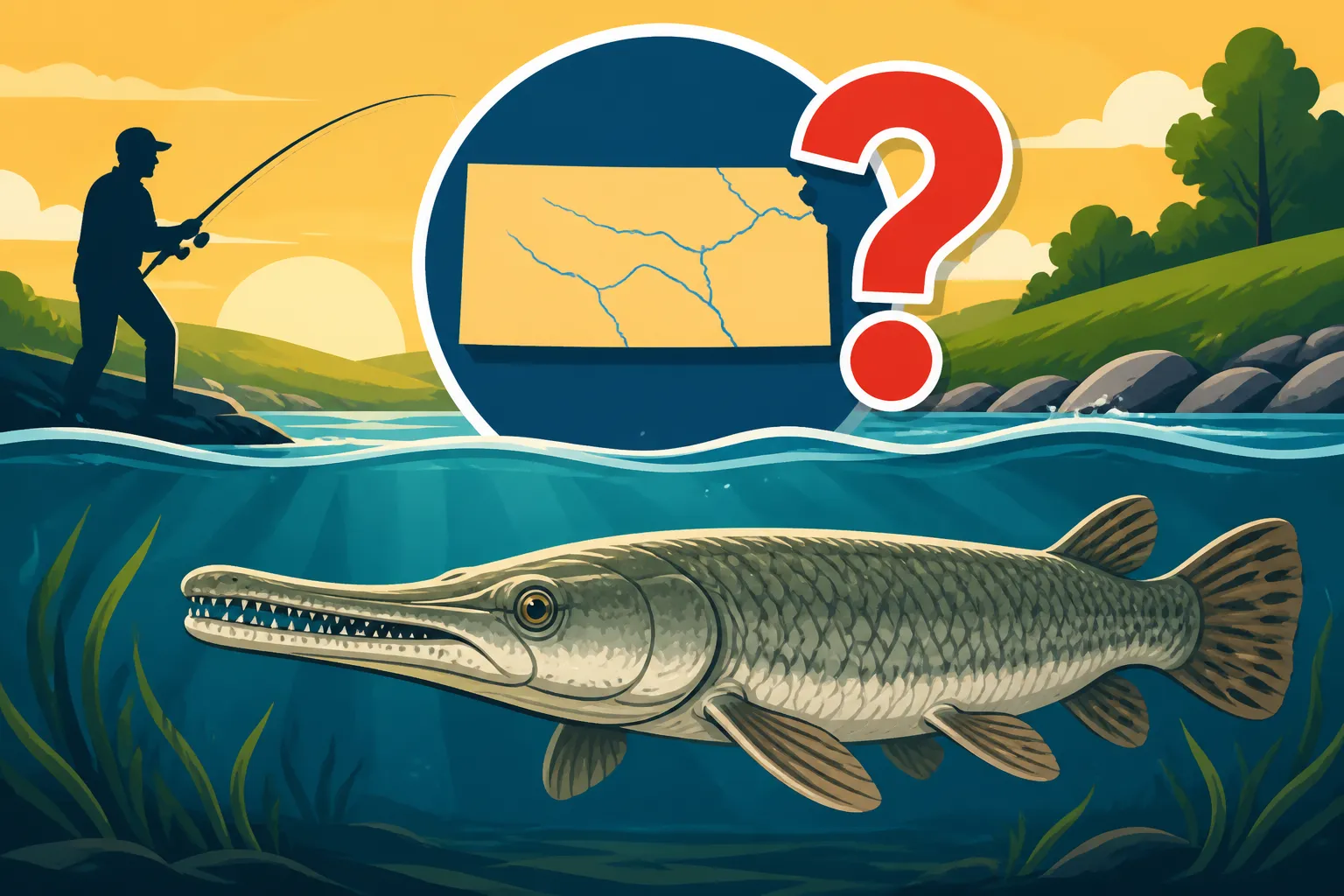
It’s a question that sparks a lot of curiosity and sometimes even a little fear among anglers: are Alligator Gar lurking in Kansas rivers? Tales of massive, toothy fish can make anyone wonder what lies beneath the surface. This guide will dive deep into the world of Alligator Gar, clarify their presence (or lack thereof) in the Sunflower State, and help you identify the impressive gar species you can expect to encounter in Kansas waters.
Understanding Alligator Gar and Their Native Range
Let's start by getting to know the creature itself. The Alligator Gar (Atractosteus spatula) is truly a prehistoric marvel, an apex predator that commands respect. But understanding where they truly call home is key to answering our question about Kansas.
What Makes Alligator Gar Unique?
Alligator Gar are unmistakable once you know what to look for, but they are often confused with their smaller cousins. They are one of the largest freshwater fish in North America, with some individuals growing over 8 feet long and weighing more than 300 pounds. Imagine reeling in something that big! Their most distinctive features are their broad, flat, alligator-like snout with two rows of razor-sharp teeth on their upper jaw. Their bodies are covered in thick, diamond-shaped ganoid scales, which are incredibly tough and act like armor. These fish are true survivors, capable of breathing both air and water, allowing them to tolerate low-oxygen environments that would kill other fish. They are ambush predators, often lying in wait in still or slow-moving waters, ready to snap up unsuspecting prey. It’s no wonder they’ve inspired so many myths and legends over the years.
Historical and Current Native Ranges
Historically, Alligator Gar were found across the lower Mississippi River basin and Gulf Coast states, extending from the western panhandle of Florida all the way down to Veracruz, Mexico, and north through parts of the Mississippi River up to southern Illinois and Missouri. Think warm, slow-moving backwaters, large rivers, bayous, and brackish estuaries. Their ideal habitat provides plenty of cover and abundant prey fish. For many decades, their populations declined due to habitat loss and overfishing, but conservation efforts have seen some success in recent years, particularly in states like Texas and Louisiana, where they are revered as a native sport fish. While their historical range did extend somewhat northward, pushing into the very southern tips of states bordering the true Mississippi, Kansas has generally been considered outside their natural, sustained breeding range.
The Alligator Gar in Kansas Waters: Fact vs. Fiction
Now, for the burning question: can you actually find Alligator Gar in Kansas rivers? The straightforward answer for sustained, naturally reproducing populations is generally no. However, that doesn't mean the idea is entirely pulled from thin air.
Official Stance from Kansas Wildlife & Parks
The Kansas Department of Wildlife, Parks and Tourism (KDWP) maintains that Alligator Gar are not native to Kansas waters and, crucially, there are no known naturally reproducing populations within the state. They simply haven't been documented to establish themselves here. The environmental conditions, while sometimes providing temporary suitable habitat, generally don't align perfectly with what Alligator Gar need for long-term survival and successful breeding cycles. For detailed information on the fish species found in our state, you can always check out the official Kansas Fish Species Guide. While you won't find Alligator Gar listed as a common catch, it's a fantastic resource for learning about what is out there.
Explaining Rare Sightings and Misidentifications
So, if they're not native, why do stories persist, and why do some anglers swear they’ve seen one?
The most common reason is misidentification. Kansas is home to several other species of gar, which we'll discuss in more detail shortly. These native gars can grow to respectable sizes and, to an untrained eye, their long, toothy snouts and armored bodies can easily be mistaken for an Alligator Gar. When you see a large, intimidating fish with a mouth full of teeth, it’s easy to jump to conclusions, especially if you’ve heard the legends.
Another less common, but possible, scenario is an isolated, non-native occurrence. This could happen if a fish was illegally introduced to a private pond or reservoir and then escaped into a public waterway during a flood. Such instances are rare, often isolated, and do not indicate a thriving population. Think of it like a fluke occurrence, not a sign of a new resident species. These individual fish might survive for a time, but without others to breed with and the right conditions, they can't establish a population.
Other Gar Species You Will Find in Kansas Rivers
While the Alligator Gar might be absent, Kansas rivers and lakes are absolutely teeming with other fantastic gar species that provide incredible angling opportunities and play vital roles in our aquatic ecosystems. These are the fish often mistaken for the mythical Alligator Gar, but they are impressive in their own right.
Longnose Gar: The Common Kansas River Resident
Without a doubt, the most common gar you'll encounter in Kansas is the Longnose Gar (Lepisosteus osseus). These beauties are widespread throughout the state, thriving in rivers like the Kansas River, and many of our larger reservoirs. You can find out more specifics about them in our Longnose Gar Facts for Kansas Anglers guide. They have a distinctly long, slender snout, much thinner and more cylindrical than the broad, flat snout of an Alligator Gar. Longnose Gar can grow quite large, often reaching lengths of 3 to 5 feet, and occasionally even longer, which is a significant size and contributes to the misidentification. Their bodies are similarly armored with those tough ganoid scales, making them formidable predators of baitfish. Catching a large Longnose Gar on rod and reel can be a thrilling experience, offering a powerful fight and a real test of your gear. If you’re fishing from the bank in Kansas, chances are you’ll eventually see one of these cruising the shallows.
Shortnose Gar and Spotted Gar: Lesser-Known Relatives
Beyond the prevalent Longnose Gar, Kansas also has populations of Shortnose Gar (Lepisosteus platostomus) and Spotted Gar (Lepisosteus oculatus).
The Shortnose Gar has, as its name suggests, a much shorter, broader snout than the Longnose Gar, though still not as broad as the Alligator Gar. They generally don't grow as large as Longnose Gar, typically maxing out around 2 to 3 feet in length. They prefer slower-moving waters and can be found in many of the same river systems and reservoirs as the Longnose.
The Spotted Gar is perhaps the prettiest of our native gar species, with distinct dark spots on its head, body, and fins. Its snout is intermediate in length between the Longnose and Shortnose gars. Spotted Gar also prefer clear, vegetated backwaters and typically don't grow much larger than Shortnose Gar, usually staying under 3 feet. While not as widespread as the Longnose, they are present in various drainages across the state, adding to the diversity of our gar population. Recognizing these different species is part of the fun of fishing and helps avoid misidentifying them as their larger, non-native cousin.
Why Alligator Gar Are Unlikely to Thrive in Kansas
Understanding the specific needs of Alligator Gar sheds light on why Kansas doesn't serve as a natural home for them, despite being home to other robust gar populations. It's all about habitat and the specific environmental conditions required for a species to truly flourish and reproduce consistently.
Habitat and Environmental Requirements
Alligator Gar thrive in warm, subtropical, and tropical climates. They prefer large, slow-moving river systems, oxbow lakes, and bayous that have extensive floodplains. These environments offer vast areas of shallow, vegetated waters for spawning and growth, as well as an abundance of large prey fish. The main rivers in Kansas, while significant, generally have faster currents, more fluctuating water levels, and overall cooler average temperatures, especially during critical spawning periods, compared to the Gulf Coast states. While the larger reservoirs provide some still-water habitat, they often lack the extensive, stable backwater systems and warm-water conditions that Alligator Gar need year-round to establish and maintain a healthy, breeding population. This difference in specific habitat needs is a primary factor.
Geographic Barriers and Reproduction Challenges
Beyond the immediate habitat, geographic barriers play a huge role. Kansas is simply too far north from the established native range of Alligator Gar for them to naturally migrate and colonize our waters in significant numbers. The journey would be arduous, involving long stretches of unsuitable river habitat. Even if individual fish somehow made their way here, successful reproduction would be extremely challenging. Alligator Gar require very specific conditions for spawning: usually large, shallow, vegetated floodplains inundated by rising river waters. These conditions, while they may occur sporadically in Kansas, are not as consistent or extensive as in their native range. Without consistent, optimal spawning habitat, a population simply cannot take root and grow. This is why you'll hear about Kansas Fishing Regulations Explained for species found here, but not typically for Alligator Gar.
Comparing Kansas Gar Species to the Alligator Gar
To help clarify the differences and put an end to any confusion, here's a quick comparison of the gar species you might encounter in Kansas versus the mighty Alligator Gar.
| Feature | Alligator Gar | Longnose Gar (Kansas Native) | Shortnose Gar (Kansas Native) | Spotted Gar (Kansas Native) |
|---|---|---|---|---|
| Snout | Very broad, flat, alligator-like; two rows of upper teeth | Long and slender, often twice as long as head | Shorter and broader than longnose, distinct teeth | Moderate length, covered in distinct spots |
| Size | Largest, up to 8+ feet, 300+ lbs | Large, commonly 3-5 feet, up to 60+ lbs | Medium, commonly 2-3 feet, up to 10-15 lbs | Medium, commonly 2-3 feet, up to 10-15 lbs |
| Coloration | Olive to brown on back, lighter belly, sometimes mottled | Olive-brown to green on back, silvery belly | Dark olive to brown on back, pale belly | Olive-brown with distinct dark spots on body/fins |
| Native Range | Gulf Coast & Lower Mississippi River Basin | Widespread across Eastern/Central US, including KS | Central US, including KS | South-Central US, including parts of KS |
| Kansas Status | Not native, no reproducing populations | Abundant and widespread | Common | Present, but less widespread than Longnose |
If you're gearing up for fishing in Kansas, knowing your local species helps you manage your expectations and select the right tackle. You can find great heavy-duty fishing lines and robust rods for these larger fish on Amazon if you're looking to upgrade your setup to tackle a big Longnose. For an impressive fight, you'll want gear that can handle it!
Conclusion
So, to definitively answer the question, "Do Kansas rivers have Alligator Gar?" – the answer is no, not as native residents with thriving, reproducing populations. While the idea might capture the imagination, the natural distribution and habitat requirements of these magnificent fish mean they primarily reside in the warmer, larger river systems of the Gulf Coast states. However, don't let that deter your angling adventures in Kansas! Our waters are rich with other formidable and exciting gar species like the Longnose Gar, Shortnose Gar, and Spotted Gar. These native fish offer incredible challenges for any angler looking to hook into something truly unique and powerful. Get out there, explore our Kansas River Fishing Guide, and appreciate the incredible diversity of fish that truly call Kansas home.
Disclaimer
This article is for general informational purposes only and does not constitute professional advice. Laws, prices and regulations vary by location and change over time. Consult a qualified professional for guidance on your specific situation.