Longnose Gar Facts for Kansas Anglers
Many Kansas anglers are curious about the mysterious, prehistoric-looking fish that lurks in our rivers and reservoirs: the Longnose Gar. Often misunderstood and sometimes intimidating with their toothy grins, these unique fish offer a thrilling challenge for those willing to learn their ways. This guide will dive deep into everything you need to know about Longnose Gar, from where they live to how to catch and handle them safely, helping you better appreciate this fascinating native species.
Understanding the Longnose Gar: A Kansas River Dweller
The Longnose Gar is truly a creature of antiquity, a living fossil that has patrolled Kansas waters for millions of years. They're not like your typical sportfish, and understanding their unique biology is the first step to successfully targeting them.
Physical Characteristics and Unique Features
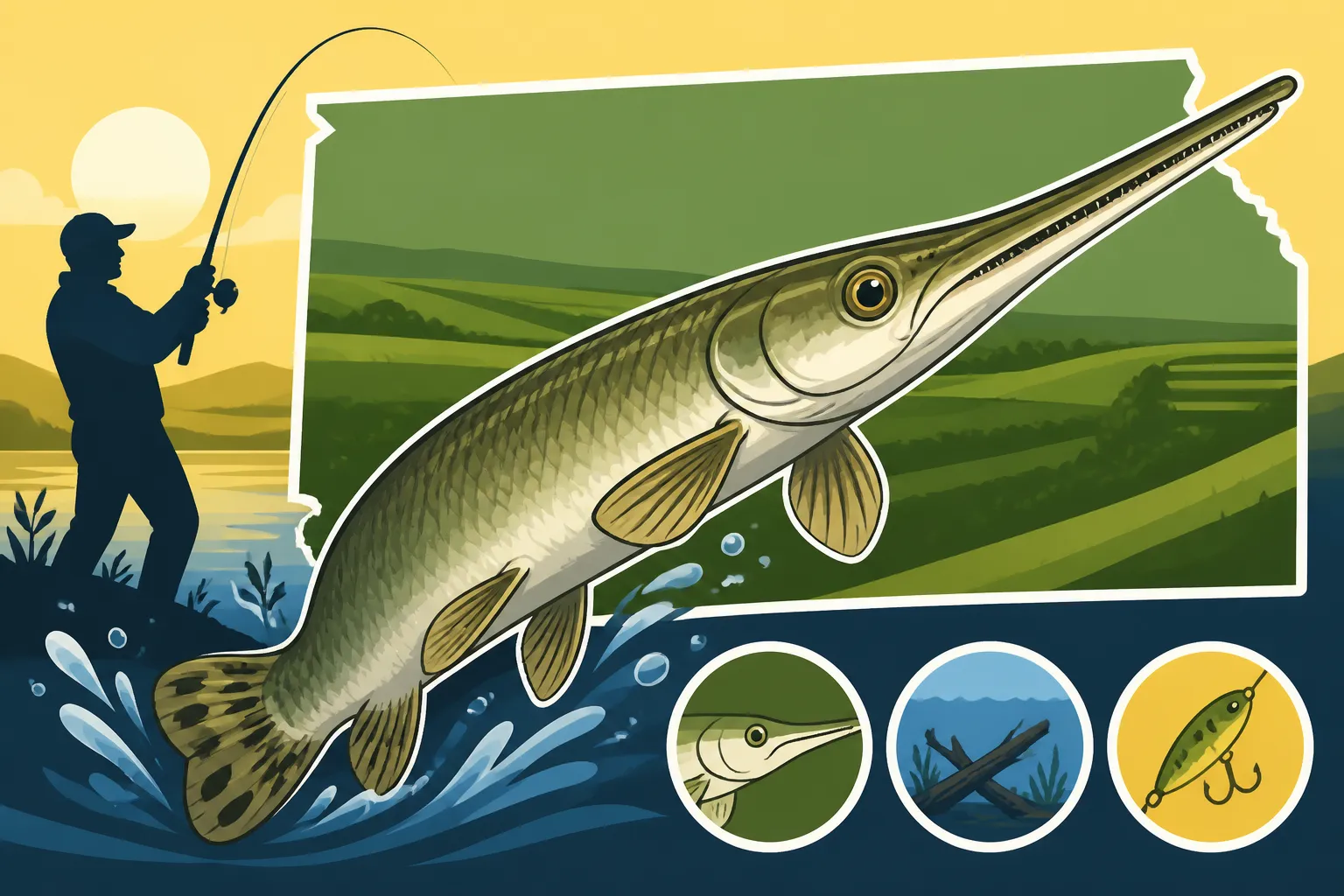
When you see a Longnose Gar, you'll immediately notice its distinctive appearance. They have elongated, torpedo-shaped bodies covered in ganoid scales, which are thick, hard, diamond-shaped, and interlocking, almost like armor. This makes them incredibly tough and well-protected. Their most striking feature, of course, is their incredibly long, narrow snout, which is filled with rows of sharp, needle-like teeth. This "long nose" is what gives them their common name and sets them apart from other gar species like the Shortnose Gar, which has a broader, shorter snout.
Adult Longnose Gar can grow quite large, sometimes exceeding four feet in length and reaching weights in the double digits, making them impressive catches. Their coloration typically ranges from olive green to brown on their backs, fading to lighter shades on their bellies, often with dark spots along their body, fins, and head. This camouflage helps them blend seamlessly into the murky or weedy waters they inhabit. Their unique swim bladder can function as a primitive lung, allowing them to gulp air from the surface, which is a key adaptation for surviving in low-oxygen environments or during hot Kansas summers when other fish might struggle. It's truly fascinating to watch them breach the surface for a quick breath. If you're keen to learn about other unique fish in our waters, check out Kansas Fish Species Guide.
Natural Habitat and Distribution in Kansas
Longnose Gar are primarily freshwater fish, preferring slow-moving rivers, backwaters, oxbow lakes, and the shallows of large reservoirs. In Kansas, you'll find them widely distributed, particularly in the larger river systems such as the Kansas River, Marais des Cygnes, Neosho, Verdigris, and their associated impoundments and backwater areas. They often hang around dense aquatic vegetation, submerged timber, or other structures where they can ambush prey. These areas provide both cover for hunting and protection from predators, though adult gar have few natural enemies. They are remarkably resilient and can tolerate a wide range of water conditions, which contributes to their widespread presence.
While they can be found throughout the state, certain rivers and reservoirs consistently produce good numbers of Longnose Gar. Think about those quieter, often overlooked stretches of water, away from heavy current, where the water might be a little warmer and a bit greener. That's prime gar territory. Knowing where these fish tend to congregate is half the battle when you're setting out to target them specifically. For more on local fishing spots, you might find our Kansas River Fishing Guide helpful.
Dietary Habits and Predatory Nature
The Longnose Gar is an apex predator in its environment, an efficient hunter perfectly designed for its role. Their diet consists almost entirely of other fish, including shad, minnows, sunfish, and small rough fish. They are ambush predators, often lying motionless, camouflaged amongst weeds or submerged logs, waiting for an unsuspecting meal to swim by. When a fish gets close enough, they execute a lightning-fast sideways strike, grabbing their prey with their tooth-filled snout. It’s not a gentle bite; it’s a decisive clamp.
Their unique mouth structure means they don't "bite" like a bass or a catfish. Instead, they snatch their prey, often holding it for a moment before turning it to swallow headfirst. This distinct feeding behavior has significant implications for how you approach fishing for them. If you try to set the hook too early, you'll often pull the bait right out of their grasp. They are incredibly patient hunters, sometimes remaining in the same spot for extended periods, conserving energy until the perfect opportunity arises.
Angling for Longnose Gar in Kansas
Fishing for Longnose Gar can be a truly exciting experience, but it definitely requires a different approach than chasing crappie or walleye. You'll need patience, the right gear, and an understanding of their unique habits.
Best Times and Locations to Find Gar
Longnose Gar are most active during the warmer months in Kansas, typically from late spring through early fall. They love the heat, and as water temperatures rise, they become more visible and aggressive. During the peak of summer, you'll often see them basking near the surface, especially in calmer, sun-warmed coves, backwaters, and slack-water areas of rivers and reservoirs. Early morning and late evening, when the sun isn't at its absolute strongest, can be particularly productive, but they'll often bite throughout the day if conditions are right.
As mentioned, look for areas with cover. Docks, fallen trees, brush piles, lily pads, and dense weed beds are all prime real estate for gar. If you can find a clear, shallow flat near deeper water, where baitfish are abundant, you’re in a good spot. In river systems, pay attention to eddies, slow current seams, and the mouths of creeks that feed into the main river. These are natural congregation points. When you see a gar "rolling" on the surface to gulp air, that's a sure sign they're in the area, and it's time to cast your line. To understand the broader fishing calendar, consult our Kansas Fishing Seasons Guide.
Essential Gear and Tackle for Gar Fishing
You don't need highly specialized, expensive gear to catch gar, but a few considerations will make your outing much more successful and less frustrating.
- Rods and Reels: A medium to heavy-action spinning or baitcasting rod, around 6.5 to 7.5 feet in length, is ideal. You want something with enough backbone to handle a strong, thrashing fish, but also sensitive enough to detect subtle takes. Pair this with a sturdy reel spooled with 20-30 pound monofilament or braided line. Braided line is often preferred due to its low stretch and abrasion resistance, which is a big plus when dealing with toothy critters and abrasive cover. For more specific advice, our Best Rods and Reels for Kansas Fishing guide can offer additional insights.
- Leaders: This is where gar fishing gets unique. Their needle-sharp teeth will shred standard monofilament or fluorocarbon leaders in seconds. Steel leaders, heavy fluorocarbon (50-80 lb), or even a specialized "gar rope" are essential. A gar rope is essentially a frayed nylon rope tied to your main line. The gar's teeth get tangled in the fibers, allowing you to land them without a hook. It's a fun, non-damaging way to catch them. If you're going with hooks, a 6-12 inch steel leader is non-negotiable. You can find pre-made steel leaders or components to make your own on platforms like Amazon.
- Hooks and Baits: When using hooks, strong, stout hooks are a must. Circle hooks in sizes 2/0 to 5/0 are often recommended because they tend to hook the fish in the corner of the mouth, making for easier release and less chance of gut-hooking. Live bait is king for gar. Small to medium-sized live shad, sunfish, or minnows (within legal size limits, of course) fished under a bobber or on the bottom are incredibly effective. Cut bait, especially fresh oily fish like shad or carp, can also work well, particularly for larger gar. If you’re looking for options, many anglers find a great selection of fishing tackle and bait on Amazon. For general bait ideas, check out Best Bait for Kansas Catfish.
Recommended Techniques for Hooking and Landing
Catching a Longnose Gar is less about a powerful hook set and more about patience and timing.
- The Wait-and-See Approach: When a gar takes your bait, resist the urge to set the hook immediately. Remember, they grab and hold, then turn the prey to swallow. You need to let them "eat" the bait. Many anglers recommend waiting 10-20 seconds, or until you feel the line steadily moving away, indicating the fish has turned the bait and is trying to swim off. If you're using a gar rope, the waiting game is still key for them to get adequately tangled.
- Hook Setting: Once you've given them time, a firm, sweeping hook set (rather than a sharp jerk) is usually more effective. Because of their bony mouths and hard snouts, penetration can be difficult. Circle hooks mitigate some of this, as they are designed to slide into the corner of the mouth as the fish pulls away.
- Fighting the Fish: Gar are strong and can put up a surprisingly good fight, often making acrobatic jumps and powerful runs. Keep constant pressure on them, and be prepared for their head shakes. Because of their armor-like scales, a landing net isn't always effective, and it can be tough on the fish (and your net!). Many experienced gar anglers prefer to hand-land them (with extreme caution and gloves!) or use a specialized Boga Grip or lip-gripping tool.
- The Gar Rope Advantage: If you're using the frayed nylon rope technique, casting it near visible gar or slowly retrieving it through areas where they might be lurking can be very effective. When a gar bites, they get their teeth hopelessly tangled in the fibers. This allows for a safe landing without a hook, often making the release much simpler. This can be a really unique and fun way to experience Kansas Fishing Techniques for Beginners for these toothy fish.
Handling and Aftercare of Longnose Gar
Handling Longnose Gar safely and responsibly is crucial, both for your well-being and the fish's. Their sharp teeth and thrashing nature demand respect.
Safe Handling Practices and Cautionary Notes
Gar have mouths full of sharp teeth, and they can be incredibly feisty when landed. This isn't a fish you want to grab with bare hands!
- Gloves are Essential: Heavy-duty gloves, like those used for handling catfish or even thicker leather work gloves, are an absolute must. These will protect your hands from their teeth and their rough scales.
- Control the Head: The most important thing is to control the gar's head. A firm grip behind the head, or using a lip-gripping tool like a Boga Grip, can help immobilize them. Be careful not to squeeze too hard, as you can injure the fish. Some anglers use a blunt tool, like a wooden dowel, to gently hold the mouth open for hook removal, but this also requires extreme caution.
- Minimize Time Out of Water: Just like any other fish, gar should be kept out of the water for the shortest time possible. Have your camera ready if you want a photo, and be prepared for a quick release.
- Hook Removal: Use long-nosed pliers or a hook remover tool to get the hook out. If the hook is deeply embedded or the fish is too agitated, it's often best to cut the line as close to the hook as possible. Hooks usually rust out quickly, and the fish has a better chance of survival than if you inflict further damage trying to extract a stubborn hook. For a deeper understanding of fishing regulations, refer to Kansas Fishing Regulations Explained.
Is Gar Meat Edible? And How to Prepare It
Yes, Longnose Gar meat is absolutely edible, and many anglers consider it a delicacy! However, it's a bit tricky to prepare due to their bony, armored exterior. The meat itself is white, firm, and flaky, often described as having a texture similar to chicken or alligator, with a mild flavor.
- Caution with Roe: A very important safety note: Gar roe (eggs) are toxic to humans and other mammals. Make sure to clean the fish thoroughly and discard the eggs if you plan to keep one for consumption.
- The "Gar Log" Technique: Because of their tough scales, filleting a gar like a traditional fish is nearly impossible. The most common method is to cut through the armored back, just behind the head, and then make a cut along the top of the backbone all the way to the tail. Then, using heavy-duty shears or a sharp knife, you essentially peel back the armored skin and scales from both sides, revealing the long, cylindrical "log" of meat. This "gar log" can then be cut into steaks, fried, grilled, or even smoked. It’s definitely a unique cleaning process, but the delicious reward is worth the effort!
Conservation and Respect for the Species
Longnose Gar are an important part of the Kansas aquatic ecosystem. As top predators, they help maintain healthy populations of forage fish. While they are generally not considered endangered or threatened in Kansas, practicing responsible angling is always important.
- Catch and Release: Many anglers target gar for the sport and the fight. If you don't plan to eat the fish, practice catch and release to help maintain healthy populations. Use barbless hooks or crush the barbs on your hooks to make release easier and less damaging.
- Legal Limits: Always be aware of any specific regulations or limits for gar in the waters you are fishing. While many areas have liberal or no limits, it’s crucial to know the local rules.
- Educate Others: Help dispel myths about gar being "trash fish" or harmful to sportfish populations. They are a native species with an important ecological role and offer a unique angling experience. By understanding and respecting them, we ensure they continue to thrive in Kansas waters for generations to come. Learning about the different Types of Gar Found can broaden your appreciation for these incredible fish.
Disclaimer
This article is for general informational purposes only and does not constitute professional advice. Laws, prices and regulations vary by location and change over time. Consult a qualified professional for guidance on your specific situation.