Fastest Growing Fish Species in Kansas
It's incredibly frustrating when you're out on the water, putting in the time, and it feels like the fish just aren't growing to that impressive size you see in pictures. Many anglers in Kansas dream of reeling in a truly substantial fish, but sometimes it feels like a lifelong wait. The good news is, certain species in our Kansas waters are built for rapid growth, reaching impressive sizes much faster than others. This guide will dive deep into the fastest-growing fish species across Kansas, explaining what makes them grow so quickly, where to find them, and how you can specifically target them to maximize your chances of catching a real lunker.
The Growth Champions of Kansas Waters
When we talk about "fastest growing," we're not just talking about fish that get big, but those that achieve significant size in a relatively short amount of time, or those that have the potential to become truly massive given the right conditions. These are the species that can turn a good fishing day into an unforgettable one with a truly impressive catch.
Blue Catfish: The River Monsters
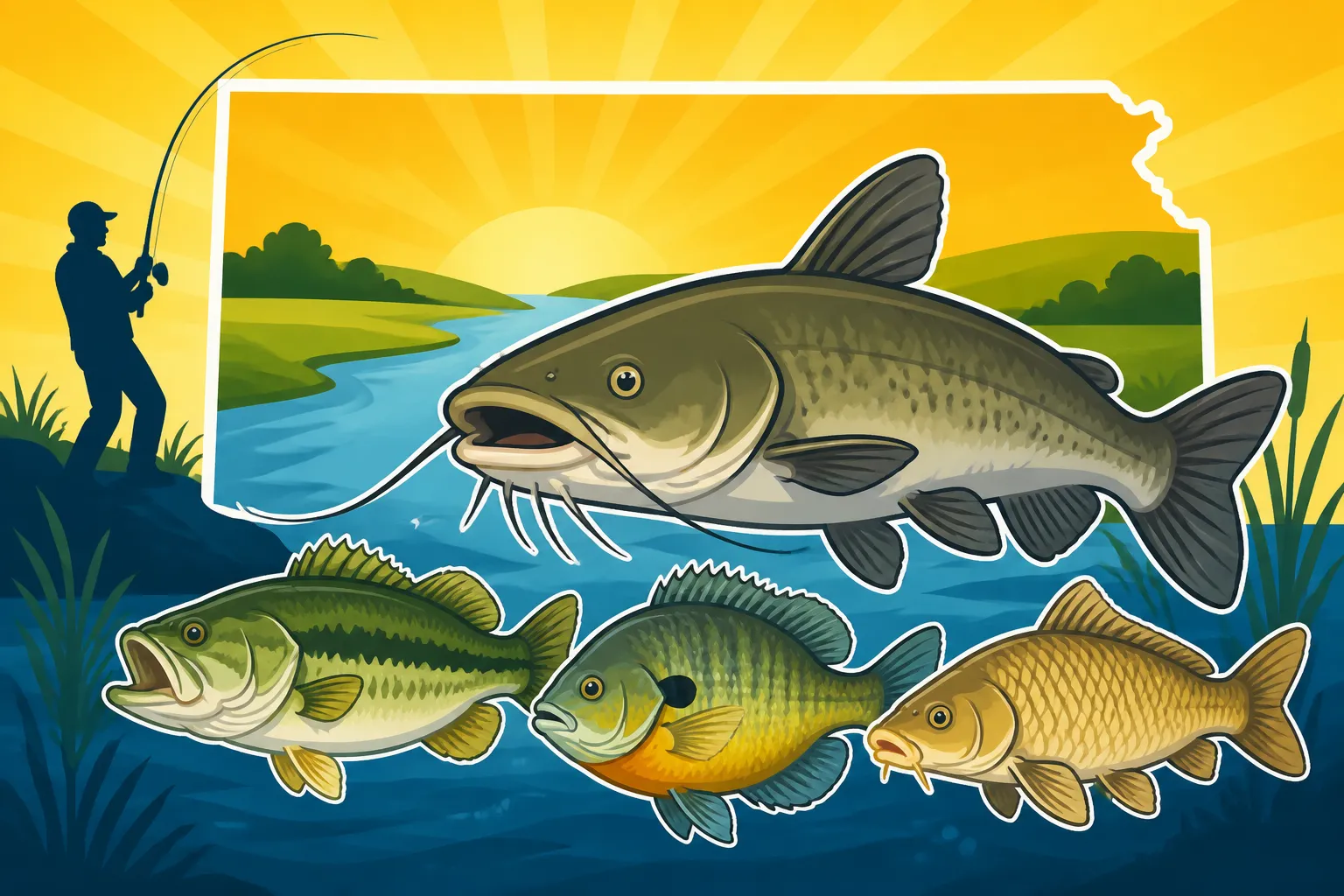
Without a doubt, the blue catfish stands out as one of Kansas's undisputed growth champions. These magnificent fish are built for size, and they achieve it with incredible speed, often reaching double-digit weights within a few years and continuing to grow into true giants that can tip the scales at well over 50 pounds, sometimes even over 100 in ideal conditions. Their potential for massive size is what truly sets them apart.
What drives their rapid growth? A few key factors. First, blue catfish are voracious predators with an incredible appetite. They feed on a wide variety of prey, from shad and other baitfish to smaller game fish, crawfish, and even mussels. This protein-rich diet, combined with a highly efficient metabolism, allows them to pack on pounds quickly. Secondly, they have a relatively long lifespan compared to many other freshwater species, giving them ample time to reach those gargantuan proportions. They thrive in large river systems and deep, expansive reservoirs, places like the Kansas River or Milford Lake, where they have plenty of room to roam and an abundant food supply. Imagine hooking into a blue cat that could be bigger than a small child – that's the kind of growth potential we're discussing here. You can learn more about these incredible fish in our Kansas Blue Catfish Facts and Limits article.
Hybrid Striped Bass (Wipers): Aggressive and Rapid
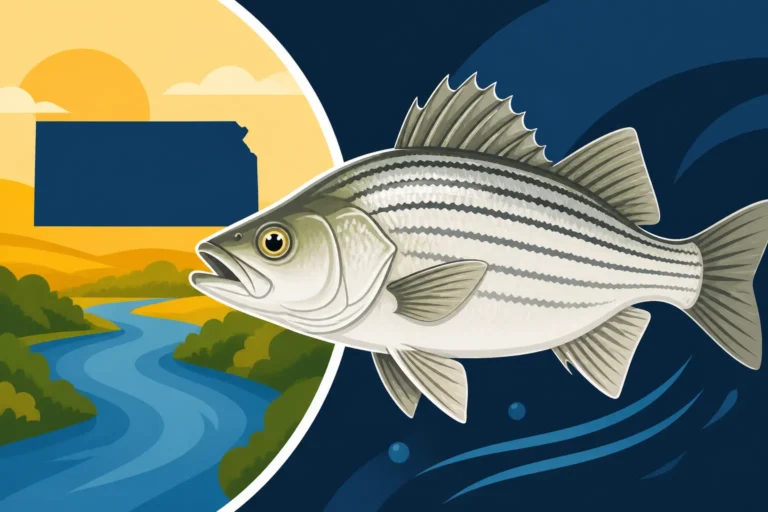
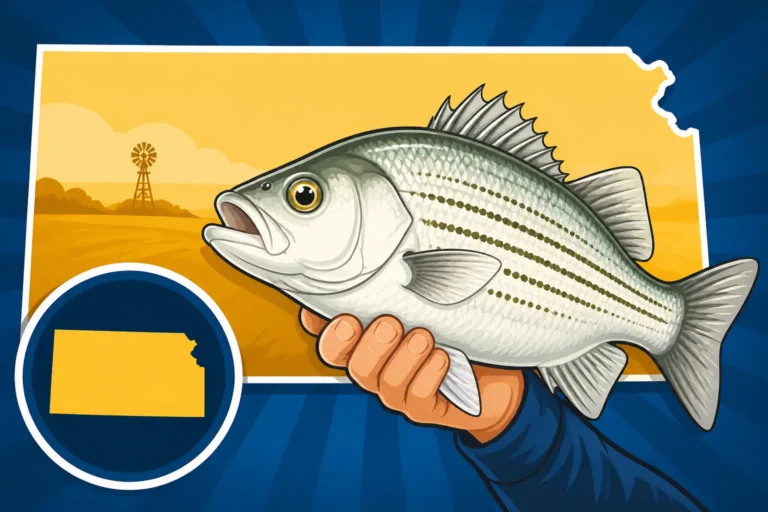
Another incredible contender for the fastest-growing title is the hybrid striped bass, affectionately known as "wipers" in the angling community. These fish are a cross between a striped bass and a white bass, and they inherit the best traits of both: the fighting spirit of the striper and the hardiness and rapid growth of the white bass. They are specifically stocked in many Kansas reservoirs for their phenomenal growth rate and exceptional fighting ability, making them a favorite among anglers looking for powerful, fast-growing sportfish.
Wipers are built for speed and aggression. Their streamlined bodies and powerful tails enable them to chase down schools of shad, their primary food source, with ruthless efficiency. The "hybrid vigor" phenomenon means they often grow faster and larger than either of their parent species when conditions are right. They are often found in open water, chasing baitfish schools, or concentrated around dam outflows where bait is plentiful and current is strong. Catching a wiper is an experience of raw power, as they hit hard and pull like a freight train, often reaching 10 to 20 pounds in a relatively short period after stocking. Understanding their identification can be helpful, which you can find in our Kansas Hybrid Striped Bass Identification guide.
Channel Catfish: Abundant and Agile Growers
While not reaching the sheer behemoth sizes of blue cats, channel catfish are incredibly widespread and demonstrate consistently agile growth to a very respectable eating size. They are perhaps the most popular catfish species in Kansas due to their abundance and willingness to bite. For anglers looking for consistent action and a good meal, channel cats offer a fantastic balance of rapid growth to a harvestable size and a widespread presence.
Channel cats are incredibly adaptable, thriving in a vast array of habitats from small ponds and streams to large rivers and reservoirs. This adaptability, combined with an opportunistic diet, allows them to grow steadily. They'll eat almost anything: insects, worms, crawfish, small fish, and even decaying organic matter. In environments with ample food and moderate competition, a channel cat can reach several pounds within a couple of years, making them a readily available target for anglers. Many smaller channel cats will grow to 5-10 pounds, and some can exceed 20 pounds, especially in larger reservoirs. Their widespread availability and consistent growth make them a backbone of Kansas fishing. For more details, check out our Kansas Channel Catfish Facts and Limits article.
Environmental Factors Fueling Fish Growth
Fish don't just magically get big; their growth is heavily influenced by the environment they live in. Understanding these factors can not only help you find bigger fish but also appreciate the delicate balance of our aquatic ecosystems.
Food Availability and Quality
It stands to reason: more good food means more growth. For fast-growing species in Kansas, a robust and healthy baitfish population is absolutely critical. Imagine a grocery store that's always fully stocked; that's what a healthy shad or shiner population is to a blue catfish or a wiper. When forage fish are abundant and easily accessible, predatory species don't have to expend as much energy hunting, allowing them to convert more of their intake into body mass.
Consider Milford Lake, for example, known for its excellent populations of blue catfish and wipers. This lake also boasts a thriving gizzard shad population. These fatty baitfish are like rocket fuel for predators, providing the caloric intake necessary for rapid development. Conversely, in a water body with sparse baitfish, even genetically predisposed fast-growing fish will struggle to reach their full potential. Anglers often look for signs of baitfish, like nervous water or feeding birds, because those are often the same areas where the big, fast-growing predators are gorging themselves. If you want to know what fuels these giants, our What Channel Catfish Eat Lakes and What Walleye Eat Reservoirs articles offer great insights.
Water Temperature and Seasonality
Fish are cold-blooded, meaning their metabolism is directly tied to the water temperature around them. In Kansas, this means distinct seasonal growth patterns. Warm summer months, when water temperatures are optimal, are prime growth periods. During these times, fish can eat more, digest faster, and convert nutrients into muscle and bone more efficiently. A thriving ecosystem in July will see fish growing at their fastest rates.
However, as water temperatures drop in the fall and winter, fish metabolisms slow down considerably. They eat less, move less, and growth slows or even halts. Think of it like a bear going into hibernation, though not as extreme. This is why a fish hatched in a spring with a long, warm summer and mild fall will likely outgrow a fish hatched in a year with a short summer or an early, harsh winter. Anglers who understand these seasonal cycles can predict when fish are most actively feeding and growing, which often correlates to the best times for fishing. For instance, the transition periods in spring and fall often see bursts of activity as fish capitalize on favorable temperatures.
Habitat Quality and Space
The physical environment also plays a massive role. A large, complex reservoir like Wilson Lake or Cheney Reservoir with diverse depths, plenty of cover (like submerged timber, rock piles, or ledges), and good water quality provides ideal conditions for fish to grow. Ample space reduces competition for food and territory, allowing individual fish to grow larger. Good water quality, especially sufficient dissolved oxygen, is essential for healthy fish metabolism and overall well-being.
In contrast, a small, overpopulated pond with limited food resources and poor water quality will produce stunted fish, even if they are genetically inclined to grow quickly. Crowding leads to increased stress, competition for limited resources, and slower growth rates. This is why you often find the truly trophy-sized fish in our state's largest reservoirs and river systems, where they have the luxury of space and a sprawling buffet of food. Understanding this helps explain why some water bodies consistently produce larger fish of certain species.
Angling Strategies for Fast-Growing Species
Knowing which fish grow fast is one thing; consistently catching them is another. By tailoring your approach to the habits and habitats of these growth champions, you can significantly increase your success rate.
Targeting Blue Catfish and Wipers
When it comes to blue catfish and wipers, you need to think big, both in terms of your tackle and your strategy. These are powerful fish that demand robust gear. For blue cats, a medium-heavy to heavy action rod paired with a strong baitcasting reel spooled with 20-50 lb test braided or monofilament line is often necessary. They prefer fresh cut bait—like shad, carp, or even small chunks of another blue cat—fished on a circle hook near deep river channels, submerged structure, or reservoir humps. Drift fishing with cut bait can be incredibly effective in large reservoirs, allowing you to cover vast areas until you locate a school. You might find some excellent gear options on Amazon for this kind of heavy-duty fishing.
Wipers, on the other hand, are often caught while aggressively chasing baitfish. Look for surface boils, where wipers are pushing shad to the surface, especially in the mornings and evenings around the main lake body or near dam outflows. Trolling with crankbaits or casting heavy spoons, swimbaits, or topwater lures into these feeding frenzies can be explosive. A medium-heavy spinning or casting rod with 12-20 lb line is usually sufficient. Both species are phenomenal fighters, so be prepared for a battle! Learning specific techniques from our Kansas Catfish Fishing Techniques or Kansas Walleye Fishing Techniques (as many wiper techniques overlap with walleye trolling) can be a game-changer.
Pursuing Channel Catfish and Walleye
Channel catfish are often more accessible and less demanding in terms of specialized tackle, making them perfect for many anglers. A medium-action rod and reel with 8-15 lb test line will handle most channel cats you encounter. While cut bait works, they are also readily caught on stink baits, chicken livers, worms, or dough baits. Fish these baits on the bottom, often near structure like brush piles, submerged timber, or channel edges in lakes, ponds, and rivers. Night fishing for channel cats can be particularly productive during warm months.
Walleye, while not growing as rapidly as blue cats or wipers, are still a prized fast-growing species that reach a good size. They prefer cooler, deeper water and often hold to structure like rocky points, humps, and creek channels. Trolling with crankbaits or bottom-bouncing rigs with live bait (like nightcrawlers or leeches) are classic walleye techniques. Jigging spoons or soft plastics near structure can also be very effective, especially during low-light conditions. A medium-light to medium power rod with sensitive tip, paired with a spinning reel spooled with 8-10 lb fluorocarbon or braided line, is a good choice. You can find robust walleye fishing gear on Amazon too. For detailed strategies, our Kansas Walleye Fishing Guide is an invaluable resource.
Responsible Angling and Conservation
While the thrill of catching a fast-growing, large fish is undeniable, practicing responsible angling is paramount to ensuring these populations remain healthy for future generations. For truly giant blue catfish or wipers, many experienced anglers advocate for catch and release, especially for the largest specimens which are often the prime breeders. These older, larger fish have contributed significantly to the gene pool, and releasing them ensures they can continue to do so.
Understanding and adhering to state regulations, including daily creel limits and length limits, is crucial. For example, specific regulations exist to manage species like walleye, often with minimum length limits or slot limits designed to protect a certain size class of fish. Check the current Kansas Fishing Regulations Explained before you head out. By being mindful of conservation, we can all contribute to the long-term health and impressive growth potential of Kansas's incredible fisheries.
Here's a quick comparison of some of Kansas's fast-growing species:
| Fish Species | Typical Fast Growth Potential (lbs) | Primary Diet | Preferred Habitat | Growth Rate Factor | Key Angling Technique |
|---|---|---|---|---|---|
| Blue Catfish | 20-50+ | Baitfish, Crawfish | Large Rivers, Deep Reservoirs | Voracious appetite, long lifespan, rich diet | Drift fishing, cut bait, bottom rigs |
| Hybrid Striped Bass (Wiper) | 10-20 | Shad | Open Reservoir Water, Dam Outflows | Hybrid vigor, aggressive predation | Trolling, casting spoons/swimbaits |
| Channel Catfish | 5-15 | Omnivorous | Diverse (Ponds, Rivers, Reservoirs) | Adaptability, widespread food sources | Bottom rigs, stink bait, live bait |
| Walleye | 5-10 | Baitfish | Deep, Clear Reservoirs, Rocky Areas | Efficient predator, specific habitat needs | Trolling crankbaits, jigging, bottom rigs |
| White Crappie | 1-2 | Minnows, Insects | Brush Piles, Submerged Timber | Abundant, consistent feeding | Jigging, minnows, light tackle |
The pursuit of fast-growing fish in Kansas offers an exciting challenge for any angler. By understanding which species grow quickly, what environmental factors contribute to their impressive size, and the best strategies to target them, you can elevate your fishing experience from good to absolutely legendary. So, next time you're planning a trip, consider focusing on these growth champions and prepare for some truly memorable battles on the water!
Disclaimer
This article is for general informational purposes only and does not constitute professional advice. Laws, prices and regulations vary by location and change over time. Consult a qualified professional for guidance on your specific situation.