Kansas Walleye Fishing Guide
There's nothing quite like the thrill of feeling that distinct "thump" of a walleye on your line, especially here in Kansas. Many anglers, myself included, have spent countless hours chasing these elusive, sharp-toothed beauties, often coming away frustrated by their finicky nature. It feels like you've tried everything – different baits, different depths, different times of day – and still, those golden-sided giants seem to mock you. This comprehensive guide is dedicated to peeling back the layers of mystery surrounding walleye fishing in our great state, providing you with the insights, techniques, and local knowledge to turn those frustrating outings into successful, memory-making adventures.
Understanding Kansas Walleye: The Basics
Before you can consistently catch walleye, you really need to understand the fish itself. They're not like a hungry channel catfish that'll hit anything, or a bluegill that's always eager. Walleye are predators, but they're often subtle, adapting their behavior to water conditions, light levels, and the availability of their favorite meals. Knowing what makes them tick is the first step in putting more of them in your cooler.
Identifying Kansas Walleye
Walleye (Sander vitreus) are truly distinctive fish, and once you've seen one, you won't mistake it for much else. They get their name from their large, somewhat opaque eyes, which are specially adapted for low-light conditions. These eyes have a reflective layer called the tapetum lucidum, which helps them see in murky water and during dawn, dusk, or even under the moon. This is a huge clue to their preferred fishing times, which we'll get into later.
Physically, walleye have a long, slender body, often a beautiful olive-green to golden-brown color on their backs, fading to a creamy white on their bellies. Their sides are usually flecked with darker spots or blotches, creating a camouflaged appearance against rocky or sandy bottoms. They possess two dorsal fins: the first is spiny and sharp, while the second is soft-rayed. Look for a distinctive white tip on the lower lobe of their tail fin – that's a tell-tale sign of a true walleye. In Kansas, you might occasionally encounter a sauger or a saugeye (a hybrid of a walleye and sauger). Sauger typically have distinct spots on their spiny dorsal fin and often darker, more mottled bodies, while saugeye share characteristics of both, but that white tail tip is almost always a dead giveaway for a walleye.
Walleye Behavior and Diet in Kansas Waters
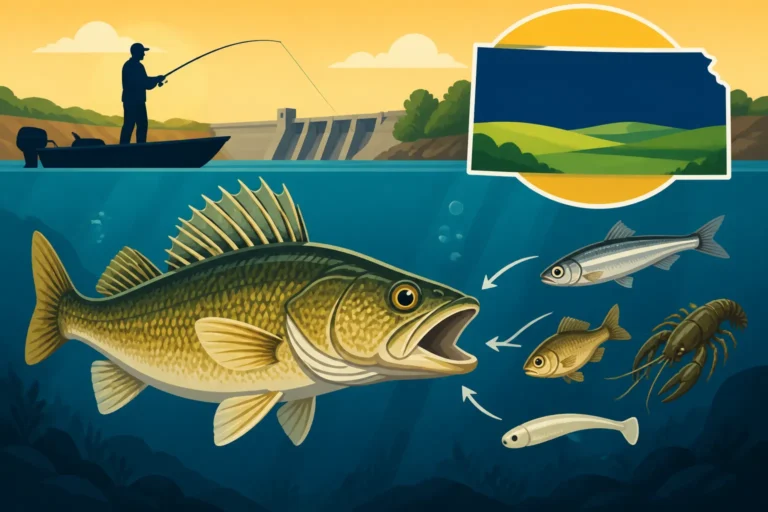
Walleye are opportunistic predators, meaning they'll eat whatever is readily available and easy to catch. In Kansas, their diet largely consists of smaller fish like shad, minnows, shiners, and young panfish. They're also not above munching on crayfish, insect larvae, and even leeches when the opportunity arises. Their hunting strategy is often ambush-oriented, especially in cover, but they'll actively cruise open water in schools, particularly when targeting baitfish.
One of the most critical aspects of walleye behavior is their light sensitivity. Because their eyes are so good in dim light, they tend to be most active during twilight hours (dawn and dusk), on cloudy days, or when the water is stained or choppy, scattering the sunlight. Bright, sunny days often drive them deeper or into heavy cover. Understanding this preference for low light can dramatically improve your success. They'll also follow schools of baitfish, so if you can locate the bait, you're usually one step closer to finding the walleye. Their schooling behavior means that if you catch one, there's a good chance more are nearby.
Top Kansas Walleye Lakes and Hotspots
Kansas boasts several fantastic reservoirs that offer incredible walleye fishing opportunities. However, knowing which lake to choose and, more importantly, where to focus your efforts within that lake, can be the difference between a triumphant outing and going home empty-handed. These fish relate heavily to structure and cover, so understanding their preferred hangouts is paramount. If you're looking for a deep dive into regulations, check out our Kansas Fishing Regulations Explained article.
Premier Walleye Destinations in Kansas
When you talk about walleye fishing in Kansas, a few names immediately jump to mind. These lakes consistently produce good numbers and often trophy-sized fish, thanks to excellent stocking programs and habitat.
Milford Lake: As the largest lake in Kansas, Milford is a perennial favorite for walleye anglers. It's known for its abundant gizzard shad population, which forms the primary forage base for its healthy walleye. Key areas include the large flats, rocky points, and submerged timber, especially in the upper reaches of the lake near the river arms. Many anglers find success Milford Lake Walleye Fishing Near the Dam, particularly during certain seasons.
Cheney Reservoir: Located near Wichita, Cheney is another walleye powerhouse. It's a shallower, wind-swept lake, which often keeps the water churned and stained, creating ideal low-light conditions for walleye during the day. Rock humps, old roadbeds, and the main lake dam face are prime spots. The Cheney Reservoir Walleye Fishing can be phenomenal, especially in spring and fall.
Wilson Lake: Touted as one of the clearest lakes in Kansas, Wilson offers a different challenge. The clear water means walleye often hold deeper or tighter to structure during the day. Known for its dramatic cliffs and rocky structure, focus on submerged points, humps, and the numerous cedar tree piles. Wilson Lake Fishing Guide provides a broader overview of this beautiful reservoir.
Council Grove Lake: This lake, while smaller than some of the giants, is a consistent producer of quality walleye. It has a good mix of timber, rock, and standing brush, offering diverse habitat. The Neosho River arm and main lake points are excellent places to start.
Lovewell Reservoir: Up in north-central Kansas, Lovewell is another gem. This shallower lake has extensive flats and old creek channels, perfect for trolling. Walleye here often relate to submerged humps and rock piles, especially when baitfish congregate. Anglers often find success with Lovewell Reservoir Walleye Fishing.
Kanopolis Lake: With its unique sandstone outcroppings and a good population of shad, Kanopolis offers excellent walleye action. Focus on the main lake points, submerged timber, and the creek channels that wind through the reservoir.
Webster Reservoir: Another western Kansas favorite, Webster is known for its productivity, particularly for those willing to brave the winds. It’s a relatively shallow, fertile lake where walleye often relate to subtle changes in bottom contour and submerged vegetation edges.
Identifying Walleye Hotspots Within Lakes
Once you've picked your lake, the real work begins: finding those specific spots where walleye congregate. These fish are masters of relating to structure, and understanding what to look for on your electronics or map is key.
Rocky Points and Humps: Walleye love rocky structure. Points that extend out into deeper water, especially those with sharp breaks or submerged rock piles, are magnets for these fish. They use these areas to ambush baitfish that move from shallow to deep water. Look for irregularities, gravel beds, or scattered rock on your fish finder. These are classic walleye ambush points.
Submerged Timber and Brush Piles: While often associated with bass or crappie, walleye will use submerged trees and brush as cover, especially in murkier water or during bright conditions. These areas provide shade and a place to hide before ambushing prey. Don't be afraid to cast or troll along the edges of standing timber lines.
Old Roadbeds and Creek Channels: Many Kansas reservoirs were built over existing topography. Old roadbeds, foundations, and creek channels that are now submerged offer distinct changes in bottom contour. Walleye will patrol these underwater highways, particularly where they intersect with deeper water or other structures. Your mapping unit on your fish finder is invaluable for identifying these subtle yet critical features.
Dam Faces and Riprap: The rocky riprap along dam faces and causeways can be phenomenal walleye producers, especially during windy conditions when waves crash against them, stirring up baitfish and small organisms. The rocks provide cover and warmth, and walleye will cruise these edges. Vertical jigging or casting crankbaits parallel to the riprap can be very effective.
Prime Seasons and Times for Walleye in Kansas
Walleye are catchable year-round in Kansas, but their behavior changes dramatically with the seasons. Understanding these shifts and knowing the optimal times to target them will significantly increase your odds of success. They don't call them "the fish of 10,000 casts" for nothing, but armed with seasonal knowledge, you can cut that number down considerably. Make sure you're up to date on all regulations, including Kansas Fishing Seasons and Limits.
Spring Walleye Fishing: The Spawn and Post-Spawn Bite
Spring is arguably the most anticipated time for walleye anglers in Kansas. As ice recedes and water temperatures begin to climb, walleye move from their deeper wintering grounds toward shallower spawning areas.
Pre-Spawn Build-up (Late Winter/Early Spring): As water temperatures hit the mid-30s to low 40s Fahrenheit, walleye start to stage in areas adjacent to their spawning grounds. These are typically rocky points, submerged humps, and river channels leading into the main lake. They're feeding heavily to build energy for the spawn, making them aggressive and relatively predictable. Trolling with deep-diving crankbaits or vertical jigging with minnow-tipped jigs can be highly effective during this phase.
The Walleye Spawn (Mid-Spring): Walleye typically spawn when water temperatures reach the upper 40s to low 50s Fahrenheit, usually from late March through April, depending on the specific lake and weather patterns. They seek out shallow, rocky areas, often with current or wave action, where they can deposit their eggs. During the actual spawn, males are usually more aggressive and numerous in these shallow areas. While females are focused on spawning, they can still be caught, especially right before or after they drop their eggs. Many anglers target rocky shorelines, dam riprap, or river sections during this window. Fishing at night can be especially productive, as walleye are even more active in the low light conditions.
Post-Spawn Recovery (Late Spring/Early Summer): After the spawn, female walleye are often recuperating in slightly deeper water, while males might linger in the spawning areas. As water temperatures continue to rise into the mid-50s and 60s, both sexes begin to scatter and resume feeding patterns, moving towards their summer haunts. This can be a challenging period, but if you find schools of recovering fish, the bite can be excellent. They’ll often relate to deeper points and humps, transitioning off their spawning grounds. Look for them in depths of 15-25 feet, using jigs, crankbaits, or live bait rigs.
Summer and Fall Walleye Strategies
Once the spring rush is over, walleye patterns shift, but the opportunities remain abundant for those who adapt.
Summer Deep Water Tactics: As summer heats up and surface water temperatures climb into the 70s and 80s, walleye generally retreat to deeper, cooler, more oxygenated waters. This often means suspending over deeper basins, relating to thermoclines (the layer where water temperature changes rapidly), or hugging deep structure like submerged islands, creek channels, and main lake points in 20-40 feet of water. Trolling deep-diving crankbaits, bottom bouncers with spinner rigs, or using slip bobber rigs with live bait can be very productive. Best Time to Catch Walleye during the summer is often early morning, late evening, or at night.
Night Fishing for Walleye: Summer nights are prime time for trophy walleye in Kansas. The low light allows them to move into shallower water to feed actively. Casting shallow-running crankbaits, suspending jerkbaits, or jigging with plastic swimbaits along rocky points, dam faces, and shallow flats can yield incredible results. This is often when the biggest walleye are caught, as they shed their daytime caution.
Fall Schooling Patterns: As water temperatures begin to cool in September and October, walleye become incredibly active again. They often school up and move to predictable feeding grounds, gorging on baitfish in preparation for winter. This is a fantastic time for trolling large areas with crankbaits or jigging spoons on main lake points and humps. They'll follow schools of shad into shallower bays or main lake flats, offering some of the year's best fishing. The aggression levels are high, and they'll strike a variety of presentations.
Optimal Daily Conditions and Times
Beyond the seasons, daily conditions play a huge role in walleye success. Paying attention to these subtle cues can make a good day great.
Low Light is Key: We've mentioned their eyes – this is the golden rule. Dawn, dusk, overcast days, or even rainy days are often the best times to find active walleye. During bright sun, they'll usually move deeper or into dense cover. Many anglers reserve their fishing for the first and last couple of hours of daylight.
Wind and Chop: A good "walleye chop" – a moderate wind creating waves on the surface – is often a blessing. The chop breaks up light penetration, makes baitfish disoriented, and creates current, all of which benefit walleye. It's often harder for them to see your boat or line. Don't be afraid of a little wind; it can turn on the bite!
Barometric Pressure: While not as cut-and-dry as light conditions, a stable or falling barometer often corresponds with more active feeding, while a rapidly rising barometer after a front can shut them down. Walleye, like many fish, react to these pressure changes, often moving deeper and becoming less aggressive after a major cold front.
Essential Walleye Fishing Techniques
Walleye fishing can be incredibly versatile, but certain techniques consistently outperform others in Kansas waters. Mastering a few key presentations and knowing when to use them will dramatically improve your catch rate. Each method targets different depths and behaviors, giving you options no matter what the walleye are doing.
Trolling for Kansas Walleye
Trolling is a cornerstone technique for many successful Kansas walleye anglers, especially on larger reservoirs like Milford and Cheney. It allows you to cover vast amounts of water, present baits at specific depths, and find active schools of fish.
Crankbait Trolling: This is perhaps the most popular trolling method. Choose crankbaits that dive to the depth where you expect the walleye to be. Lipless crankbaits, diving crankbaits (like those from Rapala or Berkley), and stickbaits are all effective. Match the color to the forage base (silver/blue for shad, perch patterns in some lakes) and water clarity. Experiment with speed; walleye often prefer a slower, more deliberate retrieve, but sometimes a faster "reaction strike" speed is needed. Using planer boards can help spread your lines out, cover more water, and get your lures away from the boat, which can be critical in clear water. Consider varying lure depth with lead-core line or snap weights. For a detailed look, check out Trolling for Walleye on Kansas Reservoirs.
Bottom Bouncer Rigs: When walleye are hugging the bottom, especially on flats or along contours, bottom bouncers are tough to beat. These L-shaped wire weights allow your bait to tick the bottom without snagging excessively. Attach a snell with a spinner blade and a live bait (worm or minnow) or a soft plastic grub. This rig is fantastic for slowly working along main lake points, submerged humps, and old creek channels. The spinner adds flash and vibration, attracting walleye from a distance. Again, adjust your trolling speed to get the ideal presentation – fast enough to make the spinner work, but slow enough for the fish to react.
Precise Depth Control: The biggest challenge and reward of trolling is depth control. Walleye are often very particular about the depth at which they feed. Use your fish finder to locate schools of baitfish and walleye, then deploy your lures to run just above or through them. Line counter reels are invaluable for replicating successful presentations. Factors like line diameter, trolling speed, and the length of line out all affect the diving depth of your lure.
Jigging and Live Bait Rigs
For a more hands-on approach or when walleye are concentrated in specific areas, jigging and live bait rigs shine. These techniques are often preferred when fishing structure or smaller spots.
Vertical Jigging: This is a fantastic technique for pinpointing walleye that are tightly schooled on humps, points, or along drop-offs. Use lead-head jigs tipped with live minnows, plastic grubs, or even a piece of worm. Drop the jig straight down to the bottom, then lift it a few inches to a foot and let it fall. The key is to keep your line as vertical as possible, maintaining contact with the bottom. Walleye often hit on the fall or when the jig is paused just above them. Spoon jigging with flashy metal spoons can also be incredibly effective, especially when baitfish are present.
Slip Bobber Rigs: When walleye are suspended or cruising at a consistent depth over structure, a slip bobber rig with live bait is incredibly effective. This rig allows you to set your bait at any depth, yet still cast it easily. Thread your line through the bobber, attach a bobber stop to set the depth, then add a small weight (split shot or an egg sinker) and a hook with a lively minnow, leech, or nightcrawler. The natural movement of the live bait under the bobber is often irresistible to finicky walleye. This is particularly useful when fishing docks, bridge pilings, or isolated timber.
Lindy Rigs (Live Bait Rigs): Also known as a "walker" or "bottom walker" rig, the Lindy rig is designed to present live bait in a natural, weedless fashion close to the bottom. It consists of a walking sinker (often bullet or cone-shaped), a swivel, and a long snell (fluorocarbon leader) with a hook. The walking sinker allows the rig to glide over snags. Use a minnow, leech, or nightcrawler, drifting or slowly trolling the rig along contours. The long leader allows the bait to appear completely natural, often enticing strikes from cautious walleye. This technique is often effective when walleye are scattered and not aggressively feeding.
Bank and Shore Fishing for Walleye
Not everyone has a boat, and thankfully, Kansas offers plenty of opportunities to catch walleye from the bank. It requires a slightly different approach, but the rewards are just as sweet.
Identifying Accessible Hotspots: Look for areas with public access that feature classic walleye structure. Dam faces with riprap, causeways, public fishing piers that extend over deeper water, and accessible points on reservoirs are all prime candidates. Areas where rivers or creeks feed into a lake can also be productive, especially during spring and fall. Pay attention to signs indicating public fishing access at state parks and wildlife areas.
Casting Techniques: Long casts are often necessary to reach deeper water or submerged structure from shore. Use medium-heavy spinning gear with braided line for maximum casting distance and sensitivity. Cast crankbaits (deep-diving or suspending), heavy jigs with soft plastics, or spoons. Retrieve slowly, pausing occasionally, to mimic wounded baitfish. During low-light periods, casting stickbaits or shallow crankbaits along the shoreline can be very effective.
Bottom Rigs for Shore Anglers: A simple bottom rig can be incredibly effective when fishing from the bank. Use a slip sinker rig (egg sinker above a swivel, with a leader and hook) with a live minnow or a chunk of cut bait. Cast it out, let it sink to the bottom, and put your rod in a holder. Walleye will often pick up the bait and run, and the slip sinker allows them to take the bait without feeling resistance. This is especially good for targeting channels or deeper holes accessible from shore. Make sure to check Kansas Daily Creel Limits by Species for specific regulations.
Best Gear and Tackle for Kansas Walleye
Having the right tools for the job is crucial when chasing walleye. While you don't need to break the bank, investing in quality gear tailored for walleye fishing will make your experience more enjoyable and significantly increase your chances of success. From the rod in your hand to the lures in your tackle box, every piece plays a role.
Rods, Reels, and Line for Walleye
Matching your rod and reel setup to your chosen technique is paramount for walleye.
Rods: For most Kansas walleye fishing, a medium to medium-heavy action spinning or baitcasting rod, typically 6'6" to 7'6" in length, is ideal.
- Jigging/Live Bait: A faster action rod with a sensitive tip is crucial for feeling subtle bites. Look for a medium-light to medium power, 6'6" to 7' spinning rod. This allows for precise jig control and quick hook sets.
- Trolling: For trolling with crankbaits or bottom bouncers, a medium-heavy action baitcasting rod around 7' to 8'6" is excellent. The longer length helps spread lines and absorb the shock of a striking fish when running multiple lines. A slower action can be beneficial here, acting as a shock absorber.
- Shore Fishing: A longer spinning rod (7' to 8' medium-heavy) will give you the casting distance needed to reach deeper water from the bank.
Reels:
- Spinning Reels: For jigging and casting lighter lures, a 2500 to 3000 size spinning reel offers a good balance of line capacity, smooth drag, and light weight.
- Baitcasting Reels: For trolling, a low-profile baitcasting reel or a round baitcasting reel with a line counter feature is a huge advantage. Line counter reels allow you to precisely replicate your presentation depth once you find a productive pattern. Look for a smooth, consistent drag system.
Line: The right line choice impacts sensitivity, casting distance, and abrasion resistance.
- Braided Line: For jigging and casting, braided line (10-20 lb test) is excellent due to its no-stretch properties, offering maximum sensitivity to feel subtle bites. It also casts incredibly well. Always use a fluorocarbon leader (6-12 lb test) to the lure or bait, as walleye can be line-shy in clear Kansas waters.
- Monofilament Line: For trolling, 10-15 lb test monofilament is a good choice. Its stretch provides a forgiving buffer for aggressive strikes, and it handles planer boards well. It also has inherent buoyancy, which can be useful for certain crankbait presentations.
- Fluorocarbon Line: While more expensive, 10-15 lb test fluorocarbon can be used as a main line for its low visibility and good abrasion resistance, especially in clear water or around rocky structure. Many anglers prefer it for leaders.
You can find a great selection of Best Rod and Reel Combo for Walleye options on Amazon, offering variety across different price points and brands.
Top Lures and Baits for Kansas Walleye
The walleye's diet and behavior should guide your lure selection. Having a diverse array of options in your tackle box will prepare you for any situation.
Crankbaits: These are essential, especially for trolling and casting.
- Deep-Diving Crankbaits: For deeper presentations (15-30+ feet), lures like Rapala Down Deep Husky Jerks, Berkley Flicker Shads, or custom painted reef runners are workhorses.
- Shallow-Running/Suspending Jerkbaits: For shallower water or night fishing, Rapala Husky Jerks, X-Raps, or suspending Lucky Crafts are very effective.
- Colors: Start with natural baitfish patterns (shad, perch, silver/blue), then experiment with brighter colors (firetiger, chartreuse) in stained water or during aggressive feeding periods.
Jigs: Versatile and effective year-round.
- Lead-Head Jigs: 1/8 to 1/2 oz jigs are most common. Pair them with plastic grubs (paddle tails, curly tails), minnow imitators, or live bait.
- Blade Baits: Lures like the Heddon Sonar or Rapala Rippin' Rap create strong vibrations and are excellent for vertical jigging or casting when fish are aggressive.
- Spoons: Jigging spoons (like a Northland Buck-Shot Rattle Spoon or a Johnson Silver Minnow) are great for vertical presentations over schooling fish, especially in deeper water.
Live Bait: Often the ace in the hole, especially for finicky walleye.
- Minnows: Shiners, fatheads, or even small suckers are gold. Hook them through the lips or just behind the dorsal fin when still-fishing or using slip bobbers.
- Nightcrawlers: Presented on a spinner rig or a simple hook, they are universally effective.
- Leeches: Tough, lively, and attractive to walleye, especially on slip bobbers or Lindy rigs.
Make sure to check out our dedicated guide to Best Lures for Kansas Walleye for more specific recommendations. You can often find great multi-packs and a wide selection of lure types and colors on Amazon.
Essential Accessories and Electronics
Modern technology and a few crucial accessories can significantly enhance your walleye fishing success.
Fish Finder/GPS Combo: This is arguably the most important piece of electronics. A good unit will show you depth contours, identify baitfish schools, locate individual walleye, and mark submerged structure. The GPS feature allows you to mark waypoints of productive spots and navigate effectively, especially on large reservoirs. Companies like Humminbird, Lowrance, and Garmin offer excellent models. For guidance, consider a Best Fish Finder for Kansas Reservoirs guide.
Landing Net: A large, rubber-coated landing net is essential. Walleye have sharp teeth and spines, and a good net protects both you and the fish. The rubber coating is also gentler on the fish's slime coat if you plan to release it.
Pliers/Forceps: For safely removing hooks from a walleye's mouth, particularly when using treble hooks on crankbaits. Their teeth can make hand-unhooking risky.
Measuring Board/Scale: If you're keeping fish, a measuring board is critical for ensuring they meet Kansas Walleye Minimum Length Limit of 21 Inches requirements and that you adhere to bag limits. A scale is great for bragging rights with larger fish!
Livewell/Cooler: If you plan to keep your catch, a functional livewell to keep fish alive until you fillet them or a quality cooler with ice for immediate storage is necessary for maintaining freshness.
Rod Holders: For trolling, rod holders are a must. They keep your rods secure, allow you to run multiple lines, and absorb the initial impact of a strike.
Having these accessories makes a day on the water smoother and more productive. You can often find great deals and a vast selection of these items, from nets to rod holders, on Amazon, making it easy to stock up before your next trip.
Kansas Walleye Regulations and Conservation
Fishing success isn't just about catching fish; it's also about understanding and respecting the rules that protect our valuable fisheries. Kansas Department of Wildlife and Parks (KDWP) works hard to maintain healthy walleye populations, and adherence to regulations is vital for long-term sustainability. It's not just about avoiding penalties; it's about being a responsible angler.
Understanding Walleye Length and Creel Limits
Regulations for walleye in Kansas are specific and designed to manage populations effectively, ensuring both a healthy fishery and opportunities for anglers to harvest fish. These limits can vary by specific water body, so always check the most current KDWP fishing regulations summary before you head out.
Statewide General Regulations: While specific lake regulations might differ, generally, walleye in Kansas have a daily creel limit and often a minimum length limit. For instance, many waters have a Kansas Walleye Daily Limit of Two Fish per angler per day, with a Kansas Walleye Minimum Length Limit of 21 Inches. This means any walleye you catch under 21 inches must be immediately released.
Why These Limits Matter: These regulations aren't arbitrary. The length limit, particularly the 21-inch minimum, is often designed to protect juvenile fish and allow them to reach reproductive age, ensuring they have a chance to spawn at least once before being harvested. The lower daily limit reflects the slower growth rate and reproductive potential of walleye compared to some other species. Additionally, some lakes may have "slot limits," where fish within a certain size range must be released, while those smaller or larger can be kept. This is often done to reduce competition among certain size classes and promote growth for trophy fish. Always consult the KDWP's current regulations guide for the specific lake you plan to fish. You can learn more about these specifics in Why the Kansas Walleye Limit Is Only Two Fish.
Responsible Catch and Release Practices
Even if you intend to keep some fish, practicing proper catch and release for undersized or unwanted walleye is critical for the health of the fishery. A poorly handled fish, even if released, might not survive.
Minimize Handling Time: The less time a fish is out of the water, the better. Have your net, pliers, and measuring board ready before you even reel in the fish.
Wet Hands: Always wet your hands before touching a fish. Dry hands can remove the protective slime coat, making the fish susceptible to disease.
Support the Fish: If you need to handle a walleye for a photo or to remove a hook, support its body horizontally, particularly larger fish. Avoid holding a fish vertically by its jaw or gill plates, as this can damage its internal organs or spine.
Quick Hook Removal: Use needle-nose pliers or forceps to quickly and gently remove the hook. If the hook is deeply ingested, it's sometimes better to cut the line as close to the hook as possible rather than tearing at sensitive internal organs.
Revive if Necessary: For a tired fish, hold it gently in the water, facing into the current, until it regains its strength and can swim away on its own. Look for strong tail kicks.
The Importance of Walleye Stocking Programs
The robust walleye fishing opportunities in Kansas don't just happen by accident. The KDWP plays a crucial role through extensive walleye stocking programs.
Supplementing Natural Reproduction: While some Kansas reservoirs have natural walleye reproduction, many rely on regular stocking to maintain fishable populations. KDWP fisheries biologists strategically stock walleye fingerlings (young fish) into lakes to bolster numbers, compensate for poor spawning years, or introduce them into new waters.
Genetic Diversity and Health: Stocking programs also consider genetic diversity and disease resistance, aiming to produce healthy, fast-growing walleye that can thrive in Kansas environments. These efforts are often funded by fishing license sales and excise taxes on fishing equipment, underscoring why purchasing your Kansas Fishing License Guide is so important for the future of our sport. Without these continuous efforts, many of our premier walleye lakes would simply not be able to sustain the level of angling pressure they experience.
Troubleshooting and Advanced Walleye Tips
Even with the best knowledge and gear, walleye can sometimes be incredibly challenging. It's their nature! But successful anglers aren't just lucky; they're adaptable and always learning. When the bite gets tough, a willingness to change tactics and a commitment to refining your approach can make all the difference.
Adapting to Changing Conditions
Walleye are highly sensitive to their environment. What worked yesterday might not work today, and understanding why can help you adjust.
Weather Fronts and Barometric Pressure: As mentioned, cold fronts are notorious for shutting down a walleye bite. After a front passes, often accompanied by high pressure and clear skies, walleye tend to become lethargic and move deeper. When this happens, slow down your presentation considerably. Downsize your lures, use finesse techniques like a small jig and minnow, or switch to live bait presented on a slip bobber or Lindy rig. Target fish that are hugging the bottom rather than suspended. Conversely, stable weather or an approaching low-pressure system can often trigger an aggressive bite.
Water Clarity and Color: Clear water generally means walleye are more wary and light-sensitive. In these conditions, use longer fluorocarbon leaders, downsize your line, and opt for natural-colored baits. Focus on low-light periods or target deeper fish. In stained or muddy water, walleye rely more on scent and vibration. This is when brighter colors (chartreuse, orange, firetiger) and lures that create a lot of vibration (blade baits, rattling crankbaits) shine. Scented soft plastics or live bait can also be highly effective.
Fishing Pressure: If a lake has seen heavy fishing pressure, especially from other walleye anglers, the fish can become conditioned and avoid common presentations. This is when you need to think outside the box. Try fishing less popular spots, experimenting with unusual lure colors or sizes, or fishing at unconventional times (like late at night). Sometimes, just changing your retrieve speed or adding a different scent can trick a pressured fish.
Advanced Tactics for Stubborn Walleye
When the standard approaches aren't cutting it, it's time to pull out some advanced moves.
Downsizing and Finesse: When walleye are lethargic or in clear, cold water, they often won't chase a large, aggressive bait. Switch to smaller jigs (1/16 to 1/8 oz), tiny soft plastics, or small minnows. Use lighter line and a very subtle retrieve. Think of it as presenting a tempting, easy meal rather than an energetic chase. Sometimes, the smallest change in jig weight or soft plastic profile can make a huge difference.
Vertical Jigging in Heavy Cover: While trolling covers water, sometimes walleye are buried deep in specific pieces of structure, like standing timber or dense rock piles, which makes trolling impractical. Using a boat with a good trolling motor and fish finder, position yourself directly over the structure and vertical jig. Drop a weedless jig (e.g., a jig with a brush guard) or a heavy spoon right into the heart of the cover. This can be a high-reward, high-risk tactic due to potential snags, but it's often where the biggest walleye hide.
Night Fishing with Electronics: We talked about night fishing earlier, but combine that with your fish finder. Many modern fish finders have excellent low-light displays. Use your electronics to find baitfish and walleye that have moved into shallower areas after dark. Position your boat strategically, often in stealth mode with a quiet trolling motor, and cast into the feeding zones. The absence of daylight often allows walleye to be more aggressive and less wary of boat noise or angler presence. A good headlamp can be helpful for tying knots without disturbing the fish. You can find robust, waterproof headlamps perfect for night fishing on Amazon.
Learning from Every Outing
The best walleye anglers are perpetual students. Every trip, successful or not, offers an opportunity to learn and refine your approach.
Keep a Fishing Log: This is an old-school tip that still holds immense value. Jot down details from each trip: date, time, weather conditions (air temp, water temp, wind, cloud cover), moon phase, water clarity, techniques used, lures/baits that worked (or didn't), depths, and locations. Over time, you'll start to see patterns emerge that can guide your future outings. For example, you might notice that walleye in Cheney Reservoir always seem to hit firetiger crankbaits on cloudy afternoons in May.
Observe and Adapt: Pay attention to what other successful anglers are doing, but don't just blindly copy them. Try to understand why they're having success. Is it their depth? Their retrieve speed? Their lure color? Be willing to change your approach throughout the day. If trolling isn't working, try jigging. If one color isn't producing, switch it up. The fish will tell you what they want if you're paying attention.
Network with Other Anglers: Join local fishing forums, attend fishing clubs, or simply strike up conversations at the boat ramp or local bait shop. Sharing information and experiences with other walleye enthusiasts can provide invaluable insights into current patterns, hot spots, and effective techniques. Just remember to be respectful of others' fishing spots!
| Kansas Walleye Hotspots Quick Reference | Primary Forage | Key Structure | Best Seasons | Common Techniques |
|---|---|---|---|---|
| Milford Lake | Gizzard Shad | Flats, Points, Submerged Timber | Spring, Fall, Summer Nights | Trolling (crankbaits, bottom bouncers), Jigging |
| Cheney Reservoir | Gizzard Shad | Rock Humps, Roadbeds, Dam Face | Spring, Fall | Trolling (crankbaits), Jigging, Live Bait Rigs |
| Wilson Lake | Gizzard Shad | Cliffs, Rocky Points, Cedar Piles | Spring, Fall, Deep Summer | Jigging, Trolling (deep crankbaits) |
| Council Grove Lake | Various Minnows | Timber, Rock, River Arms | Spring, Fall | Jigging, Trolling, Live Bait Rigs |
| Lovewell Reservoir | Shad, Minnows | Flats, Creek Channels, Humps | Spring, Fall | Trolling (crankbaits, bottom bouncers) |
| Kanopolis Lake | Shad, Minnows | Points, Submerged Timber | Spring, Fall | Jigging, Trolling, Casting |
| Webster Reservoir | Various Minnows | Flats, Bottom Contours | Spring, Fall | Trolling (bottom bouncers, crankbaits) |
Disclaimer
This article is for general informational purposes only and does not constitute professional advice. Laws, prices and regulations vary by location and change over time. Consult a qualified professional for guidance on your specific situation.