Best Lures for Kansas Walleye
Let's be honest, walleye fishing in Kansas can sometimes feel like trying to solve a complex puzzle. You've heard the stories of big catches, seen the pictures of those beautiful, elusive fish, and maybe even had a few successful trips yourself. But there are also those days when you feel like you're throwing everything but the kitchen sink at them, and they just aren't biting. It's frustrating, and it makes you question if you're using the right gear. This guide is here to unravel that mystery, focusing specifically on the best lures for Kansas walleye, helping you understand what to tie on and why, to turn those slow days into memorable ones.
Understanding Walleye Behavior in Kansas Waters
Before you even think about what lure to use, you've got to get inside a walleye's head. These aren't your typical bass or panfish; they have very specific preferences that dictate where they are, what they're eating, and how they'll react to your presentation. Kansas reservoirs like Milford Lake, Cheney Reservoir, and Wilson Lake are prime walleye territory, but each has its own nuances that savvy anglers learn to read.
Seasonal Movements and Feeding Habits
Walleye are constantly on the move, driven by water temperature, forage availability, and their spawning cycles. Knowing where they are at different times of the year is half the battle. In early spring, as ice recedes and water temperatures climb into the 40s and low 50s Fahrenheit, walleye start to stage for the spawn. They'll congregate around hard-bottomed areas, especially rocky points, riprap shorelines, and main lake points where the current might be slight but noticeable. Their feeding during this period is less aggressive, often focused on smaller, easy meals as they conserve energy for reproduction.
After the spawn, usually late April into May, walleye scatter and become more actively predatory. This is often referred to as the post-spawn "recovery" period. They're hungry and willing to chase down a meal. As summer progresses and water temperatures rise into the 70s, walleye typically retreat to deeper, cooler water, often suspending over main lake humps, deep points, or the thermocline. They become more light-sensitive, which is why early morning, late evening, and night fishing can be so productive during the warmer months. Come fall, as water cools, they become active again, feeding aggressively to build up fat reserves for winter, often found on flats, deep breaks, and channel edges. You can learn a lot more about these patterns in our comprehensive guide on Kansas Walleye Fishing Guide.
Preferred Structures and Depths
Walleye are structure-oriented fish, meaning they relate closely to changes in the lake or river bottom. This could be anything from submerged timber, rock piles, ledges, humps, or even man-made structures like roadbeds or bridge pilings. In Kansas, our large reservoirs offer an abundance of these features. Identifying these key areas is crucial. For instance, on the expansive flats of Cheney Reservoir, walleye might be found relating to subtle depth changes or gravel patches that aren't obvious on the surface.
Their preferred depth varies wildly by season and time of day. In spring, they might be in surprisingly shallow water, sometimes only a few feet deep, especially during low-light conditions. As summer heat sets in, you'll often find them anywhere from 15 to 30 feet deep, sometimes even deeper, depending on the specific lake and conditions. They use these depths to escape bright sunlight and find comfortable water temperatures. In fall, they might move back into shallower feeding zones as baitfish move there, but still prefer access to deeper water nearby. Understanding these patterns, perhaps by checking out the Best Walleye Lakes in Kansas for specific lake layouts, will significantly narrow down your lure selection.
The Essential Lure Categories for Kansas Walleye
When you walk into a tackle shop, the sheer volume of lures can be overwhelming. But for Kansas walleye, you can boil it down to a few core categories that consistently produce fish. Each category excels in different situations, and having a good selection of each will make you a more versatile and successful angler.
Crankbaits: The Trolling and Casting Workhorses
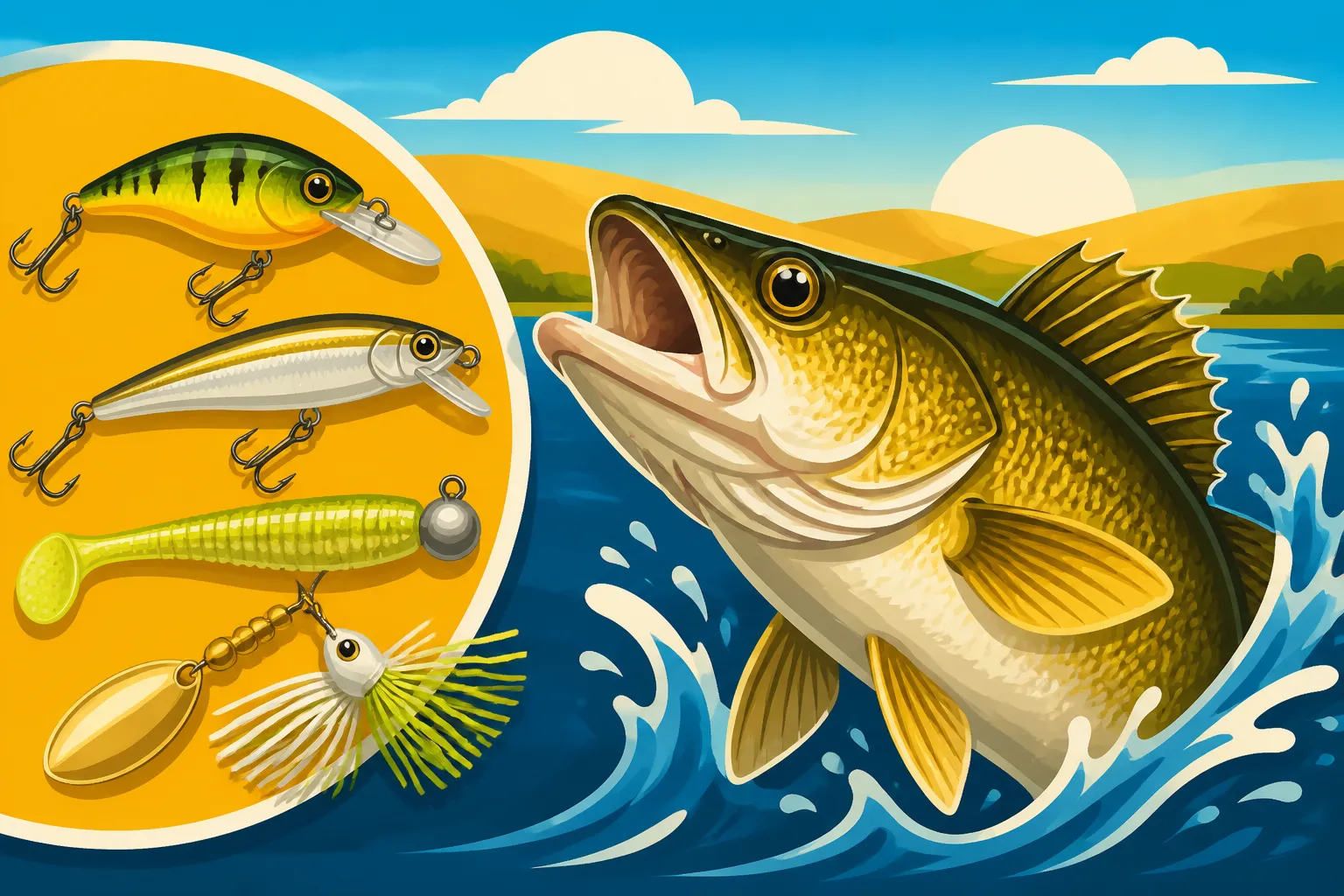
Crankbaits are arguably one of the most effective lure categories for walleye, especially for covering large expanses of water. They mimic baitfish, have a built-in wobbling action, and can dive to specific depths, making them ideal for targeting walleye that are actively feeding or suspended. They come in two main types: diving crankbaits and suspending jerkbaits.
Diving crankbaits, like the popular Rapala Shad Raps or Berkley Flicker Shads, are fantastic for trolling. They're designed to reach specific depths based on their lip size and retrieve speed. Trolling allows you to cover vast areas quickly, searching for active schools of fish along breaks, humps, and flats. For example, when walleye are spread out over a large flat on Wilson Lake in early summer, slow-trolling a crankbait at 1.5-2.5 mph can be incredibly effective. Different models are designed for different depth ranges, so having a selection that can hit anywhere from 5 to 25 feet is essential. You can find a huge variety of these on Amazon, often in multi-packs, making it easy to build your collection. Our guide on Trolling for Walleye on Kansas Reservoirs delves deeper into the nuances of this technique.
Suspending jerkbaits, such as those from the Rapala Husky Jerk or Smithwick Rogue lines, are another crankbait subset that excels when walleye are finicky or in colder water. These lures, unlike traditional diving crankbaits, suspend at a certain depth when you pause your retrieve, mimicking a wounded or dying baitfish. This "hang time" in the water column can often trigger strikes from lethargic walleye who might not commit to a faster-moving lure. They are often cast and retrieved with a jerk-pause cadence, making them deadly around rocky points and shallow structure, particularly in spring and fall.
Jigs: Versatility for All Depths and Conditions
If there's one lure every walleye angler should have in abundance, it's the jig. Jigs are incredibly versatile, allowing for precise depth control, subtle presentations, and the ability to fish vertically or cast and retrieve. They consist of a lead head molded onto a hook, which can then be tipped with various soft plastics, live bait, or even a bucktail skirt.
Traditional lead head jigs, typically in weights from 1/8 to 1/2 ounce, are indispensable. The weight you choose depends on depth, current, and wind. Lighter jigs are great for shallow water or when a slow fall is desired, while heavier jigs are necessary to maintain bottom contact in deeper water or strong winds. Tipping these jigs with soft plastics like paddle tails, grub tails, or minnow imitators creates a lifelike profile and action. Brands like Kalin's Grubs or Mister Twister produce excellent soft plastics for this application. The key to jig fishing is maintaining contact with the bottom, feeling for those subtle "thunks" or "ticks" that signify a bite. This is a primary technique when walleye are hunkered down on structure.
Hair jigs or bucktail jigs offer a slightly different presentation. The natural hair breathes and pulses in the water, providing a subtle, lifelike action even when the lure is barely moving. They are particularly effective in cold water or when walleye are highly pressured and shy of more aggressive presentations. Blade baits, while not strictly jigs, are often grouped with them due to their vertical presentation. Lures like the Heddon Sonar or Rapala Rippin' Rap vibrate intensely on the retrieve or lift, creating a lot of commotion. They are fantastic for vertical jigging over schools of fish found on your electronics or for casting and ripping through suspended walleye. While our Jigging Techniques for Kansas Crappie focuses on panfish, many of the principles of precise jig control apply to walleye as well.
Spinner Rigs and Live Bait Combinations
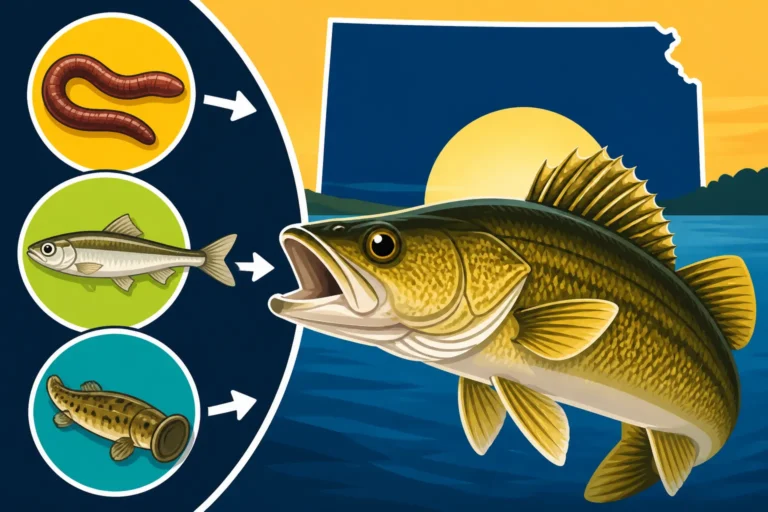
Sometimes, especially when walleye are picky, nothing beats the real thing. Spinner rigs, often called "crawler harnesses" or "rigs," combine the flash and vibration of a spinning blade with the irresistible scent and texture of live bait, typically a nightcrawler. These rigs are incredibly effective for slow-trolling or drift-fishing.
A standard spinner rig consists of a leader, one or two snelled hooks for holding the nightcrawler, and a clevis with a spinner blade. The blade size and color can be varied to match water clarity and walleye preference. Silver and gold are classic choices, but bright colors like chartreuse or orange can excel in stained water. The rig is often fished behind a bottom bouncer, which keeps your bait near the bottom without constantly snagging. This setup is a go-to for many Kansas anglers on lakes like Tuttle Creek Lake, especially when walleye are feeding on the bottom or along subtle breaks.
Beyond spinner rigs, simply drifting or slow-trolling live bait like shiners, fathead minnows, or leeches under a slip bobber or on a plain hook with a sinker can be incredibly productive. This is often the most effective method when walleye are sluggish or suspending. The natural movement and scent of live bait are hard to beat. When walleye are holding in a specific depth, a slip bobber allows you to present that live minnow precisely in their strike zone. For more on what these picky eaters prefer, check out our guide on Best Live Bait for Kansas Walleye.
Top Lure Selections for Specific Kansas Conditions
Matching your lure to the conditions is paramount for consistent walleye success in Kansas. What works in April might be completely ineffective in July. Let's break down the best lure choices for different seasons and scenarios.
Spring Spawning and Post-Spawn Tactics
Spring is a time of transition for walleye, moving from cold, deep water to shallower spawning grounds. As water temperatures climb into the 40s and low 50s, walleye begin to stage on rocky points, riprap banks, and main lake structures. Their metabolism is still relatively slow, so subtle presentations are often key.
For pre-spawn walleye, small jigs tipped with a minnow or a soft plastic like a Berkley Gulp! Minnow are incredibly effective. A 1/8 to 1/4 ounce jig in natural colors like brown, black, or olive can be deadly when fished slowly along these staging areas. Blade baits, retrieved with a lift-and-fall motion, can also entice pre-spawn fish by mimicking distressed baitfish. Trolling shallow-diving crankbaits that run 5-10 feet deep, such as a Rapala Shallow Shad Rap, can also pick off active fish along spawning routes.
After the spawn, as walleye recover and become more aggressive, the game changes. They are hungry! This is a prime time for larger crankbaits, especially those with a wider wobble, trolled over flats and points. Consider brands like Walleye Nation Creations Shuck Jigs or Flicker Shads in bright colors like firetiger or chartreuse, or more natural patterns like perch or shad. Casting suspending jerkbaits or larger jigs tipped with 3-4 inch swimbaits can also be very productive around newly emergent weed beds or riprap where baitfish are abundant. This post-spawn period offers a fantastic opportunity to fill your livewell, especially since the Kansas Walleye Length Limits and daily limits apply to these hungry fish.
Summer Deep Water and Night Fishing Lures
When Kansas summer heat sets in and water temperatures soar, walleye typically retreat to the comfort of deeper, cooler water. This usually means depths of 15 to 30 feet or more, often relating to main lake humps, deep channel edges, or points where they can ambush baitfish. Bright sunlight makes them even more light-sensitive, pushing them deeper or making them more active during low-light hours.
For deep-water walleye during the day, vertical presentations are often key. Heavy jigs (3/8-1/2 ounce) tipped with a large minnow or a plastic grub can be jigged directly over marked fish. Bottom bouncer rigs paired with spinner harnesses, often tipped with a full nightcrawler, are also incredibly effective when trolled slowly along deep breaks or humps. For these setups, ensure your line is thin but strong, like 10-12 pound fluorocarbon, for better feel in deep water. Understanding How Deep to Fish for Walleye in Summer is crucial, as you might need to adjust depths frequently.
Night fishing in summer is a whole different ballgame and can be incredibly productive for trophy walleye. As the sun sets, walleye often move shallower to feed under the cover of darkness. Long, shallow-running crankbaits, particularly those that glow or have rattle chambers, are excellent choices. Trolling these baits over shallow flats (5-15 feet) or along prominent points where baitfish congregate can trigger aggressive strikes. Black and silver or black and gold are classic night fishing colors, creating a strong silhouette against the moonlit sky. Additionally, suspending jerkbaits with a slow, erratic retrieve can be deadly when cast toward the bank on a calm summer night.
Fall Transition and Winter Slow-Biting Walleye
As autumn arrives and water temperatures begin to cool, walleye enter a period of aggressive feeding to bulk up for winter. This is a fantastic time for active angling, and lures that cover water and trigger strikes are highly effective.
During the fall transition, walleye will often move back to main lake points, rocky humps, and even shallower flats where baitfish are congregating. Trolling deep-diving crankbaits that can reach depths of 15-25 feet, like a Rapala Deep Tail Dancer or a Bandit Walleye Deep, can be incredibly productive for covering water and finding active schools. Colors that mimic shad or perch are often excellent. Jigging spoons or blade baits can also be effective when fish are located on specific structures. The fall bite can be some of the most exciting walleye fishing in Kansas.
When winter truly sets in and ice fishing becomes an option on some of Kansas's smaller lakes or protected bays, walleye become more lethargic. Finesse is key. Small jigs (1/8-1/4 ounce) tipped with live minnows are hard to beat. Jigging spoons, like a Swedish Pimple or a Northland Forage Minnow Spoon, in silver or gold, fished with a subtle lift-and-fall motion, can also trigger strikes. Ice fishing requires extreme patience and precision, often meaning fishing directly over marked fish on your electronics. In this cold water, the walleye's strike can be incredibly subtle, sometimes feeling like just a little extra weight on your line.
Color Selection and Presentation: Making Your Lures Irresistible
Choosing the right lure is one thing, but making it irresistible to a walleye involves understanding color psychology and mastering presentation techniques. These two factors can often be the difference between a tough day and a banner day on the water.
Decoding Walleye Color Preferences
Walleye vision is unique. They have excellent low-light vision, which is why they thrive in deeper, darker waters and are often more active at dawn, dusk, and night. Their eyes contain rods and cones, but they see colors differently than humans, especially under varying light conditions and water clarity.
In clear water conditions, natural colors that mimic the local forage are often best. Think subtle greens, browns, silvers, and blues that blend in. For example, a crankbait in a "perch" or "shad" pattern will look incredibly realistic in clear water, especially on lakes like Wilson. You can find many such natural patterns on Amazon, which can be useful when you need to quickly stock up on various options.
In stained or murky water, or during low light, brighter, more contrasting colors often outperform naturals. Chartreuse, orange, firetiger, and bright pinks stand out better and create a more visible target for walleye. The fluorescence of these colors can be picked up more easily in water with limited light penetration. For instance, after a rain event on Milford Lake, when the water gets a bit turbid, a chartreuse jig or crankbait might be the ticket. Sometimes, a combination of colors, like a firetiger pattern, provides both flash and contrast. Experimentation is always key, but these general guidelines will give you a solid starting point.
Mastering Retrieve Techniques for Maximum Strikes
The best lure in the world is useless if you're not presenting it correctly. Walleye are often particular about the speed, depth, and action of your lure.
For crankbaits, particularly when trolling, maintaining the correct speed is critical. Most walleye crankbaits are designed to run optimally between 1.5 and 2.5 miles per hour, but this can vary depending on the specific lure and desired action. Small adjustments in speed, even by 0.1 mph, can trigger bites. Incorporating subtle turns or S-curves with your boat can also cause your lures to speed up and slow down on the outside and inside turns, respectively, often prompting a following walleye to strike. For more details on this, check out Best Trolling Speed for Walleye. When casting crankbaits or jerkbaits, a retrieve that involves pauses, twitches, and varying speeds often works best, mimicking an injured baitfish.
Jig fishing requires a delicate touch and a keen sense of feel. Whether you're vertical jigging or casting, the "lift and fall" or "drag and pause" are common techniques. The goal is to make the jig appear natural and appealing as it moves through the water column or along the bottom. Often, the bite comes on the fall, so paying attention to slack line is crucial. A simple "snap-jigging" motion, where you lift the rod tip quickly then let the jig fall on a semi-slack line, can be very effective in triggering reaction strikes. When walleye are lethargic, a subtle "dead stick" retrieve, where the jig is barely moved, can be what it takes.
Spinner rigs and live bait presentations are usually about slow and steady. When trolling or drifting, aim for a speed that allows your spinner blade to turn consistently without over-spinning. This often means very slow speeds, sometimes as low as 0.8-1.5 mph. The natural action of the nightcrawler or minnow combined with the flash of the blade is often enough to entice a bite. For stationary live bait, ensure your bait is presented naturally in the strike zone, whether under a bobber or on the bottom.
Essential Gear Beyond the Lure for Kansas Walleye Anglers
While lures are the stars of the show, they're only as good as the supporting cast. Having the right rod, reel, and line can significantly enhance your ability to detect subtle walleye bites and successfully land those hard-fighting fish. Don't overlook these critical components of your walleye fishing setup.
Rod and Reel Setup for Walleye Fishing
When it comes to walleye, sensitivity and backbone are key. You need a rod that can transmit those light bites back to your hand, but also has enough power to set the hook firmly and control a larger fish.
For jigging and casting, a medium-light to medium power spinning rod, typically 6'6" to 7' in length, is a great all-around choice. Look for a fast or extra-fast action tip, which provides the sensitivity needed for jig presentations while still having the power to drive the hook home. Graphite rods are usually preferred for their light weight and sensitivity. Pair this with a lightweight, smooth-spinning reel in the 2000-3000 series size. A smooth drag system is essential for battling larger walleye without breaking your line. This setup allows for precise casts and excellent control over your jig or light crankbait. If you're looking for recommendations, our article on the Best Rod and Reel Combo for Walleye has some excellent suggestions.
For trolling, especially with crankbaits or bottom bouncers, a longer, more moderate action rod is often preferred. A medium power casting rod, 7' to 8' in length, with a more parabolic bend, will absorb the shock of a strike and prevent hooks from pulling out. These are typically paired with baitcasting reels that have a line counter feature. Line counters are invaluable for trolling, as they allow you to precisely replicate the amount of line you have out, which directly correlates to the depth your lure is running. This precision can make a huge difference in staying in the strike zone.
Line Choices and Terminal Tackle Considerations
Your fishing line is the direct link between you and the fish, so choosing wisely is crucial. Each type of line has its advantages and disadvantages for walleye fishing.
Braided line is a favorite among many walleye anglers due to its incredible sensitivity and lack of stretch. This means you can feel even the lightest taps on your lure, especially in deeper water. It's also very strong for its diameter, allowing for longer casts. However, braid is highly visible and has no stretch, which can sometimes lead to hooks pulling out if you're not careful. To counteract the visibility, many anglers tie a 6-10 foot fluorocarbon leader to their braided mainline. This gives you the best of both worlds: sensitivity from the braid and stealth from the fluorocarbon. For heavier trolling or bottom bouncing, 10-20 pound test braid is common.
Fluorocarbon line is a fantastic choice for leaders due to its near-invisibility underwater and its abrasion resistance. As a main line, 8-12 pound fluorocarbon offers a good balance of strength, sensitivity, and stealth. It has less stretch than monofilament but more than braid, providing a good compromise. Monofilament line, typically 8-10 pound test, is still a viable option, especially for trolling, where its stretch can act as a shock absorber. It's also the most budget-friendly option and ties knots easily.
When it comes to terminal tackle, don't skimp. Quality swivels, snap-swivels, and hooks are essential. Use ball-bearing swivels to prevent line twist, especially when using spinner rigs. Choose sharp, strong hooks that match the size of your lure and bait. Often, upgrading the trebles on new crankbaits can improve your hook-up ratio. A good selection of split shots, small bullet weights, and bottom bouncers in various weights will round out your terminal tackle for any walleye scenario.
Advanced Tips for Consistent Walleye Success
You've got the lures, the gear, and an understanding of walleye behavior. Now, let's talk about those extra steps that can truly elevate your walleye game and help you become a more consistently successful angler on Kansas waters. It's about combining knowledge with technology and a willingness to adapt.
Integrating Electronics and Mapping for Walleye
In today's fishing world, relying solely on intuition is leaving a lot of fish uncaught. Modern fish finders and mapping technologies are indispensable tools for serious walleye anglers, especially on large reservoirs.
A good fish finder with down imaging and side imaging capabilities can literally show you the underwater world. Down imaging provides a photographic-like view directly beneath your boat, helping you distinguish fish from structure. Side imaging allows you to scan wide swaths of water on either side of your boat, revealing submerged roadbeds, rock piles, humps, and schools of baitfish or walleye that you might otherwise miss. Imagine scanning a large flat on Clinton Lake and seeing a distinct school of walleye holding tight to a subtle gravel hump off to your left – that's the power of side imaging. Brands like Humminbird and Lowrance offer excellent units that can drastically improve your efficiency.
Detailed mapping, often built into your fish finder's GPS or available through apps like Navionics or C-MAP, is equally important. These maps show contour lines, depth changes, old creek channels, and submerged features. By studying these maps before you even launch the boat, you can pinpoint potential walleye holding areas. Mark promising spots as waypoints on your GPS, then use your electronics to investigate them thoroughly. This combination of mapping and real-time sonar allows you to efficiently find and stay on top of productive structure, rather than blindly searching. Our guide on How to Use a Fish Finder on a Kansas Lake offers great starting points for mastering this technology.
When to Experiment and Adapt Your Lure Strategy
No matter how much research you do or how well you understand walleye behavior, there will be days when the fish don't follow the script. This is where experimentation and adaptation come into play, and it's a hallmark of a truly successful angler.
Don't be afraid to break away from what "should" be working. If you're trolling crankbaits and not getting bites, try switching up colors, sizes, or even retrieve depths. Sometimes, a subtle change from a vibrant firetiger to a natural shad pattern, or a slightly shallower diving lure, can make all the difference. If trolling isn't working at all, consider switching to jigging or casting soft plastics. The walleye might be more receptive to a vertical presentation on a given day, or perhaps they're holding tighter to structure than your trolling pass is hitting.
Weather changes, fishing pressure, and even time of day can all influence walleye behavior, requiring you to adjust your strategy. A sudden cold front might make fish more lethargic, calling for slower retrieves and smaller baits. Increased boat traffic might push fish off primary spots, forcing you to explore secondary humps or points. Always pay attention to environmental cues and the reactions (or lack thereof) from the fish. Keep a variety of lures on hand, even some less common ones, and be willing to tie on something different if your go-to isn't producing. The walleye are the ultimate judges, and their feedback (or lack of it) is your most valuable information.
| Lure Type | Best Use Case | Ideal Seasons | Key Features for Walleye |
|---|---|---|---|
| Crankbaits | Trolling large areas, suspended fish, aggressive bite | Spring, Summer, Fall | Diving depth, wobble action, rattle chambers |
| Jigs | Vertical jigging, precise depth, subtle presentation | All Seasons | Weight, soft plastic profile, hair/bucktail, blade |
| Spinner Rigs | Slow trolling/drifting with live bait, bottom fishing | Summer, Fall | Blade size/color, snelled hooks, bottom bouncer |
| Jerkbaits | Suspending fish, cold water, finicky bite | Spring, Fall | Suspending action, flash, erratic retrieve |
| Blade Baits | Vertical jigging, reaction strikes, deep water | All Seasons | Vibration, flash, erratic action |
Disclaimer
Fishing conditions and regulations in Kansas can change. Always consult the latest Kansas Department of Wildlife and Parks (KDWP) regulations before heading out on the water. This guide is for informational purposes only and does not supersede official KDWP rules and guidelines.